Your Tech Story

Tech News

ISS

The seven-hour spacewalk by astronauts preparing International Space Station for new solar arrays.

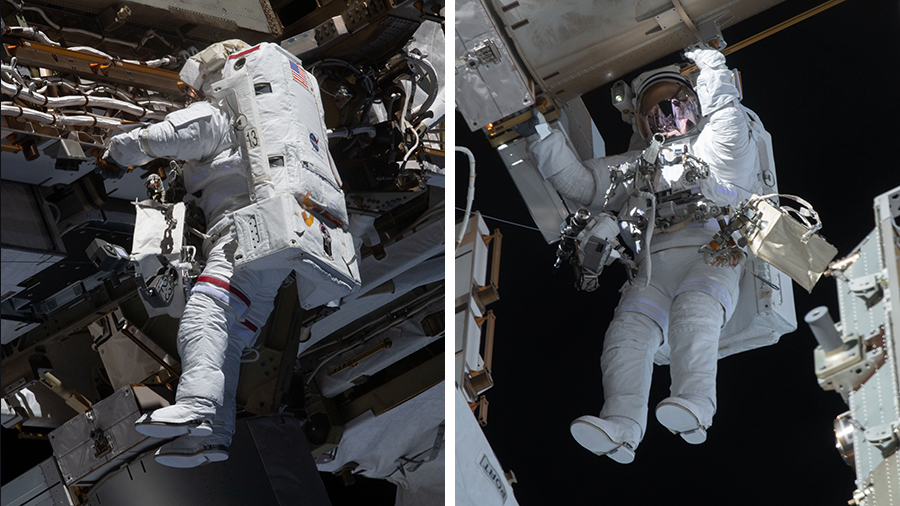
On 28th February 2021, two astronauts completed a seven-hour spacewalk as they started preparing the International Space Station (ISS) for new solar panels. The new solar panels will provide a major power upgrade for the orbiting lab. The spacewalkers are two NASA astronauts, namely, Kate Rubins and Victor Glover who worked outside the station to install the modification kits required for the new solar arrays. They planned to install two kits on two-mast canisters present at the base of the outpost’s current solar wing but succeeded in installing one (Space.com).

The astronauts are planning to complete the second installation in the next spacewalk. There are updates that the construction of the upper support hardware has been completed and secured. The next planned spacewalking is on 5th March as updated by NASA officials. NASA said that the older pair of solar panels (oldest installed in 2000) have started generating less power hence the required installation is taking place.

International Space Station new solar arrays

The size of these new solar arrays will be comparatively smaller due to the advancement in technology. Boeing, which is the prime contractor for the ISS operations is providing the new solar arrays with help from Spectrolab and Deployable Space Systems. NASA set that the new installations will take the help of the already existing infrastructure to deploy it. NASA planned to install these solar arrays in ISS’s 2B and 4B. The installation required a heavy installation kit and tools which came in an 8 feet long bag.

ISS
Image Source: blogs.nasa.gov

Both Kate and Victor started their work with the installation kit at the right edge of the ISS. They used a special ‘slingshot’ device to use crew safety tethers far from the core of the ISS (Space.com). The size of the installation kit is very large and hence was unable to fit out the door as mentioned by Art Thomason, spacewalk officer. The team is planning to bring the kit out in pieces and then assemble it together. The installation kit is not only large but weighs 150kg. Hence, the astronauts need to be very cautious while ringing it out to where the solar arrays are located. 

Obstacles while installation

Though the astronauts don’t have to deal with gravity in space, there is mass and inertia still present. Moreover, the size of the kit is too big and they haven’t worked with much larger things before. They are expected to be very cautious especially when turning the corners. At each site of the installation, the astronauts need to use portable foot restraints and tethers to anchor in place before installing the struts. It was also in the plan to secure thermal blankets over the struts. To capture clear images, there was a video camera installed in one of the astronaut’s spacesuits.

The plan was completely not successful as one of the bolts of the first strut didn’t fully engage at the first attempt. Kate used a power drill to reset it and reach a safe configuration. Upon completing it, the astronauts installed the support for the second set of arrays which will be installed on 5th March. On the next spacewalk, Kate Rubins and Soichi Noguchi will venture into space and complete the task along with other maintenance tasks.

Boosting power in the orbiting laboratory

With time, the power generation capability of the solar arrays degrades. The first installed panels had a life of 15 years and still, they are generating power. The new solar arrays will boost the power of the station by 20 to 30 percent. Currently, there are eight solar arrays in place and they provide 160kW power. Half of them don’t operate continuously as they are used when the ISS is in orbital darkness and this takes place once in a fortnight. After all the new solar panels are installed, the station will be able to receive a total power of 215kW.

The delivery of these new solar panels will take in this year in three supply missions. They will be transported in the unpressurized trunk of the SpaceX Dragon cargo spacecraft. Installing each solar array will take two spacewalks, one for preparing and the second for installation.

Australia new law

Australia finally passes the landmark law making tech giants pay for local content deals.

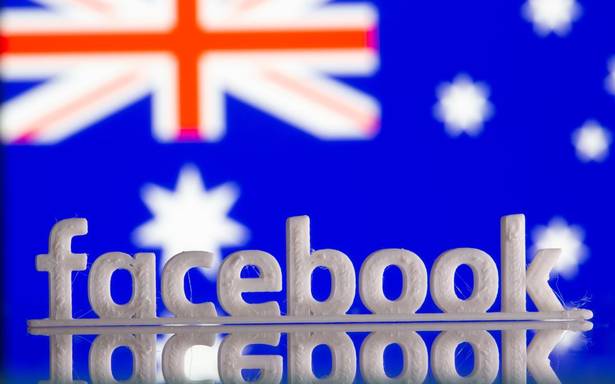
For the past few months, tension has risen between the Australian government and tech giants like Google like Facebook. According to the Australian government, such massive tech companies should pay the local media and publishing companies for content. In this way, the local Australian media channels and quality content providers will be benefited and would help in their overall economic and social growth. In the beginning, Google opposed the decision when the first news broke out, but with compromise from both parties, Australia finally passed the landmark law on 25th February 2021.

This new law passed by the Australian legislation will make the tech giants across the globe pay millions of dollars for local news content. Facebook and Google strongly opposed the law but after watering down the binding rules, they have finally agreed to pay the local news channels (Gadgets 360). In the beginning, Google said that the search engine will shut down in Australia if the law is enforced. But, after months of several discussions and debates, Google and Facebook will pay tens of millions with the enforcement of this law.

What changes the new law will bring?

The new law passed by the Australian government will help largely to uplift and give recognition to local news publishers. This can be a perfect model for other nations as well where tensions have risen before between such big firms and local companies. Uplifting small businesses help in improving the economic condition of a nation overall.

Google has launched its new product called Google News Showcase last year. The content Google will pay for now to the local Australian content publishers will be posted on this new platform. In the case of Facebook, the company will pay for the content coming up on the News product which is yet to be rolled out in Australia.

Australia new law
Image Source: thehindu.com

The main reason that the urgency to enforce this law came up is that the regulators think the big tech giants dominate online advertising. With every passing day, they are suppressing the importance of the traditional way of airing news and those organizations as well. At the same time, they are using the content from these organizations for free which is not justified. This is true as everyone is using the internet and smartphone for every purpose and the conventional way of news sourcing is getting lost somewhere. At first, the big tech firms opposed fearing it would hurt their business but it is also a government’s responsibility to uplift the condition of its nation.

Negotiations and compromises

When the Australian government planned to enforce the law the media companies opposed it because the former was going to make it compulsory. And, the government also mentioned that if the companies fail to strike a deal with the local media companies, it will fix a negotiator who will decide the terms of the monetary settlement on behalf of the company. This prospect was dramatically reduced by last-minute government amendments (Gadgets 360).

If both Google and Facebook have backed their business out from Australia, they would have lost millions of active users which would have affected their businesses. So, both Google and Facebook are trying to negotiate deals with Australian media companies. Josh Frydenberg, the Treasurer, said that it pleases the government to see that both the companies are trying to land commercial arrangements with Australian companies. Facebook was not very inclined towards this arrangement before as the company is not that much interested in news content.

Public interest journalism

The new law that is passed today is called the News Media and Digital Platforms Mandatory Bargaining Code. And, according to the Australian government, this new law will help remunerate the local media companies for the quality content they are providing. This new working culture will improve and sustain public interest journalism in Australia. The two tech giants still have a couple of months left to reach any further agreements.

Google has arranged deals with two Australian media companies namely Rupert Murdoch’s News Corp and Nine Entertainment. Facebook’s first deal is with Seven West Media which is another new organization in Australia. Both the companies are planning to invest around $1billion in the news sector for the next three years.

Esports

Esports streaming will help change the mindset of people towards gaming.

In India, when it comes down to action and strategy-based competitive gaming, the current generation has a huge potential. But somewhere the amount of infrastructure for esports or hype for taking it as a career lacks the stigma and hence continues to struggle. Though the amount of gaming expertise is increasing in India along with many new esports startups emerging, Indian esports has a great potential that is not yet unleashed. With the Asian Video Games 2022 around the corner, the preparation for participation or excitement as an audience accelerates with time.

Addressing the culture of esports in India, Akshat Rathee, cofounder of Nodwin Gaming speaks about esports and how streaming video games is more than just delivering content to the audience. Breaking the orthodox belief, many Indian gamers have been successful in choosing their career in esports. But, even today, esports or video gaming is considered not more than recreation by most Indians. Rathee’s main message to the Indians is esports is more than just a source for recreation and through esports streaming, the mentality of common people can be moulded and more Indians will be able to take it up as a career.

Esports streaming as a career

Rathee gives a very strong and impactful explanation of how the mentality of Indian people towards sports has changed with time. He says, before 1983, the hype for cricket was not as much as we witness now. The love for cricket and an enormous follower base started building up after Indian won the World Cup in 1983. So, once a sport that wasn’t even a topic of discussion in most Indian households now sends their kids for cricket coaching. And, the most significant reason for this change in perception is the victory of 1983. Because it gave people evidence to believe that investing in sports might bear a fruitful result.

Esports
Image Source: indianexpress.com

Rathee says, “With greatness and nice performances which might be publicly obtainable, comes the need for glory and legitimacy. ” It’s not just cricket that has become very popular in India, but after Viswanathan Anand became a famous Chess player and won several tournaments representing India, the followers kept increasing. This is how Rathee explains the importance of streaming as esports is no different from cricket, tennis, or chase. Indian will be waiting for the video game records in Asian Video Games 2022 and some of the esports titles that are most likely to be added are Counter-Strike: International Offensive, DOTA 2, etc.

Esports is more than Asian Video Games

While India bagged a bronze medal in Asian Video Games 2018 in esports, the participation is predicted to increase by several folds this year. As Rathee said, a sign of triumph escalates the enthusiasm among people. But, the interest in Asian Video Games 2022 doesn’t account for how many Indians are exactly inclined towards esports. There are many video gaming opportunities that are eventually opening up for potential Indian gamers who could play at a professional level. But, there should be overwhelming participation in esports like we observe in cricket or football.

A few days ago, ASUS announced the ROG Academy Programme to bring out the best of Indian video gamers and train them at a professional level. Many similar initiatives are taken by many other companies out there to improve the gaming culture in Indian and put it out there that it can be chosen as a valid profession. There are many great Indian gamers who with proper training and infrastructure can give a tough competition worldwide especially in tournaments of CS: GO, Valorant, PUBG, etc.

Streaming as a profession

Streaming enables a content producer to deliver quality content to the audience. In India, gaming content that reaches out to common people is negligible. Two reasons for this is there aren’t many streaming companies in India (recently a few startups have been established) and even today most Indian people have not accepted gaming as a profession.

When PUBG wasn’t banned in India, many famous streamers like Mortal and Dynamo Gaming had huge popularity in India. But, when speaking of esports, it is more than just playing PUBG. So, the overall esports culture has to be uplifted so that apart from avid gamers, esports content reaches out to the general public.

Foxconn

Foxconn expects ‘Limited Impact’ on Apple due to global chip shortage.

The pandemic has taken a toll on every possible industry one can think of in the last year. There was a shortage of supply, hindrance in production, unavailable transportation, and several more obstacles in any business. One latest concern in the tech industry is regarding the shortage of chips that is creating a major disturbance in the semiconductor industry. The chip shortage has affected both the automotive and semiconductor industry on a global scale.

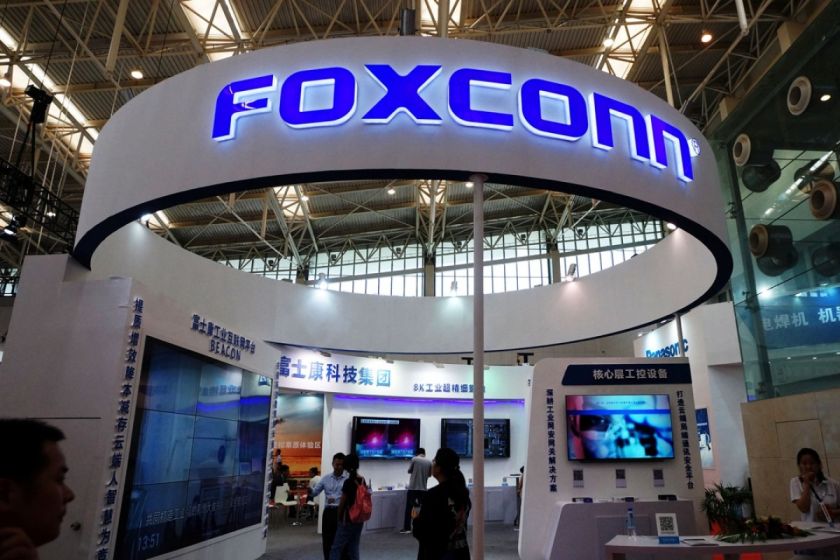
But, in response to the chip crisis situation, Foxconn mentioned last weekend that there will be “limited impact” on the company and its clients. Speaking of clients, Apple is one of the major clients of Foxconn, and since the clients are massive tech giants they always have a Plan B. With the advent of 2021, the pandemic though prevailing is easing, and Liu Young-way, chairman of the manufacturing conglomerate formally known as Hon Hai Precision Industry Co Ltd said that they expected the company to do better in the first half of 2021 (Gadgets 360).

Foxconn Global chip shortage

The global pandemic caused by COVID-19 created havoc across the globe. Though many small businesses were forced to shut down, the market for electronics boomed. During the lockdown, demand for laptops and gaming consoles increased unexpectedly as people were getting more inclined towards enjoying and working from the confinement of home. In the beginning, we didn’t have any choice but now people are adapting to this lifestyle. So, demand for good electronics, especially laptops, smartphones, and good connectivity are not going down anytime soon.

Foxconn
Image Source: scmp.com

Due to this sudden escalation in demand for electronics, chip-making companies faced some difficulties in manufacturing and constant supply. So, the chip manufacturers have to reallocate their supply for the tech industry and away from the automotive sector. A sudden shift in supply from one sector to another was going to create a shortage in the automobile industry. But, it was not possible for the chip manufacturers to meet the demand in both sectors simultaneously amidst the pandemic.

Chip shortage in many sectors

The chip shortage caused many big automobile brands like Volkswagen AG, General Motors Co, and Ford Motors Co to cut their output capacity. Because without the chips, the final model won’t be ready for sale. The chip shortage affected the automotive industry with a huge jolt but eventually, the crisis had its impact on the smartphone sector. In the smartphone industry, the companies faced a shortage in application processors, display driver chips, power management chips, etc. But, the common people didn’t face the impact of this smartphone sector crisis in a great amount.

Amidst the crisis, chip manufacturers are likely to prioritize the biggest customers. Hence, it can be predicted that Apple is going to suffer the minimal impact of the chip crisis scenario. Foxconn’s biggest customer is Apple and it also has another advantage due to its large size hence a global presence. Though big companies have also faced crises during the beginning of the pandemic, they absorbed the shock much more efficiently than the smaller businesses.

Other interest of Foxconn

Though Apple is Foxconn’s biggest priority currently, the company is still looking out for growth opportunities in other sectors. Foxconn is showing its current interest in electric vehicles (EV) and Liu has further mentioned that their EV platform (MIH EV Open Platform) currently has around 736 partner companies participating from around the globe. The company is extensively working on this area and Liu believes that two or three models for presentation will be ready by the end of the fourth quarter. But, he has also mentioned that EV’s contribution to the company won’t be significant before the next couple of years.

For contributing significantly in the area of EV, last month Foxconn and Zhejiang Geely Holding Group came into a joint partnership which will provide contract manufacturing for automakers. This new venture is shared equally between the two companies who will also provide consultancy service for EV technologies. Apple is also planning to launch self-driving cars by 2024.

Every company is trying to evolve and keep up with the evolution in technology. But. among all these giant businesses, Tesla is the one that is way ahead of all its rivals.

Apple Platform Security Guide

Apple Platform Security Guide updated highlighting changes that came up with the M1 chip

On 19th February 2021, Apple updated the company’s Platform Security Guide highlighting all the new changes that have been implemented to iPhone, iPad, and Mac. Apple has updated the Platform Security Guide in a detailed fashion mentioning every detail about all the features used by Apple to protect user data. Apple has tried to increase the transparency between the company and the users so that they have an idea about how their devices and data are kept protected across any platform.

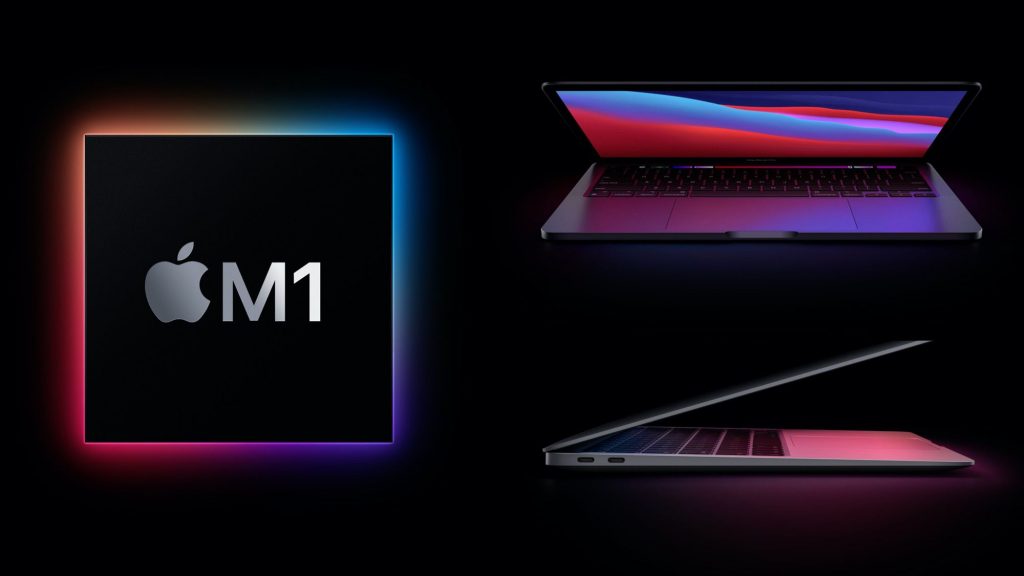
The new Platform Security Guide is the lengthiest guide of the company ever consisting of a 200-page detailed guide and information. But, the most highlighted information in the guide is about the M1 chip and all the new updates regarding security changes due to the same. Apple released the M1 chip last year and has also changed some security features accordingly.

Apple Platform Security Guide

After Apple released the last update of Platform Security Guide, it took the company ten long months to release the recent version. The main gadgets that have been focused on in this updated guide are iOS 14.3, iPad 14.3, macOS Big Sur 11.1, tvOS 14.3, and watchOS 7.2 (Gadgets 360). In the new Platform Security Guide, Apple has mainly focused on the security changes of Mac users through the new Apple M1 chip. There are eleven new topics regarding security changes and features that have introduced in the new guide.

Apple Platform Security Guide
Image Source: macrumors.com

According to the updated guide, there are security elements that will be able to provide the new Mac machines with a secure boot process. The Apple computers that are based on the new M1 silicon chip can enable kernel extensions in the devices. And, the authorization requirements for enabling this extension are also mentioned in the security guide.

In spite of the 200-page security guide mostly concerning the new M1 chip-enabled devices, Patrick Wardle, a security researcher has mentioned that M1-enabled Apple devices are still not fully secured. But, with software updates, the issues will be fixed in near future.

Security changes in iPhone and iPad

Apart from the changes that are followed by Apple’s M1 chip, the security guide also mentions the security changes for iPad and iPhone through the iOS14 updates. One of the most important iOS 14 and iPadOS 14 updates includes the iBoot implementation which is exclusively for the iPhones that are based on Apple A13 Bionic and above. In the case of iPads, the update is for the iPads fueled by Apple A14 Bionic chips. Apple has also updated the overall user experience by updating the silicon in iPad, iPhone, and Mac to T2 chip and AES hardware engine. This was incorporated to implement line-speed encryption.

Biometric Security System

Along with these updates, Apple has also included a set of changes for both its hardware and software division for the not-so-knew devices to uplift their security. One of the biggest changes that Apple has brought in its devices is face recognition and touch recognition adding an extra layer of security. Biometric security is becoming very popular recently and almost implemented in every smart device for the protection of data and devices. The conventional password protection is present along with that biometrics are added for a better user experience.

The previous reports have shown that around 51 percent of the total Apple users don’t prefer setting a password for their devices, because it takes too much effort to set a passcode and type it every time you unlock the device. So, even when there is a choice to provide security, many people choose not to set a passcode only because they have to give extra effort. But, after Apple introduced the Touch ID and Face ID, around 92 percent of Apple users switched to biometric authentication.

Every company strives to strengthen its security to the topmost level but glitches are found sooner or later. Many researchers often find bugs in the Apple security system and the company has even faced lawsuits due to this. Apple has also faced lawsuits due to copyright infringements in the anime of enhancing security systems. But, with the new updates, maybe the bugs will reduce and the overall user experience will improve.

Perseverance Rover

‘Seven Minutes of Terror’ faced by NASA Perseverance Rover before landing on Mars

Scientists hold their breaths as NASA’s Perseverance Rover enters into the thin Martian atmosphere and faced ‘seven minutes of terror’ before landing. NASA’s Mars Rover Perseverance is a robotic astrobiology lab that is designed and fit inside a space capsule. The rover was in its seven-month-long journey from Earth and it is about to land on the Martian land surface this week. The Perseverance rover is expected to emit a radio alert as it enters the atmosphere of Mars.

The signal transmitted by the rover is received at Jet Propulsion Laboratory (JPL) situated near Los Angeles. This signal will travel more than 200 million km and by the time the managers in the laboratory are able to receive it, the rover is expected to land on Mars’ surface. The expected time between entering the Martian atmosphere and landing on the surface is seven minutes whereas the radio signal transmission time to Earth is more than eleven minutes. The rover’s final descent started on Thursday and the JPL engineers have their fingers crossed for a safe landing.

JPL descent and landing team

The Mars perseverance rover mission is worth $2.7billion (approximately). Al Chen, head of the JPL descent and landing team mentioned that the safe landing part is the most difficult and dangerous part of the mission. Chen also mentioned that in such missions ‘success is never assured’ as this time the team tried to land the most complicated and heavy rover they have ever built on a landing site that they never attempted before. If the landing is successful, this mission will open many doors for the scientist to know and explore if life ever existed beyond Earth.

This mission if successful will be followed by more human missions on Martian land. But, before all the discoveries and research, a safe landing is the biggest priority. The rover is six-wheel heavy machinery that will land with the help of a giant parachute (supersonic) followed by deployment of a jet-powered sky crane. The main function of the sky crane is to successfully land the rover on the target spot safely and it will also hover over the surface while descending the rover to the surface on a tether. (Gadgets 360) Al Chen also mentioned that the perseverance rover has to do this all on her own and the team cannot be of any help at this stage.

Perseverance Rover
Image Source: tribune.com.pk

If the mission is successful, the JPL team is expected to receive a signal before 1PM (Pacific time) confirming the safe landing on the Martian soil.

More about the mission

The Mars Perseverance Rover has embarked on a two-year mission from Earth and its main objective is to search for evidence for microbial life that might have flourished on the planet billions of years ago. To do this job, the rover will engage a complex suit of instruments that will search for signs. There will be drilling operations on the rocks of Mars which will be sealed in tubes to further bring back to Earth and carry out research. This will become the first such specimen to be collected by humankind from another planet. (Reuters) The landing site of the rover is on Jerezo Crater, a 28-mile wide space on the land which is expected to be rich in fossils of microorganisms.

Objectives of the mission

NASA is planning another two such missions whose only objective will be to bring back those samples from Mars. The rover also has a small drone helicopter that will test surface-to-surface powered flight on another world for the first time. (Gadgets 360) Another objective is to extract pure oxygen and carbon dioxide from the Martian atmosphere which will be evidence that future human survival is possible on Mars. The scientists are mostly looking for organic molecules which will be proof that microorganisms did survive in the Martian atmosphere.

For the production of oxygen missions, the space agency will deploy an instrument that will produce 10 grams of oxygen an hour using the electrolysis process. Since the mission started amid the pandemic due to COVID 19, there will be much fewer people in the control room. The mission’s deputy project manager also mentioned that COVID-19 cannot stop them from carrying out such big research and setting out for more such missions.