Your Tech Story

Tech News

Byju's

Byju’s acquisition of Aakash Educational Services cost nearly $1 Billion.

Byju’s has a very broad market in the E-Learning sector not only in India but in other nations as well. The online learning platforms have witnessed a major rise in demand especially with the onset of COVID-19. Since Byju’s has a strong online presence, it is aiming to expand its offline presence as well. This is one of the reasons why Byju’s acquired the offline physical coaching center company, Aakash Educational Services. Byju’s has revealed the news on Monday about acquiring the chain of these coaching centers and accelerating its offline growth.

Byju’s is a very common and broadly used e-learning platform in India. When it comes to understanding concepts and practicing problems for competitive exams, Byju’s is one of the best options for students. And, Aakash institutes are also very famous for providing high-quality coaching mainly for NEET and JEE aspirants.

Closing the deal

The news of the acquisition has been spreading since January that Byju’s has agreed to buy Aakash Educational Services. Back in 2019, Aakash sold a 37.5 percent stake to Blackstone but Byju declined to comment on this topic. Byju’s whose current valuation is $13 billion has acquired the old chain of coaching centers for nearly $1 billion paid in cash and equity for the acquisition, that is, $600 million in cash and the rest in stock (TechCrunch).

Byju’s
Image Source: entrackr.com

When the deal was closed with Blackstone a couple of years ago that made Aakash’s total valuation to $500 million. Currently, Aakash owns more than 200 physical coaching centers all over India where top-quality mentorship is provided to the aspirants. The total number of students enrolled in Aakash coaching centers is more than 250,000.

Change in perspective

Since Aakash Educational Services is well known for providing top-class coaching to the students in India, they didn’t stop teaching during the pandemic. As the classes shifted to a virtual platform, Aakash started offering many services online to the students. So, with Byju’s already having a powerful online presence and Aakash newly making coaching options online, both the companies landed on a mutual interest during the pandemic. Though the deal has been finalized recently, both the companies were discussing terms since last year.

Even after the acquisition, the founders of the company will be attached to it and they will be still working towards providing quality coaching to the students. Aakash Chaudhry, managing director and co-promoter of Aakash Educational Services sounded very optimistic about the deal. He said that this joint partnership between two leading brands in the educational sector will provide “very substantial and value-additive services to students.”

Advantages to the acquisition

With Byju’s being the country’s most valuable Ed-tech company and Aakash having a strong physical presence, both the companies together will create a huge omnipresent brand for Indian students. Aakash Chaudhry has further added that Aakash has provided the students so far with physical coaching and whoever was in need of online tutorials and accessing content anytime, Byju’s has been their savior. So, joining hands together a unique solution will be provided to the students by leveraging physical location and online learning technology.

Byju Raveendran, co-founder, and CEO of the ed-tech startup Byju’s has said that in the future of education especially in our country, both online and offline experiences will be blended. Even before Byju’s started the online platform he used to teach hundreds of students offline on the stadiums. Apart from creating an omnichannel, this partnership is also aiming to reach students from small towns and remote areas in India.

Amit Dixit, co-head of Asia Acquisitions of Blackstone has also mentioned that the presence of an omnichannel “will be the winning model in test prep and tutoring” especially when two of the most important companies in the Indian education sector are joining hands.

Growth of Byju’s

Byju’s has come a long way since 2011 which currently serves over 80 million users. 5.5 million of the total Byju’s audience are paid customers. The company has gained massive recognition very quickly especially among students. The company has made a few big acquisitions so far which includes US-based Osmo and Scholr. One of the biggest acquisitions of the company was in 2020 when they acquired WhiteHat Jr for $300 million.

LG Electronics

LG Electronics to shutdown its Smartphone Sales and Production.

On 5th April 2021, the South Korean company, LG Electronics revealed the news of the shutdown of its smartphone sales and production. This is disheartening to see that one of the first-ever smartphone brands to launch in the market has to retreat its steps. For a long time, the LG Electronics smartphone division was struggling to survive in the market as the consumer base decreased drastically and they found it hard to find a buyer anymore. So, the company has finalized the decision to completely ending its smartphone sales and production.

As the company has decided to shutdown the production across the globe, it will leave its 10 percent share in North America. In the North American market, the two main company’s dominating the smartphone markets are Samsung and Apple’s mobile phones. The existing users of LG will either choose Samsung or Apple for the next choice. But, according to some analysts, the existing LG customers are more likely to choose Samsung over Apple as the price range especially the mid-range products have more varieties in Samsung.

Loss in LG’s Smartphone Division

It is unfortunate that LG’s smartphone division has been facing recurring losses for quite some time. In the past six years, the total loss suffered by LG’s smartphone sector has summed up to $4.5 billion. With the increasing competition in the market especially with popular mobile brands like Samsung, Apple, Xiaomi, and many more LG’s product lines got lost in the myriad. Thus dropping out from the smartphone market is a wise choice made by LG as now the company can invest more in electronics, home appliances, and electric vehicle components. LG has a good market when it comes to choosing smart devices for the home.

LG Electronics
Image Source: rprna.com

LG’s smartphone division wasn’t always like this. In 2013, LG’s smartphone was at peak of its business as it brought some good smartphone models with exquisite features to the market. LG was one of the early companies in the smartphone business to bring features like wide-angle cameras to its smartphones. During its accelerated growth, it was the third-largest brand after Samsung and Apple in terms of the largest smartphone manufacturer.

What caused the Downfall?

After LG smartphones reached their peak sale, the company slowly started witnessing a stiff decrease in buyers. The most important reason behind this is receiving slower software updates and most of the flagship products faced both software and hardware mishaps. Today, we can see how fast and often we receive regular updates on our mobile phones. The OS receives regular updates, as well as the options, have also increased. Due to a lack of such strong vision and lack of marketing skill, LG failed to survive in the long run.

With the advent of Chinese companies like Honor, Oppo, Vivo, and Xiaomi, many companies which used to be a hit even a few years ago have started struggling. Some of the companies whose sales have fallen greatly are Nokia, HTC, and BlackBerry. If we look at the statistics, Samsung shipped 256 million phones last year whereas LG shipped only 23 million. (Reuters) This shows that the company was barely surviving the competition.

Other companies will Benefit

Though Samsung will benefit greatly in the absence of LG from the market, other Chinese companies will also witness an increase in sales. The main reason behind this is that the Chinese companies don’t have a very dominating business in the United States due to rivalry between Beijing and the US, especially in recent times. But, in the case of Latin America, the Chinese smartphone business is expected to boom now that LG has completely disappeared. The company is expected to totally shut down the mobile sector by 31st July of this year.

In South Korea, the employees in the smartphone division will be shifted to other LG sectors but at the local level in other regions, this will bring uncertainties in employment. In spite of shutting down the smartphone division, LG will retain the 4G and 5G core technology patents. It will also provide service support and updates to its existing customers for a certain period of time

MobiKwik

Biggest Data Leak in India; MobiKwik to Pay a Heavy Penalty if Found Guilty

Today, data is the most important asset for everyone, and every day we see one or the other news on user data leak, even in the biggest companies have been facing such cases. This time, the Indian fintech company has come under suspicion as recently, the MobiKwik database of 10 crore users was seen on sale on the dark web. RBI has asked the company to investigate the matter, or the company will be penalized if found guilty.

The Biggest Data Leak

Recently many of the independent cybersecurity experts have claimed that they have found the MobiKwik user data on the dark web that too for sale. Another internet security researcher, Rajshekhar Rajaharia, had also tweeted about how he could access the MobiKwik and other fintech company user data on the web. He tweeted on 26 February 2021.

“Again!! 11 Crore Indian Cardholder’s Cards Data Including personal details & KYC soft copy(PAN, Aadhar, etc) allegedly leaked from a company’s Server in India. 6 TB KYC Data and 350GB compressed MySQL dump.”

Source: twitter.com

According to these security experts, the main source of the data leak is the UPI payment portals, and the data is for sale for 1.5 bitcoin or about $86,000. There are speculations that the hackers have created a separate system containing a total of 8.2 TB of data, where one can retrieve the information through a phone number or an email address. According to some of the experts, this data is also available via links, and many users have already tweeted how they have accessed their data (such as credit and debit card details) using those links.

MobiKwik’s Take on the Data Leak

MobiKwik has been denying the data leak and has addressed its users saying that the company has been taking all the measures to secure its customers’ data. One of the spokespeople of MobiKwik tweeted,

“The company has robust internal policies and information security protocols and is subjected to stringent compliance measures under its PCI-DSS, CISA, and ISO 27001;2013 certifications. These include annual security audits and quarterly penetration tests to ensure the security of its platform,” the tweet further stated, “the data available on the internet could have been uploaded by the users themselves on several platforms. For our users, we reiterate that all your MobiKwik accounts and balances are completely safe.”

Source: blog.mobikwik.com

On the claims of various security experts, the company said that these so-called media-crazed security experts have been creating chaos among MobiKwik users and wasting the precious time of the organization as well as members of the media. MobiKwik has also said that it may take legal action against these security researchers for defaming the company.

MobiKwik
Image Source: freepressjournal.in

Also, MobiKwik confirmed that during the alleged first security breach, it had performed a thorough security check and investigated if there was any data leak, but it found nothing. 

Reserve Bank of India Warns the Company

Since MobiKwik has been accused of about 110 million users’ data leaks multiple times, RBI has warned the company that if it is found guilty, it has to pay a huge penalty for that. RBI, being the central bank of India, has all rights to penalized a company that is risking the data of the Indian public.

Though MobiKwik has said that it has already performed an audit, RBI has asked MobiKwik to retain an external auditor to conduct a forensic audit as RBI isn’t sure of the audit performed by the MobiKwik team. The results of the audit may get the fin-tech company under great pressure, as if it is found guilty of the breach, it will have to face some consequences. According to the Reuter, MobiKwik may have to pay a minimum of Rs 500,000 to RBI if it is found to be a part of the data leak.

ARMv9

Intel’s market competitor Arm introduces Armv9 with major architectural updates in a long time.

After a very long time, Arm has introduced a major update unveiling the biggest technical overhaul with Armv9. With this new chip, Arm is all set to give a very tough market competition to Intel which is the world’s biggest chipmaker. With Armv9 the company has implemented major modifications to the chips, the first being Artificial Intelligence (AI). The AI revolution is a major breakthrough of this century unleashing new potential for every industry. And, Arm has designed the new chip to handle the capabilities of machine learning (ML) for security and other purposes.

Major Upgrades by ARM

Every day millions of devices are getting connected with the help of the internet and Arm is trying to enhance the computing abilities with its products. With the help of advanced architectural chips powered by AI, many devices are exploring new capabilities. The AI software helps greatly many industries to be very dynamic and provide real-time solutions and updates. With the launch of Armv9, the company has said that the upgrades are needed to support the spread of computing beyond phones, PCs, and servers. Arm wants the presence of its technology everywhere and that it becomes the next big solution for the tech industry.

Simon Segars, CEO of Arm, said that “As we look toward a future that will be defined by AI, we must lay a foundation of leading-edge compute that will be ready to address the unique challenges to come.” He further explained that Armv9 is the next computing answer for the industries trying to harness the power of AI and at the same time keeping the security in check. The company’s next 300 billion Arm-based chips will be driven by extremely powerful design and security.

Source: arm.com

Arm’s technology and processor designs are currently dominant in the smartphone industry but the company is gradually trying to expand in PCs and server fields as well. Currently, it sells its designs and licenses an instruction set to Apple, Samsung, and Qualcomm.

The New Armv9 Architecture

As the number of chips designed and shipped by Arm increases every year, very soon 100 percent of the world’s shared data will be processed on Arm. With the increasing demand for Arm’s chip, the responsibility of the company increases as well to enhance the capabilities for improved performance and better security. According to the company, these are two main priorities of Armv9 and that it will accelerate to provide more specific computing for AI, Internet of Things (IoT), and 5G gain momentum.

ARMv9
Image Source: bbc.com

Enhanced security

To tackle the security problem that is increasing in the tech world much rapidly, Arm is introducing the Arm Confidential Compute Architecture (CCA). This feature will help shield portions of code and data from access or modification while in-use, even from privileged software, by performing the computation in a hardware-based secure environment.

Henry Sanders, corporate vice president and chief technology officer, Azure Edge and Platforms at Microsoft said that “The increasing complexity of use cases from edge to cloud cannot be addressed with a one-size-fits-all solution.” Due to this reason heterogeneous computing is becoming more versatile and hence in demand among hardware and software developers.

Source: arm.com

Arm has made this possible in collaboration with Microsoft thus establishing a synergy between hardware and software. Arm has the capability of powering billions of devices and connecting them in a heterogeneous computing ecosystem.

Better performance through system design

Arm’s chip design has always increased the CPU performance and Armv9 will continue to do so. Arm says that the Armv9 generation will increase the CPU performance by 30 percent over the next two generations of mobile and infrastructure CPUs. So, Arm’s Total Compute Design methodology will accelerate overall compute performance through focused system-level hardware and software optimizations and an increase in use-case performance (Arm.com).

The new Armv9 design will give a tough competition to Intel as many companies are slowly inclining towards Arm’s processors.

Spotify

Spotify buys Locker Room app’s company Betty Labs in live Audio Push.

On 30th March 2021, Spotify revealed the news of acquiring Betty Labs, the company that made the sports-focused social audio app called Locker Room. By purchasing this company whose app became a bit hit since the launch last year, Spotify is marching its way into live audio. The live audio-based social apps are gaining much popularity in a small-time, especially with the ongoing pandemic situation.

Last year in April 2020, an invite-only audio chat social networking platform, Clubhouse was released and within a month its valuation became $100 million. Betty Lab’s social app, Locker Room was launched in October 2020 and it has become very popular among sports fans for chatting and holding watch parties.

Spotify acquiring Betty Labs speaks a ton about the company’s plans to evolve and expand in the field of music and beyond. In response to the latest acquisition, the company has said that it plans to “evolve and expand” Locker Room to offer sports, music, and cultural programming as well as live discussions with professional athletes, musicians, and other personalities (Gadgets 360).

Offering more options to the Audience

A big music streaming platform like Spotify has millions of users which comprise both the content creators and the listeners. To stay in business and keep growing, evolving is very essential as well as granting the wishes of your audience. Live format is attracting many new and existing users in music streaming platforms. Introducing a live format will broaden the community and enhance the services already offered by both apps.

Gustav Söderström, Chief Research & Development Officer at Spotify, said, “Creators and fans have been asking for live formats on Spotify, and we’re excited that soon, we’ll make them available to hundreds of millions of listeners and millions of creators on our platform.”

Source: newsroom.spotify.com

Howard Akumiah, Founder and CEO of Betty Labs, said that “We are excited to join forces with Spotify and continue building the future of audio – we’ll invest more in our product, open the experience to Spotify’s audience, diversify our content offerings, and continue expanding the community we’ve built.”

Source: newsroom.spotify.com

About Spotify

Spotify was founded in 2006 by Daniel Ek and Martin Lorentzon. It is a Swedish music streaming company that has more than 300 million active users. The company has a freemium subscription model and it is available both on iOS and Android smartphones. Currently, the company’s Spotify app is available in most parts of Europe, the Americas, Oceania, Africa, Mauritius, and Asia. The company is still expanding and it’s expected that by the end of this year, Spotify will be available to users of 178 different nations.

Spotify
Image Source: digital.hbs.edu

Spotify had a fall in the number of users during the advent of COVID-19 but it is recovering and very fast. The premium users of Spotify are increasing rapidly and last year it reached 133 million premium users. Over the years, the company has made several acquisitions and some of them are Tunigo, a music discovery app, The Echo Nest, a music intelligence company, Seed Scientific, a data science consulting firm, etc. The company is also planning to acquire Megaphone from The Slate Group for $235 million.

About Betty Labs

Betty Labs is mainly focused on providing live experiences through a social audio application. The company’s application Locker Room is used for live discussions with sports insiders and athletes. This gives the sports fan an opportunity and a platform to talk with major personalities and get more facts and ideas about important topics. It is a new company and has a total of thirteen investors till now. But, with Spotify acquiring Locker Room, Betty Labs will get more exposure in the coming days which will attract new users.

Mi 11 Series

Xiaomi Launches Mi 11 Series 5G Smartphones, Ultra, Pro, Lite Along with a Mi Band 6.

Xiaomi just launched its new Mi 11 series 5G smartphones in China on Monday. The smartphones include the Mi 11 Ultra, Mi 11 Pro, and Mi 11 Lite. Xiaomi had launched the Mi 11 series recently in December 2020, and these three smartphones are an addition to the series. The Mi 11 series is known to be the first to incorporate the Qualcomm Snapdragon 888 processor into its smartphones.  Along with three smartphones, the company has come with its Mi Smart Band 6, a successor to the Xiaomi Smart Band 5.

Mi 11 Ultra

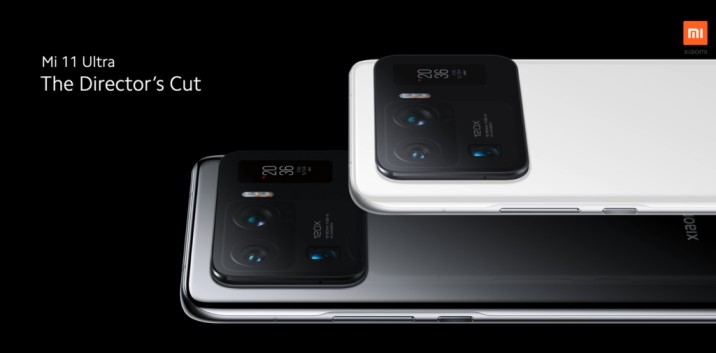
Mi 11 Ultra comes with a 120Hz refresh rate E4 AMOLED display (3,200× 1,440 pixels), featuring the quad-curved 6.81-inch 2K WQHD and 240Hz touch sampling rate. Along with the support for HDR10+ and Dolby Vision, it also includes the Corning Gorilla Glass Victus protection. Another addition to the new features of the Mi 11 Ultra smartphone is the 1.1-inch AMOLED (126×294 pixels) secondary display on the back for providing people with the facility for clicking pictures by looking into it. This display will also show notifications, battery level, and weather alerts, etc. It will also be able to mirror the front display.

Mi 11 Series
Image Source: blog.mi.com

Talking about the camera, the smartphone comes with a triple camera setup for the rear. The setup has opted for the 50MP Samsung GN2 primary wide-angle sensor with an f/1.95 aperture, LED, laser autofocus, and Optical Image Stabilisation (OIS), a 48MP Sony IMX586 ultra-wide-angle with a with OIS and f/2.2 lens as well as a 48MP tele-macro camera sensor with 5x optical zoom, 120x digital zoom and OIS. The camera is capable of recording 4K videos. The front camera of the smartphone is 20MP.

Dimension wise the Mi 11 Ultra is 164.3mm X 74.6mm X 8.8mm and weighs around 225 grams. It is also IP68 rated water and dust resistance. Mi 11 Ultra is packed with Adreno 660 GPU and supports up to 12GB LPDDR5 RAM as well as up to 512GB UFS 3.1 storage. It includes a 5,000mAh battery, a 67W wired C-port, along wireless charging support. It also offers support for 10W reverse wireless charging. The smartphone comes with an in-display fingerprint sensor.

Mi 11 Pro

Mi 11 Pro inherits almost every feature from the Mi 11 Ultra, except the latter has a better camera quality and a secondary display on the back. Mi 11 Pro has a similar 6.81-inch and a similar Corning Gorilla Glass Victus. From battery to charging system, as well as being water and dust resistant, all is the same as the Mi 11 Ultra.

Coming to the camera, Mi 11 Pro also has a triple setup on the rear. The three cameras include a similar 50MP Samsung GN2 primary sensor with an f/1.95 lens and OIS, a 13MP ultra-wide-angle secondary camera with an f/2.4 lens and a 123-degree FoV, and an 8MP tele-macro tertiary camera with an f/3.4 lens, OIS, supporting a 50x digital zoom as well as a 5x optical zoom. The smartphone has a similar 20MP front camera.

Mi 11 Lite

The Mi 11 Lite is has got a 6.55-inch HD+ AMOLED display with a 90Hz refresh rate and support for HDR10+ and Dolby Vision. This smartphone has a similar Corning Gorilla Glass 6 protection as the two other smartphones from the same series. Mi 11 Lite is packed with a Qualcomm Snapdragon 780G SoC and paired with Adreno 642 GPU. The smartphone boasts support for up to 8GB RAM and up to 256GB 2.2 storage which is expandable up to 512GB.

The Camera setup for the MI 11 Lite has also got three different cameras on the rear. It has a 64MP primary sensor, an 8MP ultra-wide-angle sensor, and a 5MP macro sensor. The front camera of the smartphone is also a 20MP camera.

The Mi 11 Lite comes with a Type-C port for charging and a 4,250mAh battery with support for 33W fast charging. As the name suggests, the Mi 11 Lite is the lightest smartphone in the series weighing 159 grams. with 160.53×75.72×6.81mm dimensions.

Mi Smart Band 6

Mi Band 6 is a wrist band with a 1.56-inch (152 x 486 pixels) AMOLED touchscreen display which is bigger than the Mi Band 5. It comes with a 125mAh battery that takes 2 hours to get fully charged and can provide up to 14 days standby time. The band comes with a sensor for supporting up to 30 sports models and can auto-identify activities like walking, running, indoor treadmills, and cycling. The band is capable of measuring the blood pressure, blood oxygen (SpO2), and heart-rate of the user. It can also track the sleep habits of the user.

Pricing and Availability

All three smartphones from Xiaomi Mi 11 series will come in different variants depending upon the RAM and storage size. The Mi 11 Ultra 8GB RAM + 256GB storage model is is priced at CNY 5,999 (around Rs. 66,400). The 12GB + 256GB storage variant CNY is for 6,499 (around Rs. 72,000) and the 12GB RAM + 512GB storage variant is available for CNY 6,999 (around Rs. 77,500). The top-line smartphone comes in Black and White color options, along with a White Ceramic Special Edition.

The Mi 11 Pro 8GB RAM + 128GB storage model price starts at CNY 4,999 (around Rs. 55,400). The 8GB RAM + 256GB storage variant costs around CNY 5,299 (around Rs. 58,700) and the 12GB RAM + 256GB storage model is priced at CNY 5,699 (around Rs. 63,100). There are three colour option for the same, i.e. Black, Green, and White.

The starting price for the Mi 11 Lite 5G is set to be CNY 2,299 (around Rs. 25,500) for the 8GB RAM + 128GB storage variant. Mi 11 Lite 8GB RAM + 256GB storage variant costs around CNY 2,599 (around Rs. 28,800). The phone comes in three colors, including Citrus Yellow, Mint Green, and Truffle Black.

Xiaomi has launched two variants of the Mi Band 6 and will be available in eight different colors. The Vanilla variant of the watch will cost CNY 229 (around Rs. 2,500), and the special edition with NFC will be available for around CNY 279 (around Rs 3,000).

The company has started the pre-sales for the Mi 11 Ultra and Mi 11 Pro from 10 pm CST on Monday, March 29 (7.30 pm IST). The company revealed that the Mi 11 Ultra and Mi 11 Pro will become available in China starting from 2 April. The Mi 11 Lite 5G will go on sale later this month.