Your Tech Story

Tech News

Oppo Reno 7 5G

Oppo Reno 7 5G, Reno 7 Pro 5G, Reno 7 SE 5G With Triple Rear Cameras Released: Check Price, Specifications.

Oppo has finally announced the arrival of its Reno 7 series in China. The Oppo Reno 7 5G, Reno 7 Pro, and Reno SE are three smartphones released by the company in the same series. Each of the three units has an AMOLED display and a gradient back panel.

Oppo Reno 7 5G: Specifications And Features

The Oppo Reno 7 has a 6.43-inch full-HD+ (1,080×2,400 pixels) AMOLED display with a 20:9 aspect ratio and a 90Hz refresh rate, and it runs on Android 11 with ColorOS 12 on top. An octa-core Qualcomm Snapdragon 778G SoC and up to 12GB of LPDDR4x RAM power the Reno 7 5G. A 64-megapixel primary sensor with an f/1.7 lens, an 8-megapixel wide-angle shooter, and a 2-megapixel macro shooter is included in the phone’s triple rear camera setup.
The Reno 7 5G has a 32-megapixel Sony IMX709 selfie camera sensor with an f/2.4 lens on the front for selfies and video chats. Up to 256GB of UFS 2.1 storage is available on the Oppo Reno 7. 5G, 4G VoLTE, Wi-Fi 6, Bluetooth v5.2, GPS/ A-GPS, NFC, and a USB Type-C port are among the connectivity options. There’s also a fingerprint sensor built into the display. Oppo has included a 4,500mAh battery in the Reno 7 5G, which supports 60W Flash Charging.

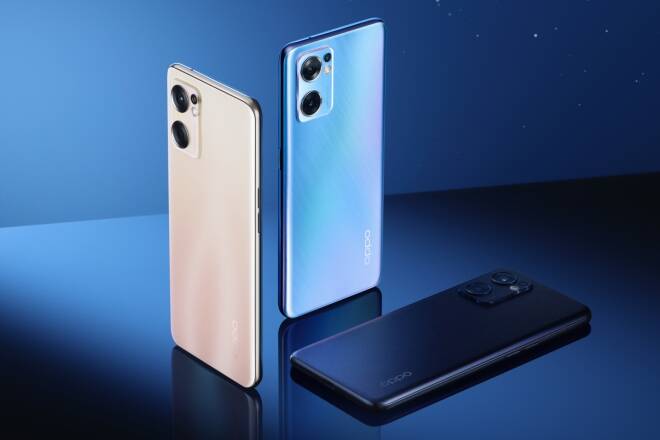
Oppo Reno 7 5G
Image source: financialexpress.com

Reno 7 Pro: Specifications And Features

The Oppo Reno 7 Pro has a 6.55-inch full HD+ AMOLED display with a 20:9 aspect ratio and a refresh rate of 90Hz. A MediaTek Dimensity 1200 Max processor is also included in the device.
A 32MP Sony IMX709 selfie camera sensor is also included in the smartphone. The device also comes with 256GB of storage. Wi-Fi 6, Bluetooth v5.2, GPS/ A-GPS, NFC, USB Type-C port, 5G, and 4G VoLTE are all supported by the device. A 4,500 mAh battery is also included, as well as 65W fast charging.

Reno 7 SE 5G: Specifications And Features

The Oppo Reno 7 SE 5G has a 6.43-inch full-HD+ (1,080×2,400 pixels) AMOLED display with a 20:9 aspect ratio and a 90Hz refresh rate, and it runs on Android 11 with ColorOS 12 on top. The phone is equipped with an octa-core MediaTek Dimensity 900 SoC and 8GB of LPDDR4x RAM.
The Oppo Reno 7 SE 5G has a 16-megapixel Sony IMX471 selfie camera sensor with an f/2.4 lens on the front for selfies and video chats. Up to 256GB of UFS 2.2 storage is available on the Oppo Reno 7 SE 5G. 5G, 4G VoLTE, Wi-Fi 6, Bluetooth v5.2, GPS/ A-GPS, and a USB Type-C port are among the connectivity options. An accelerometer, ambient light, gyroscope, magnetometer, and proximity sensor are among the onboard sensors. There’s also a fingerprint sensor built into the display. Oppo has included a 4,500mAh battery with 33W fast charging support. Last but not least, the phone is 160.2×73.2×7.45mm in size and weighs 171 grams.

Price And Availability Details

The Oppo Reno 7 costs CNY 2,699, CNY 2,999, and CNY 3,299. The phone is available with 8GB or 12GB of RAM and 128GB or 256GB of storage. The Oppo Reno 7 Pro 5G, on the other hand, has 8GB/ 12GB of RAM and 256GB of storage.
The base model costs CNY 3,699 and CNY 3,999. The Oppo Reno 7 SE 5G is also available in two storage configurations: 8GB of RAM and 128GB/256GB of storage. The base model will set you back to CNY 2,199 and CNY 2,399.

The Oppo Reno 7 and Oppo Reno 7 Pro will both be available starting December 3rd, while the Reno 7 SE 5G will be available starting December 17th. All of the devices are available in three colors: Star Rain Wish, Starry Night Black, and Morning Gold.

NSO Group

Apple Filed A Lawsuit Against NSO Group For Allegedly Targeting Over A Billion iPhone Users.

Apple has now joined WhatsApp and its parent company Meta (formerly known as Facebook) in suing NSO Group, the maker of Pegasus spyware. Apple says it’s “seeking a permanent injunction to ban NSO Group from using any Apple software, services, or devices,” along with promising new information about how NSO Group infected targeted iPhones via a zero-click exploit that researchers later dubbed ForcedEntry.

“State-sponsored actors like the NSO Group spend millions of dollars on sophisticated surveillance technologies without effective accountability,” says Senior Vice President of Software Engineering Craig Federighi in a statement.

Source: www.theverge.com

That must be changed… Apple products are the safest consumer electronics on the market, but private companies that create state-sponsored spyware have become even more dangerous.” Apple and WhatsApp aren’t alone in their legal battle with NSO Group; last year, Microsoft and Google joined Apple and WhatsApp in supporting Facebook’s lawsuit.
According to Apple’s press release, Pegasus spyware is designed to allow governments to remotely access a phone’s microphones, cameras, and other data on both iPhones and Androids. According to reports from a journalistic coalition called the Pegasus Project and Apple’s complaint from earlier this year, it’s also designed to infect phones without requiring any action from the user and without leaving a trace.

NSO Group
Image source: investing.com

Forced Entry Exploit By NSO Group

Despite NSO’s claims that its governmental clients are prohibited from using the spyware against journalists, activists, and politicians, Apple cites reports that the spyware has been used against them. It’s understandable that Apple, the company that says “what happens on your iPhone, stays on your iPhone,” would be irritated by its devices and services being used to commit “human rights abuses.”
In a statement to The New York Times, Apple’s senior director of commercial litigation Heather Grenier says the lawsuit is a “stake in the ground” meant to send a “clear signal” that the company will not tolerate “this type of abuse.” Apple claims that NSO violated Apple’s terms of service by creating “more than one hundred” Apple IDs to help it send data to targets, according to the complaint (PDF).
The Court has personal jurisdiction over Defendants because, according to information and belief, they created over one hundred Apple IDs to carry out their attacks and also agreed to Apple’s iCloud Terms and Conditions (“iCloud Terms”), which include a mandatory and enforceable forum selection and exclusive jurisdiction clause that constitutes express consent to this Court’s jurisdiction.
Apple’s complaint explains how the attack worked: NSO would send data to a target via iMessage (after determining that they were using an iPhone) that was maliciously crafted to turn off the iPhone’s logging using the Apple IDs it created. This would allow NSO to install the Pegasus spyware invisibly and control the data collected on the phone. According to Apple, the vulnerability that NSO was exploiting was fixed in iOS 14.8, which you can learn more about here. In short, NSO was sending files that took advantage of a flaw in the way iMessage handled GIFs and PDFs.
“We have not observed any evidence of successful remote attacks against devices running iOS 15 and later versions,” Apple says in a press release, citing improvements to iOS 15 security. Amnesty International stated in July when the Pegasus Project released its reports, that the latest versions of iOS (at the time, iOS 14.6) were vulnerable to attack.

Apple’s Persistent Efforts to Protect Its Customers

A number of new security features are included in iOS 15, including significant improvements to the BlastDoor security mechanism. While the NSO Group spyware is still evolving, Apple has yet to see any evidence of successful remote attacks on iOS 15 and later devices. Apple encourages all iPhone users to update their devices and always use the most up-to-date software.
In addition to the lawsuit against NSO, Apple says it will financially and technically support “organizations pursuing cyber-surveillance research and advocacy.” Citizen Lab, a group of researchers who were involved with the Pegasus Project and helped Apple discover and patch NSO’s exploits, has pledged to give free “technical, threat intelligence, and engineering assistance” to Apple in exchange for $10 million (plus any damages it wins from its lawsuit). Apple also says that “where appropriate,” it will do the same for other organizations.
NSO was recently added to the US Entity List, limiting the ways in which American companies can sell or provide technology to NSO. According to a report by the MIT Technology Review, the sanction has had a significant negative impact on NSO Group’s employee morale as well as its ability to conduct business. According to the report, the company must obtain permission from the US government to purchase items such as Windows laptops and iPhones, and the government has stated that its default decision is to deny such requests.

Vivo Y74s

Vivo Y74s With MediaTek Dimensity 810, Dual Rear Cameras Released: Check Price, Specifications

In China, Vivo has released the Y74s 5G, a new Y-series smartphone. The handset is available in two color options and costs CNY 2,299 (roughly Rs. 26,800). The device features a Full-HD+ display, dual rear cameras, a MediaTek Dimensity 810 chipset, and a 4,100mAh battery with fast-charging support, among other features. The Vivo Y74s 5G is the company’s most recent entry into the low-cost 5G market. It has a MediaTek Dimensity 810 chipset, a 50MP main camera, and 44W fast-charging support, among other high-end features. The device will compete against the Redmi Note 11T, POCO M4 Pro 5G, and Realme 8s 5G, among others, with these features. The Vivo Y74s debuts just days before the Vivo Y65 5G, which is set to arrive in Malaysia on November 23. The upcoming Vivo phone is expected to have a design similar to the Vivo Y76s, but with additional features such as triple rear cameras to set it apart.

Vivo Y74s: Specifications And Features

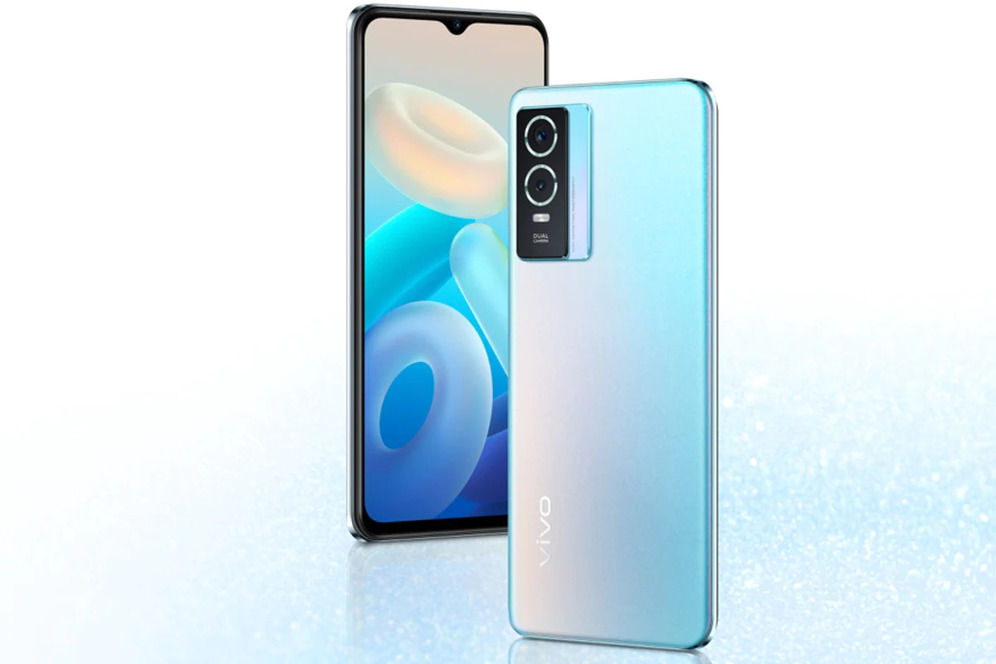
The Vivo Y74s 5G has a waterdrop notch, a noticeable bottom bezel, and a fingerprint sensor on the side. It has a rectangular camera module on the back. It comes in two colors: Starry Night Black and Galaxy Blue.
The dual-SIM (Nano) Vivo Y74s runs on Android 11 with OriginOS 1.0 on top, just like the Vivo Y76s. The phone has a 6.58-inch full-HD+ (1,080×2,408 pixels) display with a 20:9 aspect ratio, 60Hz refresh rate, and a screen-to-body ratio of 90.61 percent. An octa-core MediaTek Dimensity 810 SoC and 8GB of LPDDR4x RAM power the Vivo Y74s.
A 50MP (f/1.8) primary sensor and a 2MP (f/2.4) secondary lens are included in the Vivo Y74s 5G’s dual rear camera setup. A front-facing camera with an aperture of f/2.0 is available for selfies and video calls.
The Vivo Y74s comes with 256GB of UFS 2.2 storage that can be expanded with a microSD card (up to 1TB). 5G, 4G LTE, Wi-Fi, Bluetooth v5.1, GPS/ A-GPS, USB Type-C, and a 3.5mm headphone jack are among the connectivity options. Accelerometer, ambient light, gyro, magnetometer, and proximity sensor are among the sensors onboard. For biometric authentication, there’s also a fingerprint sensor on the side.
Vivo has included a 4,100mAh battery with 44W Flash Charge fast charging capability. The phone is 175 grams and measures 163.84x75x7.79mm.

Vivo Y74s
Image source: i.gadgets360cdn.com

Price And Availability

The Vivo Y74s costs CNY 2,299 (roughly Rs. 26,800) for the one with 8GB of RAM and 256GB of internal storage. The smartphone is currently available in Galaxy Blue and Starry Evening Black on the Vivo China website. It has yet to be made available for purchase in the United States. Details on the Vivo Y74s’ international availability and pricing are still being worked out.
Vivo Y76s was launched in China earlier this month at a starting price of CNY 1,799 (roughly Rs. 21,000) for the 8GB + 128GB storage variant. The cellphone also comes in an 8GB + 256GB storage model, which costs CNY 1,999. (roughly Rs. 23,300).

About The Company

Headquartered in Dongguan, Guangdong Province, China, Vivo is a multinational Chinese smartphone manufacturer. According to 2014 statistics, Vivo is the 5th most popular smartphone brand in China and the 10th most popular smartphone brand in the world. The annual production capacity is 60 million pieces. Vivo is currently in the top 5 most profitable smartphone manufacturers in China. Vivo continues to push the boundaries of creativity and technology. The Vivo X1 was the first smartphone to feature a HiFi chip in 2012, providing unmatched sound quality. Since then, every Vivo smartphone has incorporated the company’s pioneering technology.

Oppo A95

Oppo A95 With Snapdragon 662 SoC, 33W Fast Charging Support Now Available: Check Price And Specifications.

Oppo A95 is now available in Malaysia. The smartphone is a descendant of the Oppo A95 5G model, which was introduced in China in April this year. The Oppo A95 has a similar design to the 5G variant, but with different specifications. The Oppo A95 4G ​​uses a Qualcomm Snapdragon 662 SoC and the Oppo A95 5G uses a MediaTek Dimensity 800U SoC. The 4G model is equipped with a 5000mAh battery that can be recharged in 33 minutes. On the other hand, the Oppo A95 5G has a 4,310mAh battery and 30W VOOC flash charging.

Oppo A95: Specifications And Features

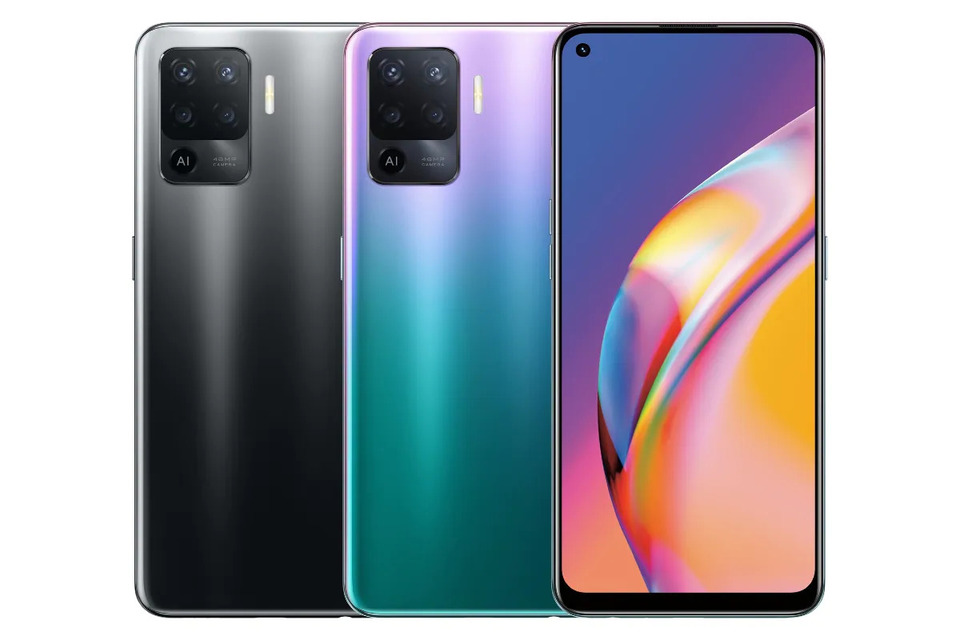
The DualSIM (Nano) Oppo A95 features a 6.43-inch FullHD + (1,080,200 pixels) AMOLED display with a 60Hz refresh rate, 90.8% screen-to-body ratio, and a notch for the input camera. The smartphone is powered by a Qualcomm Snapdragon 662 processor and is paired with 8GB of LPDDR4x RAM and up to 128GB of storage expandable with a microSD card.
The Oppo A95 has a triple rear camera with a 48MP main sensor and an f/1.7 lens. The kit includes a 2MP sensor with an f/2.4 lens and a 2MP macro camera with an f/2.4 lens. It has a 16MP sensor with an f/2.4 aperture lens on the front for selfies and video calls.
The Oppo A95 has a 5000mAh battery, fingerprint sensor, and 33W VOOC flash charging technology. A 3.5mm headphone jack, USB TypeC port, Wi-Fi, Bluetooth v5.0, and other connectivity options are available. The length of the smartphone is 160.3×73.8×7.95mm and the weight is 175g.

Oppo A95
Image source: i.gadgets360cdn.com

Price And Availability

The only 8GB RAM + 128GB storage option on the new Oppo A95 costs MYR 1099 (approx INR 19,600). Rainbow Silver and Star Black are two color options for the phone. It is already available on Oppo’s official websites, Lazada and Shopee.

OPPO: Company History

OPPO is one of the world’s most popular smartphone brands, specializing in high-quality camera phones and advanced mobile photography technology used by over 200 million people worldwide. OPPO was the first brand to offer a smartphone with 5MP (megapixel) and 16MP front-facing cameras, among other innovations in this category.
Oppo is the world’s fastest-growing smartphone manufacturer. Oppo Telecommunications Corp. is owned by Tony Chen, the company’s founder. Mike Wang is the CEO of Oppo. The history of the Oppo company dates back to 2001 when the brand name “Oppo” was registered. It was finally launched in 2004 three years after the brand name was registered. The company’s headquarters are in Dongguan, Guangdong, China. Oppo has expanded to more than 40 countries since its launch, making it the world’s leading smartphone brand in terms of market share.
Oppo is a subsidiary of BBK Electronics, a Chinese holding company that is also a major investor in the OnePlus smartphone startup. It also sells Vivo, Realme, and iQOO (a Vivo sub-brand), in addition to Oppo and One Plus. Under the Oppo Digital brand, BBK Electronics Corporation sells Blu-ray players, headphones, headphones amplifiers, and smartwatches.
OPPO, the world’s fifth-largest smartphone brand in 2018, dominated the domestic market in China and expanded to India, Southeast Asia, Africa, Australia, and Europe. OPPO has been focused on innovation in mobile photography for the past decade, and the company wanted a new brand positioning to highlight the beauty of technology and product design.

Infinix Note 11i

Infinix Note 11i With MediaTek Helio G85 SoC, Triple Rear Cameras Released: Check Price, Specifications.

The Infinix Note 11i smartphone was launched as the company’s latest model in the Note series. The new Infinix phone has a 48MP main sensor and a triple rear camera with 18W fast charging as its main features. Infinix’s latest low-cost smartphone is powered by a MediaTek Helio G85 SoC with 4GB of RAM and 64GB of internal storage. The Infinix Note 11i selfie camera has a notch on the display and has a 5000mAh battery. On the side of the phone, there is a fingerprint sensor for authentication.

Infinix Note 11i: Specifications And Features

The Infinix Note 11i is a dual SIM (Nano) smartphone running XOS 7.6 and Android 11. The smartphone is equipped with a 6.95 inch Full HD + (10802460 pixels) IPS LCD display with an aspect ratio of 91% and a touch frequency. 180Hz. sampling rate. With a contrast ratio of 1500:1, the display is also TUV Rheinland certified for low blue light.
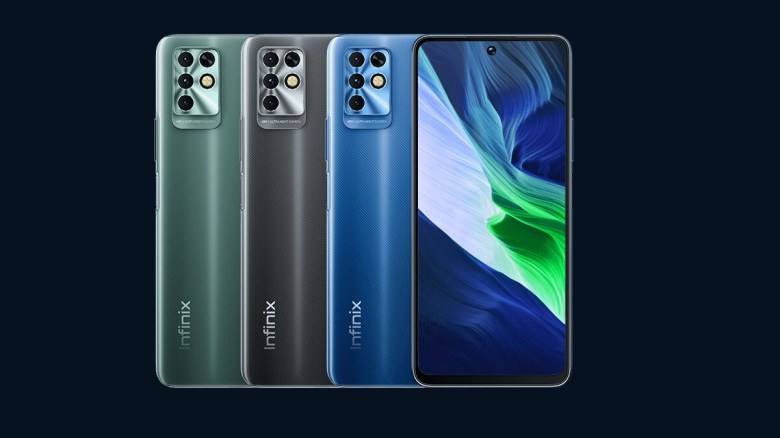
The Smartphone is powered by a MediaTek Helio G85 processor and comes with 4GB of RAM and 64GB of internal storage. A microSD card can be used for storage expansion (up to 256GB). The latest phones in the Infinix Note series come with a triple rear camera built into an optical rectangular camera module. The camera includes a 48MP main sensor, a 2MP portrait lens, and a 2MP macro sensor. The smartphone has a 16MP front camera for selfies and videos.
The Infinix Note 11i is marketed as a dual-speaker gaming device with DTS surround sound. Darlink 2.0 software on the Infinix Note 11i uses artificial intelligence (AI) to provide image stability and touch sensitivity.
The Infinix Note 11i features Wi-Fi 802.11 a/b/g/n/ac, 5G, Bluetooth, GPS, 3.5mm headphone jack, MicroUSB port, OTG and FM radio. AI noise reduction is available on the Infinix Note 11i. The same goes for the technology used. Gravity sensors, gyroscopes, ambient light sensors, proximity sensors, and electronic compasses are examples of onboard sensors. As mentioned earlier, the smartphone has a side fingerprint sensor and a face unlock function for identity verification.
The Infinix Note 11i 5000mAh battery supports 33W of power. According to Infinix, the battery can last up to 53 days of standby time and up to 160 hours of music playback. The dimensions of the phone are 173,278,778.8mm. Fast charging supercharge.

Infinix Note 11i
Image source: i.gadgets360cdn.com

Price And Availability

The company hasn’t announced the price of the smartphone. However, according to Pricebab, the phone costs C$979 (about Rs 11,900) in Ghana. As mentioned earlier, the Infinix Note 11i can only use one 4GB RAM configuration and 64GB storage. The phone is available in three colors: black, blue, and green on the official website. Infinix has not yet released details about the product launch or availability in India.

About The Company

Infinix is a Hong Kong-based smartphone manufacturer. The company claims to have research and development centers in France and South Korea and manufacturing facilities in China. The Android operating system is used by companies to make smartphones. Founded in 2013. The company claims to have subsidiaries in more than 60 countries worldwide.
The history of Infinix Moile begins with the company’s founding in 2013. With the launch of ZERO in the same year, Infinix reached a tipping point. Following that, Infinix Mobiles released the Alpha and High-End Marvel series for users, which were well-received by the market.
In the year 2013, the SURF series was also launched. Infinix introduced the note series for professionals and personal use in 2015, and the Hot Note was the company’s first best-selling mobile phone.

Ripple

Ripple Launches Crypto Liquidity Hub To Assist Customers In Buying, Selling, And Holding Cryptocurrencies.

Ripple harnesses the power of cryptocurrency and blockchain to pay for everyone, anywhere, anyway. Financial institutions can join the growing Ripple global network (RippleNet) to instantly, reliably, and cost-effectively process customer payments from anywhere in the world. Banks and payment processors can use XRP digital assets to cut costs and expand their market presence.

Ripple, a leading provider of enterprise blockchain and encryption solutions, has announced Ripple Liquidity Hub, a new solution for enterprise customers that will be available in 2022. Customers can access crypto assets on a variety of global platforms, including market makers. , a decentralized platform via exchanges, OTC tables, and future Ripple Liquidity Hub. Customers can easily buy, sell and store crypto assets thanks to turnkey product integration and smart order routing, allowing them to receive digital assets at the best price.

With plans to scale to more tokenized assets, the GA launch supports BTC, ETH, LTC, ETC, BCH, and XRP (availability varies by geographic location). Ripple plans to add new features like bidding support and monetization capabilities in the future.

Ripple
image source: investing.com

Ripple has used Liquidity Hub for internal liquidity management for nearly two years as part of its On-Demand Liquidity (ODL) product, generating multi-million dollar transactions. Ripple will now serve hundreds of customers around the world, not just financial institutions, banks, fintech, or businesses that need help preparing for the imminent cryptocurrency world.

“We understand firsthand the need for simple and effective liquidity management, so we’ve been asked by clients looking for a solution that could be a one-stop shop for buying, selling, and storing crypto assets,” said Ashish Birla. RippleNet CEO.

Ripple’s cryptographic DNA and long history of partnerships with financial institutions provide a unique opportunity to help clients address this challenge as they prepare for a tokenized future.

Unlike other solutions on the market today, Liquidity Hub is tailored to the needs of enterprise customers.

Easy Onboarding: Provides an optimized API to access digital assets from diverse liquidity pools, enabling businesses to quickly integrate with liquidity hubs and provide trading services to clients, creating new revenue streams.
Optimized Pricing: Businesses can offer optimized aggregate prices for a wide range of digital assets, enabling them to offer their clients the best possible prices from a variety of liquidity sources.
Access to Capital: Businesses do not need to pre-fund their Liquidity Hub account and can access working capital through Ripple to finance their business operations.

Coinme is the largest network of licensed cryptocurrency exchanges in the United States, with thousands of locations across the country, and is Ripple’s first alpha product partner. Initially, Coinme plans to use its underlying technology platform, Liquidity Hub, and add additional features available.

“Coinme provides an easy and convenient way to exchange cash for cryptocurrencies. To provide our clients with optimal prices for a wide range of assets, we need 24/7 access to the liquidity to manage this vast network. “We are excited to work with Ripple to bring these benefits to our customers and businesses,” said Coinme CEO Neil Bergqvist.

Ripple was the first corporate company to use cryptocurrency to solve a multi-billion dollar cross-border payment problem. Since then, Ripple has evolved from a cross-border payment network to a platform that provides tokenized services, providing businesses with crypto opportunities and preparing for a future where cryptocurrencies are in the spotlight. Liquidity is critical to and supports any cryptocurrency experience.

Going forward, all clients will sign up for RippleNet with the same basic service and wallet that supports both crypto and fiat currencies. Customers can adopt this technology to stay on the cutting edge with the latest blockchain-based solutions. The platform is designed to seamlessly upgrade and add new services as customers wish. Customers can store anything tokenized in a Rippleenable-enabled wallet.

RippleNet closed its best quarter so far, announcing more than 20 new ODL markets, including new deployments in Japan and the Middle East and a 25x increase in the international flow of the network.

Ripple announced the creation of a liquidity hub as the company continues to seek legal action with the US Securities and Exchange Commission (SEC). The U.S. Securities and Exchange Commission (SEC) accused Ripple Labs CEO Brad Garlinghouse and co-founder Chris Larsen of raising more than $1.3 billion through XRP. sued with The Commission is considering an offer of unregistered securities.