Your Tech Story

Tech News

Intel Core i9-12900KS

Intel Core i9-12900KS Launched As The World’s Fastest Desktop Processor: Check Price and Features

The Intel Core i9-12900KS has arrived, and the manufacturer claims it is the world’s fastest desktop processor now available to consumers. While independent performance studies would be required to back up the claim, there’s no disputing that the Intel Core i9-12900KS is a performance beast, and as such, it’s carrying a lot of weight.

Specifications and Features

The Intel Core i9-12900KS processor has a 16-core arrangement, which includes eight performance cores, eight efficiency cores, and 24 threads. The processor claims that one of its main strengths is its performance-boosting capabilities, and it supports Intel Thermal Velocity Boost for improved performance even at high chip temperatures, as well as Adaptive Boost, which automatically selects higher turbo boosts on cores based on the task at hand.
A 30MB smart cache memory, 150W base power throughput, and support for both PCIe Gen 5 and Gen 4 connectors are among the processor’s other notable characteristics. The Intel Core i9-12900KS can reach 5.5GHz at its max turbo-enhanced performance level thanks to Thermal Velocity Boost.

The processor will also support DDR4-3200 and DDR5-4800 RAM, completing the complete feature set of the so-called “most powerful desktop processors.”
Most publications have claimed that there isn’t much of a difference between Intel’s K series and the ‘KS’ family of CPUs. The key difference on this note is the greater turbo boost, which allows the processor to attain its claimed peak performance of 5.5GHz. However, aside from the higher power throughput necessary for the higher turbo boost, the overall performance should be comparable to what the business now offers on its 12th gen processors.

Intel Core i9-12900KS
Image source: futurecdn.net

Price and Availability

The Intel Core i9-12900KS 12th gen processor will be available globally on April 5, when it will be accessible at all Intel shops worldwide. However, given the ongoing worldwide chipset supply problem, as well as a new round of Covid-19-related lockdowns in China, it’s unclear how this limited-edition processor will be made available. The chip is expected to cost $739 (about Rs 56,000) internationally, according to Intel’s forecast.

About The Company

Intel’s technology has been at the centre of computing innovations since its founding in 1968. Intel is a market leader, developing game-changing technology that promotes global progress and improves people’s lives. They are at the crossroads of numerous technological inflexions, including artificial intelligence (AI), the 5G network revolution, and the advent of the intelligent edge, all of which will impact the technological future. These inflexions are driven by silicon and software, and Intel is at the centre of it all.
They’ve matured with data at Intel. They’ve evolved from a PC-centric corporation to one with a stronger data focus, allowing them to meet the demands of a new data-centric environment.

Intel chips are among the most complicated devices ever created, necessitating the use of modern production technologies. Moore’s Law dictates that our manufacturing techniques improve with each generation, offering even more functionality and performance, increased energy efficiency, and reduced cost per transistor.

Intel’s production facilities leverage tremendous flexibility on a global, virtual network, with six wafer fabrication sites and four assembly test manufacturing locations across the world.


Google Search

Google Search to Help You Find and Book Doctor Appointments.

Google Search will soon be able to help users find doctor appointment availability so they can schedule their health checkups without having to rely on a third-party service. On Thursday, the update was unveiled at Google’s second annual healthcare-focused event, The Check-Up. Aside from the Google Search update, the Mountain View, California-based company announced plans to integrate support for detecting atrial fibrillation (AFib) into Fitbit fitness-tracking devices to help people receive alerts for signs of an irregular heart rhythm at its virtual event. Google also unveiled a series of Health AI updates aimed at transforming smartphones into stethoscopes or ultrasound machines for early diagnosis in even the most remote locations.

Google Search is rolling out the ability to find appointment availability for doctors and local care providers by partnering with healthcare providers and a number of scheduling solution providers. The search results will show users the available appointment dates and times for doctors in the area.

When you use Google Search to look for a specific practitioner or facility, the appointment availability will appear. Once you’ve found a suitable appointment date, click the Book button next to the available slot. You will be directed to a third-party booking site.

Google Search
Image source: www.theweek.in

In the United States, Google is collaborating with a few healthcare providers and scheduling solution providers, including MinuteClinic at CVS. In the coming days, the feature will be rolled out to users searching in English in the United States. However, it is hoped that it will eventually be available in other markets.

Fitbit also announced that, in addition to Google appointment booking, it is developing an AFib algorithm that will work with the existing optical Photoplethysmography (PPG) sensor on its wearables to detect and alert users about irregular heart rhythm. The algorithm is currently being reviewed by the US Food and Drug Administration (FDA). Fitbit is expected to release an update for consumer fitness-tracking bands and smartwatches in the near future.
According to Google, its in-house algorithm correctly identified undiagnosed AFib 98 percent of the time, citing internal research.

Apple, for example, has built-in support for detecting and alerting users about AFib. Fitbit’s move, on the other hand, could bring AFib detection to a wide range of price points.

Google also announced that health information panels on YouTube will be expanded to markets such as Brazil, India, and Japan. Previously, it was only available in the United States.

Separately, at The Check Up event, Google announced its early-stage developments under the Health AI division. One of these advancements is the use of a smartphone’s built-in microphones as a stethoscope.
When placed over the chest, Google’s inbuilt microphones are used to record a participant’s heart sounds, according to research.

The latest study looks into whether a smartphone can detect heartbeats and murmurs, according to the company. However, because it requires specific hardware inputs, the detection will be limited to specific smartphone models.
In a blog post, Greg Corrado, Google’s Head of Health AI, said, “We’re currently in the early stages of clinical study testing, but we hope that our work can empower people to use the smartphone as an additional tool for accessible health evaluation.”

Google is also investigating photos from smartphone cameras to help detect diabetes and non-diabetes diseases with partners such as EyePACS and Chang Gung Memorial Hospital.

Apart from using smartphone cameras to detect heartbeats, murmurs, and diabetes signs, Google has announced that it is working on using artificial intelligence (AI) and smartphones to provide maternal ultrasound screening. Northwestern Medicine has partnered with the company to develop and test its models for expanding research.

The overall research into combining AI and smartphones to improve healthcare is still in its early stages, and it may take some time and additional effort to bring to the general public.

Zomato

Founder Of Zomato Explains How Instant Food Delivery Works.

After announcing its 10-minute food delivery service, dubbed Zomato Instant, on Monday evening, popular food delivery app Zomato received a barrage of negative feedback on social media. Zomato, a new fast-food delivery service, claims to be able to deliver your order in as little as 10 minutes, but there’s a catch. Your food orders will not all be delivered in ten minutes. From next month, the Zomato Instant service will be available at four locations in Gurugram.

Deepinder Goyal, the company’s founder, said on Tuesday that the 10-minute delivery service will be limited to items that are “popular, standardised, and can thus be dispatched within 2 minutes.”

In response to a Twitter question, the founder of Zomato highlighted the types of food that can be delivered in 10 minutes. According to him, the Instant service will deliver items such as “bread omelettes, poha, coffee, chai, Biryani, momos, and many more” within 10 minutes. If you order noodles, fried rice, or pizza, in that case, the delivery time will be increased to 30 minutes or more, depending on the distance.

Delivery Partners’ Safety

The food delivery app was trolled and questioned shortly after announcing the Zomato Instant service, for not taking the safety of its delivery partners seriously. Goyal clarified in a recent Twitter post that the company will continue to educate delivery agents on road safety. In one of his tweets, Goyal stated, “We continue to educate our delivery partners on road safety, and we also provide accidental/life insurance.”
He also said that delivery partners would be kept in the dark about the promised delivery date. This, he believes, will relieve the delivery agent of any additional stress. Goyal also stated that there will be no penalties for late deliveries.

Zomato
Image source: i0.wp.com

Delivery Times Of 10 Minutes And 30 Minutes Are Compared.

Goyal shared a chart in a Twitter thread comparing 10-minute and 30-minute deliveries. Three major factors for deliveries are mentioned in the table: kitchen preparation time, the average distance travelled, and average time travelled.

According to the chart, a 10-minute delivery requires at least 2 to 4 minutes of kitchen preparation time, whereas a 30-minute standard delivery requires at least 15-20 minutes. The graph also shows that for a 10-minute delivery service, Zomato is opening stations closer to the customer’s location by 1 to 2 kilometres. In the case of standard 30-minute delivery, the distance from the customer’s address is 5 to 7 kilometres.

As a result, delivery partners will take 3 to 6 minutes to deliver the food at a 20 kilometre per hour average speed, whereas standard delivery can take up to 15 to 20 minutes.

Why Is It That Food Is Delivered In Ten Minutes?

Customers are increasingly demanding faster responses to their needs, according to a statement from the online delivery platform. They don’t want to plan ahead of time, and they certainly don’t want to wait. One of the most popular features of the Zomato app is sorting restaurants by fastest delivery time. Furthermore, after becoming a frequent customer of Blinkit (one of Zomato’s investments in the quick commerce space), the company believes that Zomato’s 30-minute average delivery time is too long, and thus plans to launch its own delivery service.

What Are The Chances Of This Happening?

Based on demand predictability and hyperlocal preferences, each of Zomato’s finishing stations will house bestseller items (20-30 dishes) from various restaurants. “Zomato has certain data about the customers—age, location, restaurants they eat at, favourite dishes, and so on. With the previous data, the company can predict the trends on how many probable orders could come at any given point in the future,” Rajath Ratnakaran, a data analyst, explained.
If Zomato Instant works as planned, it will have a significant impact on affordability (at least a 50% reduction in cost to the end customer), accessibility (delivery time will be reduced from 30 minutes to under 10 minutes on average), and quality (with control over the supply chain, we will be able to ensure highest grade ingredients and hygiene practises across the supply chain), according to the company.

Asus Zenbook 14 Flip

Asus ZenBook 14 Flip Convertible Is Released Under The Zenbook Series.

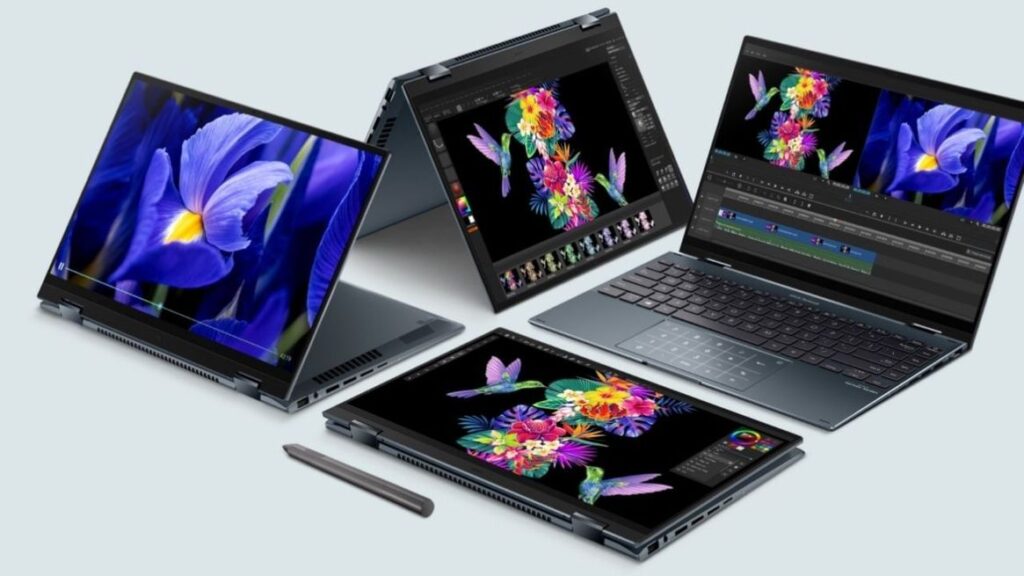
Asus, a Taiwanese technology company, has launched the Asus ZenBook 14 Flip OLED, a new premium 2-in-1 laptop in the ZenBook series, in India today. The machine is available in three different configurations, each with an OLED display and an AMD Ryzen 5000 series processor.
Because it is a 2-in-1 laptop, users can use it in a variety of ways, including as a laptop, stand, or tablet. The ZenBook 14 Flip OLED’s design is made of aluminium alloy and features a 360-degree Ergolift hinge.

Specifications And Features

The Asus ZenBook 14 Flip OLED features a 14-inch 2.8K 10-bit OLED screen with 2880 x 1800 pixel resolution, 16:10 aspect ratio, 88 percent screen-to-body ratio, and 100% DCI-P3 colour gamut coverage, among other features. The laptop is TUV Rheinland certified and supports a 90Hz screen refresh rate. With a 4096-pressure-level stylus, it also supports touchscreens.

The AMD Ryzen 5000 series processors power the Asus ZenBook 14 Flip OLED in terms of hardware. AMD Ryzen 9 5900HX, Ryzen 7 5800H, and Ryzen 5 5600H with AMD Radeon integrated graphics are the three configurations available. The device comes with up to 1TB of M.2 NVMe PCIe Gen 3 SSD storage and 16GB of LPDDR4X RAM. Two heat pipes and two IceBlade cooling fans keep the machine cool even when it’s working hard.

A 63Whr battery powers the laptop, which also supports Type-C 100W fast charging. There are several USB Type-C Gen 2 ports, a USB Type-A Gen 2 port, an HDMI 2.0 port, a microSD card reader, and a 3.5mm audio jack.
A backlit chiclet keyboard with 1.4mm key travel, virtual Numpad, 720p webcam, a fingerprint scanner integrated with the power button, Harmon Kardon sound system, Amazon Alexa, Wi-Fi 6, Bluetooth 5.0, and Windows 11 OS are some of the other features of the newly launched ZenBook series laptop.

Asus ZenBook 14 Flip
Image source: www.newsncr.com

Price And Availability

The Asus Zenbook 14 Flip OLED is available in three different configurations, with prices starting at Rs 91,900 in India. The following are the prices for all configurations:

  • Rs 91,900 for AMD Ryzen 5 5600H with 16GB RAM and 512GB SSD.
  • Rs 1,12,900 for AMD Ryzen 7 5800H with 16GB RAM and 1TB SSD.
  • Rs. 1,34,900 for AMD Ryzen 9 5900HX/16GB RAM/1TB SSD.

Starting March 21, the laptop will be available for purchase through the ASUS e-shop, Amazon India, Flipkart, and other offline platforms. It’s only available in one colour: Jade Black.

About ASUS

ASUS is a multinational computer hardware and consumer electronics company based in Taiwan that was founded in 1989. ASUS is the world’s No. 1 motherboard and gaming brand, as well as a top-three consumer notebook vendor, dedicated to creating products for today’s and tomorrow’s smart lives.
When its Eee PC revolutionised the PC industry in 2007, ASUS became well-known in North America. With the ASUS ZenFone series, the company is now pioneering new mobile trends, and it is rapidly developing virtual and augmented reality products, as well as IoT devices and robotics technologies. ASUS recently released Zenbo, a smart home robot designed to provide families with assistance, entertainment, and companionship.

Airbnb

Airbnb’s India Business Almost Back To Pre-Covid Levels: Blecharczyk

According to Nathan Blecharczyk, co-founder and chief strategy officer of Airbnb, the company’s India business has nearly recovered to pre-epidemic levels, and the recovery has been very strong. Blecharczyk discusses the rebound in travel and tourism, assisting Ukrainians during times of conflict, and transforming the company’s future into an end-to-end travel platform in an interview with ET’s Vinod Mahant.

When do you think the business of Airbnb India will recover to pre-epidemic levels?

His Response: We’re almost done with our 2019 numbers in 2021. So, we’re nearly back to where we were before. In addition, the household position in rural India in the third quarter of 2021 was more than double that of the same period in 2019. During the epidemic, we saw this change in many countries. People are travelling within their own country, particularly in rural areas, to places they have never visited before. Last year, Airbnb guests visited 6,000 new cities and towns that had never been visited by an Airbnb guest before. This will be a fantastic opportunity with the resumption of international travel.

Is Airbnb planning to increase its investment in India?

In Bengaluru, we plan to open a technology hub. We’re ecstatic to be a part of Bengaluru’s tech scene. In the near future, we hope to hire more than 100 high-tech employees. We’ve always wanted to bring our innovative culture to Bengaluru’s ecosystem. This, I believe, will be critical as we serve India. In India, tourism will soon recover, and we look forward to working with local governments across the country. The centre will assist us and our local teams in more effectively localising Airbnb in their respective markets.

Airbnb
Image source: i.guim.co.uk

Various journey and tourism-related platforms are competing to be end-to-end service providers for travellers. What stage of the journey are you on?

It’s something we aspire to, and we were working on a variety of different tasks prior to the pandemic. Now that the pandemic has struck, we must carefully consider what is most important to us. Clearly, the pandemic has struck us hard right now. We saw our income drop by 80% in two weeks and realised we needed to make some sacrifices. We were unable to continue doing what we had been doing previously. And that was after we made the decision to double down on what sets us apart, which is the fact that we now have hosts. We have some unusual people who find themselves providing unique hospitality. Whether it’s by sharing their homes, sharing their experiences, or making recommendations.

Right now, we have 4 million hosts. However, we estimate that we will have tens of millions more. As a result, we believe that this is still an underutilised option that we should pursue. I believe that as we consider the end-to-end platform, we will ensure that we consider how to approach it in a way that capitalises on our differentiators. Everything we do revolves around the needs of the guests.

Do you think the Ukraine-Russia conflict will cause travel plans to be pushed back this summer?

I believe it is too early to tell. All of this happened over the course of a few weeks. No one could have predicted where we are now two weeks ago. So far, this conflict has been limited to a specific geographic area; however, we are seeing the effects of it across the board in terms of fuel prices, refugees, and so on.

However, I believe that one thing we’ve learned from the pandemic is that there is a desire to travel, a need to connect, and a pent-up demand. It will be interesting to see how this plays out in travel.

What we’ve discovered at Airbnb is that you can quickly adapt as shopper behaviour changes. Our platform has inherent adaptability; the fact that we now have houses, not just in cities, but also in rural areas. As a result, we’ll meet demand wherever it arises, even if it’s only in the United States. And we’ve tried to anticipate what customers want right now.

So, in the last year, we’ve launched more than 150 product options based on what customers are looking for right now. We have a feature called a versatile search that allows people to look for and book a place to stay without having to specify specific dates. Since its launch, our flexible date search tool has been used to conduct over 800 million searches. Throughout a period of significant change, we’ve innovated and remained extremely agile, focusing on the needs of our customers. And that will be our strategy moving forward, as we expect the journey to continue to change. We’re going to be extremely aware of it.

Many people from all over the world booked Airbnb apartments in Ukraine during the Ukraine-Russia conflict, with no intention of staying, just to help the Ukrainians. Could you tell us how that idea came to you?

This is the first time we’ve ever witnessed something like this. The people’s goal is to pay directly to those who have been affected by the war in Ukraine. These hosts have not been requested. It is sincere in its desire to assist in the emergence of generosity among guests all over the world. Nearly $ 1.5 million has been donated to the platform in the last 24 hours – a significant sum of money in such a short period of time.

In the meantime, Airbnb has pledged to house 100,000 Ukrainian refugees in the coming months. Essentially, airbnb.org and its donors are contributing funds to help pay for it. In addition, Airbnb hosts are opening their homes to help refugees arriving from Ukraine, some for free and others at a reduced rate.

iOS 15.4

iOS 15.4 Update Now Available For Download, Allows You To Unlock Your iPhone With Mask On

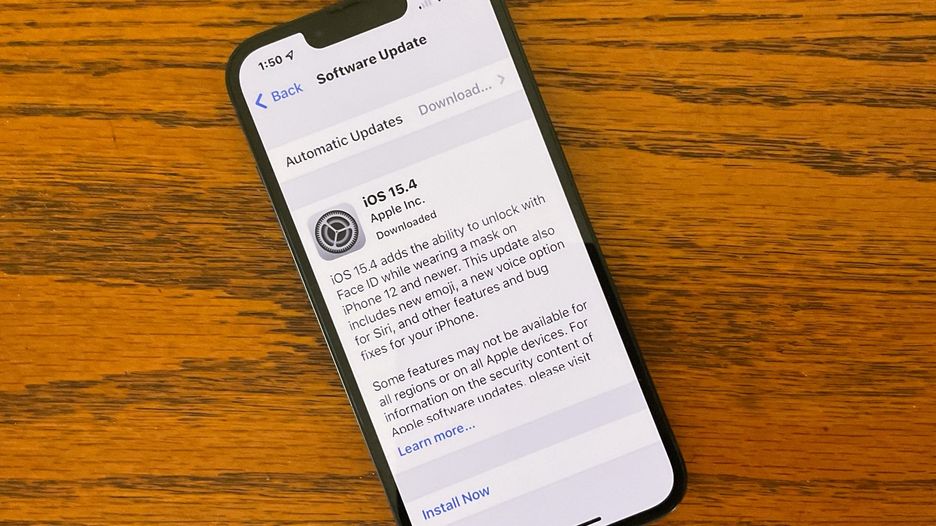
The latest version of Apple’s iOS 15.4 is now available for download, and the Face ID feature now works with a mask. With a face mask on, users will be able to unlock their iPhones and autofill passwords using Face ID. Apple claims that the feature authenticates by scanning unique features around the eye area, but it does warn that Face ID works best when the entire face is visible. Users do not, however, need to wear a mask when setting up Face ID.

Users of Apple iPhones can download and install iOS 15.4 by going to Settings> General> Software Update. Because the update is around 1.25GB in size, make sure you have WiFi when installing it. If you haven’t updated your iPhone in a while, the file size may be larger. You can also set a reminder to install the update while the phone is charging overnight. Here’s a rundown of what the new iOS 15.4 update has to offer.

Face ID

Face ID will first function while wearing a mask. After you install the new update, you’ll find this option in the settings. While wearing a mask, users will be able to use Face ID to access Apple Pay and password autofill in Safari. Users will be able to choose whether or not to use Face ID with a mask in the settings.

The iPhone 12 and newer devices, which include the iPhone 12, iPhone 12 mini, iPhone 12 Pro, Pro Max, and the latest iPhone 13 lineup, have this capability. Users of Apple’s iPhone 11 series, iPhone XS series, and iPhone X will be unable to use the feature.

iOS 15.4
Image source: www.cultofmac.com

Emoji

Apple’s iOS 15.4 update also adds new emojis to the keyboard, including faces, hand gestures, and everyday objects. Users can now select different skin tones for each hand when using the handshake emoji.

Facetime, Siri, and Vaccination

SharePlay sessions can now be started directly from supported apps with the new update. Meanwhile, on iPhone XS, iPhone XR, iPhone 11, or newer, Siri can now provide time and date information while offline. Additionally, EU residents can download and store verification of their vaccination, test results, and recovery records via the EU Digital Covid Certificate support in the Health app using the Vaccination Cards feature. The Covid-19 vaccination card in Apple Wallet now supports the EU Digital Covid Certificate format.

Other Features

Support for Italian and Chinese on Safari web page translation is also included in the update. Seasons, as well as played, unplayed, saved, and downloaded episodes, are now available in the Podcasts app. Apple iCloud custom email domains can be managed in Settings, and the News app’s Today feed and Audio tab will feature improved audio content discovery. Users will also be able to add text to Notes and Reminders using the camera on the keyboard. With Reminders, Shortcuts now supports adding, removing, and querying tags.
Apple has also changed the settings for Emergency SOS. Users can now use Call with Hold to get access to this. Furthermore, in Emergency SOS settings, a Call with 5 Presses is still an option.

Magnifier’s close-up mode now uses the iPhone 13 Pro and iPhone 13 Pro Max’s Ultra-Wide camera to help users see small objects. Users will be able to save passwords in their own notes in Apple’s Settings app.
This update contains some bug fixes as well. The keyboard was inserting a full stop between typed numbers, the News widgets in Today View were not opening articles when tapped, and photos and videos were not syncing to iCloud Photo Library.

Another issue addressed by the update is the Speak Screen Accessibility feature in the Books app quitting unexpectedly. It also resolves an issue where the Live Listen did not turn off when the Control Centre was turned off.