Your Tech Story

Tech News

google

Google can soon read your doctor’s bad handwriting

Many doctors prescribe medication in haste, thereby making it almost impossible for their patients to comprehend what they intended to write. This issue has existed for decades, and many tech companies have repeatedly tried to fix it without much to no success. Google is now attempting to translate those difficult-to-understand texts.

Google
Image Source: forbes.com

On Monday, at its annual conference, Google announced that it is partnering with community pharmacies to explore ways to recognize doctor handwriting.

Read More: Google Chrome rolls out memory and power-saving modes

The feature, which is currently in research and not yet available to the public, enables users to either snap a picture of the prescribed medication or attach one from their photo library. After processing the image, the application senses and highlights the medications mentioned in the note, as demonstrated by a Google executive.

This will act as an assistive technology for digitizing handwritten medical documents by augmenting the humans in the loop such as pharmacists, however no decision will be made solely based on the output provided by this technology,” the company said in a statement.

Source: techcrunch.com

Google for India is the firm’s annual conference in the South Asian business, where a variety of brand-new developments are showcased. The corporation also stated that it is working on a single, unified model that will comprise more than 100 Indian languages including both speech and text in order to enhance the internet journey of the incoming millions of South Asians.

It has nearly five hundred million users in India which makes it an important business for the firm. However, it has also been one of the toughest years for Google in the South Asian business, where it has been struck twice over the past months by India’s antitrust regulator.

We’ve started working on the complex process of identifying what’s written on medical prescriptions by building an assistive model to digitize it, using AI, for medical healthcare professionals”, said by Google India in a statement.

Source: 9to5google.com

A similar type of technology has already been used in Google Lens, a multipurpose object recognition tool powered by Artificial Intelligence that can detect and recognize data and translate different languages. The Google Lens application can currently be used to virtually encode handwritten notes, though the feature varied depending on how easily readable the handwriting was. 

Epic Games

Fortnite maker Epic Games to pay $520M in FTC settlement

According to The Wall Street Journal, Epic Games Inc., the company that created the video game Fortnite, has consented to pay $520 million to resolve claims made by the Federal Trade Commission that it intentionally violated children’s online privacy laws and tricked users into making unintended purchases.

Epic Games
Image Source: whqr.org

The creator of the popular video game “Fortnite,” Epic Games, has agreed to pay the US government a total of $520 million to resolve claims that it deceived millions of players, which include kids and teenagers, into making unplanned purchases and that it broke a key federal law protecting the privacy of children.

In order to settle allegations that it violated the Children’s Online Privacy Protection Act (COPPA) by collecting the personal information of children under the age of 13 without first obtaining their parent’s verifiable consent, Epic has agreed to pay the US government $275 million.

Read More: Journey of a gaming firm that left a bigger footprint in the gaming industry

According to the FTC, it is the biggest fine it has ever assessed for breaking a rule it has enforced. In a second, different settlement, Epic will fork out $245 million in payments to customers who the FTC claims were injured by user-interface design decisions that were misleading.

According to the FTC, this accord is the biggest administrative order in the agency’s history.

TC commissioner Christine Wilson emphasized the risks of ignoring children’s privacy concerns when it comes to online gaming. She gave three instances of actual underage users involving sexual abuse and child pornography with the intention that it would serve as “a wake-up call to skeptics who believe that invasion of privacy lead merely to targeted advertising.”

The settlement, according to FTC Chair Lina Khan, demonstrates the agency’s increased attention to privacy and so-called “dark patterns,” which are design cues meant to steer users in the direction of a company’s favored outcome.

The FTC and Epic have reached a tentative agreement that restricts Epic from charging customers without their permission or utilizing dark patterns. It also bans Epic from locking users out of their accounts in reaction to users’ refund requests with credit card providers disputing erroneous charges. The agreement will be in effect for 20 years after it is implemented.

Along with paying a fine, Epic will be prohibited from allowing text and voice communication for kids and teenagers without parental approval. Additionally, the company will be required to remove any personal data it earlier connected via Fortnite in contravention of COPPA laws unless it receives permission from parents to keep it.

On its website, Epic wrote a lengthy article describing the accusations and settlement. It noted, “No developer creates a game with the intention of ending up here. The video game industry is a place of fast-moving innovation, where player expectations are high and new ideas are paramount. Statutes written decades ago don’t specify how gaming ecosystems should operate.

The laws have not changed, but their application has evolved and long-standing industry practices are no longer enough. We accepted this agreement because we want Epic to be at the forefront of consumer protection and provide the best experience for our players.” 

Elon Musk

Elon Musk proposes to step down as head of Twitter in the poll

Amid a series of issues involving the popular social media platform, Twitter owner Elon Musk uploaded a poll on Sunday asking the public whether he should step down as CEO.

“Should I resign as CEO of Twitter?” Musk asked in a tweet.

“I will follow the outcome of this poll,” he added.

Source: thehill.com

As of Sunday, approximately 58 percent of Twitter users wanted Elon Musk to resign, whilst also 42 percent wanted him to remain as the CEO. The poll closed early Monday morning.

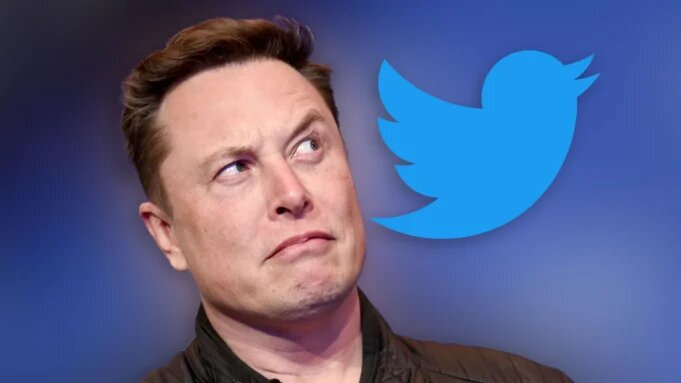
Elon Musk
Image Source: deadline.com

Musk jokingly posted a tweet after posting the poll saying, as the phrase goes, be cautious what you wish, as you might get it.

Musk ended up taking Twitter private with his multibillion-dollar acquisition of the firm earlier this year, progressing to fire the majority of its execs and disintegrate its board of directors. He still owes creditors who helped finance the acquisition billions of dollars.

The poll was conducted amid the latest uproar over his erratic handling of the platform, in response to a new Twitter strategy forbidding users from publicizing other social media platforms. Musk suspended the accounts of tech journalists who have been critical of him earlier this week.

The 51-year-old CEO also wrote on Twitter that polls will be held in the future to decide on major company policies.

Musk apologized saying It won’t happen again.

Musk lifted the prohibitions on the journalists after conducting a survey during which 59 percent of Twitter users demanded that the accounts be restored immediately.

The proposed regulations on publicizing other social platforms come at a time when many liberal Twitter users are looking for alternatives.

Meanwhile, brands are removing their advertising from Twitter at an alarming rate. Musk has repeatedly stated that Twitter’s financial situation is dire.

You must like pain a lot,” Musk tweeted, noting the company “has been in the fast lane to bankruptcy since May.” Yet Musk denied that he has a new CEO in mind.

No one wants the job who can actually keep Twitter alive. There is no successor,” Musk tweeted. “The question is not finding a CEO, the question is finding a CEO who can keep Twitter alive.”

Source: cnn.com
microsoft

Microsoft bans cryptocurrency mining on cloud services

According to media sources, Microsoft has prohibited cryptocurrency mining from using its internet services in order to protect all of its cloud users.

Microsoft has amended the Universal License Terms for Online Services, which went into effect on December 1. Microsoft has restricted the use of online services for crypto-mining. It is implemented to safeguard its consumers and cloud services. The IT behemoth announced the latest changes earlier this month.

MIcrosoft
Image Source: economictimes.indiatimes.com

The update stated, “Neither Customer nor those that access an Online Service through Customer, may use an Online Service … to mine cryptocurrency without Microsoft’s prior written approval.”

Microsoft’s Summary of Changes to the license mentioned, “Updated Acceptable Use Policy to clarify that mining cryptocurrency is prohibited without prior Microsoft approval.”

Read More: Microsoft to Offer Call of Duty on Nintendo Devices if Activision Deal Closes

Microsoft suggested requesting pre-approval authorization to use any of its online services for cryptocurrency mining in the ‘Acceptable Use Policy’ section of its website, which comes amid rising worries about cyberfraud and threats.

The company noted, “Cryptocurrency mining can disrupt or even impair Online Services and its users, and is often associated with unauthorized access to and use of customer accounts.

We made this change to further protect our customers and mitigate the risk of disrupting or impairing services in the Microsoft Cloud. Permission to mine crypto may be considered for Testing and Research for security detections.”

Cryptocurrency cloud mining enables users to mine without the need for additional hardware or equipment. According to statistics from the blockchain research firm, Blockchain Council, this aspect of no cost associated has piqued clients’ interest in cloud mining. Microsoft Online Services, a part of the company’s SaaS strategy, is its hosted software product.

One of these services is the Microsoft Azure cloud computing network, which offers cryptocurrency mining for several subscription kinds. As was reported earlier, Microsoft also tested out blockchain services on Azure, but in September of last year, the project abruptly ended.

According to sources, Microsoft cloud computing systems have experienced storage issues in recent years as a result of constraints in the ongoing supply chain. Microsoft issued a warning to users about a new cryptocurrency mining malware last year that has the ability to steal credentials, disable security measures, proliferate via emails, and eventually drop additional tools for human-operated operations.

The cryptocurrency mining malware known as “LemonDuck” is propagated by phishing emails, vulnerabilities, USB devices, and brute force assaults in a number of nations, including India. It targeted Linux and Windows systems. This is not the first time that a major IT company has prohibited cryptocurrency mining on its website.

Similar rules apply at Google, which forbids mining without explicit written consent from the company. A mining malware threat detection solution for hacked accounts in Google’s cloud service was added earlier in 2022. Google stated last year that the majority of “malicious actors” had utilized compromised cloud accounts to mine cryptocurrency.

Crypto mining is likewise not permitted during the 12-month free trial of Amazon’s AWS. If users decide to mine on AWS, they can be charged a fee and risk having their accounts suspended.

15.5-Inch MacBook Air

15.5-Inch MacBook Air Expected to unveil in Spring 2023

Several rumors over the past year have suggested that Apple is preparing the latest 15-inch MacBook Air to exist side by side with the present 13-inch model. for n Now, reliable analyst Ross Young claims that the forthcoming 15.5-inch MacBook Air will proceed with panel production within the first quarter of 2023, trying to imply a spring release.

15.5-inch MacBook Air
Image Source: forbes.com

Young, as well as Bloomberg, have both initially speculated upon the likelihood of a 15-inch MacBook Air. Bloomberg has suggested earlier that there might be a rollout in the spring of next year in particular. latest report of CEO Young claims that panel production will begin in Q1, which corresponds to the prospect of a spring launch date.

Read More: Apple’s iOS 16.2 update released: Check out the new features

Young’s report today also reveals that the forthcoming MacBook Air will come with a 15.5-inch display. This means that Apple will offer two MacBook Air sizes which will be our current 13.6 inches and the latest 15.5-Inch MacBook Air.

Initially, Apple used to sell the MacBook Air in two different sizes which were 11 inches and 13 inches, but somehow it ultimately shortened the lineup and dropped the smaller option.

In addition to the MacBook Air with the larger screen, Bloomberg also revealed that Apple is working on a 12-inch MacBook in June. This computer, however, is not expected to be released until the end of the year 2023 or it might be early 2024.

Providing the MacBook Air in two screen sizes is consistent with Apple’s strategy for the MacBook Air, which would be accessible in 14-inch and 16-inch form factors. With the introduction of Apple Silicon, the firm has made it easier to enlarge its MacBook lineup, which appears to be the case based on these rumors.

In the meantime, according to an online report, Tata Group plans to establish small exclusive Apple stores all over India. According to individuals with knowledge of the situation, Apple is partnering with Infiniti Retail owned by Tata, which operates the Croma store chain, for the venture.

Retail will turn into an Apple franchisee partner, to open 100 stores in malls and high-street nearby locations. The collaboration between Tata and Apple comes as Apple prepares to open its first flagship store owned by the company in Mumbai in the first quarter of 2023.

Elon Musk

Elon Musk starts banning critical journalists from Twitter

Several Elon Musk-critical journalists have been blocked by Twitter.

Elon Musk, Twitter’s new owner and self-described freedom of speech absolutist, made a big effort to restrict the press on Thursday evening when he suspended the Twitter accounts of several prominent journalists.

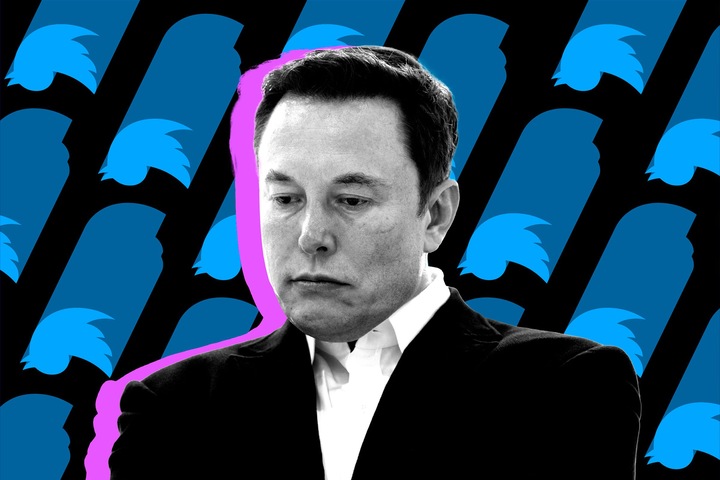
Elon Musk
Image Source: theverge.com

In the midst of his spat with Sweeney and the now suspended @ElonJet account controlled by the teen, Musk had threatened to suspend any Twitter accounts that published real-time information on a person’s location.

The accounts of Donie O’Sullivan of CNN, Ryan Mac of The New York Times, Drew Harwell of The Washington Post, and other reporters who have actively covered Musk in recent weeks have all been abruptly and permanently suspended.

Read More: Elon Musk sells another $3.58 billion of Tesla shares

Musk stated that the journalists had broken his new “doxxing” policy by disclosing his “exact real-time” location, which amounted to what he called “assassination coordinates,” in a series of intermittent tweets. Musk’s precise real-time location didn’t appear to be provided by any of the journalists who were banned.

Thursday night, CNN issued a statement denouncing the “impulsive and unjustified” suspension of O’Sullivan and others from Twitter. CNN noted, “Twitter’s increasing instability and volatility should be of incredible concern for everyone who used Twitter. We have asked Twitter for an explanation, and we will reevaluate our relationship based on that response.”

Musk later reaffirmed his allegation that he had been doxxed in a Twitter Spaces hosted by a BuzzFeed journalist. Shortly before his suspension, O’Sullivan posted on Twitter that the social media platform had suspended the account of Mastodon, an up-and-coming rival social media platform, allowing @ElonJet, an account that updates the location of Musk’s private jet.

Doxxing is the act of publicly disclosing a person’s home address or other private information online. However, the banned Twitter account had tracked Musk’s plane using openly accessible flight data that is still available online.

The restrictions raise several concerns about the platform’s future, which has been dubbed a “digital town square.” The suppression of journalists by Musk raised serious concerns about his alleged support for free expression.

Musk has stated numerous times that he wants to allow all legitimate expression on the platform. He had tweeted, “I hope that even my worst critics remain on Twitter because that is what free speech means.”

Climate activists commonly utilize accounts like ElonJet to highlight the severe environmental impact that private jets have. Taylor Swift, Kim Kardashian, Kylie Jenner, and Elon Musk have all faced criticism this year for utilizing aircraft when more environmentally friendly alternatives might be employed.

Musk has long objected to the live sharing of his private jet’s whereabouts. He even went so far as to make the @ElonJet account manager an offer of thousands of dollars to take the account offline at one point.

After Twitter announced new rules barring accounts that track users’ real-time whereabouts, the @ElonJet handle, which had accumulated over 500,000 followers, was indefinitely suspended on Wednesday. Musk also deleted any accounts that included links to such data. Earlier, Twitter had no limitations regarding location sharing.

The modifications followed Musk’s decision to reinstate past Twitter policy violators and cease enforcing the restrictions on Covid-19 disinformation.