Your Tech Story

Tech News

Google

Google wins appeal of $20 mln US patent verdict

Search Engine Giant, Google, a subsidiary of Alphabet, successfully persuaded an appeals court in the United States on Tuesday to invalidate three anti-malware copyrights that were at the center of a Texas court’s twenty million-dollar infringing acts decision against the firm.

Google
Image Source: communicationstoday.co.in

Alfonso Cioffi & Allen Rozman’s copyrights, according to the U.S. Appeals Court for the Federal Circuit, were found to be inapplicable because they covered ideas that were not covered by a prior version of the claim.

Also Read: Twitter Clashes With Brazil Over School Violence Posts

Google welcomed the choice, according to spokesman José Castada. An inquiry for comment was not immediately answered by the inventors’ attorneys.

In 2013, Cioffi along with the daughters of the late Rozman filed a lawsuit against Google in the Federal court in East Texas, claiming that Chrome’s malware protection features violated their patents for a system that stops malware from gaining access to sensitive information on a computer.

A jury found that Google violated the patents in 2017 and granted the complainants a total of 20 million USD in addition to continuing payments, which according to the plaintiff’s representative at that point in time were anticipated to reach approximately seven million dollars yearly for the following nine years.

However, the Federal Circuit declared all of the patents invalid on Tuesday. The three-judge bench reached a unanimous conclusion that the three claims had been reissued from a previous anti-malware claim and that federal law needed the newly issued patents to encompass the same idea as the first.

The new patents described web browser-specific technology that was absent from the original patent, according to the appeals court.

Contrary to popular belief, the defendants in Big Tech’s latest patent litigation argue that bigger firms utilize their clout to squeeze rivals.

The British competition regulator declared that Alphabet’s child firm Google’s measures to permit app developers to bypass Google Play’s invoicing mechanism appeared to be adequate to allay its reservations about in-app purchases.

Also Read: Scan.com raises $12m for US and UK expansion

The entire monopoly Google has over in-app purchases has, according to the Competition and Markets Authorities (CMA) of Britain, unjustly constrained developers by requiring them to adopt Google Play’s charging system, decreasing competition and harming users.

According to the CMA, Google’s suggestions would let app creators provide another means of payment of their choice or give customers the option of choosing from that method and Google Play’s payment system.

Scan.com

Scan.com raises $12m for US and UK expansion

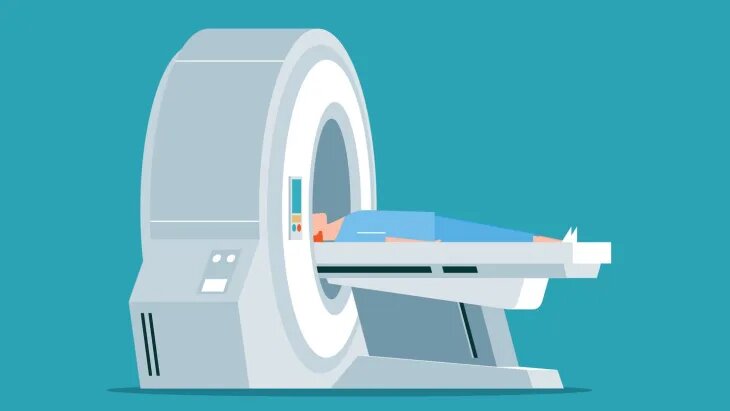
An ineffective public medical system has provided an ideal environment for health IT businesses to thrive, tackling issues like shortages of staff and enhancing radiologists’ software infrastructure. One such business is Scan.com, a healthcare imaging firm with offices in London that links patients with facilities for MRI, ultrasound, CT scans & X-ray scans.

Scan.com
Image Source: techcrunch.com

As it seeks to improve on its latest U.S. debut, the firm today revealed that it has raised twelve million dollars in an initial round of funding.

Also Read: Google TV now has over 800 ad-supported free channels

The issue, stated by Scan.com, lies in the fact that regardless of whether a patient can schedule an initial visit with a doctor, the referral procedure that follows to obtain the necessary scan can take months to complete, and they may then endure waiting even longer for the results to arrive.

Scan.com is collaborating with numerous scanning facilities to provide users with convenient reports that are complete with clickable graphics and are provided within a week. This allows people to get healthcare imaging services regardless of a general practitioner’s referral.

By paying in advance to guarantee their scan, members of Scan.com’s digital referral program are then scheduled for a virtual meeting with a doctor within forty-eight hours.

If a scan reveals a critical issue, the patient is placed in Scan.com’s urgent findings pathway, during which a clinical team gets in touch with them to talk about the findings and provide advice to determine what to do next.

Our clinical team offers consultations and guidance to all patients once they’ve booked, which is a core part of the service we offer,” Scan.com CEO Charlie Bullock explained to TechCrunch. “Their time is included in our scan pricing, which is why we take payment at the point of booking. During the consultation, the clinician can amend the scan type, add or amend body parts, and ensure the scan is both safe and medically justified for the patient’s needs.”

Khalid Latief & Jasper Nissim, two doctors who organized testing for the patients they treated, launched Scan.com about five years ago after growing frustrated with the inefficiencies in the process. Scan.com debuted its service in the United States two months back, and as of now, it has about 30 staff working in both the UK as well as the US.

Also Read: South Korea fines Google $32 million for squeezing out rival

With an additional 12 million USD in cash on hand, Scan.com is well-positioned to keep up its U.S. broadening and expanding the scope of its offerings to include things like DEXA scans, echocardiograms, as well as mammograms. The company is also well-funded to pursue business contracts with companies that offer digital health services, staff benefits platforms, and other trade associations.

Medical imaging covers such a variety of modalities that our focus is to launch as many of these as we can,” Bullock said. “Alongside scans, we also want to design pathways to add value for our patients, such as guided injections for pain relief, or adding in-vitro testing and pathology solutions to our preventative screenings to make them more comprehensive.”

Twitter

Twitter Clashes With Brazil Over School Violence Posts

Twitter is under fire in the biggest economy in Latin America for its lax stance on material that is thought to incite violence in schools.

Brazil accuses Twitter of allowing posts that encourage violence in schools. Authorities this week started over 500 requests to remove content and profiles that were initially rejected by Twitter, which has advocated a free-speech attitude since its acquisition by billionaire Elon Musk last year.

Twitter
Image Source: bloomberg.com

Due to the controversial attitude, an executive order was issued late on Wednesday that warns Twitter and other websites of fines or even a possible ban if they don’t comply. cracking down on social networking sites carrying posts celebrating the attacks after a startling rise in homicides in educational facilities across Brazil.

Also Read: US Is Buying Chipmaking Machines From Taiwan More Than Ever

After putting forward the decree in Brasilia on Wednesday evening, Justice Minister Flavio Dino declared that “a child’s life is worth more than all the terms of use in all the platforms.”

The Justice Ministry’s push comes as the country is still in shock following the murder of four children this month at a creche in the southern state of Santa Catarina, which was committed by a man brandishing a hatchet.

Investigators frequently cite the development of active online communities that praise such assaults as one of the factors contributing to the ongoing rise in school violence. Local media stated that Twitter has started removing some of the content highlighted by the Ministry of Justice as a result of pressure from Brazilian authorities.

However, it is still unknown whether Twitter will comply with the government’s request. In Brazil, occurrences of school violence were uncommon, but researchers at the University of So Paulo have counted 10 cases during the last 13 months. This year, four incidents took place.

According to Carolina Ricardo, executive director of the non-governmental organization Sou da Paz, there is a definite link between attacks and social media networks that disseminate hate speech. She stated, “There’s also a clear reference to the US cases, all recent Brazilian cases were inspired in Columbine’s, so it’s necessary to truly debate social media regulation.”

Also Read: PBS Joins NPR in Quitting Twitter Over State-Backed Label

Twitter and Brazilian authorities also had a dispute in 2021 over tweets on school violence in the state of Santa Catarina. The dispute started when a judge directed Twitter to take down tweets about a police operation at a school that resulted in the deaths of two children. The judge alleged that the posts broke the nation’s rules prohibiting the spread of violent information.

Following Musk’s takeover, Twitter’s legal policy team, which censors content in response to governmental and legal requests and evaluates law enforcement requests for user data, suffered from “massive cuts”. Since then, other members of the policy team have left on their own volitionally, leaving fewer individuals with the time or knowledge to handle requests from the government.

Taiwan

US Is Buying Chipmaking Machines From Taiwan More Than Ever

As the Biden administration seeks to revive the local semiconductor industry, US sales of Taiwanese chip-making gear reached an all-new high record in March. According to information from the Ministry of Finance in Taiwan, the country which is a worldwide hub for silicon manufacturing innovations, witnessed a 42.6 percent increase in its chipmaking equipment exports to the US in March compared to the same month last year, setting an all-time high record of 71.3 million USD (RM314.01 million). However, trade in China went down 33.7 percent, marking the tenth consecutive month of a downward spiral.

Taiwan
Image Source: cnbc.com

Taiwan is a key factor in the worldwide supply chain and residence of Taiwan Semiconductor Manufacturing Co (TSMC) as well as numerous additional key players in the chip industry.

Also Read: Why is Samsung’s cut in chip production good news for industry?

United States officials took action to establish more sophisticated chipmaking within American borders because of concerns over over-dependence on Taiwan island, which China regards as a portion of its own country.

Due to financial aid and assistance from the state and municipal governments, TSMC is building two fabrication facilities in Arizona.

The chip supply chain is beginning to split apart as a result of US measures to restrict China’s access to essential semiconductor equipment, know-how, and goods. One indication of this is the decline in Taiwan’s shipments of semiconductor machines to China.

A month back, Japan also unveiled intentions for new export limits on chip manufacturing equipment, clearly aiming its limitations at China which is the second-largest economy in the world.

Japan’s move to collaborate with the United States and the Netherlands in banning chip manufacturing equipment exports to China has given the allies strong tools to use in the expanding technological conflict.

The commerce ministry of Japan announced this week that beginning in July, exports of 23 different types of chip technology will require government authorization.

This has an impact on a wide range of businesses, which includes Nikon Corp., Tokyo Electron Ltd., and Screen Holdings Co., which have played a key role in China’s efforts to establish a local chip sector.

Japan joining the export curbs will do great harm to China’s ability to make and develop chips smaller than 16 nanometers,” said Akira Minamikawa, an analyst at research company Omdia.

Source: bloomberg.com

Also Read: U.S. set to further tighten chipmaking exports to China

American businesses like Applied Materials Inc. were immediately impacted by the regulations when the Biden administration published its extensive limits on chip-related shipments to China in October.

Following the announcement that both the Netherlands along with Japan has joined the China restriction, all the main nations that manufacture chipmaking gear are taking part. The most cutting-edge equipment, involving those that produce logic chips at 16 nm or with more complex geometries, are covered by the constraints.

NPR

PBS Joins NPR in Quitting Twitter Over State-Backed Label

NPR announced its departure from Twitter on Wednesday, marking the first notable news organization to do so since Mr. Elon Musk’s turbulent acquisition of the social media site.

The departure ends a week-long controversy over Twitter’s choice to identify NPR as “state-affiliated media,” designating it similarly to big media organizations in totalitarian nations like Russia or China.

NPR
Image Source: bloomberg.com

Popular in the United States, NPR already stopped tweeting from its primary account as it awaited Twitter to reverse course. Twitter only achieved this by changing NPR’s label to “government-funded media,” something it also did for the BBC in the United Kingdom.

Also Read: South Korea fines Google $32 million for squeezing out rival

Elon Musk, the owner of Twitter, has criticized NPR’s reliance on US government financing, despite the fact that just a small portion of the Washington-based organization’s income comes from federal agencies.

All of NPR’s organizational accounts “will no longer be active on Twitter,” the organization announced in a brief statement because “Twitter is taking actions that undermine our credibility by falsely implying that we are not editorially independent.”

It continued, “There are plenty of ways to stay connected and keep up with NPR’s news, music, and cultural content”, urging readers to alternative platforms that it then provided links for in a final tweet.

Mr. Musk has long stated his intense dislike for the news industry, and he recently added an automated poop emoji response to emails from journalists. News organizations have had a difficult time weaning themselves from the network, which continues to be a major forum for dialogue among politicians, pundits, and public figures.

NPR’s journalists and affiliate radio stations “will be able to decide on their own if they want to stay on the platform,” an NPR official told Agence France-Presse. NPR left the platform just hours after Elon Musk said in a BBC interview on Tuesday that he would think about changing the designation to “publicly funded” because the original choice of the label was erroneous.

He also commented on Twitter’s contentious decision to remove The New York Times’ blue verification mark after the publication declined to pay to preserve it.

Also Read: Baidu sues Apple, app developers over fake Ernie bot apps

Starting on April 20, all legacy verified Twitter accounts that were established to be authentic under the previous management of the company will have to pay to join Twitter Blue. Mr. Musk stated that he did not want Twitter to support “some anointed class of journalists” who decide what counts as news as one of the reasons for this.

Elon Musk bought the social media network for $44 billion last year and has since made significant changes, including getting rid of the verification process for the press, celebrities, and other well-known Twitter users.

South Korea

South Korea fines Google $32 million for squeezing out rival

The antitrust regulatory body in South Korea has penalized Google which is a subsidiary of Alphabet, about KRW 42.1 billion, 31.88 million USD which is around Rs. 262 Crore for hindering the launch of video games for smartphones on an opponent’s forum.

South Korea
Image Source: bworldonline.com

KFTC (The Korea Fair Trade Commission) stated that Google on Tuesday, by involving video game developers to entirely unveil their titles on Google Play in return for offering in-app publicity around June 2016 and April 2018, increased its dominant market position and harmed the localized app market One Store’s earnings and worth as a platform.

Also Read: Baidu sues Apple, app developers over fake Ernie bot apps

Google stated that it will analyze the Korea Fair Trade Commission’s final verdict before deciding what to do next.

“Google makes substantial investments in the success of developers, and we respectfully disagree with the KFTC’s conclusions”, a spokesperson said.

Source: gadgets360.com

According to the South Korea Fair Trade Commission, the government’s attempts to promote fair markets are a component of the lawsuit against the US tech behemoth.

The antitrust regulator stated that other local companies were also impacted by Google’s conduct, including Netmarble, Nexon, & NCSOFT.

For preventing customizable copies of its Android operating system, Google was heavily fined by the KFTC in 2021 with a huge fine of over 200 billion won.

Top Indian entrepreneurs urged the nation’s competition authority to investigate Google, a few weeks ago for allegedly breaching an antitrust regulation by demanding a hefty service charge for in-app purchases, according to a document.

The Alliance of Digital India Foundation (ADIF) lawsuit was the newest confrontation between Google & Indian businesses, who have long blasted the US corporation for enforcing unfair business terms and conditions that disadvantage smaller competitors.

Also Read: Amazon plans to trim employee stock awards amid tough economy

“Google’s policy change of charging service fee even on transactions processed by third-party payment processors … has detrimental consequences for users and app developers,” the 15-page confidential March complaint by the Alliance of Digital India Foundation said.

Source: gadgets360.com

Google, which did not respond to inquiries, previously explained that the service charges fund investments within the Google Play app store as well as the Android operating system for smartphones, in order to ensure that it is distributed for free, and includes developer tools as well as analytic services.