Your Tech Story

Tech News

SoftBank

SoftBank May Turn Profit After $48 Billion in Vision Fund Losses

After five quarters of revenue losses, SoftBank Group Corporation’s Vision Fund is set to earn a profit owing to a recovery driven by artificial intelligence which is increasing startup market valuations.

After suffering losses of 6.9 trillion dollars approximately $48 billion over the previous two years of operation at the Vision Fund investment subsidiary, the Japanese behemoth is battling to restore its foundation.

SoftBank
Image Source: ft.com

Based on the average of expert expectations, analysts anticipate a minor gain at the investment company for the three months ending in June, whereas SoftBank is expected to disclose a profit of about 73 billion dollars on Tuesday.The IPO (Initial Public Offering) of Arm Ltd. will determine if SoftBank owner Masayoshi Son can embark on the attack and look for new possibilities in business.

In a marketplace launch as early as September, his chip creator hopes to make a profit of a maximum of ten billion dollars at an estimated valuation of 60 to 70 billion dollars. If Arm were successful in achieving its fundraising goal, it would surpass Meta Platforms Inc. as well as Alibaba Group Holding Limited as the biggest technology debut ever.

The values of Arm’s competitors have increased as a result of their obsession with artificial intelligence. The valuation of NVIDIA Corporation has surpassed a trillion dollars this year, and the Nasdaq 100, a barometer for technology firms, had its greatest January-June result ever.

Also Read: Crypto stocks dip after bitcoin slumps to six-week low.

According to Kirk Boodry, a researcher at Astris Advisory, SoftBank provides investors with a means to participate in Arm as an artificial intelligence play before its debut.

“A further run once a public prospectus comes out would not be surprising at all,” he said.

“I’m not convinced we are completely out of the woods yet,” as July’s gains may turn out to be ephemeral while “tech seems priced for perfection (again),” Boodry said. Still, the bounce is “worth highlighting,” and Arm’s upside should provide support even if the Vision Fund looks weak, he said.

Source: finance.yahoo.com

According to Boodry’s estimation, the Vision Fund’s public holdings increased by around 1.1 billion dollars in the June quarter. The two companies that contributed the most, DoorDash Inc. along with Grab Holdings Ltd., had increases of 20 per cent and 14 per cent, respectively, throughout the time frame. Coupang Inc. had a 9 per cent increase. In the same time frame, SoftBank’s stocks increased 31 per cent, which was a three-year high.

Tenstorrent

AI chip firm Tenstorrent raises $100 mln from Hyundai, Samsung

Tenstorrent, a Canadian firm, has raised 100 million dollars from sponsors including Samsung Investment Fund, Hyundai Motor Group, and Kia to compete with Nvidia’s monopoly in the provision of processors for artificial intelligence solutions including ChatGPT by OpenAI and Bard of Google.

Tenstorrent
Image Source: freemalaysiatoday.com

“With this investment, the Group expects to develop optimized but differentiated semiconductor technology that will aid future mobilities and strengthen internal capabilities in AI technology development,” Heung-soo Kim, executive vice president and head of the global strategy office at Hyundai Motor Group, said in a statement.

Source: tbsnews.net

Jim Keller, previously employed by Tesla, is the founder and chief executive officer of the firm, which has received 234.5 million dollars so far and has a current market value of approximately one billion dollars.

According to Reuters, Tenstorrent secured 50 million dollars from the Catalyst Fund of Samsung, thirty million dollars from Hyundai, and twenty million dollars from Kia, along with different investors including Eclipse Ventures, Fidelity Ventures, Epiq Capital, as well as Maverick Capital in the most recent round of investment.

Also Read: Uber Is Developing an AI-Powered Chatbot to Integrate Into App

Tenstorrent won’t technically acquire an added worth until it does a second round of equity financing, which the company says it hopes to complete next year. This is because the investment round was set up as a loan that would eventually be converted to shares. Regarding specifics of the convertible debt, Tenstorrent refuses to provide additional information.

In a statement about the new investment, Hyundai said, “Hyundai Motor Group today announced a strategic investment in Tenstorrent, an artificial intelligence (AI) semiconductor company based in Toronto, Canada, which will allow the Group to integrate AI into future Hyundai, Kia, and Genesis vehicles, and other future mobilities, including robotics and advanced air mobility (AAM).”

Source: livemint.com

 In addition to manufacturing its own artificial intelligence chips, Tenstorrent, which was launched in 2016, also sells its proprietary rights and other technologies to clients so they may create their own artificial intelligence chips.

Tenstorrent is currently focusing on additional applications for AI chips, including the agreement unveiled in May where the firm would produce chips that might be utilized in smart televisions, in addition to taking against Nvidia in the data center.

In the meantime, Keller, who assumed control of the artificial intelligence chip manufacturer previously this year, has in the past produced chips for firms such as Tesla, Apple, and Intel. His tenure at Tenstorrent represents a comeback to the automotive technology industry.

Rakuten

Rakuten signs MoU with OpenAI to develop services

In a significant stride towards fostering innovation and technological advancement, Rakuten Group, Japan’s leading e-commerce and tech giant, has announced the signing of a momentous Memorandum of Understanding (MoU) with OpenAI.

The collaborative effort aims to explore and develop cutting-edge commercial opportunities that leverage the power of OpenAI’s revolutionary artificial intelligence applications across Rakuten’s diverse portfolio of products and services.

rakuten
Image Source: reuters.com

The MoU marks the beginning of an exciting partnership between Rakuten and OpenAI, two trailblazers in their respective fields. OpenAI, renowned for pushing the boundaries of artificial intelligence research, brings to the table a wealth of knowledge in natural language processing, machine learning, and robotics.

Rakuten, with its extensive presence in e-commerce, digital content, fintech, and telecommunications, offers a unique ecosystem to test and implement OpenAI’s innovations in real-world scenarios.

Under the agreement, both companies will collaborate to integrate OpenAI’s applications into Rakuten’s existing products and services. This collaboration holds the promise of enhancing user experiences, streamlining processes, and unlocking new possibilities across Rakuten’s vast customer base.

Also Read: Crypto stocks dip after bitcoin slumps to six-week low

By tapping into OpenAI’s state-of-the-art technologies, Rakuten aims to offer more personalized and tailored solutions that cater to the evolving demands of consumers in an increasingly interconnected world.

The partnership also aims to foster cross-learning between the two organizations. OpenAI, as an AI research powerhouse, will gain valuable insights from Rakuten’s operational expertise and extensive consumer data.

Simultaneously, Rakuten stands to benefit from OpenAI’s research advancements, accelerating its digital transformation journey and reinforcing its position as a global technology leader.

Hiroshi Mikitani, Chairman and CEO of Rakuten Group, expressed his enthusiasm for the partnership, stating, “We are thrilled to collaborate with OpenAI in this endeavor. Rakuten’s mission is to empower people and society through innovation and technology, and AI has always been at the forefront of our strategy. Partnering with OpenAI will open up new avenues for us to revolutionize our products and services, ultimately elevating customer satisfaction.”

Sam Altman, CEO of OpenAI, also shared his vision for the partnership, saying, “We believe in creating a global community that benefits from AI’s progress. Collaborating with Rakuten is a fantastic opportunity to bring the fruits of our research to millions of users worldwide. Together, we aim to create transformative AI-driven solutions that drive growth, efficiency, and accessibility.”

As the world continues to embrace the potential of artificial intelligence, the collaboration between Rakuten and OpenAI holds the promise of delivering groundbreaking services and experiences.

Through this MoU, the two companies are poised to shape the future of commerce, technology, and AI-driven innovations, driving positive change and making a lasting impact on the lives of people worldwide. As the partnership unfolds, the world eagerly awaits the transformative outcomes that this fusion of expertise and vision will yield.

Chatbot

Uber Is Developing an AI-Powered Chatbot to Integrate Into App

Uber Technologies, an Uber subsidiary, is building a chatbot that will be driven by artificial intelligence (AI) and incorporated into the application, following the lengthy list of businesses that are using linguistic technology to enhance automated operations like customer service and marketing.

On Tuesday, in a discussion with Bloomberg Technology, CEO Dara Khosrowshahi stated that they are working on it currently. He did not go into more detail about what the digital assistant will be able to perform but rather emphasized how Uber already employs artificial intelligence in its operations.

Chatbot
Image Source: hindustantimes.com

Uber has been using machine learning and artificial intelligence for a while, Khosrowshahi emphasized. The algorithms used by Uber to connect consumers with vehicles or couriers based upon numerous criteria like distance and time of day presently heavily rely on these kinds of technologies.

Also Read: Crypto stocks dip after bitcoin slumps to six-week low

“We have been working with machine learning, artificial intelligence systems for years and years,” he told Emily Chang. “Every time you get matched up with a car or a courier, there are algorithms making that happen, from the time of day, distance, all of that is driven by machine learning.”

Source: scmp.com

Both DoorDash Inc. as well as Instacart Inc., two of Uber’s delivery rivals, are developing chatbots.

Also Read: WhatsApp Launches Instant Video Messages

DashAI, a technology being developed by DoorDash, will expedite shopping and aid users in finding meal alternatives on the app. Consumers may utilize Instacart’s latest “Ask Instacart” function, backed by the application programming interface (API) of OpenAI Inc., to raise inquiries regarding the preparation of meals.

Despite just recording its first operational profit, the company’s sales dropped short of experts’ projections, which caused a six percent drop in its stock price. Regardless of this setback, Uber is still committed to improving its user experience and service to consumers by integrating AI-powered technology, such as the future chatbot.

In conclusion, Uber’s creation of a chatbot powered by artificial intelligence shows its dedication to using cutting-edge technology to enhance customer experience, streamline processes, and spur advancement in the cutthroat ride-hailing services and delivery sector.

Crypto

Crypto stocks dip after bitcoin slumps to six-week low

Shares of crypto and blockchain-related companies faced a downward trend in premarket trading on Tuesday as bitcoin, the leading cryptocurrency, experienced a significant slump, hitting a six-week low. The bearish sentiment followed news of a hack at Curve Finance, a prominent platform utilized for borrowing and trading cryptocurrencies.

crypto
Image Source: brecorder.com

Bitcoin, which commands the lion’s share of the cryptocurrency market, witnessed a 2% drop, tumbling to $28,870 in value. The market reaction was swift and widespread, affecting a range of crypto-related businesses and platforms.

Curve Finance, a decentralized finance (DeFi) protocol that enables users to lend, borrow, and trade cryptocurrencies, revealed on Sunday that it had fallen victim to a malicious hack. The company disclosed the security breach on the messaging platform “X” (formerly known as Twitter). Reports suggest that the losses from the hack could exceed $40 million, casting a shadow over the broader crypto industry.

In response to the turmoil, major players in the crypto space experienced significant declines in their stock prices during premarket trading. Coinbase, a prominent cryptocurrency exchange, saw its stock dip by 3.1%, while Bitfarms, a blockchain-farm operator, experienced a 1.1% drop in its shares.

Also Read: Bosch opens chip test center in Malaysia

Crypto miners also suffered from the downturn, with companies like Riot Platforms, Marathon Digital, and Hut 8 Mining (the U.S.-listed shares of a Canadian crypto mining firm) all experiencing declines ranging from 3% to 3.35%.

Beyond individual company woes, the broader crypto industry faces additional challenges on the regulatory front. Two of the largest players in the sector, Binance, and Coinbase, are currently under scrutiny from the U.S. Securities and Exchange Commission (SEC). The regulatory uncertainty surrounding these platforms has added to the market’s anxiety, leading to a cautious approach from investors.

Moreover, the recent interest rate hikes implemented by the U.S. Federal Reserve have exerted additional pressure on risky assets, including cryptocurrencies. As the Fed tightens its monetary policy to curb inflationary pressures, investors have become increasingly wary of the high volatility and speculative nature of the crypto market.

Overall, the crypto industry finds itself at a crucial juncture, grappling with both internal and external challenges. The recent hack at Curve Finance has underscored the importance of strengthening security measures and risk management protocols across all crypto platforms. Additionally, regulatory scrutiny and macroeconomic factors continue to play a significant role in shaping investor sentiment in the market.

As the situation unfolds, market participants are likely to closely monitor developments in the ongoing investigations involving Binance and Coinbase. Furthermore, any future actions taken by central banks and regulatory bodies could have far-reaching implications for the crypto space as it seeks to find stability amidst a volatile market environment.

Bosch

Bosch opens chip test center in Malaysia

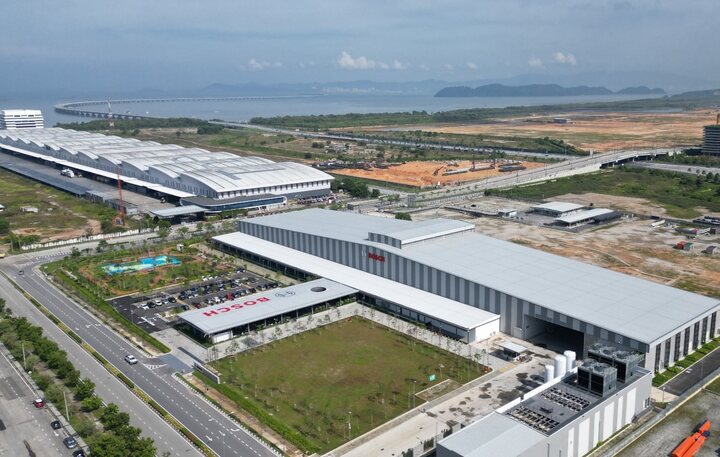
The German electronics maker Robert Bosch said on Tuesday that it has launched its latest testing facility for semiconductors plus sensors for 65 million euros approximately $71.62 million in Malaysia and that it had plans to make investments of an additional 285,000,000 euros by the second half of the next decade.

By the middle of the 2030s, 400 more employment may be generated, it noted.

bosch
Image Source: just-auto.com

The majority of Bosch’s final evaluation for semiconductors is presently done in its plants in Germany, Reutlingen, China, Suzhou, and Hungary.

The brand-new testing facility in Penang will join those locations since Bosch is getting support for it from Malaysia.

“With our new semiconductor test center in Penang, we are creating additional capacity within our worldwide manufacturing network to meet the continued high demand for chips and sensors,” said Dr. Stefan Hartung, chairman of the Bosch board of management. “Semiconductors are a decisive success factor for all Bosch business areas, and the expansion of this business is strategically very important.”

Source: bosch-presse.de

On the Penang mainland area, Bosch has an overall of about 1 lakh square meters of property allocated. The brand-new test facility is greater than 18,000 square meters in size and has workplaces, neat spaces, and testing facilities for manufacturing as well as quality assurance.

Also Read: Apple rolling out second public beta of iOS 17 and macOS 14

There are expected to be up to 400 colleagues employed there by halfway through the following decade. With the addition of the new facility and an overall staff of 4,200 employees, Penang has grown to be Bosch’s largest Southeast Asian site.

Frontend production and backend production are the two main divisions in semiconductor production. Malaysia serves as a key node in the worldwide supply chain for semiconductors in the second case. According to estimates, the nation accounts for roughly thirteen percent of the world’s backend manufacturing.

In the past few years, the territory of Penang has produced over five percent of the global semiconductor market’s income, following government statistics.

“The new test center in Penang brings our manufacturing network closer to the companies that serve the further value chain of semiconductor manufacturing as well as to customers in this important Asian market. That shortens delivery times and routes, and it improves our competitiveness,” says Dr Markus Heyn, member of the Bosch board of management and chairman of the Mobility business sector.

Source: bosch-presse.de

Through its semiconductor sector, Bosch has embarked on an agenda of international expansion. The business intends to spend almost 3 billion euros in Dresden as well as Reutlingen during the following three years.