Your Tech Story

Story

Micro Focus

Micro Focus – Story Of The First Software Company To Win Queen’s Award.

Micro Focus International plc is a British multinational conglomerate that is based in the IT sector. The company was founded in 1976 and its headquarters is based in Newbury, Berkshire, England. As the main product of the company, Micro Focus provides enterprise application integration, management software, and IT consultancy. It is a public limited company listed on the London Stock Exchange and it is also an element of the FTSE 250 Index.

The company currently generates $3 billion in revenue annually. Micro Focus also claims to be the largest provider of enterprise software on a global scale with 40,000 worldwide customers. Micro Focus has 12,000 employees who work across 48 different countries. A majority of the Fortune 100 companies are customers of Micro Focus.

History of Micro Focus

In 1976, Micro Focus was established in England. The product of the Company that became a big hit in the software industry was CIS COBOL. It was a standard-compliant COBOL that was developed for its implementation in microcomputers. On the basis of developing this software product, Micro Focus became the first company to win the Queen’s Award for the industry. For a new company like Micro Focus, it was quite prestigious and helped acquire more investors and customers.

Micro Focus
Image source: www.irishtimes.com

Expansion and Acquisitions

The company eventually started acquired a lot of businesses to expand in the various domains of the IT sector. In 1998, Micro Focus acquired an application enablement business called Intersolv Inc for $534 million. After the acquisition, Company started a new business with Intersolv and renamed the company Merant. After the first acquisition, the company acquired XDB Systems in the same year. Acquiring this company gave Micro Focus access to XDB Enterprise Server RDBMS (Relational Database Management System). After two years, the merged business with Intersolv was split and again the company took its original name. The demerger of the Company was backed by Golden Gate Capital Partners.

In 2005, Company filed its first IPO and got listed on the London Stock Exchange. MicroFocus, in 2007, acquired the ACUCOBOL-GT product line of the company Acucorp Inc. It is a San Diego-based company that is known for developing modern COBOL development tools using advanced tech for the business growth of COBOL applications. In 2008, Company acquired an Israeli-based public company called NetManage for $73.3 million. It was a software company developed by an Israeli engineer. The growth curve of MicroFocus was moving upwards as it kept on acquiring more and more companies which gave it exposure to a larger customer base.

In 2008, Company acquired Liant Software Corporation for its RM/COBOL and PL/I product lines. It was a Texas-based company that owned assets of one of the main competitors of MicroFocus. In 2009, the company acquired two new businesses. First, it acquired the company that developed application lifecycle management tools, Borland followed by a business unit of another company. The second company it acquired was the Quality Solutions and TestPartner of Compuware.

Present-Day

In December 2013, the company acquired few product lines of Progress Software with include Orbix, Orbacus, and Artix. This line of software was originally developed by IONA Technologies and it had great demand in the market. In 2014, Company showed an interest in buying The Attachmate Group for $1.2 billion in shares. This would give Micro Focus access to a certain number of specific product lines. On the other hand, the owner of The Attachment Group which consisted of several investment partners would hold a 40 percent stake in Company after the deal was closed. The company acquired a few more enterprises after the deal which included Gwava Inc, ATAR Labs, Serena Software, etc.

Stephen Murdoch – CEO of Micro Focus

Stephen Murdoch joined Micro Focus in 2012 as the General Manager of the Product Group. Later, he became the Chief Marketing Officer and became the CEO of the company in 2018. Before joining Company, Stephen has working experience in Dell and also 17 years of experience at IBM.

QlikTech

QlikTech: Providing Analytical Software and Data Solutions.

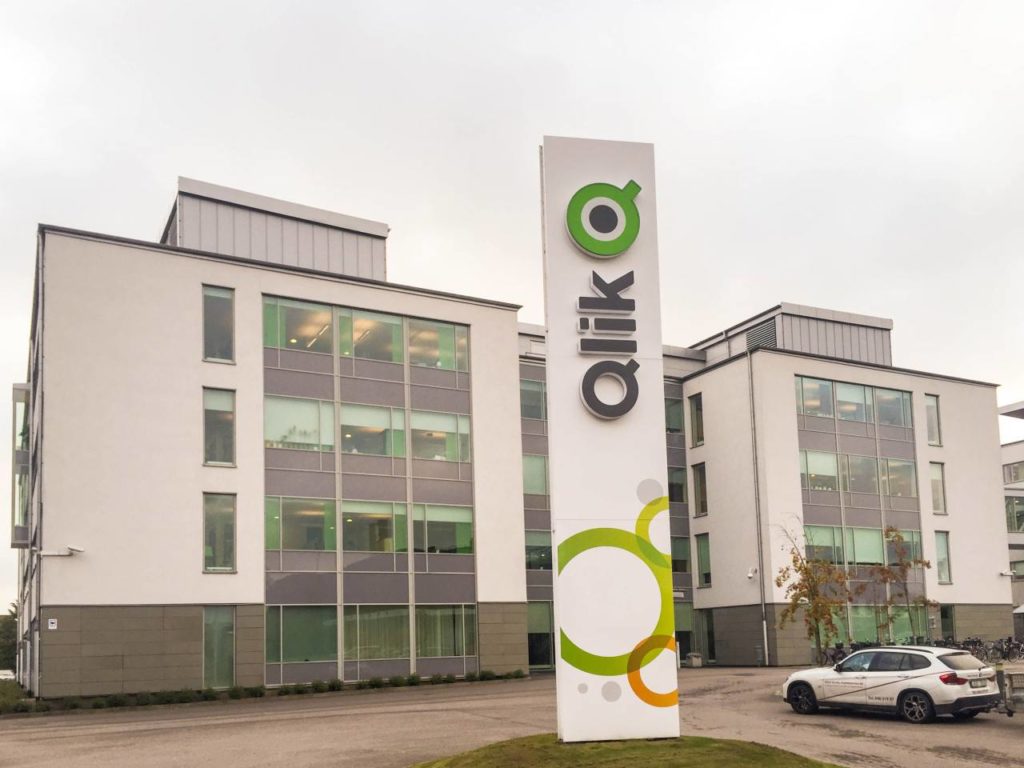
Qlik, aka QlikTech Inc., is a software solution company that deals with providing a business analytical platform to enterprises to solve their problems. The company was founded in 1993, and for the past almost 30 years, Qlik has helped many big-name companies with its business intelligence software solutions. The company deals in services like data analytics and data integration, having offices all around the world. Qlik is known for its excellence and innovation, has joined its hands with companies like Accenture and Cognizant for multiple programs.

About the Company

Qlik started its journey 28 years back in Sweden as a company providing detailed data analysis services. The company headquarters is in Lund, Sweden, and about 2500 people are working for it globally. Along with Sweden, the company has established offices in the US, Canada, Latin America, Europe, Middle East, as well as in Africa. Qlik is known for its services in business intelligence, data analytics, data integration, business analysis, and software development. Qlik Sense, Qlik Replicate, and Qlik Catalog are a few of the main products that the company endorses. The Qlik services are compatible with the major web service providers like Amazon Web Services (AWS), Microsoft Azure, Microsoft applications, Google, SAP, etc.

QlikTech
Image source: analyticsindiamag.com

Founding QlikTech

Bjorn Berg and Staffan Gestrelius from Sweden founded QlikTech in 1993 as the providers of data analysis services. The company introduced QlikView as its first product, released in 1994, and got the patent for the same in 1995. In the following years, the company released the other three versions of the product. The popularity of QlikView brought Qlik funding from renowned Swedish investors Handelsbanken and Industrifonden in 1999. This led to the growth in the number of employees as well.
In 2004, Qlik went international and established the company headquarters in the US. The same year, the company also received more investments from Accel Partners and Jerusalem Venture Partners. In 2005, the company released version 7 of QlikView, replacing the single-user desktop with a server-based web tool.
By the end of the decade, the company was already a unicorn, and in 2011, the market capitalization of Qlik reached $2 billion. In the following years, the company made some important acquisitions that helped its expansion. Vizubi, Idevio, Crunch Data, Attunity, Knarr Analytic, and RoxAI are some of the companies acquired by Qlik.
In 2012, Qlik was among the top three fastest-growing tech companies in America. The next year, Qlik opened a new office in Perth, Australia, followed by the opening of a research and development branch in Ottawa, Ontario in 2015. In 2017, Qlik joined hands with Thomas Jefferson University of Pennsylvania to fight the opioid epidemic in the country. The next year, the company received the Best Business Intelligence and Analytics Software award.
By 2019, the Qlik had successfully launched its Software-as-a-Service environment, and the customers were now allowed to deploy its software on Qlik as well as any other public cloud. Wrightington, Wigan, and Leigh NHS Foundation Trust used the Qlik software to keep the record of the patients during the COVID-19 pandemic in the UK.
Qlik Sense and QlikView are some of its major products that run on its Associative Engine, used for big data analytics. Other than those, Qlik Analytics Platform, Qlik Data Catalyst, Qlik Core are some of the products that work using the same engine. Other Qlik products include Qlik GeoAnalytics, Qlik DataMarket, Qlik Connectors, Qlik Catalog, and Qlik Compose, etc.

The CEO at QlikTech

Mike Capone is the current CEO at Qlik. Capone went to Dickinson College to earn a BS degree in Computer Science and later completed an MBA in Finance from Pace University. Before joining Qlik, he has worked with companies like ADP and Medidata. He held the positions like Corporate Vice President of Product Development & CIO as well as the General Manager of the global outsourcing business at ADP. At Medidata, Capone worked as the COO and helped in the product development of the company. In January 2018, he became the CEO of Qlik.

Visma

Visma – A Leading Software Company In The Nordic Region And Europe.

Visma is a computer software company that is owned by a group of private equity firms. The company was founded in 1996 and it is based in Oslo, Norway. The Visma management only owns 6.6 percent of the company and the other owners include Hg and co-investors (major ownership), Cinven, Immediate Capital Group, and Montagu. Back in 1996, Company was formed by the merger of multiple companies are Multisoft, SpecTec, and Dovre Information Systems.

About The Company

Visma is a Nordic software company that mainly provides business software, IT consultancy, and related services. The main market of Company is spread across the entire Nordic region and also in Central and Eastern Europe as well. Some of the countries where the Company has offices are Sweden, Denmark, Finland, the Netherlands, Romania, Hungary, United Kingdom, and many more. Currently, Company has around 900,000 customers out of which the majority are from Northern Europe.

The CEO of the company is Merete Hverven and there are 12,500 employees working under her supervision. Visma is a big organization and it has been divided into five groups for different operations. The five divisions are Visma SMB (software division), Visma Enterprise, Visma Custom Solutions, Cloud Infrastructure Services, and Commerce Solutions. The revenue generated last year by the company was 18.68 billion NOK.

Visma
Image source: kinstacdn.com

History of Visma

The company started its operations officially in 1996 and it got listed on Oslo Stock Exchange and started operating as a public company. The companies that today form Visma were merged in 1996 and together as a single organization rolled out three key products, SpecTec (marine), Visma Logistics, and Visma Business. In 1997, the company faced some financial crisis as the investment company planned for the growth of the company exceeded the company’s resources. In order to survive this turmoil, the company was restructured, and hence most of the management team and board of directors were replaced. A new CEO was hired for the company but at the same time, there were several layoffs.

Two years after reorganizing the company, it started expanding overseas. In 1999, the company opened offices in Denmark and the UK. The company started to prepare itself for the launch of Visma Business e-commerce, developed its web, and WAP extensions for all the applications of Visma. In 2000, Company decided to sell its Marine ASA’s operations. The deal was confirmed with a Dutch company called Station 12 and the cash Visma received was used to offer both software and outsourcing services within finance and payroll.

Growth and Expansion

In 2001, Company acquired a Swedish company called Spcs which was followed by acquiring a Finnish company called Liinos. Through the acquisition of Liinos, Company strategically entered the Finnish market. In the later years, Visma entered into the Norwegian and Danish market and also into the public sector through the acquisition of Møre Datasystemer. In 2003, the company also started a collaboration with Norway’s largest bank (DNB) and the national postal service. By the time the company was growing steadily, it established Visma’s Management Trainee program. In 2006, Company entered the Dutch market after it acquired AccountView, a software company. During this time, the ownership of the company changed as Visma became a private company with majority of ownership going to HgCapital.

Visma as a Private Company

After the change in ownership, the company established its retail IT division. In 2009, Company completed the construction of its new headquarters in Oslo and also became the second-largest accounting firm in Finland. In 2010, Kohlberg Kravis and Roberts acquired 76.9 percent ownership of the company and after this transaction, the valuation of the Company became 11 billion NOK. In the upcoming years, Visma acquired some more companies and rolled out products for medium and small-scale businesses. Last year, the company acquired Yuki, a Dutch company that provides a bookkeeping software platform.

Merete Hverven – CEO of Visma

In 2011, Merete Hverven joined Visma as HR Director and after two years she became the Chief Human Resource Officer. Last year, she became the CEO of the company and she has been awarded several prestigious mentions for her leadership, influence, and passion in tech. In 2019, she became one of the top three most influential women in technology by ODA Award Woman.

Neusoft Corporation

Neusoft Corporation – A Chinese Software Company Founded By The Northeastern University Professors.

Neusoft Corporation is a famous company in the IT industry known for mainly software development and designing medical equipment and systems. The company was founded in 1991 and back then it was known as Shenyang Neu-Alpine Software Co Ltd. Liu Jiren and Li Huatian are known as the main founders of the company. Both of them were professors at Northeastern University and worked in the Computer Software and Network Engineering Research Laboratory. Since the professor of Northeastern University founded the college, the company was named after it and Neusoft is the acronym of Northeastern University Software.

About Neusoft Corporation

Neusoft Corporation is a very famous company based in China. Its headquarters is located in Shenyang, China. It is a publicly-traded company that is listed on the Shanghai Stock Exchange. The current CEO and Chairman of the company are Liu Jiren, one of the original founders of the company. Last year, the company was the largest enterprise in China for providing IT services.

Neusoft has several subsidiaries spread over various countries. In the US, it has offices in Michigan, Santa Clara, California, North Carolina, etc. In Asia, the company has entered the Japanese market and some of the other subsidiaries are present in Switzerland, Germany, and Romania. In 2012, Neusoft was the biggest IT outsourcing firm in China. Today, the company has approximately 20,000 employees across various continents.

Neusoft Corporation
Image source: www.massdevice.com

History Of The Company

Before officially establishing the company as Neusoft Corporation in 1991, it was first a research laboratory in the campus of Northeastern University. The two founders founded this computer research laboratory in 1988 and initially consisted of only three computers. The company started off with three people including the co-founders working in the lab. After two years, the laboratory expanded and became the NEU Computer Software Research and Development Centre. Next year, the NEU Centre established a joint venture with the Japanese company, Alpine Electronics and it was renamed as Neu-Alpine Software Research Institute.

Expansion

Software outsourcing became one of the main services provided by the company and Alpine became its first customer from overseas. In 1993, the company was renamed as Neu-Alpine Software Co Ltd. From the very beginning, Leu Jiren became the CEO of the company and all these developments took place under his jurisdiction. In the mid-1990s, the development of the Neusoft Park began and it was also entering a new market of the healthcare sector. Neusoft established the NEU Computer Imaging Centre and took interest in CT scanning and other medical technologies.
In 1996, the NEU Software Group Ltd was established. Until then it had only Alpine Electronics as one of its collaborative partners. But after the NEU Software Group was established it started partnering with multiple companies and one of them was Toshiba. The same year, Neusoft filed for an IPO and it became the first software company in China to get listed on the Shanghai Stock Exchange. In 1998, the company entered into a partnership with Boa Steel which strengthened the investor base of the company.

In early 2000, a new consolidation of investments took place which led to some changes in ownership of the company. The major investors of the company including Alpine Electronics, Bao Steel, and Toshiba became the shareholders of the Neusoft Group. With a strong partnership with multiple companies, Neusoft expanded very rapidly and by 2004 it had a total of 40 offices in China and 6,000 employees working there. The company, though became the largest outsourcing company in China, is still behind Indian giants like the Tata Group and Infosys. The main market of Neusoft is in China and Japan.

About The Founders

Liu Jiren is famous as the CEO and Chairman of the largest software company in China. He is a visionary and his exceptional knowledge about industry transformed a small business founded on a college campus into a multinational conglomerate. In 2019, he received Ernst & Young’s EY Entrepreneur of the Year Alumni Award for Societal Impact.

Li Huatian was an electrical engineer with immense contributions in the computer science fields. He is one of the oldest and earliest computer scientists from China who has significant contributions in the field. He was a professor both at Dalian University of Technology and Northeastern University. He passed away in January 2007.

verint systems

Verint Systems – Story of a New-York Based Analytics Company Founded in 2002.

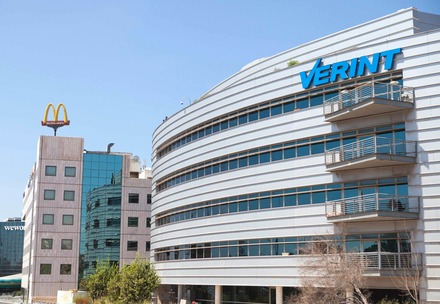
As businesses are growing rapidly in the digital era, the demand for software development, IT, and business consulting sectors is also booming. Verint Systems is one of those analytics companies that is known for software development and also for selling hardware products. The company’s headquarters is based in Melville, New York, US. Verint System wasn’t always an independently traded public company as it started off as a Comverse Infosys unit of Comverse Technology.

In 2002, Verint Systems was founded (became a public company) and is currently led by Dan Bodner, President, and CEO of Verint. The company has grown significantly after it became public and currently generates revenue in billions. Verint provides services to more than 150 countries and has over 10,000 clients. So, let’s have a look at the early years of the Company and how it spun off from Comverse Technology.

History of Company

Verint Systems, as a part of Comverse Technology, was founded in 1999. But, this business unit of Comverse Technology was originally incorporated in 1994 in Delaware. Back then it was a wholly-owned subsidiary of the company which later became the business unit of Comverse Infosys. Before the company established itself as Verint Systems, its main focus was on the call recording market. The call recording market, back then, grew popular as it was the era when technology from analog tape transformed into digital recorders. In 1999, the company rolled out a service for internet call waiting.

The same year when Verint became the business unit of Comverse Infosys, the company decided to merge another division of Comverse with it. So, Verint was merged with a Comverse unit which was focused on the security and communication interception market. Converse Technology acquired a company called Loronix Information Systems Inc which along with Verint expanded into the video security market in 2001. And next year, Converse Infosys finally renamed itself Verint Systems.

verint systems
Image source: haarets.co.il

Verint Systems as a Public Company

In 2002, Company filed its IPO and became a public company although the majority of its stakes were still owned by Comverse Technology. After starting off as a public company, Verint expanded the range of solutions, entered into various overseas markets, and acquired a bunch of companies.

Some of the companies acquired by Verint Systems are MultiVision Intelligent Surveillance Limited which was a business in the video security sector. It also acquired a UK-based customer management company called CM Insight followed by a company that specialized in interaction recording and performance evaluation. Verint acquired all these companies in a short time span and thus strengthened its existing market and opened up new possibilities. Verint also acquired a data mining company called ViewLinks Euclipse Ltd and a workforce optimization company called Witness Systems Inc. In July 2008, Verint Systems acquired a very young company called Focal Info. Amit Bohensky founded this software company which mainly focused on web data extraction and analytics. Verint Systems acquired the company with an undisclosed monetary amount and the founder was hired back after the acquisition.

An Independent Company

After Verint became a public company in 2002, it was delisted from the NASDAQ stock exchange in 2006 along with Comverse Technology due to a scandal. But, again in 2010, Company was back on the NASDAQ stock exchange list and struck a deal with Comverse Technology to sell its remaining interest in Verint. In 2012, Company became a completely independent company as it bought the remaining stakes from Comverse for $800 million. After the buyout, Company made some major acquisitions which include KANA Software Inc for $514.2 million, Next IT for $30 million upfront cash and $20 million future payments, and a software company called OpinionLab for an undisclosed amount.

Dan Bodner – CEO of Verint Systems

Dan Bodner is serving as the CEO of Verint Systems since the company became a different entity that separated from Comverse Technology. Dan is attached to Comverse Technology when Verint was just a wholly-owned subsidiary of the company. Currently, he is also the Chairman of the Board of Verint Systems. Dan Bodner completed his education at the Israel Institute of Technology.

Schneider Electric

Schneider Electric – The Biggest Sustainable Electric Equipment Manufactures.

Schneider Electric is a well-known electrical equipment development company, serving all over the world. The company has been there in the industry for the past 185 years and taking its legacy to another level with its excellence. Along with providing the best electric products, the company keeps sustainability in mind and curates its products based on that. From homes to data centers and from real-time automation to software, Schneider Electric has covered it all. The company is operational in over a hundred countries with more than twenty subsidiaries and 20,000 patents registered. It is a publically traded company that has also registered its name under the Fortune Global 500 list.

About the Schneider Electric

Schneider Electric SA is a French electric company, founded back in 1836. Its headquarters is in Rueil-Malmaison, France, and offers its services to its worldwide customers having its offices and manufacturing plants established in over a hundred countries. Schneider Electric has over 135,000 people working for it, in more than twenty subsidiaries, such as Luminous Power Technologies Pvt. Ltd., APC, Areva T&D, Federal Pioneer, TAC, and Zicom, etc. As per 2019 records, the company made revenue worth €27.2 billion and holds assets worth €45 billion. Schneider Electric energy and automation digital solutions, such as building automation, home automation, electric power distribution, industrial safety services, etc.

Schneider Electric
Image source: zawya.com

The Beginning and Growth

Schneider brothers Eugène Schneider and Adolphe Schneider acquired mines and forges at Le Creusot, France, to establish a steel and machinery factory in 1936. After two years, the founders named their company Schneider & Cie, which later became one of the leading steel companies in the area and remained in that position for the next 50 years. In 1891, Schneider started to invest in the electricity business, as it was one of the emerging fields of that time. The new business started to grow rapidly, and in 1919, Schneider started its international expansion entering Germany and Eastern Europe.
Like every other big company, the two world wars were very crucial for Schneider. As soon as the second world war ended, Schneider started to grow at an even faster pace. In 1949, the company decided to restructure its operations and planned multiple acquisitions. In 1975, the company acquired a share in one of the biggest electric equipment manufacturing companies of France named Merlin Gerin. In the next two decades, it went on to acquire names like Télémécanique (1988), Square D (1991), and Lexel (1999). In May 1999, the company was renamed Schneider Electric from its century-old name Schneider & Cie.
In the year 2000, Schneider Electric moved its headquarters to Rueil-Malmaison, France. During the same time, it established the Schneider Electric Foundation, an organization to spread awareness about sustainability and emerging economics. In 2010, the company started to invest in software, critical power and grid applications. Schneider also introduced a new program named Life is On that promoted sustainability and efficiency. The same year, Schneider Electric also established a venture capital firm to support new startups.
In 2014, the company partnered with the German power supplier RWE, and in the next year, it introduced EcoStruxure, an IoT-enabled architecture. Its acquisition of British retail brand Tower Electric in 2016 helped it strengthen its position in Europe. In 2019, the company launched a cross-industry digital ecosystem named Scheider Electric Exchange. The next year, it acquired companies like RIB Software and ProLeiT AG. The same year it introduced smart equipment for better electricity distribution, specifically for Nigeria.

The CEO at Schneider Electric

Jean-Pascal Tricoire, a renowned Fench businessman is the current CEO and the chairman of Schneider Electric. He was born on 11 May 1963 in Beaupréau, France. Tricoire is an Electronic engineering graduate and holds an MBA from EM LYON Business School. Before joining Schneider, he has worked with multiple famous companies.
Tricoire started his career at Alcatel, Schlumberger and joined Saint-Gobain afterwards. In 1986, he was working at Merlin Gerin. As in 1992, Schneider took over the company, he became a part of the company too. After working in different branches of Schneider Electric in Italy, China and South Africa, he was appointed as the Head of Schneider Electric’s Global Strategic Accounts. In January 2002, he became the Vice President of the International Division of the company, and in October 2003, he was announced the Deputy CEO and COO of Schneider Electric. Finally, in 2006, he was promoted to be the CEO of Schneider Electric SA.