Your Tech Story

Story

meltwater

Meltwater – Formerly known As Magenta News Is The World’s First Online Media Monitoring Business.

Meltwater (formerly known as Meltwater Group) is a publicly-traded company based in California, US. The company was originally founded in Oslo, Norway in 2001 as Magenta News. Today, the company has a worldwide business and employs more than 1,600 people. Meltwater mainly offers software as a service (SaaS) solutions and currently, it has more than 27,000 customers on a global scale spread across 120 countries. It has also built 50 offices in 20 countries in various parts of Europe, Africa, Asia Pacific, Australia, and North America. The company also has a non-profit division called The Meltwater Foundation and its project started in Accra, Ghana.

The Story Behind The Success

Meltwater was founded in 2001 by two legends, Jørn Lyseggen and Gard Haugen. They started the company as Magenta News and it was established in Oslo, Norway. When the two founders decided to open their business, all they had was a coffee machine and a capital of $15,000. Their first office was a very little space in a shipyard from where the team tried to create the first server farm. The company’s first target was to educate the Norwegian market to make their influence strong in the home country. The company educated its existing and potential audience regarding the value of tracking and monitoring online news. After struggling for a couple of years, the footprint of the company began growing in the mid-2000s.

Since Meltwater was the world’s first online media monitoring company, once it stabilized itself in the digital market it started growing rapidly. After establishing the company, it rolled out its first product which was a news clipping service. The product was capable of scanning 100,000 news sources at a single time for collecting keywords relevant to a business and its customers. In 2005, the company decided to shift its headquarters from Ohio to San Francisco and also changed the name of the company to Meltwater News.

meltwater
Image source: wikimedia.org

Expansion

Amidst the rapid growth that the company was making, it decided to open a non-profit arm to offer business and educational support to the people of Africa. The Meltwater Foundation launched the Meltwater Entrepreneurial School of Technology (MEST) to offer entrepreneurial training in Ghana. Within 2008, the company expanded to almost every continent and secured an impressive customer base in each one of them. In 2010, the company announced the release of Meltwater Press which was a web-based media contact database. The same year, Company acquired an Indian-based social media monitoring company, BuzzGain followed by a CRM software developer, JitterJam 2011. After these two successful acquisitions, Meltwater released an in-house social marketing and business intelligence tool called Buzz Engage. Meltwater made another acquisition in 2011 (IceRocket) to integrate its functionality with the Buzz Engage Platform.

In 2015, the company decided to launch a new media intelligence platform and named it Meltwater. For the next few years, Meltwater made several acquisitions and each of the company’s platforms was integrated with some of the existing Meltwater products to make them more flexible. In March 2016, the company acquired Encore Alert and in 2017 it acquired an Oxford University spin-out, Wrapidity. Later in 2017, Meltwater acquired a big data company called Klarity followed by Algo. In 2018 it acquired two companies, namely, Datasift and Sysomos. In 2020, Jørn Lyseggen stepped down as the CEO of the company and he was replaced by Niklas De Besche. But after a few months, he was made the COO of the company and John Box became the new CEO.

Jørn Lyseggen – Founder & Chairman of Meltwater

Jørn Lyseggen is a famous Norwegian entrepreneur who is currently the Executive Chairman of Meltwater and MEST. Lyseggen’s career started as a research scientist at the Norwegian Computing Center. Since he has a very entrepreneurial mindset, Lyseggen worked for different startups and also became the CEO of Mogul AS. The biggest highlight in his career was founding Magenta News (now known as Meltwater) and also a non-profit organization to boost the startup culture among Africans.

trellix

Trellix – A Cybersecurity Company That Was Founded By A Former Engineer Of Sun Microsystems.

Trellix is a cybersecurity company based in California, United States. Recently, FireEye and McAfee enterprise businesses combined together to launch this extended detection and response company in January 2022. So, the roots of Trellix originally date back to the foundation of FireEye by Ashar Aziz, a former engineer at Sun Microsystems.

FireEye was founded in 2004 and after a gap of a few years, the company started commercializing its products. Today, Trellix represents the products of FireEye and some of its main products are email security, endpoint security, file security, cross-vendor, etc. Trellix has approximately 3,400 employees and the company’s recent research claims that most of the hacking groups are either linked to China or Russia.

About Trellix

Trellix is a privately-held cybersecurity company that has evolved in the past 18 years and expanded the ways and techniques in threat detection. The company has been responsible for the detection and prevention of some of the major cyber-attacks across the world. Currently, the Trellix Advanced Threat Research (ATR) team has anticipated cyber attacks targeting Ukraine, and hence team of wipers has been deployed.

Trellix offers both hardware and software products for investigating cyberattacks, preventing malicious activities, and analyzing IT risks. The initial focus of the company was on developing virtual machines to test internet traffic. But after the company started acquisitions it diversified. In 2013, the company went public but then it was privatized once again in 2021. In 2021, FireEye sold both its brand name and products to Symphony Technology Group which then launched Trellix after a year.

Trellix
Image source: indianexpress.com

History

The history of Trellix began in 2004 with the foundation of FireEye. Though the company was established in 2004, its first product was publicly released in 2010, after a gap of six years. After it released its first product, the company decided to expand in the Middle Eastern market in the same year. By the end of 2010, FireEye opened new offices in the Asia Pacific region, and in 2011 opened new offices in Europe. In 2013, the company expanded into the African market as well. Till 2012, the founder of FireEye, Ashar Aziz played the role of CEO in the company but stepped down in December and he was replaced by David DeWalt, former CEO of McAfee. The main reason why DeWalt was recruited was to prepare the company for an IPO. In 2013, the company raised $50 million in funding and went public after which it raised another $300 million.

Recent Operations

FireEye was growing rapidly especially after it became a public company. The annual revenue of the company increased by eight folds within a couple of years between 2010 and 2012. As the company grew and expanded to various other international markets, the employees also increased from 175 in 2011 to 900 in 2013. Though FireEye was growing rapidly the net profit was not increasing sharply because of the high operating cost, especially in the research division. FireEye also started making acquisitions during this time and started with Mandiant, an information security company in 2013. The deal was closed for $1 billion. Mandiant was a famous cybersecurity company that was known for investigating high-profile hacking groups. In 2014, it acquired another information security company called nPulse Technologies for $60 million.

After making a few acquisitions and launching new products, the annual revenue of the company was $100 million in 2015. But even at this point, the company wasn’t profitable yet due to large research expenditure. In 2016, FireEye acquired two new companies called iSight Partners and Invotas. In the same year, DeWalt stepped down from the CEO of the company and he was replaced by Mandiant CEO Kevin Mandia. In 2021, after STG acquired both FireEye and McAfee Enterprise, the company decided to roll out Trellix.

Bryan Palma – CEO of Trellix

Bryan Palma has become the CEO of Trellix in 2022. He is new to the company as he joined FireEye only a year ago as the Executive Vice President of FireEye Products. He went to the University of Richmond for his bachelor’s and later acquired an MBA degree from Duke University.

Clarivate

Clarivate – Famous American Analytics Firm Emerged As A Part Of Thomson Reuters.

Clarivate is an analytics company that mainly offers critical information, domain expertise, workflow solutions, etc. Its main goal is to reduce the time between cultivating new ideas and converting them to innovative solutions for its customers. Clarivate was founded in 2016 but before that, it was a part of Thomson Reuters (Intellectual Property and Science Division). Clarivate mainly offers subscription-based services for several purposes like competitive profiling, bibliometrics, etc for pharmacy and biotech. Clarivate is a publicly-traded company listed on New York Stock Exchange and its headquarters is based in Philadelphia in the US and London in the UK.

About Clarivate

Apart from being a global leader in the entrepreneurial community, Clarivate is also a well-known organization in the scientific community. The company mainly uses data from the Web of Science to calculate the impact factor. Its product family includes applications like Publons, EndNote, ScholarOne, etc. Clarivate was spun off from Thomson Reuters in 2016 after the acquisition of the former by Onex Corporation and Baring Private Equity Asia. In the last 5-6 years, the company made a series of acquisitions to expand the territory. And today the company has more than 11,000 employees who are working with 200 partners across the globe.

Clarivate is innovative in terms that it has a rich scientific influence as well as entrepreneurial zeal. Recently, it has also committed to #StandWithUkraine by launching resource centers for displaced researchers. It has also announced that the company will cease all its commercial activities in Russia. Though the company is expanding very rapidly, it has also been accused of using anti-competitive practices for increasing the prices of the products it has already acquired.

Clarivate
Image source: www.stm-publishing.com

History

The original roots of Clarivate date back to the 19th century when in 1864 Zoological Record was founded. It is currently the world’s oldest database of animal biology. Over the years, the database has evolved and the company also broadened with trusted customers. Before Clarivate was known as the Intellectual Property and Science Division, it was known as Thomson Scientific. Then in 2016, the company decided to strike a deal with two private equity firms and sold Clarivate for $3.55 billion. In 2016, Company was officially separated from Thomson Reuters, and from the next year, the company started acquiring several other businesses for expanding the number of products and also spread into more geographical territories.

Expansion & Acquisition

Clarivate acquired a company called Publons in 2017. Publons offered a platform for research scholars to share recognition for the purpose of peer review. In April 2018, Company acquired another company called Kopernio which is an AI-based tech startup for searching full-text versions of several scientific and research journal articles. Later that year, Clarivate acquired another AI-based company called Trademark Vision for research applications. In 2019, the company decided to go public and hence it merged with Churchill Capital Corp SPAC and obtained a public listing on the NYSE. In 2019, Company acquired two new companies, namely, SequenceBase and Darts-ip. The former is a provider of patent sequence information mainly for the pharmaceutical industry while the latter is a provider of case law data and analytics. In 2021, Clarivate acquired ProQuest for $5.3 billion.

Jerre Stead – CEO of Clarivate

Jerre Stead is the CEO of Clarivate since 2019 and before that, he served as the CEO of Churchill Capital Corp. Stead is a very experienced business executive professional before he served in nine companies as the CEO. He served as the CEO of IHS Markit before getting associated with Clarivate and Churchill. Some of the other companies he worked for are Square D, AT&T, Legent Corporation, and many more.

Cylance

Cylance – A Billion-Dollar Cybersecurity Startup Founded By A Former Executive Of McAfee.

Cylance is a cybersecurity software firm founded in 2012. It is a young company and has already reached a billion-dollar valuation. Cylance is a privately-held company as in 2019 it was acquired by BlackBerry Limited for $1.4 billion. Stuart McClure, a former executive at McAfee is the founder of Cylance and now product and service are under the brand name of BlackBerry. The company’s headquarters is based in Irvine, California, US. Cylance mainly develops antivirus software programs and other related computer software. When Cylance was an independent company it claimed that the company focuses on preventive software rather than malware detection.

Backstory of Cylance

Stuart McClure was a cybersecurity researcher and before founding Cylance he was the global Chief Technology Officer at McAfee. While he was working as the CTO of McAfee, he spend half of his time apologizing to the customers of McAfee for data breaches. And, McClure said mentioned that every breach seemed to be worse than the previous one. This defamed the company and each and every day McClure had a long conversation with top priority clients of McAfee.

Several clients asked him what are the types of software and the various layer of security system that is used by the company to prevent such data breaches. While going through this phase of constant questioning and allegations, he realized that there are no new ways of hacking a system. And if he can teach the computer to prevent such attacks that would solve the main problem. This was the beginning of Cylance and he started thinking of a new project.

Cylance
Image source: rackcdn.com

Early Days

Apart from McClure, Ryan Permeh, the former chief scientist of McAfee is also one of the main brains behind founding Cylance. McClure’s approach towards its customers was not in a conventional way that is used by most cybersecurity companies. For example, many big companies try to intimidate clients by saying that there are several ways that a hacker can compromise a system and that is why advanced solutions are required to prevent such attacks. But McClure was very honest and transparent at Cylance from the beginning. He said that there can be only a handful of ways through which a hacker can penetrate a company’s network. And if someone knows the way around their system then it becomes easier to understand how the mindset of the hacker and how that breach can be prevented.

Success

After Cylance was founded it was able to land many big reputed clients like Toyota, Panasonic, WWE, etc. In 2015, the company raised $42 million from funding rounds which included investors like CapitalOne, Dell, Draper Fisher Jurvetson, and many more. In 2016, the company was able to raise another $100 million and the main investors were Blackstone Tactical Opportunities and Insight Venture Partners. The reputation of the company rose in 2016 when the U.S. House of Representatives Committee on Oversight and Government Reform reported the worst data breach and was fixed by Cylance. After it fixed a big data breach for the US government, Dell also announced that the company would incorporate Cylance in the machines sold to corporate customers. With more investors coming on board by the end of 2015, Cylance reached the mark of a $1 billion valuation. In the same year, the company also ranked 26th in Inc 5000, and the annual revenue of the company summed up to $11.1 million.

Awards & Recognitions

Cylance has been awarded several prestigious awards and also featured in many renowned magazines. Only four years after founding the company, Cylance was featured in Forbes in 2016 in the Forbes Cloud 100 list. In the same years, it was also named Orange County Entrepreneur of the Year. In 2017 the company was recognized by LinkedIn as one of the “Top Companies | Startups” of the year 2017 and next year it won the MSPWorld Cup Award.

Stuart McClure – Founder of Cylance

Stuart McClure is the founder and former CEO of the company until the company was acquired by BlackBerry. Before founding Cylance, Stuart McCLure was the EVP, Global CTO, and General Manager of McAfee. He also wrote a book on cybersecurity called Hacking Exposed.

Zebra Technologies

Zebra Technologies – A Mobile Computing Company Famous For Its Innovation In IoT.

Zebra Technologies is an American-based mobile computing company and is known for IoT innovations. The company was founded in 1969 by Ed Kaplan and Gerhard Cless. Zebra Technologies was originally incorporated as Data Specialties Incorporated and later the brand name was changed after several mergers and acquisitions. The headquarters of the company is based in Illinois, United States and there are nearly 9,000 employees in the company. It has received several awards and is recognized by famous magazines like Forbes for being one of the best American employers. The company has currently spread across 100 countries and has made more than 10,000 partners.

About Zebra Technologies

The main industry in which Zebra Technologies is based is computer hardware, retail, manufacturing, transportation and logistics, and health. The company has offices in 50 countries and the locations include China, Germany, India, the US, UK, Japan, Mexico, Russia, and many more. By the end of 2015, the company announced that the products and services of Zebra Technologies are provided across 170 countries. And by the end of 2020, the company reached 180 countries with 8,800 employees. Though the company has made several acquisitions in the past twenty years, in 2021 it acquired three companies in a row including Adaptive Vision, Fetch Robotics, and Antuit.ai.

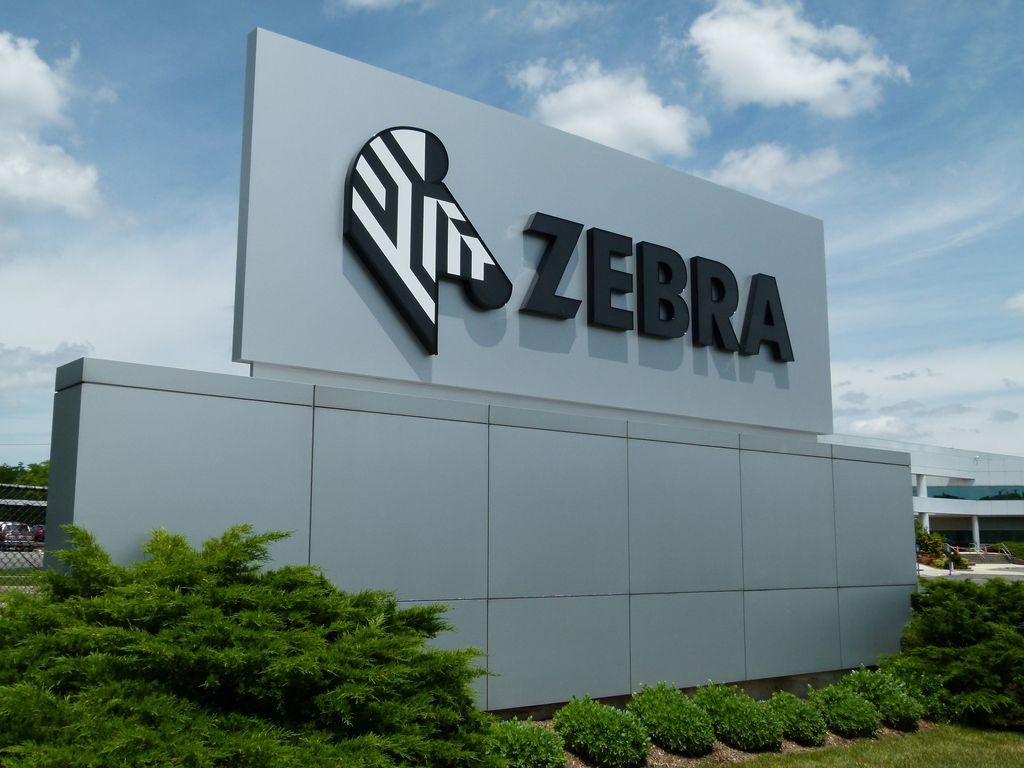
Zebra Technologies
Image source: colite.com

Foundation

When Zebra Technologies was established back in the late 1960s, its main domain was manufacturing high-speed electromechanical products. After more than a decade, the company decided to shift its market and focus on on-demand labeling and ticketing systems. So, in 1982 it rolled out its first barcode printer and after four years introduced a thermal printer for on-demand barcode labeling. In 1986, the company’s name was changed to its current name Zebra Technologies and in 1991 it became a publicly-traded company. In the same year, Company also introduced its first laser scannable two-dimensional barcode. In 1997, it launched the first wearable computer and eventually started expanding its product base.

Expansion

In 1998, Company merged with Eltron International, a company known for manufacturing photo ID card printers. Zebra Technologies started acquiring companies from the starting of the next decade. In 2000, it acquired Comtec Information Systems, a manufacturer of wireless mobile printers followed by acquiring Atlantek Inc in 2003. Next year, the company entered into the RFID smart label manufacturing market and launched new products. In the next few years, the company acquired Swecoin, Proveo AG, WhereNetCorp, and Navis Holdings. In 2007, Zebra Technologies appointed its new CEO, Anders Gustafsson. It also acquired Enterprise Solutions Group in 2008 which was renamed Zebra Enterprise Solutions in 2009.

In the upcoming years, Zebra Technologies acquired Multispectral Solutions, LaserBand, and StepOne Systems. The last two companies were purchased for $1.5 million. In 2013, the made a big acquisition as it purchased Hart Systems from a private equity firm Topspin Partners LBO. The deal was finalized for $94 million. In 2014, the company offered $3.45 billion for acquiring Motorola Solutions’ Enterprise Division. This acquisition brought many new technologies to the company including advanced data capture communications technology. In the same year, the company also installed its real-time location system (RTLS) in NFL stadiums. In 2018, the company acquired Xplore Technologies followed by Temptime Corporation in 2019. For workforce management and communication solutions, the company acquired Reflexis Systems in 2020.

Anders Gustafsson – CEO of Zebra Technologies

Anders Gustafsson is the CEO and a director of Zebra Technologies. Before Anders joined Zebra Technologies, he served as the CEO of Spirent Communications. When he was at Spirent, his strategies helped the company grow in the non-core sector and also made several successful acquisitions. He was also associated with Tellabs Inc and Motorola. He completed electrical engineering from the Chalmers University of Technology.

monday.com

Monday.com – A Company That Gives The Liberty To Design Their Own Work Management Applications.

Founded in 2012 by three entrepreneurs, Monday.com was built in a way to give companies and individual clients the liberty to develop their own applications. Depending on the needs and goals of a company, it has to buy or develop customized work management software. Monday.com is a publicly-traded company that specializes in several domains including project management, team management, no-code development platform, and many more. The project of Monday.com was started in 2012 and was officially launched two years after that. The company’s headquarters is based in Tel Aviv, Israel and currently, it has more than 1,000 employees.

About the Company

Being an expert in project and work management, the main services offered by Monday.com are sales and CRM, inventory tracking, software development, HR, operations, etc. Monday.com can be best described as a Work Operating System (Work OS) that is a very flexible option, especially for the remote work environment. It helps in shaping the entire workflow in a team from collaboration to developing custom work applications. The UI of Monday.com is very careful and it helps in visualizing a lot of information from a different perspective. Monday.com was originally famous as daPulse and its name was changed in 2017. Recently, the company was also awarded Calcalist’s most promising startups.

History

The founders of Monday.com are Roy Mann, Eran Kampf, and Eran Zinman. These three founders started the project to develop something innovative and easily customizable so that it can be used by everyone. In 2012 the company was started and it was a huge triumph for the company that later in the same year it was able to raised funding of $1.5 million in the seed round. The first step towards developing a new project, the founders tried to understand the pain points of their target customers and eventually built a prototype under the brand name daPulse. In 2014, after two years of hard work the company was finally able to launch its first commercial product, and in the same year, it was able to land its first six customers. The business started out of an apartment in Tel Aviv and in that tiny office, they hosted their first board meeting.

Expansion

The company started growing impressively as within one year of launching its first product its customer base went from having six customers to 3,181 new customers. So, it expanded the team as well and added nine new members. In 2016, the company hosted its Series A funding round and raised $7.6 million. This funding round was led by Genesis Partners and Entrée Capital. By the end of this year, the company was able to acquire more than 7,000 new customers. Monday.com released a new mobile application in 2016. The Series B funding round of the company took place in 2017 and the company successfully raised $25 million. Insight Venture Partners along with existing investors from the Series A funding round. The total customer base of the company exceeded 20,000. Monday.com eventually got some exposure in 2017 when it was featured in Globes Most Promising Startup of the Year and also became one of the top 15 companies in 500 Fastest Growing Companies. By the end of 2017, daPulse was officially branded as Monday.com.

In 2018, the company expanded more as it opened its first international office in New York City. The company also raised $50 million in Series C funding and a new investor called Stripes Group was added. In the Series D funding round, the company was able to raise $150 million and it was raised by Sapphire Ventures. The company became the recipient of the 2020 Webby Award and also achieved unicorn status. It has also expanded to the UK, Miami, and San Francisco.

monday.com
Image source: onlinegeniuses.com

Roy Mann – CEO of Monday.com

Roy Mann is one of the founders of Monday.com and the present CEO of the company. He started his career as a web developer at Finjan. Apart from co-founding Monday.com, he is also the founder of SaveAnAlien.com and served as the former C-CTO of wix.com. Mann studied computer science at Reichman University.