Your Tech Story

Story

Spire Global

Spire Global – A Data Analytics Company Harnessing The Power Of Satellite Technology. 

Founded in 2012, Spire Global is a data and analytics company that is known for tracking global data and using satellite technology for weather forecasting and other aviation patterns. The founders of the company are Peter Platzer, Joel Spark, and Jeroen Cappaert. Spire Global currently has around 250 employees who are serving customers from across the world. The headquarters of the company is based in San Francisco, California. Apart from San Francisco, Spire Global has offices in Boulder, Luxembourg, Washington DC, Cambridge, Singapore, and Glasgow. 

Early Days

When Spire Global was founded, its original name was NanoSatisfi Inc. The three founders of company are International Space University graduates and they founded the company as a part of the project, ArduSat. This project aimed toward democratizing access to space. Testing of the early prototypes was financially backed through crowdfunding a Kickstarter. Through this crowdfunding, Spire Global was able to raise $106,330. In November 2012, the company signed an agreement with NanoRacks for the deployment of satellites. The deployment of these two satellites became famous because it was the first US Commercial Satellite Deployment from the International Space Station. 

Spire Global required a massive amount of capital for building those satellites. For this reason, the company incubated with Lemnos Labs, and Spire raised $1.5 million in a seed funding round. The main investors were E-merge, Shasta Ventures, Lemnos Labs, Grishin Robotics, and Beamonte Investments. After one year of working in partnership with NanoRacks, the company was successfully able to release ArduSat-1 and ArduSat-X (1U CubeSats). After their release from the ISS, Spire Global quickly started transmitting data to the company’s servers.

Spire Global
Image source: spire.com

Growth and Expansion

After 1U CubeSats, the experts at Spire Global took interest in 3U nanosatellites so that they can start porting more complex payloads. Within seven months, the company transitioned from 1U to 3U and launched the first prototype in 2014. In July of the same year, the company hosted a Series A funding round and was able to raise $25 million. This funding round was led by Will Porteous from RRE Ventures and was also backed by Emerge, Mitsui & Co. Global Investment, and Mousse Partners Capital. ArduSat was a spin-off from the company as it decided to focus exclusively on educational technology. By the end of 2014 ended, Spire opened a  new office in Singapore and eventually started expanding the network. 

In 2015, the Series B funding round took place where the company was able to raise $40 million and the round was led by Promus Ventures. As the company was expanding, it was getting pressure to mass-produce satellites but space became the main constraint. So, the company opened a new office in Glasglow which also marked its entry into the European market. Spire Global became a publicly-traded company in 2021 and had a market value of $1.6 million. But recently the company is going through a rough patch due to rising losses and the close of the SPAC merger. 

Peter Platzer – CEO of Spire Global

Peter Platzer is the co-founder and CEO of Spire Global. His vision behind founding Spire Global was to provide satellite-powered data from any point on Earth. In 2013, Platzer was named White House Champion of Change for his idea to launch small form-factor satellites into space. Peter also worked at CERN and Max Planck Institute. His research was based on high frequency and high accuracy data in space and he also interned at NASA Ames’ Space Portal. He is currently a part of Harvard Business School as a career coach. 

veritone

Veritone – A Company That Is Investing In Unleashing The Undiscovered Potential Of AI.

Humans are making progress with technology every day, hence we are constantly discovering and learning something. The real power of an invention remains unknown until and unless the entire world is trying to fathom it. Artificial Intelligence is a very prominent example to understand the various layers of how an invention slowly unfolds its power. Veritone, founded in 2014, by Chad and Ryan Steelberg has embraced the entrepreneurial journey to do the same. They have founded Veritone to explore and unleash different powers of AI that the world hasn’t witnessed before. The main goal of the company is to offer AI-powered solutions to solve some of the biggest complicated challenges of the modern world. 

About Veritone

Veritone is an artificial intelligence company based in Costa Mesa, California. The company was founded in 2014 and within the next few years went international. Veritone has offices in California, New York City, Denver, London, and other places. It is a publicly-traded company (traded on NASDAQ Global Market) and offers services to more than 1,500 customers across the globe. It has a very diverse customer base that ranges from media conglomerates to various police agencies. Veritone has two wholly owned subsidiaries, Veritone One and Veritone Digital that offer content management solutions and licensing services. Veritone’s most famous product is its proprietary software system, aiWARE which is used by worldwide customers. 

veritone
Image source: hindustantimes.com

Company’s Story

Both brothers, Chad and Ryan Steelberg, grew a deep interest in technology from a very young age. Their dream was to welcome the world into a new age of technology. Eventually, when they started their career life, their experience grew and wanted to build an AI-powered empire for the world. So, with the past experience and a zeal to create a new empire, the two brothers founded Veritone in 2014. Three years after founding the company, Veritone decided to go public but unfortunately suffered a loss of $59.6 million in that year. It also acquired a company called Atigeo Corporation during the same time. In 2018, the company acquired four new businesses, including, Machine Box, Wazee Digital, Performance Bridge, and S Media Limited. At the end of 2018, the company recorded a loss of $61.1 million. 

In 2019, the company heavily invested in ads for clients like Uber, LinkedIn, HelloFresh, Audible, etc. Since the company was facing losses, in 2020 it received a loan of $6.5 million from Sunwest Bank. The company later announced that it would return the full loan because it has the financial flexibility to maintain its capital position. In 2022, Veritone became the winner of the 14th Annual Media Excellence Awards for Best Artificial Intelligence. 

About The Founders

The two brothers, Chad and Ryan Steelberg founded Veritone in 2014 with the sole purpose to extend the application of AI by manipulating its unexplored power. But, at the same time, they made sure that the company also follows all the ethical rules to do the same. 

Apart from being one of the co-founders of the company, Chad Steelberg is the current CEO and Chairman of the Board as well. Before co-founding Veritone, he served as a board member of Brand Affinity Technologies for almost five years. He also worked at Google for a year as the general manager of the Audio Division. He is also the co-founder of an advertising company that was acquired by Google in 2006. The first company founded by Chad Steelberg was Adforce, an independent ad service company that was eventually acquired by CMGi. 

Ryan Steelberg is the co-founder of Veritone who also co-founded dMarc Broadcasting, an advertising company with his brother. He is currently the President of Veritone One and also became the President of the parent company in 2017. For seven years, he worked with Brand Affinity Technologies as its CEO and President. At Google, he worked as the Head of the Radio Division. 

Digimarc

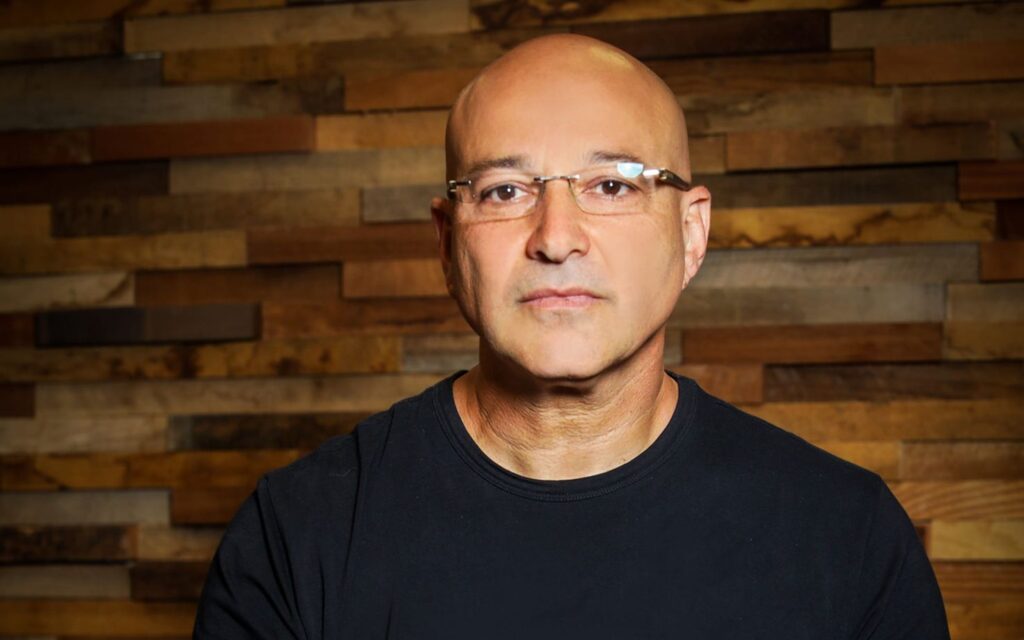
Geoff Rhoads got the idea for founding Digimarc while he was working to remove noise from digital photos.

In 1995, Geoff Rhoads founded Digimarc, a publicly-traded company that offers digital identifiers including QR codes and digital watermarks. The company is based in Oregon, United States. The company mainly offers these products and services to prevent counterfeiting, increase accuracy, product authenticity, and many more. The solutions of Digimarc are used in multiple industries from health and beauty to automotive and manufacturing sectors. With the digitized products of Digimarc, companies can witness better brand integrity and full supply chain traceability. Currently, the company has around 300 employees who are working under the leadership of Riley McCormack.

Founding Story

Entrepreneur and astronomer, Geoff Rhoads, worked at Tektronix before founding Digimarc. While he working with the electronics manufacturer, he began his research on space imagery and content protection. This thorough research work took place in the early 1990s and in 1994 Rhoads founded a company called Signet. This venture was exclusively focusing on the concept of digital watermarking. He got the idea for founding Signet while he was working to remove noise from digital photos of deep space imaging. In 1995, Digimarc was founded as a part of Signet and was spun off in the same year. The company was founded in Portland, Oregon with only three employees. In 1996, after the initial funding round, Digimarc released its first product for image copyright communication. The product was basically a digital watermarking plug-in bundled with software like Adobe Photoshop. 

In the first round of funding, Digimarc raised $4.5 million which was the highest compared to other new startups in Oregon. Adobe acquired 10% of the company and became one of the major investors. In 1997, Bruce Davis became the new CEO of the company and in the same year, the company was awarded the first digital watermarking patent. Today, the company has nearly 1,100 patents in its portfolio. After a couple of years, the company aimed for developing a global system for deterring the creation and usage of unauthorized banknotes (digital copies). So, it signed a multi-year deal with several banks for preventing digital counterfeiting. In the same year, the company filed its IPO where it raised more than $90 million. By the end of the decade, the company launched MediaBridge for shifting readers from printed media to web content. 

Digimarc
Image source: www.digimarc.com

Expansion

In 2000, Wired launched its first digitally-enhanced magazine and featured Digimarc technology. The next year, Digimarc acquired a business division of Polaroid Corporation and the assets of the company were used to establish Digimarc ID Systems. This ID system was launched to enhance driver’s licenses in 37 states. But, in 2008 the company sold this business unit for $315 million and shifted its focus toward content protection and digital media engagement. In 2002, Bruce Davis became the Chairman of the Board of Directors, and in 2003 Michigan issued its first driving license using Digimarc technology. In 2004, Digimarc was featured in Forbes magazine for being one of the top 25 fastest-growing companies. 

For advanced image identification and a rigorous search system, Digimarc launched Digimarc ImageBridge in 2005. In 2007, the company partnered with Nielsen such that the latter can use the watermarking technology for video content. Digimarc was also recognized by IEEE for having one of the most valuable patent portfolios among software companies. In 2012, the company acquired Attributor Corporation (specializing in content protection services). In 2014, Digimarc ranked four in the 100 Best Companies to Work for in Oregon, and in the next year received  Emmy Award for Technology & Engineering.

After its huge contribution to the entertainment industry, the company’s next focus was the retail sector. In 2016, the company partnered with leading retail scanner vendors like NCR, Zebra, and Honeywell. New Seasons Market, an Oregon-based grocery supply chain also adopted the Digimarc barcode in the same year. In 2017, the company opened new offices in Germany and Japan. In April 2021, Bruce Davis retired as the CEO of the company and he was replaced by Riley McCormack. To expand its product base, Digimarc completed the acquisition of EVRYTHNG, an IoT software company in 2022. 

About Riley McCormack

Riley joined Digimarc recently and before that he was the CEO and PM of Tracer Capital Management. He is also the founder of this New York-based hedge fund. Riley also worked as a research analyst at Morgan Stanley and also founded TCM Strategic, a fund that has recently made an investment in Digimarc. 

Genius Sports

Genius Sports – A Young Startup That Has Become The Current Talk Of The Sports Data Industry.

Being the messiah in the world of sports data and technology, Genius Sports is known for organizing, optimizing, and creating unique sports experiences. The company was founded in 2016 as a result of a merger between two companies. Currently, the headquarters of the company is based in London, UK. Genius Sports is mainly responsible for offering software to various sports leagues and federations. Various services like data management, video streaming, and integrated services are also provided by the company. Various sports allow the company (giving rights) to commercialize their data and video content with authorities like media companies and casinos. 

About Genius Sports

Being founded only five years ago, Genius Sports is currently one of the fastest-growing sports technology companies across the globe. The company now employs more than 1,800 people around the world with major offices in New York City, Tallinn, Los Angeles, Medellin, and many more. The company is catering toward building a more sustainable sports ecosystem with a fair share of engagement, commercial benefits, and competitiveness. To date, the company has covered around 240,000 sports events and established more than 600 long-term partnerships. In April 2021, the company got listed on the New York Stock Exchange through a special purpose acquisition company, dMY Technology Group. 

Genius Sports
Image source: www.americanfootballinternational.com

A Merger Between Two Companies

In 2016, Mark Locke decided to merge his company, Betgenius and SportingPulse International. The newly formed company was called Genius Sports which became a perfect blend of sports technology, data supplier, and the betting industry. One year after the merger, Sports Genius started acquiring several other companies starting with Data Project, a volleyball technology provider. In the same year, the PGA Tour launched a new integrity program for mainly preventing betting-related corruption. The company was selected to support this integrity program through close monitoring and educational services. 

In 2018, a new statistics initiative was announced by the National Collegiate Athletic Association (NCAA) for all its members alongside Genius Sports. In the same year, Apax Partners acquired Genius Sports but even after the acquisition, Locke continued as the CEO of the company. Later in 2018, Football Data Co. came into an agreement along with Genius Sports and Perform Group to protect the football leagues in England and Scotland against match-fixing. This was for the first time that two technology companies combined for the mentioned reason.

Expansion

As the company was eventually landing deals with various types of sports leagues, in 2019 it struck a deal with NASCAR stock-car racing association. Genius Sports chose to strike a deal with this organization to become the exclusive provider of NASCAR data to licensed sportsbooks across the world. In the same year, it made a deal with Football DataCo for being the official supplier of live data. The company also partnered with the German Football Association and Superliga Argentina to help prevent match-fixing and unhealthy sports betting. In October 2020, the company acquired Oppia Performance, a video production, and streaming company. In 2021, Company partnered with the National Football League, WynnBET, Canadian Football League, and many other famous and influential organizations in the sports industry. 

Mark Locke – CEO of Genius Sports

Mark Locke is not only the CEO of Genius Sports but also its co-founder. Locke has more than fifteen years of experience in both the sports technology and media industry. His entrepreneurial journey started when he launched Betgenius in 2001 and currently it is a part of the Genius Sports Group. Locke, in 2015, recognized the huge potential hidden between the intersection of sports and the betting industry. This is the reason why he decided to merge Betgenius and SportingPulse International. Locke also has a history in telecommunications and ventures for property management. 

Cellebrite

Cellebrite – An Israeli-based Global Leader In The Digital Intelligence Sector.

Founded in 1999, Cellebrite is a leading digital intelligence company based in Petah Tikva, Israel. The founders of the company are Avi Yablonka, Yaron Baratz, and Yuval Aflalo. The mission of Cellebrite is to protect common people by accelerating the justice rate and ensuring privacy. Cellebrite partners with both private and public organizations to monitor and manage their digital intelligence. This adversely helps in the investigation, protecting millions of life and sensitive data. Cellebrite is an award-winning Digital Intelligence Investigative Platform. The company maintains proper transparency while protecting and safeguarding public and private assets. Currently, the technology of Cellebrite is used in more than 140 countries for public safety.

Founding History

The three founders established Cellebrite in 1999 in Israel. Other executive members of the company like Ron Serber and Yossi Carmil joined the company eventually in 2001 and 2004 respectively. In 2005, both Serber and Carmil were made Co-CEOs but Carmil is holding the post individually after Serber resigned from the company in 2020. Since 1999, Cellebrite has come a long way in the next two decades as it has opened several offices around the globe. Currently, Cellebrite has fourteen offices spread across the world including major business spots in Washington, Munich, the US, Singapore, etc. In Nagoya, Japan, Cellebrite is a fully owned subsidiary of Sun Corporation. The company mainly came onto the radar of the police force and other law enforcement agencies when it unlocked the murderer’s phone in the San Bernardino massacre.

When the company was selling commercial products for the first time, it mainly manufactured both hardware and software. These products offered compressive phone-to-phone data transfer devices and that various contact transfer and synchronization tools for mobile phones. These products were developed to be used by various support staff, especially wireless carrier sales in retail stores. The company eventually decided to expand to other markets. Thus, in 2007, Cellebrite founded an independent business unit targeted at the mobile forensics industry. In the same year, Cellebrite came under the acquisition of FutureDial Incorporated and Sun Corporation (one of its major shareholders). In 2017, the company rebranded its Mobile Lifecycle division as Mobilogy. Mobilogy was mainly known for producing hardware and software products for various purposes like data backup, phone-to-phone data transfer, electronic software distribution, data analysis tools, etc.

Recent Days

As the company was expanding both geographically and in terms of product diversity, many firms started investing in the company. In 2019, Israeli Growth Partners invested around $110 million in Cellebrite. With the funds raised from funding, Company made a few acquisitions in the last two years. In 2020, the company acquired BlackBag Technologies, a computer forensics company. After this acquisition, Cellebrite expanded its digital intelligence solutions to include data collection tools from computers.

In 2021, the company announced a business agreement and its plan to merge with TWC Tech Holdings II Corporation. Since the acquisition has been completed, Company has become a publicly-traded company. In 2022, Cellebrite joined AWS Partner Network as an Advanced Technology Partner and recently it was named a Leader in the Inaugural IDC MarketScape on Digital Forensics. 

Cellebrite
Image source: www.telegraph.co.uk

Yossi Carmil – CEO of Cellebrite

Yossi Carmil has more than 25 years of experience especially when it comes to various leadership positions, business development, global sales, and many more. He has been working with Cellebrite for more than 16 years and as the CEO of the company he monitors everything from vision to execution. He worked at several other companies before joining Cellebrite including Siemens Israel Ltd, Elgad Com Group, and Bosch, Germany.

MapmyIndia

MapmyIndia – India’s First Internet Mapping Digital Portal.

The times have gone when people used to buy paper maps and roam around the world. Technology has also impacted how maps are made and designed today. Several online map services have been launched, which have replaced the physical map due to the convenience these offer to their users. People are now actively using services such as Google Map, Apple Map, Bing Map, etc., which are available at users’ fingertips. One such revolutionary service is the MapmyIndia, which has a similar concept but is limited to only Indian territory and for the purpose of marketing and logistics operations. The map not only offers digital map data, but also provides telematics services, GIS AI technologies, and location-based SaaS services. The company is about 27 years old and has made its name among the leading digital map service providers.

About the Company

A couple from India, Rakesh and Rashmi Verma founded MapmyIndia in 1995. The company headquarters is based in New Delhi, India. MapmyIndia is a publicly-traded company, trading on NSE as MAPMYINDIA. The company majors in services like IoT, Navigation, Maps, and GIS Services in the Indian subcontinent only. CE Info Systems Ltd. is the parent company of MapmyIndia, and over 700 people are currently working for it. Apart from New Delhi, the company has established its offices in Mumbai and Bengaluru. The company has also opened offices overseas in countries like USA and Japan. Since the beginning, MapmyIndia has been offering services to various big tech, corporates, automotive, and government authorities. The major clients of the company include Amazon Alexa, Apple, ISRO, Uber, Facebook, Mercedes-Benz, Mahindra, PhonePe, HDFC, TVS, Airtel, etc.

MapmyIndia
Image source: indianexpress.com

The Founding

Rakesh and Rashmi Verma, an Indian couple, started CE Info Systems in 1995 in New Delhi. The founders started to develop a web mapping technology under the name of CE Info-Systems. The very technology was to provide marketing and logistics services to the client organizations. As soon as the company was successful in developing the technology, it bagged its first contracts from companies like Coca-Cola and Cellular One.

In 2004, MapmyIndia launched India’s first internet mapping digital portal. The portal provided location-based services on mobile as well as the web. The portal was also adopted by India’s MagicBricks. In 2007, MapmyIndia came with a pan-India GPS system, and in 2010, the company launched Road Pilot, a GPS navigation service, followed by the launch of another IoT, a GPS-based telematics platform in 2011.

MapmyIndia also partnered with ISRO as the latter integrated MapmyIndia’s online maps into its satellite imagery. In 2015, the company released a map and location API for the developers, and by the next year, it started to build transportation, logistics, and workforce automation platforms. MapmyIndia also integrated AI technology into its maps such that to offer 4D HD digital maps. It also brought the digital address and location system for pan-India in 2017.

In the following years, MapmyIndia released a geospatial analytics platform (2019), N-Case mobility suite for digital vehicle transformation (2019), location-powered Enterprise Digital Transformation suite (2020), as well as real-time maps of Covid vaccine centers on CoWIN (2021), etc.

In 2021, MapmyIndia went public on the Indian Stock Exchange. Since the inception of MapmyIndia, the company has raised over $34 million in venture capital through various rounds of funding.

The CEO at MapmyIndia

Rohan Verma is the current CEO at MapmyIndia. He has got a Bachelor’s Science degree in Electrical Engineering from Stanford University and a Master’s of Business Administration from London Business. While studying at Stanford (2004-2007), Verma worked at MapmyIndia and helped in creating India’s first interactive map portal. For the rest of the years, Verma remained on the boards of MapmyIndia.

Apart from MapmyIndia, Verma worked as a design technology intern at Intel and as a summer business analyst at McKinsey & Company. He has also worked at Microsoft and Visit for a few years. In 2018, Verma founded Infidreams and joined Cholamandalam Investment and Finance Company as its board member. In April 2019, Verma became the CEO of MapmyIndia.