Your Tech Story

Story

China Plans Big AI and Computing Buildup in Boon for Local Firms

China Plans Big AI and Computing Buildup in Boon for Local Firms

Since the country’s economy has been placed under strain by US sanctions, China wants to increase its computing power by over a third in a span of just three years. This initiative will hopefully help local suppliers and increase technological independence.

China Plans Big AI and Computing Buildup in Boon for Local Firms
Image Source: datacenterknowledge.com

As stated in a joint statement from numerous organizations, which includes the Ministry of Industry and Information Technology, the second-biggest economy in the entire globe is aiming for more than 300 exaflops of computing capability throughout its tech industry by 2025, up from 220 this year. This objective is Beijing’s newest effort to build a digital network to boost a lagging economy.

In the next two years, China also intends to construct 20 more smart computing facilities. In the years leading up to 2025, larger optical networks and more sophisticated data storage will be constructed, according to the authorities.

According to them, the increased processing capacity would benefit industries including manufacturing, teaching, financial services, health care, transportation, and energy.

China plans to strengthen the synergy in the industry and safeguard the supply chain by developing controllable solutions and encouraging the use of home-grown, reliable software,” the statement read.

finance.yahoo.com

The authorities emphasized that a crucial component of this framework development is supply chain security.

The United States has tightened restrictions on high-end goods being sent to China, such as cutting-edge processors like Nvidia Corp. that are essential for developing artificial intelligence (AI) models. As the tech battle drives Beijing to focus on an American-free supply network, the Asian nation is now encouraging the use of home-made IT products ranging from operating systems to memory chips for storage.

The two companies most involved in developing indigenous technology are Semiconductor Manufacturing International Corp. and Huawei Technologies Co., both of whom the US has banned. The pair’s success in creating a sophisticated processor for Huawei’s most recent handsets has energized the effort overall and cast doubt on the efficacy of Washington’s restrictions on China.

Also Read: Apple’s Challenge for the Next Vision Pro: Making It Easier to Wear

“China has found that traditionally, every 1 yuan invested in computing power has driven 3-4 yuan of economic output,” Akshara Bassi, senior research analyst at Counterpoint, told CNBC via email. “The investments echo China’s plans to drive economic output through leadership in technology prowess and integrating AI with existing technologies and solutions across all industries and domains.”

cnbc.com

China aims to concentrate on sectors like memory storage and data transmission networks as part of its drive into computing, and it also has plans to expand its data center infrastructure. For cloud computing players to expand their presence, they are necessary.

Oyo Talks to Apollo for $660 Million Refinance on IPO Delay

Oyo Talks to Apollo for $660 Million Refinance on IPO Delay

Oyo Hotels, the hospitality startup backed by SoftBank Group Corp., is in discussions with Apollo Global Management Inc. to refinance a $660 million loan. This move comes as Oyo seeks additional time to reduce its debt, following a delay in its initial public offering (IPO), sources familiar with the matter revealed.

Oyo Talks to Apollo for $660 Million Refinance on IPO Delay
Image Source: bloomberg.com

Oravel Stays Pvt, Oyo’s parent company, is reportedly seeking to extend the loan’s maturity to five years, compared to the existing 2026 deadline. The negotiations are ongoing, with a decision potentially being reached as early as next month, according to insiders.

The talks with Apollo come on the heels of Oyo reporting its first-ever annual profit. Fitch Ratings anticipates further improvement in earnings as the travel industry continues to recover. Oyo, initially heralded as the first Indian unicorn to secure debt from foreign institutions, had offered generous terms and maintenance covenants, a practice common among firms considered risky by investors.

A spokesperson for Oyo addressed the refinancing discussions, stating, “Due to an increase in profits, we regularly get approached for cheaper financing options, but the company’s board hasn’t approved anything, including prepaying some portion.” Apollo declined to comment on the matter.

As of now, there’s no final decision on the refinancing terms, and Oyo’s loan was indicated at 86.5 cents on the dollar according to data compiled by Bloomberg.

Oyo’s prolonged wait for its IPO has proven to be more protracted than anticipated. The anticipated proceeds from the IPO could have assisted the company in reducing its debt, but instead, Oyo is exploring refinancing options. The startup’s founder, Ritesh Agarwal, has been striving for years to bring Oyo public. The company, 47% owned by SoftBank, also counts Airbnb Inc. among its backers.

Also Read: Dell Says Servers, Not PCs, Are Its Main Growth Engine in the AI Era

Oyo had initially filed for an IPO in 2021, aiming to raise 84.3 billion rupees ($1 billion). However, it faced challenges as technology valuations plummeted, impacting startups globally. Although Oyo filed fresh IPO documents on April 1, key details such as the amount sought, advisors, and financial specifics remain undisclosed.

The ongoing negotiations with Apollo underscore Oyo’s strategic financial moves as it navigates the complexities of the hospitality industry and seeks to strengthen its position in the market.

Visa Initiative to Invest $100 Million in Generative AI Ventures

Visa Initiative to Invest $100 Million in Generative AI Ventures

In a move set to reshape the landscape of commerce and payments, Visa has declared its intention to invest $100 million in companies at the forefront of developing generative AI technologies. 

Visa Initiative to Invest $100 Million in Generative AI Ventures
Image Source: ffnews.com

The investment initiative will be executed through Visa Ventures, the global corporate investment arm with a history spanning 16 years. Visa, a trailblazer in AI applications for payments since 1993, is now focusing its attention on the burgeoning field of generative AI. This subset of artificial intelligence is characterized by its ability to generate text, images, or other content based on extensive datasets and textual prompts.

Jack Forestell, Chief Product and Strategy Officer of Visa emphasized the profound impact generative AI will have, stating, “While much of generative AI so far has been focused on tasks and content creation, this technology will soon not only reshape how we live and work, but it will also meaningfully change commerce in ways we need to understand.”

David Rolf, Head of Visa Ventures, underscored the transformative potential of generative AI, calling it “one of the most transformative technologies of our time.” He noted that Visa Ventures possesses flexibility in terms of the number and size of investments, expressing an interest in making a range of smaller investments in the early stages of the industry.

Rolf outlined the criteria for potential investments, specifying that Visa is seeking to support companies applying generative AI to address real challenges in commerce, payments, and fintech. This includes B2B processes around payments and infrastructure with the potential to significantly impact commerce. Rolf emphasized that Visa is open to engaging with companies at various levels of the technology stack, from data organization for generative AI to end-user experiences.

Also Read: Arc Raises $70 Million to Build the Tesla of Boats

Furthermore, responsible AI use aligning with Visa’s policies is a key consideration. Rolf stated, “One of our key considerations is how well these companies are practicing responsible use of AI, in line with Visa’s policies.”

This announcement follows Visa’s strategic move to appoint Marie-Elise Droga as the head of fintech, who noted that her team frequently collaborates with the Visa Ventures team. This collaboration serves as a scouting engine, identifying innovative startups that align with Visa’s vision for the future of commerce and payments. As Visa Ventures embarks on this $100 million investment journey, the landscape of generative AI technologies in commerce and payments is poised for significant transformation.

Arc Raises $70 Million to Build the Tesla of Boats

Arc Raises $70 Million to Build the Tesla of Boats

Every year, about 12 million recreational boats travel through America’s streams, spewing foul emissions, gasoline sheens, and screaming noises from engines in their wake. Several firms are already working to expand the electric vehicle trend that is currently sweeping across streets globally into rivers, lakes, and coastal seas.

Arc Raises $70 Million to Build the Tesla of Boats
Image Source: robbreport.com

One of the more recent entries in the expanding marketplace for battery-operated boats is Arc Boat Company. The Los Angeles-based business, whose group comprises former engineers from Tesla and SpaceX, was founded in 2021 with the goal of electrifying the sector, beginning with the creation of an expensive luxury powerboat.

The business announced on Wednesday that a seventy-million-dollar Series B investment round had been completed, increasing its total capital to over 100 million dollars. The current venture capital investors in Arc, including Menlo Ventures, Lowercarbon Capital, Andreessen Horowitz, and Abstract Ventures, participated in the round.

“Gas boats are noisy, they’re noxious, they are super-unreliable,” Mitch Lee, Arc’s CEO and co-founder, told Canary Media. “Electric boats solve a lot of those pain points. But the hard part is execution of the technology.”

news.yahoo.com

Arc intends to use its new investment to develop and produce wakeboarding speed boats from a new facility in Torrance, in the state of California, to appeal to a larger, though still somewhat wealthy, marketplace of recreational boaters. Within the span of 18 months, the firm hopes to double its employment to about 140, according to Lee.

Also Read: Cellnex Agrees to Sell Nordics Stake for €730 Million

Just one percent of the nation’s yearly carbon dioxide emissions from gasoline-powered vehicles come from recreational boat engines. They have an even more immediate negative effect on the ecosystem because they release airborne pollutants that cause smog and leak gasoline. Recreational boats can nevertheless be excellent initial prospects for creating the zero-emissions technology required to clean up bigger, long-distance boats, according to transportation professionals, even if they have far fewer energy requirements than, for example, a high-powered fishing boat or a cargo ship.

“It’s really hard to package enough power into a boat to be directly competitive with existing gas options,” Lee said. “It’s a testament to our team that we’ve delivered these [Arc One] boats on an incredibly fast timeline” while working toward the next phase of the company’s journey, he added.

news.yahoo.com
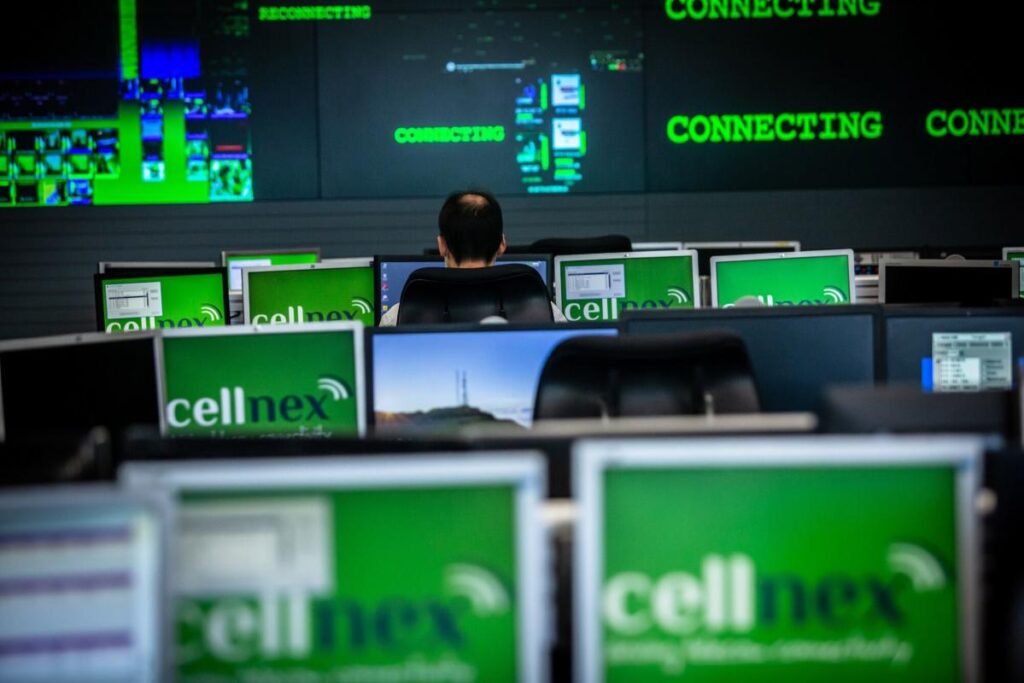
Cellnex Agrees to Sell Nordics Stake for €730 Million

Cellnex Agrees to Sell Nordics Stake for €730 Million

Cellnex Telecom SA, Europe’s largest tower operator, has announced its agreement to sell a substantial stake in its operations in Denmark and Sweden for approximately €730 million ($772 million) in a strategic move aimed at reducing debt. 

Cellnex Agrees to Sell Nordics Stake for €730 Million
Image Source: finance.yahoo.com

This marks Cellnex’s first major divestment under the leadership of CEO Marco Patuano, who took the reins in June with a mission to reshape the company’s strategy after a series of acquisitions. Private equity firm Stonepeak is set to acquire a 49% holding in Cellnex’s Danish and Swedish operations. The deal involves a €558 million upfront payment, with an additional €130 million scheduled three years after closing. Furthermore, a €40 million earn-out is anticipated in 2026. The transaction is slated to conclude no later than the first quarter of the upcoming year.

Shares of Cellnex experienced a 4% surge to €33.70 in Madrid, reaching the highest point since July. The stock’s performance made it the leading gainer on the European Stoxx 600 Telecommunications Index.

Patuano, expressing his views in July, highlighted Denmark and Sweden as markets ripe for consolidation. He emphasized the importance of partnering with entities possessing “deep pockets” to facilitate the process. The tower operator had initially entered these markets in 2021 through the acquisition of CK Hutchison Holdings Ltd.’s European towers.

Analyst James Ratzer from New Street Research remarked that Cellnex secured an advantageous deal, receiving a premium compared to its current trading multiple and the acquisition cost of the assets two years ago. This divestment aligns with Cellnex’s commitment to its deleveraging initiative.

Also Read: ChatGPT Now Supports Voice Chats and Image-Based Queries

Since its initial public offering in 2015, Cellnex enjoyed a period of advantageous borrowing costs and strong investor interest, facilitating numerous acquisitions. However, the dynamics shifted with rising interest rates, prompting Cellnex to explore avenues to raise funds and alleviate its debt burden.

Patuano, while emphasizing debt reduction as a priority, has also indicated a willingness to collaborate with financial investors to support future ventures. The successful sale of its Nordics stake is seen as a significant step in executing this dual strategy, providing both a financial boost and paving the way for future initiatives.

Palantir Wins $250 Million AI Deal with US Defence Department

Palantir Wins $250 Million AI Deal with US Defence Department

A brand-new $250 million artificial intelligence agreement for the U.S. Army would help Palantir Technologies (PLTR), claims a financial professional who rates the PLTR stock underperform. On Wednesday, following the news, Palantir’s stock increased.

Palantir Wins $250 Million AI Deal with US Defence Department
Image Source: bloomberg.com

“While this contract adds fuel to the argument that Palantir is more like a government service provider, this contract bodes well for Palantir’s fourth-quarter and 2024 revenue,” William Blair analyst Louie DiPalma said in a note to clients.

www.investors.com

The U.S. Army has a three-year agreement for research and development operations.

Military leaders have praised the possible combat uses of machine learning and artificial intelligence, and business has matched the enthusiasm. Interest in these technologies has grown in the defence community in recent years.

The Government Accountability Office, a government watchdog, said that as of 2021, the Defence Department was managing over 685 AI-related projects. A minimum of 232 were under Army control.

Today’s stock market saw a 6.4 percent rise in PLTR stock, which closed at 14.85.

If the firm is awarded a new contract by the National Health System of the United Kingdom, the price of PLTR stock might increase further. Throughout the coronavirus crisis, the NHS employed Palantir. Now available is a larger deal valued at around $595 million. A choice is anticipated in 2023.

Palantir has worked with government clients to employ AI techniques for the military, combating terrorism, and gathering intelligence. Additionally, such artificial intelligence created prediction models by using pattern recognition.

Generative AI is currently being included by Palantir in its software system.

Generic artificial intelligence models analyze “prompts,” such as internet search terms that specify what a user is looking for. Technologies that use generative artificial intelligence independently produce literature, pictures, videos, as well as computer code. Palantir also wants to offer generative AI technology in industrial areas like the healthcare industry.

Early this year, Palantir unveiled the “Artificial Intelligence Platform,” its latest product. Palantir reports that the AIP has 150 consumers as of the middle of September, an increase of fifty percent over the previous month.

Also Read: TikTok’s E-Commerce Ambitions Stall as Global Backlash Grows

Palantir has also not provided pricing information for its generative AI solutions. Analysts claim that this makes the possible income rise from the AIP uncertain.

On August 1, PLTR stock reached a 52-week intraday record high of 20.24 as AI shares pushed higher. The PLTR stock, however, has now fallen from its 52-week high as of September 27. However, Palantir stock has grown by 124 percent so far in 2023.