Your Tech Story

Story

Ericsson

Ericsson: From Telephone Equipment Makers to the Biggest Player in Networking and Telecommunications

The Generation after World War 2 and before the beginning of the new century has witnessed the biggest technology revolution in the history of technology. But few companies have been there from the beginning, and as a part of the revolution, they have contributed a lot than just watching things change. One such company, which has over 49000 patents in its name and has been adding its share to the development process for more than 150 years, is Ericsson. The company is one of the leaders in networking and telecommunications, constantly providing something to the ongoing technology revolution.

About the Company

Ericsson is a Sweden-based multinational telecommunication company. The company headquarters in Stockholm and has multiple offices in different countries. Ericsson is known for its contribution to the development of wireless technology and is also the founder of Bluetooth technology. It has 27% of share in the world’s 2G, 3G, and 4G networks, and currently, it is emerging as the biggest 5G technology provider. Ericsson also deals in software development and infrastructure development in ICT for telecommunications operators, development of equipment for traditional telecommunications, Internet Protocol (IP) networking, mobile and fixed broadband, cable TV, IPTV, video systems, etc.

The Foundational Story of Ericsson

The company’s history dates back to almost 150 years ago. It was founded in central Stockholm in 1876 by Lars Magnus Ericsson, who, before founding the company, worked for a telegraph equipment development company in Sweden. The idea behind opening Ericsson was quite simple, repairing the foreign-made telephones.

Only in two years of its founding, in 1978, Ericsson started to independently build and sell the telephone equipment. In the same year, the company bagged a contract from Stockholms Allmänna Telefonaktiebolag (the first telephone company in Sweden), where the company had to supply telephones and switchboards to them. This was a big step for Ericsson, and soon it was ready for its international expansion.

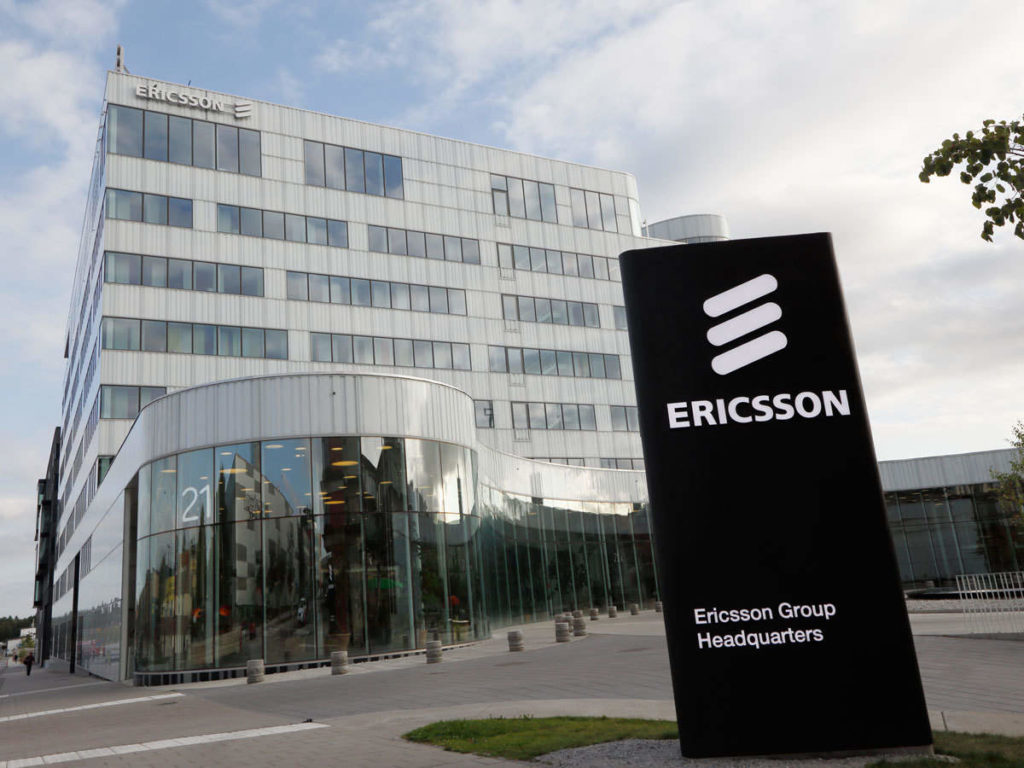
Ericsson
Image Source: economictimes.indiatimes.com

In 1890, the company opened its first international factories in the UK, Russia, Australia, and New Zealand. In the next 20-30 years, the company was competing with its rivals in the US and China but continued to dominate the European telecommunication industry. With the major events taking place, including the World War, the Great Depression, etc., the company was losing its grip in the foreign as well as local markets. The company came under debt, leading to selling off its share to other companies.

In 1925, Karl Fredric Wincrantz acquired most of Ericsson’s shares. With this acquisition, they got rebranded as Telefonaktiebolaget LM Ericsson. Due to the first world war and other events taking place, the governments took the charge of the telecommunication operations. The government would grant the operations of the telecommunication operations on leases, and the company also managed to get some. This led the company to stabilize its condition in the telecommunication market.

Though the company was only providing the manual exchange design telephones, in 1956, it came up with the world’s first fully automatic mobile telephone system, MTA. This changed the conditions for the company, and again the company became one of the biggest suppliers of telephone equipment and crossbar switching. Ericsson crossbar switching was the most in-demand equipment that the telephone administrations in various countries had started to use. In 1983, Ericsson introduced the ERIPAX suite of network products and services.

By 1990, with the rise of the internet and mobile phones, Ericsson also started to build mobile phones and was dominating 40% of the world’s mobile market. During the same time, it was operating in 117 countries providing its telecommunication services. In 1996, the company was already operating tests on WCDMA and had partnered with DoCoMo. But the mobile revolution was moving too fast, and the company was unable to follow up. So in 2001, there was a spin-off of the mobile unit from Ericsson, and a joint venture of Ericsson mobile unit with Sony formed the Sony Ericsson Mobile Communications. This spin-off led to multiple employees cut as well.

The spin-off proved to be a better decision, as the arrival of 3G has opened new doors for Ericsson. It was already working on WCDMA and continued to improve its workability with the changing trends. The improved version of WCDMA, High-Speed Packet Access (HSPA), was out, and by 2006, Ericsson was officially providing its HSPA services in 59 countries. In 2012, Sony acquired all the share of Ericsson in Sony Ericsson, and Ericsson announced that it would solely work on the wireless technology and acquired BelAir Networks, a network technology company. This acquisition was followed by the acquisition of NKT Holding, Red Bee Media, Microsoft’s Mediaroom, some shares in Apcera for cloud policy compliance, Envivio, some operations in Ericpol, etc.

The Founder: Lars Magnus Ericsson
Ericsson founder
Image Source: mg.wikipedia.org

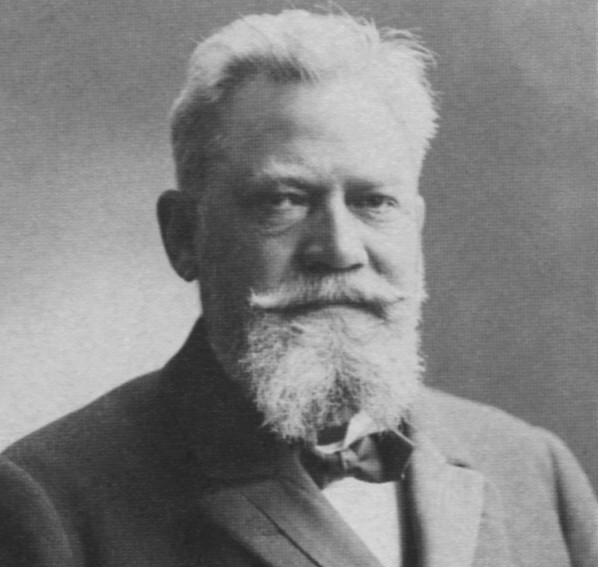
The beginning was quite rough for Lars Magnus Ericsson, the founder of the company. He was born in a small village of Värmland near Karlstad and Arvika. He lost his father at 12, so he had to go out and earn bread for his family. He worked in small workshops and various other places and arranged enough money to leave his village and moved to Stockholm. There he got work in a telegraph equipment-making factory. He learned the skills and was offered two state scholarships to study instrument-making abroad for three years. After completing the scholarship, Ericsson came back to Sweden, and with one of his friends, Carl Johan Andersson, he started a small workshop in a small kitchen that today is known as Ericsson. Ericsson retired from his company in 1900, at the age of 54 and sold all his shares in 1905.

Ericsson has gone through all up and downs, and still, it has emerged as the leader in the telecommunication industry. The company started by making telephone equipment, and today it is the largest wireless network provider. The current President and CEO (Chief Executive Officer) of Ericsson is Börje Ekholm and Ronnie Leten is the Chairman.

Capgemini

Capgemini: A Big Name in the IT Consulting Services in the Digital World

The most innovative discovery that the world has witnessed in the past 60-70 years is the discovery of computers and the internet. These two technologies have changed the face of the world and have brought humongous opportunities for people in every nook and corner of the world. The internet has made it easy for people sitting in a backward area to work with a company based miles and miles away from their place.

The scope of the internet and computers is not limited to providing jobs to people, but these have also encouraged the startups to provide their B2C and B2B services in the most innovative ways to make the business even easier. Such a company that has taken full advantage of digital innovation is Capgemini, a renowned name in the world of technology and innovation.

About the Company

Capgemini is a French company having its headquarters based in Paris. Serge Kampf founded Capgemini in 1967 in Paris and now the company has expanded to various foreign countries having multiple offices in each. Capgemini is a technology company with expertise in different services, including consulting, technology, professional, and outsourcing services.

Capgemini
Image Source: capgemini.com

The Foundational Story of Capgemini

Kampf founded Capgemini as SOGETI (Société pour la Gestion de l’Entreprise et le Traitement de l’Information) on 1 october, 1967. In the beginning, it started to work as an enterprise management and data processing company. As SOGETI, Capgemini, in 1974, acquired a New York-based company named Gemini Computer Systems. The next year, the company went on to acquire another technology company, named CAP (Centre d’Analyse et de Programmation), leading to a name change of SOGETI (Due to an international dispute on a similar name as CAP of another company), to Cap Gemini Sogeti.

In the next five years, Cap Gemini Sogeti started its international business by launching its US operations in 1981 and opened 20 new branches in the US only. By this time, the company had employed about 500 people and also made another acquisition of a data conversion company, named DASD Corporation. The company cut the Sogeti from its name and changed it to Cap Gemini. It also redesigned the company logo for every branch in the world. This way, Sogeti became a separate subsidiary of Cap Gemini that solely works as information technology consulting company.

In the year 2000, by acquiring Ernst & Young Consulting, Capgemini entered into the consulting business and started its consulting business as Cap Gemini Ernst & Young. In 2017, the company had another rebranding of its name, and from Cap Gemini, it became Capgemini.

The Founder Serge Kampf

Serge Kampf is one of the leaders who are known for their management and leadership skills and are the role-models for many budding entrepreneurs. Kampf was born on 13 October 1934 in Grenoble, France. He was born to a soldier father. Since Kampf’s father was in the army, he spent his school days at a boarding. After completing his school, Kampf passed the entrance exam of the French Telecom administration. He then obtained a double honors degree in Law and Economics. After completing his education, his first job was for an underground telephone exchange as a Telecom Inspector.

While working for the exchange, Kampf realized that he does not like his work and wanted to try something else. While looking for opportunities, he got to know about the newly emerging technology, which was IT. Kampf became curious about IT and computers and immediately applied for jobs in two companies working in IT, Bull and IBM. Though he got offers from both companies, he went on to join Bull. He started as a commercial engineer, and later, with one after another promotion, he became the regional manager of Bull.

After working for seven years with Bull, Kampf got motivated to start his own business. He wanted to have the freedom of a boss and did not want to serve anyone else than himself. So in 1967, he resigned from Bull and started Sogeti on 1 October 1967, from a two-room office in Grenoble, with a team of six people. The company wasn’t one of its kind, but it was the first French IT services company.

Kampf served Capgemini as its CEO till 2002, and in 2012, he resigned as the Chairman of the company too. He served the Board of Directors as the vice-president till 2016, when he died at the age of 81 in Grenoble.

Capgemini Today

Capgemini is dominating the IT consulting services in the world. It has multiple branches in different countries in the world, and as of 2020, more than 370,000 employees are working for the company across the globe. Currently, Aiman Ezzat is the serving CEO at Capgemini, and Paul Hermelin is the chairman of the Board of the company.

National Instruments

National Instruments: The Success Story of a Company Running After Innovation

Necessity is the key to invention. This is the statement that has been the basis of most of the inventions and innovation that has taken place in the world. There have been many stories of success that are the result of need, need to bring about change, and need to get the best technologies for solving the most complicated problems. NI aka National Instruments Corporation is also one of the success stories whose foundation based on the need to turn things simpler and make work easier for people.

National Instruments Corporation

NI is an American technology company which is based in Austin, Texas. The company is known for its automated test equipment and virtual instrumentation software. The popular software products from NI include LabWindows/CVI, LabVIEW Communication System Design, DIAdem, VerusStand, NI TestStand, NI Switch Executive, NI Multisim, etc. NI builds programs to help people do their programming even faster and better by providing them with easy to use automated programming environment.

National Instruments
Image Source: ni.com

For example, LabVIEW is a graphical development environment, whereas the LabVIEW Communications System Design Suite is built to provide its users with faster deployment of the communication systems. Similarly, NI’s NI DIAdem is used for data management, and NI VeriStand is designed for real-time testing. The company has also introduced many hardware products as well. These products include NI CompactRIO, NI roboRIO, NI CompactDAQ, STS, PXI and PXIe Platforms, etc.

History

NI’s history is as old as forty years.  The company was founded in 1976 by three colleagues, James Truchard, Jeff Kodosky, and Bill Nowlin, working at the University of Texas at Austin Applied Research Laboratories. The three co-founders were part of a team that was researching for the US navy during the 1970s. While working together, the three realized that the technology they were using was quite outdated and took way too much time to complete a task. The three thought of developing a new data analysis product that would be faster and would be easy to use.

For the purpose of developing a new product, like many other technology companies, the three founded their company working in the garage of James Truchard in 1976. After a lot of brainstorming and discussion over names like Longhorn Instruments and Texas Digital, they finalized National Instruments (NI) for their new company.

The three were still working at the university and were handling their company work through the garage only. They took a loan of $10,000 from the Interfirst Bank. For the marketing of their company they used the method of cold calling and bagged their first contract from San Antonio based Kelly Air Force Base. They also hired Kim Harrison-Hosen for all their office work, and by the end of the year, they had successfully connected with three clients.

In 1978, the three moved the company to a real office at Burnet Road in Austin. The co-founders focused on the marketing of their company, and through mails and cold calling, they were able to get orders worth $400,000 in the next two years. In 1980, the profits made the co-founders confident enough to leave their jobs and focus solely on company operations.

NI then started to take up new projects so that to expand the scope of the company. By 1983, the company had changed two offices, and in the same year, it produced its first GPIB board used to connect instruments to IBM PCs. The latest discovery of that time was the Macintosh computer, and NI wanted to take advantage of this opportunity.

NI, in 1986, introduced its first flagship product, i.e., LabVIEW graphical development platform for the Macintosh computer. Later, in 1991, NI got the patent for LabView. This software was easy to use as the programmers did not have to write the code, but they could program graphically by connecting the icons given. After Macintosh, the company released LAbWindows for Microsoft DOS. In 1987, NI opened its first international office in Tokyo, Japan. NI also launched the National Instruments Alliance Partner program to connect with third-party developers and engineers to enhance the capabilities of NI products.

NI had $100 million in annual sales in 1993, and by 1998, the company had hired 1000 employees, such that they had to move to a new office. This new office boasted an employee-friendly environment that included play areas and a gymnasium for its employees.

Though NI had already appeared on the web, at the beginning of 2000, the company started its website with the domain ni.com. With the widespread of the internet, NI started to work on web technologies. It also launched the NI Developer Zone, where users could access the sample codes and sample programs and seek help from the NI engineers. The company launched its first international manufacturing unit in Debrecen, Hungary, and by 2006, it had around 40 sales offices opened globally. In 2013, NI acquired Digilent Inc.

The CEO of the Company

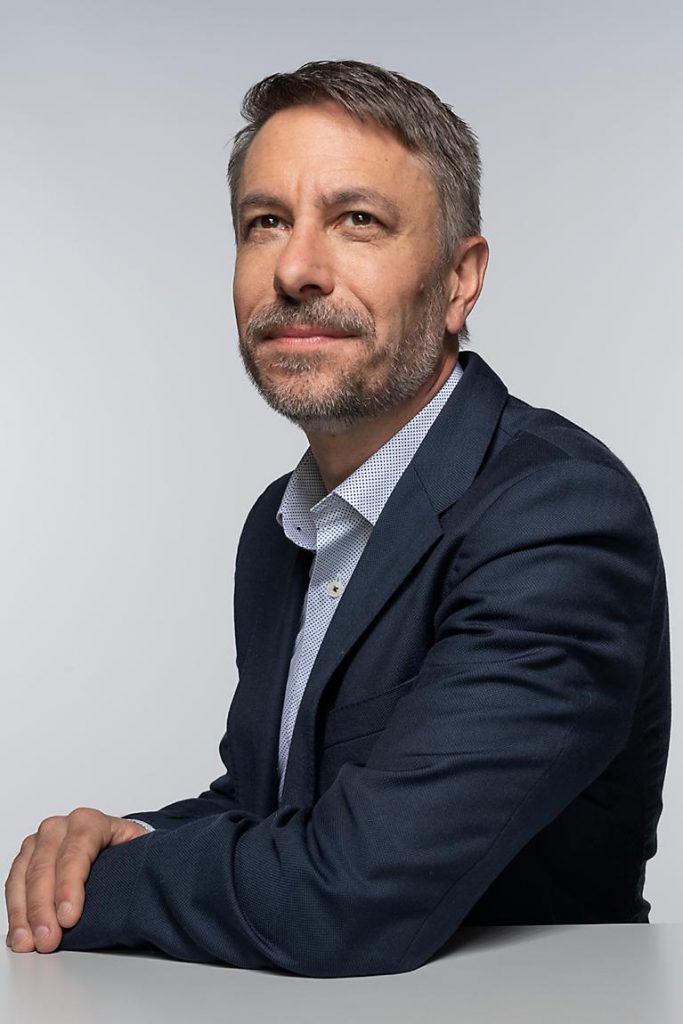
National Instruments CEO
Image Source: ni.com

Eric Starkloff is the current CEO of NI. He is also one of the board members of NI and the President of the company. Starkloff is a graduate in electrical engineering from the University of Virginia. He started his career with NI as an application engineer and has been working at NI for more than twenty years.

NI Today

NI is one of the biggest technology companies in the world. After moving to different size offices, the company now headquarters in Austin, Texas. Michael E. McGrath is the current Chairman of the company, and Eric Starkloff serves as the CEO at NI. The company has got over 7500 employees globally, and the annual revenue of the company, as of 2019, is recorded to be $ 1.353 billion. NI went public in 1995 and is listed on NASDAQ as NATI.

TE Connectivity

TE Connectivity: The ‘Not So’ Popular Global Industrial Leader in the World of Connectivity

Facebook, Google, and Microsoft are the names that are well known to us and have become an inseparable part of our lives. We all use their products and know well about them. But there are a few companies that are continuously providing us with their services, but still, we don’t know much or anything about them. These companies are not very popular but are touching our lives, and in some cases, we can’t even manage without their products. One such company is TE Connectivity, which has been there for more than a decade providing its services to us without caring about if its customers know about it or not.

About the Company TE Connectivity

TE Connectivity is an IT and electronics company that manufactures sensors and connectivity equipment that are capable of working in a harsh environment. From the internet to the cloud structure, from drones to space rockets, and from the vehicles on the roads to aeroplanes in the sky, TE Connectivity has its part in every other field that exists in the world.

The company works in three main fields, i.e. Communications Solutions, Transportation Solutions, and Industrial Solutions. So as the names suggest, TE connectivity provides its connectivity solutions in the field of communication, transportation, and in various industries.

The communication solutions include the manufacturing of electronic equipment that is used in home appliances like dishwashers, washing machines, refrigerators, air conditions, etc. The transport solutions by TE Connectivity are focused on automotive, industrial, and commercial transportation, and these products are used in high-speed metros, light rail vehicles, locomotives, etc.

This segment of the company also works on building sensors for various industries like medical, aerospace, commercial transportation, and defense, etc. With the Industrial solutions, TE Connectivity manufactures equipment that provides connectivity, power, and signal to automate the operations in various fields, including transportation, industries, medical, defense, and others.

The Foundational Story of TE Connectivity

TE Connectivity is a spin-off of Tyco International Ltd., a company with a history that dates back to 1960. Arthur J. Rosenberg founded Tyco International in Ireland with its operational headquarter in Princeton, New Jersey. It was a security system company and was mainly focused on semiconductor manufacturing for the government and did research work for the military.

TE Connectivity
Image Source: commons.wikimedia.org

In 1964, the company went public, and in 1970, it was listed on the New York Stock Exchange. By the year 1980, Tyco International had acquired companies like Simplex Technology, Grinnell Fire Protection Systems, Armin Plastics and was spreading its services. The company then divided its operations into three categories, i.e., fire protection, electronics, and packaging. Tyco continued to work in the three fields until 2007, when the current CEO of Tyco International, Ed Breen, spun off the company into three companies. TE Connectivity was one of the three resultant companies.

The CEO of the Company

Terrence Curtin is the current CEO at TE Connectivity. He was born and brought up in Mount Penn, a city in Pennsylvania, USA. According to one of the interviews of Curtin, he wasn’t good at academics but was one of the star players of the gridiron and the baseball team of his school. He wanted to do better at academics, so he used his talent of gridiron and baseball to get into a good college to get an environment where he could improve at his studies. Eventually, he got admission into the Albright College in Reading, Pennsylvania. He graduated with a degree in accounts in 1990 and immediately joined one of the biggest accounts firms of that time, Arthur Andersen.

After working for a few years with Arthur Andersen, Curtin joined TE Connectivity as its Chief Financial Officer and later, held the position of the corporate controller of the company. In a few years, he was appointed as the president of the company. In 2016, he got elected to the Board of Directors of the company. After a year, in March 2017, Curtin was appointed as the CEO of TE Connectivity.

TE Connectivity Today

TE Connectivity is one of the biggest technology companies that are into connectivity and sensor products manufacturing. The company has got 150 branches in 40 countries, and over 7000 engineers working for TE are connecting to its customers every day to solve their problems. Other than that, the employee count for the company as of 2020 is 80000, and the total revenue for the same year was recorded to be USD 12 billion.

Workday

Workday: Helping Tech Giants Solve Big Problems with Innovative Solutions

Cloud computing, because of its versatility and various features, has opened many doors for new businesses. From Microsoft to Amazon, every big company has launched its cloud-based services, and names like Workday Inc. are making big in this field with their innovative ideas on problem-solving for their clients. Workday Inc. is an American on-demand cloud-based service provider that is listed among the top five cloud-based service providers in the world.  

About the Company Workday Inc.

Workday Inc. is headquartered in Pleasanton, California, U.S., and was founded in 2005 by Dave Duffield and Aneel Bhusri. Currently, Duffield is working as the chairman of the company, and Bhusri is serving Workday as the co-Ceo. Workday Inc. is an online software service provider and offers subscription-based services to its clients, according to their interests and requirements. These services include financial management, spend management, analytics, reporting and benchmarking, human capital management, enterprise planning, payroll, and workforce management, etc. The company doesn’t sell its software but services.

Workday Inc. believes in adapting to the changes, so it has always walked together with every new innovation and developed solutions for its clients incorporating the latest technologies. The company’s software includes technologies like machine learning to provide its clients with the best solutions and help them grow with the new technologies. The company always keeps on updating its services according to new technologies arriving and release major updates for its software every six months.

In fifteen years journey of Workday, the company has come up with 34 different products, Amazon Web Services being its major cloud computing infrastructure provider. The company has its various data centers situated in different cities in the world, including Virginia, Dublin, Ireland, Netherlands, and Amsterdam, etc.

The Foundational Story of Workday Inc.

Dave Duffield, the co-founder of Workday Inc., had already founded another company named PeopleSoft and was one of the famous entrepreneurs among his peers. He met Aneel Bhusri when both were working for PeopleSoft. After selling off PeopleSoft, one day, Duffield had a meeting with Bhusri at Jax Truckee Diner, in Lake Tahoe of California. During the meeting, the two decided to start a new SaaS (software as a service) company that would develop and offer cloud-based HR and Finance applications. The idea was to revolutionize the enterprise software market and help companies manage their finances and hr functions through their online services.

Workday
Image Source: workday.com

So in March 2005, the two launched Workday Inc. in Walnut Creek, California, with an initial investment by Duffield and Greylock Partners, a venture capital firm. Later in 2008, the company headquarters was shifted to Pleasanton, California. Workday partnered with Flextronics in the same year to incorporate human capital management software services into its operations. To enhance its services, Workday also partnered with names like Fairchild Semiconductor, Thomson Reuters, Aviva and Time Warner, etc.

By the mid of the next year, Workday had raised around $75 million through a round of investment led by New Enterprise Associates. By 2011, the company had raised a total of $250 million since its inception, Jeff Bezos (CEO Amazon) being one of the major investors. The company had its first IPO in the New York Stock Exchange in October 2012, raising $637 million by selling 22.75 million Class A shares.    

The Founder of the Company

Dave Duffield is a renowned entrepreneur who is also the founder of the technology company PeopleSoft. The Workday co-founder Aneel Bhusri is also known for his leadership and was associated with PeopleSoft. He was the vice-president of the company.

Dave Duffield has got an electrical engineering degree and has done an MBA from Cornell University. After graduating, he joined IBM as the marketing representative, and later, worked as the systems engineer in the same company. Duffield also worked with Integral Systems and held different positions at the company, including the post of CEO, chairman, and chief product architect. Apart from PeopleSoft and Workday, he is also one of the co-founders of Information Associates. He has won various awards, including the Golden Plate Award (1998), EY Entrepreneur of the Year (2013), and Cornell Engineering Distinguished Alumni Award (2018).

The other co-founder of Workday Inc., Aneel Bhusri, is a Bachelor of Science degree in electrical engineering from Brown University and has done an MBA from Stanford Graduate School of Business. He started his career at Morgan Stanley as a corporate finance analyst. In 1993 he joined PeopleSoft as the director of planning. After a decade of working for PeopleSoft, he ended up being the vice-chairman of the company. During the same time, he also partnered with the capital venture firm Greylock Partners. He is a recipient of the EY Entrepreneur of the Year (2013) and the Great Place to Work CEO For All Leadership Award (2020).

The Company Today

In fifteen years of its journey, Workday Inc. has become one of the top tech companies in the world. It has also made a few acquisitions to enhance its services. In 2017, the company opened its platform for developers and third-party software to step into the Platform as a Service market. The company has featured among the Fortune magazine’s top 100 companies, that too in the top five companies in 2020. Currently, over 12,500 are working in Workday Inc. at its different branches around the globe.

Computacenter

Computacenter: The Leaders in the Field of IT Infrastructure

Though there has never been such a demand for computers and other related technologies as it is now, going back 30-40 years ago, the computer business was the one flourishing industry that attracted everyone who got to know about it. The ones, who understood the worth of information technology at that time, are now listed among the biggest entrepreneurs in the world. Many technology companies that started with a scratch at that time, have emerged as the top-most companies of IT today. One such company is Computacenter that unlike the other technology firms started big and still is making big in the computer business at the global level.

About the Company Computacenter

Computacenter is a UK-based leading independent IT infrastructure provider. The company assists its customers with technology infrastructure investment, such that to help them yield maximum results for their businesses at a lesser cost. Computacenter offers a wide range of IT services including supply, implementation, providing support, and managing the information technology systems for its clients. The company also provides security services for the network, the data center as well as the workplace for the clients. Its customer base is expanded in both public and the private sector all around the world.

Computacenter
Image Source: sharecast.com

The Beginning of the Company

Computacenter is a leading IT infrastructure provider, founded by two Harvard graduates Philip Hulme and Peter Ogden in 1981. The company started its operations in the UK and now is a major IT service provider for countries like Germany, France, Luxembourg, Belgium, etc.

The company began its operations in 1981, but the real journey of Computacenter started in 1990 when the internet had become the hottest topic. The founders saw the potential of the internet and made the maximum use of it for their business. The company built a team of 15 people to work on a new electronic catalog, to form a high-quality market catalog, and revolutionize their transactions with their customers. Computacenter was one of the first companies to enter e-Commerce for their business.

The Expansion

By the year 1994, Computacenter had become the fastest-growing independent IT company in the UK and had decided to expand its operations in the other parts of Europe as well. In 1995, the company established a new branch in France, and in another three years, Computacenter got listed on the London Stock Exchange, on 21 May 1998. The company opened another branch in Belgium in 1999.

By 2001, the internet was reaching every corner of the world, and Computacenter started selling its services through its website. But for its websites in different countries, the company had to create separate content, to provide the users with the right and understandable information. So the company decided to change its strategy for other countries and adopted the concept of outsourcing and partnered with CNET Content Solutions to outsource their product content management needs.

Acquisitions

During the same time, in 2001, Computacenter acquired the GECITS UK and GECITS France. On the other hand, GECITS took over the operations of Computacenter Germany. Other than GECITS, Computacenter acquired Digica and Allnet to enhance its outsourcing and IT management services.

In 2002 Computacenter established its new Solution Centre in the UK. The company then acquired the Germany and Austria branches of GE Capital IT Solutions in 2004. In 2009, Computacenter took over the operations of Thesaurus Computer Services (UK), followed by the acquisition of Top Info in February 2011. Then Computacenter went on to acquire TeamUltra, a service management company, in 2017, and RDC, an IT Asset Disposal business, in 2018. Before the takeover, Computacenter had been a partner of c for several years. Later in 2019, Computacenter’s acquiring included the USA-based Fusionstorm and Netherlands’ Misco Solutions.

Present Condition

Computacenter is a leading name in the technology world with a huge customer base globally. The company offers support to its clients by providing them with resources and manage their IT infrastructure. The co-founder of Computacenter Peter Ogden served the company as the Chairman from the beginning till 1998, and its other co-founder, Philip Hulme, took over the post of Chairman in the same year after Odgen resigned, until 2001. Later, both joined the board of the company. Both the co-founders have been knighted for their contribution to the field of technology.

As of 2019 records, Greg Lock is serving as the Chairman and Mike Norris is serving as the CEO of Computacenter.