Your Tech Story

Story

Insight Enterprises : The Largest B2B IT Service Providers, Committed to Complete Customer Satisfaction

Small steps take people to bigger changes, and Insight Enterprises is one such example. Insight Enterprises is an Arizona-based technology company, which started as a computer storage sellers and turned into one of the largest business-to-business IT service providers in the world. The company specializes in B2B commercial and public sector IT solutions and have been offering its services to its global customer base for the past 33 years. The company is best known for its direct marketing strategy of selling brand-name microcomputers, peripherals, and software through the catalogue, phone, and Internet.

About the Company

Since Insight Enterprises is a B2B service provider, its services include helping organizations manage their resources and be future-ready. The company provides its hardware and software solution to big enterprises and expertise in spanning cloud, IoT, managed services, etc. Insight Enterprises have helped many industry leaders and has established its offices in 19 different countries across the globe.

Insight Enterprises currently is serving in various industrial sectors, including construction, enterprise business, finance, retail and manufacturing, etc. The major field of work of the company includes data centre, devices, servers, software, licensing, Power, Storage, IT Services, etc.  As per the 2019 records, Insight Enterprises earned annual revenue of $7.73 billion and around 11000 people working at its global offices.

The Back History of Insight Enterprises

Two brothers and then college students, Eric Crown and Tim Crown founded Hard Drives International in 1986 with a cash advance of $2000 from a credit card in a rented 100 square feet of office space. The company started as a computer storage selling business, where the customer could place their orders through mails. The two were successful at selling hard drives at a lower price and eventually, made a $20,000 profit in the first year of their company.

In 1988, they renamed the company Drives International to Insight Direct and chose magazine ads and toll-free telephone lines to sell mass storage products. The founders changed the name of the company to Insight Enterprises in 1991 and started to sell computers and their accessories, by investing around $1.5 million each month on ads in print media. By 1993, the company had started to focus on corporate customers and launched its one-day shipping service with the name, Air Insight. During the same time, the company also started to manufacture its own products, including computers and peripheral devices, and just in 7 years of its inception, in 1995, the company had its first IPO on NASDAQ.

The International Expansion

By the year 1997, Insight Enterprises started to expand its operations overseas and acquired the Montreal based TC Computers. The next year, the company went on to acquire Choice Peripherals Ltd., Plusnet Technologies Ltd., and Force 9 in 1998, helping the company enter Europe.

The 2000s have been the years of expansion for the company, as it took over the operations of Action Computer Supplies Holdings PLC (2001) of the U.K., Comark (2002), Software Spectrum (2006), Calence LLC (2008) and Minx Ltd. (2008).

In 2015, Insight Enterprises opted to be more focused on customer relations and interaction. The company acquired Boston based company BlueMetal in the same year to expand its operations in the design and technology architectural field, and the next year, it acquired Australian-based business technology consulting company Ignia.

Insight also acquired the Minnesota-based Datalink for $11.25 per share in 2016 and purchased the Dutch cloud service provider Caase.com in 2017. In the following years, the company made major acquisitions like Cardinal Solutions (2018) and PCM, Inc. (2019).

The CEO at Insight Enterprises

Ken Lamneck is the current CEO and the president of Insight Enterprises. He completed a bachelor’s degree in Science from the United States Military Academy at West Point and a Master’s degree in Business Administration from the University of Texas at El Paso. Lamneck has got more than 25 years of experience in corporate.

Lamneck started his career with the U.S. Army and has been one of the contributors in the development of the software used in the army known as the Patriot Missile System. After serving the arming for five years, he joined IBM as an engineer. Later, he worked at various ranks in Arrow Electronics and was promoted to be the president of the Industrial Computer Products business of the company in 1997. In 2004, switching his job from Arrow Electronics to Tech Data Corp., Lamneck then joined Insight Enterprises in 2010 as the CEO and the President of the company.

Jabil Inc.: The Largest Global Electronics Manufacturing Company

Jabil Inc. is a global manufacturing services company based in the United States. It is one of the largest companies in the Tampa Bay area, with headquarters in the Gateway area of St. Petersburg, Florida. Jabil operates 100 plants in 30 countries and employs 260,000 people worldwide.

About the Company

Jabil is now the third-largest EMS provider in the world, with over $17 billion in revenue and over 140,000 employees worldwide. Sixty global operations in the Americas, Asia, and Europe design, manufacture, and ship products worth $60 million per day, including single-use devices for the healthcare industry, wind turbine engines for the energy market, innovative materials technologies for mobility products, and computing products.

The Journey

Jabil, the name of the company, is derived from the first names of James Golden and William (Bill) E. Morean, who founded it in 1966. The company’s original mission was to build and repair circuit boards for Control Data Systems in Detroit. For one customer, this was mostly accomplished through manual processes on a small scale.

In 1969, Jabil was formally incorporated in Detroit, and the PCBs were an early product of the company. Overall, the 1990s were a bumpy ride, with three major customers – NEC, Quantum Computing, and Zenith Data Systems – accounting for two-thirds of its revenue. In 1993, Jabil went public and in 1998, began to trade on the New York Stock Exchange under the ticker symbol JBL.

Throughout these years, Jabil expanded its engineering, design, and supply chain capabilities, as well as gaining expertise in new manufacturing technologies such as SMT. The company increased its workforce by 30% in the first half of 1995 alone as it began to expand its customer base. By the end of 1996, HP had become the company’s largest customer, and other data communications firms had also been added to the stable.  In 2001, the company made it to the S&P 500 Index. In 2014, the company was demoted from the S&P 500 Index to the S&P MidCap 400 Index.

Sectors of economic development

Jabil’s customer base is spread into healthcare, life sciences, clean technology, instrumentation, defense, aerospace, automotive, computing, storage, consumer products, networking, and telecommunications, etc. Design engineering, manufacturing, and supply chain services for the EMS and consumer industries, as well as materials technology services, are among its offerings (plastics, metals, automation, and tooling). Jabil’s business is divided into three segments; Service, Design Engineering and Logistic and Supply Chain.

Service: Jabil provides design engineering services. The company offers industrial design services that focus on the aesthetics of plastic and metal enclosures that house circuit boards use. Jabil’s mechanical design services include electronic and optical assembly dimensional design and analysis. Jabil’s computer-aided design services include printed circuit board assembly design, testing, and verification, as well as other consulting services.

Design Engineering: Jabil has an industry-specific design team for each of the industries it serves, which includes computer and storage, digital home, healthcare and instrumentation, point of sale, and mobile. Jabil has provided design and engineering assistance to many Fortune 500 companies, including Sandy Creek, Cisco, etc.

Logistics and supply chain: Jabil is a company that provides supply chain and logistics services. Electronic procurement, virtual/vertical mechanics, logistics, supply chain management, advanced forecasting, efficiency, automated multinational processes, supply chain solutions, and market analytics are among the services offered. During the 2011 Tsunami and earthquake in Japan, examples of the company’s supply chain and distribution management became visible. When a supply chain disruption occurred, Jabil rerouted supply from alternative sources, allocated limited production to key customers and distributors, specified and quality alternative parts, and called on existing suppliers to assist in mitigating the impact of the disruptions.

Acquisitions and growth

Jabil has acquired several companies and business units till now. Their acquisitions have allowed them to establish a presence in countries such as China, Mexico, India, Spain, the Netherlands, and Russia, to name a few. Jabil opened a Photovoltaic Certification and Testing Laboratory in St. Petersburg, Florida, in 2011. Jabil announced in February 2013 that it would buy Nypro for $665 million in cash and completed the transaction in July 2013.

Honors and recognition

Jabil has received numerous awards and accolades. In 2006, it became the first recipient of the Mexican government’s National Quality Award. This award is given to organizations that have demonstrated excellence in total quality management practices.

Frost & Sullivan awarded the company the Excellence in Best Practices Award in 2009. In addition, the company received an HR award in Poland and an NEC Solution America’s Favorite Supplier Award. The United States Department of Energy presented Jabil with the 2010 Save Energy Now Award.

The Brains Behind Jabil

In 1966, William E. Morean and James Golden founded the electronics assembly repair business Jabil in Detroit, Michigan. James sold his stake to E. Morean after only a few years, whereas the latter retired from active leadership in 2000, remaining on the board until 2014. Although E. Morean’s management style was appropriate for such a volatile and fast-growing period in the industry’s history, the true strategic vision of what would become Jabil did not emerge until his son William D. Morean joined the company in 1977. That is why, although his father was the actual founder, we regard William as the true Icon of the EMS industry within Jabil.

TSMC

TSMC – The World’s First and Most Valued Semiconductor Foundry.

Taiwan Semiconductor is home to many world-famous technology companies, and several foreign companies have also established their manufacturing units in this small country. Along with that, Taiwan Semiconductor is also known for being the headquarters for the world’s largest dedicated independent (pure-play) semiconductor foundry, i.e. TSMC (Taiwan Semiconductor Manufacturing Company, Limited).

TSMC is a semiconductor contract manufacturing and design company. It designs, manufactures, tests, and ships integrated circuits as well as other semiconductor devices to its worldwide customers. TSMC is one of the largest semiconductor companies in Taiwan, with its chips being used in almost every piece of electronic equipment, from smartphones, laptops, and video game consoles to data centres and F-35 fighter jets.

A Brief Introduction

TSMC is a Taiwanese company with its headquarter located in the Hsinchu Science Park in Hsinchu. The company was founded in 1984 and has most of its shares owned by foreign investors. TSMC mainly deals in the manufacturing of Integrated circuits and related services and serves with the brand names CyberShuttle prototyping service, Open Innovation Platform, and eFoundry online services. WaferTech, TSMC PRC, and SSMC are some of its subsidiaries.

TSMC recorded net annual revenue of NT$1.07 trillion in 2019, with 51,297 employees working for it in its global offices. As per the 2020 records, the company can manufacture 13 million 300 mm equivalent wafers per year. Apple, Huawei, Sony, Qualcomm, Broadcom, and HiSilicon are some famous names that are the permanent clients of TSMC, and the list of clients for the company goes as long as 500 companies from across the world.

The Founding Story of TSMC

The late 70s and the beginning of the 80s was the time when semiconductor technology was emerging at a high pace. In 1985, the Taiwan government appointed Morris Chang, a Taiwanese businessman, having more than 25 years of experience in the field of the semiconductor industry, to help them bring the technology to Taiwan. After establishing the first non-profit research institute ITRI in 1986, the Taiwan government, along with Chang, established the world’s first dedicated semiconductor foundry named TSMC in 1987. TSMC was a joint venture between the Taiwan government with 21% shares, Dutch multinational electronics conglomerate Philips with 28% share, and other private investors owning the rest of the shares in the company.

TSMC
Image Source: openthenews.com

TSMC was founded at the time when companies like Intel, NEC, Fujitsu were already making their chips. But the business idea behind TSMC was to provide the other companies with the chips manufacturing service, saving lots of time and money for them. This idea attracted many customers for TSMC, not only from Taiwan but also the big-name companies from Silicon Valley.

When TSMC had just started its journey, IDMs was ruling the industry. But just in ten years in the business, TSMC was at the level of IDMs. In 1997, the company got listed on the New York Stock Exchange, becoming the first Taiwanese company to do so. The years 2000 onwards have been the year of pure growth for the company, and it added clients like AMD, Apple Inc., Broadcom Inc., Marvell, MediaTek, Nvidia, Qualcomm, Xilinx, NXP, STMicroelectronics and Texas Instruments to its customer list.

By the year 2011, TSMC had increased its research works by 39%. The same year the company also started the trial production of A5 SoC and A6 SoCs for Apple’s iPad and iPhone devices. In 2013, it was among the 100 most valued companies in the world on the FT Global 500 list. In 2014, TSMC was producing A8 and A8X SoCs for Apple, and it became the exclusive producer of A9X. The company surpassed the market capitalization of Intel in 2017 and became the world’s 10th most valuable company in 2020.

Morris Chang, The Founder TSMC

Morris Chang is known as one of the famous businessmen and the founder of TSMC. He was born in Ningbo, Chekiang, on 10 July 1931 and was brought up in British Hong Kong due to the Second Sino-Japanese War. In 1951, he went to the Massachusetts Institute of Technology and obtained a graduate and postgraduate degree in mechanical engineering.

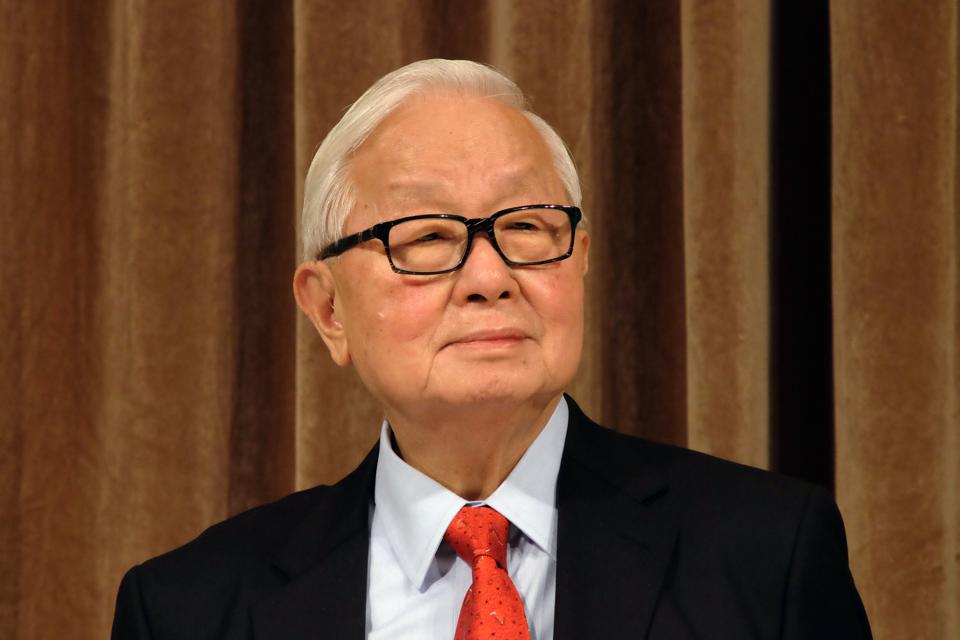
TSMC Founder
Image Source: forbes.com

After completing his education, he joined Sylvania Electric Products, and after working for three years at the company, he joined Texas Instruments in 1958. The latter sponsored Chang’s doctorate, and he joined Stanford University in 1964 to complete a PhD in electrical engineering. Chang spent 25 years of his career at Texas Instruments and was leading the company as the group vice president of its worldwide semiconductor business in the later years. After leaving TI in 1984, he also worked as the COO and president of General Instrument Corporation for one year.

The Taiwanese government wanted to work in the field of semiconductor, so it called back Chang to Taiwan and appointed him as the chairman and president of the newly established Industrial Technology Research Institute in 1985. Under his leadership, TSMC has become the largest semiconductor foundry in the world. During his time at TSMC, he served the company at various ranks, including the chairman and the CEO of TSMC. He retired as the CEO on 5 June 2018 from TSMC.

NTT Corporation

NTT Corporation, One of the Largest Global Telecommunication Carriers.

Nippon Telegraph and Telephone (NTT) Corporation offers telephone, telegraph, leased circuits, data communication, terminal equipment sales, and other telecommunications facilities. Within Japan, the company offers both local and long-distance telecommunications services.

NTT (Nippon Telegraph and Telephone Corporation) is one of the world’s largest telecommunications carriers, with nearly 310,000 people worldwide. It is selected by up to 88 percent of the top 100 firms in the Fortune Global Business Ranking “Fortune 500,” an annual business journal published in the United States. The corporation was formed in accordance with the NTT Law (Law Concerning Nippon Telegraph and Telephone Corporation, Etc.).

A Small Backstory of NTT

NTT was established in 1952 as a public entity and Japan’s sole telecommunications company. NTT was a significant factor in Japan’s dominance in the computer microchip industry due to its need for increasingly advanced electronics equipment and its willingness to use large financial resources in support of technological research and development. The corporation was designing non-telephone linking technologies for electronic data systems and fiber-optic telecommunications services in the 1980s.

NTT Corporation
Image Source: cdn-japantimes.com

The Company’s Vision

Various social issues have arisen, such as global population growth and resource and water scarcity, as well as a falling birth rate and an aging population in Japan. To address these issues, it has become critical in all situations to advance digital development through the use of ICT (information and communication technology), as suggested in “Society 5.0.”

As “The Value Partner,” NTT Group will strive to address social challenges by advancing digital change through its business practices, using its various management tools and skills, such as research and development, ICT technology, and manpower, and partnering with its partners. NTT Group claims that resolving social problems can help to achieve a wise world through the use of ICT and the United Nations’ sustainable development goals (SDGs).

The skills and programs of NTT Group for tackling social problems have already earned high acclaim in Japan and abroad. Furthermore, in terms of ensuring and running dependable ICT infrastructure, they have high-quality and dependable facilities, such as maintenance and protection dependent on strong networks.

The B2B2X Model

The promotion of the B2B2X model is one of the main pillars of NTT Group’s initiatives aimed at achieving a smart society. The B2B2X model is not a service that NTT Group offers directly to customers, but rather a model in which NTT Group assists service providers in delivering different value-added services to their customers by providing a range of ICT resources such as AI and IoT.

NTT Group has previously collaborated on the B2B2X platform with a number of member companies and local municipalities, but will now step up efforts to promote a model that makes use of digital services and data storage. The Company would increase the number of projects developed as B2B2X model enterprises from 13 in the current fiscal year to 100 by the fiscal year ending March 31, 2022, by these types of initiatives.

NTT Personal Customer Services

The Company implement “personal solutions” customized to each particular customer, headed by NTT DOCOMO, and assist customers in making lifestyle improvements. Rate contracts have been substantially updated to include better value and easy rates, and the company wants to update electronic purchases and personal contents in terms of facilities. Furthermore, NTT wants to enhance connectivity with and individual customers by using AI and big data.

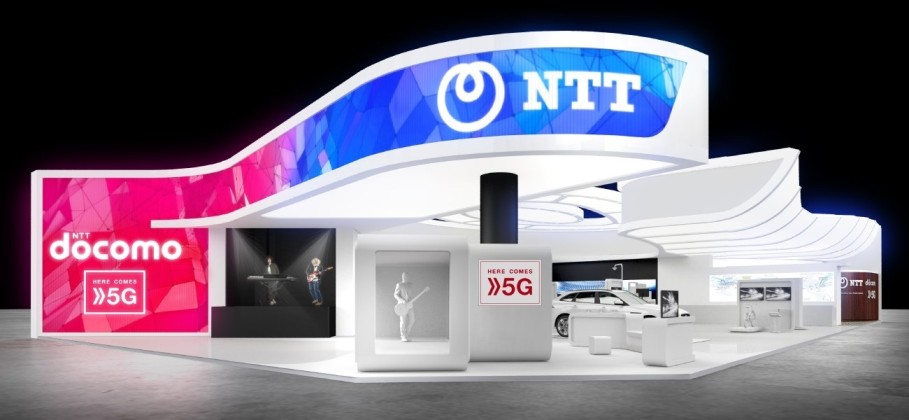
NTT Corporation
Image Source: mms.businesswire.com

The Company will be able to capture market prospects and minimize business risks by encouraging ESG management that is adequately attentive to “climate,” “social,” and “governance”-related issues, resulting in continued gains in the corporate value.

In terms of distributions, NTT’s simple strategy is to raise dividends steadily. Furthermore, in terms of equity buybacks, the company wants to continue to carry out buybacks in a flexible manner in order to increase resource productivity in the future.

Jun Sawada, The CEO of NTT

Jun Sawada was born on the 30th of July, 1955. He is a Japanese businessman who has served as president and CEO of Nippon Telegraph and Telephone (NTT) since June 2018. Sawada joined NTT in April 1978 and has held a number of senior roles at the firm since then. In June 2018, he took over as CEO after Hiroo Unoura.

NTT Group’s Mission Before and After COVID-19:

The company anticipates two significant changes in our culture and lives. The first would be the institutionalization of remote communications for the purpose of psychological distancing. The second would be a shift in the nature of globalism, as retaining social distance restricts the flow of individuals, goods, and capital. These developments would fuel a movement toward shifting supply chains built on a regional basis around the world to more globally installed supply chains, resulting in a new approach to “glocalization.”

Philips

Philips – The Journey From Home Lighting to Healthcare.

Philips started as a bulb manufacturing company and is still known as one, but there is more to it. The company has also emerged as one of the biggest healthcare technology companies. For its healthcare wing, the company works in three divisions, i.e., Personal Health, Connected Care, and Diagnosis & Treatment. For the past more than 120 years, the company has evolved as an innovative leader in the industry and is counted among the largest conglomerate. The company recorded annual revenue of €19.535 billion, with 81,592 employees working for it worldwide. 

A Brief Introduction

Philips is a multinational conglomerate mainly known for the production of audiovisual equipment and lighting. Gerard Philips and his father Frederik Philips founded the company on 15 May 1891 in Eindhoven, Netherlands. The company started as the manufacturer of the light bulb, but today its product list also includes a vast range of lighting products (including smart lights and home systems), audio products (wireless speakers, DJ mixers, Radio systems, hi-fi systems, headphones, etc.) as well as healthcare products (clinical informatics, imaging systems, diagnostic monitoring, etc.).

Philips
Image Source: channelnews.com.au

The Establishment of Philips

Gerard and his father Frederik started the Company in an empty factory building in Eindhoven in 1981, beginning with manufacturing the carbon-filament lamps and other electro-technical products. Though the two founders had high hopes with the company, they were unable to get a hold of the market. In 1895, Gerard’s younger brother, Anton, who was also an engineer, joined the company as a sales representative. The addition of Anton helped the company to get on the right track, and it started to grow.

By 1908, the Philips brothers had established the Philips Metaalgloeilampfabriek N.V. (Philips Metal Filament Lamp Factory Ltd.), and in four years, they founded Philips Gloeilampenfabrieken N.V. (Philips Lightbulb Factories Ltd.)., becoming a multinational company known as Philips Corporation.

In the 20s and 30s, the company experimented with the production of vacuum tubes, the first electric razor (Philishave) of the US, and radios (Chapel). The Philips razors are still a part of the Phillip product and quite popular among people.

In the late 30s, the company also experimented with the Stirling engine to promote the sales of its radios and developed an experimental engine capable of producing 16 W of shaft power. The generator became quite popular, and the company launched many versions of it. The ‘reversed Stirling engine’ cryocooler generator is the most popular among all the Philips Stirling engines.

Anticipating the danger of the Germans in the Netherlands during World War II in 1940, Anton Phillip with his other family members moved to the US, taking most of the Company’s capital. They established the North American Philips Company as part of Philips Corporation and moved the operations of the Eindhoven factory to Netherlands Antilles to keep the business running in the Netherlands. The company’s first factory in Eindhoven was destroyed during the war. As soon as the war ended the company headquarter was moved back to Eindhoven.

The Journey Afterwards

By the end of the 1940s, The company started to produce television sets and established a record label with the name Philips Records. In 1963, the company launched the audio Compact Audio Cassette tape and brought the first combination portable radio and a cassette recorder to the market. These recorders later became hugely popular as the boom box.

In 1972, the company launched the world’s first home video cassette recorder, and with time, enhanced its capabilities accordingly. The Company also introduced the first commercial LaserDisc standard and players and partnered with Sony to launch Compact Disc in 1982. The Company also tried its hands in the development of ICs and joined forces with ASM International in 1984, forming ASML.

At the beginning of the 90s, the company saw a financial loss. As an effect of that, it renamed N.V. Philips Gloeilampenfabrieken to Philips Electronics N.V. and established a new corporate division with the name Philips Electronics North America Corp in the US. In 1997, the company headquarters was also moved to Amsterdam. The company established a manufacturing unit for its semiconductor business in Silicon Valley in 1998.

At the beginning of the 2000s, the company entered into the healthcare technology business and acquired the Optiva Corporation renaming it Philips Oral Healthcare. The next year, the company completed the acquisition of Agilent Technologies’ Healthcare Solutions Group. The same year it also partnered with LG for a joint venture LG.Philips Displays. The company in order to expand in the healthcare business acquired Lifeline Systems (2006), Ximis, Inc. (2007), Respironics, Inc. (2007), and VISICU (2008).

In 2013, the company was renamed Royal Philips N.V., and in September 2014, the company split its operations into two major divisions, i.e., healthcare and consumer lifestyle. The company became more focused on healthcare and acquired companies like Volcano Corporation (2015) and Spectranetics Corp (2017). It also completed major investments in companies like Mytonomy (2017) and DEARhealth (2019). This led to the spinning off of Philips’ lighting division and the formation of an independent public company named Philips Lighting N.V., which later in 2018 was renamed Signify N.V.

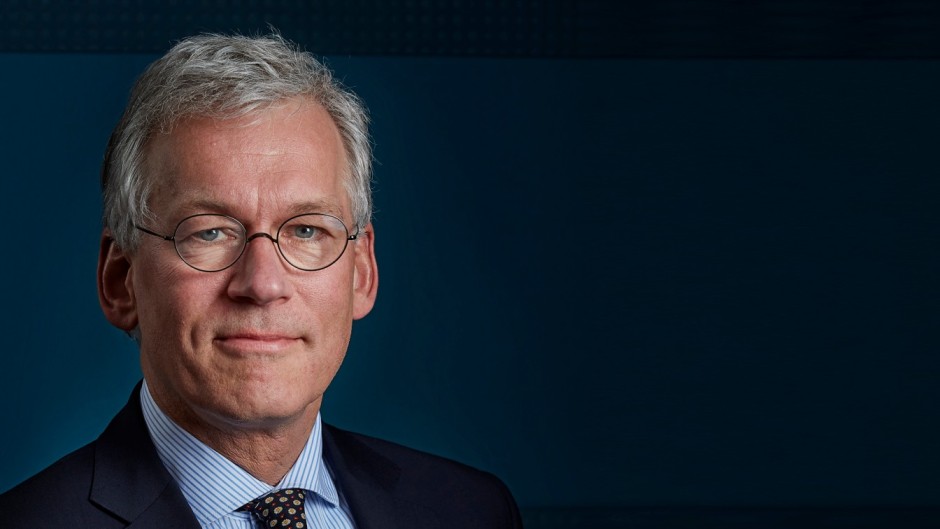
The CEO: François Adrianus van Houten

Philips CEO
Image Source: ml-eu.globenewswire.com

François Adrianus van Houten is the current CEO of Royal Philips Electronics. Houten has an old connection with the company, as he is the son of one of the board of directors of the company. He was born on 26 April 1960 in the Netherlands and completed his graduation in Economics from Erasmus University Rotterdam. As soon he completed his education, he joined Philips Data Systems, and since then he has been to different major positions in the company. In November 2014, he was appointed as the CEO of Philips Semiconductors, followed by holding the position of CEO at NXP in 2008. Finally, on 1 April 2011, he became the Chief Executive Officer of Royal Philips Electronics.

Kyocera Corporation

Kyocera Corporation – The Journey of Growth and Innovation

Kyocera Corporation is a Japan-based high-quality ceramic component manufacturing company. Kyocera is known for its development work in the field of insulator ceramics and has ties with companies like Sony and Qualcomm. It is known for its quality products and has always introduced innovative technologies to the world. Kyocera Corporation is one of the first companies to produce fine ceramic components, and for the past 60 years, it is also one of the top ceramic component suppliers in the world.

The Establishment of Kyocera Corporation

Kyocera Corporation is a Japanese ceramics and electronics manufacturing company, operating in multiple regions of the world. The company has its headquarter based in Kyoto, Japan, and was founded in 1959 by Kazuo Inamori. Kyocera is specialized in the manufacturing of ceramic products and includes printers/multi-function devices, satellite phones, mobile phones, solar power generating systems, and advanced ceramics as its main products.  Kyocera is one of the first companies to introduce a battery-powered portable laptop.

Kyocera Corporation
Image Source: global.kyocera.com

As per the 2018 records, the total annual revenue of Kyocera was ¥1.577 trillion, and 70,153 are working for the company. Apart from Japan, Kyocera has expanded its business to countries like the US, Germany, India, and the UK.

The Founding Story

The history of Kyocera Corporation dates back to sixty years ago in 1959 when Kazuo Inamori founded the company as Kyoto Ceramic Company, Limited. He, along with his 28 colleagues from his previous job, raised a capital of 3 million yen to start the business. The company started its journey as the developer of ceramic components for electronic devices. Its flagship product was a ceramic insulator known as a Kelcima, an insulator used in the picture tubes of TVs.

In the early 60s, ICs had been introduced and had opened doors for new opportunities for the companies. Taking advantage of it, Kyocera also began to ship ceramic semiconductors that helped hugely in the growth of the company. By the mid of 70s, the company started to expand its operations and was manufacturing solar photovoltaic modules, biocompatible tooth- and joint-replacement systems, industrial cutting tools, consumer ceramics as well as lab-grown gemstones.

By the end of the decade, the company also began to invest in electronic equipment manufacturing and radio communication technologies. Kyocera acquired Yashica Company in 1983, and entered the optical technology business, and started to manufacture film and digital cameras. In the 80s, the company also shipped CD players, receivers, turntables, and cassette decks. In 1989, Kyocera acquired Elco Corporation, followed by the acquisition of AVX Corporation in 1990.

By the mid of 90s, photovoltaic solar energy products from the company became very famous, and Kyocera established a separate unit named Kyocera Solar Corporation for the same in Japan in 1996. To further expand its operation in the solar energy system, Kyocera merged its operations with Golden Genesis Company in 1999.

Kyocera began the new century by acquiring Mita Industrial Company, Limited, and mobile phone manufacturing operations of Qualcomm in 2000. In 2003, Kyocera entered India and established a mobile phone subsidiary named Kyocera Wireless India in Bangalore. The company is credited for being one of the first companies to introduce Color displays on entry-level CDMA Handsets. It is also the first one to launch the EOS concept phone at CTIA.

In 2010, Kyocera acquired the thin film transistor (TFT) liquid crystal display (LCD) design and manufacturing business Sony Mobile Display Corporation. The company also acquired Optrex Corporation in 2012 and SGS Tool Company in 2016.

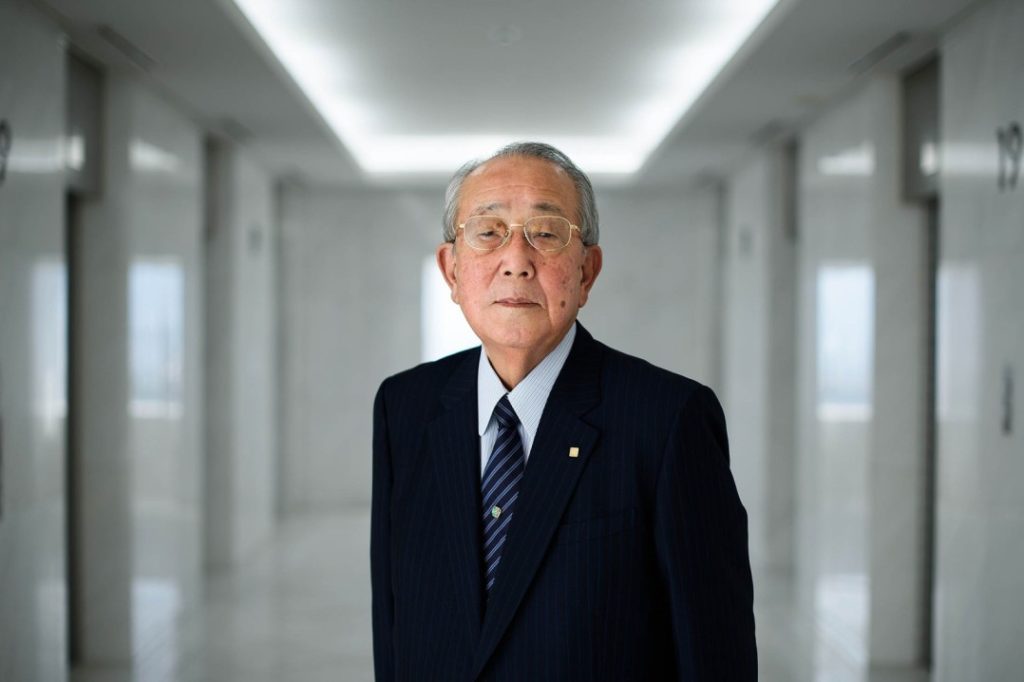
The Founder: Kazuo Inamori

Kazuo Inamori, the founder of Kyocera, was born on 30 January 1932 in Kagoshima, Japan. He completed a graduate degree in Science from Kagoshima University in 1955. His first job was as a researcher at Shofu Industries of Kyoto. His work at the company taught him a lot about ceramic insulators, and he was encouraged to start his own ceramic insulator manufacturing business. So in 1959, he left the company to start Kyocera with the help of 28 staff members from Shofu Industries.

Kyocera Corporation Founder
Image Source: cdn-japantimes.com

Other than Kyocera, Inamori also founded Daini Denden (DDI) Corporation in 1984. In 2010 he was appointed as the CEO of Japan Airlines. He is also into philanthropy works. Inamori is a recipient of the Othmer Gold Medal for his contribution to progress in science and chemistry.