Your Tech Story

Story

cerner corporation

Cerner Corporation – Merging Healthcare and IT.

For the past forty years, Cerner Corporation has worked at the crossroads of health care and information technology to link individuals and systems all over the globe. They use the latest technology to develop solutions that empower communities and people to take charge of their own health. Their tools are designed to work today while also pondering about tomorrow, whether or not they are supporting the clinical, financial, or operational areas of a hospital or health system.

Establishment of the Cerner Corporation


Cerner Corporation was founded in 1979 through Arthur Andersen’s colleagues Neal Patterson, Paul Group, and Cliff Illig. Its authentic name became PGI & Associates, however, when it released its first machine, PathNet, in 1984, it was renamed Cerner. In 1986, it went public. Cerner’s customer base step by step multiplied in the late 1980s, achieving 70 sites in 1987, 120 sites in 1988, 170 sites in 1989, and 250 sites in 1990. Cerner was operating on additives of a Health Network Architecture (HNA), an incorporated IT machine designed to automate health care processes, at the time. Clients could purchase individual components or the complete machine all at once. By 1994, more than 30 customers had purchased the complete HNA machine, with another 100 purchasing more than one component of the machine.

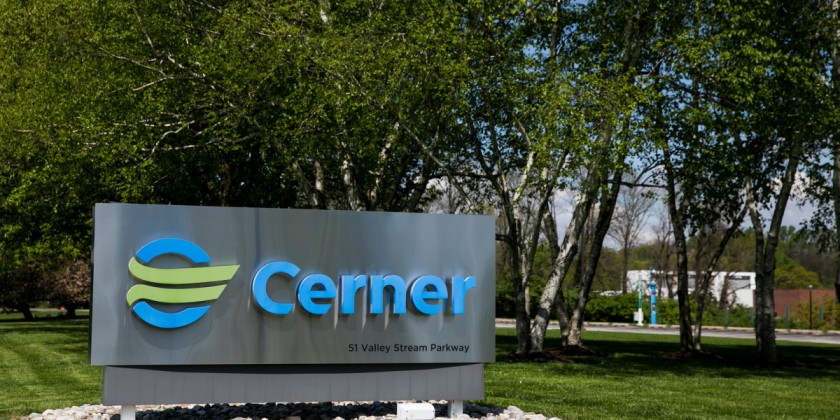
cerner corporation
Image Source: fortune.com


Cerner bought IMC Health Care, Inc. in early 2010 in order to keep expanding its health offerings to industrial employers, pharmacies, and health applications outside of Cerner.
Cerner Corporation announced its intention to purchase Siemens Health Services, Germany’s Siemens AG’s health information technology business, for $1.3 billion on August 5, 2014. On February 2, 2015, the acquisition was completed.
On July 29, 2015, the Leidos Partnership for Defense Health, comprised of Cerner, Accenture, and Leidos, was awarded a 10-year, $4.3 billion contract to overhaul and manage the Department of Defense’s electronic health records.


The Company’s Offerings


Command Center
The need for situational awareness in health care systems has never been greater. The Cerner Command Center Dashboard uses near real-time data and predictive analytics to give health systems a clear view of critical resources like staffed bed capacity, care demand, and equipment – information that leaders use to anticipate and respond to patient needs. The Cerner Command Center dashboard provides actionable data insights to enable effective resource and process management in order to improve health system operations.
Cerner’s best practices for staffing and patient throughput processes, Cerner model system for integrated and automated workforce management and capacity management solutions, AWS cloud, predictive intelligence, and machine learning, and integration across Cerner platforms can all be used by the Cerner Command Center to help reduce operational costs.


HealtheReferrals
HealtheReferrals supports provider organizations, throughout any EHR and payer, in the growth and retention of patients. The product targets patients with a configurable patient-supplier algorithm which includes factors such as specialty, insurance networks, proximity to patients, and network members. The product is the most appropriate in-network provider. It also offers analytical and referral coordination capabilities to help ensure transparency through employee and affiliate networks.
The average person influences household healthcare expenditure in excess of 1,5 M$, all references count. Cerner realizes that it is critical for the health of an organization to improve margins and lower risk and provide cost-effective care. HealtheReferrals is committed to providing providers and managers with the information they need to achieve these goals, independently of EHR.


Neal Patterson, The Founder


Neal Patterson has been CEO of Cerner for 38 years, an enterprise which he co-founded in 1979 with two colleagues. Patterson was a long-time CEO of the country. With revenues of 4,8 billion US dollars in 2016 and over 25,000 employees around the world, Cerner is currently the world’s largest independent information technology provider.

Patterson was posthumously brought to the Hall of Fame in 2019 and appointed as the International Entrepreneur of the Year by the Regnier Institute of Entrepreneurship and Innovation of the University of Missouri-Kansas.
On a farm near Manchester, Oklahoma, Patterson was brought up. He obtained a Bachelor of Finance and a Masters in Business Administration from the Oklahoma State University.
As a result of the recent recurrent cancer, Neal L. Patterson died on 9 July 2017. He was 67 years old.


Brent Shafer, The CEO


Brent Shafer, Chief Executive of Cerner, is responsible for the company’s market-oriented business units, consumer brands, key strategic relations, and priority business initiatives and is responsible for developing and expanding these business units.
Shafer has been CEO of Philips North America, where she has supervised the portfolio of health technology that includes a wide range of solutions and services inpatient surveillance, imaging, clinical computer technology, sleep, and respiratory services as well as a group of leading consumer brands. Shafer previously served as the CEO of Philips’ global Home Healthcare Solutions division.

Shafer possesses extensive experience building innovative value-based business models. He has contributed to the growth of a complex multinational organization for a number of years as a senior leader with Philips. He is also a member of the Healthcare Leadership Council which brings together health leaders of the nation to develop policies, plans, and programs to implement their vision of a system that provides all Americans with affordable, high-quality care. He received a Bachelor’s degree from the University of Utah.

Dormakaba

Dormakaba – One of the Biggest Global Access Control and Security Solutions Company.

Dormakaba Holding AG started as two separate companies and have separate histories before 2015. Kaba and former Dorma merged in 2015 to form Dormakaba, a global security group offering services like identification, safe locks and lodging products.

Dormakaba is a global leader in the field of access security and has over 150 years of experience. The company is providing its services to almost every industry, including healthcare, hotel, education, shops, entertainment facilities, etc. Dormakaba headquarters is based in Rümlang, Switzerland, and over 15000 people are working for it. Dormakaba work in five different segments, i.e., Access Solutions AMER (North and South America), Access Solutions APAC (Asia Pacific), Access Solutions DACH (Germany, Austria, Switzerland),  Access Solutions EMEA (Europe, Middle East, Africa), Key and Wall Solutions.

The Growth History of Dormakaba

Dormakaba
Image source: www.mark-info.co.uk

Kaba started as a locksmith shop, which also worked as a cash register factory. Franz Bauer founded Kaba in Zurich in 1862, but in 1915, Leo Bodmer bought and renamed the company to Bauer AG. The first patent for the company after the acquisition was of the first cylinder lock made by inventor Fritz Schori. The lock was named after the founder of Kaba, i.e., ‘Kassenbauer’ (in German).

In the coming years, the company expanded from Zurich to the whole of Europe and listed on the Zurich stock exchange along with a name change to Kaba Holding AG in 1995. In 2001, the company started to expand overseas through some major acquisitions, Unican Security Systems of North America being one of them. The company also acquired a China-based company named  Wah Yuet Group, a US-based company Computerized Security Systems and a Dutch company  H. Cillekens Zn. B.V. in 2006. At the same time, Kaba also partnered with Minda Group of India.

The Growth Story of Dormakaba

On the other hand, Wilhelm Dörken and Rudolf Mankel founded Dorma as Dörken & Mankel KG in Ennepetal, Germany, in the year 1908. The company worked in the field of door technology. For the 50 years of its inception, the company was constantly working towards incorporating technology into the door systems, and in 1962, it built its first automatic door.

In the next fifteen years, the company also started to work on glass fittings. The company also started to expand and opened its first international office in Singapore in 1978. In the next ten years, Dorma brought Safety solutions and emergency exit control systems to its product range. In 1999, Dorma acquired a comapny named Groom and introduced mobile partition walls in 2002. In 2013, the company recorded 1 billion Euros in annual turnover.

The Merger

The two companies, Dorma and Kaba, both the leaders in their respective fields, decided to merge their operations to expand even more. The two companies came together on 30 April 2015 for the planning and sealed the deal in September of the same year.

The Product Range

Today, Dormakaba is among the top three security companies and is offering its services worldwide. Since the company is a result of a big merger, the company provides its services under multiple brand names, including Keyscan, Best, Dorma, Dorma, Dormakaba, lIco, Kaba, Kilargo, Legic, etc. Also, the areas of operation for the company includes door hardware, electronic access and data, entrance systems, mechanical key systems, safe locks, lodging systems, interior glass systems, movable walls, etc.

The CEO at Dormakaba

Sabrina Soussan is the CEO of Dormakaba. She is a French and German national. Soussan has a Master’s Degree in Mechanical and Aeronautical engineering from the E.N.S.M.A Aeronautical and Mechanical Engineering School, Poitiers (FR) and an MBA Degree from the Poitiers and Dublin University.

Soussan was appointed as the CEO of Dormakaba in January 2021. Before that, she served as the co-CEO at Siemens Mobility and worked at the company for eleven years in different positions. She also worked at companies like Renault for a few years. Soussan is also a member of the board of directors at ITT Inc. and Schaeffler.

Seagate Technology

Seagate Technology – The Biggest Contributor to the Growth of Computer Storage Industry.

Computer storage is an essential part of computer hardware and software. Over time, computer storage has gone through a tremendous change, and we have seen these devices grow in technology and size. Today a small chip can hold data over 500 GB or more. And this has happened due to some innovative companies running behind the technology and working towards innovation. Seagate Technology is one such example of companies, working in the field of computer storage that has been actively providing innovative products to the industry.

Seagate Technology Holdings initially founded as Shugart Technology is an American data storage company manufacturing and distributing computer storage devices. It was founded about 40 years ago and has been working in the field of computer storage as a leader. The company is credited for ‘sparking the personal computer revolution’ with its 5.25-inch hard drive for the PCs.

 About Seagate Technology

Seagate is a result of a prediction of upcoming growth in the economic industry as microcomputers were becoming popular in the late 70s. The company, today, stands as the biggest supplier of the HDD market and competes with companies like Western Digital. Seagate has also added to its growth with some of its major acquisitions, including Conner Peripherals, Maxtor and Samsung’s HDD business.

Seagate has established its operational headquarters in California, US, and the legal domicile is in Dublin, Ireland. The company has seen rapid growth in its sales in the past twenty years. As per the 2020 records, the company made revenues worth US$10.51 billion, and over 42,000 people are working for it in the US and overseas.

Seagate Technology
Image Source: www.seagate.com

Founding Seagate Technology

Finis Conner and Alan Shugart founded Seagate Technology on 1 November 1979 as Shugart Technology. It was Conner who thought of the idea to start a hard disk drive manufacturing company to take advantage of the upcoming economic boom.  Later, Tom Mitchell, Doug Mahon and Syed Iftikar joined in to become the partners in the company. There was a company already existing with the name Shugart, so the founders had to change the name to Seagate Technology.

Seagate started as the manufacturers of hard disk drives for computers. In 1980, the company developed its first product, the 5-megabyte ST-506, the first 5.25-inch hard disk drive (HDD). Later, due to the huge popularity of the ST-506, Seagate also brought the 10-megabyte version of the same hard disk. Soon Seagate became the major supplier of the hard disk drives for microcomputers and bagged a contract for OEM for the IBM XT from IBM. IBM XT was the first personal computer that had a hard disk.

The Growth

By the early 80s, Seagate had got a hold on the 45% of the single-user hard drive market. At the beginning of the 90s, Seagate shifted its focus from external drives to mainframe drives, and it limited the outsourcing of components from other companies. Instead, it started to manufacture most of the components in its manufacturing units. During the same time, Seagate also introduced the industry’s first hard disk with a 7200-RPM spindle speed. The company was already trading on Nasdaq but moved to New York Stock Exchange in 1995.

In 1996, Seagate merged with Conner Peripheral, standing as the largest independent hard-drive manufacturer in the world. The same year, the company came with the first hard disk with a 10,000-RPM spindle speed in the industry, named Cheetah 4LP. Between 1997 and 2004, Seagate increased its production, supplying about 20 million drives per quarter.

In the year 2000, the company became a private company, but after a lot of restricting and relocation to the Cayman Islands, it became public in 2002. In 2003, Seagate started to manufacture hard disks for notebook computers as well as for the first iPods, smartphones and cameras. Seagate introduced the concept of hybrid drive in 2007, and the next year, it sold 1 billion HDDs.

In 2010, another restructuring for the company took place, and the company headquarter was moved to Cupertino, California. The company also changed the country of its incorporation to Ireland, with a name change to Seagate Technology plc. The same year, it brought the world’s first 3 TB hard drive. By 2012, the company value had raised to $14 billion and produced the first 1 TB/square inch density hard drive. The next year, Seagate was shipping the shingled magnetic recording drives, and in 2016, it demonstrated the 60 TB SSD, ‘largest ever.’

In 2020, the company’s operational headquarters was moved to Fremont, California. In May 2020, Seagate Technology Holdings plc became the parent company of Seagate, replacing Seagate Technology plc.

The Founder

Finis Conner is the founder of Seagate Technolgy. He was born on 28 July 1943 in Gadsden, Alabama. Because of his poor financial condition, Conner started to work at the age of 19 at IBM, and with time managed to get a degree in industrial management from San Jose State College in 1969. With his experience at IBM, Conner thought of the idea to build a company named Shugart Associates with Alan Shugart to manufacture floppy disks, becoming the pioneer in the industry. Later with Shugart, he founded Seagate Technology. Apart from that, Conner also founded Conner Peripherals, which later became a part of Seagate Technology.

United Microelectronics Corporation

United Microelectronics Corporation – Taiwan’s First Semiconductor Company.

Taiwan is the manufacturing hub for most of the world’s biggest electronics and IT companies. Apart from providing land for manufacturing and labor for work, Taiwan has also given some big-name companies that are leaders of their respective fields. UMC, aka United Microelectronics Corporation, is one such Taiwanese company that has made its mark on the international level. In fact, it is the first semiconductor company in Taiwan.

UMC was founded in 1980, and its headquarter is based in Hsinchu Science Park Hsinchu, Taiwan. The founding of the company is a result of the spinning off of the government-sponsored organization, the Industrial Technology Research Institute (ITRI).

About United Microelectronics Corporation

As said earlier UMC is a spin-off company of a state-owned institution. The company is the first semiconductor company in Taiwan, and it is known to manufacture integrated circuit wafers for other companies which produce fabless semiconductor. Though the company is based in Taiwan, it does most of its business outside the country, TSMC and GlobalFoundries being its major competitors and the automotive industry being its major area of service. The company operates through its four different fabs (300 mm), based in Japan, Taiwan, Singapore, and China, to provide better service to its customers.

United Microelectronics Corporation
Image Source: tradingview.com

UMC incorporates the latest technologies and innovative techniques to manufacture and process IC manufacturing. Logic/Mixed-Signal, embedded High-Voltage, embedded Non-Volatile-Memory, RFSOI, and BCD, etc., are some of the techniques used by the company. The company has over 12 fab productions and produces about 800,000 wafers every month.

UMC trades as a public company and has listed on New York Stock Exchange as well as Taiwan Stock Exchange. The company employs over 19,500 people worldwide, and as per 2019 records, the company made annual revenues worth US$5 billion.

The Founding and Growth

UMC became the first Taiwanese semiconductor company when it got spun off from the state-owned ITRI. It became the pioneer of the commercial semiconductor industry for Taiwan. In 1985, UMC listed on  Taiwan Stock Exchange. The company ran on the IDM model for about fifteen years from its inception, and then in 1995, the company switched to the pure-play foundry model and started to manufacture its own products.

The next year, UMC spun off multiple design units, resulting in the formation of AMIC Technology, MediaTek, ITE Technology,  Novatek, Faraday Technology, and Davicom. In 1999, the company established its first 12A, Taiwan’s first 12-inch wafer fab in Tainan Science Park. The next year, UMC became Taiwan’s first-ever semiconductor company to list on the New York Stock Exchange. The same year, the company started to manufacture the chips using copper process technology. It also brought the first 0.13-micron ICs to the industry.

In 2024, the Singapore-based wafer fab of the UMC started mass production, and in 2008, UMC listed some of its stocks on the Dow Jones Sustainability Index (DJSI). The company also made some acquisitions like Hejian Technology Wafer Fab of China in 2013 and  Japan-based Mie Fujitsu Semiconductor in 2019. In 2015, UMC entered China by establishing a 12-inch wafer fab in Xiamen, Fujian Province, China, where the company started the 28 nm mass production in 2017.

Stan Hung: The Chairman at UMC

Stan Hung is the Chairman of the Board and Chief Strategy Officer in United Microelectronics Corporation. He joined the company in 1991 and became the chairman in 2008. Hung is a native of Taiwan. He completed his school education from a local high school and earned a bachelor’s degree in accounting from Tamkang University, Taiwan.

Other than being the chairman of UMC, Hung also holds a prime position in some prominent companies. He has been appointed as the chairman of the board in Fortune Venture Capital Corp., TLC Capital Co., Ltd., and Faraday Technology Corporation. Hung also serves Triknight Capital Corporation and UnitedDS Semiconductor (Shandong) Co., Ltd. as the director.

Snowflake Inc

Snowflake Inc – An Eight Years Old Cloud Computing Company to top the Forbes Cloud 100 List

Cloud Computing in today’s era is a very promising field to both launch a business and get employed. Data storage based on cloud computing has escalated first and it makes access centralized for big enterprises as well as for individuals. Snowflake Inc is a very successful company in the sector of cloud computing-based data warehousing. Benoit Dageville along with Thierry Cruanes and Marcin Zukowski formed the company in July 2012. The company, however, was in stealth mode for two years and was officially launched in 2014. Currently, the company provides cloud-based data storage services and runs on Google Cloud Platform since 2019.

About Snowflake Inc

Benoit along with the other co-founders worked from scratch to build a data platform that will harness the power of cloud storage. The company claims that its platform leverages the two most important elements of the general cloud platform,i.e., elasticity and performance to develop a more flexible product. Snowflake makes sure that the customers can share data both in and out of their organization with the utmost security and without actually copying or moving the data.

Snowflake Inc
Image Source: siliconangle.com

The platform of Snowflake is used by many renowned companies including Adobe, Overstock, Capital One, etc. Over the years, the company has expanded on international grounds and currently, it has more than 1300 partners helping to strengthen the presence of Snowflake Inc. According to the statistics of last year, it had 3,400 active customers in 2020.

The Beginning of Snowflake Inc

Benoit and Thierry knew each other before co-founding Snowflake as they were colleagues while working for Oracle. Back in 2012, Benoit and Thierry discussed how the development of Hadoop will bring change in scenarios for processing large datasets. It was most likely to make the work of Benoit and Thierry obsolete that they were doing in Oracle. So, these led both the co-founders of Snowflake to think about the future and how big data was gradually taking over the data storage service sector. Benoit also realized that even Hadoop is having a few shortcomings like missing key features and overall less efficient. This led to the idea of building a new platform that would overcome both the shortcomings of Hadoop and data warehouses back then.

So, Benoit, Thierry, and Marcin started working on this new data platform from zero and were finally successful in developing it. The system that they created ran ten times faster as compared to any other data storage platform back then for the same cost. After they created the product, they gradually moved forward to the next step and founded Snowflake Inc. The company was named Snowflake because all the co-founders have a love for winter sports. Though the product was successfully developed in 2012, it was two years later that the company was launched publicly by Bob Muglia. In 2015, the product was eventually available and 80 organizations used it back then.

Success of Snowflake

Snowflake has always been one of the top companies in the data storage sector to continuously evolve their product. They are well known for their work culture and innovation that has kept them in business with a strong ground. When the product was developed in 2012, the co-founders started looking for investors and it was a bit difficult to convince people how a data storage platform will evolve in the future and why their system was superior. But, both Benoit and Thierry had a professional background which strengthened their game of networking. So, in August 2012 the company was successful in raising $5 million in Series A funding led by Sutter Hill Ventures.

After it came out of stealth mode in 2014, the company raised another $26 million followed by $45 million in 2015. The next two years were followed by raising a huge amount of money and in 2018 the company’s net valuation became $1.5 billion. Snowflake reached unparalleled heights as it gained unicorn status only after four years of the official launch. Last year, the company became public via an IPO and raised $3.4 billion.

Due to its innovative products, Snowflake has been the recipient of multiple awards and honors including “Cool Vendor” in Gartner’s Magic Quadrant, acquired the first position at the 2015 Strata + Hadoop World startup competition, ranked No. 1 on LinkedIn’s 2019 U.S, etc.

The Founders

Snowflake Inc Founders
Benoit Dageville, Thierry Cruanes, and Marcin Żukowski
Image Source: twitter.com, qconsf.com, and cwi.nl

Benoit Dageville is a French computer scientist who started his career at Bull Information Systems. Before co-founding Snowflake Inc, he worked at Oracle for more than fifteen years. Thierry Cruanes is also a computer scientist who worked at two leading companies, IBM and Oracle before developing Snowflake. Marcin Zukowski also has a very impressive professional career which includes working in multiple companies like Microsoft, Google, CWI, Actian Corporation, etc. Apart from co-founding Snowflake, he also founded Vectorwise.

ServiceNow

ServiceNow – One of the Fastest Growing Cloud-Computing Company

Cloud computing has changed the face of the IT industry. It has increased the scope for software companies and the people seeking innovation. ServiceNow is one such company that saw the scope in cloud computing and decided to move forward to work in software-as-a-service. In fact, ServiceNow is known as one of the pioneers of software-as-a-service. The company came into being in 2003, and ever since, it has been growing towards its goal of clients’ satisfaction. Fred Luddy founded ServiceNow, and the company headquarter is located in Santa Clara, California.

ServiceNow, today, deals in platform-as-a-service operations like Cloud computing, technical management support, IT service management, and Enterprise Service Management and is currently serving over 6000 customers worldwide. The company has also started to incorporate artificial intelligence technology into its cloud computing service to yield more practical solutions. ServiceNow employs over 12000 people, and as of 2019, made revenues worth US$3,460,437,000.

Broke to Billionaire Story of ServiceNow

Fred Luddy, the founder of ServiceNow, has a real ‘rags to riches story and has also given us an example of “the age is just a number”. Luddy founded the company, after he went through a $35 million personal fortune loss, because of a fraud in his previous company, Peregrine Systems, around fourteen years ago. He was was the CTO at the company and lost his money due to accounting fraud.

But later, Luddy geared up and started to work on the next project, i.e. a cloud-based product (software-as-a-service) to ease out operations for the average office worker. Luddy founded the software company Glidesoft, Inc. in 2003, just before Luddy turned 50, discarding the psychological thing for people that 50 years is too late for starting a business. In 2004, the company name was changed to ServiceNow, and till 2005, the founder was working on software that the company was going to sell.

ServiceNow
Image Source: plat4mation.com

In 2005, ServiceNow hired its first five employees (Luddy’s brother Rob being one of them) and raised US$2.5 million in venture capital. Rob joined the company as the first sales representative, who took the product into the market, making first of the sales for the company.

In just two years after raising the money and going into the market, ServiceNow made revenues worth US$13 million. In 2007, the company moved to San Jose, Silicon Valley, and the company started to make profits. ServiceNow had a D series fundraising lead by Sequoia Capital in 2009, where it raised 41.4 million.

By 2011, ServiceNow had opened offices in places like San Diego, Chicago, New York, Atlanta, London and Frankfurt. The same year, it partnered with Accenture such that the former was offering consulting services to the latter through its hundred dedicated employees.

In 2012, ServiceNow had its first IPO, and the same year its headquarter was moved to Santa Clara, California. ServiceNow made revenues worth 1.39 billion in 2016 and reached the market cap of 12.34 billion. The company also ranked number 1 on the  Forbes Most Innovative Companies list in 2018, and in 2021, it was among the world’s most admired companies for the 2021 list of Fortune Magazine.

Acquisitions

In the year 2013, ServiceNow started to make acquisitions to encourage company growth. Mirror42 (2013), Neebula Systems (2014), Intréis (2015), Brightpoint Security (2016), DxContinuum (2017), VendorHawk (2018), Parlo (2018), Appsee Ltd. (2019), Loom Systems and Passage AI (2020), Attivio (2020), Element AI (2020), Intellibot (2021), and Lightstep (2021) are some of the names of its acquired companies.

The Founder: Fred Luddy

Fred Luddy, the founder of ServiceNow is known as one of the software-as-a-service pioneers. He is an American national and grew up in New Castle, Indiana. Luddy completed his high school at a local public school and has always been interested in computer programming. He joined Indiana University but left his studies in between to work more on his programming skills.

Before starting ServiceNow, he was working at Peregrine Systems as the CTO. But in 2003, due to accounting fraud, he lost money worth $35 million in the same company. After starting ServiceNow, he served the company as the CEO till 2011 and then started working an advisory role for ServiceNow till 2016.