Your Tech Story

Product

SanDisk

Sanjay Mehrotra: Never-Ending Journey For A Better Digital World of SanDisk Founder

There are many persons who believe in innovations. Although, very few of them are responsible to make that happen. But the persons, who dare to transfer those inventions from lab to daily use, make the world a better place. So, they set their name in the list of influencing entrepreneurs. Sanjay Mehrotra is one of them, who not only believes in innovation but also devoted himself to deliver a better one. He is the co-founder and former CEO of SanDisk that replaces hard disk drives with flash memory in the 19th century.
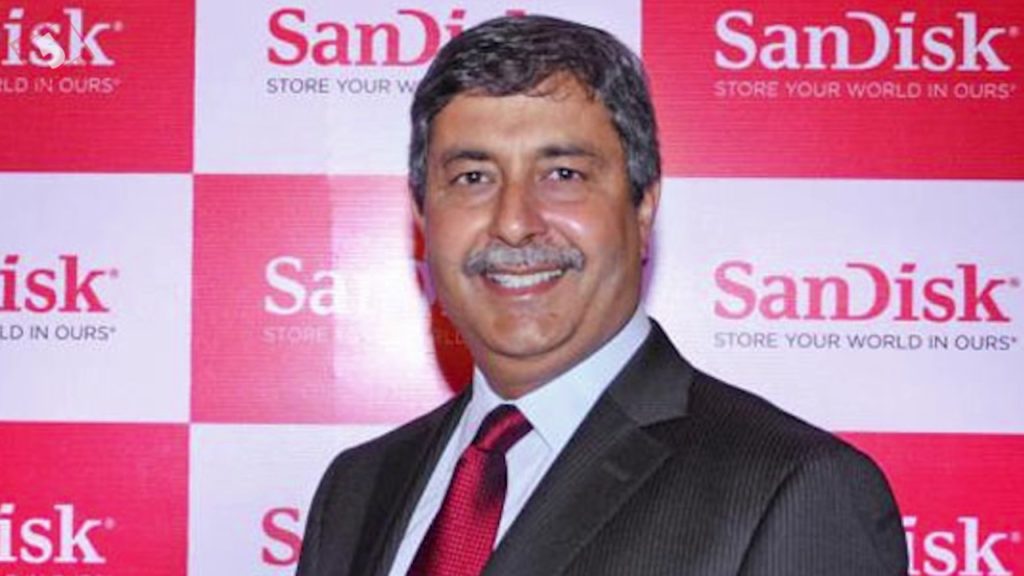
Image Source – Google

At present, he is the CEO of Micron Technology, which is one of the leading memory storage devices manufacturers. It has been never easy to climb the ladder of success. Yet, it is inspiring to know the untold journey of Sanjay Mehrotra.

Early life

He was born on 27th June 1958 in Kanpur, India. Sanjay spent his childhood days in the same city. Thereafter, the Mehrotra family shifted to Delhi due to his father’s work. He went to Delhi school for primary education. Also, at Sardar Patel Vidyalaya he completed secondary schooling.

UG course at the University of California

When the students were dreaming of post-graduation in foreign. At that time, Sanjay’s father inspired him for UG in a foreign country. BITS Pilani was well known for collaboration with international Universities. So, he took admission for UG program, in the hope of future chance to go abroad. He completed two years of Electrical engineering in Bits Pilani, and then the day came.

He grabbed the opportunity to study the remaining UG course at the University of California, Berkeley. Reaching there was not a cakewalk. At first, his visa got denied three times. But his father’s support and his ambitions do not let him stop. They had to request multiple times and countless meetings to the Indian US embassy. Finally, he got the passport and flight landed at the destination.

Earlier achievements

He applied for a master’s degree, at the same University as a UG program. During his master’s program, he worked on Integrated circuits. But his interest was more towards designing. Hence, he could not stop himself from discovering non-volatile memory design.

Sanjay named more than 70 patents. Also, he presented research papers on the Flash memory system and non-volatile memory design.

He joined Intel Corporation as a Non-Volatile design engineer in 1980. It was the opportunity to explore his area of interest in non-volatile memory design more.

What happens when one Indian, one Chinese, and one person from Israel meet? No idea. Well, when these three persons met, they founded SanDisk; that too in one different country.

Boom of SanDisk

In 1988, Sanjay Mehrotra, Eli Harari, and Jack Yuan started a small company in Silicon Valley. Initially, they wanted to replace hard disk drives with their flash solid-state drives (SSD). To achieve this, they designed the first flash-based SSD mounted in a 2.5inch hard drive for IBM. Though it was of only 20MB capacity, it was a great move to install the technology which was at the experimental state at that time.

The first product of SanDisk traded out for $1000. After that, they changed their products according to market needs. SanDisk boomed the digital industry with its first mega-market sale of open standard digital films.

The Journey Continues

In the year 2011, Sanjay Mehrotra acquired the position as CEO. Under his policies, the company gained most of the electronics market. In fact, in 2012 SanDisk was the third-highest among other consumer electronics companies.

In recent years, SanDisk working on SSD for cloud computing. Also, they produce more than 2 million USB flash drivers per day. In 2017, Sanjay Mehrotra assigned as the new Chief executive officer of Micron Inc. Also, he is the onboard member of SanDisk.

Zilingo

Zilingo – Indian Entrepreneurs Create New Style Statement

We all love talking about fashion. Many of us have the urge to recreate their wardrobe every season. From a 5-years old little girl to a 60-years old man, we all want to look classic. A perfect fashion icon speaks through the language of style.

Brands can never define fashion. The idea behind fashion is creative and one can get inspiration from anywhere. It is a form of art that seeks ideas from a high-class designer dress to some really cool street style. Ankiti Bose and Dhruv Kapoor proved that in front of the entire world.

Who are they?

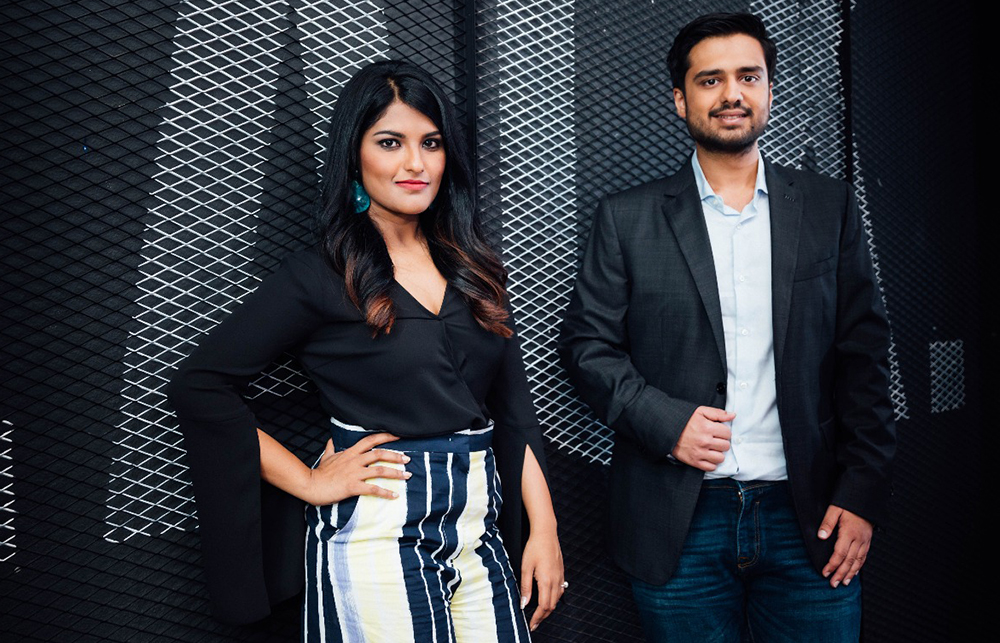
Ankiti Bose and Dhruv Kapoor are the founders of Zilingo, an online commerce platform for fashion. Though they are from different career background they hit it off pretty well.

Zilingo-Founders
Image Source – Google Images

Ankiti Bose

Before founding Zilingo, Ankiti Bose worked as an investment analyst Sequoia Capital. She worked at the Bangalore office. Bose studied Economics and Mathematics from St. Xavier’s College, Mumbai.

She is a fashion enthusiast. Her trip to Bangkok and witnessing their magnificent street fashion is what inspired her to create something of her own. She has also worked for McKinsey & Company.

Dhruv Kapoor

It is true that Engineers can be anywhere. One might get a B. Tech degree but for most of them, interest lies somewhere else. Dhruv Kapoor is an engineer who graduated from IIT, Guwahati. He studied Electrical and Electronic Engineering.

After graduating in 2012, Dhruv Kapoor joined Yahoo as a Software Engineer. After working there for a year, he joined Kiwi. Eventually, he met Bose, decided to quit the job and start a business.

The Back Story

None of them had the perfect plan to start a business. It happened all of a sudden. They trusted their guts and took the risk.

The story begins when Bose went on a Bangkok trip with her friends. It was back in 2014. She went shopping in a market called Chatuchak. According to her, it was the largest weekend market worldwide.

She witnessed more than 10,000 independent retailers with really inspiring designs. Unfortunately, none of them knew how to take their business online. This is when Bose thought of creating a platform where these powerful talents can be showcased and earned as well.

With the idea in her mind, she knew it would be better if she had a tech guy in her team. Because irrespective of the idea technology has a bigger role to play. After a few days, she met Kapoor at a party in her own flat. She shared her idea and Kapoor found it really interesting. They decided to take the next step.

The Beginning

They started with quitting their jobs. There wasn’t any second thought about their plan. Initially, they spend $30,000 each from their savings. Sequoia India backed Zilingo since Bose was a former employee. The company provided Zilingo the seed funding.

In 2015, Bose and Kapoor established Zilingo in Singapore.

What is Zilingo?

The company is a dream place for any potential designer who lacks a source. Zilingo is a fashion company that connects wholesalers, retailers and help them reach out to customers. It provides technical and financial support.

Within four years, the company has expanded to Hong Kong, Indonesia, Thailand, Philippines, Australia, India, and the U.S. Every company or the independent retailer who wishes to do sell their products go through strict scrutiny. Zilingo charges a commission of 10%-30% for all of them.

The Success

From the very beginning, Zilingo raised a good amount of funding. It raised around $8 million in Series A funding followed by $18 million in Series B funding. Zilingo’s Series C funding round took place in 2018 and it raised $54 million. The amount almost quadrupled in the Series D funding round.

Zilingo has become one of the highest capitalized start-ups in South East Asia. The company’s valuation became $970 million in February 2019.

Zilingo, today, has more than 600 employees working over eight nations. The company’s valuation is on the course to become $1 billion. Bose is the first Indian woman who co-founded a start-up of such valuation. She has become a role model for all young women entrepreneurs out there.

The company has created a sign of dignity for both its business strategy and technology. What can be a better combination than an economist and a software engineer? Zilingo’s team is full of creative, inspiring and passionate people.

Rolf-Schroemgens

Trivago N.V., Making Hotel Experience Better

The travel agents are in huge demand with development in the tourism industry. India’s travel and tourism attract millions of foreign travelers every year. Witnessing immense profit in the acreage of tourism, a lot of online travel companies has been launched within the past decade. The companies like Trivago provide an entire customized travel package for you.

But, Trivago is a company that exclusively makes hotel search better. Trivago founded in January 2005 is a hotel search engine provides services to more than fifty countries. Users can search hotels according to their convenience and book through Trivago’s online platform.

Trivago founders are Rolf Schroemgens, Stephan Stubner, Peter Vinnemeier, and Malte Siewert. Schroemgens is the CEO of the company. The company currently has around 1300 employees.

About the Founders

Rolf Schroemgens
Image Source: Google

Rolf Schroemgens went to the HHL-Leipzig Graduate School of Management. He graduated in the year 2000 and started working in Ciao.com. He worked as the VP of Product & Strategy. He left the company in 2001 and after a break of three years, he made a breakthrough. Schroemgens became the President of the Entrepreneur’s Organization in 2015.

Stubner completed his high school education from Munich and went to the University of Paderborn for studying business. After graduating he started launching many online start-ups from 1999. By the time, he co-founded Trivago he was surrounded by a whirlpool of entrepreneurial experience.

Vinnemeier also went to HHL-Leipzig Graduate School of Management and before that went to the University of Illinois, Chicago. He was also the co-founder and CTO of Ciao.com and left the company along with Schroemgens.

Siewert apart from co-founded Trivago also co-founded Monkish Equity. He is a Strategic Advisor at Well now.

The Beginning

Originating on the lands of Germany, Trivago N.V became the nation’s first website for searching hotels. The company was founded in January 2005 and the Expedia Group of America acquired a major stock of it after a few years. The company started with initial external funding of $1.2 million.

When the company was formed, Stubner was named the Managing Director. But, he quit both his position and company as well. The other three co-founders took the entire responsibility of making this hotel search engine famous.

Initially, the main investors of Trivago included Samwer brothers, Florian Heinemann and Christian Vollmann. But, in 2008 the more investors came in-house increasing the amount of funding. In 2008, Trivago raised $1.14 million from Series B funding led by HOWZAT Media LLC. This marked the starting of a new era.

Exponential Growth

Unlike most of the websites, Trivago didn’t rely on Google to drive traffic. The team decided to invest in the advertising sector and hence launched TV advertisements. The company didn’t follow any strict digital marketing strategies. Schroemgens, in an interview, said that there wasn’t much competition in the market when Trivago was formed. Thus, they relied on TV for expanding their audience and it worked out pretty well.

Once they started making a good amount of profit, they started pouring it to expand in other countries. The company sold one-fourth of it to a US investment fund in December 2010. The acquisition was made for $52.86 million. After a couple of years, the American company, Expedia Group declared that it would be buying a major stake in Trivago. The deal was officially completed in 2013 for $632 million.

Business Model

In 2015, Trivago announced that its annual revenue turned up to $573.4 million. And the sole reason behind it was Trivago’s business model. The company followed the cost-per-click business model. Since it is a site where users can compare hotel prices; every click signifies a certain amount of sum in Trivago’s pocket.

Advertisements

Every company invests in an advertisement. But, nothing can beat the success of Trivago’s ads brought by the famous ‘Trivago guy’ and the ‘Trivago girl’. The ‘Trivago guy’ especially got famous in India which is portrayed by Abhinav Kumar.

The Success

Trivago’s big acquisitions include Rheinfabrik (an app development company) and Base7booking (a part of this company was acquired). The company was listed in the NASDAQ exchange in December 2016.

Beating the competition in today’s market, Trivago is the largest hotel search engine site throughout the world. It compares the rate of more than 1 million hotels and has 250 booking sites.

Schroemgens said that the company will continue to invest more in TV advertisements.

Phone

Best Phones Under INR 10,000 for Indian Market

Are you looking for the best one under INR 10,000? Well, if you are, then you are in the right place! As technology surges ahead becoming more affordable by the day, features such as high-functioning rear cameras, full HD displays and fingerprint sensors are becoming a common part of even budget phones.

The sub-10,000 market is a very significant one in India and contributes heavily to annual mobile phone sales in the country. There were several new entries into the scene this year and since most of them offer great specifications, it becomes difficult to choose the right model. Therefore, here’s a little something to help you out. Heres a comprehensive look at the five best phones under Rs 10,000 in India.

  1.   Xiaomi Redmi Note 7 

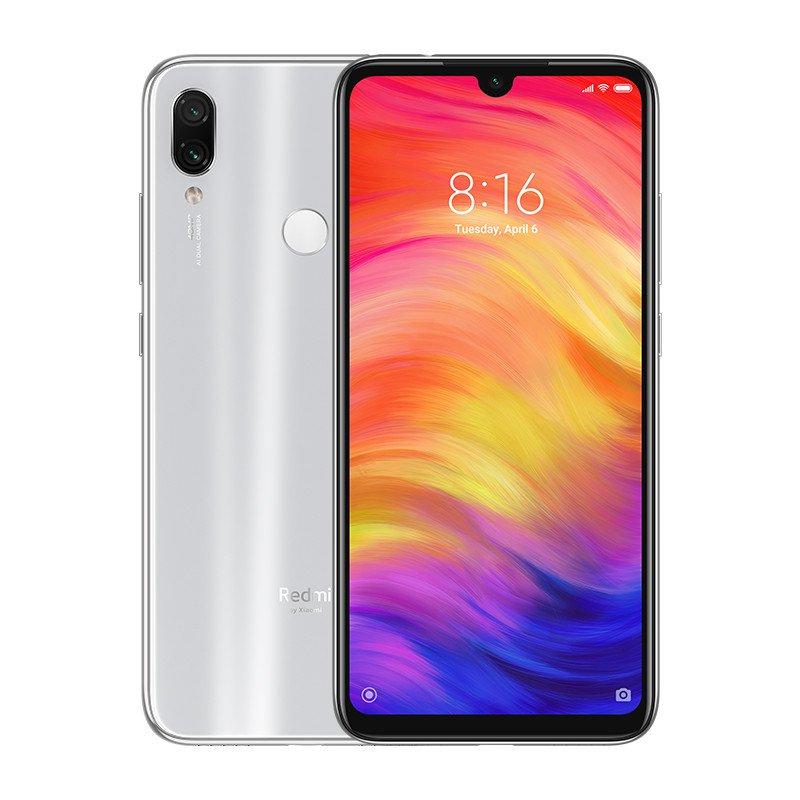
The Redmi Note 7 does not offer a 48MP camera, but it comes packed with power as it runs on a Snapdragon 660 SoC that will not let you down when it comes to performance. The vibrant display and new colour gradient make the phone visually stunning. 

It is similar to the Asus Pro M2 but comes with a smaller battery that is well capable of lasting a day and a half.  Performance is where this phone outshines its competitors because the Snapdragon processor makes this phone the fastest in the market for this price range. 

The camera performance, like with all Xiaomi phones is quite good, and the front camera produces some memorable selfies.   The night mode in the primary camera has been well appreciated by users, and so has the noise reduction feature in the video recording. 

Designwise, the screen is protected by Gorilla Glass 5 and has an exceptional finish. The only downfall would be the UI as the phone runs the MIUI 10, which is notorious due to the server ads that it comes with, but overall the phone works great.  

If you don’t mind splurging a little extra, the Redmi Note 7S is a great option, as it sits between the Redmi Note 7 and Redmi Note 7 Pro. This was runs on the MIUI 10.3 and allows a lot of customisations. The major difference though is the camera, as the Note 7S supports a 48MP primary sensor making it a great camera phone.  

2.   Realme 3 Pro 

The Realme 3 Pro is considered one of the company’s flagships and has been designed to go head to head against the Redmi Note 7 Pro. Similar to the Realme 2 Pro in terms of design, the phone features a small notch and slim.

The 6.3inch fullHD+ display helps in bringing to life vivid colours and perform commendably even under direct sunlight. The phone also has three slots, meaning you have enough space for two NanoSIMs and a microSD card. It comes with the Qualcomm Snapdragon 710 SoC., which is one of the best ships in the under 20,000 market. 

The phone comes in two varieties; 4GB RAM and 6GB RAM. The OS used is similar to the Android 9 Pie and runs smoothly.   The phone, thanks to the great processor can handle intensive apps and games and does not heat up at all. 

3.   Samsung Galaxy M10 

The most significant advantage that the Samsung Galaxy M10 provides is that it houses an ultra-wide-angle camera which was not something you would regularly see in the under Rs10,000 segment, making it an excellent buy for the price.

The primary camera does a great job, as with all Samsung phones when the lighting is good enough, and the display stretches till the end, making it a great phone to watch videos and movies on. As long as you don’t want heavy multitasking, the phone is an excellent buy for the price, and the battery is good enough for it to last over a day on a maximum charge.  

 However, the old chipset is not the most reliable, and hence, performance suffers as a result of this. But thanks to optimisations Samsung has deployed, the phone works well enough and can handle a multitude of apps reasonably well. The waterdrop notch on the screen, makes the phone’s display the best in the under 10,000 categories.  

 Further, if you don’t mind splurging a little more, the Galaxy M30 is a great option. The 3GB variant of this phone falls in the under 10,000 categories and is a great buy for the price, sporting a Super AMOLED display. The fullHD+ panel gives crisp images and the Samsung Exynos 7904 SoC also allows for intensive gaming and app use.  Once again, as with most Samsung processors, the device does tend to heat up when used for extended periods of time. However, the greatest drawback is that it comes with an Android Oreo and not Android Pie.   

4.   Realme 5

The Realme 5 comes with an updated crystal back panel and polycarbonate exterior, making it a little heavier than its predecessor. The phone has a huge 6.5-inch HD+ display, which has good brightness optimisation even though the resolution is a little low. The phone, much like most Realme phones, has three slots in the side, allowing the phone to carry Nano-SIMs and a microSD card.

The Realme 5 runs on the ColorOS 6.0.1, which resembles the Android 9 Pie, allowing a lot of customization options such as gestures and shortcuts. The phone utilizes a Snapdragon 665 SoC which allows for intensive gaming without much heating up. The phone sports four cameras in the back, and is the first sub-10,000 phone to do so. These include a primary camera, a depth sensor, a wide-angle lens and a macro lens.

The 13-MP front camera gifts you some great selfies, while supporting video stabilization. While the cameras do a great job in good lighting, they struggle to capture the same quality under low-lighting, which is the main drawback of this phone. The 5000mAh battery can easily last a day and half on a single charge. That is a good thing, given that the phone does not support fast charging. The phone has multiple variants, with the base variant which comes stocked with 3GB of RAM is a good buy at 9000.

5.   Asus Zenfone Max Pro M1 

The Asus Zenfone Max Pro M1 is similar to the Redmi Note 5 Pro but outperforms it as it comes with stock Android. The build quality is fantastic, and the phone feels very robust and sturdy while the 16 MP dual back camera is quite adept at capturing pictures.  

The fact that it comes with the Android 8.1 Oreo helped in boosting sales, and it looks like it will end the year as one of the most popular budget phones. They also provide regular updates for the UI, making it a reliable phone that stays relevant. The phone also comes with a massive 5,000mAh battery that ensures that it will stay alive even under strenuous use.  

fitbit

SUCCESS STORY OF FITBIT, LIVE YOUR LIFE IN A HEALTHIER WAY

When maintaining a proper diet or leading healthier lifestyle bumps into our way, we often tend to master the postponing game. Do you know why? Somewhere we are not encouraged enough to wake up every morning and have a good workout and wait till it turns into a serious health issue.

There is a minor part of the population who consciously tracks their fitness metrics and follows a healthy lifestyle. Honestly, many of us think that it’s an extravagant lifestyle to keep track of your health records and especially the Indians show minimal efforts henceforth. So, to keep your health records in track in an interesting way and give some push to yourself, Eric Friedman and James Park launched Fitbit in 2007, a company that produces smart wearable devices to track your health. It is interesting how Fitbit rose from just an idea twelve years ago given that it almost hit dead end several times and now competes with business tycoons like Apple and Xiaomi.

James Park

After passing out from University School at Cleveland, Ohio, Park went to Harvard for studying Computer Science but eventually dropped out. He joined Morgan Stanley as a Peon in 1998 and continued for a year. In October 1999, Park co-founded Epesi Technologies, a B2B integration software followed by co-founding Wind-Up Labs in 2002. Park’s life story is something that catches the attention of today’s generation, isn’t it? Dropping out of college and creating such a massive empire for himself.
Park along with Friedman thought of doing something incredible with the small sensors and hence came up with the idea of Fitbit to digitalize even the fitness and health of normal people.

Eric Friedman

Friedman is a Computer Science engineer who completed both his Bachelor’s and Masters from Yale University. After passing out in 2000, Friedman joined Epesi Technologies as a Software Engineer and then co-founded Wind-Up Labs with Park in August 2002. Friedman also worked for Microsoft in his early career and before co-founding Fitbit he worked at CNET Networks and Engineer Manager. Currently, he is serving as the CTO of Fitbit.

The beginning and the Turmoil

Already after founding Wind-Up Labs, both Park and Friedman didn’t have any intention to stop. They wanted to do something unique with small sensors and discovered a huge potential in the sphere of health. If small devices can be made out to track personal fitness data, they thought they might have a really good audience. At first, they created just a small circuit board within a wooden box as a prototype which helped them raise $400,000 and eventually more once they started furnishing their experimental gadgets.

In 9th September 2008, both of them attended the TechCrunch 50 Conference and received 2,000 pre-orders for their product in a single day. They accepted the order and realized later that it was a not-so-good move as they didn’t have a manufacturing unit at all. After a few months of the constant search for an appropriate supplier, the product started showing some flaws. The fate of Fitbit turned upside down and the co-founders thought of giving up. But after the topsy-turvy, they were finally able to launch the fitness tracker in 2009. They shipped around 5,000 units of this tracker and received another 2,000 pre-booking. Since there was no third party in the business, Fitbit made a robust profit out of it.

The Success

In 2011, Fitbit introduced another new tracker much better than the previous one as this one came with an altimeter and many other modifications. At the end of 2014, the company’s annual revenue summed up to $745.4 million and in the next year the company filed for its first IPO and the amount was $358 million. This year turned out to be one of the best for the company as more than 18 million fitness trackers were sold given that no new products were launched in this year.

The company also has a pretty impressive list of acquisitions starting from March 2015. Fitbit acquired Firstar in 5th March 2015 for $17.8 million followed by acquiring Coin, a credit card company in 2016. In 2017, the company acquired a smartwatch based start-up, Vector Watch SRL and in the next year a software company called Twine Health.

The company currently manufactures fitness trackers mainly for heart rate, sleep quality and number of steps. Though the company has faced a few shady plots for revealing too much information about Fitbit’s users to each other through its feature, still the company has managed to stay on the top in terms of wearable technology.

Roku

Media for the Masses: Success Story of Roku Inc

Roku is an American media-based company based in California and helps customers stream video and audio files from various channels all over the internet. Roku has been a revolutionary player in the field of media and has changed the way people consume media in the US. The company manufactures small devices that allow televisions to capture and play live-streamed audio and video files, thereby helping viewers use their television the way they would use the laptop or desktop. Since launching in 2002, the company has expanded its horizons and now also owns an advertisement business, and is even involved in licensing its players to external companies. Read on to find out how one entrepreneur with a vision was able to change the way people watch shows.

About the Founder

Anthony J. Wood was born in 1965 in Manchester, and lived his early years in England before moving to Georgia and then to Texas. As a child, he was always busy tinkering with stuff building transistor radios and telegraphs at a young age. He went to the Netherlands for his eighth-grade, and over there, he taught himself to code. When he got back home to Texas, he got himself TRS-80 and began programming. He was schooled in America and obtained a degree in Electrical Engineering from Texas University. It was A&M University that Wood met and fell in love with his future wife Susan, who was a student of Environmental Design at the University.

While in junior year at University, Wood founded SunRize, a company that made products for the Commodore Amiga. He had an entrepreneurial streak even back then and soon had over 14 employees, making more than $100,000. But soon enough, the company got so large that his grades started to suffer as a result. When it came to a point where Wood had to make a choice, he chose his education and hence shut the company down to finish his degree.

Fresh out of college, he launched iBand, which was a company which focused on building webpage editors. A year later, he sold the company to Macromedia $36 million and stayed on at the company as Vice President. This was the first and one of the only times Wood ever worked under someone else, and he was already 30 years old! After two years there, he left to found ReplayTV, financing the project himself before turning to angel investors.

British-born American entrepreneur and businessman is a billionaire popularly known for being the founder, and CEO of Roku, Inc. Wood worked as the CEO of ReplayTV between 1997 and 2001 and then sold that enterprise SONICblue in 2002 for over a $110 million. Later that same year, Wood founded Roku and served as the Chairman of the Board from 2008. He currently owns over 27% of Roku.

Founding Roku

Soon after selling ReplayTV, Wood focused on his new venture and founded Roku, which translates to the number six in Japanese. This was to symbolize how Roku is the sixth company founded by serial entrepreneur and investor Anthony Wood. A few years later, in 2007, Wood was given the position of VP at Netflix, with plans to build their device. When this plan fell through, a new Roku company was set-up to build the player, in Palo Alto and Netflix served as the chief investor, shelling out over $6 million for the company. The company moved their headquarters to Saratoga, later that year and announced a venture capital funding round adding another $8.4 million to their capital. By 2011, Roku’s players had streamed and downloaded more than 15 million clips and the device had over a million active users.

Media Mogul

By 2017, the company had grown to such an extent that it went public, offering the public an initial stock offering on NASDAQ. The same year, Roku acquired Dynastrom, a Danish company which makes smart speakers. 2017 also witnessed the company launch its advertising product, which allowed customers to buy ad slots for themselves on the Roku channel. This brought with it a huge shift from cable TV advertising to advertising on online streaming platforms. In 2016, Roku sought help from a media firm that focuses on targeted advertising called Magna, to extend their streaming platform to incorporate advertisements. The same year, they partnered with Nielsen which helps companies gauge their advertising effectiveness, as a means to measure the partnership’s success. Media for the Masses By 2017, the company had grown to such an extent that it went public, offering the public an initial stock offering on NASDAQ. The same year, Roku acquired Dynastrom, a Danish company which makes smart speakers. 2017 also witnessed the company launch its advertising product, which allowed customers to buy ad slots for themselves on the Roku channel. This brought with it a huge shift from cable TV advertising to advertising on online streaming platforms. In 2016, Roku sought help from a media firm that focuses on targeted advertising called Magna, to extend their streaming platform to incorporate advertisements. The same year, they partnered with Nielsen which helps companies gauge their advertising effectiveness, as a means to measure the partnership’s success.

Since debuting on the NASDAQ in 2017, the company’s shares have gone up by about 145%, meaning Wood’s stake is now worth over $1.2 billion. Their active accounts have gone up by about 46% and Roku now serves more than 22 million users, with hours of streamed content hitting rising by 58% to hit the 5.5-billion-mark last year. Helping drive this growth is their pricing, as Roku offers their device for a relatively cheap price of $30. This has helped them grow their customer-base and amass a loyal following. An easy set-up routine and intuitive user interface have been other factors that have led to their impressive growth. So much so that one in every four TVs purchased in the US came with an inbuilt Roku player.

Though Roku began its business journey as a company that manufactures devices, it now ears millions through the sale of Roku players, with the help of its partnering brands, revenue-sharing deals with over 3000 content creators and through advertisements. With even Morgan Stanley predicting that Roku will go over 40 million active users by 2020, it is safe to say that the company’s future is brighter than ever before.