Your Tech Story

News

Advantest

Japan’s Advantest sees AI driving demand for chip testing

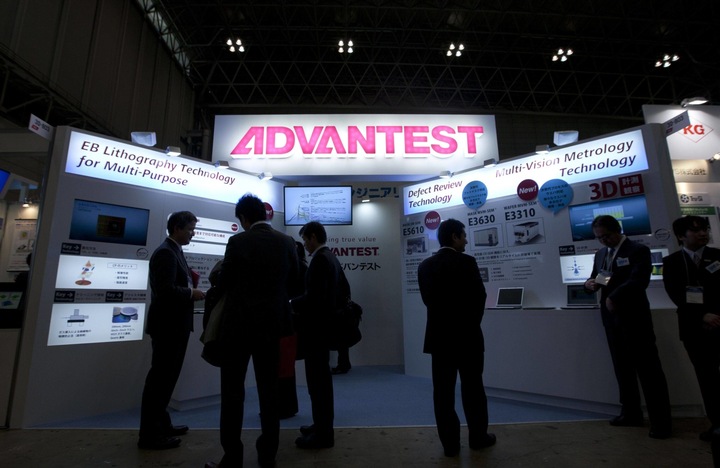
On Wednesday, Japan’s Advantest Corporation announced that it expects rapid use of advanced semiconductors for generative artificial intelligence (AI) applications to carry on demand for its chip testing machinery.

“We can expect rapid growth in demand. However, we still don’t have concrete visibility,” Advantest CEO Yoshiaki Yoshida told an earnings briefing.

Source: theprint.in
Advantest
Image Source: japantimes.co.jp

As the world’s interest is grabbed by the potential of ChatGPT and other solutions designed at bringing web services more sophisticated and human-like Advantest stocks have soared 36 percent this year, nearing all-time highs. The corporation anticipates that operational profit would increase by 48 percent to 170 billion dollars in the financial year that ended in March.

The industry is expected to decrease this year as a result of clients hoarding surplus inventory, according to Advantest, a global leader in chip testing machinery together with Teradyne Inc. of the United States.

“Despite the fall this year I believe we will eventually face a growth curve,” Yoshida said. Advantest shares have more than doubled in value since the start of the year.

Source: theprint.in

Microsoft, as well as Alphabet’s child company Google, are one of the first to include generative artificial intelligence into their online tools, but a competing race to establish a dominating artificial intelligence platform in the world’s biggest internet marketplace has begun in China, driven by SenseTime, Alibaba Group Holding, Group, as well as Baidu.

Also Read: Intel, Ericsson to work together on custom 5G chip

Data centers are necessary for managing and developing artificial intelligence models that power anything from smart chatbot assistants to self-driving cars. The best hardware at the moment for real-time data analysis is numerous thousands of graphics processors, which are needed to do it.

According to Bloomberg Intelligence analyst Masahiro Wakasugi, the expanding usage of AI is straining the capabilities of sophisticated packaging and chip miniaturization, increasing the possibility of production errors.

Chip tester requirement is significantly increased as a result, enabling producers to ensure product quality and performance.

Teradyne, a competing company established in North Reading, Massachusetts, is rivaling Advantest. When a client switches vendors, which is exceedingly uncommon because it requires rethinking more machinery or whole lines of production, as well as retraining people, switching testing instruments might result in an important change in market share between the two.

In a couple of years, outstanding performance Graphics Processing Unit chip testers’ global sales would probably surpass those of smartphone chip testers, according to Toyo Securities analyst Hideki Yasuda.

Logitech

Logitech raises sales forecast for the first half of 2024

In the initial batch of economic numbers since the departure of longtime chief executive officer Bracken Darrell from the manufacturer of desktop and laptop accessories a month ago, Logitech International (LOGN.S) upped its revenue and earnings projection for the first quarter of the fiscal year 2024.

“While the markets are still challenging, I am proud of the team’s achievements during our first quarter,” said Guy Gecht, Logitech’s interim chief executive officer. “Our high-caliber seasoned team, design-led engineering, and strong execution truly set us apart. Our latest innovations and elevated outlook are just a glimpse of Logitech’s full potential as we execute our strategic vision.”

Source: news.logitech.com

A computer keyboard and mouse manufacturer reported that the hunt for a replacement was going smoothly and that there will be a follow-up when there is information to tell.

Logitech
Image Source: finance.yahoo.com

Guy Gecht, the interim chief executive officer of Logitech, stated that the financial markets were constantly competitive for the company. Throughout the global epidemic lockdown, individuals loaded up on Logitech’s web cameras and other tools so they could work from home, which led to a boom for the company.

Ever since then, performances have been hampered by decreased spending by firms and consumers due to the recession.

The Swiss-American business was, though, a little more upbeat on Tuesday, stating that it now anticipates first-half revenues of 1.875 billion USD to 1.975 billion USD, higher than the prior estimate of 1.8 billion USD to 1.9 billion USD.

Also Read: Netflix falls as benefits from password-sharing limit to take time

Additionally, the business anticipates non-GAAP operating earnings in the range of 180 million dollars to 220 million dollars for the first half of this fiscal year, up from its earlier forecast of 160 million dollars to 190 million dollars.

In addition, Logitech predicted full-year revenues of 3.8 billion dollars to 4 billion dollars in its first prediction for this fiscal year.

According to the chief financial officer Charles Boynton, Logitech achieved steady success in cutting operational costs and inventories over the three months leading up to the finish of June.

The present economic decline presents a dilemma for Logitech because it hasn’t yet hired Darrell’s replacement. Darrell left last month to take the CEO position at VF Corporation (VFC.N), the company that makes Vans trainers and The North Face outerwear.

Darrell, who oversaw Logitech for ten years, is credited for the company’s comeback through more rapid product introductions and enhanced design.

Ericsson

Intel, Ericsson to work together on custom 5G chip

The most cutting-edge manufacturing procedure Intel has revealed will be used to create a unique chip for telecommunications device producer in Sweden, Ericsson 5G networking equipment, the company announced on Tuesday.

“As our work together evolves, this is a significant milestone with Ericsson to partner broadly on their next-generation optimized 5G infrastructure. This agreement exemplifies our shared vision to innovate and transform network connectivity, and it reinforces the growing customer confidence in our process and manufacturing technology,” said Sachin Katti, Senior Vice President and General Manager of the Network and Edge Group, Intel. “We look forward to working together with Ericsson, an industry leader, to build networks that are open, reliable, and ready for the future.”

Source: ericsson.com
Ericsson
Image Source: verdict.co.uk

Competitors like the Taiwan Semiconductor Manufacturing Company have surpassed Intel in the production of the most minor and most energy-efficient chips. Packing five generations of chip production advancements into a span of four years was a significant component of Intel Chief Executive Officer, Pat Gelsinger’s strategy, which was first unveiled in 2021, to reclaim that advantage and bring the firm around.

According to Intel, the new Ericsson chip will use Intel’s “18A” manufacturing method which would make it one of the first chips from outside users to do so.

“Ericsson has a long history of close collaboration with Intel, and we are pleased to expand this further as we utilize Intel to manufacture our future custom 5G SoCs on their 18A process node, which is in line with Ericsson’s long-term strategy for a more resilient and sustainable supply chain,” said Fredrik Jejdling, Executive Vice President and Head of Networks, Ericsson. “In addition, we will be expanding the collaboration that we announced at MWC 2023 to work together with the ecosystem to accelerate industry-scale open RAN utilizing standard Intel Xeon-based platforms.”

Source: ericsson.com

The release date of the chip was not disclosed by Intel or Ericsson, but the company has indicated before that its 18A manufacturing method will be available by 2025.

Also Read: Stellantis, Samsung SDI set plan to build second US battery plant

The most recent node in Intel’s roadmap, 18A, was released four years ago. They will introduce ribbon architecture innovation along with enhanced performance to Intel 18A upon launching RibbonFET as well as PowerVia in Intel 20A. By 2025, these advancements will aid Intel in regaining the top spot while enhancing its consumer offers.

As the deployments of 5G proceed, completely configurable, open software-defined networks driven by the same cloud-native technologies that revolutionized the data center will be the wave of the future, bringing with them unmatched agility and automation.

The technology sector must cooperate and continue to synchronize network requirements within the framework of one worldwide set of rules to achieve the highest performance, and innovation, along with global scale. To provide their clients with these advantages in the direction of an industry-scale open RAN, Intel and Ericsson work in conjunction with other top technology firms.

Stellantis

Stellantis, Samsung SDI set plan to build second US battery plant

On Monday, the French-Italian carmaker Stellantis as well as the South Korean battery manufacturer Samsung SDI announced plans to establish a new joint-venture facility in the United States to produce batteries for electric vehicles. The project is assumed to start operations by 2027.

Both firms stated that the acquisition still has to be completed and that the location of the facility is still being considered. Additionally, later on, it will be revealed how much money is going to be invested in the location and exactly how many people will work there. The facility will initially be able to produce 34 gigawatt hours or GWh.

Stellantis
Image Source: europe.autonews.com

“This new facility will contribute to reaching our aggressive target to offer at least 25 new battery electric vehicles for the North American market by the end of the decade,” Stellantis CEO Carlos Tavares said in a statement.

“The second plant will accelerate our market penetration into the U.S.,” Samsung SDI CEO Yoon-ho Choi said in the statement.

Source: cnbc.com

By 2030, Stellantis, a company whose product lines comprise Citroen, Peugeot, Ram, Jeep, Alfa Romeo, and Opel, wants to sell only electric cars for passengers in Europe and a mix of fifty percent electric cars and light-duty trucks in the United States. It has stated that it needs to obtain 400 GWh of capacity for batteries in order to do that.

Stellantis stated in 2021 that it intended to invest a total of $35 billion worldwide until 2025 in electric vehicle manufacture and software. The second American battery factory, according to Stellantis, is going to be the sixth facility to help the business.

Also Read: Google raising price of YouTube Premium to $13.99 per month

Stellantis along with Samsung SDI announced in May 2022 that they will invest over two billion dollars to construct the initial joint battery production, which would be operational in Kokomo, Indiana, by the first half of 2025.

The initial capacity of such a facility will be 23 GWh, and it will gradually increase to 33 GWh.

At the time, the firms predicted that 1,400 employees would work at the Indiana factory, and investments might eventually reach 3.1 billion USD.

In addition, Stellantis is constructing a battery facility in Windsor, Ontario, Canada in partnership with LG Energy Solution of South Korea. 2,500 jobs will be created by the facility when it opens in 2024, and it will have a manufacturing capacity of more than 45 GWh per year.

To establish a collaborative battery facility in the United States with a 2026 opening and a 30 GWh yearly capacity, Samsung SDI along with General Motors announced in April that they will invest over three billion dollars. Additionally planned for Indiana, this facility will have 1,700 workers.

Netflix

Netflix falls as benefits from password-sharing limit to take time

Netflix (NFLX.O) stock fell over eight percent on Thursday following the video streaming service giant sluggish revenue increase raised doubts about how quickly its new ventures will develop.

Thanks to repression on the sharing of passwords and the launch of a less expensive membership tier that is paired with commercials, the business attracted roughly 6 million customers in the second quarter, exceeding Wall Street’s estimates by nearly three times.

Netflix
Image Source: ctvnews.ca

Greg Peters, the company’s co-chief executive officer, warned that it would be several quarters before the results of those initiatives were seen because the quarterly sales growth and projection fell short of expectations.

On Thursday, Netflix stock had its second-worst day of the year, shedding roughly eighteen billion dollars in worth. The stock has risen approximately 48 percent to this point in 2023.

The industry was “realms away” from understanding if the highly-touted advertising tier could grow into the next money supplier according to Sophie Lund-Yates who is a Hargreaves Lansdown analyst. “Netflix must extract every bit of profit as possible through various avenues she also said.

Also Read: Google raising price of YouTube Premium to $13.99 per month

The business has been competing against Disney+ alongside Amazon Prime Video in a market that is beginning to show indications of overcrowding in the United States of America. The majority of the business’s new subscribers are from nations where it has lower costs.

“Some folks are using the result as an excuse to take some profits,” Pivotal Research Group analyst Jeffrey Wlodarczak said.

Source: reuters.com

Despite this, analysts continued to have a generally positive outlook for the company, with a minimum of 26 of them raising their price goals in anticipation of the new revenue-generating efforts accelerating the increase in revenue in the second quarter of 2023.

They stated that the current Hollywood dispute could not affect the streaming service’s slate until 2024, which might provide the firm an advantage over its rivals given that it has a strong schedule of programming.

The corporation also has a sizable global footprint, which gives it the opportunity to access a variety of non-American programming and protects it from the strike. The popularity of its non-English titles, including “Physical 100”, “The Glory,” and “Alice in Borderland,” has also increased.

“Every other streamer is now increasing prices, while Netflix is now extremely competitive with its ad tier. It is putting all the building blocks in place for future revenue growth,” PP Foresight analyst Paolo Pescatore said.

Source: reuters.com
YouTube Premium

Google raising price of YouTube Premium to $13.99 per month

In the United States, the cost of YouTube Premium has gone up from 2 dollars to 13.99 dollars a month from what it previously was. The new fee was secretly adjusted on Google’s registration site for the application, which was initially discovered by 9to5Google.

A yearly membership to YouTube Premium will now cost 139.99 dollars instead of the previous 19.99 dollars, in addition to the monthly pricing hike.

YouTube Premium
Image Source: arstechnica.com

A rise in the cost is also being implemented for YouTube Music in the United States, which is an online music streaming app that can be accessed alone or as included in a Premium membership. According to recent pricing changes for Tidal, Amazon Music, and Apple Music, it is now priced at 10.99 dollars per month.

Spotify is a prominent exception because it continues to charge 9.99 dollars every month, but the chief executive officer Daniel Ek currently said the music streaming service is prepared to increase its prices which indicates a comparable hike would not be far off.

Google issued an official statement to The Verge confirming the price rise.

 “We’re updating the price for YouTube Premium and YouTube Music Premium subscribers in the US to continue delivering great service and features,” YouTube spokesperson Jessica Gibby said in a statement.

“We believe this new price reflects the value of YouTube Premium which allows subscribers to enjoy ad-free YouTube with background and offline play and uninterrupted access to over 100M songs with the YouTube Music app.”

Source: theverge.com

Gibby reaffirmed that most current customers of Premium, as well as YouTube Music Premium, would experience pricing increases starting with the following payment cycle and added that they may anticipate receiving an email confirming the price increase.

Also Read: Coinbase CEO Brian Armstrong Set to Meet With House Democrats

The price rise for single users comes after news of a comparable pricing hike for family plan customers to YouTube Premium during October.

Additionally subject to the price rise are existing 9.99 dollars YouTube Red members. When Google last increased the cost of a without ads YouTube subscription as part of the rebranding from “YouTube Red” to “YouTube Premium” in 2018, it still permitted previous YouTube Red users to maintain their previous monthly rate. Until the price rise takes effect, these members are getting three more months of service at their present cost.

It doesn’t look like there are any sudden plans to raise the cost by the same amount in other countries, but Google isn’t canceling the possibility.

 “We re-evaluate our pricing on an ongoing basis as conditions change in countries around the world,” YouTube’s Gibby said in a statement. “Any future price increases will be communicated first and foremost directly to existing members, providing a minimum of 30 days before any price increases take effect.

Source: theverge.com