Your Tech Story

News

Kevin O'Leary Eyes TikTok Acquisition at 90% Discount

Kevin O’Leary Eyes TikTok Acquisition at 90% Discount

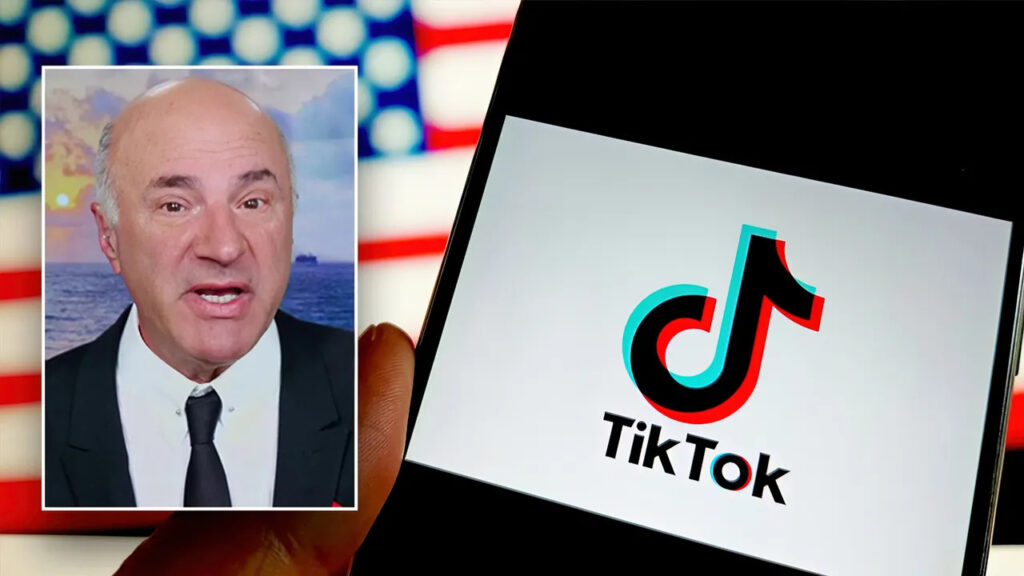
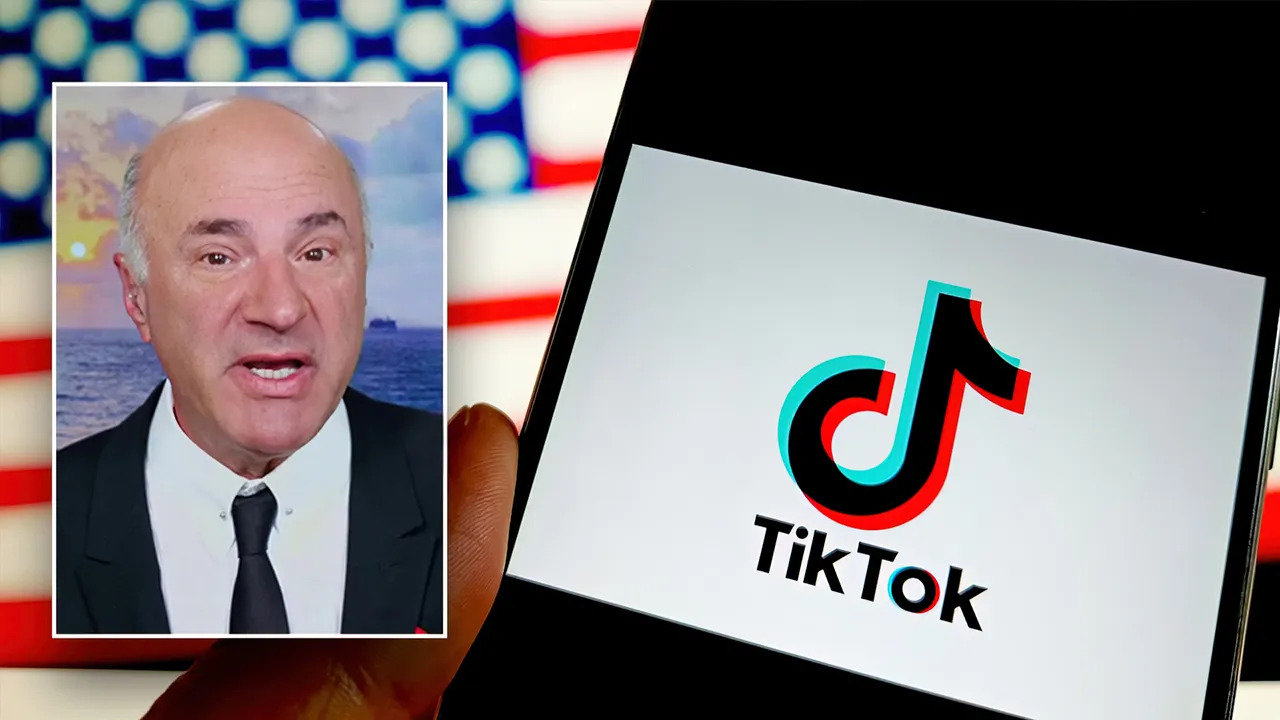
In a surprising turn of events, Kevin O’Leary, the renowned entrepreneur and star of the hit show “Shark Tank,” has publicly expressed his interest in acquiring the popular social media platform TikTok. However, what makes this proposition particularly intriguing is his aim to secure the deal at up to a 90% discount. Here’s a deeper dive into O’Leary’s strategic reasoning behind this ambitious proposal.

O'Leary's Bold Move
Kevin O'Leary Eyes TikTok Acquisition at 90% Discount

Image Source: foxbusiness.com

Kevin O’Leary, also known as “Mr. Wonderful” for his sharp business acumen and no-nonsense approach to investment, has never shied away from making headlines with his bold business moves. His latest interest in TikTok is no exception, sparking curiosity and speculation within the business and tech communities.

The Rationale Behind the Discount

O’Leary’s proposition stems from a combination of factors that he believes devalues TikTok’s current market position. Firstly, the increasing regulatory scrutiny faced by TikTok in several countries over data privacy concerns poses a significant risk to its continued global operation and growth. O’Leary argues that this heightened regulatory environment could potentially lead to bans or restrictions, severely impacting TikTok’s user base and profitability.

Furthermore, the competitive landscape of social media platforms is constantly evolving, with new players entering the market and existing platforms enhancing their features to retain user engagement. This competition, according to O’Leary, makes TikTok’s dominant position less secure in the long run, thereby justifying a lower valuation.

The Strategic Advantage

O’Leary envisions turning TikTok into a powerhouse of profitability by leveraging its vast user base and engagement metrics to attract high-value advertising deals and partnerships. He believes that by acquiring TikTok at a discount, he can mitigate the risks associated with regulatory challenges and market competition while capitalizing on its existing strengths.

While the idea of acquiring TikTok at such a steep discount may seem far-fetched to some, O’Leary’s proposal raises important questions about the future of TikTok and the value of social media platforms in a rapidly changing digital landscape. If successful, O’Leary’s gamble could redefine how businesses evaluate and capitalize on social media assets.

Conclusion

Kevin O’Leary’s interest in purchasing TikTok at up to a 90% discount is a testament to his reputation as a visionary investor who is not afraid to make bold moves. Whether his ambitious plan will come to fruition remains to be seen, but it undoubtedly adds an intriguing chapter to the ongoing narrative of TikTok’s global saga. As the world watches on, the outcome of this proposal could have significant implications for the future of social media investments and the valuation of digital platforms in an ever-evolving market.

Spotify Rolls Out New Miniplayer Feature for Desktop Users

Spotify Rolls Out New Miniplayer Feature for Desktop Users

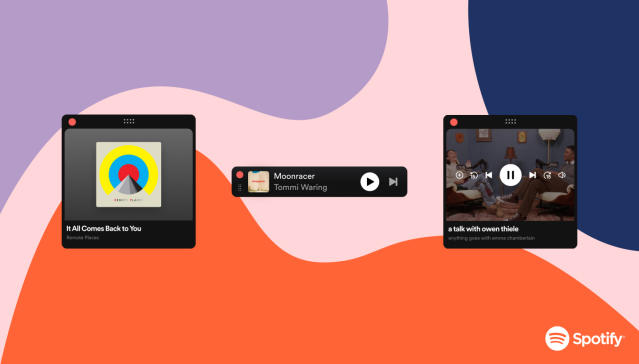
To improve the listening experience of millions of people around the globe, Spotify has officially unveiled its latest feature: a sleek and user-friendly Miniplayer for desktop platforms. This innovative combination aims to provide Spotify users with a more convenient and accessible way to control their music without disrupting their workflow or browsing experience.

Seamless Integration for Uninterrupted Listening

The new Miniplayer feature marks a significant leap towards seamless music enjoyment, allowing users to play, pause, and skip tracks directly from a compact interface on their desktop screen. This development comes as a response to user feedback looking for more flexible and less intrusive ways to manage their Spotify playlists while multitasking on their computers.

How the Miniplayer Works

Spotify Rolls Out New Miniplayer Feature for Desktop Users

Image Source: open.spotify.com

Spotify’s Miniplayer easily integrates into the desktop app, occupying minimal screen real estate while providing full control over music playback. Users can activate the Miniplayer with a simple click, which transforms the normal Spotify interface into a discreet but functional player. This ensures that users can enjoy uninterrupted music while focusing on other tasks.

Features and Functionality

Despite its compact size, the Miniplayer doesn’t skimp on features. Users have access to essential controls like play, pause, skip, and volume adjustment. Additionally, the Miniplayer displays track information including song title, artist, and album cover, ensuring users stay informed about what’s playing without the need to open the full Spotify application.

A Strategic Move to Enhance User Experience

Spotify’s introduction of the Miniplayer on desktop platforms underlines the company’s commitment to improving user experience and adaptability. By allowing users to easily manage their music playback, Spotify continues to establish itself as a leading music streaming service that values ​​convenience, innovation, and user satisfaction.

Availability and Accessibility

The Miniplayer feature is rolling out globally and will be available to all Spotify users on desktop platforms including Windows and macOS. To access the Miniplayer, users simply need to update their Spotify desktop app to the latest version, where they will have the Miniplayer option readily available.

Conclusion

Spotify’s launch of the Miniplayer feature represents a thoughtful improvement designed to meet the growing needs of its user base. By offering a more integrated and less disruptive listening experience, Spotify not only enriches the music streaming experience, but reaffirms its position as a platform that innovates with the user in mind.

As the Miniplayer begins to make its way to desktops around the world, Spotify users can look forward to a more streamlined and enjoyable music listening experience, further strengthening the bond between the streaming service and its global community of music lovers.

Google Faces €250 Million Fine in France Over News Publisher Dispute

Google Faces €250 Million Fine in France Over News Publisher Dispute

The competition authority in France, Autorite de la Concurrence, fined Alphabet Inc.’s Google a whopping €250 million for not negotiating agreements with media outlets for the publication of links to their material. Google was also fined for training its AI system on press articles without properly notifying the authorities or the publishers.

Context of the Conflict

Google Faces €250 Million Fine in France Over News Publisher Dispute

Image Source: euronews.com

The fine is related to a copyright dispute that was started by Agence France Presse (AFP), one of the biggest news organisations in France, along with other complaints. Due to legal action taken against it in the past over its management of French web material, Google was first fined €500 million. Google’s decision to withdraw its appeal in 2022 gave the impression that the matter had been settled, but the latest decision shows that the internet giant and French regulators are still at odds.

Penalties for Violations

The French watchdog on competition discovered that Google had broken four of the seven promises made in a settlement deal. Among these transgressions are the inability to negotiate in good faith with publishers and the opaqueness of the information provided. The problem was additionally made worse by Google’s unauthorised usage of press articles to train its artificial intelligence (AI) system.

Regulatory Action's Escalation

The French authorities’ ongoing efforts to hold Google responsible for its dealings with the media industry are reflected in these most recent penalties. The regulatory body has demonstrated its unwavering commitment to ensuring equitable treatment for press publishers by imposing sanctions on the internet giant for comparable offences.

European Union's Directive on Copyright

The efforts of the French antitrust body are in line with larger European Union policies that seek to rectify the power disparity between press publishers and digital firms. Neighbouring rights requirements were established by the EU’s 2019 Copyright Directive, which mandates that platforms such as Google sign arrangements with publishers for the use of their work.

Google's Past Legal Conflicts

The dispute between Google and European regulators on its handling of news publishers is not new. The business has previously been the target of legal issues and investigations in several European nations, including Germany and Spain. While some instances have been resolved, others have forced Google to make big operational adjustments, including briefly removing its News service from Spain.

In summary, Google’s €250 million punishment levied by the French competition authorities highlights the continuous conflict between internet companies and regulators on equitable treatment of news producers. It’s unclear how Google and other platforms will modify their business models to comply with legal requirements as long as debates about digital copyright and neighbouring rights go on.

 
US Government Backs Intel with $20 Billion for Domestic Chip Production

US Government Backs Intel with $20 Billion for Domestic Chip Production

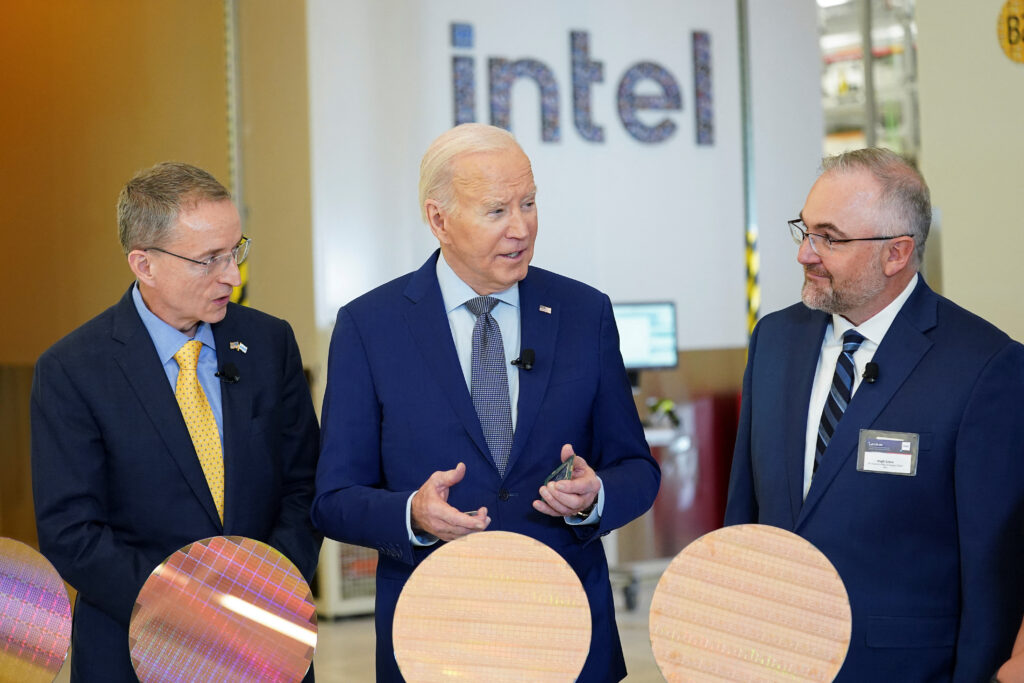
President Joe Biden has announced a groundbreaking agreement, awarding Intel nearly $20 billion in grants and loans. This move signifies the largest government subsidy to bolster cutting-edge chip production, elevating domestic semiconductor output to new heights.

Reviving Advanced Semiconductor Manufacturing in America

US Government Backs Intel with $20 Billion for Domestic Chip Production

Image Source: reuters.com

The preliminary agreement includes $8.5 billion in grants and up to $11 billion in loans for Intel’s initiatives in Arizona. This funding will facilitate the construction of two new factories and the modernization of an existing facility, propelling advanced semiconductor manufacturing in the country.

Biden emphasized the crucial role of domestic chip production, especially amidst the semiconductor shortage worsened by the pandemic. He criticized previous policies that led to job outsourcing and emphasized the importance of making products invented in America on American soil.

Commerce Department Secretary Gina Raimondo hailed this investment as one of the largest in U.S. semiconductor manufacturing history. The administration’s ambitious goal is to raise the U.S. share of advanced chip production from 0% to 20% by 2030, reinforcing national security and economic resilience.

The investment in Intel is a key component of the 2022 CHIPS and Science Act, which aims to inject $52.7 billion into boosting domestic semiconductor output. This strategic move not only addresses economic concerns but also aligns with national security objectives by reducing reliance on chip manufacturing abroad, particularly in China and Taiwan.

Lawmakers have expressed concerns about the risks associated with depending heavily on chips produced in Taiwan, given China’s territorial claims over the island. The substantial investment in Intel signifies a shift towards securing a more independent and robust semiconductor supply chain.

Republican U.S. Representative Michael McCaul, a proponent of legislation shaping the CHIPS Act, lauded the announcement as a step towards strengthening America’s technological capabilities and reducing vulnerabilities in critical supply chains.

In conclusion, Biden’s unprecedented investment in Intel underscores a pivotal moment in revitalizing advanced semiconductor manufacturing in the United States. This move not only bolsters economic growth but also enhances national security and technological leadership on the global stage.

A Milestone in Mind-Control Technology: First Human Uses Neuralink to Move Cursor with Thoughts

A Milestone in Mind-Control Technology: First Human Uses Neuralink to Move Cursor with Thoughts

In an unprecedented leap towards integrating technology with human cognitive functions, an unprecedented incident has emerged, showing a volunteer effectively using Neuralink’s brain chip to move a computer cursor with his mind. Has gone. This important achievement not only ushers in a new era in medical science and technology but also opens up vast possibilities for enhancing human-machine interaction.

Neuralink's Breakthrough

A Milestone in Mind-Control Technology: First Human Uses Neuralink to Move Cursor with Thoughts

Image Source: wsj.com

Neuralink, the neurotechnology company founded by Elon Musk, has long been at the forefront of developing ultra-high bandwidth brain-machine interfaces. The company’s mission is to enable humans to control digital devices through thought alone, and their latest achievement is an important step toward realizing this vision.

The Experiment Unveiled

In a controlled laboratory setting, a volunteer equipped with Neuralink’s brain chip demonstrated the ability to navigate and control a computer cursor without any physical movement. This breakthrough has been achieved through decoding nerve signals sent from the brain and translating them into digital commands that a computer can understand and execute.

Implications for the Future

This pioneering display opens up a world of possibilities for individuals with mobility disabilities, providing a new level of independence and interaction with the digital world. Furthermore, it paves the way for further research into how technology can bridge the gap between the human brain and external devices, potentially revolutionizing the way we communicate, learn and interact with our environment.

Ethical Considerations and Future Prospects

As we move further into the realm of brain-computer interfaces (BCIs), ethical considerations regarding privacy, security, and long-term impact on human cognition and society at large come to the forefront. Neuralink’s ongoing research and development is conducted with these concerns in mind, aiming to balance technological progress with ethical responsibility.

Conclusion

The successful demonstration of mind-controlling a computer cursor is an important milestone toward seamless human-machine integration. As Neuralink continues to refine and expand the capabilities of its brain chip technology, the future promises to break barriers and open up new possibilities for humanity.

In conclusion, this achievement is not just a technological victory, but a ray of hope for enhancing human capabilities and improving lives through technology. The journey ahead is full of challenges and opportunities, but the horizon is bright with the promise of a more interconnected and empowered world.

The World's Most Luxurious Meal Costs $495,000 and will be Served in a Space Balloon

The World’s Most Luxurious Meal Costs $495,000 and will be Served in a Space Balloon

Would you be willing to indulge in a Michelin-starred dinner while travelling to and from the edge of space through cuisine? That’s exactly what luxury space travel company SpaceVIP is proposing, as they just revealed intentions for the first-ever Michelin-starred supper to be served in orbit in 2025. This six-hour stratospheric trip, which is partnered with famous chef Rasmus Munk, promises to change eating like never before.

Revealing Space Cuisine: Mission Information

The World's Most Luxurious Meal Costs $495,000 and will be Served in a Space Balloon

Image Source: tastingtable.com

Roman Chiporukha, the creator of SpaceVIP, announced the ambitious initiative and said that the conversation this revelation has sparked about space tourism is evidence of its importance. Launched from Kennedy Space Centre in Florida, Spaceship Neptune is a carbon-neutral spaceship that provides a pressurised capsule experience at a height of 100,000 feet above sea level. At an astounding $495,000 per person, this gourmet adventure seeks to redefine the pinnacle of opulent eating.

Collaborations and Mission: Increasing Human Awareness

Aiming to elevate human awareness, SpaceVIP has been forming collaborations with the goal of democratising space travel. Comparable to the democratisation of air travel in the 1920s, the firm works with artists and visionaries to make space experiences more accessible. Through leveraging business expansion and technology developments, SpaceVIP hopes to set the stage for a time when private space flight is commonplace. Launched from Kennedy Space Centre in Florida, Spaceship Neptune is a carbon-neutral spaceship that provides a pressurised capsule experience at a height of 100,000 feet above sea level. This gourmet adventure, which costs an astounding $495,000 per person, attempts to push the limits of opulent eating. 

Behind the Menu: The Maestro Cook Rasmus Munk

Chef Rasmus Munk, well-known for his immersive dining experiences at Alchemist, elevates his culinary skills to the forefront of this intergalactic expedition. Munk’s menu, which has earned two Michelin stars and a reputation for creating food with a social purpose, will honour the heritage of space research over the last 60 years. Details are still being worked out, but customers can anticipate foods that draw inspiration from humanity’s expedition into the last frontier.

Proceeds for Space Exploration: A Noble Cause

Beyond the opulence, there is a noble goal to this gastronomic adventure. The Space Prize Foundation will receive all event earnings, which will be used to further space travel and universal literacy. SpaceVIP’s purpose to advance awareness and unity for the welfare of mankind stays at the forefront as it continues to push life-changing space experiences.

A Heavenly Feast for the Senses: The Conclusion

SpaceVIP invites explorers to set off on a once-in-a-lifetime expedition as preparations are underway for the most costly lunch ever to be served in space. This gastronomic trip promises to be an unmatched feast for the senses, breaking earthly bounds and creating a communal vision for humanity’s future with culinary excellence, charitable endeavours, and the marvels of space combined.