Your Tech Story

News

Microsoft Windows 10 Tab Experience

Microsoft Releases New Build for Insiders that Enhances the Windows 10 Tab Experience

Microsoft has been experimenting with Windows 10 since it was first launched to bring a better user experience for its customers. Recently, it had released some new features for its Tablet OS. This time, again, keeping the Tab experience in mind, the company has launched a new build for testing, i.e., Build 18970 (20H1), to enhance it. The company released the build for the Microsoft Insiders for the testing, and along with that, they can also use the Cumulative Update Build 18970.1005 (KB4518974).

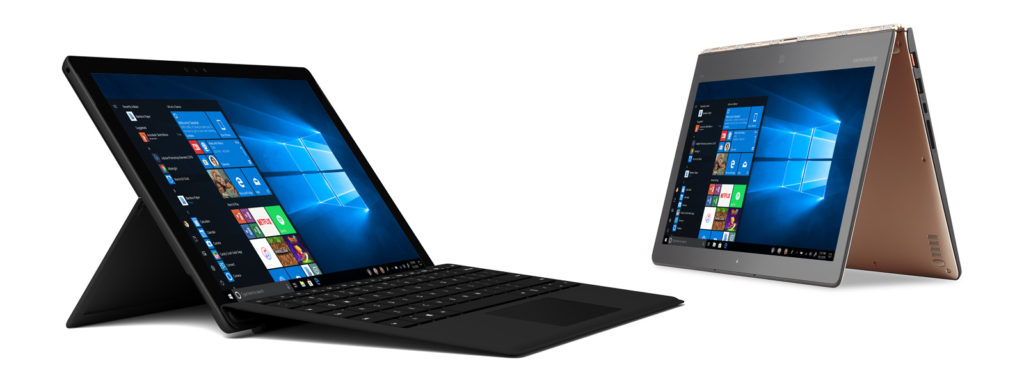
The build has been designed for the 2-in-1 convertible PCs, including the Surface Pro. The new build has got a similar design as the current Windows 10 desktop interface, but as soon the keyboard is removed, or the position of the PC is changed to a Tablet’s, Windows becomes compatible to the Tablet view.

The new build has brought some changes to the current interface of the 2-in-1s. The changes include increased spacing between the Taskbar icons, and the company has collapsed the Search box on taskbar into an icon. So to use the Search box, one needs to tap on the icon, and the Search box will pop up on the screen. Also, when turned into a Tablet, the File Explorer switches to touch-optimized layout for better accessibility for the users. The company has also optimised the keyboard software for the Tablet, as when turned into a Tab, the Touch keyboard is auto invoked upon tapping on any of the text fields on the screen.

Microsoft Windows 10 Tab Experience
Image Source: microsoft.com

Since the company is trying to provide its users with a better Tablet experience, it has also made some changes in the settings for the Tablet. Along with the new build, Microsoft has also made refurbished the Rest option for the Windows. Now, the users can easily re-install the Windows from the cloud or local drive using the Reset option. Earlier Reset option only allowed the installation through a local install, that too with available Windows files (the compressed copy of Windows files stored at the local disk). Now the users will be able to speed up the process of installing the Windows through the cloud.

These are some of the changes that Microsoft has defined through a Blogpost, but according to the reports, there are some more. But that, one can only know after exploring the new Build. Currently, it is only available to the Microsoft Insiders, and after the update is released for the general public, the users can enjoy the new Tab experience as soon they change the position of the laptop as a Tab or remove the keyboard from it.

Reno 2

Oppo Launches the Reno 2 Series Smartphones in India

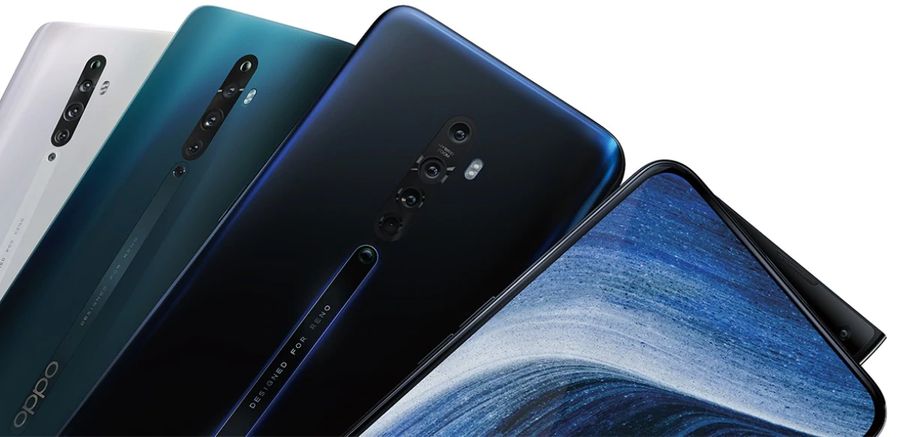
Oppo has launched another range of smartphones, and that the company has brought to India first. The new series is called the Reno 2 series, under which the company has launched three flagship smartphones, Reno 2, Reno 2Z, and Reno 2F. Though the Reno 2 series is the sequel of the previously launched high-end smartphone Oppo Reno series, it is not that of a high-end series. But still, the series includes one of the decent smartphones that lie under the affordable mid-range smartphone criteria.

Reno 2

The Reno 2 smartphone is a 6.5 inches smartphone and is powered by the Snapdragon 730 processor. It has got an 8GB RAM as well as offers secondary storage of 256GB, which is further extendable through an SD card. The smartphone is being compared to Samsung’s Galaxy S10 due to the usage of the 20:9 1080p Dynamic AMOLED panel in it.

The quad-camera on the rear of the smartphone includes a 48-megapixel Sony IMX 586 primary sensor with an 8-megapixel wide-angle camera, a 13-megapixel telephoto camera along with a 2-megapixel monochrome sensor. The cameras are accompanied by an LED flashlight, and all the cameras and the flash have been coupled in a vertical line at the back of the smartphone.

Reno 2
Image Source: gadgets.ndtv.com

There is also a 16-megapixel selfie pop-up camera that comes out through motorised camera mechanism from the top of it. The very smartphone will be available for Rs 36,990 in the Indian market starting from 20 September. The prebooking fro the smartphone will start from 10 September.

Reno 2Z & Reno 2F

On the other hand, the Reno 2Z and Reno 2F have got a bit smaller screen size, i.e. 6.3 inches 19.5:9 1080p OLED screens. The Reno 2Z is empowered with the MediaTek Helio P90 processor, whereas the Reno 2F is running on an Helio P70 processor. Both the smartphones, like Reno 2, have got an 8GB RAM. Reno 2Z includes a 256GB internal storage, and the 2F has got a 128GB internal storage.

The camera setup for the two is similar to that of the Reno 2, i.e. is a quad-camera setup in a vertical line on the back of the smartphones. Both have got an 8-megapixel wide-angle camera with a 48-megapixel main camera, a 2-megapixel sensor with a mono lens and 2-megapixel portrait sensor. But for both, the company has used different sensors for the main camera. For Reno 2Z, the company has used the Sony IMX586 sensor, and for Reno 2F, Samsung’s cheaper GM1 module has been used. The company has used an electronically stabilized camera setup for both instead of optical image stabilization.

The price of the Reno 2Z is set to be 29,990 and is already available for pre-bookings. The smartphone will be available in the market starting from 6 September. On the other hand, the price of Reno 2F is yet to be revealed, and as indicated by Oppo, it will be available for purchases in the coming November.

All the three shares a few similar features, like all the three runs the Oppo’s ColorOS 6.1, they have got the support for USB-C, VOOC 3.0 flash charging, a 4,000mAh battery and has also got the support for an optical in-display fingerprint sensor.

The company has shuffled the smartphones in four different colours, that includes Ocean Blue (Reno2), Luminous Black (Reno2 & Reno2Z), Sky White/Polar Light (Reno2Z), and Sky White/Lake Green (Reno2F).

Apple iOS 13.1

Apple Releases the Developers Beta for iOS 13.1 Ahead of iOS 13

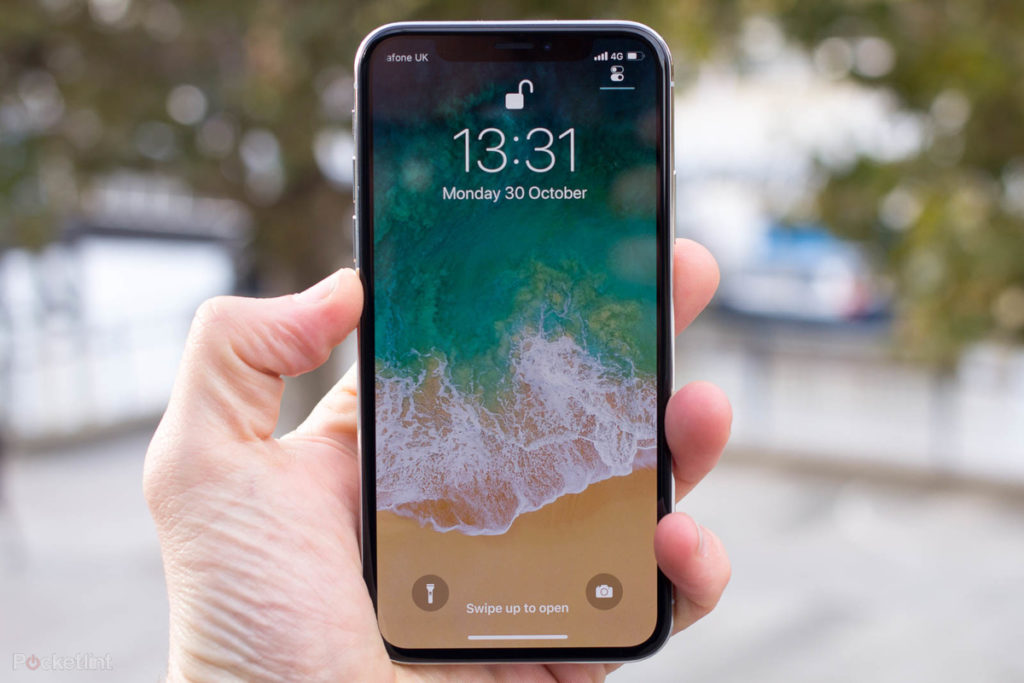
Apple is only a few weeks away from launching its flagship smartphone, the iPhone 11, but before that, the company has got a surprise for its users. People are aware that the company is working on its next iOS version, i.e. iOS 13, and that like usual time, the company will launch after the release of its new iPhone. But this time, Apple has gone for something unusual. The company has just announced the release of the first developer beta of iOS and iPadOS 13.1 before the launch of the iOS 13.

Yes, the company has released the iOS 13.1 beta version for testing ahead of the release of iOS 13, which is quite unlike Apple. Usually, the company releases the major updates in the iOS, and only after that, go for the release of .1 version of the software.

The release of the beta of iOS 13.1 indicates that the iOS 13 is almost ready, and is starting to work on the next version of the OS. When a company releases the developers beta, it is for the developers to test the features and find the bugs. This way, the company can improve the product before the release.

Apple iOS 13.1
Image Source: pocket-lint.com

So, similarly, with the .1 version, the company is trying to test some of its features, that it will be incorporating in the next version of iOS 13. The newly released beta version of the Apple OS, along with new features, has also got some of the bug fixes. One of the new features that the company has set for the test with the release of the beta is the audio sharing support.

The feature will allow the Apple device to simultaneously connect to two different pairs of Airpods through Bluetooth. But there is still a question that will the iPhone, and the other apple device support connecting to two pair of Airpods?

The other feature that the company has introduced with the new OS beta is the video editing feature, that will allow the users to make the background of a video transparent or invisible. It will help produce the green screen effect on the videos. Apple has developed the feature with the help of recently acquired company Spektral.

Along with the iPhone, the company has also released the new beta versions for watchOS 6.0 and tvOS 13.0 today. The users can go to the software updates option on the iPhones to get the developer beta installed on their devices from today onwards. There is no statement from the company that when the beta of iOS 13.1 will be available for the general public.

France G7 Summit

G7 Summit 2019 : France, U.S. Strike Compromise on Digital Tax

The 45th G7 summit just took place in France and became the centre of discussion for various reasons. One of the reasons being the meeting between Indian PM Narendra Modi and Trump as well as the rejection of $20 million aid for stopping the Amazon forest fire by Brazil. But one of the main agenda that was sorted out at the summit was the controversial French Digital Tax.

During the conference at the G7 summit, President Donald Trump and French President Emmanuel Macron announced that they have agreed on finding a way to put a fair tax on the big foreign tech companies operating in France. But until the OECD does not set some proper tax guidelines, France will retain the same digital tax.

Macron also admitted that the controversy based on the new taxes has also affected the business of the French wine in the U.S. He also admitted that it has become expensive for big companies like Facebook and Google to operate their business in France.

France G7 Summit
Image Source: cbs42.com

The 134 OECD countries have been working towards establishing a new set of rules for the tech companies to operate in foreign countries, and France promised at the G7 summit that it would remove its digital tax asap OECD will finalise the new rules. The announcement also indicated that the rules may arrive as soon as 2020.

In July, France imposed new digital tax for the big foreign tech companies operating in the country. The digital tax is based on the local profits rather than the global revenues those companies earn. According to French digital tax the companies that make over a €25 million (around $27.7 million) in France, or €750 million (around $830 million) worldwide, will need to pay an extra 3% tax to the French government. This way, the GAFA companies, i.e. Google, Apple, Facebook and Amazon (all the U.S. based companies) are becoming the main targets of France.

But after the agreement, the Tax Authority of France will look on the taxes that those companies have paid and the taxes they will pay under France’s digital tax policy. It will also calculate the amount these companies will be paying after OECD establishes the new tax rules for them. Concluding the extra paid tax, the French government will reimburse the extra amount back to those companies.

“Everything that is paid in excess compared to the international solution will be credited to the company,” said the French Economy Minister Bruno Le Maire.

The new agreement will help the two companies to reduce the tension as well as the trade conflict between them.

OnePlus TV

The 55-inch QLED OnePlus TV Coming to India in September

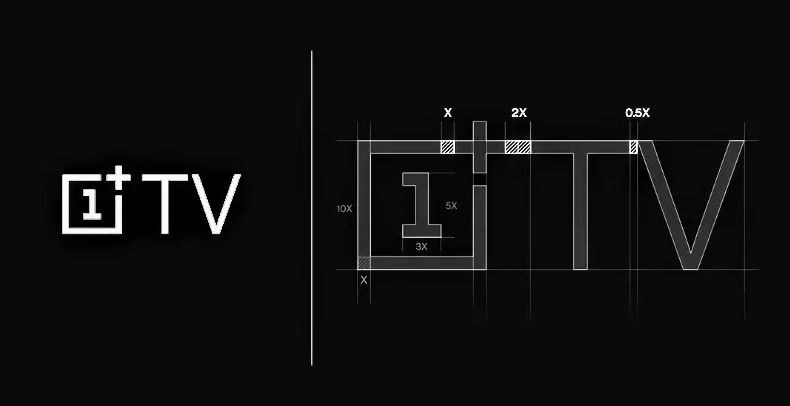
OnePlus has proven its worth with its outstanding range of smartphones, specifically known for its cameras. Now the company is up to releasing the series of its LED TVs, that according to the company will be having a QLED panel. For the past couple of days, the company has been giving information about its new TV in bits, and now it has finally revealed the name of the TV, i.e. OnePlus TV.

The OnePlus CEO Pete Lau, revealed the name of the TV last week. The company had hosted a contest for the name of its new smart TV last year. But it seems that the company went simply with its trade name. There were also a few revelations about the features as well as the release date of the OnePlus TV.

Along with a blog post, the company took it to Twitter to announce the release month for the TV, i.e. September. The company also tweeted about the size of the TV and a few other features as well. Previously, the leaks suggested that the TV will be available in four different sizes, i.e. 43-inches, 55-inches, 65-inches, and 75-inches. And according to one of the tweets from OnePlus, the TV that the company will be releasing in India will be a 55 inches, that too with a QLED screen. The U.S. and China will be receiving the biggest edition of the TV, i.e. the 75 inches panel TV.

OnePlus TV
Image Source: gadgetsnow.com

QLED display seems to be like the OLED display but is quite different from the latter. Q-LED stands for quantum-dot light-emitting diode. Basically, in OLED, every pixel emits their own light, whereas, QLED still works on the backlighting. QLED TVs have been the most significant part of the Samsung TV series, and now, we will see how the OnePlus TVs perform in the market for the company. The rumours also suggest that the TV may have 4K as well as 8K resolution with HDR.

For the sale of the TV, the company has partnered with Amazon and has included a ‘Notify Me’ button on Amazon’s OnePlus TV page. So the users need to login and click on the button, to stay updated with the new updates about the TV.

The TV will also render support for Bluetooth 5.0, and the company claims that the users will get the “unique Android TV experience” with the new OnePlus TV. Since there is a mention about Android, the smart TV from OnePlus may run on the Android Pie and include some of the Android apps in it. It is also expected that the TV may support a 3GB RAM.

“I am confident that there are many things that you can expect from OnePlus TV. Image and sound quality are fundamental that we must get right. Alongside these key essentials, I believe the TV’s remarkable design and smart interconnectivity make this product even more exciting,” Lau said.

Apple Card

The US Citizens Can Now Finally Use the Apple Card

Apple finally launched its most anticipated Apple card on Tuesday. For now, it will only be available for the users in the U.S. The users can apply for the card directly from their Apple Wallet app on their iPhone. They do not have to wait for the physical card to arrive as they can use it virtually through the Apple Pay as soon they request for the card.

The new card is the digital-first card that the iPhone users will get, and it will even make the credits private for the users. According to Apple, no system will keep the record of from where and when a user has shopped and what amount did he pay, like, in the cash system, it will keep the credits anonymous. So the users don’t have to worry about their data being sold by the company. But the users can see their spendings and balance in the card through the Apple Card app. They can also keep the record of the cash backs they got and see where they spent their money in Apple Maps.

Apple has partnered with Goldman Sachs and Mastercard to design and process the card. There is no annual fee, cash advances fees, over the limit fees or late fees, that the user needs to pay to use the card. And moreover, according to the claims made by the company, it has got even lesser interest on the purchases. In fact, the company will be providing incentives and cash rewards to users for using the new card. The card is acceptable at every merchant accepting Mastercard.

Apple Card
Image Source: interestingengineering.com

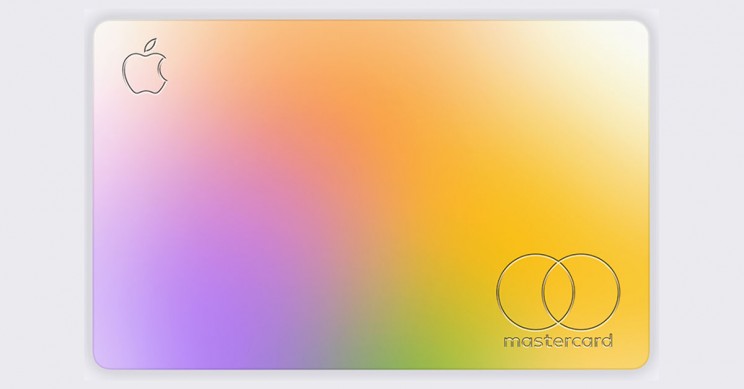
The new card also renders some interesting features, like it changes colour for different types of spendings. For example, if a user is using the card for a restaurant bill, the card will turn orange. And if the spending is on entertainment, the card colour will be a mix of orange and pink. Apple has already started 3% cashback on purchase through the virtual card at selected merchants, including Uber and Uber Eats. With the physical card, the cashback will be 1%.

The new app to use the card is available for the users, who own an Apple 6 or a newer model running iOS 12.4. To use the app, you need to go to the Apple Wallet and tap on the (+) icon on the upper right corner on the screen. Then, a Continue button will appear along with a small description of the Apple Card. Upon tapping on the Continue button, a list of Card Type will appear, where you need to select Apple Card. Then you must verify and confirm your details by filling in the information and accept the Apple Card terms and conditions on the next screen.

After that, Apple will send you a description of the credit limit and interest rates based on your information, where you need to tap on Accept Apple Card. This way, the card will be ready for use.