Your Tech Story

News

Geely

How Geely Car Manufacturers Are Taking to the Stars?

Ever since mankind took form on the Earth, he has been fascinated by the sky and the stars. As a civilization, we have yearned to explore more about the stars than any species before us. This quest for innovation and creation has helped us become the longest surviving dominant species on Earth. Innovations in the field of science and technology have made it easier to live, lengthened our life spans and made things which were impossible in the past, possible. One of the key areas in which research is going on now is space and telecommunications. We are eternally in search of a new home in the galaxy, and science is helping us do that. Furthermore, huge advancements in the field of electronics and communication have made it possible for us to link various devices together. One major change that will occur in the next few years is the globalization and cloud-control of cars. Let us take a look at how Chinese auto-giant, Geely is making this dream a reality by taking to the stars.

Geely to Build Satellites

Geely is the largest private car manufacturer in China, and they are all ready to enter the satellite business. This Chinese conglomerate has been rapidly expanding in the last decade, having moved into trucking, speed trains, drones, and even Volvos. The company is showing no signs of slowing down any time soon, by releasing a statement that they will soon be entering the aerospace field.

This move has been undertaken so as to make it easier to tie together all their assets. Geely will begin work on its own satellite-powered network, in order to formulate a mobility ecosystem that will be smart and intelligent.

On Monday, the automotive giant announced their plans to begin work on a production facility that will create, design and test satellites in Taizhou, Zhejiang. This facility will have state-of-the-art technology, which will help it create different satellites for both Geely and non-Geely devices and machines. The company also mentioned that the satellite network will be launched by the end of the year, but refrained from commenting on how large or extensive it would be. Sources states that the giant is spending almost $326 million on this project, and plans to makeover 500 satellites a year.

Satellite Power

Most of these will be low-orbit satellites that will provide high-speed data transmission capabilities and also help with navigation. Geely believes that this will help usher in a new age for cloud computing, which will make it possible for vehicles to receive over-the-air instructions and updates.

Furthermore, this will help in providing a direct link between the manufacturer and the vehicle, allowing the company to constantly keep track of the device’s performance and maintenance. Also, the company might plan to collaborate with other satellite makers such as SpaceX and OneWeb. Altogether, these satellite constellations will be able to transmit large volumes of data.

While current GPS probes are only accurate up to meters, this new satellite network will make it possible for vehicles to be accurate to within even a centimeter. Such accuracy will prove to be crucial when it comes to autonomous vehicles, as the biggest argument against their use is that of safety and inaccuracy. Unmanned flight, UAVs and smart cars will all turn into realities if this plan works the way it ought to.

The Future

Autonomous vehicles will be a signature of the future. As and when that happens, Geely will have a huge advantage over its competitors if it has its own satellite network to back up its vehicles. Instead of relying on third-party vendors for satellites, the company will be able to make use of its own fleet to run diagnostics, control navigation and also set up communication with its cars.

Furthermore, the demand for on and in-car connectivity has been on the rise in the last couple of years and have their own satellite network will help Geely back up that demand. A similar move has been undertaken by Elon Musk, whose company SpaceX is creating a Starlink network, which can be used to communicate with his Teslas.

Every year over 78 million people buy cars, and as the years go by, more and more people want their cars to be smarter. Connected cars will help buyers get the best of both worlds by being smart, intelligent, intuitive and highly productive. For instance, in 2016, connections for cars was growing at a faster rate than cellular connections for mobile phones.

This is because a high-end supercar has to process more data than a supercomputer! Hence, car manufacturers all around the world have realized that in the future, cellular connections alone will not be enough to process all the data required. Hence, satellites will be the best option for them to transmit large data and process vital information. Therefore, we will be seeing even more car makers, such as Geely, take to the stars in order to turn their dreams into a reality.

Commercial Docking Space

Space-Wars: The Fight for Commercial Docking Space in Outer-Space

For as long as humankind has been alive on Earth, it has been fascinated by the stars. Throughout history, we have seen great thinkers and scientists look to the skies for inspiration, and thinking men and women have always tried to unravel the secrets that lie behind our home planet. This innate curiosity which powers all our innovation has led to several space exploration missions, multiple moon landings and even expeditions to Mars. Quite recently, it has led to commercial satellites taking to the stars as well. History was created recently, when for the first time in the history of the world, two commercial satellites, as a part of a servicing mission docked in orbit! The scientific community has never been happier as this will lead to a new beginning with regards to space exploration and satellite servicing. Read on to find out more about this docking and why it is so important and historic.

New Beginnings

This orbiting provides new hope for ailing satellites which have been orbit for continuous periods of time and require quick assists. Furthermore, it could also give rise to a new form of business- space decluttering! As technology advanced, humans kept sending exploratory missions to outer space. This coupled with a large number of satellites in place for communication and spatial recognition has led to a space problem in outer-space. The skies are immensely cluttered and filled with space junk, which now has reached a stage, wherein we need cleaners to clear out.

International Space Docking

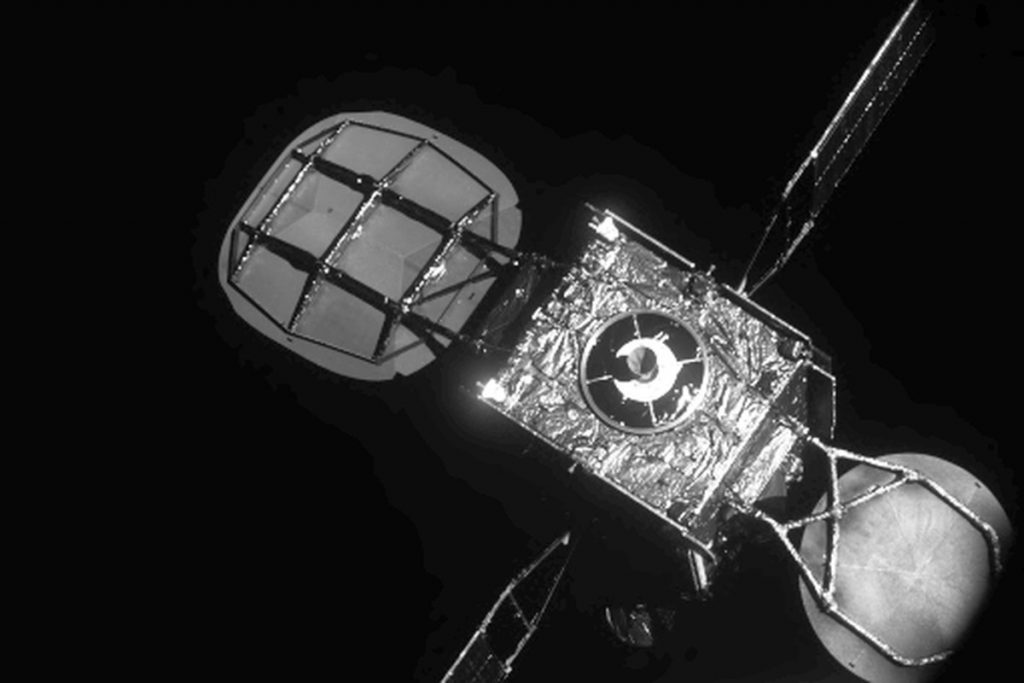
Out of the two satellites that docked, one is a telecom-industry satellite that was low on fuel while the other was a replacement that plans on taking over the former’s movements. This maneuver will help the Intelsat-901 extend the 19-year mission it has been fulfilling with regards to TV relay, by another 5 years. For all the scientists, platforms and satellite makers involved in the process, this docking is a major accomplishment as it helps in solving several problems.

The two satellites met about 36,000 km above the Earth’s surface, and the mission was spearheaded by Northrop Grumman, the maker of the Mission Extension Vehicle-1. After the successful docking, the MEV-1 plans to move westward by 27.5 degrees to continue its telecoms duties by late March. While talks of inter-galactic re-fueling and junk removal have been going for decades now, the success of the Northrop Grumman is the first undertaking that has come out with a positive result. The international docking took place on Tuesday, 300 km above the arc from where telecom satellites usually undergo their data relaying.

Process of Docking

  • Pushing of a probe into the Intelsat-901’s engine nozzle.
  • Removal of any spacecraft that is currently operational from close proximity to prevent any mishaps
  • The MEV-1 approaches the IS-901.
  • Opening of the probe’s fingers into the IS-901, allowing the MEV-1 to hold the spacecraft in place.
  • Autonomous docking once both the crafts are aligned.
  • Following the docking, the MEV-1 will now control all the movements of the satellite, allowing the IS-901 to continue operations for five more years.
  • Afterward, the MEV-1 will get rid of the IS-901 and dump it in what is commonly referred to as space. graveyard, which contains other defunct satellites.
  • The MEV-1 will then move on to the next ailing and old satellite, in a bid to extend its lifetime.

The MEV

The MEV-1, launched in October last year rose around 180 miles above the geosynchronous orbit to help the IS-901, which had stopped services in December of last year. This new stack consisting of two satellites will now perform the duties which IS-901 had earlier done, which will ensure that the TV relaying service continues uninterrupted for another five years. The contract also ensures that the MEV-1 after the period is over will return the IS-901 to a decommissioning orbit, before moving on to a different client spacecraft.

The MEV can accomplish multiple dockings and has a service life extension capability of over 15 years. However, in the near future, this vehicle will be capable of doing much more as the company aims to establish a fleet of such vehicles to make servicing, maintenance, and repair work possible. Furthermore, other plans include allowing the MEV to carry out inclination changes, diagnostics, spacecraft inspections, and even in-orbit repair assembly.

People Involved in the Docking

Northrop Grumman is a new company that works in the field of satellite communications through its subsidiary- SpaceLogistics LLC. The company plans on expanding the present project and wishes to perform in-orbit repair, maintenance, and assembly in time. It is now working on new technology that will help the docking probe, not just tug onto an object, but actually hold it, the way a robotic arm would. Furthermore, it is also working on the creation of fuel-pods that can attach itself onto satellites that are running low of fuel. SpaceLogistics is all set to launch its second MEV this year in order to perform some routine support on another Intelsat spacecraft.

Stephen Spengler who serves as the CEO of Intelsat says that such plans were set in motion in 1992, wherein an Intelsat spacecraft was famously rescued by another space-vehicle when it fell into lower-Earth orbit. Spengler believes that the company has always pushed boundaries with respect to space technology and will continue to do so in the coming years, turning dreams into reality in the process.

Kenichi Ayukawa

Maruti Suzuki is Ready to Invest 4,000 Crore Rupees on New Models: Ayukawa

Highlights:

Mr. Kenichi Ayukawa expressed the concept of Futuro-E in the SUV segment.

This year, Maruti Suzuki to invest ₹4000 (US$ 572.33 million) crore on plant renovations and new product development.

Kenichi Ayukawa at Auto Expo 2020

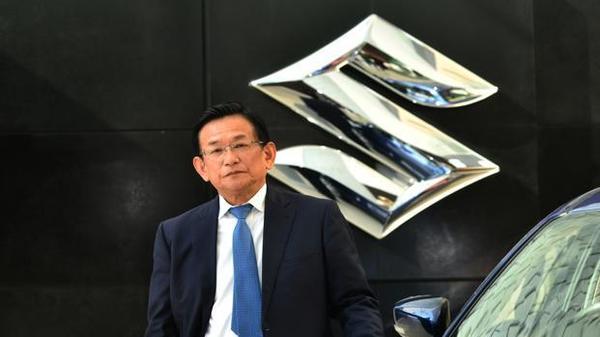
On Wednesday, at Auto Expo 2020 in New Delhi the Managing Director and CEO of Maruti Suzuki India Ltd, Mr. Kenichi Ayukawa expressed the concept Futuro-E in the SUV segment. Maruti Suzuki India is the largest passenger carmaker in the country. However, the company is ready to invest more in new product development. Kenichi Ayukawa, CEO of Maruti Suzuki unveiled the decision of the company to invest ₹4,000 crores this year on new product developments and plant renovations.

He said to BusinessLine on the sidelines of the Auto Expo that “We will invest around ₹4,000 crores in developing new products and modifications of the factories (in Haryana) this year”.

The company announced on the first day of Expo that it would work towards alternative fuel models. As well, electrification of its future models to contribute to environment safety.

What is Mission Green Million?

In this decade, Maruti Suzuki aims to sell around one-million cars that are adapted to new technology. Such as smart hybrid, strong hybrid, and electric vehicles.

“Mission Green Million is our commitment to bring advanced powertrain technologies for Indian customers. In this mission, ‘Make in India’ will be our core philosophy. S-CNG and Smart Hybrid technologies on Maruti Suzuki cars have seen huge acceptance by customers,” CEO Kenichi Ayukawa said.

He also added, the company has complete faith in the future of the Indian automotive market and will accelerate its efforts for electrification of powertrains, with a technology-agnostic approach.

“Our endeavor will be to offer realistic solutions for mass acceptance by customers,” Ayukawa said.

Maruti Suzuki Gujarat plant

Regarding the Gujrat plant, the CEO of Maruti Suzuki said, “It was delayed a bit in terms of completion. But is now on schedule and on track to expand the capacity by 2.5 lakh units to 7.50 lakh units this year”.

Maruti Suzuki and Toyota Partnership

On the partnership with Toyota, “all works were progressing as planned and products would start rolling out in the near future”, he said. Also, Ayukawa added, rolling out of the new Brezza by Toyota this year, and branding it, would also depend on when Toyota decides to launch the vehicle.

yahoo

Goodbye Yahoo: yahoo to shut down community website

If you grew up in the ’90s, chances are that you have used a Yahoo account at some point. The 2000s saw the rise of Yahoo as a big shot with several well-run communities and networks. Since then though, its popularity has dwindled thanks to stiff competition from social media sites like Facebook and Twitter.

However, Yahoo recently released a notice in early October stating that it is closing down the Yahoo Groups website. A popular website back in the day, Groups presented a mix of community forums and mailing lists that people don’t use now. Here’s a look at everything you need to know about the notice, and its impact.

End of an Era

The notice said that users could add new content up to Oct. 28. Following this, on Dec.14, all content will be wiped for good. Therefore, the company has given users time till 14th to back-up their data, and save what they have uploaded. Everything from files, photos, links and polls to attachments will be cleared off the site.

What will remain is the option for users to communicate with their group members through email. However, the website will continue to live but all groups will be private and admins will only have access to limited settings and functions. Yahoo did not clarify why Groups was shutting down. Groups had always been an extension of real-life communities, helping to bring people together across various common interests and friends. The notice also has a link explaining how to save user data. But before that, what exactly was Yahoo Groups?

History of Yahoo Groups

Launched in 2001, Yahoo Groups came when the dotcom boom was at its peak and during its heyday had millions of users. The online discussion portal faced severe competition from the rise of social media sites such as Facebook and Reddit. As people switched to other such platforms, Groups fell behind and was left with a few loyalists. So much so that, several groups on the website have not been upgraded in years! While certain forums on the website are new, it does not provide the kind of interface that Facebook or Instagram does, and hence struggled to retain users.

Rise of Yahoo Groups

Yahoo Groups was once a very popular forum which helped people with common interests connect for almost two decades. At the height of its popularity, that is during 2010, Yahoo Groups boasted of over 115 million active users. To help people build and maintain virtual relationships, the website had over 10 million groups.

Due to a large number of users, Yahoo had enough power to make over 100 carriers and mobile manufacturers pre-install their apps on new devices. To keep Facebook at bay, Yahoo promoted new and unique features such as subgroups, and private chats. But despite their best efforts, Yahoo was fighting a losing battle. With Instagram exploding around that time, users quickly migrated to rival platforms. Hence, it is safe to the say that the shutdown as imminent, being a long time coming!

How to Save Files

To save their data, Yahoo users can download it from their Privacy Dashboard. The notice also links to a Yahoo web-page that explains how to download your data and save it. However, the process is quite cumbersome as you have to individually download each file or photo. Users also have the option of requesting a complete download to the company. This request will take up to 30 days to process, and the download will be available only after that. Afterwards, the group will have only basic communication features. Functions such as attaching photos, polls, links and calendar will be lost forever.

Takeover and Promises

Verizon acquired Yahoo in 2017 in a deal that was worth $4.48 billion and created Verizon Media. Verizon Media too failed to compete against Google and Facebook and is being forced to cut their budget and staff. Strangely enough, the notice regarding Yahoo Groups went away quietly, only being mentioned in small support documents. However, as a sign of good faith, Jason Scott from The Internet Archive has promised to save as much content as possible. So maybe it might not all be lost forever.

Yahoo had previously removed their application GeoCities, taking with it 7 million websites. Digital archivists tried then as well to save whatever they could. Also, before that, they had winded up their Maps site in 2015, and their messenger last year! Sadly, each shut down such as this leads to the erasing of internet history, making it a pivotal moment. While many of you might not have used it in its full capacity, you might have been part of a fan club or movie club. Make sure you do visit one last time before Yahoo effectively erases that part of your childhood.

AT&T TV now

AT&T Applies New Price Hikes to its TV Now Streaming Service

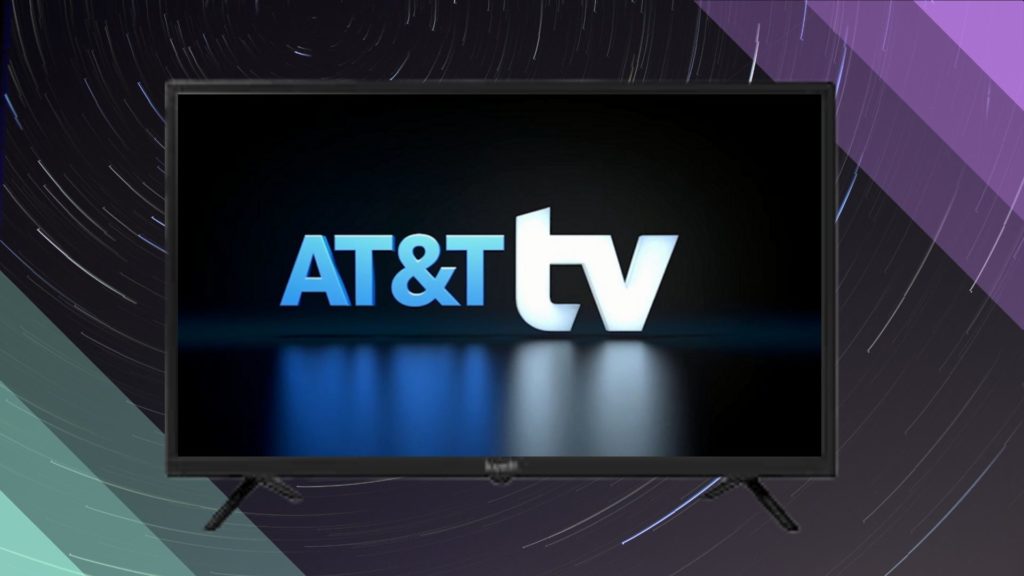
Streaming services are slowly taking over the TV audience, but yet to stay in the field and ahead of the competitors, these streaming services need to apply new strategies, now and then. Despite the tough competition, AT&T’s TV Now, previously known as DirecTV Now, is yet again up to increase its prices.

AT&T at the beginning of the year had revised its streaming service plans and launched two types of streaming packages, i.e., the $50 Plus package that offers the users the access to over 45 channels, and the $70 Max package that allows the users to access over 60 channels and offers more sports coverage. But now, the company has again decided to increase the prices and that too, by 30% for the Plus package and 14% for the Max package.

It means the Plus package will now cost $65 and the Max package will be worth $80. But unlike the previous price hikes, the hikes this time will apply to both existing and the new customers, whereas in the previous price rise, the existing customers did not have to pay the extra money on their current plans.

AT&T TV now
Image Source: variety.com

AT&T is not having much good experience with its streaming business, as it has not been able to attract more customers to the services, instead is losing them slowly. Yet the company has to earn some profits, so it has decided to raise the prices.

Last year, AT&T ended the year with 1.6 million customers, whereas the number of customers in Q2 2018 was 1.8 million. Today, the customer count for the service remains at 1.3 million, which is a huge decline.

Despite the loss of last year’s customers, the company isn’t much worried about how the price hikes will affect the existing ones. For the users, there is an option to stay on the service or opt-out without paying any extra charges. Though AT&T offers a number of great services through the streaming TV, i.e. live TV and original contents from companies like HBO, it is up to the users to decide whether they think the 30% hike is valid for these services or not. The price hikes will take effect starting from 19 November 2019.

OnePlus 7T Pro

The OnePlus 7 Pro Gets Small Updates with New One Plus 7T Pro

OnePlus is one of the brands that have got to a top position among its rivals in a very small period. And with time, the company has been becoming more and more popular and promising with its products. This time, the company has launched its another premium product, i.e. OnePlus 7T Pro.

Early this year, the company had launched the OnePlus 7 Pro smartphone, and surprisingly, within a few months of its launch, OnePlus came up with another version of the same series, i.e. One Plus 7 Pro. And now after a month, it has released the new OnePlus 7T Pro. The 7T Pro is on the higher end with a price of £699 and can be called the improved version of the 7 Pro and 7T.

Since in one year there has been the launch of two similar smartphones from the same series, for the company too, it was difficult to get new features. This implies that the smartphone though has got a few improvements, but it won’t be able to impress the public at the level 7 Pro did. Maybe, this is the reason that OnePlus is releasing the smartphone only in the European and the Asian market.

OnePlus 7T Pro
Image Source: proandroid.com

With most of the similarities, the smartphone has got improved features in terms of the camera, battery as well as the processor. With a similar super-smooth 90Hz refresh rate the new 7T Pro has got an even more awesome OLED screen.

Though the 7 Pro has been declared the fastest Android smartphone, the new 7T Pro has got the latest Snapdragon 855 Plus chipset, making it even faster at the performance. Along with the latest OxygenOS-version of Android 10 incorporated to it and the faster performance, makes the smartphone most suitable for the gaming people.

Unlike its predecessor, for now, the company has only revealed a single colour in the smartphone, i.e. a stunning ‘Haze Blue’. With the launch of another series of the 7T Pro smartphone. i.e. McLaren Edition, the company has also introduced an orange colour in it.

The 7T Pro has got a similar size and weight as of the 7 Pro smartphone, and there have been no changes to the 16-megapixel pop-up selfie camera and the in-display fingerprint sensor as well. With buttons and ports, design-wise too, the two smartphones are completely identical.

Where the new 7T Pro renders support for 8GB RAM, the McLaren edition smartphone has got a whopping 12GB RAM, which is more than enough. There has been an improvement in the battery as well, as the new OnePlus 7T Pro comes with a 4085mAh battery along with a faster charging rate. So within 20-25 minutes, you will get a 100% charging, and that will run a whole day despite extensive usage.

Despite the company has invested a lot on the new OnePlus 7T Pro, it is just a refresh to the 7 Pro and is more expensive. So it won’t be a good buy unless you want faster charging or the smartphone for gaming.