Your Tech Story

News

Amazon

Amazon accuses Future Group of insider trading in new push to block Reliance deal

Amazon has made a few arguments and asked India’s market regulators to look into the Future Retail deal with Reliance Industries. The company has accused Future Retail of insider trading, a letter confirmed by Reuters as it seeks to stop its business partner from becoming a part of the rival’s dynasty. In response to this accusation, Future Group has asked the court for a restraining order so that Amazon cannot approach the regulators which might put the deal with Reliance in jeopardy.

Amazon has been putting pressure on the Securities and Exchange Board of India (SEBI) to review the deal of Reliance that took place in August. The August deal between Reliance and the Future Group announced the acquisition of the retail, wholesale, logistics, and warehousing business of the latter for Rs 24,713 crore via Reliance Retail Ventures.

Why Amazon is making accusations?

Amazon has made it clear that it had an agreement with the Future Group in 2019 that prevented the Indian group’s retail assets from selling to some specific parties. Reliance is one of those parties that Future Group is barred from selling the assets. Amazon now accuses the Future Group that it has disclosed price-sensitive details of an injunction granted by a Singapore arbitrator to Reliance in order to block its deal with the same. In response to these allegations, the Future Group has included in its statement that Amazon needs a “tutorial on the law on insider trading”.

The deal along with accusations and the judgment will be an example of how the Indian firms and the judiciary system values the arbitration decision made following overseas arbitration rules. This may come as another backlash for Amazon which will degrade its reputation more as it is already facing antitrust challenges.

Amazon
Image Source: gadgets.ndtv.com

The injunction Amazon speaks of was granted on 25th October while the company welcomed the decision. On the same day, Reliance informed that it has informed of the arbitration order and the company will enforce its rights to complete the deal with Future Group as early as possible. But, now Amazon in its 20-page letter to the SEBI accused that Reliance was secretive about the price details of the injunction.

What if the Reliance deal fails?

Amidst the accusations that Amazon has made to scupper the deal, Future Retail will go into liquidation if the deal with Reliance Industries is not successful. The 130-page order by the arbitrator shows the level of concern in the Future Retail of this deal breaks. More than 1,500 outlets of Future Retail will have to pack up creating havoc for thousands of employees and the workers in the vendor firms. Future Retail has taken the decision to go for liquidation which means the earning of more than 29,000 employees will stop at once.

Future Retail said that after the pandemic has struck the world, the retail sector has been hit hard. And, this deal with Reliance was supposed to protect the interest of the stakeholders by the acquisition of the liabilities and huge funding. Amazon, after filing accusations has made its relationship sore with both Future Retail and Mukesh Ambani’s Reliance.

Future Group defends itself

While Amazon is putting allegations on the Future Retail and Reliance, a spokesperson for Future has made a statement to Reuters that Amazon has made wrongful allegations. The news of the injunction was made public on Sunday. Neither Reliance nor SEBI has made any comments to Reuters after this and Amazon has also declined to comment regarding the content of the letter.

Future Retail has further told that the agreement Amazon is talking about regarding preventing from selling the assets to Reliance was with a separate Future Group unit. It has also mentioned that on 26th October Future Retail said that they were examining the arbitration order and the same should be tested by Indian law.

Now, we can do nothing but wait and observe the decision of the Indian court. It is important for the regulators as well to choose the right side between Amazon and Future Retail. Amidst the COVID-19 crisis, losing a job for thousands of employees will make the economy worse.

Apple Event

Apple Major Announcements from One More Thing Event

Apple hosted its One More Thing event yesterday. This was the tech giant’s third event in the last three months, with several major announcements coming out yesterday. Apple has kept itself busy throughout the pandemic, focusing on research and development. All that hard work seems to have paid off as the One More Thing event announced certain new releases for the company. In this article, we will take an in-depth look at the event and the major announcement made by the American giant.

Apple Move to Better Chips

The One More Thing event’s most significant announcement came in the way they detailed in what manner Apple would be shifting the new Macs to better chips. The new chips, built and designed by Apple will power the new Mac Mini, MacBook Pro, and MacBook Air. While Apple has been mass-producing its chips for the iPad, iPhone, and Watches, they relied on third-party suppliers for the other devices. Rather than rely on Intel processors, Apple has switched to its ARM-based processors to power all their new Macs.

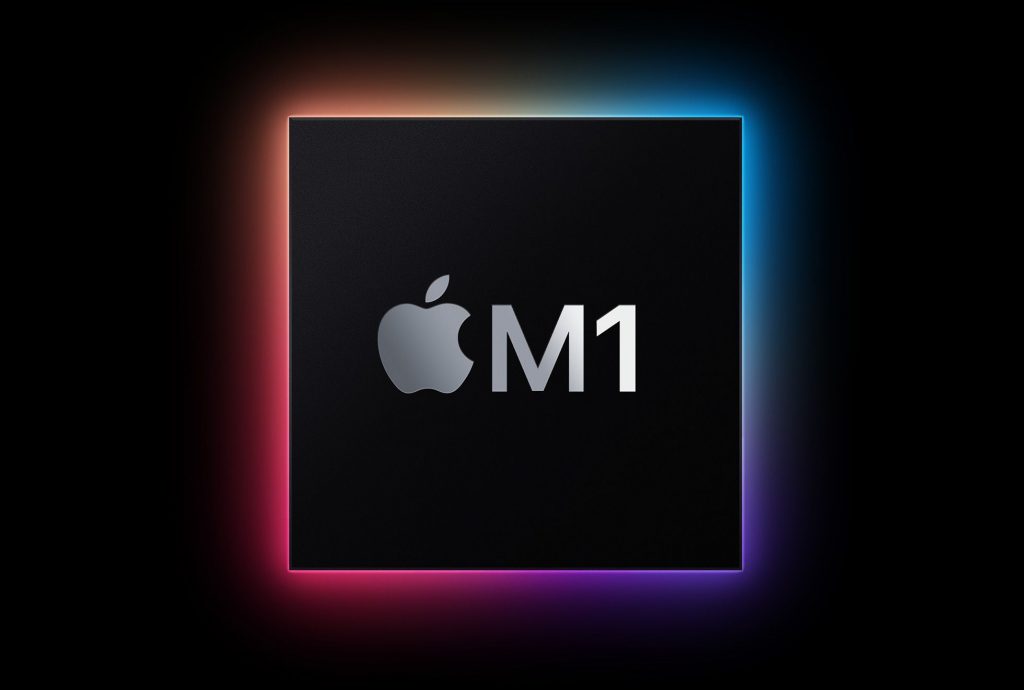
However, the company seems to be shifting that concept by using their chips for their bigger devices as well. Apple promises better performance, higher efficiency, and improved power efficiency with its new chips. The first Mac chip named M1 will have the following specifications;

Runs on an 8-core CPU with four focusing on high-performance and the four on high efficiency

  • A GPU with up to eight cores
  • Uses around 16 billion transistors
  • Comes built-in with Apple’s Secure Enclave system in
  • Supports both the Thunderbolt and USB 4 system

iOS Applications to run on Mac

As mentioned at the WWDC conference held in June, the iOS applications will now run on Mac devices. In June, Apple announced that several new applications will now run on both iOS and Mac. Apple held true to their word, and the One More Thing event showcased the HBO Max and Among Us apps running on both iOS and macOS.

Apple Event
Image Source: hk.asiatatler.com

New MacBook Air Announced

Apple also announced a new MacBook Air which will run on Apple’s self-designed M1 chip. The new device, much to the surprise of fans and experts, will run fanless. Apple claimed that the latest device was around 3.5 times faster than its predecessor. Furthermore, the absence of fans for cooling will help make the new MacBook Air a lot quieter than the previous generation. Announcers claimed that the device would run for up to 15 hours on a single charge while using the internet, and for 18 hours if only watching videos. The MacBook Air features a 13.3-inch display and supports an SSD of up to 2 TB. The device will also support Wi-Fi 6, Thunderbolt connectivity, and USB 4 systems. Apple announced that the new device would cost $999 for regular customers, and $899 for educational users.

Apple Announces New Mac Mini

The Mac Mini will also feature the new M1 chip and will go for sale at $699. When considered with older models, the new Mac Mini has been priced $100 less, with experts believing this will help boost sales considerably. The device will support an SSD with up to 2TB capacity and comes with 16GB worth memory. When it comes to connectivity, the device has two USB-A and USB-C ports. The USB-C ports support both Thunderbolt and USB 4 connectivity. The Mac Mini also features a 3.5mm headphone jack, along with space for HDMI 2.0 and Gigabit Ethernet cables.

New MacBook Pro

The new M1 chips will help the MacBook Pro last for up to 17 hours claims Apple. Furthermore, the device will last for up to 20 when used only for video playback. Similar to the MacBook Air, the Pro too features a 13.3-inch display and offers support to SSD’s with up to 2TB storage. The device has 16GB worth of memory and supports both Thunderbolt and USB 4 for connectivity. Additionally, it also features the TouchID, supports Wi-Fi 6, and has a TouchBar. The device will go on sale for $1,299 for regular customers and $1,199 for educational users.

Big Sur arriving soon

Another major announcement that Apple made concerned the new macOS update. Apple announced Version 11.0, named the Big Sur back in June during the WWDC event. The One More Thing event finally named a release date for the update, by informing excited fans that it will drop on November 12th. We will have to wait and see what new changes the update brings, but it is safe to say that fans are excited regarding all the new announcements.

Inito

Indian made Inito Fertility Monitor receives approval from FDA prepares for US launch

On 9th November 2020, Inito, a Bengaluru-based medical start-up received approval from the US Food and Drug Administration (FDA) for launching its Fertility Monitor in the U.S. The co-founder of the company, Aayush Rai has informed The Indian Express that it is a very proud moment for the people of the company. Aayush also mentioned that they are very glad that their invention can be implemented on a global level and not just in the U.S. or India. The company has made a breakthrough that Aayush mentions as a development for the rest of the world from India. The Fertility Monitor has passed all the rules of the FDA and all set for launch in the international market.

Inito received Class One approval

Fertility Monitor is a home-based user testing product and thus has to go through various scrutinies to prove that it is safe to use. The Fertility Monitor received class one approval and it means that according to FDA it is a device with the lowest degree of risks. This is a very impressive invention for a start-up to receive a class one approval given that the use of medical instruments is very sensitive. The company is still required to show the clinical trial data, pass all the levels of scrutiny for manufacturing requirements, and other rules of the U.S. regulator. The main goal of the Fertility Monitor is to see if it works both safely and accurately.

Work environment

As the U.S. has grant approval for the Inito Fertility Monitor, they are preparing for setting up an operation in the U.S. Inito should strictly abide by the U.S. regulatory standards apart from creating a huge user base and run smooth production operation. Many factors especially the physical environment should be maintained at an optimum condition for proper production. For example, temperature is one of the major factors that play a role in using medical devices. So, a lot of pre-processing is required before production starts in the U.S.

Inito Fertility Monitor
Image Source: indianexpress.com

How the device will work?

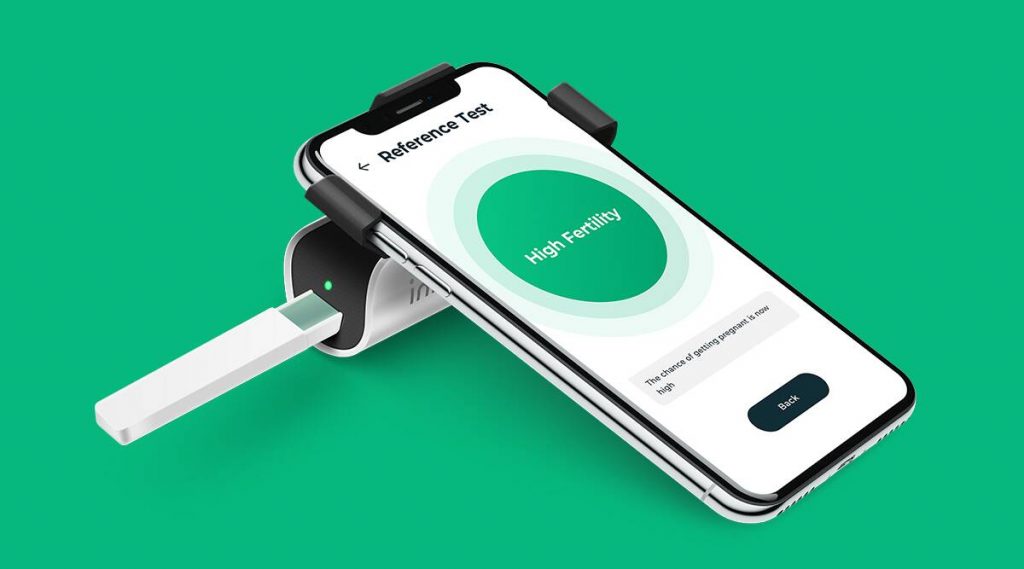
The Inito smart Fertility Monitor can be connected to a user’s smartphone by installing the app for Android or iOS. This will help couples give a clearer view of the most fertile days when they are trying to conceive. Many couples struggle to conceive and hence it is a huge advantage to get access to such a device at home. Inito doesn’t work like the regular ovulation strips rather it combines testing for both estrogen and Luteinizing Hormone (LH). Many ovulation testing kits are available on the market but they only test the LH level. But, the presence of high LH is not the only indication of high chances of fertility.

So, Inito’s Fertility Monitor measures both the estrogen and LH level and connects it to the phone’s app, and shows a certain period of six days as the fertility window. The smart monitor not only displays the level of estrogen and LH but also shows the probability of fertility from low to high in the six-days window. Moreover, through the level of these hormones, other health issues can be predicted as well. If you observe an abnormal level of estrogen and LH you can then consult the doctor to figure out if there is any other complexity in your body. The company through this invention is trying to help figure out couples the best time to conceive as according to the Indian Society of Assisted Reproduction (ISAR), 10-14% of couples in India face fertility issues.

More about Inito

In India, Inito sells its Fertility Monitor along with strips via Amazon. Currently, Bangalore is their biggest market but their market is also growing in tier-2 and tier-3 cities. Aayush said that the product they have developed requires a very educational background to adopt it quickly. Since sexual education is still a subject of taboo in our country, maybe the product is taking time to expand in small cities.

Inito’s developments are very forward-thinking and show an accurate result. This company is the first-ever medical device start-up from India to secure funding from Y-Combinator. The company plans to add more hormones to the test both in the field of fertility and beyond. The company will further focus on testing for thyroid, vitamin D, testosterone, and HBa1c.

Google Pay UPI

Google Pay and PhonePe Hit Back Against New Government Regulation Regarding UPI Payments

India’s move to cap digital payments within the nation has drawn flak from all quarters. Global tech mogul Google on Friday expressed its discontent regarding the new rule, which will make things difficult for its payment portal- Google Pay. India recently decided to put a cap on the amount or share of financial transactions facilitated by payment platforms. Google stated that curtailing the freedom of such platforms would hinder India’s growing digital payments economy. In this article, we will take a look at the new rule brought out by India, and how it can impact digital payments.

Google Pay and PhonePe Hit by India’s New Rule

Google’s criticism came as a result of a new rule passed by the Indian government. The National Payments Corp of India released a notice on Thursday regarding how third-party payment platforms will process only 30% of all UPI transactions from January 1, 2021. The NCPI is India’s flagship UPI payment-processing platform. The UPI framework has grown in popularity in India over the last few years due to its ability to facilitate easy and seamless transactions. The new rule will prevent third-party apps from cornering the market as it puts a threshold based on the total volume of financial transactions occurring within India.

Prevents Growth of Other Apps

Such a move will restrict the growth of other payment services, such as the ones offered by Google, Walmart, and Facebook. However, it will help accelerate the development of portals hosted by Reliance Jio and SoftBank’s Paytm, both of which have bank permits. As per NPCI records, over 2.07 billion UPI transactions were made in October. Walmart-owned PhonePe processed over 40% of such transactions, whereas Google Pay came in a close second. PhonePe processed over 83.5 crore transactions in October while, Google Pay facilitated around 82 crore transactions. They were followed by a dozen other platforms splitting the rest of the market share. Both GPay and PhonePe exceed the cap set by the NPCI and will receive two years to maintain compliance with the new laws.

Google Pay UPI
Image Source: studiobook.in

Reaction from the platforms

Sajith Sivanandan, who serves as the Business Head of GPay, said that such a move was very unexpected. He went on to say that it would have an impact on hundreds of millions of users, leading to a drop in the adoption of UPI payments in the country. However, the new laws will not have an impact on Jio Payments Bank and Paytm as they do not come under the category of third-party apps. Certain experts said that such a move gives stimulus to the theory that the government is pitting foreign players against Indians. They questioned the NPCI’s move to place a cap on third-party platforms and not all platforms on the whole. 

However, as expected, the spokesman for Paytm said that such a move would help grow the UPI infrastructure in India. They went on to say that the new rules would help de-risk and diversify the UPI transactions market in the country. PhonePe CEO, Sameer Nigam said that the company would try its best to ensure that the new rule does not disrupt UPI services for its customers. 

Facebook left behind 

The new rule came out right after NPCI finally permitted Facebook-owned WhatsApp to begin a payment service in India. The authority had cleared the roll-out of such a service in a limited capacity to over 20 million users. While the long-awaited approval came as a sigh of relief for the company, the new rule will inhibit their growth prospects. While WhatsApp has a customer base of over 400 million users, this new rule will create problems for the company. However, the company welcomed the approval by stating that the combination of WhatsApp and UPI would help India’s rural population participate more freely in the digital economy. 

Such a move has been in the works since 2019, wherein the cap was supposed to be at 50% in the first year, and reduced to 40% in the second year. However, the NPCI has gone ahead with a flat rate for the cap but giving companies two years to comply with the regulations.  Ram Rastogi, who is a former NPCI executive, stated that the new move would help foster healthy competition. He ventured to say that since PhonePe and GPay together accounted for almost 80% of the market, bringing in such a cap would help diversify the market. Furthermore, experts believe that such a move would also help the government prevent cybersecurity threats. Also, more competition would help make the market less vulnerable, while also allowing the authorities better controls over the market.

Arm

Arm promises better gaming experience and productivity with the launch of the new Cortex-A78C CPU

Mankind can never meet the absolute best when looking for excellence. In this tech-driven world, everything we are developing becomes backdated too soon. The development in the sphere of science is taking place rapidly aiming to optimize the working condition of every single thing surrounding us. With that being said, computers and smartphones are two mostly used gadgets that undergo modification most often. Enhancing the performance of a machine and increasing its ability to do more work is the prime concern of the modern world.

So, here’s good news for the smartphone users that yesterday Arm has announced a new CPU variant that will fuel the next-generation flagship smartphones. This new CPU variant is Cortex-A78C that can be seen in laptop SOCs and it is responsible for making the system highly efficient.

Arm Powering more than the next generation smartphones

Earlier this year, the company has launched Cortex-A78 and along with that Cortex-A which has claimed that it increased the efficiency of the system by 20%. The processor broke its record as compared to Cortex-A77 it was successful in increasing the energy savings by 50%. The company claims that as Cortex-A78 is exclusively for smartphones, the new Cortex-A78C will always power on-the-go devices like always-on laptops.

In May 2020, the company’s new products were focused mainly on mobile solutions. The company launched ARM Cortex-A78 CPU, ARM Mali-G78 GPU, and ARM Ethos-N78 NPU. Apart from this, the company also launched the Cortex-X Custom Program that allowed customization of products that go beyond the conventional line of Arm products. With ARM Cortex-A78 CPU as the foundation, the company launched Cortex-A78C to build a secure computing solution as well. This new product will be a combination of Arm’s high-efficiency Cortex-A78 as well as the advanced safety features of the Cortex-A78AE CPU. We are looking forward to a CPU with enhanced performance along with scalability and security.

Arm
Image Source: cdn.ndtv.com

Features of the new Cortex-A78C CPU

The new Cortex-A78C will provide support for up to 8 big CPU clusters leading to more homogenous multi big core computing. As compared to the Cortex-A78, this new octa-core configuration will improve multi-threaded performance. This will meet the demand for digital immersion workload such as increasing the all-day gaming productivity. The new CPU has focused on making the gaming experience better and the capability of the system higher. So, when this CPU will combine with Mali GPUs, the all-day gaming will become much better as Mali-G78 provided much better graphic performance and battery life.

For having a better experience while working with datasheets, Arm has increased the L3 cache memory to 8MB. This will help in enhancing the performance of the professional applications as well as bring AAA gaming to the next-generation devices. Apart from the improvement in gaming life, the CPU will also provide updates for data and device security. To ensure security, a new feature called Pointer Authentication (PAC) has been introduced to minimize the attack surface by preventing the attackers from controlling the software control flow. This key feature also ensures data safety when installing a third-party app.

The Arm has committed completely to respond to the needs of all users. It understands the need for a different market and thus trying to deliver CPU designed for individual needs. So, it has taken a big leap from Cortex-A78 to Cortex-A-78C by not thinking only about smartphones but also on-the-go devices. The company still hasn’t made clear that exactly which are the devices that can be powered by the new Cortex-A78C CPU.

More about Arm 

The Arm is a semiconductor and software design company whose primary interest lies in designing ARM processors. It has an important role to play in the market of smartphones, computers, and other devices. It licenses the right to many companies to build systems using Arm cores and eventually coming up with the most efficient device. Recently, Arm has come into a partnership with the US Defence Department’s DARPA Agency. This gives the agency access to Arm’s technology for research purposes. This year, NVIDIA announced plans on acquiring Arm which would mark the biggest acquisition in the semiconductor industry to date. Many multinational tech companies use Arm’s processor. Some of them are Apple, Samsung, Nokia, Sony, HTC, Qualcomm, etc.

Micromax

Micromax banks on INdia to take on Chinese brands by making surprising announcements.

Last month Micromax made a surprising announcement that they were making a comeback to the Indian smartphone market. Often regarded as a significant player in the budget-phone segment, Micromax was an Indian favorite a few years ago. The comeback rides on the hopes that Indians will prefer Micromax to the Chinese phones which now flood the market. The comeback pitch which they launched regarding their new releases also captured this sentiment beautifully. With the new phones out, here’s a quick look at how the company expects the Indian market to react.

Micromax Pitch for a New Future

Micromax co-founder Rahul Sharma talked about his humble origins in Micromax’s advertisement for their new devices. During the ad, he spoke about how his father was an ordinary government school teacher. Since Micromax has always been an economical choice for Indians, the advertisement emphasizes the right emotions. The comeback pitch also focused heavily on nationalism and patriotism. Both these emotions have been on a high recently due to border skirmishes with the Chinese. 

The advertisement focused on Sharma, who has served as the brand’s face for years. Started by Vikas Jain, Rajesh Agarwal, Sumeet Kumar, and Rahul Sharma, Micromax took the market by a storm. The video also talks about the success the brand enjoyed and how it eventually lost out to Chinese competitors. He then goes on to reference the events at the border, with the Galwan issue being a hot topic recently. The emotional pitch makes it clear that Micromax hopes the current Anti-China sentiment will help it regain its foothold in the Indian market. With their new line named IN hitting markets, Micromax requires all the help it can get to muster a strong comeback.

What the Experts Think

However, industry experts seem to think that the Anti-China sentiment can only do so much for the company. While the idea might work temporarily, consumers still look for value when buying products. Off late, the Chinese products have been delivering the value that consumers seek and have hence become a hit. Therefore, to succeed, Micromax will have to match its competitors in terms of specifications and price. The Research Director at the International Data Corporation, Navkendar Singh, believes that unless they go head-to-head with the Chinese on quality, the brand will not be able to make an impact.

A survey was done by the IDC in July, soon after the border skirmish showed that though seven out of ten consumers asked for a non-Chinese phone, only two or three bought one. The most significant reason for this being that there aren’t many non-Chinese options in the market. Apple is not affordable to most Indians, leaving Samsung the most prominent choice for consumers. 

How to Make a Difference?

Since the sentiment is an emotional reaction, Rushabh Doshi who heads research at Canalys Research believes Micromax might make an impact. However, he is quick to point out that the brand lost against Chinese competitors before due to their quality and after-sales services. In the past, the company relied heavily on Chinese supply chains which also made procurement complicated. He believes that the only way they can make an impact is if they have a robust intellectual property to rival Chinese vendors. With the market’s 80% being accounted for by the top five players, can Micromax’s nationalist pitch make a difference?

Micromax’s Options 

Micromax
Image Source: economictimes.indiatimes.com

Realme has been able to make a space for itself within the market, proving that it is in fact, possible. However, the top five brands, which now include Realme, are pushing out smaller ones, such as Motorola, LG, and Nokia. Experts think that sticking to the budget INR 7000-8000 range might help the company. Since most of these brands exist within the highly competitive INR 10,000-20,000 range, avoiding this might help Micromax regain some market share. Also, the last few months witnessed a lot of people shifting to the budget category due to financial constraints. The sub-10,000 range has fewer players, with the major ones being Tecno, ITEL, Redmi, and Realme due to its low-margin characteristics. As a result, most experts believed that the November 3 launch would focus on budget-friendly options.

Micromax IN Series Launch

After much anticipation, Micromax finally launched the IN series in India yesterday. The brand released two new phones, IN Note 1 and IN 1b which fall within the INR 7000-11,000 range. The phones will go on sale on both the official Micromax website and Flipkart. 

Micromax IN Note

The phone is powered by the MediaTek G85 and features a 5000 mAh battery and runs Stock Android as its OS. The Micromax IN Note 1 has a base price of 10,999 and will house 4GB RAM and 64GB storage. Meanwhile, the model that has 4GB RAM and 128GB storage will cost users INR 12,999. The phone will go on sale on November 24th through both Flipkart and Micromax’s official website. The phone features a relatively large 6.7-inch full HD display and comes with a punch-hole camera. The phone has a 48MP rear camera that has a 5MP for ultra-wide angle and a dual 2MP setup for Macro and depth sensors. In the front, the phone features a 16MP ultra-wide angle selfie camera.

Micromax IN 1b

This budget-friendly option from Micromax runs on a MediaTek G35. Like the more expensive model, this too features a 5000 mAh battery and will run Stock Android. This option will start at a base price of INR 6,999 and will have 2GB RAM and storage worth 32GB. The model that runs on 4GB RAM and offers 64GB storage will go for sale at INR 7,999. It features an HD+ display on a screen that is 6.5-inches in size and comes with a mini drop design. The phone comes with an AI Dual camera, that has an 8MP front camera and a 13MP primary camera with a 2MP depth sensor.

Both these phones will face stiff competition from the Redmi 9 series, along with ITEL and Tecno phones. So, we will have to wait and see whether the nationalistic sentiments help Micromax climb back to the top of the Indian market. Whatever might happen, it is good news that Indians now have an economical choice that is made-in-India when buying a new smartphone.