Your Tech Story

News

QoQ Growth

Global Production of Smartphones Surges Ahead with Highest QoQ Growth

The global smartphone industry had taken quite a hit as a result of the COVID-19 pandemic. However, the industry seems to be back on its feet, owing to new releases and a surge in demand. The global production of smartphones has shown a marked increase of 20% on quarter-on-quarter growth. The increase takes the production to 336 million units in 2020’s third quarter as per market research done by TrendForce. In this article, we will take a closer look at this report and what it means for smartphone users around the world.

QoQ Growth

The report highlights how this is the highest QoQ reported in recent years, despite the slowdown caused by the global pandemic. TrendForce also noted that the comparisons of various QoQ clearly outline a recovery from the plummet in demand caused by COVID-19. However, even with such a surge in production, only Xiaomi and Samsung were able to increase their market share this quarter out of the top six.

Companies Moving Ahead

As per TrendForce’s data, Samsung experienced a QoQ growth of 42% producing 78 million units last quarter. This massive growth helped the smartphone giant retain its global top spot. However, the research predicts that Samsung will drop its production to 62 million, indicating a drop of 16 million units by the end of the holiday season. As the company faces stiff competition from the Apple iPhone 12 series, after the holiday stockpiling in Europe and North America, there will be a reduction in production.

Coming in second is Oppo, with a 64% QoQ increase that saw the company produce 45 million units in the third quarter. However, this figure also includes devices from the Realme, OnePlus, and Oppo lines, leading to a higher number. Following close behind was Xiaomi which experienced a 51% QoQ boost leading to the production of 44.5 million units. Due to the comparative figures, TrendForce recorded that both Xiaomi and Oppo shares the second spot.

Other Companies in the Mix

Oppo, Vivo, and Xiaomi have all benefitted from Huawei’s loss of market share. Huawei has had to deal with American sanctions that have severely impacted its production and demand. Both Oppo and Xiaomi are planning to boost their production in the fourth quarter. Estimated production volumes for Oppo and Xiaomi include 47 million and 46 million units respectively. 

QoQ Growth
Image Source: nextbigbrand.in

Meanwhile, Apple dropped to the fourth position on the chart due to a QoQ growth of a meager 2%. The American giant produced only 42 million units in the third quarter, and this drop is attributed to the delay in launching the iPhone 12. Researchers believe that the launch of the 12 series will reinstate Apple’s high position on global charts, with production volume estimates being as high as 74 million units in the fourth quarter.

Bottom End of the Chart

Mirroring Apple’s position was Huawei, which produced 42 million units in the third quarter, on par with Apple. However, the company witnessed a QoQ decline as large as 19%, which experts believe will fall to a whopping 30% by the end of the fourth quarter. As a result, their production volume is expected to shrink to 30 million units. Vivo came in sixth with a QoQ increase of 13%, producing 30 million units in the third quarter. However, experts believe that the company will expand production to 35 million units in the fourth quarter, indicating a higher QoQ in the future.

Political Tensions

TrendForce’s experts noted that the ongoing India-China border dispute will put even more pressure on companies like Xiaomi, Vivo, and Oppo. As Indians take a more patriotic and nationalist approach to production and purchase, these companies will face hurdles in their sales efforts. India remains a primary foreign market for all these manufacturers, and they may experience a loss of market share if these sentiments are to continue. The trio of brands enjoy a robust local supply chain in India and have a strong brand identity. However, if the dispute drags on Indian buyers might gravitate towards their competitors, marking a decline in sales for them.

TrendForce also noted that the global production of smartphones for 2020, experienced a YoY drop of 11%. This year, the total production volume touched 1.25 billion units, and this is expected to grow to 1.36 billion units in 2021. Therefore, smartphone manufacturers can expect a surge in demand in the coming year, helping them recover fully from the lull caused by the COVID-19 pandemic this year.

Qualcomm

Qualcomm Reveals Details Regarding Faster and More Powerful Snapdragon 888

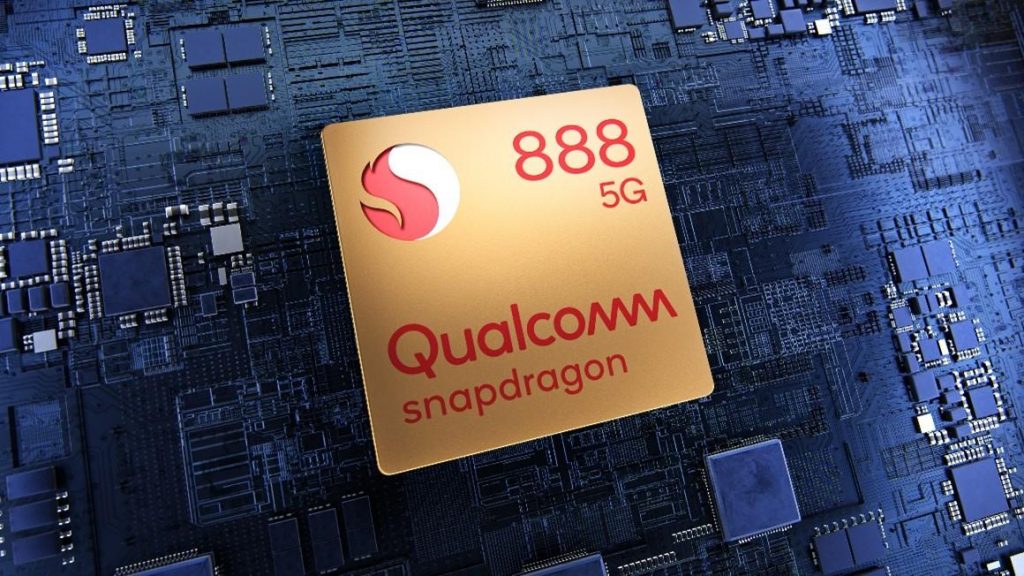
Snapdragon, as a part of its annual Tech Summit Digital 2020 introduced its flagship 888 5G platform for mobile phones. As per reports, this chipset will serve as the benchmark for most flagship phones to hit the market next year. The new platform contains key industry-leading innovations in the fields of 5G, gaming, camera, and artificial intelligence. The Snapdragon 888 has the power to transform mobile devices into gaming rigs of exceptional quality. Additionally, the new chipset can convert phones into high-quality cameras and capable personal assistant. Let us now take an in-depth look at the new chipset and what features it will bring to the world of smartphones.

Qualcomm Snapdragon 888

The Snapdragon 888 provides advanced 5G capabilities and connectivity, which will allow it to redefine mobile experiences for users. As a result, the chipset will usher in a new dawn of console-quality gaming, enterprise mobility, and telephony.  Senior VP of Mobile and Infrastructure for Qualcomm Technologies, Alex Katouzian said that this new chipset is yet another breakthrough technology. Qualcomm has a long history of providing such historic breakthroughs in the field of premium-tier mobile phones. The new chipset will allow manufacturers to differentiate their products and bring to life cutting-edge mobile technologies.

Key Features of the Snapdragon 888

Qualcomm
Image Source: qualcomm.com

Connectivity: Features the world’s most advanced 5G platform that supports both Wi-Fi 6 and Bluetooth audio. It also features the Snapdragon 3rd Gen X60 Modem-RF System that extends support for 5G-enabled sub-6 carrier aggregation. This will help make the system capable of delivering the world’s fastest 5G speeds, up to a maximum of 7.5 Gbps.  The system also enables superior coverage as it uses a Dynamic Spectrum Sharing technology. The chip also supports Global 5G multi-SIM, enabling international roaming, and allows users to manage multiple numbers on the same phone.

Additionally, the system also allows users to optimize their different monthly plans and receive the best services at the most affordable costs. The chip also supports the world’s fastest Wi-Fi 6 speeds up to 3.6 Gbps as it runs on the FastConnect 6900 Connectivity System. This feature also supports Bluetooth 5.2, the Qualcomm aptX suite, and unique modulation and coding features.

Artificial Intelligence: Snapdragon 888 has a unique 6th Gen AI Engine that features the Hexagon 780 processor. This new system provides the perfect blend of voice assistants, gaming capabilities, camera quality, and fast connectivity. The chipset also features power-efficient options and performance that is three times better than the previous generation at 26 TOPS.

The platform also makes use of the 2nd Gen Sensing Hub, integrating a low-power processor to improve activity detection, screen wake, and audio detection. Such features make use of advancements in technologies like 5G, Bluetooth, and Wi-Fi. The updated AI Engine Direct software will enable developers to run AI-powered apps on the platform.

Camera: The Snapdragon 888 features the Spectra 580 ISP, and will be the first to have a Triple Image Signal Processor. This will enable it to capture streams simultaneously from three cameras at speeds as high as 2.7 gigapixels per second. Users can use 120fps snapshots to capture HD action sequences or three 4K HDR videos. The Spectra 580 ISP also has an updated low light architecture, allowing users to take brighter photos, even in near darkness conditions. To enable image capture in more shades, the chip features a 10-bit color depth in HEIF.

Gaming: The chipset features an Elite Gaming arsenal allowing users to enjoy ultra-smooth play at high graphics, mirroring desktop capabilities. The Snapdragon 888 also brings Variable Rate Shading to mobiles for the first time, improving rendering by 30%. The Game Quick Touch function improves responsiveness by 20% and helps in lowering touch latency.

Performance: The chipset features several significant architectural advances. Manufacturing of the platform makes use of 5nm process technology, with the Kryo 680 improving CPU performance by 25%. Top frequencies lie close to a whopping 2.84GHz, and this will be the first commercial subsystem based on the Arm Cortex-X1. The Adreno 660 renders graphics 35% faster when compared to the previous generation and can sustain better performance for more extended periods.

Security: Snapdragon 888 features the following technologies to protect user data and maintain a secure ecosystem. 

  1. Secure Processing Unit
  2. Trusted Execution Environment
  3. Wireless Edge Services 
  4. Type-1 Hypervisor, which helps isolate data between apps 
  5. Capture cryptographically-sealed photos 

Mobile phones that make use of the Snapdragon 888 will hit the market by the first quarter of 2021. All the features listed above make it evident that the devices making use of this chipset will be miles ahead of its competitors. There will be a substantial boost in Qualcomm’s capabilities, helping our smartphones become faster, safer, and more efficient than ever before!

Slack

Salesforce to acquire work-chat service app Slack for $27.7 billion

On Tuesday both Salesforce and Slack confirmed the acquisition of the latter for $27.7 billion by the software company Salesforce. This acquisition will mark one of the biggest business deals in the software industry and also the biggest in the history of Salesforce to date. Salesforce is a cloud computing giant which after owning the new work-chat app will amplify the working connectivity globally. The company will have a better shot at giving tough competition to the tech giant Microsoft.

Salesforce was one of the earlier companies in the IT industry to sell software in the form of subscription service. This saved many small companies and individual workers the time to install the programs on PCs. But, the concept of the software subscription is not a unique idea anymore. Many companies especially the big tech giants are making such online services with lucrative packages to offer, for example, IBM and Microsoft. So, what’s Salesforce’s plan in the long run?

Slack Competing with Microsoft

Slack is an application used for messaging on a professional level. It is mostly used to enable communication among a group of people (especially workplace teams) which offers more than just one-to-one chatting service. Unfortunately with Microsoft Teams into Office 365, the demand for Slack was pulled down. In July, Slack launched a complaint against Microsoft in the European Union for illegally offering Teams in Office 365 subscription. And, customers will rather prefer a subscription where they are offered more than one service and everything is connected to ease the workflow. On top of this, some of the main products of Salesforce are in tough competition with Microsoft’s to stay afloat in the market. So, what is better than making a deal to make the company bigger and better?

Slack
Image Source: howtogeek.com

The experts can see clearly that for Salesforce the main target is to outrun Microsoft as the latter is moving far ahead of Salesforce in terms of cloud computing. Marc Benioff, CEO and founder of Salesforce said that “Slack is a central nervous system for so many companies” and that “it’s a match made in heaven”. But, if it is only about outrunning Microsoft not every decision of the company might be fruitful.

The Salesforce – Slack deal

Salesforce is paying Slack $27.7 billion to close the deal. Under the agreements for this acquisition, the Slack shareholders will get $26.79 in cash and 0.0776 shares of Salesforce common stock for each share of Slack. And, this calculation gives an entire value of $27.7 billion according to the November 2020 closing price of Salesforce’s common stock. March believes that this acquisition and what it will lead to will become the future of enterprise software. And, as the entire world is now getting accustomed to the work-from-home habit, the two companies might have hit the jackpot after all.

Stewart Butterfield, CEO of Slack, believes that with every passing day enterprise software is becoming the core of any organization. So, to build products and services with less complexity, more flexibility, proper alignment, and organizational agility is the main goal. He also said that he believes this is the most strategic decision in the history of software.

The current reputation of Salesforce 

It has been over two decades that Salesforce is providing computing solutions to customers around the globe. The company has achieved massive success and recently it is also expanding its business by several acquisitions. The company bought a data analytics specialist for $15.7 last year. The current market value of Salesforce is approximately $220 billion which is around seven-folds greater than it was almost a decade ago. Kate Leggett, an analyst predicts Salesforce made a very positive acquisition as Slack will be added to its software suite giving people a similar experience like Office 365. If there are no hiccups in the way, Salesforce will take full control of Slack by mid-2021.

An arsenal of perks

Though Slack is a very handy alternative for email and other online communication, it is not as popular as it was expected to be. It is used by many companies and government agencies but not a hot deal for the investors. So, by selling it to one of the leading software companies in the world, Slack just made a perfect exit embarking on a new journey. With Slack being acquired now it will have a broad customer base of the Salesforce and attract new customers as well for the company.

FAU-G

FAU-G – India’s Very Own Shooter-Game Up for Pre-Registration on Google Play Store.

FAU-G, which is a mobile game that Indians have been looking on with a lot of excitement, has finally come up live on the Google Play Store. While the game is not ready for download yet, gamers can now pre-register for the game, which will be out soon. The Indian public has been waiting patiently for what they believe to be India’s most high-profile made-in-India shooter game. Indians believe that FAU-G will rival PUBG in popularity, and see it as an Indian-made alternative to the viral Chinese shooting game. Let us now take a closer look at the game’s launch on the Google Play Store and what this means for Indian gamers.

FAU-G Up for Pre-Registration

FAU-G had to battle through multiple changes in its launching date and delays to appear on the Google Play Store finally. However, the developers have plans to launch only an Android version initially, and later expand to newer markets. Additionally, the listing on the Play Store helps in expanding on the storyline more than what the teaser initially did. The plans for such a game came out two days after India banned over 118 Chinese apps way back in September. However, the game has been marketed as more than just a replacement for PUBG Mobile India. Most Indians acknowledge that the game is a patriotic one as its developers will contribute a share of their earnings to the armed forces. 

FAU-G
Image Source: i.gadgets360cdn.com

FAU-G Gameplay

FAU-G stands for Fearless and United Guards, and users who sign up for the pre-registration will receive a notification when the game drops on the Play Store. Also, all eligible devices which have signed up will automatically download and install the game. However, the developers have not revealed details regarding the game’s size and other technical details. The listing does give a brief outline of the basic gameplay that FAU-G will follow and the storyline it will stick to, which follows closely what gamers saw in the teaser. As expected, the game will in some ways emulate the clashes that occurred in the Galwan Valley between the Indian and Chinese armed forces. The scenario described on Google Play Store emphasizes that the game will focus on Indian soldiers posted on India’s northern borders. The characters will go by the name FAU-G commandos, which will serve as an elite Indian wing of soldiers who patrol the most dangerous territories.

FAU-G Development

Bangalore-based gaming company nCore Games have been developing FAU-G. The company has been partnering with Bollywood actor and celebrity Akshay Kumar, and the first trailer for the game went live on October 25th. While the game was to drop by the end of October, the team ran into delays and pushed the launch into November. However, this puts the game on a collision course with the launch of PUBG Mobile India. PUBG Mobile India is an alternate version of the trendy shooter game that is tailored for the Indian market. Both have announced that launches in November but ran into delays and now seem to be competing on who will hit the market first. On a troubling note for nCore, the number of followers that PUBG India boasts far outweighs the support that FAU-G enjoys on Tap Tap. However, things might pan out quite differently once the games drop, as FAU-G has a patriotic angle.

PUBG Corporation Hassles

The PUBG Corporation has been trying very hard to minimize the effect of the border tensions between Indian and China in the last few months. The company has had to do this so that they receive the approvals required to make a comeback into the Indian market. Meanwhile, FAU-G has been using the heightened nationalism and anti-China sentiment that arose as a result of the skirmish for their gains. Their teaser emulated the Valley skirmish along the LOC and used brawler mechanics to depict the clash realistically. The game is also using the Atma Nirbhar Bharat sentiment to inspire more Indians to use its made-in-India services. Additionally, the developers will donate 20% of their revenue to Bharat Ke Veer. This is a trust that the government established to help the families of soldiers who died in the line of duty. 

Foxconn

Foxconn shift some Apple production to Vietnam to minimize China risk

The advent of the global pandemic has already destabilized the economic condition around the world that might take years to repair and heal. And, amidst such a crisis tension between America and the Republic of China increases as former US President Donald Trump openly blames China for the novel coronavirus. With Trump’s exit from the White House and Joe Biden’s incoming administration, the intensity of impact due to the Sino-American conflict depends on how America can sustain and strengthen its competitive advantages.

But, keeping in mind that the impact of the Sino-US war can fall heavy on the businesses, Foxconn is moving a part of iPad and MacBook assembly to Vietnam from China. The decision has been taken at the request of Apple Inc. This way the company can both minimize the effect of the Sino-American war in its production and business and expand the Vietnamese market. The plant in Vietnam is expected to come online in the first half of 2021.

Foxconn Taking production out of China

Under Trump’s administration, he has repeatedly asked the US firms to take their production out of China. The relationship between the two nations in terms of trading and beyond has gone stale especially after the open accusation. Few months after the outbreak of COVID 19, Trump also decided the ban TikTok as it was responsible for data theft by the Chinese government. He further made some amendments to Clean Network System so that the privacy of every US citizen is protected. Trump didn’t only stop at this as United Nations especially targeted the made in China electronics for higher import tariffs. A restriction in the trade for products using US technology to supply in China was made as it put the nation at risk. No business wants to get caught up in this nasty trade war which can be the end of their market. So, some other Taiwanese manufacturers are also planning to shift some of their production units to countries like Vietnam, India, and Mexico.

Foxconn plan for Apple

Currently, Foxconn is planning to shift the assembly lines for Apple’s iPad tablet and MacBook laptop to the northeastern Vietnamese plant in Bac Giang province. The company has started building the assembly lines as announced in July of this year and will start production by the first half of next year. The source of this news is anonymous as the plan of Foxconn in the Vietnamese market is private. But, the company has not been clear about the fraction of production it is planning to take out of China. The person though has informed that Foxconn is doing this at Apple’s request as the latter wants to “diversify production following the trade war”. So, to support the Vietnamese expansion, Foxconn announced an investment of $270 million to open a new subsidiary called FuKang Technology.

Foxconn
Image Source: businessconnectindia.in

Foxconn has denied commenting on the details about the plan. The company said that due to the reasons of commercial sensitivity they will not comment on any aspect of work revolving around its customers. Apple didn’t choose to make any comments either. Shifting the production of China will also mark a date in history for Foxconn as this will be the first time the company will not assemble iPad in China.

Products other than iPad and MacBook

News has spread that the production in the Vietnamese plant will go beyond Apple’s products. The contract manufacturer has plans to assemble television sets in this new plant for Sony. The production is scheduled for late 2020 to early 2021. But, Sony has declined to comment. Foxconn has a plan to produce more than just Apple’s product meaning it might eventually have a good grip on the Vietnamese electronic market. The anonymous person has informed that the new plant will also manufacture computer keyboards.

Other Asian markets

Foxconn has planned to invest a handsome amount in the Indian market as well. The company has already made plans to spend up to $1 billion in India for iPhone assembly. Apple is requesting to expand business in other markets anywhere beyond China. And, India is a land that produces quality engineers every year. So, it is a smart move for Foxconn to invest such a bulky amount in India. The company is also considering building plants in Mexico.

Apple

Indian Government import hurdles affect Apple and Xiaomi devices

India and China have been engaging in a war of words for a while now.  The border skirmish that took place in July has led to several disputes and talks which have not led to much. The world also seems to be having a tough time with China due to its handling of the COVID-19 pandemic. This has led to an escalation of problems around the world, leading to trade embargos of various kinds. In recent news, India’s stringent quality checks and clearances regarding Chinese goods have led to import troubles for various brands. Here’s a quick look at what impact the control measures will have on the electronics industry.

How Import hurdles affect Apple

The import of goods such as the new iPhone model and several devices by Xiaomi has been delayed due to India’s more stringent quality checks. All electronic goods coming from China now require tight quality clearances, leading to delays in procurement and order fulfillment. Since the release of the new iPhone model early last month, the demand for the phone has been rising in the country. However, industry sources claim that the need for better quality measures has led to a significant slow-down in the import of such goods. In the past, the Bureau of Indian Standards took around 15 days to process such imports. However, recently the same process has been taking up to two months. 

Other Moves

The BIS began to delay the quality checks and reports sometime in August, shortly after the border incident. The delays in quality checks mostly had an impact on the shipping of laptops, smartphones, and smartwatches. Experts believe that this was a direct repercussion of India’s deteriorating ties with China. Since the border skirmish, India has made the rules regarding foreign investment a lot more stringent. While this has made it more difficult for Chinese companies in India, the government has also been pushing for other reforms. Recently, the Indian government banned hundreds of Chinese applications, including some by ByteDance, Alibaba, and Tencent. All three are some of the biggest tech giants in the world, worth billions of US Dollars, and the government banned an additional 43 apps on Tuesday.

Moves from the Electronics Sector

Since these measures have led to a bottleneck in the procurement of the new Apple models, executives from Apple India have begun negotiations. Top executives from the company are talking to BIS to get them to speed up the process of approval. The executives are also providing assurances that the company will shortly set up manufacturing plants in India for local production and assembly. While it remains unclear just how long the delay will extend, both parties refused to comment when asked what their opinion was on the matter. 

Apple

While Apple does have assembly stations in India, newer models, like the iPhone 12, come from China. India has been pushing heavily to set up establishments in India and make the production a local affair. Contract manufacturers in China make a bulk of Apple’s devices which are then shipped to all four corners of the world. As of yesterday, the BIS had over 1080 pending applications for tablets, laptops, and other devices. A staggering 669 of those have been delayed for over 20 days as per reports from the agency’s website. These included several units built in Chinese factories of Wistron and Compal Electronics and Hangzhou Hikvision. Some of these applications have been pending since way back in September, leading to supply chain delays and hiccups.

Boycott Calls

Both nationalist groups and Indian manufacturers have been calling for a complete ban on imported Chinese goods in recent months. On a similar line, Prime Minister Modi has also been heavily pushing an agenda that supports local production and self-reliance. Experts believe that the Ministry of Electronics and IT are pushing Indian manufacturers to produce more goods locally. As per BIS regulations, various electronic devices need to meet specific predefined standards. While the clearance delays do cause problems for large tech giants, it allows Indians to source more locally.

With the festive season coming up, the delays regarding clearance will lead to huge problems for several companies. Since the government restricted the importing of TVs in July, this is another segment that has been affected by recent events. Such moves will have a detrimental impact on brands such as Samsung and Xiaomi. This might be a crucial moment for India as it tries to improve and increase its domestic production.  We will have to wait and see if the delays hurt the electronics sector or give it an impetus to start producing more locally. The latter will lead to the availability of more products while also providing employment opportunities to millions.