Your Tech Story

News

Chromebooks for cloud gaming

Google to introduce Chromebooks for Cloud Gaming

It’s only been a few weeks since Google announced that its cloud gaming service Stadia will be discontinued next year. And now, the company has made a new cloud gaming announcement that it is launching Chromebooks made by various manufacturers that are optimized for cloud gaming.

Chromebooks for cloud gaming
Image Source: techviral91.com

To bring users marquee titles, Google has also partnered with cloud gaming services such as Nvidia GeForce Now, Microsoft Xbox Cloud Gaming, and Amazon Luna. Furthermore, Acer, Corsair, HyperX, Lenovo, and SteelSeries have collaborated with the company to create “Works with Chromebook” certified peripherals for these devices.

“Chromebooks have always been known for being fast, secure, and easy-to-use devices. Since their launch more than a decade ago, we have improved their capabilities and expanded the variety of devices for people to choose from,” the company said in a blog post.

“Today, we are taking that effort a step further by introducing the world’s first laptops built for cloud gaming along with our partners Acer, ASUS, and Lenovo,” it added.

Source: business-standard.com

Hardware specifications

This first generation of Chromebooks for cloud gaming from Acer, Asus, and Lenovo includes numerous gaming-related features. High-resolution displays with refresh rates of 120Hz or higher, Wi-Fi 6 or 6E compatibility, high-quality audio, and RGB keyboards with anti-ghosting are among them. Anti-ghosting is a feature that registers all the key presses accurately even when you press multiple keys at once.

The first set of devices is priced between $399 and $799 to appeal to a wider audience. These laptops use Intel processors ranging from Core i3 to Core i7, depending on the price. Here’s a quick rundown of the three launch models’ specifications.

Lenovo IdeaPad Gaming Chromebook

It sports a 16-inch display with a WQXGA screen (2560 X 1500), and a 120 Hz refresh rate and has a 12th Gen Intel Core i3/i5 processor and 8 GB RAM. There are two versions with storage of variations of 256 GB/512 GB SSD and 128 eMMC. It features 4 X 2W speakers with Waves Audi and supports 2 X 2 Intel Wi-Fi 6E, and Bluetooth 5. Lenovo IdeaPad Gaming Chromebook contains 2 USB 3.2 gen 2 type C ports, 1 X USB 3.2 Gen 1 type A, 1 X HDMI 2.0, 1 X audio combo jack, 1 microSD card reader, and a battery backup of 71 Wh.

Acer Chromebook 516 GE

Acer Chromebook 516 GE features a display of 16-inch WQXGA screen (2560 X 1500) with a 120 Hz refresh rate. It contains a 12th gen Intel Core i5 processor with 8 GB RAM and 256 GB SSD. It sports DTS audio with quad-force vibration cancellation stereo. Some other features are 2 X 2 Intel Wi-fi 6E, Bluetooth 5.2, 2 x USB 3.2 gen 2type C, 1 x USB 3.2 gen 2 type A, 1 x HDMI 2.1, 1x audio combo jack, 1 x Ethernet RJ-45 port and battery backup of 65 Wh.

Asus Chromebook Vibe CX55 Flip

Asus Chromebook Vibe CX55 Flip sports a 15.6-inch Full HD (1920 X 1080) IPS touchscreen with 144 Hz refresh rate, 11th Gen Intel Core i3/i5/i7. It is available in 128GB/256GB/512GB SSD. It sports 2X Harman/Kardon certified speakers. Other features are 2X2 Wi-Fi 6, Bluetooth 5, 2 x USB 3.2 gen 2 type C; 1 x USB 3.2 gen 1 type A; 1 x HDMI 2.0; 1x audio combo jack; 1 x microSD card reader and a battery backup of 57 Wh.

Google does not currently have a set of requirements or certification for Chromebooks for cloud gaming. So, we don’t know if future devices must meet certain specifications to be included in this initiative, but Google will prioritize future devices with high refresh rate screens and good Wi-Fi connectivity.

However, the company stated that GameBench independently tested all three launch devices to ensure they provide a consistent and smooth gaming experience at 120 frames per second with a latency of less than 85ms.

All of these devices will be available for purchase in October. Acer, Corsair, HyperX, Lenovo, and SteelSeries supported accessories including headsets, mice, and controllers.

Meta Quest Pro

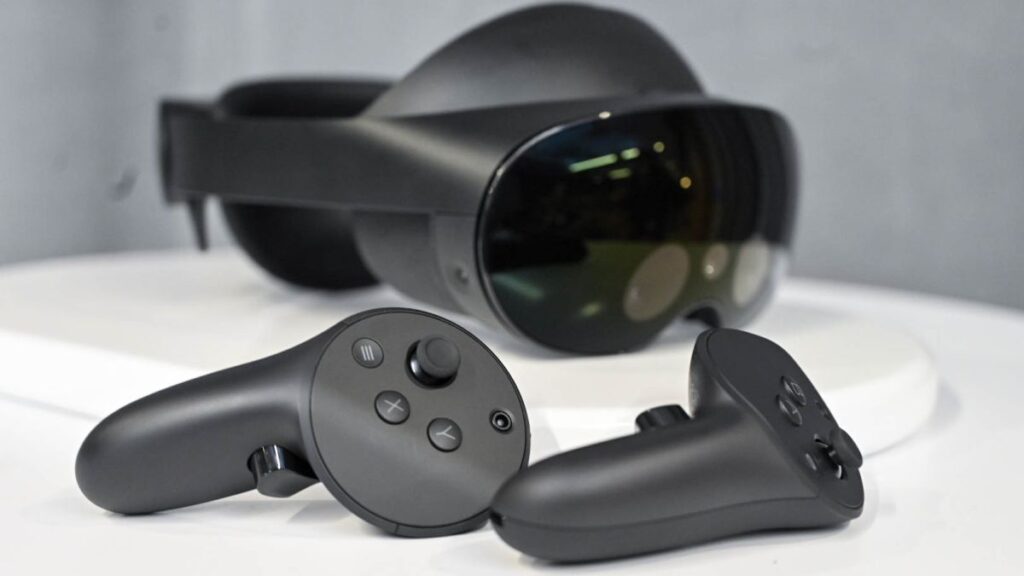
Meta releases new $1500 Meta Quest Pro VR Headset

Meta CEO Mark Zuckerberg has unveiled the all-new Quest Pro(formerly Project Cambria), a premium $1500 Meta Quest Pro VR Headset, at Meta’s annual Connect conference.

Meta Quest Pro
Image Source: laptopmag.com

The $1,500 headset, which was presented at Meta’s Connect Conference, will be available to buy from October 25. Users can also place pre-orders on the Meta website. The launch is a part of Meta’s strategy to grow its user base.

Since its release in 2020, the Quest Pro’s predecessor, the Quest 2, had a sale of around 15 million units. Unlike its predecessor, Quest Pro supports mixed reality, allowing users to view digital content overlaid on the actual world.

Mark Zuckerberg, CEO of Meta, called mixed reality “the next major step for VR.”

Meta Quest Pro is the first in a lineup of cutting-edge headsets designed to increase the potential of mixed and virtual reality. The headset’s pancake lenses compress light multiple times, resulting in smaller overall dimensions and crisper sights. Overall, the Meta Quest Pro headset is more ergonomic and balanced because of the new, flared battery on the back.

The device is powered by the Qualcomm Snapdragon XR2+ processor. It offers 256GB of internal storage and 12GB of RAM. In order to provide users with a full-color mixed reality and virtual environment, it features ten high-resolution sensors, five of which are located within the headset and five outside.

There are two LCD panels that provide richer, more vibrant colors due to the local dimming and quantum dot technology. Meta Quest Pro’s design enables users to switch between the physical and virtual worlds while using their peripheral vision. If the user desires an immersive experience, magnetic partial light blocks are included in the box. It contains sensors for detecting the eyes and capturing facial expressions.

For a richer virtual experience, if the person raises an eyebrow, grins, or just engages in eye contact with somebody, their avatar does the same. To track the user’s position in 3D space independently of the headset, the headset contains three built-in sensors for each controller. In comparison to Meta Quest 2, Meta Quest Pro provides 10% more pixels per degree and 37% more pixels per inch.

Additionally, users will notice a 50% improvement in the periphery of the screen and a 25% rise in full-field visual acuity in the center. The color spectrum has also increased by 1.3 times from the previous version. The device comes with rechargeable batteries and a TruTouch Haptics system.

The Quest Pro has a battery life of one to two hours, though users can also use the device while it’s charging. According to Meta, a complete battery charge will take about two hours.

Microsoft CEO and Chairman Satya Nadella also joined Zuckerberg to reveal a brand-new partnership that will bring potent new work and productivity features to Meta Quest Pro and Meta Quest 2 in the coming years. These tools include apps for Microsoft Teams and Windows 365 as well as the capability to attend a Teams meeting from within Meta Horizon Workrooms.

Most likely, Apple’s rumored AR/VR headset will compete with Meta’s newest headset. The advancement of Meta’s headsets is essential to the company’s plans for the Metaverse, wherein Mr. Zuckerberg envisions a brand-new internet where users can play and work together.

Metaverse is a virtual environment where users may both conduct their daily lives as avatars and explore fantastical virtual worlds. Although several IT companies are developing their metaverses, it will probably be years before any are materialized. There have been conflicting reviews of Meta’s current virtual reality environment, Horizons, and there have also been allegations of sexual assault and violence committed by avatars there.

1024 users

WhatsApp reportedly tested to increase group size up to 1024 participants

There is good news if you enjoy WhatsApp groups but believe that their biggest drawback is that they never get big enough. The messaging service WhatsApp, which is owned by Meta, has announced a number of new features and is now enabling the addition of up to 1024 users to groups for certain beta testers.

1024 users
Image Source: androidcentral.com

When it pertains to group chat capacity, WhatsApp has traditionally been a bit stingy, but it’s getting better. The company expanded the group chat size to 512 individuals in May and added the capacity to exchange files with up to 2GB in storage. Users of WhatsApp’s most recent beta for iOS and Android can form groups with up to 1,023 members.

Only a small group of beta testers have access to the feature for now, but it’s reasonable to anticipate that it will soon be made available to more people to add 1024 users in groups. With this minor upgrade, WhatsApp moves a bit closer to the Telegram messenger, which supports big groups of thousands of users.

Pavel Durov, the developer of Telegram, recently claimed that the system’s encryption standards are pointless if it constantly has security problems and that WhatsApp has been utilized as a surveillance tool. He made these remarks after WhatsApp delivered a critical update that, as per reports, contained security weaknesses that exposed users to hackers,

Large groups are useless if one can’t effectively manage them, but there is also positive news in that regard. WaBetaInfo claims that WhatsApp is creating new capabilities that will provide administrators with additional choices for handling huge groups. To examine all of the applicants and approve them all at once, they include a membership approval process and a list of group members who are presently awaiting permission.

The move would improve the recently introduced Communities feature, which enables several groups to all be placed underneath a single Community umbrella. The messaging app has undergone a tonne of changes and additions this year, including emoji reactions, the option to hide the “Last Seen” status for specific contacts, more features for group phone conversations, and an enhanced native Windows client, in addition to the increased group chat member limit.

WhatsApp unveiled a new calling function for its app last month. With its new Call Links feature, users may now join an audio or video call with just one tap. On the messaging network operated by Meta, users can post links to the corresponding calls for their family and friends. This virtual call service functions quite similarly to Google Meet or Zoom.

In the meantime, the platform launched WhatsApp Premium, a new tool for business accounts. Right now it is only available for beta testers in some nations.

Through WhatsApp Premium, businesses may take use of several cutting-edge features, including a better way to connect with clients and some advantages when connecting new devices. WhatsApp has recently started testing features that restrict users from taking screenshots of photographs transmitted with the “View once” option but only with a small group of beta testers.

WhatsApp Group has become the go-to spot for users to connect with various individuals on a single topic. The new update will increase its popularity and has a lot of potential.

Apple AirTags

Lufthansa Bans Apple AirTags on Flights

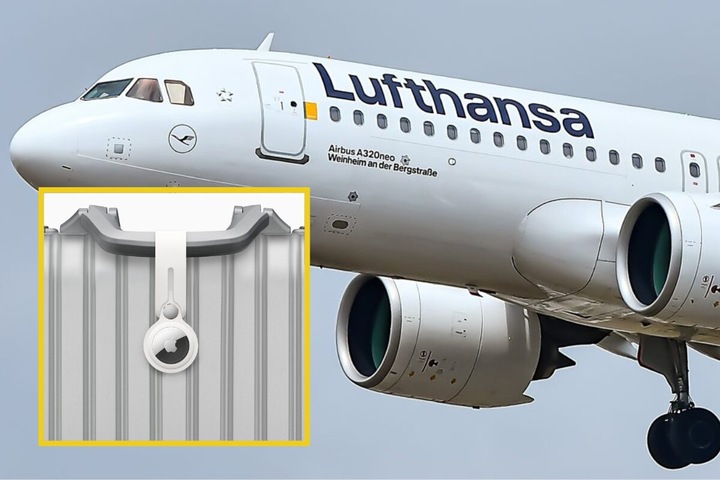
Lufthansa is the latest airline to prohibit the use of Apple AirTags on its flights. The German airline stated, in a statement, that it is aware of the new accessory and that it is not permitted to be used on flights due to a high risk of meddling with aircraft navigation and also the communication systems.

Apple AirTags
Image Source: paddleyourownkanoo.com

According to the statement, Lufthansa is currently updating its in-flight safety video to reflect the new policy. Other airlines, including Delta and American, have also prohibited the use of AirTags on their flights.

Lufthansa announced over the weekend that it is prohibiting Apple AirTags from checked bags only to attribute the policy to the ICAO (International Civil Aviation Organization).

The German airline replied to a request to address reports on Lufthansa’s ban on AirTags from checked luggage in a statement posted to its Twitter account.

“Lufthansa is banning activated AirTags from luggage as they are classified as dangerous and need to be turned off,” the airline said on Saturday. “According to ICAO guidelines, baggage trackers are subject to the dangerous goods regulations. Furthermore, due to their transmission function, the trackers must be deactivated during the flight if they are in checked baggage and cannot be used as a result”, it explained.

Source: theregister.com

The policy appears to be unpopular among tourists who have been using Apple AirTags to track checked bags because air carriers misdirect or lose bags regularly.

Travelers speculate that Lufthansa implemented this policy to avoid being shamed by passengers whose bags were lost on social media. Lufthansa did not respond to multiple phone calls and emails seeking comment on the policy’s rationale if it will be enforced, and how.

Lufthansa stated in a report that Apple AirTags are small, coin-sized devices that can be attached to items such as keys and wallets to help them stay organized. The devices communicate with Apple devices via Bluetooth and can be used to track down misplaced items. While AirTags are not intended for use on aircraft, they do emit radio signals that may interfere with aircraft navigation and communication systems. As a result, many airlines have decided to prohibit the use of AirTags on their flights.

IATA and the ICAO did not respond immediately to requests for comment, and Apple did not reply to a request for comment either.

The combustion of lithium-ion batteries in aircraft baggage holds has resulted in restrictions on the types of electronic devices that can be carried in aircraft cabins and baggage holds over the last decade.

Apple AirTags, on the other hand, rely on tiny lithium-metal batteries, specifically model CR2032. They have an energy density of 198 milliwatt hours per gramme and a lithium content of 0.109 grammes (about 0.0038 oz.). As a result, they are permitted in checked bags in the United States under FAA regulations.

AirTags appear to be permitted under International Air Transport Association (IATA) rules, which are based on ICAO recommendations. According to the IATA rule, approval is not required for lithium metal batteries with a lithium content of two grams or less, so AirTags are permitted.

Separate Lufthansa guidelines state that checked bags may contain devices with integral, removable batteries with up to 0.3 g of lithium, indicating that AirTags should be permitted.

Specific IATA guidance for “smart” baggage features, such as GPS trackers, requires, “The portable electronic device must be designed with at least two independent means to turn off completely, turn off cellular or mobile functions, or a combination of both when airborne.”

Source: theregister.com

Since AirTags lack an on-device or remote off switch, this may be where Apple’s GPS trackers breach the rules. To turn it off, the battery must be removed, or it will run out of power.

It’s unclear whether or not Lufthansa intends to enforce this policy. Removing bags with AirTags from flights will certainly generate negative feedback from customers.

new policy

Elon Musk Slams PayPal’s ‘New Policy’ to Fine Users

Last week, according to a number of media sources, PayPal issued a new policy update prohibiting users of its services from engaging in actions it defined as “sending, publishing, or publication of any messages, content, or materials” disseminating misleading information.

new policy
Image Source: pgurus.com

According to reports, the policy change, which stated that users could be required to pay charges of $2,500 for every breach, was set to take effect on November 3. After receiving a barrage of condemnation from a number of well-known people, including the company’s former president, David Marcus, PayPal hastily apologized for what it termed “confusion” and claimed it was all just an oversight.

David Marcus, the former President of PayPal, criticized the new policy change on Twitter, noting that it runs against everything he believes in.

Marcus noted in his tweet, “A private company now gets to decide to take your money if you say something they disagree with. Insanity”.

Elon Musk, the co-founder of PayPal and the CEO of Tesla responded “Agreed” in response to Marcus’s tweet.

Musk, the CEO of Tesla and SpaceX, co-founded the online bank X.com in 1999. In 2000, X.com and Confinity merged to become PayPal. PayPal was purchased by the online auction site eBay in 2002 for $1.5 billion. eBay separated it in 2015.

Musk, who has reopened negotiations to purchase Twitter for over $44 billion, has also stated a desire to create a super app called X.com that will be accessible to everyone worldwide, similar to China’s WeChat.

On Monday, PayPal announced that it will not penalize users for false information and that a previous policy update stating that users would be required to pay damages of $2500 was sent incorrectly. The update, which PayPal claimed contained inaccurate information, provoked severe outrage on social media. The shares of the California-based corporation fell by about 6%.

The company states, “An acceptable use policy (AUP) notice recently went out in error that included incorrect information. PayPal is not fining people for misinformation and this language was never intended to be inserted in our policy.”

According to Google Trends data, global searches for “delete PayPal” increased by 1,392% after the update revelation and the company’s subsequent apologies.

PayPal has found itself in several controversies this year. On September 15, PayPal removed two right-leaning organizations from its platform in the UK. They were a campaign organization called The Free Speech Union and a news website called ‘The Daily Sceptic’. After a public outcry that reached Parliament, the accounts were subsequently reinstated.

Recently, Paypal also banned Gay Against Groomers, a group of LGBT individuals opposed to the sexualization and gender transformation of minor children.

This occurs during a crucial phase for PayPal. This year, pressure on tech and fintech companies as well as more specialized difficulties for businesses has caused PayPal shares to lose more than half of their value.

In order to adjust expectations to the new economic realities, the corporation lowered its prediction numerous times throughout 2022. Additionally, PayPal executives admitted that they had overestimated how pandemic-era trends would continue once the world reopened.

PayPal is a multinational financial tech company that operates an online payment platform in most countries that permit online money transfers. The business processes payments for internet retailers, auction sites, and several other business users for a fee.

Microsoft fall event

Microsoft Fall event 2022: What to expect

On Wednesday, October 12, the Microsoft fall event will most likely demonstrate how serious the company is about supporting Windows on ARM. Microsoft has yet to determine the future of Windows on ARM-based PCs, despite Apple’s shift to ARM-based silicon on its Mac. More information about Microsoft’s vision for Windows on ARM could be revealed at the company’s fall product launch next week.

Microsoft fall event
Image Source: windowscentral.com

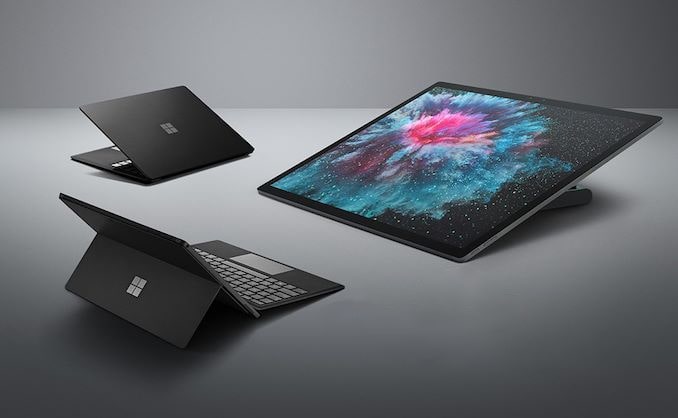
Meanwhile, Microsoft is preparing to launch several new Surface-branded computers, including a long-overdue Surface Studio refresh, next week. This Microsoft fall event will be broadcast live on Microsoft’s website and social media channels and will begin at 7:30 p.m. IST.

Here’s what we can expect.

Surface Pro 9

A Microsoft hardware event wouldn’t be complete without a new tablet, and the Surface Pro 9 could be one of the most significant updates to the lineup in recent memory.

According to Windows Central, the new model will incorporate the ARM-based Surface Pro X into the regular Pro family. If so, you’ll be able to choose between processor architectures without changing form factors, which is a first for the Pro series.

Whatever chip is used it would provide a significant speed boost. According to a source, Intel-based Surface Pro 9 models will use 12th-generation Core i5 and i7 U-series processors (significantly faster than the Pro 8’s 11th-generation parts), while ARM models will use the SQ3, a custom variant of the Snapdragon 8cx Gen 3.

Microsoft may stick with the previous maximum of 32GB of RAM and 1TB of storage, though cellular models will reportedly support 5G.

There are only a few changes to the tablet’s outlook. The Surface Pro 9 will be nearly similar to its previous model, with a 13-inch 120Hz display, two Thunderbolt 4 ports, a front 5-megapixel camera, a rear 10-megapixel camera, and support for the Slim Pen 2.

Although this is an iterative design, people liked the Pro 8 last year. It’s just a matter of if the cost is reasonable. According to WinFuture, Europeans may pay the equivalent of $1,300 for a Core i5 model with 256GB of storage, but this may not reflect American pricing.

Surface Laptop 5

The Surface Laptop hasn’t been touched by Microsoft since the spring of 2021, so it’s overdue for an update. Hopefully, the work is in progress. According to both Windows Central and WinFuture insiders, a Surface Laptop 5 with some minor but significant improvements is in the works.

The 13.5- and 15-inch portables would be equipped with 12th-generation Core i5 and i7 processors, which would represent significant improvements over previous chips. The most notable difference may be what you don’t get — WinFuture says there will be no AMD Ryzen-powered Surface Laptop 5 variants. However, the machine may be the first to support Thunderbolt 4.

The design of the Surface Laptop 5 could be nearly similar to that of its tablet counterpart. Cosmetic changes are unlikely, except for a possible sage green color option borrowed from the Laptop Go 2.

That won’t be a problem if you like Microsoft’s minimalist aesthetics, but it might be disappointing if you were hoping for a more eye-catching notebook like the XPS 13 Plus or MacBook Air M2 – especially given the rumored $1,200 asking price in Europe.

Surface Studio 3

The Surface Studio 3 is one of the most highly awaited products at the Microsoft fall event. Surface Studio’s most recent version was released in 2018, so it’s pending an update. The second-generation Surface Studio was excoriated for its high price as well as its out-of-date CPU and GPU. Microsoft will not make the same mistake with the Surface Studio 3.

According to rumors, the new all-in-one PC will use the same chassis as the first two Studios, including the signature tilting, stylus-friendly 28-inch display. However, the CPU and GPU will have been updated.

Wildcards: A mini-PC and Surface accessories

The biggest surprise may be the release of Project Volterra, a compact desktop aimed at developers creating ARM-native Windows apps with AI features. So it won’t be the Surface’s answer to the Mac mini.

The only other highlights could be the accessories. Windows Central’s Zac Bowden recently shared images of what he claims are updated Surface Keyboard and Surface Pen models that could be included with the Surface Studio 3 as well as sold separately. A Surface Mouse revision may also be available. Bowden also hinted at a “premium” speaker as well as a Teams-focused remote, but little else is known about them.