Your Tech Story

News

duplex

Google to shut down Duplex AI for web

Google has announced the disappearance of its Duplex on the Web service which is a tool powered by AI that was released in 2019 to assist users with a wide variety of online tasks such as purchasing airline tickets or improving the efficiency of the check-in process for flights on airline websites.

Duplex
Image Source: techcrunch.com

“Any automation features enabled by Duplex on the Web will no longer be supported after this date,” said the update.

“As we continue to improve the Duplex experience, we’re responding to the feedback we’ve heard from users and developers about how to make it even better,” a Google spokesperson told TechCrunch.

“By the end of this year, we’ll turn down Duplex on the Web and fully focus on making AI advancements to the Duplex voice technology that helps people most every day,” the spokesperson added.

Source: business-standard.com

The service was first officially confirmed at Google I/O 2019 as just an extension to its call-automation Duplex technology. As well as, while its use case was primarily limited to purchasing movie tickets, the facility subsequently expanded to also include data breach protection and check additional help or aid on e-commerce online sites.

Read More: What is the ChatGPT, which has taken the internet by storm?

Google has not clarified the reason why it is closing down the service, but as per TechCrunch, the cost of training and fine-tuning resource-intensive AI models might be the reason. Besides that, if website owners prevent the crawler from indexing their content, the performance of Duplex on the Web may decrease badly.

The company plans to invest less in improving Google Assistant and Google Assistant-powered services for non-Google devices.

Google positions it as an assistant that can aid you with mundane activities which include bookings and reservations, where it can contact the location and handle the bookings for you.

In 2019, Google introduced Duplex for the web which was an offshoot of the assistant which would assist you in filling out web application forms to make the user experience more seamless.

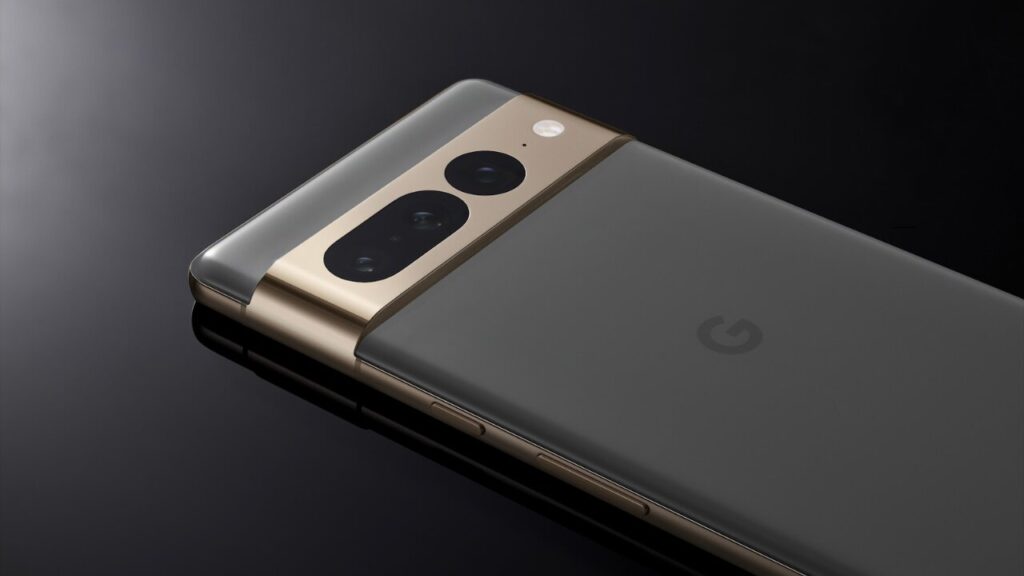
pixel 7

The Pixel 7 Finally Gets Its Free VPN in Google’s Latest Drop

At the “Made by Google” event earlier this year, Google unveiled the Pixel and Pixel 7 Pro smartphones. The company launched free VPN services for its mobile devices via the Google One app in addition to the flagship phones and the Pixel watch.

Pixel 7
Image Source: gizmodo.com.au

Despite all of the wonderful features the Pixel 7 offers, up until now, it hasn’t received some of the most highly anticipated abilities. The most recent Pixel release from Google contains some of the much-heralded features of the new Pixel 7 including a free VPN via Google One.

Google has finally provided private browsing after previewing it at its Pixel presentation in October. Users of the Pixel 7 and Pixel 7 Pro will now get free, no-cost, subscription-free access to this VPN via the Google One app. Before this only users of Google’s $9.99/month 2TB subscription were permitted to use it.

Read More: WhatsApp rolls out picture-in-picture mode on iOS beta

One’s internet activity is encrypted and their IP address is hidden when using a VPN by Google One. A VPN offers users safety while utilizing a public network and also prevents location tracking. Users of the Google One application can select “Use VPN” to immediately protect their location and browsing history.

Apple offers a comparable solution for iPhones called Private Relay, but it isn’t free for iPhone 14 users and requires a membership to either its iCloud+ or Apple One services. Private Relay, however, only shields user traffic that travels through Apple’s own internet browser, Safari.

With the most recent version, the Recorder app now has speaker labels that will give people in the recording their own labels automatically. Additionally, the software will insert a line break anytime the speaker in transcriptions changes.

The devices will also have Clear Calling activated, which will aid in lowering background noise and enhancing human voice quality. Pixel 7 will be able to distinguish between several speakers and create line breaks when necessary when users record lectures or conferences.

Owners of Pixel Watches will receive Sleep Profiles, a Fitbit Premium feature, even if they aren’t subscribed to Fitbit Premium. To assess one’s sleep, this tool keeps track of ten distinct factors, including the length of your sleep, interruptions, and regularity of bedtime.

New additions for other Pixel smartphones are included in this Pixel drop as well. The upcoming single portal for privacy and security settings will feature action cards with tips on how to make your software as secure as possible.

In January, phones using the Pixel Buds Pro will also get spatial audio. Google noted, “you can also turn on spatial audio with wired headphones.”

In a subsequent update, Google confirmed that the Pixel Watch Fall Detection will arrive in 2023 and that the redesigned tiles for sunset/sunrise and favorite contacts would be available.

Google just unveiled a ranking of the top games and applications available in India’s Google Play Store. Quest has been named the “Best App of 2022” in this yearly update to Google’s top applications and games. While the battle royale game Apex Legends Mobile has been chosen as the “Best Game of 2022.”

picture-in-picture mode

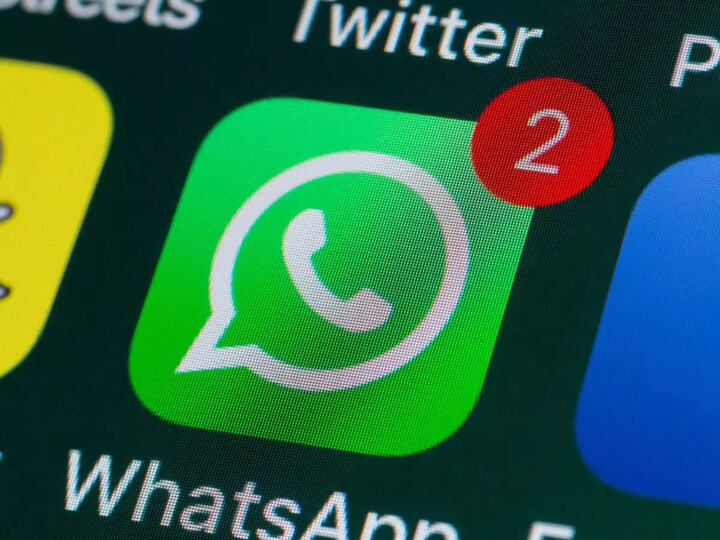
WhatsApp rolls out picture-in-picture mode on iOS beta

For iOS beta users, Meta-owned WhatsApp is launching a brand-new picture-in-picture mode for video chatting. Users would be able to open and access other apps while on a WhatsApp video chat with the new feature. Especially, the latest feature option is only available to a limited number of iOS beta testers.

picture-in-picture mode
Image Source: economictimes.indiatimes.com

As per WABetaInfo, WhatsApp has made the new Picture-in-Picture feature available to certain beta iOS beta testers who already have installed the new WhatsApp beta for iOS 22.24.0.79 upgrade. More users will be able to use the feature in the following days.

What exactly is WhatsApp picture-in-picture mode?

As shown in the screenshot of the new feature launched by WABetaInfo, the latest picture-in-picture mode will enable the users to carry out multiple tasks on the phone while on a WhatsApp video chat. Noticeably, if a user leaves the WhatsApp app during a video call, the picture-in-picture view will appear on the main window immediately.

This allows iPhone users to access other apps without needing to close the video call window or pause their camera. Users will be able to switch off or momentarily deactivate the video call view as needed.

Besides that, as of now, the picture-in-picture mode is available on iOS 16.1 and later, so it is possible that it will be one of the features supported by the upgrade that carries official support for iOS 16. WhatsApp is also operating to add support for iOS 15 devices.

Read More: What is the ChatGPT, which has taken the internet by storm?

Importantly, Android users can already use the picture-in-picture mode for video chatting. In addition, WhatsApp allows both Android and iOS users to enable picture-in-picture mode when viewing shared video files on the app.

To enable picture-in-picture mode, navigate to your device’s Settings> Apps and Notifications> WhatsApp> Advanced Picture-in-picture.

Meanwhile, WhatsApp is testing another update that re-designs and expands the alternatives mostly under the disappearing messages quick access button. Besides that, the Meta-owned instant messenger platform has updated and released eight emojis and it will add 21 further new emojis to improve users’ messaging experiences. The emoticon update is now available in the most recent beta Build on the Play Store.

xrOS

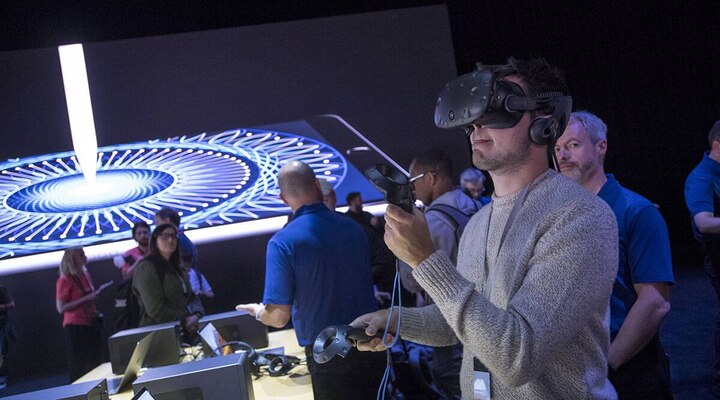
Apple renames mixed-reality software ‘xrOS’ ahead of expected AR/VR headset

According to rumors, Apple has renamed its mixed-reality operating system from “reality” to “xrOS” indicating that it may soon be introducing an AR/VR headset.

xrOS
Image Source: indianexpress.com

Apple company is intensifying work on a mixed-reality AR-VR headset, its first significant new product line since the Apple Watch. Bloomberg reported that a shell company named Deep Dive LLC had been registering the xrOS trademark across numerous nations.

This company is anticipated to be connected to Apple. Apple’s rumored “reality,” the operating system for their specific AR and VR platform, may now go by the name “xrOS.” Apple may sell its hybrid AR/VR headset by next year, claims Mark Gurman of Bloomberg. Apple is reported to be developing a VR or AR headset, and that gear requires its very own operating system to function.

Read More: Apple devices of skiers accidentally call 911 due to its crash detection tech

The new OS name makes reference to the mixed-reality features of the headset. The extended reality, also known as “XR,” is a concept that includes both virtual and augmented reality. While virtual reality is an immersive experience for games and watching videos, augmented reality adds visuals and virtual info to the real environment.

According to a 2017 report, Apple’s headset would include its own processor and display in addition to having a separate operating system. At the time, the software was known as “rOS.” At least three AR and VR headsets are reportedly in the works at Apple. The “Apple Reality Pro,” a designation for the headset that appeared in trademark applications in late August, is claimed to be the N301.

With a probable release in 2023, the headset is anticipated to be a mixed-reality competitor to the Meta Quest Pro. It appears that the N602 will be the second-generation model, with two variations available to customers. One will offer improvements over the previous model, whereas another will be a less expensive substitute. The third, the N421, is said to resemble Apple Glass smart glasses more than a headset.

Apple’s foray into the market puts it in a fight with Meta Platforms which is relying less on Apple products and is counting on the metaverse. The action is also a component of Apple’s ongoing search for its “next big thing.” With the launch of the Apple Watch in 2015, the corporation transformed its wearables operation into a segment that now contributes $41.2 billion to its annual revenue or over 10% of all sales.

Apple’s initial headset launch might feature a set of 4K OLED displays, 15 camera modules strewn about the outside, and probable functionality for eye tracking and hand gestures. It is currently estimated to be in an “advanced” state of development.

The initial wave might potentially include costly headgear, with suggested prices as high as $3,000. The headset is meant to be worn for communication, viewing content, and playing video games. Apple is allegedly developing native mixed reality-compatible versions of popular apps like Messages and Maps.

Tim Cook, the CEO of Apple, has made a point of expressing his passion for augmented reality over recent years, and the corporation has developed a framework called ARKit that enables iPads and iPhones to run AR applications.

SpaceX

SpaceX gets U.S. approval to deploy up to 7,500 satellites

The US Federal Communications Commission i.e., FCC approved SpaceX proposal to deploy approximately 7,500 satellites on Thursday but put several other judgments on hold.

SpaceX
Image Source: moneycontrol.com

Starlink, a rapidly expanding network of over 3,500 low-Earth orbit satellites, has thousands of users across the United States thus far, with customers paying a minimum of 599 USD ‘for a user terminal as well as 110 USD per month for service. In 2018, the FCC approved SpaceX’s plans to launch up to 4,425 first-generation satellites.

Read More: Neuralink brain chip to begin human trials in 6 months

SpaceX has applied for permission to function a network of 29,988 satellites known as the “second-generation” or Gen2 Starlink constellation, which will transmit internet to areas that have limited or no internet access.

The FCC denied SpaceX’s entire application, which included the deployment of approximately 30,000 satellites in low Earth orbit, and imposed conditions on the firm’s plan to deploy the satellites. It postponed the decision to initiate launching the full number of applications.

“Our action will allow SpaceX to begin deployment of Gen2 Starlink, which will bring next-generation satellite broadband to Americans nationwide,” the FCC said in its approval order, adding it “will enable worldwide satellite broadband service, helping to close the digital divide on a global scale.”

The FCC said its decision “will protect other satellite and terrestrial operators from harmful interference and maintain a safe space environment” and protect “spectrum and orbital resources for future use.”

Source: reuters.com

A U.S. appeals court backed the FCC’s 2021 decision to allow SpaceX’s plan to deploy some Starlink satellites in a lower Earth orbit just as scheduled as the portion of its push to offer space-based broadband internet service.

In September, SpaceX filed a lawsuit against the FCC for denying it 885.5 million USD in rural broadband subsidies. Starlink’s technique has real promise according to FCC Chairwoman Jessica Rosenworcel, but it is unable to meet the program’s requirements, citing data showing a gradual decline in the rate of speed over the past year and casting the service’s price as too high for consumers.

crash detection

Apple devices of skiers accidentally call 911 due to its crash detection tech

Skiers are inadvertently dialing 911 thanks to the Crash Detection technology included in the iPhone 14 Pro, iPhone 14, and new Apple Watch models, claims Utah news outlet KSL.

crash detection
Image Source: mashable.com

In a county in Utah, emergency dispatchers told a local media source that they are experiencing an increase in unintentional 911 calls from skiers who own new Apple products equipped with the company’s crash-detection system.

Crash Detection is a brand-new security feature that Apple unveiled in September. The 2022 Apple Watch devices and the iPhone 14 editions all have cutting-edge sensors that enable Crash Detection to function. The feature has been rigorously tested, and Apple has so far released updates to make it better.

However, it appears that the iPhone 14 or the newest Apple Watch when skiing could accidentally trigger Crash Detection. If it detects a crash, Apple’s crash-detection system alerts users with a message and a sound.

The message can be ignored, but if it is not done so within 20 seconds, the system sends an automated message with the user’s GPS coordinates and phone number to the nearest emergency contact center.

Summit County Dispatch Center supervisor Suzie Butterfield told KSL, “We will get a call in that says the owner of this Apple Watch or iPhone has either had a severe crash or they’ve been involved in a car accident.

They won’t respond to you when you first start talking because I don’t even think they knew that they did it, but on callback … they’re usually like, ‘Oh I’m sorry, I was skiing. Everything’s fine.”

Furthermore, Butterfield claimed that she gets 3 to 5 emergency calls every day from an Apple device. She didn’t receive any calls related to any actual crashes.

That indicates that Crash Detection made the call after mistaking skiing for a car accident. However, Butterfield views this technology as a tool rather than a hindrance. She warned that a skier could hit a tree and be rendered unconscious while remaining invisible to other skiers. She also cautioned skiers against disabling Crash Detection on their Apple Watch and iPhone 14.

Rollercoasters have also been known to activate the Crash Detection technology in the new iPhone and Apple Watch models. The Dollywood theme park has posted cautions for two of its most furious roller coasters, informing Apple users that the ride’s “dynamic movement” may cause their Apple watches or iPhones to initiate an emergency call.

Recently Apple released an update to iOS 16.1.2 that contains “Crash Detection optimizations.” Apple has not explained what this means, although it probably aims to reduce unintentional activation in situations when there hasn’t actually been a car accident.

Apple released the first beta of iOS 16.2 to devs in October, and the company announced that customers would be able to submit a complaint to the company when Emergency SOS has been inadvertently enabled in the future iOS version, iOS 16.2. Users can remark on the removal of the Emergency SOS function in the iOS 16.2 beta from Apple.