Your Tech Story

News

Twitter CEO

Elon Musk will resign as Twitter CEO once he finds a replacement

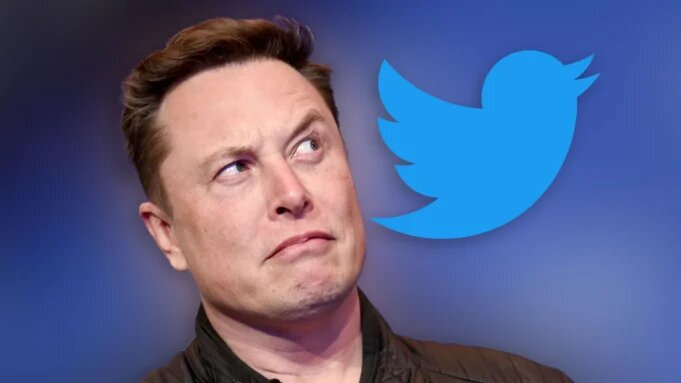
Elon Musk, the owner of Twitter, clarified Tuesday evening that he will resign as Twitter CEO, but only after identifying a new leader, specifically addressing for the very first time a Twitter poll he made earlier this week in which thousands of users voted for his overthrow.

Twitter CEO
Image Source: latimes.com

Musk stated in a tweet that he would resign as soon as he finds someone unwise enough to take the job.

Musk also stated that after stepping down as CEO, he will run the software & servers teams at Twitter, implying that he will retain great influence over the business and decisions.

The news comes now after a day of passivity regarding the poll’s outcome. After more than 17 million daily users chose to vote, with 57.5 percent of respondents saying Musk should resign, Musk acknowledged the results only implicitly on Monday. He proposed that future Twitter polls be limited to paid subscribers to Twitter Blue which is the firm’s subscription service.

Musk’s poll asking people whether he should step down as CEO came in the wake of a huge backlash over Twitter’s abrupt dispersion of several journalists who cover him, as well as Twitter’s choice to ban, then unban, links to other social networking sites such as Facebook, Instagram, and Mastodon which is a rapidly growing Twitter rival that has grown in size since October.

Musk’s brief duration as CEO has caused dramatic, sometimes unpredictable changes at one of the world’s most powerful social media firms.

Under his governance, Twitter has laid off most of its employees, ostracised major advertisers, accepted former President Donald Trump back to the site after his suspension following the Jan. 6 Capitol riots, as well as issued internal communications to reporters about Twitter’s operational processes before Musk acquired the company.

Musk forced the company’s existing workers to sign a pledge to become extremely hardcore in their job, and he flagrantly ignored Twitter’s policy against Covid-19 misconceptions.

Twitter launched, and then had to un-launch, a paid verification feature that was immediately exploited by cynical accounts imitating authenticated major brands, sports people, and other prominent people on the platform in a matter of days.

Musk’s proclivity for making massive product changes based on nothing other than informal Twitter poll results has highlighted his impromptu and ad hoc management style. However, many people on Twitter have expressed their displeasure with this approach. Twitter suspended several reporters last week after they reported on Musk’s complete ban of a profile that tracked his jet.

Growing critique of Musk resulted in Sunday’s poll, which served as an impactful, if unscientific, referendum on Musk’s management of the business since his acquisition of Twitter in late October.

OnePlus 11

The OnePlus 11 launch date has been finalized

OnePlus has made the launch date public for its upcoming high-end smartphone. On February 7, the OnePlus 11 will be unveiled alongside a slew of other new products, including the OnePlus Buds Pro 2.

OnePlus 11
Image Source: 91mobiles.com

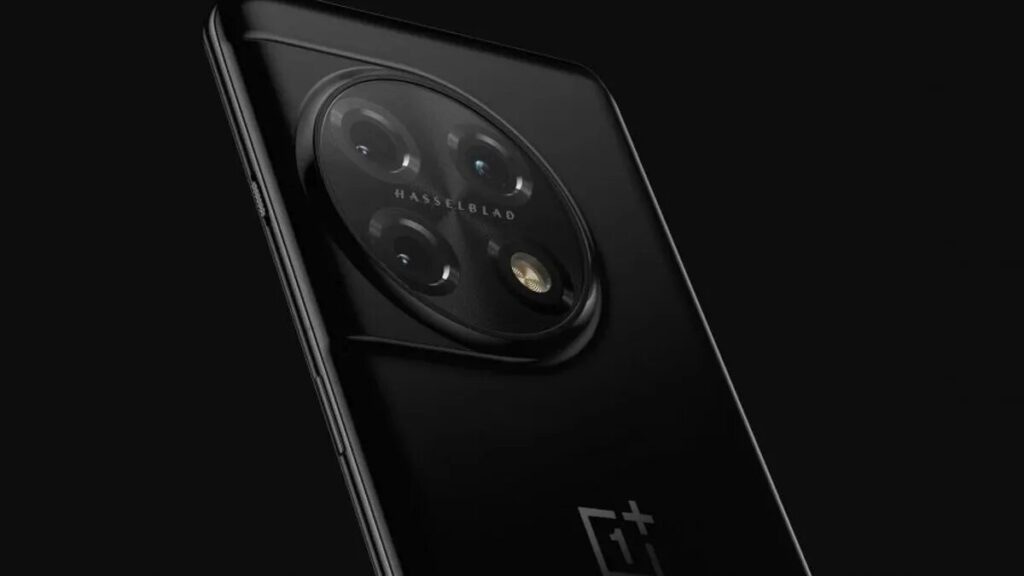
OnePlus 11 is on its way. OnePlus has officially revealed its plan for the launch of the OnePlus 11, its next-generation flagship phone, following a slew of teasers and rumors. A teaser video showcasing the camera block and Hasselblad branding was posted by OnePlus. OnePlus 11 will be released on February 7. The OnePlus 11 5G and OnePlus Buds Pro 2 will be unveiled at an event called Dubbed Cloud 11 in New Delhi.

The teaser image that accompanied Monday’s revelation is consistent with earlier leaks of renders and depicts a revised camera bump. Separately, company spokeswoman Spenser Blank stated that two features absent from the OnePlus 10T—a Hasselblad-branded camera system and the adored alert slider—will be included on the OnePlus 11.

Read More: 15.5-Inch MacBook Air Expected to unveil in Spring 2023

There aren’t many specifics available at this time. “Witness the Shape of Power” is the headline for the event teaser, which is undoubtedly related to quick charging, one of OnePlus’ key selling points. According to leaks so far, the device will also have a 6.7-inch screen with a 120Hz refresh rate, a Snapdragon 8 Gen 2 CPU, and rapid wired charging up to 100W.

The OnePlus 11 will supersede the OnePlus 10 Pro. It will likely have a premium glass sandwich layout with a metal frame as far as appearance is concerned. The primary camera bump will be the main distinction between the OnePlus 10 Pro and its successor.

It will feature a circular camera bump at the rear with Hasselblad branding in contrast to the OnePlus 10 Pro’s square-like camera configuration. The display is probably going to be more accurate in terms of color and peak brightness than the OnePlus 10 Pro. The smartphone will probably come with a brand-new, enhanced in-display fingerprint sensor as well.

This display is most likely 3D curved, and Corning’s most recent Gorilla glass is anticipated to be used for enhanced protection. The OnePlus 11 should be a wonderful gaming device because the display probably has a better touch reaction rate.

The phone will reportedly have a 5,000 mAh battery and support wired charging up to 100W and wireless charging up to 50W. By limiting the fast charging capabilities to 100W, it appears that the company has discovered the ideal balance between protecting battery health and quick charging.

In order to leverage the market success of its midrange devices in 2022, the company is holding its event in India. As per Counterpoint Research, OnePlus was in 3rd spot in India’s premium smartphone market share, after Apple and Samsung (respectively), thus there is still plenty of space for growth.

The OnePlus 11 is probably going to be sold on Amazon, and it might also be the priciest OnePlus phone ever introduced. The base model of the phone is expected to cost more than Rs 65,000, whereas the top-of-the-line OnePlus 11 with 16GB RAM and 512GB of internal storage may cost more than Rs 80,000.

end-to-end encryption

Google announced end-to-end encryption for Gmail web

To render its emails more difficult to hack, Google is deploying a new update. According to a Google announcement, Gmail will soon support end-to-end encryption in web browsers. The capability, which is presently in beta, enables customers to send and get encrypted emails both inside and outside of their domain, according to a blog post from the company.

end-to-end encryption
Image Source: gizmodo.com.au

The new technology, which Google describes as client-side encryption, will make sure that important information in the body of the email and attachments is unreadable by Google servers. Additionally, it will provide customers access to the encryption keys while allowing the identity service to access them.

Google noted, “Google Workspace already uses the latest cryptographic standards to encrypt all data at rest and in transit between our facilities Client-side encryption helps strengthen the confidentiality of your data while helping to address a broad range of data sovereignty and compliance needs.”

Client-side encryption (CSE) in Google Workspace enables the processing of data encryption in the client’s browser prior to data transmission or cloud-based storage in Drive. The company emphasized will not be able to access users’ encryption keys. It noted, “You can use your own encryption keys to encrypt your organization’s data, in addition to using the default encryption that Google Workspace provides.

Read More: 15.5-Inch MacBook Air Expected to unveil in Spring 2023

With Google Workspace Client-side encryption (CSE), content encryption is handled in the client’s browser before any data is transmitted or stored in Drive’s cloud-based storage. That way, Google servers can’t access your encryption keys and decrypt your data. After you set up CSE, you can choose which users can create client-side encrypted content and share it internally or externally.”

Gmail’s end-to-end encryption will make sure that all email communications sent by users are encrypted by the sender and can only be decoded on the device of the intended receiver.

The emails and attachments transmitted with them cannot be decrypted or read by any organization or third party, including Google’s own email server. The fact that Google already offers client-side encryption on Google Drive, Sheets, Docs, Google Meet, Slides, Google Calendar and Google is noteworthy.

According to Google, customers with Google Workspace Enterprise Plus, Education Plus, or Education Standard are eligible to sign up for the Gmail client-side encryption (CSE) beta program. The beta program is accepting applications through January 2023. Users must submit a Gmail CSE Beta Test Application, which must include details like their email id, test group domain, and Project ID.

Users of Google Workspace Essentials, Business Starter, Business Standard, Business Plus, Enterprise Essentials, Education Fundamentals, Frontline, and Nonprofits, as well as older G Suite Basic and Business customers, will not be able to use the new feature as of now. According to Google, the public release will be made available at a later time in 2023.

Google has made it clear that the new functionality would encrypt both the email content and all attachments, including embedded photos. Google, however, will not encrypt the email’s header, which contains the topic, timestamps, and recipient lists.

Additionally, Google has stated that “in an upcoming release” it will add client-side encryption to its Gmail application for iOS and Android devices.

google

Google can soon read your doctor’s bad handwriting

Many doctors prescribe medication in haste, thereby making it almost impossible for their patients to comprehend what they intended to write. This issue has existed for decades, and many tech companies have repeatedly tried to fix it without much to no success. Google is now attempting to translate those difficult-to-understand texts.

Google
Image Source: forbes.com

On Monday, at its annual conference, Google announced that it is partnering with community pharmacies to explore ways to recognize doctor handwriting.

Read More: Google Chrome rolls out memory and power-saving modes

The feature, which is currently in research and not yet available to the public, enables users to either snap a picture of the prescribed medication or attach one from their photo library. After processing the image, the application senses and highlights the medications mentioned in the note, as demonstrated by a Google executive.

This will act as an assistive technology for digitizing handwritten medical documents by augmenting the humans in the loop such as pharmacists, however no decision will be made solely based on the output provided by this technology,” the company said in a statement.

Source: techcrunch.com

Google for India is the firm’s annual conference in the South Asian business, where a variety of brand-new developments are showcased. The corporation also stated that it is working on a single, unified model that will comprise more than 100 Indian languages including both speech and text in order to enhance the internet journey of the incoming millions of South Asians.

It has nearly five hundred million users in India which makes it an important business for the firm. However, it has also been one of the toughest years for Google in the South Asian business, where it has been struck twice over the past months by India’s antitrust regulator.

We’ve started working on the complex process of identifying what’s written on medical prescriptions by building an assistive model to digitize it, using AI, for medical healthcare professionals”, said by Google India in a statement.

Source: 9to5google.com

A similar type of technology has already been used in Google Lens, a multipurpose object recognition tool powered by Artificial Intelligence that can detect and recognize data and translate different languages. The Google Lens application can currently be used to virtually encode handwritten notes, though the feature varied depending on how easily readable the handwriting was. 

Epic Games

Fortnite maker Epic Games to pay $520M in FTC settlement

According to The Wall Street Journal, Epic Games Inc., the company that created the video game Fortnite, has consented to pay $520 million to resolve claims made by the Federal Trade Commission that it intentionally violated children’s online privacy laws and tricked users into making unintended purchases.

Epic Games
Image Source: whqr.org

The creator of the popular video game “Fortnite,” Epic Games, has agreed to pay the US government a total of $520 million to resolve claims that it deceived millions of players, which include kids and teenagers, into making unplanned purchases and that it broke a key federal law protecting the privacy of children.

In order to settle allegations that it violated the Children’s Online Privacy Protection Act (COPPA) by collecting the personal information of children under the age of 13 without first obtaining their parent’s verifiable consent, Epic has agreed to pay the US government $275 million.

Read More: Journey of a gaming firm that left a bigger footprint in the gaming industry

According to the FTC, it is the biggest fine it has ever assessed for breaking a rule it has enforced. In a second, different settlement, Epic will fork out $245 million in payments to customers who the FTC claims were injured by user-interface design decisions that were misleading.

According to the FTC, this accord is the biggest administrative order in the agency’s history.

TC commissioner Christine Wilson emphasized the risks of ignoring children’s privacy concerns when it comes to online gaming. She gave three instances of actual underage users involving sexual abuse and child pornography with the intention that it would serve as “a wake-up call to skeptics who believe that invasion of privacy lead merely to targeted advertising.”

The settlement, according to FTC Chair Lina Khan, demonstrates the agency’s increased attention to privacy and so-called “dark patterns,” which are design cues meant to steer users in the direction of a company’s favored outcome.

The FTC and Epic have reached a tentative agreement that restricts Epic from charging customers without their permission or utilizing dark patterns. It also bans Epic from locking users out of their accounts in reaction to users’ refund requests with credit card providers disputing erroneous charges. The agreement will be in effect for 20 years after it is implemented.

Along with paying a fine, Epic will be prohibited from allowing text and voice communication for kids and teenagers without parental approval. Additionally, the company will be required to remove any personal data it earlier connected via Fortnite in contravention of COPPA laws unless it receives permission from parents to keep it.

On its website, Epic wrote a lengthy article describing the accusations and settlement. It noted, “No developer creates a game with the intention of ending up here. The video game industry is a place of fast-moving innovation, where player expectations are high and new ideas are paramount. Statutes written decades ago don’t specify how gaming ecosystems should operate.

The laws have not changed, but their application has evolved and long-standing industry practices are no longer enough. We accepted this agreement because we want Epic to be at the forefront of consumer protection and provide the best experience for our players.” 

Elon Musk

Elon Musk proposes to step down as head of Twitter in the poll

Amid a series of issues involving the popular social media platform, Twitter owner Elon Musk uploaded a poll on Sunday asking the public whether he should step down as CEO.

“Should I resign as CEO of Twitter?” Musk asked in a tweet.

“I will follow the outcome of this poll,” he added.

Source: thehill.com

As of Sunday, approximately 58 percent of Twitter users wanted Elon Musk to resign, whilst also 42 percent wanted him to remain as the CEO. The poll closed early Monday morning.

Elon Musk
Image Source: deadline.com

Musk jokingly posted a tweet after posting the poll saying, as the phrase goes, be cautious what you wish, as you might get it.

Musk ended up taking Twitter private with his multibillion-dollar acquisition of the firm earlier this year, progressing to fire the majority of its execs and disintegrate its board of directors. He still owes creditors who helped finance the acquisition billions of dollars.

The poll was conducted amid the latest uproar over his erratic handling of the platform, in response to a new Twitter strategy forbidding users from publicizing other social media platforms. Musk suspended the accounts of tech journalists who have been critical of him earlier this week.

The 51-year-old CEO also wrote on Twitter that polls will be held in the future to decide on major company policies.

Musk apologized saying It won’t happen again.

Musk lifted the prohibitions on the journalists after conducting a survey during which 59 percent of Twitter users demanded that the accounts be restored immediately.

The proposed regulations on publicizing other social platforms come at a time when many liberal Twitter users are looking for alternatives.

Meanwhile, brands are removing their advertising from Twitter at an alarming rate. Musk has repeatedly stated that Twitter’s financial situation is dire.

You must like pain a lot,” Musk tweeted, noting the company “has been in the fast lane to bankruptcy since May.” Yet Musk denied that he has a new CEO in mind.

No one wants the job who can actually keep Twitter alive. There is no successor,” Musk tweeted. “The question is not finding a CEO, the question is finding a CEO who can keep Twitter alive.”

Source: cnn.com