Your Tech Story

News

robotaxi

Baidu gets license for driverless robotaxi tests in Beijing

On Friday, Baidu Inc. said that it had received the first license to test autonomous cars on Beijing’s roads and that it would expand its network of robotaxi by 200 in the upcoming year.

robotaxi
Image Source: yahoo.com

The startup Pony. ai, which is sponsored by Toyota Motor Corp. and Baidu Inc., announced on Friday that it had been given the first permits to test completely autonomous vehicles in Beijing without the use of safety controllers as a backup.

As a first step toward providing commercial robotaxi services in the Chinese capital, Baidu and Pony.ai said that they would each start testing 10 autonomous vehicles in a technological park built by the Beijing government.

Over the last five years, Beijing-based Baidu, which derives the majority of its earnings from its online search engine, has concentrated on self-driving technologies in an effort to diversify. Last year, it began charging for its robotaxi service Apollo Go.

A robotaxi journey is expected to eventually cost approximately half as much as a trip in a commercial vehicle with a driver, according to the prediction.

In the upcoming year, the company announced that it would expand its network of robotaxis in China by 200 more.

Apollo Go, which runs without a safety driver in Wuhan and Chongqing, provided a total of 1.4 million driverless rides at the end of the third quarter, according to Baidu. In Guangzhou, where it runs a taxi service, rival Pony.ai, which has operations in both China and the US, has been developing autonomous drive systems.

Additionally, it is testing self-driving cars in Arizona and California while using safety drivers as a backup. Despite the aggressive implementation timetable expected a few years ago, manufacturers outside of China have backed off, and regulatory barriers have emerged, even as Chinese companies strive for self-driving cars.

Three years after CEO Elon Musk said the business was on schedule to produce a fleet of a million robotaxis, Tesla’s “Full Self Driving” technology needs a human behind the wheel who is prepared to take charge.

Due to claims that its electric vehicles can run themselves, Tesla is currently the subject of a criminal probe in the US. The robotaxi division of General Motors Co, Cruise, has announced intentions to expand its service throughout San Francisco and other American cities and to add thousands of automated cars in the upcoming year.

Following incidents in which the vehicles braked improperly or were immobilized, U.S. auto safety officials announced earlier this month that they had launched a safety inquiry into the autonomous driving system utilized by Cruise.

After determining that the mass implementation of a commercial automated drive system would require more money and time than the companies anticipated when they joined together in 2019, Ford Motor and Volkswagen AG closed down their collaborative self-driving company, Argo AI, in October.

A fault led to a test vehicle colliding with a traffic median in California, according to an informal investigation by the National Highway Traffic Safety, and Pony.ai agreed to fix a version of its automated driving software in the US in March.

HTTP Downloads

Google Working To Block Insecure HTTP Downloads In Chrome

Since HTTPS has grown more widespread on the internet, Google Chrome is planning to roll out a security feature that will restrict “insecure” HTTP downloads.

Whilst it used to be the case in that only privacy-sensitive websites, such as banks, required HTTPS encryption, it has now proficiently become the standard, particularly as even more online sites manage our data regularly. Google has been planning to add new security features to Chrome in recent years to promote the use of HTTPS connections anywhere and everywhere possible.

HTTP Downloads
Image Source: sammobile.com

Most prominently, any previous HTTP website is now marked as “Not Secure” in the address bar. Chrome also prevents websites that are secured from using insecure web forms and sometimes provides non-secure installs by default. This mix of safe and unsafe elements is referred to as mixed content.

A while back, the company added an “Always use secure connections” option to Chrome’s security settings. Allowing this directs Chrome to “upgrade” to the HTTPS mode of websites if you happen to navigate toward the unprotected version by accident. If a protected version is not accessible, an on-screen warning appears, asking if you want to proceed.

Google, a renowned search engine technology-focused firm, is planning to broaden that option to protect Chrome visitors from all possibly insecure HTTP downloads, based on a new code refactoring and affiliated explainer. This goes over and above the existing mixed data download protective measures by preventing downloads from any connection, regardless of whether it is affiliated with an unprotected website.

For instance, if you tap on an HTTPS download link and it takes you to an unprotected HTTP server then before finally connecting to an HTTPS server, Google Chrome will flag the download as unsafe. Likewise, if you’re visiting a website that’s only accessible via HTTP, Chrome will block any installs from that site.

Even so, as with Chrome’s other methods of preventing unprotected websites and installs, you will be able to get around the block. In this sense, it serves more as a loud alert to make sure you understand exactly what you’re doing than it is to truly stop users from possibly dangerous areas of the internet.

This upgrade feature to inhibit unprotected HTTP downloads will be sealed behind a Chrome flag at first. However, it is intended that it will be available shortly as a portion of the “Always use secure connections” toggle.

Because the feature is still in development, it is unlikely to be available for widespread testing until Chrome 111, which is scheduled to be released in March 2023, with a full launch following later in the year.

Apple

Apple sued by ex-patent attorney alleging discrimination

After complaining about a male colleague, a former Apple patent attorney filed a lawsuit against Apple alleging discrimination and harassment.

Jayna Richardson Whitt filed a lawsuit against Apple in California, alleging that the firm discriminated against her after learning that she was a domestic abuse victim by rejecting her for higher-level employment roles at the company.

Apple
Image Source: appleinsider.com

Whitt has been employed at Apple since 2006. She claims that throughout this period, she advanced to positions like Director of IP Transactions but also experienced discrimination.

According to the complaint she filed in state court in San Mateo, California on December 20, a White male supervisor “favored Caucasian males and subjected minorities, females, and employees with disabilities to discriminatory treatment.” The patent attorney, who described herself as a single parent of Asian heritage, claimed in her lawsuit that the discrimination was visible in hiring choices, mentoring, assignments, and invitations to meetings.

According to Whitt’s complaint, the company spent more than $630,000 to shield Chief Executive Tim Cook from a stalker in 2021. She claimed that despite uploading a video of a White male coworker brandishing a gun and sharing proof of “death threats and terrorization,” Apple left her “defenseless.”

Whitt said that the company left her on her own to secure her devices, accounts, and Wi-Fi without any assistance from the company’s global security division. Apple initiated an investigation after Whitt published an article in April exposing the company’s harassment and discrimination.

According to Whitt’s complaint, the company conducted an investigation into her behavior after she published the article before terminating her in July. Apple HR criticized her for “allowing a personal relationship to interfere with my work, not adequately securing my devices and accounts, and being unprofessional during the investigation.”

In July, Whitt’s job was terminated “based upon pretextual accusations that she violated Apple policies,” according to her complaint.

Other women have openly recounted their experiences with sexism, harassment, abuse, and other problems at Apple. To draw attention to the issues within the corporation, former employee Cher Scarlett and others started the #AppleToo initiative in 2021.

After weeks of public declarations from Apple employees about internal grievances going unaddressed or dismissed, the group was formed.

In 2021, Scarlett complained to the National Labor Relations Board. She agreed to ask for a withdrawal once she and Apple reached a settlement, but the board rejected the motion since it was illegal.

It is still looking into the situation. In a meeting in September 2021, problems pertaining to employee relations were discussed in part by Apple CEO Tim Cook and SVP of Retail and People Deirdre O’Brien. Pay equity was among the topics that were considered.

In an August statement, Apple said that its policies against discrimination are clear. The company noted, “There are some accounts raised that do not reflect our intentions or our policies and we should have handled them differently, including certain exchanges reported in this story. As a result, we will make changes to our training and processes.”

Prime Air

Amazon starts ‘Prime Air’ drone delivery in California and Texas

About two years after receiving permission from the US Federal Aviation Administration, Amazon has begun deploying drones to deliver packages in Texas and California. Prior to Christmas, the retail behemoth delivered products to customers’ backyards in Lockeford, California, and College Station, Texas, according to ARS Technica. This was done using Amazon Prime Air, the company’s new drone delivery service.

Prime Air
Image Source: finance.yahoo.com

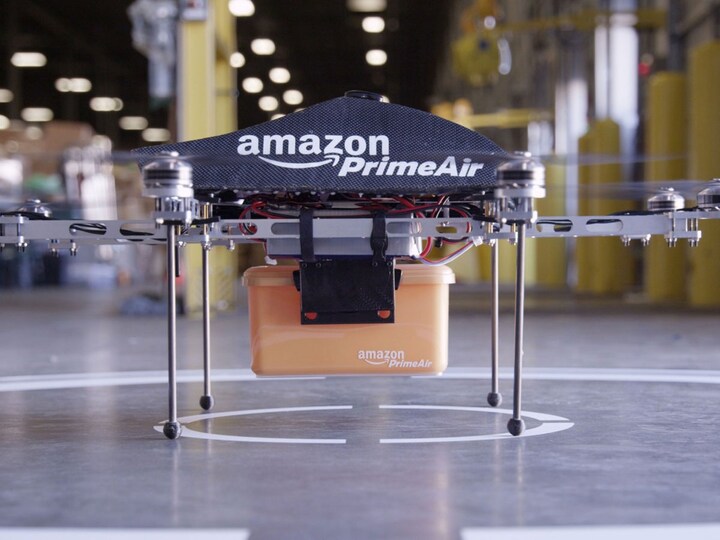
Using its hexagonal MK27-2 delivery drone with six propellers, Amazon stated on its website that the new service aimed to deliver products to customers’ homes within an hour.

Amazon Air spokesperson Natalie Banke noted, “Our aim is to safely introduce our drones to the skies. We are starting in these communities and will gradually expand deliveries to more customers over time.”

In addition to filing Final Environmental Assessment and Finding of No Significant Impact/Record of Decision filings for Lockeford on November 14 and College Station on December 12, the Federal Aviation Administration (FAA) granted Amazon Part 135 authority to send items by drone in 2020.

In contrast to College Station, Texas, which is a medium-sized city 100 miles northwest of Houston and is home to Texas A&M, Lockeford, California, a rural community 50 miles southeast of Sacramento, has just around 3,500 residents. Residents of each town may register and place orders, and Amazon will let consumers in other areas know when delivery drones are accessible where they are when it is.

According to the most current filings, Amazon’s deliveries will be possible 3.73 miles from its delivery center.

The company claimed that their drones would arrive at the chosen delivery site, hover at a “safe height,” and then “safely” deliver the package before ascending to the air.

Amazon had stated in a previous statement this year, “Lockeford residents will play an important role in defining the future. Their feedback about Prime Air, with drones delivering packages in their backyards, will help us create a service that will safely scale to meet the needs of customers everywhere.”

Customers will receive tracking details and an approximate delivery time after placing their order, at which point the drone will deliver the package to their backyard. According to Amazon, the drones’ six propellers and purposeful hexagonal design are intended to increase stability and reduce high-frequency sound waves.

Despite the fact that the MK27-2 delivery drones are programmed to avoid obstacles like chimneys and fly autonomously, Amazon claims it still uses people to oversee deliveries at the moment.

Safety will remain a priority, especially in light of certain difficulties Amazon encountered when building its drone delivery program, such as crashes. According to Insider and Bloomberg, one mishap at its test facility in Pendleton, Oregon involved a drone that plummeted 160 feet and started a brush fire that covered 25 acres.

Currently, Amazon is developing a new, allegedly safer MK30 drone, which should be usable in 2024. It should be more capable of withstanding high temperatures and mild rain, be smaller and lighter than MK27-2 delivery drones, and travel farther.

There are numerous companies developing their own drone delivery systems, including Amazon. Walmart and Alphabet debuted their own versions in specific regions last year for a limited audience.

Kraken

Crypto exchange Kraken to stop operations in Japan

Kraken, a US-based cryptocurrency exchange, announced on Wednesday, December 28 that it would shut down operations in Japan in the upcoming month, citing the country’s current market conditions as well as a flawed crypto market around the globe.

Kraken
Image Source: reuters.com

Kraken will deregister itself from JFSA (the Financial Services Agency) on January 31, at which point clients will be required to retract their fiat and cryptocurrency holdings, in accordance with a statement.

Kraken stated that it is funded entirely to make sure that almost all influenced clients can withdraw their investments as soon as possible.

Kraken announced last month that it is planning to decrease its workforce by 30 percent, or approximately 1,100 employees, due to weak market dynamics.

Bitcoin, the world’s most valuable cryptocurrency, has lost 60 percent of its value this year, while the overall crypto market has shrunk by US$1.4 trillion, crushed by the demise of Sam Bankman-FTX Fried’s aristocracy, Celsius, and alleged “stablecoins” terraUSD and Luna.

Kraken said customers should withdraw their fiat and crypto holdings before that date, with the exchange “fully funded to ensure all affected clients can withdraw their assets in a timely manner”.

Current market conditions in Japan in combination with a weak crypto market globally mean the resources needed to further grow our business in Japan aren’t justified at this time. As a result, Kraken will no longer service clients in Japan through Payward Asia,” Kraken said.

We value the trust our clients put in us and we will do what we can to minimize the impact of our decision on you. That’s why we are committed to ensuring a seamless transition and we hope the information in this email will help you decide what is the best option for you.”

Source: aljazeera.com

In 2022, cryptocurrency prices have dropped sharply, with the flagship resource Bitcoin having lost approximately two-thirds of its worth ever since the beginning of the year.

Kraken, itself through the branch Payward Asia, heretofore went out of business in Japan in the year 2018, citing rising business costs, before actually relaunching with a Tokyo workplace after two years.

suicide prevention

Twitter restores the suicide-prevention feature

Following pressure from certain users and consumer safety organizations over its removal, Twitter Inc. has reinstated a feature that provides suicide prevention helplines and other safety options to users seeking specific material.

suicide prevention
Image Source: reuters.com

According to Reuters’ report on Friday, Elon Musk had instructed the company to remove the safety measure earlier in the week. Ella Irwin, Twitter’s head of trust and safety, acknowledged the removal after the publication of the piece but stated that it was only temporary.

She noted, “We have been fixing and revamping our prompts. They were just temporarily removed while we do that. We expect to have them back up next week.” 

Musk refuted claims that Twitter had ever deleted the suicide prevention feature on Saturday morning. He tweeted, “The message is actually still up. This is fake news. Twitter doesn’t prevent suicide.” 

Irwin told Reuters that going ahead, Twitter intends to follow Google’s lead. She claimed that Google “does really well with these in their search results and [we] are actually mirroring some of their approach with the changes we are making. Google provides highly relevant message prompts based on search terms, they are always current and are optimized appropriately for both mobile and web.”

The feature, known as #ThereIsHelp, places a banner at the top of search results for certain topics. It has listed contacts for support organizations in many countries related to mental health, HIV, vaccines, child sexual exploitation, COVID-19, gender-based violence, natural disasters, and freedom of expression.

By Saturday, the banner returned to searches about suicide and domestic violence in multiple countries under terms like “shtwt,” shorthand for “self-harm Twitter.” It was unclear if the feature had been reinstated for other categories.

Some search terms that Twitter had previously claimed to have activated the features as “#HIV”—were not working. Although consumer safety organizations have criticized the company for permitting tweets that they claim violate the guidelines, Twitter prohibits users from promoting self-harm. 

Even though it was only temporary, the #ThereIsHelp banner’s absence prompted some proponents of consumer protection to criticize Twitter. Some consumer safety organizations and Twitter users expressed concern for the safety of the network’s most vulnerable users after #ThereIsHelp vanished from the platform.

Internet firms like Twitter, Alphabet’s Google, and Meta’s Facebook have sought for years to point users to reputable resource providers for safety issues, in part as a result of pressure from these organizations. Former Trust and Safety council member Eirliani Abdul Rahman told Reuters that she found the incident very uncomfortable and terribly disturbing. Rahman added that businesses often develop safety features “in parallel,” keeping the ones that are currently in use before replacing them. 

Despite the fact that researchers and civil rights organizations have observed an increase in tweets containing racist remarks and other hateful content, Musk has previously claimed that appearances, or views, of harmful content, have decreased since he took control of the firm in October and has tweeted charts demonstrating a downward trend.

Additionally, the entrepreneur has stated he wants to fight child abuse pictures on Twitter and has condemned how the former owner handled the situation. However, he has significantly reduced the staff responsible for handling potentially offensive material.