Your Tech Story

News

Qualcomm

Qualcomm to Bring Satellite Connectivity to Android Smartphones

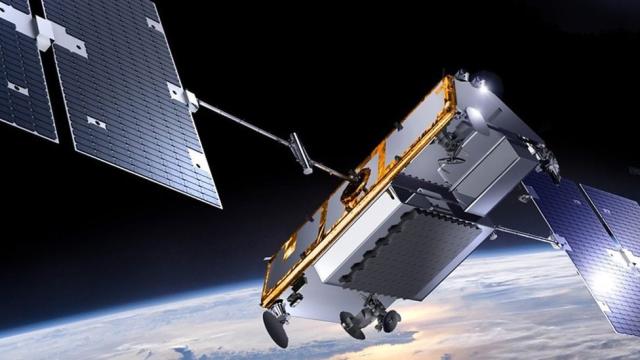
Qualcomm recently announced plans to provide satellite-based connectivity to next-generation Android smartphones.  Cellular-to-satellite communication for Android handsets will be made possible thanks to a partnership between Qualcomm and Iridium.

The service, known as Snapdragon Satellite, will first be accessible on mobile platforms supported by the Snapdragon 5G modem, such as Qualcomm’s Snapdragon 8 Gen 2 platform.

Qualcomm
Image Source: finance.yahoo.com

Iridium’s L-band spectrum will be used for the service’s uplink and downlink to enable two-way messaging. In the second half of the year, the first Snapdragon Satellite-equipped Android handsets are anticipated to go on sale. 

Although Qualcomm claims Snapdragon Satellite will first be used in smartphones, it may also be used in laptops, tablets, cars, and Internet of Things (IoT) devices. OEMs and app developers will be able to distinguish and offer distinctive branded services that employ satellite connectivity.

The L-band spectrum used by the Iridium satellite constellation, which Snapdragon Satellite will use, is “more resilient to weather” than frequencies utilized by other networks, according to Iridium. Snapdragon Satellite-enabled Android handsets still require a clear sky to function, but with a strong connection, messages can be transferred in as low as 10 seconds. 

Similar to Apple’s Emergency SOS via Satellite capability, which is made possible through cooperation with Globalstar, Qualcomm claims that the Snapdragon Satellite technology will initially be utilized for emergency communications.

Qualcomm also lists SMS texting and connectivity in isolated, rural, and offshore areas as potential uses for Snapdragon Satellite, indicating that it might have more applications in the future than just responding to emergencies. 

The news from Qualcomm and Iridium comes just after Apple unveiled the iPhone 14, which has an emergency SOS satellite message service that uses the Globalstar satellite network.

Users of Apple iPhones can get this service, named Emergency SOS through Satellite, for free for two years. Apple spent $450 million to make this service available. It’s not a great surprise that Iridium and Qualcomm announced their partnership because there was much anticipation that Iridium would compete in the smartphone-to-satellite market.

Earlier this week, Space News reported that Iridium and Samsung had a cellular-to-satellite agreement after Samsung disclosed in a regulatory filing that it is entitled to royalties, development fees, and network usage fees from an unnamed new technology. 

According to Qualcomm, the manufacturer of GPS-based devices Garmin Ltd will organize emergency response services for users. 

Qualcomm was able to update the Snapdragon platform to connect to the Iridium network without needing to make any hardware upgrades to the baseband or the transceiver, according to Francesco Grilli, VP of product management at Qualcomm.

Grilli claimed that a number of Android smartphone devices are already under development that would support Snapdragon He said that Western Europe and North America would be the first regions to sell smartphones with this feature.

Ring

Amazon’s Ring finally debuts its in-car security camera

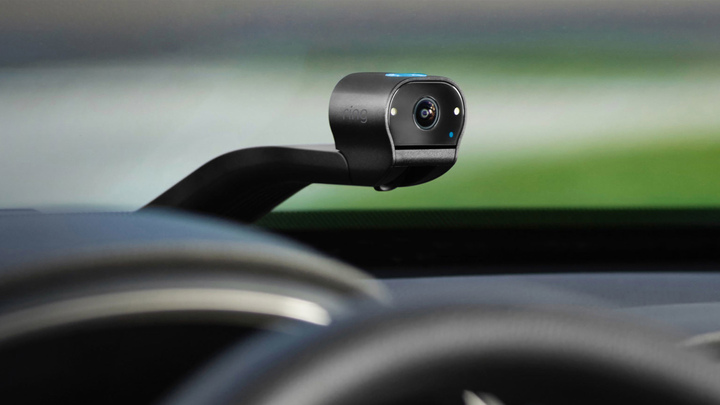
Amazon owns the home security and smart home business Ring LLC. The Ring Car Cam is now accessible for preorder, more than two years after it was first announced. The company’s first dashboard security camera is now available for purchase at Amazon.com or Ring.com for $199.99, a $50 discount off the list price. It will start shipping to US customers on February 15.

Ring
Image Source: geekwire.com

The new Ring Car Cam, which will be available later this year, adopts a novel strategy for the company by taking its security features to the road. A set of HD cameras are housed inside the modern design that sits on the dashboard and faces both into and out of the vehicle.

The night vision-enhanced wide-angle lenses encompass the road and the interior of the vehicle to guard against both accidents and break-ins. Ring adds its customary software to the hardware to enhance the Car Cam interaction.

Real-time notifications are powered by motion alerts, and a live view function that works well with two-way chat is also included.

Not to mention that the entire setup is Alexa-compatible, so one can ask the voice assistant to automatically record film to capture anything—including anything one has just passed on the road.

While driving, video can be automatically or manually recorded. If users purchase a Ring Protect Go plan, which includes LTE connectivity and costs $6 per month or $60 per year, they can access a live feed from the camera while they’re not in the car.

Additionally, the subscription includes 180 days of cloud storage for videos as well as real-time incident alerts in the Ring app. When the camera is linked to Wi-Fi, such as when parked in the driveway or via the hotspot on the phone, it can access local storage. While driving, video can be automatically or manually recorded.

If users purchase a Ring Protect Go plan, which includes LTE connectivity and costs $6 per month or $60 per year, they can access a live feed from the camera while they’re not in the car. Additionally, the subscription includes 180 days of cloud storage for videos as well as real-time incident alerts in the Ring app.

When the camera is linked to Wi-Fi, such as when parked in the driveway or via the hotspot on your phone, it can access local storage. When using the Traffic Stop feature of the Ring Car Cam, users can instantly begin recording during a stop or after an accident, for example, by saying “Alexa, record.”

The OBD-II port on the vehicle serves as the device’s power source. The cable is neatly secured between the windscreen and the dashboard with the aid of a tool that attaches to the windscreen.

For watching both recorded and live video from its two cameras, the camera integrates with the Ring app. For two-way communication from the automobile or to get in touch with others who are in the car, one may also utilize the built-in microphone and speaker.

Amazon

Amazon plans to cut more than 18,000 jobs

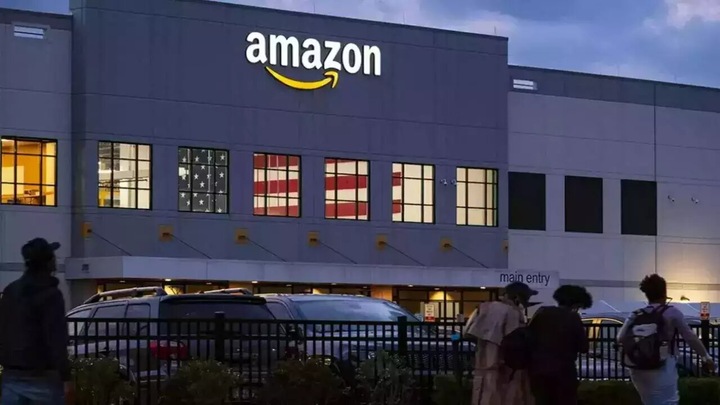
Amazon announced on Wednesday that it will eliminate more than 18,000 employees which is a larger number than the e-commerce giant initially stated last year.

Amazon
Image Source: timesnownews.com

The Wall Street Journal had previously reported on the cuts, which Amazon claimed pre-empted its scheduled announcement.

We typically wait to communicate about these outcomes until we can speak with the people who are directly impacted,” CEO Andy Jassy wrote in a memo to employees that the company published on its blog. “However, because one of our teammates leaked this information externally, we decided it was better to share this news earlier so you can hear the details directly from me.”

Source: cnbc.com

Tech firms are picking up from where they left off a year ago in 2023, getting ready for a prolonged economic recession. Salesforce announced on Wednesday that it would decrease its headcount by 10 percent, affecting over 7,000 employees. During the Covid global epidemic, both Amazon as well as Salesforce conceded to hiring too quickly.

Amazon particularly accepted that it had placed too many warehouse staff too quickly since customers shifted to online shopping. At the finish of the third quarter, the firm employed about 1.54 million individuals.

In November, Jassy announced that Amazon would remove positions, such as those in its physical stores, devices, and books divisions. CNBC revealed at the time that tech giant Amazon was planning to lay off approximately 10,000 employees. The figure has risen.

Amazon has weathered uncertain and difficult economies in the past, and we will continue to do so,” Jassy wrote. “These changes will help us pursue our long-term opportunities with a stronger cost structure; however, I’m also optimistic that we’ll be inventive, resourceful, and scrappy in this time when we’re not hiring expansively and eliminating some roles.”

Source: cnbc.com

The company intends to notify staff members who will be laid off beginning January 18, Jassy stated, mentioning that the majority of layoffs will occur in the Experience, stores, and People, and Technology (PXT) groups.

Other major tech companies, including Meta, which possesses Facebook, Instagram, as well as WhatsApp, and other businesses based on the cloud such as software firm Salesforce, have recently revealed significant layoffs.

Amazon has so far declared that it will start reducing projects such as the Echo which is better known as Alexa as well as delivery robots, that were wonderful but did not generate revenue.

Ant Group

Jack Ma’s Ant Group Wins Approval for $1.5 Billion Capital Raise

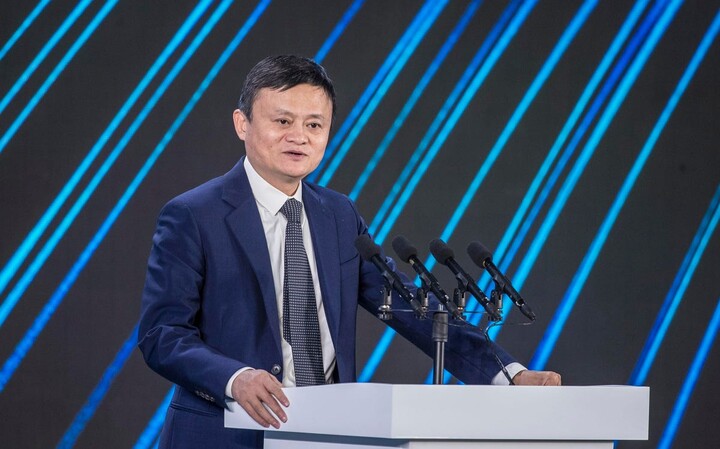
The government-ordered makeover of the financial technology company is progressing after Chinese regulators accepted a plan by billionaire Jack Ma’s Ant Group Co. to fund 10.5 billion yuan ($1.5 billion) for its consumer unit.

Ant Group
Image Source: forbes.com

A bid by billionaire Jack Ma‘s Ant Group to raise 10.5 billion yuan for its consumer division was authorized by Chinese regulators, signifying headway in the government-ordered reorganization of the financial tech firm.

According to a notice published on December 30, the Chongqing branch of the China Banking and Insurance Regulatory Commission approved the company’s intention to increase its capital to 18.5 billion yuan.

An entity held by the city of Hangzhou would hold 10% of the company’s shares after the deal, making it the second-largest shareholder behind Ant, which committed 5.25 billion yuan as part of the plan.

The deal removes a significant barrier for Ant as it works to satisfy regulatory requirements in the wake of a crackdown on its operations following the failure of its big initial public offering in 2020. Ant is still trying to receive a financial holding license that will oversee it more like a bank. Chinese officials have curbed shadow banking over the past few years to lower economic risk.

The approval is another indication that Beijing is easing its position on its enormous internet sector, which has historically been a major driver of growth as the second-largest economy in the world struggles.

Authorities granted approval for the largest group of brand-new major game releases in months last week, enabling Tencent Holdings to restock a pipeline that had been depleted by the crackdown.

After the Ant news broke and the Hang Seng Tech Index continued its uptrend to gain 3.3%, shares of Ma’s Alibaba increased by as high as 7.7%. While Baidu Inc. rose by 6%, Tencent increased by over 4%. According to Leon Qi of Daiwa Capital Markets Hong Kong Ltd., “we view it as a signal on Ant’s regulatory rectification wrap-up.”

Once the funding is finished, he predicted that the consumer division will be able to manage 1.1 trillion yuan in loans. Jiangsu Yuyue Medical Equipment & Supply Co. and Sunny Optical Technology Group Co. are two additional recent investors.

The consumer finance division combines Huabei and Jiebei, Ant’s two most successful online lending businesses. A previous attempt to increase capital to 30 billion yuan has been toned back and is now included in the present plan.

One of China’s bad-debt managers, Cinda Asset Management, canceled a deal to invest 6 billion yuan for a 20% interest in the market leader in consumer financing last year without providing a rationale.

Jack Ma has kept a quiet profile since Ant’s IPO was put on hold. Alibaba reaffirmed that Ma “intends to reduce and thereafter limit his direct and indirect economic interest in Ant Group over time” to a level that does not exceed 8.8%” in a filing in July.

Afeela

CES 2023: Sony and Honda reveal Afeela, their joint EV brand

According to Sony Honda Mobility Inc., its electric vehicle will debut under the brand Afeela. This marks the newest entry in a market already packed with established players like Tesla Inc.

Afeela
Image Source: techcrunch.com

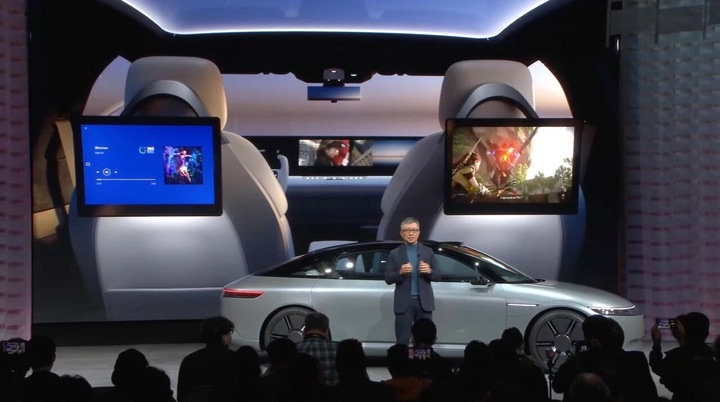
Yasuhide Mizuno, chief executive officer of Sony Honda Mobility, revealed the first prototype of the project during Sony’s CES press conference in Las Vegas on Wednesday. The Afeela prototype was unveiled by Sony and Honda over a year after the two companies announced their intentions to jointly produce and market electric automobiles.

The four-door sedan was demonstrated on stage as Sony CEO Kenichiro Yoshida discussed the company’s mobility strategy, which places an emphasis on creating automobiles with autonomous features and the ability to turn into “moving entertainment spaces.”

According to the CEO of Sony, the Afeelas’ first preorders will take place during the initial half of 2025, and sales will start the following year. Buyers in North America will receive the first shipments in the spring of 2026.

The new EV will initially be produced at Honda’s North American factory and will have Level 3 automated driving features under certain restrictions, according to prior statements from Sony and Honda. In a vehicle with level 3 autonomy, the driver can still operate the vehicle in congested areas, but only when the system explicitly requests it.

The incorporation of external media on the front of the car, which enables it to communicate with other drivers and transmit critical information, was one of the new design aspects that Sony presented at the event.

The prototype is also outfitted with 45 cameras and sensors both inside and outside the car to assure security. To avoid accidents, the in-cabin sensors will keep track of the driver’s condition.

As per Yoshida, CEO of Sony, Afeela will also offer top-notch entertainment to its patrons. The Sony-Honda JV will use the 3D computer graphics game engine Unreal Engine from Epic Games in its automobiles to help envision not only entertainment in cars but also connectivity and safety.

CEO Yoshida noted, “In addition to movies, games, and music, we envision a new in-cabin experience using our expertise in UX and UI technologies.”

The Snapdragon digital chassis from Qualcomm, along with its system-on-a-chip technology, will be the foundation for Afeela cars. Through the continual inclusion of games and other improvements over the period of owning one of its vehicles, Tesla Inc. has established the benchmark for connected vehicle experiences.

Together with electronics companies’ expertise in entertainment, networking, and sensors, Sony, Honda, and numerous European manufacturers, including Volkswagen AG, are now striving to accelerate the development of intelligent electric vehicles.

According to Epic Games Chief Technology Officer Kim Libreri, the company would collaborate with Sony Honda to “deliver connected automotive experiences that lead the way not only in visual communication and safety but also entertainment.”

Google

Google to pay $9.5 million to resolve DC location tracking lawsuit

Google has agreed to compensate 9.5 million USD as a settlement of a lawsuit filed previously this year by Washington DC Attorney General Karl Racine who alleged Google of misleading users and violating their privacy. Google has also consented to modify some of its methods, majorly how well it notifies users about the collection, storage, and use of their location data.

Google
Image Source: wtop.com

Google leads consumers to believe that consumers are in control of whether Google collects and retains information about their location and how that information is used,” the complaint, which Racine filed in January, read. “In reality, consumers who use Google products cannot prevent Google from collecting, storing and profiting from their location.”

Source: engadget.com

Racine’s office also alleged Google of using “dark patterns,” which seem to be design choices that aim to deceive users into performing actions that do not benefit them. The AG’s office stated that the company repetitively prompted users to enable location tracking options in some specific apps and notified people that such features would not operate normally unless location tracking was enabled.

Racine and his team discovered that location information was not even required for the app in discussion. They claimed that Google made it unlikely for customers to opt out of getting their location tracked.

Google received a pittance of 9.5 million USD. Last quarter, it ended up taking the firm Alphabet less than 20 minutes to generate that much earnings. Modifications to the firm’s practices as a result of the agreement may have a greater impact.

Individuals who have specific location settings enabled will receive messages explaining how to disable each setting, remove the associated data, and restrict the time Google could indeed keep that details. Users who create a new Google account will be informed as to which location-related account options are enabled by default and given the option to disable them.

It will have to keep a webpage up to date with information about its location data practices and policies. This will include methods for users to see their location settings as well as information on how each setting affects Google’s collection, preservation, or use of location information.

Furthermore, without the user’s full permission, Google will be prohibited from spreading a user’s exact location details with a third-party marketer. Within 30 days of receiving the information, the company must remove location information “which came from a device or from an IP address in both web and app activity.”

“Given the vast level of tracking and surveillance that technology companies can embed into their widely used products, it is only fair that consumers be informed of how important user data, including information about their every move, is gathered, tracked, and utilized by these companies,” Racine said in a statement. “Significantly, this resolution also provides users with the ability and choice to opt of being tracked, as well as restrict the manner in which user information may be shared with third parties.”

Source: engadget.com