Your Tech Story

Founder

Robert Pera : The Wireless Wonder of Silicon Valley

The CEO of Ubiquiti Networks, Robert Pera, is one of the youngest entrepreneurs and a self-made billionaire of the Silicon Valley. With the passion for designing products, he left a lavish job at Apple and started a company in an economical $650-per-month apartment/office, reminding himself that he must not fail. A media-shy entrepreneur who is living a lean life has the ambition to create internet connectivity that is available everywhere.

Early Life

Robert Pera was born on 10 March 1978 in San Carlos. His father worked as a business consultant, and his mother was a public relation officer. He was always interested in technology and computers. He started his first business when he was still in high school. He used to set up computers, networks, and some databases that ran the software. He was also a member of his school’s basketball team. The same time he was diagnosed by a heart-valve infection and had to leave the school for a year. After completing his school, he joined the University of California in San Diego, where he pursued a B.A. degree in Japanese Language and a B.S. in Electrical Engineering. He also obtained the M.S. degree in Electrical Engineering from the same university.

Robert Pera
Image Source : networthstat.com

Career

Pera was a Steve Jobs admirer, and after completing his education, he got the opportunity to work at Apple Inc., as a hardware engineer. His work was related to testing the company’s Wi-Fi devices. After working there for some time, he discovered that the signal emitted by the power sources used by the Apple’s WiFi devices were below FCC limits, and the transmission range could be enhanced by boosting their power so that to make internet accessible at the places where the telephone and cable companies did not reach. He consulted his superiors regarding the same matter, but nobody took him seriously.

Founding Ubiquiti Networks

Pera had an idea, and he himself started working on his own low-cost, high-performance WiFi module, at his apartment for a long period of one year, and in early 2005, he quit Apple Inc. to form his own company, i.e., Ubiquiti Networks.

With the savings and credit card cash debt, he managed to raise $30,000 to invest in his company, and started Ubiquiti Networks, in March 2005. The main goal, to start this company was to wirelessly deliver the Internet to the underserved areas, using the existing wifi technologies. The first product series launched by the company included the Super Range mini-PCI radio cards SR2 and SR5.

The Super Range module used the Atheros chipset, operating at 2.4 and 5.8 GHz bands. The card received a successful welcome and was used by many small and medium scale Wireless Internet service providers, all over the world. Currently, the company deals in the four major products: airMAX, airFiber, airVision, UniFi and has spread its branches to other fields including wireless access points, security cameras and traditional networking equipment, etc., as well. Currently, more than 180 countries are using the equipment from Ubiquiti Networks, around the world.

Personal Life

The American entrepreneur secured a place in the Forbes’ list of 10 youngest billionaires in the world, at the age of 36. He is the 229th richest man in the United States, and the 642nd richest person, in the World Billionaire list. Pera took the company public in 2011 and raised US$ 33.5 million in the IPO. He owns the 64 per cent shares in the company.

In October 2012, he purchased the National Basketball Association franchise Memphis Grizzlies from Michael Heisley paying $350 million. Pera also supports the sports charity named Grizzlies Foundation operating in Memphis.

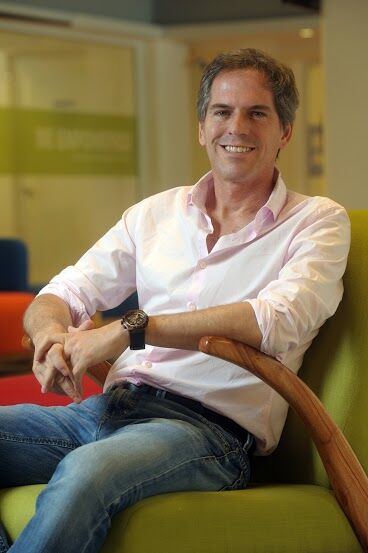
Alec Oxenford : Co-founder & Former CEO of OLX

Alec Oxenford, born and brought up in Argentina, is an entrepreneur and a technology enthusiast, who has the credits for the establishing the foundation of some multi-billion projects. The native of Argentina, Oxenford completed his graduation in Business Administration from the Pontifical Catholic University of Argentina, and later, joined Harvard University to pursue a master’s degree in the same stream.

Career

As soon as Oxenford completed his education, he started working at Boston Consulting Group. After working for six long years with the same company, Oxenford gained more skills and experience and founded DeRemate, an online consumer-to-consumer trading platform in Latin America, that was later acquired by eBay in 2005.

The time he was successfully running DeRemate, he also co-founded DineroMail.com, a popular payment platform in Latin America, in March 2003 and was associated with the same till December 2010.

Founding OLX

In 2006, Oxenford joined his hands with a French native and angel investor, Fabrice Grinda, to co-found another internet-based platform, as a Craigslist alternative for the world outside of the United States, OLX, a free classified for advertisements. Both were assigned the position of the CEO of the company. The idea was new, and there were not many supporters for the same. But, Oxenford and his partner were quite confident about it. The two came to the conclusion that first, they must test their portal in a native place or a developing country, to properly endorse its services. Hence, they first launched OLX for the people of Argentina, and then in a country overseas, i.e., India.

alec oxenford
Image Source : fortune.com

With good marketing techniques, it became popular in India in no time as a platform to online sell the second-hand items, and the goods that were no more required. Currently, OLX operates in 45 countries, with 330 million users and 60 million listings a month, becoming the largest online classified ads company.

In 2006, OLX acquired Mundoanuncio.com, another classified site to target the Hispanic market, and also invested in a Chinese classifieds site Edeng.cn, in 2007. It also started a partnership with Friendster, in 2008, and social network Hi5, in 2009. The website was modified with the social network widgets, improved search, Ajax-based editors, interactive maps, and mobile versions, with the addition of Web 2.0″ features to it, in 2008.

In 2010, the South African group Naspers acquired OLX, Oxenford remaining CEO through 2014, and Grinda remaining CEO until 2013.

In 2014, Oxenford left OLX and started working on his next project. In 2015, he co-founded another online buying and selling platform, this time especially for the mobile marketplace, named letgo. In the year 2017, the annual revenue of letgo was $375 million and confirmed for the first time that the company had a $1 billion valuation.

Personal Life

Oxenford has been an art lover and has collected various art pieces from around the world. He is also in writing and has spoken at Jóvenes Líderes in 2010, the Web 2.0 Conference in 2015, Red Innova in the years 2014, 2015, and 2016, Art Basel in 2016, and ArteBa in 2017. He was elected as the Young Global Leader by the World Economic Forum (2006-2011) and also received the CNN Internet Leader Award in 2001 and the Entrepreneur Award in 2003.

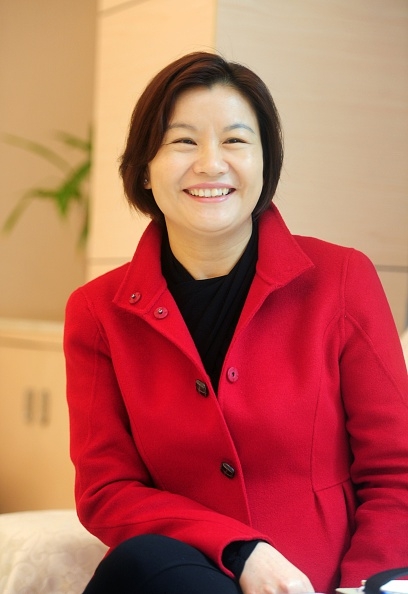
Zhou Qunfei : The Self-made Billionaire & the Founder of Lens Technology

Zhou Qunfei, the founder of Lens Technology, is the world’s richest self-made billionaire, and one of the richest women in the tech sector. She despite facing a lot of difficulties and struggle, managed to accomplish what seemed impossible at a time. She, even, achieving so much in life, is still a grounded person and is not hesitant to sit down and work as a worker in her company. Travelling back and forth between China, Korea and the Silicon Valley, Apple and Samsung are one of the biggest clients of her organisation. Her rags-to-rich story is an inspiration to millions of women in a man dominating society.

Early Life

Zhou Qunfei was born in 1970, in Xiangxiang, Hunan province, in a family with bad financial conditions. Her father had retired from the army. He had become partially blind and lost a finger in an industrial accident before Zhou was born. Zhou lost her mother when she was five. Her father made his living by making bamboo baskets, chairs and repairing bicycles. As a child, Zhou started raising animals to earn a small profit to help her family financially.

zhou-qunfei
Image Source : vivify

Zhou completed her secondary education from a local school and moved to the Guangdong province, to live with her uncle’s family, at the age of sixteen, to become a migrant worker in Shenzhen. She aspired to join a government job, but due to lack of a diploma, she had to drop the idea. But, being a bright student, she took jobs nearby the Shenzhen University so that she could easily complete her studies along with work. With her dedication, she was able to pursue various courses and received multiple certifications in the subjects including accounting, computer operations, customs processing.

Founding Lens Technology

Although Zhou had started earning with her part-time jobs when she was a little kid, her first full-time job was with the small family-run firm making watch parts, where she was paid 180 yuan a month. In just three months, she wrote a humble resignation letter to her boss, as she was unable to co-op with the working conditions of the company. Her resignation moved her boss, who instead of accepting the resignation, promoted Zhou to a higher rank.

After working for a few years in the same company, in 1993, Zhou founded her own company that sold high-quality watch lenses, at the mere age of 22. The company’s first employees included her brother, sister, their spouses, and their cousins, who started their work in a three bedroom apartment. Zhou used her savings of HK$20,000 (~USD$3,000), to start the company. She got involved in every operation of the company and became proficient in each of it, including the repairs and creating improved designs of factory machinery. Her big break came when the Chinese electronics giant TCL Corporation approached her with a contract to make mobile phone screens, in 2001. In 2003, she again received an order from Motorola, to develop glass screens for their Razr V3. By the time, mobile companies had started using glass screens replacing the plastic screens for the mobiles.

Earning major profits in mobile phone screen manufacturing, in 2003, Zhou founded Lens Technology and started producing touch screen for smartphones. The company received its name, in order to be more visible for its potential customers, in the online searches. The company soon received orders from HTC, Nokia, Samsung Electronics and also from Apple, in 2007, the biggest breakthrough for Lens Technology, and became the topmost touchscreen supplier. The company also supplies the watch glass for the apple watches. By the year 2017, the company had established 32 factories at different locations and had hired 90,000 employees. In 2015, Zhou made the company IPO public on the ChiNext A-share market of the Shenzhen Stock Exchange, and Lens Technology became China’s largest technology IPO, in the first quarter of 2015 and raised Zhou’s net worth by 452%.

Personal Life

Zou is married twice, and her first marriage was with her former factory boss. She has a daughter with him. In 2008, she married Zheng Junlong, an old colleague from Lens Technology, and the two have a son together. Along with working as her hobby, she also enjoys mountain climbing and playing ping-pong.

Zhou is China’s richest woman and is listed at number 61, in the Forbes list of 2016 Power Women. She was also named the number 18 on the Fortune 2016 Most Powerful Women of Asia-Pacific list.

Alan Trefler : World Open Chess Champion & the Founder-CEO of Pegasystems

Alan Trefler is a chess master and successful entrepreneur, who keeps a low profile for its multi-billion company. Having a bright future in Chess and winning against multiple grandmasters, Trefler decided to stick to software development, that too proved to be the best of his decisions. Although he has not entirely left the game, he still plays the exhibition matches with former grandmasters of the game.

Early Life

Alan Trefler was born on 15 March 1956, in Boston, Massachusetts. His father Eric Trefler was the owner of an art and furniture restorer, named Trefler’s, and his mother, Dorothy Trefler, was a schoolteacher. He spent his childhood in Brookline, Massachusetts, living with his parents and brother Leon.

Alan Trefler
Image Source: Forbes

Trefler attended the Brookline High School and became a chess champion there, winning numerous school level chess competitions. As a teenager, he started his first part-time job at his father’s shop. In 1973, he joined Dartmouth College, where he studied economics and computer science. In 1975, he participated in the World Open Chess Championship and won the championship against the grandmaster Pal Benko.

Career

After completing his B.S., Trefler joined his first job at Casher Associates Inc., in Chestnut Hill, Massachusetts, as the project manager. He got the job even he was underqualified for it, as the company needed an employee on an urgent basis. Although Trefler could easily pursue his Chess career, he chose to work in a software company.

After leaving the job as the project manager, Trefler joined a software engineering firm. Later, in 1980, he successfully built a computer system that could play chess. In the same year, he started working at TMI Systems, as the team leader.

Founding Pegasystems

In April 1983, Trefler left TMI Systems, to found his own software company, named Pegasystems. He was 27, when he started the company, with an aim to enable business people to more directly instruct the machine and get the computer to really understand how business people wanted things to work. He became the CEO and the chairman of the company, and in 1996, the company went public on NASDAQ. The United States govt conferred a patent to Trefler, for Pegasystems’ distinctive rules-based architecture, which provides the framework for Pegasystems’ business process management (BPM) solutions.

The American Business Awards presented Trefler with the Stevie Award for Computer Software CEO of the Year, in 2009. He was also named the Public Company CEO of the Year, in 2011, by the Massachusetts Technology Leadership Council. Pegasystems entered into the field of telecommunications and healthcare when it acquired Chordiant for around $161.5 million. By the beginning of the year 2015, the company had 3,000 employees and 30 offices.

Personal Life

In 1992, Trefler married an investment banker, Pamela. The couple resides in Brookline, Massachusetts. Both of them are active philanthropists and in 1995, donated $1 million to Dorchester High School in Dorchester, Boston. In 1997, they founded The Trefler Foundation that aims to improve the urban education system. Trefler also competed in a charity chess tournament alongside grandmasters such as Garry Kasparov and Boaz Weinstein, in 2010. In March 2017, he appeared on the Forbes Billionaire’s List for the first time. He also published a book named Build for Change in 2014.

Don Valentine : The Legendary Venture Capitalist of the Silicon Valley

A start-up always is an unpredictable and a doubtful move for any of the founders as well as its investors. But taking risks is the key to innovations. To attract the investors the founders must have a convincing idea and a self-belief so that the investors can also trust them. Donald T. Valentine is one of the biggest venture capitalists in Silicon Valley, and the founder of Sequoia Capital, who has been the investor for various new ideas, resulting in the foundation of many famous multi-billion companies. According to Don, the start-ups are compelling, as the survival is the prime motivation for the people who are behind it.

Early Life

Donald T. Valentine spent his childhood in the suburbs of New York. He was born on 26 June 1932, in Yonkers, New York. His father was a minor official in labour unions in the Teamsters and worked all his life to earn his living. Donald joined a nearby Catholic school at the Fordham University, and himself is a Catholic. After completing the school, he entered the same university to pursue an undergraduate degree in Arts.

Founding Sequoia

In the early 50’s, Don got a chance to work for the military and was moved to California for some time. There he came to know the very first time that there are also some places in the world, where it did not snow. He liked the fact so much that he decided to move to such a place. After he was back in New York, he joined the Sylvania Electric, where he worked at various different projects. The company was the manufacturer of the cathode-ray tubes, semiconductor, and the vacuum tubes. Just after some time of working in the company, he was promoted to the sales engineering department and was transferred to California, the place, where he always intended to be.

Don Valentine
Image Source: alchetron.com

In California, Valentine was introduced to a bigger industry and was convinced that there is much more than vacuum tubes, and the future is all about the semiconductor. In 1959, he joined the start-up company, Fairchild Semiconductor, in Los Angeles, as one of the first West Coast salesmen of the company. After working in Fairchild for seven years, he left the company and subsequently, switched between almost ten other companies, before joining the National Semiconductor, as the senior sales and marketing executive, in 1967.

Valentine founded a venture capital firm Sequoia Capital, in 1972. The company was focussed on the investments to small, risky tech companies. The firm’s first investment was to the startup company Atari (1975). Sequoia has financed probably six hundred different companies, including LSI Logic, Oracle Corporation, Cisco, Electronic Arts, Google, YouTube, etc.

Don has served as a member of the boards of dozens of those companies, for a long time. Also, Sequoia was one of the original investors of Apple Computer. Valentine met Steve Jobs when he was a line engineer at Atari and financed Apple Inc., with $150,000 as its capital investment, in 1978. He is the former Chairman of NetApp and Traiana. He was featured in the 2011’s documentary film Something Ventured. He has also been called the “grandfather of Silicon Valley venture capital”.

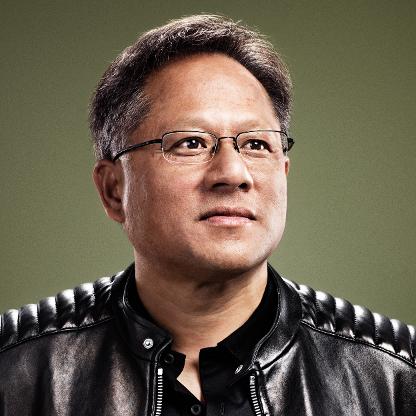
Jensen Huang : The CEO & Co-founder of Nvidia

An American entrepreneur and a businessman, Jensen Huang is the CEO and co-founder of the graphics-processor company Nvidia. Huang is an all-rounder, who as a child was placed third in junior doubles at the U.S Open and at the same time, was deeply in love with his books. He is a fan of tattoos and his love for cars as well as speed, encouraged him to buy a Ferrari 430, a Ferrari 599 and a Swedish Koenigsegg CCX. Huang is never afraid of failures and believes that it is ‘Okay to Fail’, to achieve your goals.

Early Life

Jensen Huang was born on 17 February 1963, in Tainan City, Taiwan. After some time, his family moved to Oneida, Kentucky, and then to Oregon. His family, along with his elder brother, sent him to live with their relatives, in the United States, when he was just 10 years old. There, the two joined the Baptist School, a school for troubled students. After a few years, both of them were back in Oregon, to reunite with their parents. Huang completed his high school education from the Aloha High School, outside Portland.

In 1984, Huang entered the Oregon State University, where he received a bachelor’s degree in electrical engineering. He further joined Stanford University, to complete a master’s degree in the same, in 1992.

Founding Nvidia

After completing his education, Huang started working at LSI Logic as the Director of the company. He then, joined Advanced Micro Devices, Inc., as the microprocessor designer.

jen-hsun-huang
Image Source: idolnetworth.com

Huang knew that graphics is the future of computers and gaming will be the most revenue generating field in the future. In April 1993, along with his partners, Curtis Priem and Chris Malachowsky, Huang co-founded Nvidia, a software and semiconductor maker company, with a capital of $40,000.

Huang was appointed as the CEO of the company, Curtis Priem as the Chief Technical Officer and Chris as the Senior Vice President for Engineering and Operations. Chris worked at the same position for ten long years, and in 2003, he took retirement from his post.

Nvidia deals mainly in four markets including gaming, professional visualization, data centres and auto. The company has also started working in the field of artificial intelligence.

The company received $20 million of venture capital funding from Sequoia Capital and others. In 2018, the company recorded a 40.6% increase in the revenue of the company, with the earnings of US$3.047 billion.

Personal Life

Huang is married to Lori Huang, who was once his Lab partner in College. The couple has two children with their marriage.

Huang is also into Philanthropy and donated US$30 million to build the Jen-Hsun Huang School of Engineering Center to his alma mater Stanford University.

Ernst & Young named him the Entrepreneur of the Year in High Technology, in 1999. In 2003, he was presented with the Dr Morris Chang Exemplary Leadership Award. In 2009, he received an honorary doctorate from Oregon State University. Huang was named among the world’s top 50 influencers, in the in the inaugural EDGE 50, in 2018.