Your Tech Story

Founder

Tony Xu : The Co-founder of the Dashing Food Delivery Service ‘DoorDash’

The food industry is blooming with every second that passes. Now that the food industry has got technology-induced in it, one can order any kind of food, anytime, anywhere. It requires nothing but a simple three taps on your tech-savvy devices. In this growing food industry, DoorDash emerges as a key company leading the change. Tony Xu, the founding CEO of the company shares a success story which speaks that a simple problem can turn on the light in our minds to figure out something innovative.

DoorDash Inc. is an on-demand food delivery service which was founded in 2013 by Andy Fang, Stanley Tang, Tony Xu and Evan Moore. The founding story of DoorDash, as described by Tony, is an ‘unlikely one’.

It was 2012, and all four of the founders were working on an app which focused on building the technology for small businesses. They used to go and talk to the owners of coffee shops and restaurants. It all started when they were in a small macaroon store, in Palo Alto. The manager of the store, Chloe, expressed all the problems in her day to day business. However, as they were about to leave, Chloe showed them a thick booklet, which contained pages of delivery orders, and said, “This drives me crazy. I have no drivers to fulfil them, and I’m the one doing all of it.”

Tony Xu
Image Source: Bloomberg

All four of them had their lightbulb moment. They spent the next few weeks interviewing and questioning other small businesses (nearly 200) and heard the same thing over and over again: ‘Deliveries are painful’. They started coding keeping in mind that they can improve this backlog and were ready with their first prototype within a few hours.

On January 12th, 2013, Palo Alto Delivery was born. The service spread so quickly that all the four members were delivering all over the Stanford campus. In the day, they were students and, in the night, they were delivery drivers. The name ‘Palo Alto Delivery’ was changed to DoorDash, in June 2013, and the delivery drivers were called the ‘Dashers’. “We learnt so much from driving in the streets. Now, anyone who joins the company, has to be a Dasher for at least 1 week,” said Xu.

“When we first started, we were trying to solve our own problems of getting food delivered. But soon, it grew quickly within the Stanford community and beyond. We found out that many families and office workers in the area have the same problem. When we deliver food, it’s as much about delivering happiness as it is about bringing convenience,” DoorDash posted on Medium.

Tony Xu, is a first-generation American. His first job was at his mom’s restaurant. His education includes B.S. (High Honours) in Industrial Engineering and Operations Research from UC Berkeley, M.B.A. from Stanford Graduate School of Business. He was an Arjay Miller Scholar at Stanford. He started his professional career at McKinsey and Company. After that, he worked in Product at Square and led special projects for CEO and CFO at eBay.

When he started DoorDash, his simple mission was to enable every merchant to deliver easily, and that mission has come a long way. DoorDash has drawn investments worth $700 million with key investors being: Khosla Ventures, SoftBank, Sequoia Capital, GIC, Kleiner Perkins Caufield, and Byers. During 2018, the company was valued at $1.4 billion in a round of funding.

In April 2018, DoorDash stepped into the grocery deliveries with a partnership with Walmart. Further, in the year, DoorDash surpassed Uber Eats to become the second largest company in US food delivery sales behind only GrubHub.

The company took everyone by surprise when its valuation took place in February 2019. The company’s value increased 5 times and valued $7 billion when the rounding was done by SoftBank, Vision Fund, DST Global and Y Combinator.

Tony Xu, has also kept the focus of the company on an issue very important to him personally. Project DASH was launched and has since focused on the efforts to save food from wastage.

“Today, more than four and a half years after we first launched the company, we’re still passionate about transforming local businesses helping them thrive in this digital and convenient economy.” Tony Xu, the founding CEO is leading his company with its dashing food delivery services to new heights and is setting an example in front of the world that if innovation stays, then progress to success will always be on the tracks.

Kanika Tekriwal – The CEO & Founder of High Flying JetSetGo

When it comes to ultimate comfort in travel, airlines are at the top. But the airlines have their path and destinations set, and at the time of emergency, the only thing you can do is, co-operate with them and wait. But then, there come the affordable private flights that JetSetGo provides even on urgent basis. JetSetGo is a multi-faceted organization dealing with low-cost private services. It focuses on delivering innovating and transforming ideas into the general aviation industry. The co-founding CEO of JetSetGo, Kanika Tekriwal is someone who shares a story which is a set example for everyone and speaks that sometimes discomfort can lead to great ideas. All one needs is a spirit and a willingness to fight back their own backlogs.

Kanika hails from a business family but had to face a non-supportive journey. Aviation was looked up as an industry with male dominance, and her parents were against it from the very beginning, but her passion towards her goal changed their thinking and made them support their daughter. “Doing a job in aviation, and being a women entrepreneur are two different things. Though you find women in plenty in the industry, and the majority of them are employees and not the employers. Being a woman employer in aviation is indeed a tough task. When I told my parents about my dream, they were drop-dead against it. But I was adamant, and when they saw a little success and passion of their daughter, they supported me,” said Kanika in an exclusive interview.

Kanika Tekriwal
Image Source: beboldpeople.com

She always aspired to be in the aviation industry, to do something for the betterment of the services. Kanika pursued B.A. in Economics from the University of Mumbai, and later, moved to the United Kingdom for her M.B.A.

It was after her coming back from the UK, in 2011, when she started to think about turning her dream into reality. That’s when a major setback hit her hard. She was diagnosed with cancer. But that did not stop her from achieving her goals. During the nine months of rigorous treatment, she conceptualized the whole idea of JetSetGo. She sensed the need for an aggregator in the private jet space. “I would meet a number of people using private jets who complained that booking one in India was a very shoddy experience, and they felt cheated that the entire private jet experience is a far cry over travelling business or first. At the same time, private jet owners were selling planes due to the escalating costs, regular maintenance, and other hindrances as well as not getting the real pleasure of actually owning an aircraft.”

She started the company ‘JetSetGo’ in 2014 and aimed to cater to a wide clientele. JetSetGo offers exclusive ground services, unparalleled personalized inflight services, the highest aircraft dispatch rate, state-of-the-art technology, and ensures 100% safety. The company is referred to as the ‘Uber of the Skies’ delivering the ultimate pleasure of private aviation. JetSetGo has been showing a massive 7X growth ever since with investments coming in from large personalities, Yuvraj Singh and Puneet Dalmia.

“The very thought of having a chartered plane gives one a feeling, which is beyond imagination. Affording a chartered plane is indeed a matter of luxury today. But, probably after a century, when we all would have gone to dust and bones. People will own their own jets. And I am talking about people with decent earning and not the high and mighty. I believe time will come that in India, too.” said Kanika when asked about the company and indicated that private flying will get cheaper in India. She expects India to become one of the largest private aviation markets in the world, in the next 10 years. She makes sure that in her company, gender equality remains intact as she is a huge supporter of women empowerment.

“JetSetGo, today, has 162 visitors monthly out of which 64.5 are first-time visitors. JetSetGo is looking at capturing a minimum of 20 per cent market share by the end of the year, and we will raise the bar without compromise to indulge and cater to each customer’s need,” mentions Tekriwal. JetSetGo is growing at a rate of 70% per year. Its customer range starts with a net worth of $10 million. In 2016, the company did 4,691 hours of flying with a dispatch rate of 99.2% as compared to 74% of the global average.

JetSetGo acquired Indo Pacific Aviation Limited with an undisclosed amount. “This acquisition now gives a significant boost to our ability to grow our fleet and offer unique services and next-generation aircraft for personalized on-demand mobility”

Kanika Tekriwal, the founding CEO of JetSetGo expresses cancer as her the best experience so far because it gave her a new life to experience. She clearly is an inspiration to everyone and shows that nothing can stop you from achieving non-turbulent flights to success.

7 Most Influential Women Making Their Own Space in the Tech World

8th March, the International Women’s Day, a day to observe the contribution of women to the world, that many women rejoice with lots of excitement and as a proud woman, and some clearly say that every day is a women’s day. Even we think the same, but what is bad in celebrating it together on the day, which internationally has been reserved for every woman.

Women's day

Today, as a recognition to the contribution of women to the world, as a daughter, mother, wife, sister, a homemaker, an entrepreneur and what not, we are writing down a list of few of the most influential women in the tech world:

1. Lynda Weinman, Founder Lynda.com: Online learning and training have become quite popular these days, but over twenty years ago, it was not that of a common thing. It was Lynda Weiman, who founded one of the first online training websites Lynda.com, in 1995. The website offers a variety of courses for online software training as well as for learning creative, and business skills. Lynda has won the San Francisco Women on the WebTop 25 Women award in 1999.

2. Melanie Perkins, Founder Canva: Melanie Perkins is the Co-Founder & Chief Executive Officer at Canva, which was founded in 2012, as an online tool to build beautiful graphic designs. The platform facilitates million of photographs, graphics and fonts, that people use to create awesome designs.

Perkins founded Canva in 2015, and in just four years, the company has raised to over 200 employees. According to 2018 reports, the company is valued at $1 billion. Melanie Perkins is one of the youngest female CEOs in the tech industry.

3. Lara Setrakian, Founder News Deeply: From a journalist to an entrepreneur, Lara Setrakian is the founding CEO and Executive Editor of News Deeply. It is journalism and technology-based digital platform that hosts world news, discussions and knowledge exchange. She was among the top 9 most influential Young Professionals in Foreign Policy under 33 list by The Diplomatic Courier.

4. Limor Fried, Founder Adafruit: Being the only female entrepreneur among 15 finalists for the “Entrepreneur of the Year” list might be a great feeling. Limor Fried is that ‘only female’ who gave competition to the other 14 male entrepreneurs for the title in 2012.

Fried was studying electrical engineering at MIT when she founded Adafruit, the company which sells electronic kits, components, and tools, mainly for the hobbyist market. Her leadership skills can be estimated with the fact that Adafruit sold more than $3 million worth of product while having a team of only eight employees in 2010.

5. Rashmi Sinha, Founder Slideshare: An Indian-American businesswoman, who is the CEO and founder of SlideShare, the biggest presentation sharing platform, was named the No. 8 on its Most Powerful Women Entrepreneurs list by Fortune in 2008. Rashmi Sinha was also among the World’s Top 10 Women Influencers in Web 2.0 by Fast Company.

6. Meredith Perry, Founder uBeam: Perry is a Paleobiology graduate from the University of Pennsylvania. She founded uBeam as a project for an invention competition. uBeam is a device that solves the problem of wired chargers, emitting power through which people can roam in a room with their laptops without connecting it with a charger.

Perry also performed zero gravity experiments at NASA Ames Research Center as a student ambassador.

7. Tracy Young, Founder Plangrid: A civil engineering pass out who opted to go to the site build buildings, instead of sitting in an office and make plans and designs. After gaining some experience, Young came to the conclusion that technology must get into construction, too, and built Plangrid. The app enables contractors and architects to collaborate on plans via their iPads.

Although this is a small list of women and only in the field of technology, there are millions of women having their influential part to every field, whether it is sports, education, journalism, architecture, entertainment, or any other field that exists.

On this special day, we wish all the Women out there a Happy Women’s Day.

The Success Story of Hewlett-Packard (HP)

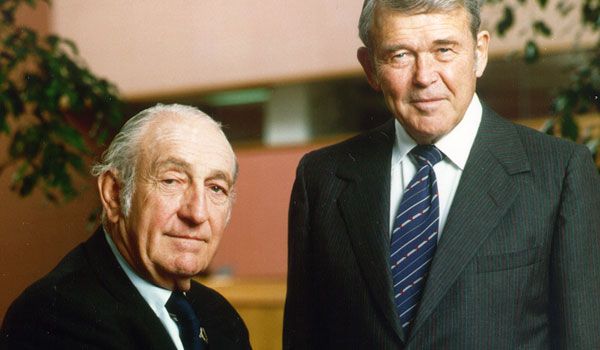
HP is not a new name in the IT industry, and the narrative of the company is over 80 years old. The company was founded by two Stanford graduates Bill Hewlett and David Packard, in January 1939.

The two co-founders met each other in a social outing during the time they were studying at Stanford. Both were pursuing a degree in electrical engineering and shared a common interest in starting a business after completing their education. They discussed their idea with their fellowship professor Frederick Terman at Stanford and with his supervision started working on the same.

The two started their company from Packard’s garage in Palo Alto, in 1938, with an initial capital investment of US$538, even without deciding a proper name for it. In 1939, they tossed a coin to decide the name for the company adopting the surname of their names. The toss was among Hewlett-Packard and Packard-Hewlett, in which Hewlett-Packard won.

hewlett-packerd
Image Source: Pinterest

The first product from the company was a precision audio oscillator, the Model HP200A. It was cheap and efficient, and became one of the most successful product, commercially. The same product was also used by Walt Disney Productions, for the movie Fantasia, in certifying the Fantasound surround sound systems installed in theatres.

In 1957, the company went public in its initial public offering.

In the 1960s, Hewlett-Packard started producing the semiconductor devices for the instruments and calculators. In 1966, the company entered into a new business of computer manufacturing and rolled out the accumulator-based design HP 2100 / HP 1000 series of minicomputers, followed by the HP 9800 and HP 250 series of desktop and business computers.

In the 70s the company started producing the advanced business computers, i.e. stack-based HP 3000 computers. During the same time, the HP 2640 series smart computers were also introduced that included one of the first bit mapped graphics displays. The same computer was used to develop the first commercial WYSIWYG Presentation Program, BRUNO, by coupling the HP 2100 21MX F-Series micro-coded Scientific Instruction Set.

In the same decade, the company produced the world’s first handheld scientific calculator HP-35, world’s first handheld programmable HP-65, first alphanumeric, programmable, expandable HP-41C and first symbolic, and the graphing calculator HP-28C.

In the 80s, Hewlett-Packard expanded its business to build printers and scanners for desktop computers. With the rise of the internet, the company registered its website domain as HP.com, on 3 March 1986, becoming the ninth Internet .com domain ever. In 1989, HP acquired the Apollo Computer, and in 1995 it acquired the Convex Computers.

By 1998, the company had become one of the leaders in the desktops, laptops, and servers for many different markets. Later, it also started its online service hpshopping.com, to sell its products online, which was rebranded to “HP Home & Home Office Store” in 2005.

In 2005, due to the merger with Compaq, Hewlett-Packard was facing heavy losses in the business. In 2006, the company offered a new range of products in both hardware and software, reducing the costs. In 2007, the company’s revenues skyrocketed, and HP hit the $100 Billion mark for the first time.

In 2011, Hewlett-Packard launched its first tablet named HP TouchPad, followed by the industries’ first wireless mouse. But by the end of the same year, it announced that it won’t be operating in the tablet and smartphone business anymore, and will focus more on the Cloud, solutions and software business.

In the years 2012-13, the Hewlett-Packard faced a great decline in its profits, cutting down 34000 jobs in the same years.

In October 2014, the news of splitting up of Hewlett Packard into two separate companies came into knowledge. The two wings would do their separate business of personal computers and printer manufacturing. Finally, in November 2015, the company separated into HP Inc. and Hewlett Packard Enterprise, HP Inc. retaining the Hewlett-Packard’s stock price history.

Although the company has seen many ups and downs during its long journey, the vast history of HP has introduced the world with many great inventions. The company also gets credits for many patents and will be known for its contribution to the IT industry.

Richard Liu – CEO and Founder of ‘Jingdong’; Journey of a Man from Nowhere to Billions

Every big journey has a small start. Every success story has n number of hardships and failures and so does the success story of Richard Liu have. The man who rose from multiple failing businesses and everlasting debts to fame and a business worth billions of dollars. His story speaks up that sometimes taking the wrong roads might benefit as they teach important lessons for future life.

Richard Liu (also known as Liu Qiangdong) was born on March 10, 1973, in a family having a business of coal shipping. He had a vast interest in politics, so he got enrolled in the department of sociology, in the People’s University of China. During the same time, he also studied computer programming as he realized that a degree in sociology, won’t ensure him a job.

richard liu
Image Source: Forbes

While in college, he invested his money in a restaurant venture which failed deliberately and left him in debt. He passed his degree in 1996, and after that went on to pursue a degree of Executive M.B.A. from the China Europe International Business School.

After completing his studies, Liu was first employed by a Japanese health product company and served as the Director of computers and business, alongside the logistics supervisor. In early 1988, he realized that it was the right time to step into the business world and in June, he opened a business with the name Jingdong in Zhongguancun High-tech Industrial Park in Beijing. The company focused on selling authorized magneto-optical products. By 2003, his business was blooming and he managed to open 12 stores.

In mid-2003, the Severe Acute Respiratory Syndrome (SARS) forced Jingdong employees to stay back at home, and this hit the company hard. Liu’s business fell into a great loss (losing more than 8 million Yuan) and forcing Liu to think out of the box. That’s when he met with an idea to take his business online idea took him from nowhere to the entrepreneur he is now.

In 2005, Liu founded JD.com which eventually grew his business. He closed all of the offline stores and built it a full-time e-commerce company. Richard changed the company’s focus from magneto-optical products to a whole variety of products which can be seen on the site itself.

‘JD.com sets the standard for online shopping through its commitment to quality, authenticity, and its vast product offering covering everything from fresh food and apparel to electronics and cosmetics. Its unrivalled nationwide fulfilment network provides standard same- and next-day delivery covering a population of more than 1 billion – a level of service and speed that is unmatched globally,’ the site itself says.

Richard has been involved in some conflicts too, in his personal life. He was arrested in Minnesota for sexual assault but was released a day after as the company stated the acquisitions were false.

JD currently has 15,000 plus employees and is having a net worth of a massive $57.6 billion. Liu himself has a net worth of $6.1 billion (Forbes) with all-time worth being nearly $2.1 billion. In 2017, he was #25 in Richest in Tech and in 2018, was at #30 on China Rich List 2018.

Richard Liu, the CEO and founder of Jingdong, shows us that no matter how many failures you face, it is all about getting back up, learning and fighting again. Real success comes from not giving up. Richard is an inspiration to all.

Henry Ford : The Founder of Ford Motor Company

“Follow your passion. Following your passion will lead you to the road of success.” the most common saying that we hear today. But how many of us have the courage to do that? Only a few are there who recognise their passion and pursue it to find self-satisfaction. One such prominent personality was Henry Ford, the founder and the first chief engineer of Ford Motor Company. Henry’s passion was his love for the machines, and his passion gave inspiration to many, as his only interest led him to build an empire which is one of the biggest automobile manufacturers, today.

Early Life

Henry Ford was born on 30 July 1863, in Greenfield Township, Michigan, in a farmer’s family. His fathers family belonged to England, and his mother’s parents had moved from Belgian to Michigan. In his early childhood, he was introduced to many types of machinery used in farming, and the time he became a teenager, he became more interested in the machinery repair work than farming. He used to dismantle and repair the timepieces and became a pro at it.

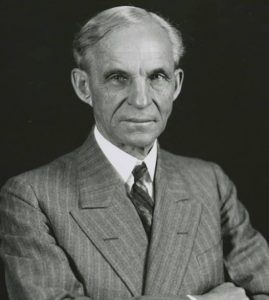
henry ford
Image Source: thehenryford.org

His love for machines led him to move to Detroit and join the James F. Flower & Bros. as an apprentice machinist. Later, he joined the Detroit Dry Dock Co. at the same position.

Though he was never interested in farming, he had to move back to his hometown to work on his family farms. Here too, except the farming work, he was more involved in the other machinery work. In the same time, he learned to operate the Westinghouse portable steam engine and was appointed by Westinghouse to service their steam engine.

Career

As Henry was always interested in working with the machines, with his interest he had developed great skills, too. In 1982, to pursue his dream career he started working with the Edison Illuminating Company of Detroit as an engineer. Within two years, he was promoted as the Chief Engineer in the company. He had gained enough experience and was earning good money too, so he started experimenting with his own projects and was able to build a self-propelled vehicle naming it the Ford Quadricycle.

On 5 August 1899, Henry founded Detroit Automobile Company and launched another vehicle financed by Detroit-based businessperson William H. Murphy. Since the company could not provide the best quality of vehicles, the company was shut within two years of its inception, in January 1901.

In the month of October the same year, Henry built another 26-horsepower automobile. The vehicle was of high quality and encouraged the shareholders of the Detroit Automobile Company to invest in another newly built company named Henry Ford Company, established on 30 November 1901, where Ford became the chief engineer. But in the very next year, due to some dispute, Henry left the company.

Leaving the company did not stop Henry from manufacturing vehicles, and in 1902, he, with the help of former racing cyclist Tom Cooper, manufactured the 80+ horsepower racer “999” that participated and won a race, in the same year.

Founding Ford Motor Company

The success of “999” was enough to attract more investors, and that is what happened next. Alexander Y. Malcomson partnered with Henry to form Ford & Malcomson, Ltd. to manufacture an inexpensive automobile. Soon, other investors including Dodge Brothers also partnered with Henry and Malcomson, and they incorporated the company as Ford Motor Company, on 16 June 1903, with a capital of $28,000. The next model from the company set a new land speed record at 91.3 miles per hour that drove on the ice of Lake St. Clair.

It was the race driver Barney Oldfield who became the most important person in terms of marketing of the cars produced by the company, as he drove the “999” around the country.

The next popular model that the company produced was the T model, having a cost of around $825 (1908). It was the first car model that had steering on the left, and the engine and other machine parts were enclosed under the metal covers. The design was impressive, and various other companies copied the design.

In 1914, the recorded sales passed 250,000 units, and in 1916, sales reached 472,000. In 1927, the final total production of the T model was 15,007,034, which set a record that stayed for the next 45 years.

By the year 1918, Henry acquired the sole ownership of the company. The next hit model that the company produced was the model A, introduced in December 1927.

Henry was not only a visionary inventor but was also an excellent entrepreneur. He tried to get everything under one-roof and tried to avoid any kind of dependence on any other company. He had established an empire where he could manufacture the products from scratch. He always supported the economic independence of the United States.

In 1911, he established the first two international Ford plants in Britain and Canada, followed by the establishment of the other plants in Germany, Australia, India, and France, by the year 1920.

During the first World War Henry also invested in the aviation industry and built the most successful aircraft, the Ford 4AT Trimotor. The company also acquired the Stout Metal Airplane Company. In 1927. The Smithsonian Institution has honoured Ford for changing the aviation industry. In 1933, the aviation wing of the Ford Company was shut down due to the sales issues.

During the war, Henry was one of the 170 peace leaders who were against the war and was making efforts to stop it. In the second World War, too, he opposed America’s participation in the war.

After the death of his son Edsel Ford, in May 1943, who was also serving as the President of the company, the company started facing a kind of decline. Henry had left the Presidency over twenty years ago, and due to his son’s death, he reconsidered to regain the post. Although due to his health issues, there were only a handful of people who wanted him to take the position, he was chosen with majority votes as the President of the company. But due to bad health, he appointed his grandson Henry Ford II, as president and the company was back on the track.

Personal Life & Death

Henry had married Clara Jane Bryant on April 11, 1888, and had a son Edsel Ford, who later became the President of the Ford Motor Company.

Henry ran as a Democrat for the United States Senate from Michigan in 1918 but lost to the Republican candidate, Truman Newberry with a small margin.

He also took immense interest in the car racing and manufactured cars, especially, to compete in various races. He himself, too, participated in a few car races.

On 7 April 1947, he died of cerebral haemorrhage at Fair Lane at the age of 83.

Ford Henry will always be remembered for his contribution to the automobile industry and the leadership qualities that he possessed. He was a great inventor, and his story is a motivation for many.