Your Tech Story

Founder

local motors

Jay Rogers : The Founder of Local Motors and Inventor of First 3D Printed Electric Car

There have been startups based on daily needs and also on the pain points people go through every day. But sometimes, it is the question of life and death, and the safety of people. There are many such examples of startups that are inspired by the people’s safety, and one such startup is Local Motors, that have a great story behind it.

Local Motors was founded by Jay Rogers in 2007 and have its headquarters situated at Phoenix, Arizona. Local Motors is a car manufacturing company that builds its autonomous cars with the help crowdsourcing.

Before starting up Local Motors, Rogers was a Marine in the US navy. But even before that, he was a confused young lad, who did not have any idea what would be the best career choice for him. He graduated from Princeton University with a degree in banking and was about to opt for an MBA for his post-graduation when he met a fellow from the same MBA batch, who had also been a marine.
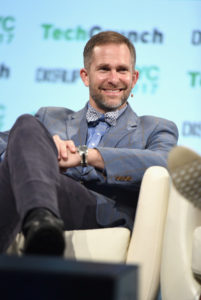
Jay Rogers Local Motors
Image Source: zimbio.com

Influenced by that person, Rogers, in 1999, joined the U.S. Marine Corps. He served as a marine for seven long years and went through random experiences. He was posted in locations, including Iraq. In 2004, when he was appointed in Iraq, he lost one of his fellow officer and friend, Brent Morel while riding a Humvee. Rogers found it stupid to deploy a Humvee in Iraq as the vehicle have a heavy engine. Again in next couple of years, he lost his another friend due to the failed landing of a Boeing Vertol CH-46 Sea Knight helicopter.

These incidents hit Rogers hard, as he found out that these two vehicles were the best vehicles built in America. Still, these were not smart enough to save human lives. After seven years of his service as a marine, Rogers returned to complete a degree in business from the Harvard University, to give a direction to his new startup that was inspired by the sad incidents happened in his life. He wanted to start a company that would create smart vehicles to help people with their needs.

Rogers studied the business models of various car manufacturing companies, and what they all were doing was not customer-focused. He had a different approach, through which he wanted to build customer-oriented vehicles. So he thought of building a unique open-source micro-factory for rapid manufacturing.

But without investments, it was not possible to build a company, and then the products. So he approached the investors from the silicon valley, but for his disappointment people were more interested in investing their money in the already famous companies like Tesla. But without losing hope, Rogers raised a $10 million with the help of his family, friends and a few investors.

But the amount was not sufficient for both designing and developing the product. But Rogers again came with a unique solution. He opted for crowdsourcing the design concept for the company’s first product, offering $20,000 for the winner. An art student won the competition, and in 2009, based on the same design, Rogers launched the Rally Fighter, the first Local Motors product and a souped-up, fibreglass-chassis dune buggy made to run in the desert. The car was a massive success. A total of 20 units of this desert crawler was sold in the same year.

Since the launch of Rally Fighter, the basic business model of the company includes designing, engineering and manufacturing of automobiles open source, such that the designers are welcomed to submit their designs, and the community votes and selects the winners. Even though a single winner is chosen for the design, the community members can suggest improvements for the same. For Rally Fighter only, 35000 designs had been submitted by designers.

Rally Fighter was a giant desert truck, so now Rogers wanted something that would be suitable for the general public. On the arrival of the 3D printers in 2014, he opened a challenge for the Local Motors’ employees as well as for the community members to make the world’s first drivable 3D-printed automobile. 200 designers participated in the challenge, and Strati became the world’s first 3D printed electric car. The car was manufactured in 44 hours and in front of a live audience at the International Manufacturing Technology Show in McCormick Place, Chicago.

Though the car was not powerful enough, it set new technology standards. It gave Rogers the confidence of building something new. A few months later, Local Motors was invited to Berlin’s Urban Mobility Challenge, to build an emission-free minibus. Again Rogers notified all its 200,000 in the community for the designs for a $20,000 top prize. The design of a 24-year-old Colombian industrial engineer, Edgar Sarmiento, was finalised for the challenge and Olli was manufactured. The 8 to 12 seater minibus, Olli, was manufactured in the partnership with IBM.

Olli was demonstrated on Facebook Live of Berlin’s Urban Mobility Challenge. People were quite impressed with the design and the capabilities of the vehicle. So the company received $1 billion in financing from Florida-based Elite Transportation Services (ETS) for Olli. The company also received funding of $20 million from Texas-based Xcelerate.

The company is looking forward to embedding the autonomous driving and artificial intelligence to the new models of Olli. For bringing the new technologies to Local Motors, the company has partnered with International Business Machines Corp.’s Watson program for artificial intelligence and also with Robotic Research LLC.

Currently, Jay Rogers is serving the company as the CEO.

Weebly

The Founding Story of Weebly : The Website Hosting and Building Interface

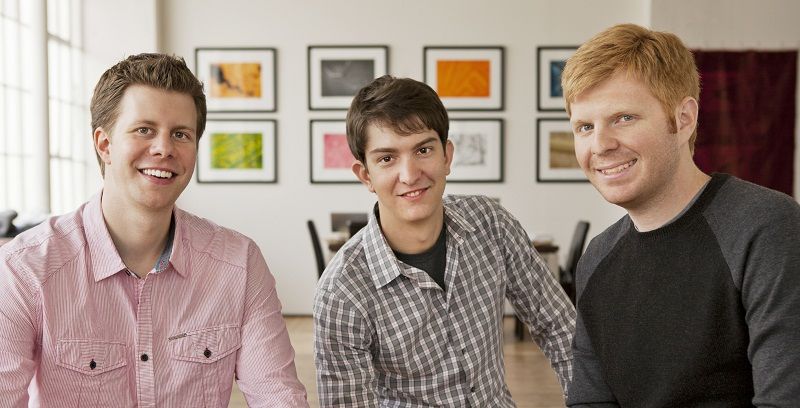
There have been many cases when people created wondrous things without knowing its worth. Though they want to accomplish a goal, they don’t have the idea that of the impact of their end product. They just keep working to get the product, and at the end, when the product is ready, it transforms their whole lives. One appropriate example of the same is none other than Weebly. Three college students, Dave Rusenko, Chris Fanini, and Dan Veltri, founded Weebly as a college project in 2006, and now, it is one of the most popular website building platforms.

Rusenko and Fanini were friends and met Veltri at the Pennsylvania State University. The university required every student to maintain an online profile. So one of Rusensko’s friend, who was a non-computer student, asked him to help her out with building her website for the astronomy class. While he was helping her, he figured out that many people need a website, but don’t have the skill to build one. This incident led him to think of developing a software that would help people, who did not know how to code, build a whole website.

Rusensko wrote the first line of code for the software, Weebly, as his college project, and Fanini and Veltri also joined in. In 2006, they completed a basic product and represented the same in a tech gathering of 1000 people. But for their disappointment, the CEO who was leading the gathering called the software “the worst idea” over the mic. This was heartbreaking for the three, but they kept the belief in their product, as it was a fact that not many people were into coding and ultimately, needed a website.

After the successful release of the invitational beta of the software in January 2006, in six months, they launched the official private-beta of the software. The next year in January, they took the software to Y Combinator’s winter startup program in Silicon Valley, California. Even though they were the last to apply, their idea had the potential that they got the entry. After getting selected in for the program, the three started working full-time on the software. The next year, they included a new editing interface named “what-you-see-is-what-you-get” to the software. They also raised a US$650,000 funding the same year.

Weebly now was a company, and they had to monetise the software. For that, they introduced the Pro accounts for the users, and also, included AdSense to the platform. In 2009, they also added support for editing the HTML and CSS to Weebly software. In 2013, the company hosted the C series funding, which helped them raise another $35 million. Companies, like Sequoia Capital and Tencent Holdings Ltd., also became the investment partner of Weebly. Till the time, the company had joined 80 employees to its work fleet.

In 2016, the company started working to add support for building an eCommerce website to the software, including the support for online payments through PayPal, Stripe or Authorize.net. It also included features to help people promote their brand, like Facebook Ad creator, integrated email marketing, and lead capture, etc. The platform offers support for 15 different languages, including English, Chinese, Japanese, Russian, Spanish, German, etc.

In 2018, Square acquired Weebly for a massive $365 million in cash and stock.

The website builder provides the users with multiple feature-rich options, such that they can create a multi-function website in minutes. Today, the very platform also provides hosting service where the users can get domain name including .weebly.com, .com, .net, .org, .co, .info, or .us. In the past 12 years, the company has earned over 45 million customers.

In 2007, Weebly was among the 50 Best Websites of 2007 by TIME Magazine. The CEO and co-founder of Weebly, David Rusenko, got a place in the Forbes’ list of “30 Under 30” in 2011.

Fleet Space

Flavia Tata Nardini : Fleet Space Founder and a Pioneer in the Emerging Australian Space Industry

Today, everything is about connections; not the human connection, but the connection of humans through the internet. The Internet has transformed the world in less than the world had in the past 20 centuries. People just need their smartphone, and they can accomplish most of their daily routine work in a few swipes. Despite such advancement in human life, an aerospace engineer from Australia, Flavia Tata Nardini, does not want to stop here. She wants to create a network in the space, such that there will be no earthly object without an internet connection. Whether it is the students in the classroom or the tree in the forest, everything connected. The founder of Fleet Space Technologies has been developing satellites since she was a teen, and now, she is entirely focussing on the space as well as connecting the IoT devices.

Early Life and Career

Nardini was born into an engineer’s family in Rome, Italy. With a dream of becoming an astronaut, she completed a bachelor degree in aerospace engineering from University La Sapienza, Rome. She then completed a master’s degree in space engineering from the same university. In her late teens, she bagged an internship job at European Space Agency in The Netherlands, where she worked on the rocket propulsion technology.

In July 2009, she joined another company named TNO in The Netherlands, where she worked in various roles for four years, including propulsion design and test engineer as well as a product manager. Later, she even moved to Qatar to work with another space agency, where she sent nanosatellites to space.

Flavia Nardini founder Fleet Space
Image Source: amazon.com

Later, she moved to Adelaide, South Australia, to live with her partner (now husband) in 2014. Qualified with a lot of experience in space activities, it became tough for Nardini to find a job, as there was only one space startup back then. And having kids, she could not work in the defence, either. So, along with one of her future Fleet Space partner, Matt Pearson, she founded an educational startup named Launchbox. Under this startup, the two of the co-founders started teaching little kids about space and nanosatellites. Under the program, they even built CubeSat satellite using 3D printed components and launched them to the stratosphere.

Founding Fleet Space

While working for Launchbox, the two of the co-founders realised that they could also build a new space startup for connecting the IoT devices. Since no space agencies were working in Australia, founding one seemed a good idea to them. Hence in 2015, they, along with another aerospace engineer, Dr Matthew Tetlow, co-founded Fleet Space.

Fleet Space aims to create a network of nanosatellites around the earth, such that it can provide internet access to every person on earth for cheaper prices. The increase in the interconnection through the internet will make every single task accessible through a smartphone. For now, the company target is to connect 7.5 billion IoT devices on earth with the help of nanosatellites by 2020.

Partnerships and Fundings

Fleet Space has got the Australian as well the US government on board for the development process. Private companies like SpaceX has also partnered with the company to fulfil the goal. The French space agency CNES has also taken an initiative to help Fleet Space get the financial backing, and will be tracking and supporting the satellites built by Fleet Space. The company raised a $5m in Series A capital from Blackbird Ventures and Atlassian.

At the time Nardini founded the company, there was only one space startup in Australia. But with the success of Fleet Space, other budding entrepreneurs have also stepped into the same technology, and there are over 260 new startups that are working in the field of space research. In fact, the Australian government also announced in 2017 that it will be building the national space agency for Australia.

In September 2019, the company raised $7.35 million in the Series B funding led by Momenta Ventures and Horizons Ventures. Till now, Fleet has placed four CubeSat-class satellites in orbit and plans to send more satellites to the space to fulfil the demands.

Nardini’s love for space and satellites proves that the sky is the limit for her. She is an inspiring woman and a true example of women empowerment.

freelancer.com

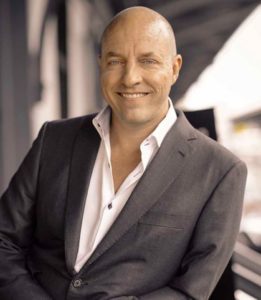
Matt Barrie : The Founder of Global Freelancer Marketplace, ‘Freelancer.com’

The growing online marketplace has got the scope for every profession to flourish, and it’s a golden era for the freelancers. How many of you know about Fiverr? Well, I can bet a lot of you guys must be using it already to earn some extra cash, isn’t it? Fiverr was launched in 2010 as a two-sided platform for both the freelancers and the clients, to do any kind of job that is required to set up a company. But, just a year before the launch of Fiverr, Matt Barrie founded freelancer.com, an online platform to upload your projects and hire suitable freelancers to do the job. And today, it is the largest marketplace in the world in terms of the projects uploaded, and the number of users.

Matt Barrie founded freelancer.com in 2009, which is headquartered in Sydney, Australia.

Early Life

Barrie was born on 16 August 1973, in Adelaide, Australia. For his undergraduate course, he went to the University of Sydney to pursue a BSc Hons, and later, received a post-graduate degree in electrical engineering from the Stanford University in 1998.

Early Career

His first step into the professional world was right after he graduated and was hired by Kroll O’Gara Information Security Group. During his time here, he acquired an information security website, Packetstorm from Ken Williams.

Barrie-Matt Freelancer.com
Image Source: icmi.com.au

In 2000, he joined Innovation Capital as an investment manager and left the company within a year. This was followed by joining Sensory Networks in 2001, where he became the chief executive officer. He left the company after five years, and in between, he attended the executive program for growing companies at Stanford.

In January 2008, Barrie joined as Non-Executive Director in Julius Finance followed by joining QuintessenceLabs as an Advisor in October 2008. Barrie also played a role as an Adjunct Associate Professor in the University of Sydney for 13 years, and finally, left the post in 2013.

Forming Freelancer.com

After joining and leaving many companies, since 1998, Barrie finally formed freelancer.com in 2009. But, the idea of forming an online platform, where freelancers and professionals could meet, wasn’t one of his perfectly planned start-up executed henceforth.

He saw the vast opportunity of this freelancing website when he needed a freelancer to get one of his data entry job done, but was unable to find anyone fit for the project. So, he searched for people online, especially, for college students and found GetAFreelancer where he could upload his project and find a suitable freelancer. After he registered, his job was done within a few days. This gave Barrie a very clear picture of what’s next in the online business trend, and what possibly can create an enormous potential market.

Success of Freelancer.com

Within six years of the company’s establishment, it has expanded the marketplace to over 247 countries, regions, and territories. The company now deals with more than 16million users with more than 8 million projects updated in various categories. Some of the categories of freelancer.com that lured most of the professionals to get their jobs done were software development, graphic designing, and digital marketing.

Freelancer.com became very popular quickly because the services were exchanged online, and the company was trusted enough. For many college students who belonged to remote areas, where finding jobs offline was very much difficult, got a fair opportunity to showcase their talent and earn money. Freelancer.com also created a global network and gave an ample of different options to choose from especially for the clients.

Once the company started expanding, it acquired many crowdsourcing marketplaces like GetAFreelancer.com, EUFreelance.com, LimeExchange, Freelancer.co.uk, etc. By 2016, Freelancer.com was operating in 34 different languages and 21 currencies. So far, some of the biggest clients of Freelancer.com are NASA, Airbus, and U.S Department of Energy.

What after Freelancer.com?

Barrie clearly didn’t hit a pause after the huge success of Freelancer.com. In November 2015, he joined Escrow.com as chief executive and president. Escrow.com is an online payment company, where he is still a position holder.

In November 2018, he joined Freightlancer as Executive Chairman. It’s a marketplace for shipping and transportation which also provides metro delivery through a network of freelancers from Freelancer.com.

Reach Robotics

Silas Adekunle : The Founder of AR Robot Maker ‘Reach Robotics’

It is quite obvious to think that the world’s first gaming robot has been developed by a teen from the U.S., maybe from Japan, or even China, but in our imagination, Africa, and then Nigeria is way behind in this contrast. But would you believe if we tell you that this very robot does exist, and the inventor of the same does not belong to any of the developed nations, but Nigeria? Yes, a young lad, Silas Adekunle, of Nigerian descent is the developer of the world’s first gaming robot.

Early Life

Silas Adekunle was born in Lagos, Nigeria where he spent initial ten years of his life. He was always curious about technology, but due to lack of resources, could not get access to it. But when he turned ten, his parents moved to the UK, and he got the chance to know more about it. He had the desire to learn but had to pace up his learning process due to cultural shock. But soon, he was able to get among one of the bright students in his school.

After completing his school education, he joined the University of the West of England, Bristol to complete a bachelor’s degree in robotics and opted for C++. But it was before joining the university, that he had already started learning to code and do experiments with robots through YouTube and other online tutorials. Because of his knowledge about robotics, he became the team leader of the Robotics in Schools programme of the university. This programme targetted the students with a promising performance in the field of science, technology, engineering and mathematics. This was the turning point of Adekunle’s life, as he got to learn more about the subject he loved.

Finding the Passion

Silas Adekunle
Image Source: owler.com

Besides going to college, he opted for a part-time teaching job, where eventually, he started teaching the kids about robotics using his robotic kits, he was using. But soon, he realised that the kids used to lose their interest in robots as soon as they know completely about it.

While teaching the kids, he conceived the idea of Reaching Robotics, a program to teach kids robotics, built in a more innovative way. The concept was to build robots with gamification. He pitched the idea in front of the university and Princes’ Trust. Adekunle always knew he wanted a career in robotics and had made some entrepreneurial plans as well. As he was always in love with motion, he decided to build a consumer product based on it.

Founding Reach Robotics

Inspired by the already existing pet robots, Adekunle started working on a robot that would also express emotions and be a character from a game. In 2013, he met Christopher Beck, who was studying for his PhD in computer science, and John Rees, a robotics expert and engineering consultant. Both joined Adekunle for the development of the robot. Next thing they did was founding Reach Robots.

It took the three of them to create their and the world’s first gaming robot named Mekamon total two years. Mekamon is a gaming robot using which a player can play the game through its Android or iOS phone. The robot has got sensors to sense the obstacles and can easily identify things around it. The robot is a combination of gaming mechanics and augmented reality.

Receiving the Funding and New Partnerships

Silas Adekunle pitched his idea of gamified robots in front of a few capitalists and was able to raise $10M in total, including pre-seed and seed funding. Later, he also launched an educational branch of the firm with the name Reach Edu. The company also launched an app that teaches the children robotics and coding. The Reach Robotics product Mekamon was influencing enough that it also got Apple onboard to sign an agreement with the company in 2017. According to the agreement, Apple is the official retailer of the robot and sells the product in both the US and the UK markets.

Today, Reach Robotics is one of the leading robot makers that make use of AI and AR for the development of their robots. For his development works, Adekunle has been awarded a few famous awards. He was named to the Financial Times’ list of the ‘Top 100 minority ethnic leaders in technology in November 2018. He was also in the list of Forbe’s 30 Under 30 list. UWE Bristol also awarded him an Honorary Degree of Doctor of Technology to recognise his contribution to the student entrepreneurship and technology development.

spicejet

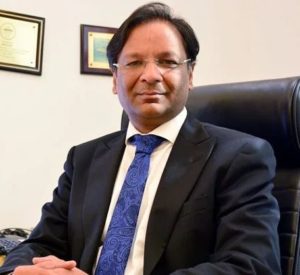
Ajay Singh : The Man Who Saved SpiceJet From Vanishing into Oblivion

What is good in doing business without risks? When one aims for something bigger and more profitable, it is reasonable to go against the odds and take the chances. But, what about the companies whose strategies are failing and going downwards in the spiral of destruction? Should it give up or just hope for a knight in shining armour to appear and be the lifesaver. Well, the story of SpiceJet clearly narrates a tale, where they well resurrected by none but Ajay Singh. After facing excessive loss through 4 consecutive financial years, Ajay Singh finally stepped in to take over the control once again and re-establish the reputation of the company.

SpiceJet is an Indian airline headquartered in Gurugram whose history dates back to 1984.

Early Life

Singh was born into an influential family from Delhi. His father was an established businessman, Vijinder Singh, and his mother was Kalpana. Singh’s family business was mainly about real estate and fashion accessories.

Ajay Singh SpiceJet
Image Source: indianexpress.com

Singh was kind of an all-rounder from a very young age. He went to St. Columba’s School and apart from excelling in his academics, he was very good at playing cricket, table tennis and football. He was also the caption of his school’s football team. After completing his school, he went to IIT Delhi and graduated from there in 1988 with a degree in textile engineering. And, like kids in the family of every other businessman, he went to pursue his MBA. He completed his MBA from Cornell University.

Early Career

At Cornell, he became the President of the Indian Association, and thus, showed a keen interest in the events of India related to government policies. He was also interested in political matters and thought that more educated people are needed in the Indian political system. So, he came back to India in 1992 and pursued law at Delhi University.

In 1996, Rajendra Gupta, a BJP leader who later became Delhi transport minister, hired Singh for Delhi’s transport corporation board. After joining his first responsibility was to stabilize an already bankrupted corporation, which had 40,000 employees. Singh implemented the global transportation strategies and expanded the corporation from 300 to 5000 buses within a span of two and a half years. This was his first achievement after returning to India and stepping into both the political and business world.

In 1998, Singh became an officer on special duty (OSD), where he played a major role in launching DD Sports and DD News. Singh had some plans and suggestions in his mind to reduce the cost of telephony, and thus, persuaded BSNL to drop the incoming charges on mobile. All these developments took place only up till 2004 when BJP lost the general election, and Singh found him unemployed.

Singh Acquired SpiceJet

After BJP lost the election, Singh decided to get back in the entrepreneurial world, and his first move was to acquire ModiLuft and carrying the business as SpiceJet.

Looking back to the history of ModiLuft, it was an airline company established in 1984 by S.K Modi. In 1993, it came into a partnership with Lufthansa, a German airline, but in 1996, it ceased the operations.

So, whatever was left of the company was acquired by Singh after eight years, and this time, he renamed it as SpiceJet and followed the low-cost model to provide a good experience and low fare to the public.

Initially, Singh’s stake was 20% in SpiceJet, but it came to 6% when media tycoon Kalinathi Maran acquired 37.7% in 2010. Eventually, Singh sold his remaining stakes too.

The Downfall of SpiceJet

After Singh stepped down, SpiceJet rocketed in terms of making consecutive losses in three years. In the year 2012, SpiceJet faced a loss of Rs 604 crore followed by Rs 192 crore, Rs 1,001 crore, and Rs crore, in the next three following years.

The market share dropped from 20.9% in 2014 to 9.2% in 2015. Increased number of employees also created a problem, as, after some time, the company was unable to pay them. The oil companies also refused to refuel them, and by 2015, the company was barely able to crawl on the surface with no chance of survival. This is when Singh stepped in.

Bringing SpiceJet Back to Business

Singh was back in the territory of SpiceJet in 2015 and acquired 58.46% stakes of the company. He spotted that over employment was a very big issue with the company and brought down the number of employees to 4,000 from 5,500. After facing crores of loss for four consecutive years, the company finally made a profit of Rs 450 crore in 2016.

Today, SpiceJet has become India’s fourth-largest airline in terms of passengers and operates 306 flights on a daily basis.