Your Tech Story

Yashica Vashishtha

Yashica is a Software Engineer turned Content Writer, who loves to write on social causes and expertise in writing technical stuff. She loves to watch movies and explore new places. She believes that you need to live once before you die. So experimenting with her life and career choices, she is trying to live her life to the fullest.

Ledger goes Mobile with its Next-gen Bluetooth Hardware Wallet Launched at CES 2019

Only one day to go for the CES, and many of the companies have already revealed the products that they will be launching at the conference. On the same league, Ledger, the leading crypto wallet producer, has announced the launch of a new and more secure Bluetooth wallet Nano X, in the upcoming event of CES 2019.

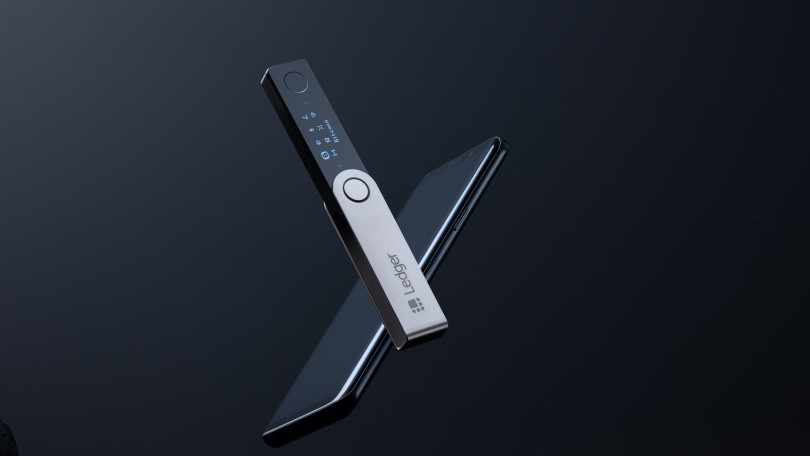
Ledger has not only beefed up the storage for the latest device but has also added support for multiple, i.e. up to 100 wallets. It has also enhanced the support for more coins, i.e. up to 1100 coins. The wallet now can be managed through an app, Ledger Live, installed on the user’s smartphone. It can be enabled and connected to the wallet through the Bluetooth. This means that now the users can easily send and receive tokens from their phones.
Ledger Nano X
Image Source: pcmag.com

Also, earlier those hardware wallets were connected through a USB cable. Although the wireless connection may seem to be risky, the fact that the wallet is only connected through the Live app using a particular pin for each user can diminish the risk.

Ledger’s previously launched hardware wallet, the Nano S, had become very popular among its users. The device is quite similar to the Nano X, except it had storage and support for a lesser number of wallets and coins. A hardware crypto wallet is a more flexible way for keeping the cryptocurrency locally in a protected manner, without storing it on an exchange. The wallet is secured with the help of a unique key, that the users must input every single time they use it.

Ledger, on January 4, had tweeted on its official account, “You asked, we listened: more applications on a single device, coming soon – 7 Jan 2019,” followed by another tweet, “Your crypto assets, always secured, everywhere you go with #Bluetooth.”

Ledger’s CEO Éric Larchevêque said, “There have been a lot of requests from our users to have a native application.” On the Bluetooth device being secure, he stated, “The Bluetooth connection is only used to send public data, such as your public key. The transaction itself is encrypted end-to-end while using the highest level of encryption and security on the Bluetooth protocol. No private keys are on the Bluetooth connection. It’s the same as the USB cable. Security-wise, the architecture is the same.”

The Nano X has also got a bigger screen, and the navigation buttons have been moved to the front from the top. The device has got its users the facility for tracking their assets including minimal hardware requirements. The acceptance rate of Nano X can be estimated through the success of its predecessor, Nano S, previously had gained. The mobile app, Ledger Live, is set to be rolling out on the iOS as well as the Android smartphones from 28 January 2019, and the company has started the preorders for the device from today onwards. The cost for Nano X has been fixed at $119 and will be shipped by March this year.

The Boeing Company: 100 Years of Aviation Pioneering

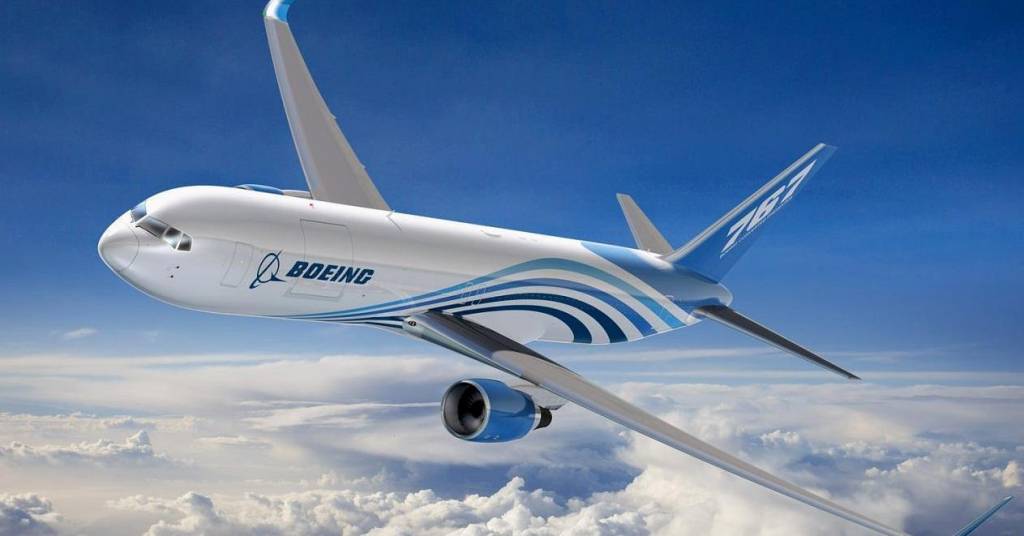
The Boeing Company is one of the biggest names in the pioneering of aero products. The company derived its name from the surname of its founder William Edward Boeing, who was an American timber businessman. The company has an old history, as it was founded almost 102 years ago, on 15 July 1916, in Seattle, Washington, U.S. The founder and the former CEO of the company, William Boeing, had an immense interest in the aircrafts, which he developed when he first time saw a manned flying machine during the Alaska-Yukon-Pacific Exposition, in Seattle, in 1909.

After the incident, Boeing himself joined the Glenn L. Martin Flying School in Los Angeles to learn flying. He even purchased a plane for himself from Martin’s. The idea of manufacturing his first plane hit his mind when he was unable to get the replacement for the damaged parts of his newly purchased aircraft from Martin’s. Hence with the help of his friend Cdr. George Conrad Westervelt, he built an amphibian biplane, the B & W Seaplane.

In 1910, William Boeing bought Heath’s shipyard in Seattle, where he founded The Boeing Company, his first aeroplane factory, on July 15, 1916, with the name Pacific Aero Products Co. Before founding the company, William owned business of timber. So his experience with the wood helped him a lot in the Airplane manufacturing business.

boeing
Image Source: almasdarnews.com

On 9 May 1917, the company was rebranded as Boeing Airplane Company. In the same year, it shipped its first 50 aeroplanes built for the US Navy for the first world war and moved its operations to its Boeing Plant1 located in the Washington state.

In 1919, the company manufactured the Boeing B-1 flying boat, which could carry two more passengers along with the pilot. The aircraft served as the international airmail from Seattle to Victoria, British Columbia, for eight long years. By the time, Boeing started manufacturing fighter planes for the U.S. Army Air Service. The early models of its fighter planes were PW-9 fighter and the Boeing P-12/F4B fighter.

Soon, Boeing’s Model 40 mail plane started operating between San Francisco and Chicago for the U.S. government, under the U.S. Post Office’s contract. In 1927, the company launched an airline named Boeing Air Transport and manufactured its first passenger plane Boeing 80 that took its first flight on 27 July 1928. The same year, the company went through a merger with the Pacific Air Transport.

In the early 30’s Boeing emerged as a leader in the all-metal aircraft construction and built a low-wing monoplane, named as Monomail, to carry mails. The Mononmail also became the basis of the Boeing YB-9 architecture. In 1932, the company brought the first all-metal monoplane fighter, Model 248, and in the next year Model 247, a standard passenger plane.

In 1938, the company built the largest passengers airliner, the Boeing 314 Clipper, to fly on transoceanic routes, under an agreement with Pan American World Airways. The plane had a capacity of 90 passengers in the day flight and of 40 passengers in the night flight. It took its first flight in June 1938 and started operating for regular passenger service from the U.S. to the U.K.

During the world II, Boeing won a contract to build the fighter planes for the U.S. Air Force. Almost all of the aircraft manufacturing companies cooperated at building them. They hired the family members of the soldiers who had gone to the war and built a large number of B-17 and B-29 bombers. The production had gone to a level that almost 350 planes were made in every month.

In 1947, Boeing built its first jet aircraft XB-47 followed by the successful launching of B-47 and B-52 bombers. It also started building the military jets, including the B-47 Stratojet and B-52 Stratofortress, in the decade of 50s. Soon Boeing entered into the manufacturing of the intercontinental missile, using the short-range missile technology.

In the mid-50s, the company started the manufacturing of the small turbine engines and became a leader in the same. Boeing built 2,461 engines before production ceased in April 1968.

The decade of the 50s and 60s were the decades of manufacturing jetliners for Boeing. It launched the 707, 720 as well as 727 commercial jetliners in those years. The 727 was the first commercial jetliner to reach 1,000 sales. Boeing’s twin-engine 737, become the best-selling commercial jet aircraft of all times.

In the 70s, the company faced a simultaneous decline and recession in the market. But by the mid of the 80s, the economic condition of the company started to improve, and it introduced new passenger airliners, the single-aisle 757, the larger, twin-aisle 767, and upgraded versions of the 737, with larger seating capacity.

Having been a part of the Apollo project, it also participated in other space programs and became the first contractor for the International Space Station program. In 1994, Boeing came up with the most modern, i.e., typical three-class layout aircraft, the twin-engine 777, with a seating capacity of 300-370 passengers.

In early 2000, the company purchased Hughes Electronics, in order to expand into the aerospace field. Boeing became the largest provider of rocket launch services to the U.S. government, through its joint venture, United Launch Alliance, with Lockheed Martin, in late 2006. Boeing also became the prime contractors in the U.S. military’s Future Combat Systems program.

Boeing revealed its Q4 profit of the year 2013 in January 2014, that was estimated to be about US$1.23 billion. In 2017, the company had 140,800 and made a revenue of US$93,392 million.

Whirlpool to Launch Wear OS App to Expand the Mobile Connectivity for its Appliances

wearable
Image Source: wsj.com

The biggest home appliance manufacturer Whirlpool Corporation has announced that it is going launch a wear OS app, powered by Google, for its connected home appliances, in the coming event of CES 2019. The 107 years old company has been introducing unique and innovative technologies every once in a while, and now it is again pushing the bars with its new idea of controlling the home gadgets with the help of a wearable OS app.

The app will help the user to keep a track of and control the appliances like the microwave oven, speakers, washing machine, etc. The company has also mentioned that it has simplified voice commands to its Smart Laundry appliances for both Google Assistant and Alexa devices.

The General Manager, WLabs of Whirlpool Corporation, Doug Searles, said, “Innovations from labs are designed to deliver on people’s unanswered questions and pain points.” He further added, “Our engineers and designers push the boundaries of what the general public knows and recognizes as a Whirlpool product, and redefine what a home appliance can achieve. Whether delivering on a specific, singular need or making multiple steps in the cooking process easier, each of the WLabs innovations coming to the marketplace gives us a view of what the future of cooking will look like.”

The app will preferably work for the ovens, washers and the dryers. The user will be competent to see the current oven status and monitor it through commands given to the app, even during an active cycle. Same for the washers and the dryer, the user will be able to watch the status and handle them with various options in an active cycle.

Although it’s not the first time when Whirlpool is extending its functionality using a wearable, it has already launched the same with the Apple Watch in the early last year. But this time, Whirlpool has come with a Google OS app, that will now enable the android users to enjoy this innovative facility. The launch will take place in the CES 2019 event in the coming week, and the Whirlpool Wear OS app will go live soon in the first half of the year.

Google Plans to Start Charging the Chinese OEMs for PlayStore Apps

The Chinese market for smartphones has gained a lot of popularity around the world, especially Android smartphones. The popularity of the Chinese apps was also on the peak last year. But for the smartphone manufacturers from the Chinese industry may have to face some heat this year, as now they may have to pay for the Android apps and services on their smartphones.

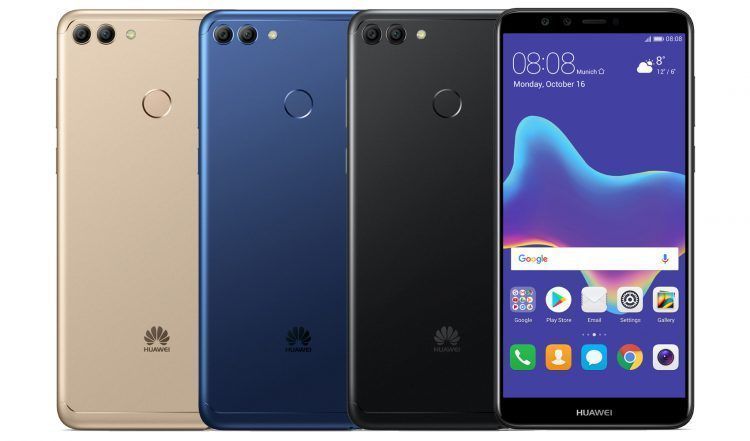
Chinese smartphones
Image Source: Pinterest

In a tweet from the official Android Twitter account (spotted by SlashLeaks), Google has stated that it may start charging the Chinese OEMs from third quarter for using Android apps.

The tweet wrote, ”We plan to charge Chinese manufacturers in the third quarter of 2019, which may include Huawei, ZTE, Xiaomi, and many other smartphone manufacturers.” Google has never charged the Android device manufacturers for its apps and services, but the tweet clearly shows that the biggest smartphone manufacturers like Huawei, ZTE and Xiaomi will be affected by this decision.

Last year in July, European Commission had fined Google with $5 billion, as it allegedly blamed the tech giant for “illegally tying” the Chrome and search apps to Android. Google provides a few pre-installed services and apps, like Google search and Google Chrome to the Android smartphone manufacturers for free, which was the major concern of the European Commission that Google forced those apps on to the smartphone users resulting in dominating their app market.

As a result, Google had produced a new licensing agreement for the smartphones that were shipped to Europe. According to the agreement, Google started charging the hardware firms, up to $40, for using its apps on their devices. The fee also depended on the size and type of the device as well as in which country it was going to operate.

Likewise, for the Chinese smartphone manufacturers as well, the company is planning to impose a fee on the usage of its apps and services. But still, the Android OS will remain free and open-source for them.

What’s App Suspends its Services for Older Nokia Phones with the Start of the New Year

whatsapp-nokia
Image Source: nokiamob.net

What’s App is one of the most used messenger apps across the world. It has been enhancing the user experience by making regular updates to it. But those updates and upgrades have to get some better system support to run on. Most of the older phone did not run the app due to the software and hardware compatibility issues. What’s App also announced a few years ago, that it will stop investing in the app for those older phones, and has been pulling out its support for many old phones regularly.

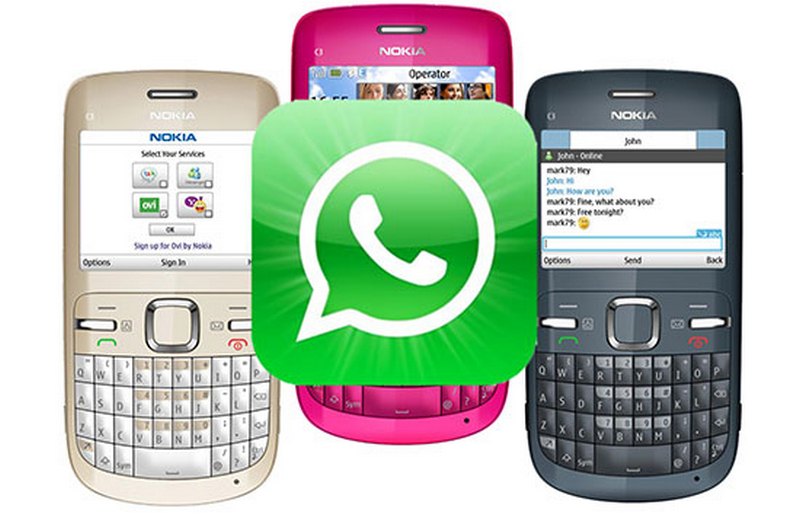
In contrast to that, it has now, halted its services for the Nokia phones based on the S40 platform, starting from January 1, 2019. The company had announced in the late December 2018, that it is going to cease its services for the S40 OS Nokia devices as they are no longer capable of handling the new updates to the app.

The cease has affected almost every S40 phones, especially the Asha series phones including the Nokia Asha 201, Nokia Asha 500, Nokia Asha 501, Nokia Asha 502, Nokia Asha 205, Nokia Asha 210, Nokia Asha 230, Nokia 208, Nokia 301, Nokia Asha 503, Nokia 515 and Nokia 206, etc. The other Nokia phones include Nokia 206, Nokia 208, Nokia 301, Nokia 515, Nokia C3-00, Nokia C3-01, Nokia X2-00, Nokia X2-01, Nokia X3-02 and Nokia X3-02.5.

The company had already removed its app support from various other smartphones last year including the BlackBerry OS, BlackBerry 10, Nokia Symbian S60, Windows Phone 8.0 and its older versions. But still, the app has got its support for a few old OSes, except it has not provided all the new services to its users.

WhatsApp, in a post, stated, “This was a tough decision for us to make, but the right one in order to give people better ways to keep in touch with friends, family, and loved ones using WhatsApp. Those who own a phone powered by this very platform has no choice but to upgrade their device if they wish to continue using WhatsApp.”

What’s App is one of the most popular instant message service providers and with its support for the older phones, it had helped those who were not among the smartphone lovers and used the phones only to make calls and send messages. Now as What’s App has stopped its services for many of the Symbian phones and S40 platform phones, it is going to affect many of its users too.

Review 2018 : Coolest Technologies & Gadgets of the Year

tech review 2018

The year 2018 is considered to be the year of transitions. With the new launches and new tech trends that were introduced in this year, the tech people were forced to think if the year brought the technical revolution 4.0? The year was great for the online businesses and for many startups as well. The most promising technologies (monthly) that became really popular in 2018, includes the following:

January: The year had been incredible for Amazon, and it all started with the launch of Amazon’s first cashier less Amazon Go store in Seattle in January. The store definitely represented the upcoming future.

February: Following the lead of Google and Amazon, Apple also launched its digital home assistant, the Apple Home Pod, a premium speaker and a smart hub. It is a $349 gadget, which is compact, solid and stylish. It is an endlessly entertaining system, powered by Apple assistant Siri.

March: Samsung launched its latest Galaxy smartphone the Samsung Galaxy S9, that was predicted to be almost similar to the S8 smartphone, but by the end of the year it came out to be one of the best smartphones of 2018. The look, design, software and the hardware, the smartphone has won in all the aspects.

April: Microsoft released its first Linux product having its own Linux kernel: Azure Sphere. Although the company was never in favour of using Linux in its system, finally, it had to adopt the technology.

May: The Huawei Matebook X Pro became the best laptop of the year only within the week it launched. With the terrific battery life and performance, it won the hearts of all. The laptop has a sleek design and has a gorgeous bright display. It costs $1,499 for the 16GB of RAM and a 512GB SSD model.

June: Proof Wristband is an alcohol tracking wearable, that helps you to track your alcohol intake, and help you limit it to a certain amount so that you can enjoy your time with your friends, without getting any harm to your health. The device is the first of its kind, based on an advanced BAC tracking ability using the Cartridge System.

July: Powered by Google Assistant, Lenovo Smart Display is a $249 smart speaker having a sharp 10-inch display and a 5-MP camera, that enables you to make video calls. The speaker has been designed for doing almost all the things that a Google Home or Google Home Mini can do.

August: The 88-inch OLED TV, LG 8K TV, was launched at the IFA technology show in Berlin. The product became the most talked about device of the event. Having a resolution of 7640×4320, it is the first ever biggest TV till now.

September: In this month, Apple launched not one but three new iPhones including the iPhone XS, iPhone XS Max and iPhone XR. By far iPhone XS Max had become the most popular among them all, due to the lovely big screen, strong battery life and camera improvements. Though the smartphone is more expensive, it is still a great phone.

October: In October 2018, Microsoft launched its hybrid tablet the Surface Pro 6, having a sturdier keyboard and improved battery life. Its new type cover and the surface pen are massive improvements for it. The lightweight design of the tablet is not only attractive but also more easy to carry along. Another major launch of October 2018 is Google’s smartphone Google Pixel 3. The smartphone has incredible camera resolution, supporting the wider selfie photos. It renders excellent performance and beats its contemporaries in design as well.

November: The best smartphone from One Plus, the OnePlus 6T, comes with a larger display, bigger battery and new fingerprint technology. OnePlus 6T starts at $529 for the 6GB RAM/128GB model and runs on Android v9.0 (Pie) operating system.

December: Although there were a few major launches and announcements in the tech industries, the main headline of December 2018 was the launch of the first national security space mission rocket by SpaceX. The rocket lifted the first GPS III satellite from the US Air Force. Also, Amazon ended the year on the same note where it had started it. The company again launched another tiny version of its Amazon Go stores in Seattle (the eighth Amazon Go store) in December 2018. It clearly shows that Amazon has been successful in its experiment with the cashier-less stores.