Your Tech Story

Yashica Vashishtha

Yashica is a Software Engineer turned Content Writer, who loves to write on social causes and expertise in writing technical stuff. She loves to watch movies and explore new places. She believes that you need to live once before you die. So experimenting with her life and career choices, she is trying to live her life to the fullest.

Avast : Largest Security Company in the World, Fighting the Cyber Attacks

Having more than 435 million users worldwide, Avast Software is the biggest antivirus providers in the world. Headquartered in Prague, Czech Republic, the company was founded by two people who avoided opting for physics in college, to avoid entering into politics and joining Communist Party of Czechoslovakia. The thirty years of history of this cybersecurity company once had started with a team of 40 people, and after thirty years, it has approximately 1,700 employees, across its 25 offices worldwide. The company not only have the largest number of global users, but it also had the biggest tech IPO of 2018.

The Founders

Two Czech software engineers Pavel Baudis and Eduard Kucera, founded Avast in 1988 almost 31 years ago, as Alwil.

Eduard-Kucera-Pavel-Baudis
Image Source: usatoday.com

Baudis was a graduate from the Prague University of Chemical Technology and majored in Information Technology. After graduating from the university, he started working as a Graphics Specialist at the Mathematical Research Institute. In 1986, the first computer virus came into being, and, after two years, in 1988, Baudis wrote the first antivirus program to remove it.

The other co-founder of Avast, Eduard Kucera was born in 1953 and was graduated from the Charles University.

Kucera also worked at the Research Institute for Mathematical Machines, where he met Baudis.

According to Forbes (2017), both Baudis and Kucera are the 8th wealthiest men in the Czech Republic.

Founding Avast

Working at RIMM, Pavel Baudis came across a virus named Vienna and developed the first program to remove it. The success of the program made him think of founding Alwil, a cooperative to develop antivirus, with Kucera.

In the 80’s it was prohibited to have private ownership, so the two co-founders left the Research Institute of Mathematical Machines, in order to found Alwil, under Socialist Union of Youth (the only legal private-owned business entity at that time). They developed the first software named Avast under Alwil.

In 1991, they turned the cooperative into a joint partnership, in the wake of the Velvet Revolution. Due to the Velvet Revolution, there was a huge change in the country’s economy. In 1995, the company released its first antivirus program for Windows 95, written by Alwil employee, Ondrej Vlcek . In the 90s the software became really popular, and Avast received an award from the IT security testing organization, at the Virus Bulletin.

The late 90s were not very good for the company, financially. So in 2001, the company launched a freemium program, in which the users could use its basic product, for free. By 2004, the number of free users grew to a million, and in just two years the number had multiplied twenty times.

In 2010, the company was rebranded as Avast, raising $100 million in venture capital investments. Till 2013, Avast had extended its services in 38 countries, in 43 languages and 200 million people using the software.

In 2014, Avast valued at $1 billion after CVC Capital bought an interest in Avast. The company also launched its mobile app in the same year. In 2015, it became the biggest antivirus company in the world, having the largest share in the market for antivirus software.

In 2016, Avast acquired AVG, for $1.3 billion, and in the following year, it acquired UK-based company Piriform. In May 2018, the company went public on the London Stock Exchange and valued at £2.4 billion. It was one of the biggest technology listings of UK.

France Fines Google €50 Million Upon Failing the GDPR Directives

Due to the data breach allegations, 2018, proved to be an unfavourable year for tech giants like Google and Facebook. Now again Google is having troubles with the same issues as French regulators have fined Google nearly US $57 million for violating Europe’s tough new data-privacy rules.

Google
Image Source: marketingland.com

This is the first time when the European regulator has put such a huge amount as fine to a U.S. giant company since the regionwide regulations took effect last year.

CNIL, France’s top data-privacy agency, reported that Google has failed the tough new regulations, that were implemented last year in May, resulting in major data violation. It also said that Google was unable to explain how and why it was collecting the users’ data, and how the users could control the permissions.

Although seemingly, the amount looks huge, according to the GDPR rules, for a more serious offence, the fine will be maximum of four per cent of the annual global turnover of the offender.

A spokesperson form Google said, “People expect high standards of transparency and control from us. We’re deeply committed to meeting those expectations and the consent requirements of the GDPR”.

Soon after the GDPR regulations came into effect last May, two advocacy groups lodged complaints against Google, saying that it is difficult to understand and manage the preferences on how Google is using their personal information.

To file the complaint, almost 10,000 members from France’s Quadrature du Net group had signed an agreement against Google’s data consent policies. The None Of Your Business group also complained upon the tech giant against the forced consent its apps and software put on the users.

Since GDPR has been applied to the web, every tech company need to follow the same in order to run their services in the European region. Having faced a number of data breach charges last year, Google has been working on its data privacy regulations. Even though this time again it has failed the same to some extent, the company still has time to rectify these violations.

Brian Armstrong : The Nerd Who Co-founded Coinbase; the Future “Google” of Crypto

It is rare to find a single person with a technical background who also has a great sense of business. Such a person is capable of building a robust business model that will pay off really well and sustain in the changing technology and business needs. Brian Armstrong, a nerd from San Jose, who had been experimenting with various businesses, since his teens, and also had an immense interest in programming languages, ended up in building the world’s largest cryptocurrency exchange; Coinbase.

Early Life

Armstrong was born on 25 January 1983 and was brought up in the San Jose, in California. He was still in school when he developed an interest in computer programming. He started learning Java and CSS, that led him to get work from local firms from San Jose when he was still in school and created websites for them. His neighbour’s garage was his first office.

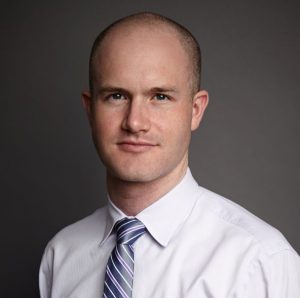
Brian Armstrong
Image Source: techcrunch.com

In 2001, after completing his school, he went to Rice University, where he completed a graduate degree in Computer Science along with another graduate degree in Economics. He also received a master’s in Computer Science from the same university.

Early Career

During his bachelor’s in Computer Science, Armstrong had done a four months’ internship as the Team Lead at IBM San Jose. There he developed tools for Network Attached Storage devices based on Java. Later, when he completed his graduate degree in Computer Science, he started working as an Enterprise Risk Management Consultant at Deloitte and Touche.

In 2003, he co-founded UniversityTutor.com. The website helped people find personal tutors in their area. On 16 May 2011, Brian joined Airbnb as the software engineer and worked there for a year.

Founding Coinbase

Armstrong was always interested in starting some business and actively thought of many ideas for that. By the end of 2010, he came across to the concept of Bitcoin. Being a technical product, it was quite amusing for him. At the same time, he got familiar to the fact that there were not many marketplaces for the exchange of bitcoin.

Being a computer programmer and an economist, he was capable of conceiving a plan to create an exchange marketplace for Bitcoin. In July 2011, Brian came together with Fred Ehrsam, who worked at Goldman Sachs, to co-found Coinbase.

It was the time when a single Bitcoin priced at $10 and buying Bitcoins required serious tech chops. Coinbase was the alternative for such transactional platforms, where people could use the traditional bank accounts to purchase cryptocurrency, similar to using PayPal. The two founders got Coinbase to enter into Y Combinator startup incubator, in 2012, to raise funding for the company.

In October 2012, the two launched the company and started operations of buying and selling the cryptocurrency through bank transfers. In 2013, the company received funding worth US$5 million from the venture capital firm Union Square Ventures.

Due to the ease of use, by the year 2014, the company had a million users using its services. In the same year, the company acquired Kippt, the blockchain explorer service. It also launched the vault service for secure storage of bitcoin as well as added a feature to process Bitcoins to payment apps like Stripe, Braintree, and PayPal.

In 2015, the company launched the Coinbase Exchange, through which the professional traders could exchange the cryptocurrency. By 2016, the company had added Ethereum to its platform and also rebranded the exchange name to Global Digital Asset Exchange (GDAX). Currently, the exchange process the transaction of multiple cryptocurrencies, but has stopped the same for Ethereum, due to suspicion of the attack on the network.

The company is currently processing its wallet in 32 different companies.

Personal Life

In 2017, Armstrong was listed as Fortune 40 under 40, and later, recode under the 100 list. By the end of 2018, he was among the list of billionaires, and his net worth was estimated between $900 million and $1 billion. Currently, he serves as the CEO of Coinbase, the company having over 200 employees.

Facebook Adds Petition Feature to its Feed, to Focus on the “Things” that Really Matters

The Facebook page feature has made people create their business pages, and due to ease of accessibility, many government organisations also have created their own FB pages, where they regularly post news and other daily important announcements.

Facebook
Image Source: TechCrunch

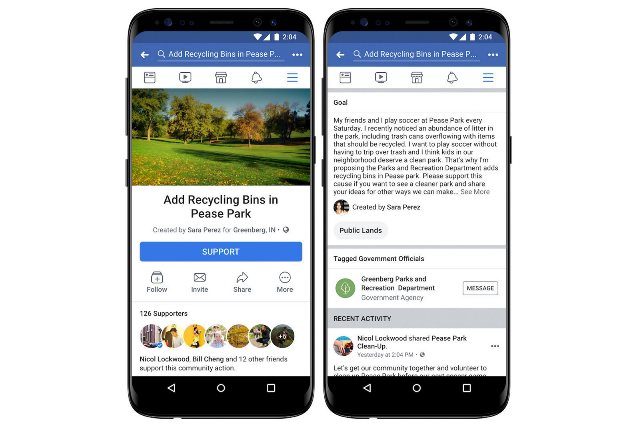
Now as FB has been a powerful platform to gather people for some real potential topics too, starting from today, FB is rolling out a new Community Action feature on it, to help people request a change from their local officials and government.

Tech Crunch reported on Sunday, “Community Actions will be a petition feature in Facebook’s News Feed and reach users in the US on Tuesday and other markets later.”

With the help of this petition feature, people will be able to initiate an agenda and can discuss the same with a wide community to gather support from other people too. They can even tag the local authorities to attract their attention to the subject matter.

People can create a proper post having a title, image, description, related to that topic, and others can press the support button as the patron to the agenda. They can also organise fundraisers as well as events with the same feature, and the people can discuss the agenda in the comment section of the post.

Although Facebook already supported similar features before, this time it is entirely focussed on involving the major social concerns relating to the government. The extended the support to the petition the higher the chances of getting the government to the matter sooner.

Facebook right now is working on how to make this feature more authentic and not absurd, so that the real issues will get the attention instead of some fake news or some random stuff. Although the petition might not be able to cause big agendas and tag the President, people can get the state representatives to see through the issue. The feature is currently available to the US citizens only. Facebook has reported that it did a few rounds of testing with the feature and till now, it has done quite well.

Gill Shwed : The Israeli Inventor & the Pioneer of the Cybersecurity

Computer’s security has been the biggest issue, even if its a PC or a huge work station. Also, as the Internet is a vulnerable place, the data security has become a major concern. But thanks to those who have been working to maintain the cybersecurity, and are, continuously, providing proper protection from various threats and malware. One of such computer scientists, who are responsible for the basic computer security, is Gill Shwed. This Israeli software engineer is one of the extraordinary personalities who has a big share in the development of the cybersecurity and is considered as the inventor of the modern firewall.

Early Life

The 50 years old Israeli software engineer, Shwed, was born Jerusalem, Israel, in 1968. He was merely 13 when he grew interested in computer programming and started practising it. Being a bright student at the school, and having mastered computer programming at a young age, he was able to get enrolled at Hebrew University in Jerusalem to study computer science, at the age of 15. When he got admission into the college, he was still in the high school.

Gill Shwed
Image Source: ifi.today

Career

After completing his education, Shwed joined the Israel Defense Forces and served the Intelligence Corps Unit 8200, where he worked on securing classified networks. Soon after completing the military service, he joined an Israeli startup company Optrotech, as a software developer.

Founding Check Point

In 1993, Shwed joined his hands with Marius Nacht and Shlomo Kramer, to found a computer software and hardware company, Check Point. Nacht was his colleague from Optrotech and Kramer was a friend from his military unit.

The foundation of Check Point was based on the core technology, the stateful inspection. The first product the company launched was the FireWall-1. It then developed the world’s first VPN, the VPN-1. The two products were inspired by Shwed’s work at the military.

Soon, Check Point raised its first round of funding from the BRM Group. Just the next year, in 1994, Sun Microsystems signed an OEM agreement with CheckPoint, and HP too signed the same agreement with the company in 1995. The same year, Check Point established its head office in Redwood City, California. In the following year, the company went public on NASDAQ and raised $67 million from its IPO.

Check Point and Nokia came together in 1998. The two companies bundled their software together, i.e. Check Point’s security software and Nokia’s Computer Network Security Appliances.

Check Point acquired many startups and companies, including Zone Labs (2003), Protect Data (2006), NFR security (2006), Nokia’s network security business unit (2009), Liquid Machines (2010), etc. In March 2018, Check Point along with SanDisk launched Check Point GO, a USB drive to turn a PC into a secure corporate desktop.

In 2016, the company’s revenue was estimated around US$1.741 billion and the net income at US$ 725 million. In the same year, total 3,500 employees were working in the company.

Personal Life

Shwed holds Israeli citizenship and lives in Tel Aviv, Israel. In 2002, he got featured on the cover of the billionaire issue of Forbes. He has received a doctorate degree in Science from Technion – Israel Institute of Technology, in 2005. He was named in the list of world’s 100 top young leaders by the World Economic Forum’s Global Leader for Tomorrow. He became the first recipient of Israel Prize in technology.

Apart from programming and computing, Shwed has immense interest in cooking and photography.

Coinstar & Coinme Partners to Provide Bitcoin Purchase through Grocery Kiosks

The America based coin-cashing machine maker, Coinstar, is now ready to offer bitcoin on the coin-counting kiosks at various grocery stores for easy cryptocurrency purchases. Yes! The company has partnered with the Seattle based Bitcoin ATM producers, Coinme, in order to enable people to buy Bitcoins at the grocery stores.

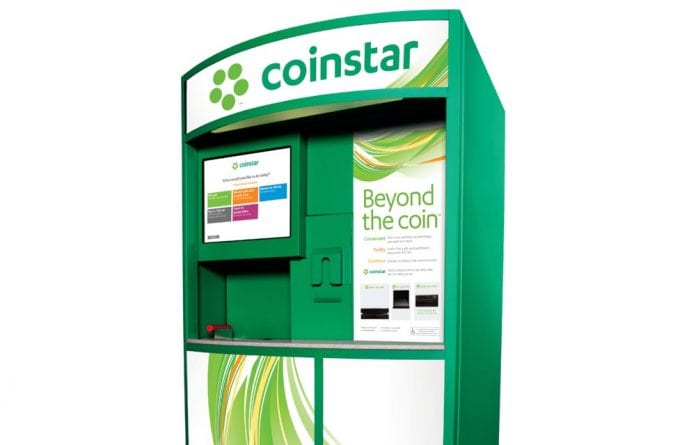
coinstar-kiosk
Image Source: bitcoinerx.com

Coinme is the first licensed Bitcoin ATM operator in the US, having a number of crypto ATMs in the parts of the 11 states, and Coinstar, too, operates a network of thousands of kiosks in the states. People usually use those kiosks to convert their change into bills or gift cards for easy shopping. But now with the same machines, people will also be able to buy Bitcoins.

Coinstar CEO Jim Gaherity, said, “Coinstar is always looking for new ways to offer value to our consumers when they visit our kiosks, and Coinme’s innovative delivery mechanism along with Coinstar’s flexible platform makes it possible for consumers to easily purchase Bitcoin with cash.”

Last year, Coinstar had joined its hands with Seattle based startup doxo, enabling people to pay bills at the Coinstar kiosks. The company also added the Amazon Cash deposit capability to it.

Coinstar will charge a particular fee, to its users for every purchase. They will be able to purchase bitcoin worth $2,500 and will also get vouchers on transactions through the machine. They can easily redeem the vouchers at the official website of Coinme.

Although the charges the Bitcoin ATM machines put on every transaction is too high, but people still find it more convenient. And expectations are that they won’t mind paying the hefty charges on buying Bitcoins through the Coinstar’s kiosks, due to the convenience it is going to provide. For now, the machine will only have the support for purchasing the Bitcoin over cash. In future, it may have the options for credit cards and digital money, too.

Initially, the company will have its cash-counting-cum-Bitcoin machines installed at a few selected stores of Safeway and Albertson, in California, Texas, and Washington. Coinme has also added in their announcement on their website that in future, their partnership with Coinstar will result in thousands of places to buy Bitcoin.