Your Tech Story

Yashica Vashishtha

Yashica is a Software Engineer turned Content Writer, who loves to write on social causes and expertise in writing technical stuff. She loves to watch movies and explore new places. She believes that you need to live once before you die. So experimenting with her life and career choices, she is trying to live her life to the fullest.

New “Dr Mario World” Game to Get on to iPhone & Android Smartphones by Summer 2019

Nintendo, the Japanese multinational video game company has announced that it is going to launch its another mobile video game, Dr Mario World, in the coming summer. The game is going to be an action puzzle game, based on the theme of the 90’s popular Mario game.

mario-world
Image Source: destructoid.com

For the development process, Nintendo has joined its hands with Japanese messaging app LINE and development company NHN Entertainment. The game will be available on the Apple Store and the Play Store for free, with in-app purchases.

One of the prominent names in the video game industry, Nintendo, has been in the field for the past many decades, and in 2016, it started its Smartphone games line. One of the first mobile apps which the company introduced was freemium social networking app Miitomo. Later, the company rolled out Super Mario Run, its first game to the mobile games lineup, and then, Fire Emblem Heroes for the Smartphone users.

The company made the announcement through its official Twitter account about the release of its new game, saying, “The doctor is in! Mario puts on the white coat once again in the mobile game Dr Mario World, targeting an early summer 2019 global release.”

Dr Mario World is the 90’s most famous Mario games played on NES. The company has already developed and launched a few other games, few of which were huge hits and few of which could not do that well. Now we need to see how well the game goes as the puzzle game on the Smartphones.

Nintendo had also been preparing to bring about another Mario game, Mario Kart Tour, for quite some time now, but now, there may be a delay in the release of the game to avoid any kind of mistakes and to provide better quality to its users. Even after the delay, people can expect the game to launch in the summer along with Dr Mario World.

The Dr Mario World will be released in about 60 countries.

Tim Norton : The Kiwi Serial Entrepreneur & Founder of 90 Seconds

Startups these days have certainly become a trend. Several good ideas are revolving around the investors to get their initial fundings. Many of which are successful in receiving the same, but happens to the ones who are not able to get one and end up with failure? Surely owner of those idea gets disheartened and drop their plan of startup.

But when you are really talented and have helped many other companies with their businesses, you get the confidence to start your own a hundred times even if you have failed multiple times.

The New Zealander self-made entrepreneur, Tim Norton, is one such personality, who kept on working on his ideas and built multiple startups until he founded 90 Seconds.

Early Career

Tim Norton, the serial entrepreneur, is a native of New Zealand, often described as the Steve Jobs of New Zealand. He was born and brought up in Matamata, a town in New Zealand’s North Island. He completed his graduate degree in commerce from the University of Canterbury, in 1999.

Tim Norton
Image Source: Twitter

Soon after he graduated, Tim started working at Energy Intellect Ltd. as the Product & Growth Manager and led many projects there. With his leadership quality, Norton was able to raise $1 million revenue within first 12 months of his entry in the company. Later in the same company, he also handled the post of IT systems administrator and managed the development team. He also successfully raised capital funding for the company.

Beginning of Entrepreneurship

After working for three long years in Energy Intellect, Norton left the job in May 2003. Having gained much experience as a leader, he thought of starting his own business. In the same year, in the month of July, he started his consultant firm Little Ones, where he managed projects for web application development companies.

Although the company was doing really well, he wanted to try out other businesses too. After Little Ones, he started another venture, EvolutionOne, that hosted many open source business apps on the cloud, to provide the various organisations with a single platform, where they could manage their business online.

After these two startups, Norton went to found a few other startups, too, including Decisive Flow, StartupMedia, Airspace and Love to Ride.

Although, not all of his startups succeded, and he ended up borrowing up to a million dollars of debt.

Founding 90 Seconds

In 2010, Norton founded his most successful startup, 90 Seconds Limited, the Cloud Video Production Service. At the time, he was still under a huge debt. In the beginning, Norton shot small videos for free and posted on the platform. He knew that people do not like to watch ads in between the videos and also avoided watching longer videos, so he selected a 90 seconds’ time frame for the videos to be uploaded on the platform, and from here only he discovered the name for his startup.

At the same time, Norton started travelling to various other countries to shoot videos on different topics and to promote his startup in other countries too. In the early stage of the inception of the company, 90 Seconds opened an office in London.

The startup was a huge success, and within one year of its launch, Norton was able to pull off all his debt.

In 2015, the company reported the production of over 10,000 videos for more than 1,000 brands, in 80 countries. The recorded growth rate of the company had reached to 10% month on month, in the same year.

In 2016, 90 Seconds raised a $7.5million funding from Sequoia Capital. At the same time, it also got investment from 40 other investment firms. By Feb 2016, 90Seconds had established offices in five countries and seven cities.

The life story of this Kiwi entrepreneur is really inspiring in terms of the failure he faced in some of his startups, and even then he kept on experimenting to find the one business that would transform his career entirely.

After Second Straight Quarterly Profit, Tesla to Start the Production of Y Model By 2020

There have been many talks about Tesla’s SUV electric vehicle, Model Y. Even the Tesla CEO Elon Musk has been talking about this SUV model since 2015. But the wait might get over soon, as according to some reports, Tesla has sent letters to its shareholders regarding starting the production of the Y model as soon as 2020 ends.

tesla
Image Source: fortune.com

The Model Y is going to be a mid-sized SUV vehicle, whose design is yet to be revealed. Allegedly, the Model Y will be based on the Model 3 sedan, and it will obtain 75 per cent of its parts from the most affordable Tesla model. Hence the production cost of the Model Y may be a bit lesser than the Model 3.

Tesla, basically, has its production line for its other models including S, X and 3, based in Fremont, but the Model Y may get its own dedicated production line at Gigafactory in Nevada, since there may not be much space for the production at Fremont for the Model Y.

The company came up with the plan of starting the production of the Model Y, as a result of a profitable fourth quarter of 2018, reported last year. Tesla said on Wednesday that it made a profit of $139.5 million in the fourth quarter, after recovering a loss of $675.4 million from a year earlier.

Tesla went public in 2010, and this is the first time that the automaker has revealed its profits, in consecutive quarters. According to Musk, the company is ready to invest in new projects and bring improvements to the older ones. The company has claimed that it will cut the cost on various Tesla models, will improve its service operations, launch at least three sedan models for its Chinese and European customers, and also will start working on its Model Y.

The Model Y is expected to be a crossover, and that may lead to an increased demand for Nidel Y over Model 3, resulting in an uptick in sales, and profit. If we consider the letter Tesla sent to its shareholders, the year is going to, certainly, be a profitable one for Tesla.

Pankhuri Shrivastava : The Founder of GrabHouse, the First Indian Broker Free House Hunting Platform

Moving from one city to another or shifting your whole setup from one place to the other, within the city, is as painful as finding the perfect rental apartment in the required budget. In the cities, this painful work starts from going to different brokers offering various awful deals, and in the end, you have to pay a huge amount on brokerage too. Sometimes the place is good but is far from your workplace. Sometimes it has all the facilities but there is a shortage of water. Though many of the online platforms have sorted out this problem through many good deals, still, these platforms are not completely broker-free. Then there comes GrabHouse, which have been built to provide people with the broker-free services, such that to help them find the perfect apartment, as the founder of GrabHouse, Pankhuri Shrivastava, was also a victim of the same.

Early Life

Pankhuri was born and brought in Jhansi. She went to Rajiv Gandhi Technical University, Bhopal, to receive a B.Tech degree. After graduation, this young entrepreneur had two choices, completing higher education, or attending the two years fellowship program with Teach India. Pankhuri went with the fellowship program and started teaching in a municipal school in Mumbai.

Founding GrabHouse

The time Pankhuri was working with Teach India, she moved to Mumbai and her struggle to find the suitable shelter began. In three years of her living in Mumbai, she had moved from over five flats and had gone through bad brokers experiences.

Pankhri Shrivastva with Prateek Shukla
Image Source: officechai.com

This was the time when Pankhuri realised that there should be a better way to find a suitable home at a suitable price. As she had already paid hefty brokerage amount for the five flats, she had lived in before. She had got fed up of this conventional method of house hunting.

In the end, she came to the conclusion that someone has to create a better platform to avoid those hurdles during the home search, and that someone could be her. So, without waiting anymore, Pankhuri approached another fellow from Teach India fellowship Prateek Shukla, who is an IIT Kanpur pass out and the other co-founder of GrabHouse.

The two started working on the concept and launched GrabHouse, India’s first brokerage free house hunting portal, in 2013. But launching the startup was just not enough, the startup also needed the funding to move further. So the two co-founders participated in a boot camp, organised by India Quotient and the potential of their idea made the company reach to the top 10 companies, that would get the funding.

Finally, the company received its initial funding from India Quotient, and soon other investors were also approaching them. The company managed to raise $12million in Series A funding from Kalahari and Sequoia capital with the help of India Quotient, in 2015. As soon Pankhuri and Prateek started the development and coding process, they decided to move the company to Koramangala, Bangluru, where all other startup companies had established their headquarters.

Reaching out to house owners and heading up as a rival against the conventional broker-based house hunt, was the most challenging task. But yet again Pankhuri found the most convenient way. She used the various Facebook flat finding groups to reach out to people and expand the scope of Grab House.

In the span of two years the company grew to 11 cities and got enlisted among the top five house hunting web portals.

In November 2016, Online classifieds company Quikr acquired Grabhouse in an all-stock deal. Allegedly, Quikr paid a sum of $10 million for the start-up.

Personal Life

Pankhuri is an avid reader and also love writing blogs. Her fellowship with Teach India also turned her into a philanthropist.

Pinterest Hires Goldman & JPMorgan Chase as the Lead Underwriters for its Anticipated IPO

Pinterest is all set for its IPO, and reportedly, this San Francisco based photo sharing website owner has hired Goldman Sachs and JPMorgan Chase as its lead underwriters for the same. The company has been in the business, since almost 11 years, and has become a well known visual search site where people post and share pictures related to different sorts including fashion, beauty, lifestyle, wedding etc.

pinterest
Image Source: appobzor.com

According to Reuters, the company has indicated that the company may raise $1.5 billion in the IP0, and it may go public in the first half of the year. According to the people with the awareness on the subject, said that in 2017, Pinterest raised $150 million in secret funding round and was valued at $12.3 billion, at the same share prices.

Pinterest, a social media website, with a unique concept, has grown very well since its inception, and currently, has more than a 250 million monthly active users. Last year, the company valued between $12 billion and $13 billion and reported annual revenue of $700 million, which was 50 per cent more than the revenue it gained in 2017. The main reason behind the success of this platform, according to one of its investor is that “there are no Russian trolls” on Pinterest, and also, there have been no cases in which Pinterest have ever sold its users’ data.

Pinterest is like a bulletin board and used to bookmark and pin things the users want to track onto it. The boards are categorized based on different topics. But the site is just not a photo sharing website, as it also allows people to sell goods on the platforms. The user can also shop for things through their mobiles, by holding and clicking on the desired product.

Although the timing for the IPO is not the best as its contemporary companies, including Facebook and Twitter, are going through serious user privacy breach allegations, put by the politicians. But as Pinterest has always been away from such matters it may not affect its IPO.

Notably, along with Goldman Sachs, Pinterest’s IPO is backed by many other investment firms, including Valiant Capital Partners, Wellington Management, Andreessen Horowitz and Bessemer Venture Partners.

Google is Working on Apple-Inspired Face ID Authentication & Privacy Protections

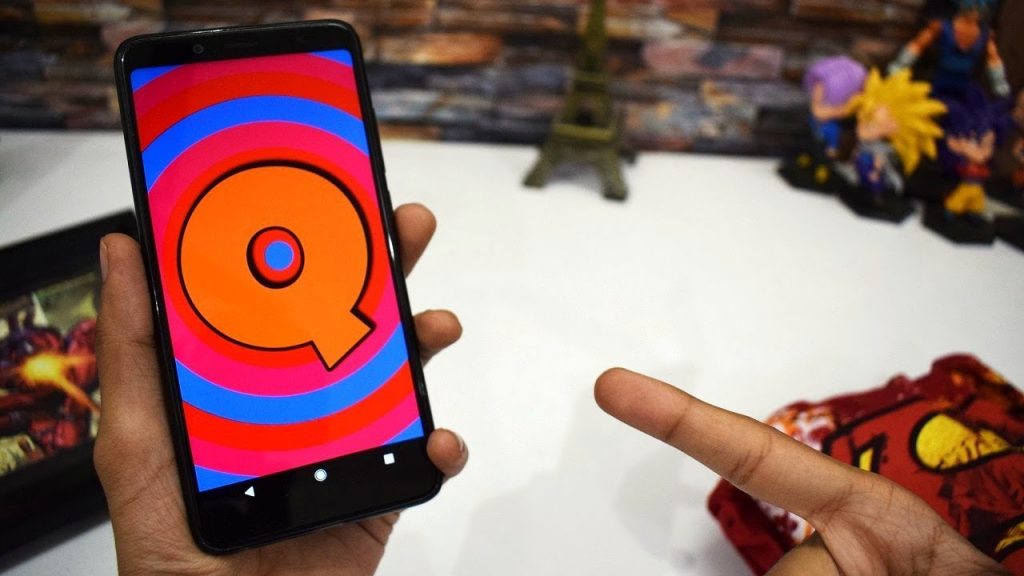
Android Pie is still not available on all the Android Smartphones, and Google is all set to launch its another mobile operating system, i.e. Android Q. There have been various guesses about the release date and the features of this new Android OS, and last week the XDA Developers, also, published its findings through the leaked AOSP build of Android Q.

Android Q
Image Source: YouTube

The code obtained by the XDA developers includes various methods, classes and strings that reveals that the new OS may have the facial recognition. Even being late for the fingerprint technology on the iPhones, Apple was the first who introduced the face recognition technology on them. Now, along with the other guesses, this piece of code clearly shows that Google is all set to catch up with its rival company on the face recognition technique.

Although Android already has got a 2D-based “Trusted Face” face scanning-based authentication support, Android doesn’t offer any native hardware support. The new feature will be a secure biometric authentication feature similar to Apple’s Face ID.

Apple uses a depth sensing system, that projects a structured light from a dot project in order to recognise the user’s face. An array of 30,000 dots projected through True Depth, in a known pattern using a vertical-cavity surface-emitting laser (VCSEL) module, is processed and compared with the resulting image against secure reference data.

Mishaal Rahman, specially indicated towards the code it found related to facial identification on the XDA-Developers Portal site, writing, “dozens of strings and multiple methods, classes and fields related to facial recognition in the framework, SystemUI and Settings APKs”.

The Smartphone companies including Huawei and Xiaomi, already have incorporated the suitable hardware for such technology, but as they are using the Android OS on them, they were not able to make use of the hardware, until now.

The findings also indicated towards the new Android Q having better privacy for users, especially, involving the clipboard permissions. Usually, the apps can access a user’s clipboard, even having the most sensitive information on them, but now, the OEM may prevent the apps to access the information on the clipboard without permission.