Yashica is a Software Engineer turned Content Writer, who loves to write on social causes and expertise in writing technical stuff. She loves to watch movies and explore new places. She believes that you need to live once before you die. So experimenting with her life and career choices, she is trying to live her life to the fullest.
Indian digital payment industry is booming, and with the platforms like Paytm, Amazon Pay, and Google Pay, people have got many choices to opt for. On 24th April Facebook-owned WhatsApp also announced that it is going to launch a digital payment service, WhatsApp Pay, in India, giving a clear message to the leaders of digital payment, that they need to brace up for a big competition.
Image Source: thenextweb.com
For now, Paytm, an almost decade-old company, backed by Alibaba, is the biggest local digital payment service in India. On the same league, Amazon has also launched its payment service recently, Amazon Pay UPI for Android customers for peer-to-peer payments, whereas, Google Pay (earlier Google Tez) has got a hold on a share of 45 million users, operating $81 billion in transactions in March. There has been also news from Apple of planning to launch its Apple Pay service in India soon.
Though Paytm has been ruling the Indian market for the past decade, with the rise of other services including Google Pay and Amazon Pay, it has become easy to believe that Whats App Pay can easily influence people with its payment services.
Since WhatsApp has been the most loved app in India, so with a user base of over 300 million in India, it won’t be tough for WhatsApp Pay to challenge the existing digital payment services. In fact, its parent company, Facebook has got additional Indian userbase of over 300 million people, which is huge, as Paytm alone entertains only 230 million users. This way launching a peer-to-peer UPI based payment service will easily attract most of its users as it will be easy for them to transact on WhatsApp.
“Indians love WhatsApp and will love the convenience of transacting through the app. I foresee a trend wherein entrepreneurs and small and medium enterprises start embracing and using WhatsApp Pay. This will contribute to, and increase their creditworthiness. In turn, this trend will enable them to easily borrow credit from formal sources, such as banks.” Prabhu Ram, head of the Industry Intelligence Group at CMR, said in the report.
According to WhatsApp, in an app test, over 1 million people were able to send and receive money in a safe and secure manner. The company has also told the Supreme Court on May 3 that it will be complying with the RBI norms before starting its payment service in India, and it is willing to contribute to India’s financial inclusion goals.
Yashica is a Software Engineer turned Content Writer, who loves to write on social causes and expertise in writing technical stuff. She loves to watch movies and explore new places. She believes that you need to live once before you die. So experimenting with her life and career choices, she is trying to live her life to the fullest.
Handsfree,
smart speaker, music streaming services, so much has been changed in
the past more than a decade. To be precise, there were no such
technologies over 17 years ago, and people were happy detangling the
mesh of cables for music. But there was a group of visionaries, that
wanted to bring the change and free people from the trap of cables to
provide them with the best sound experience.
The American consumer electronics company, Sonos, was founded by four business partners John MacFarlane, Craig Shelburne, Tom Cullen, and Trung Mai, in 2002. Except for John, all the other three co-founders belonged to Santa Barbara, and John moved to the city to pursue a PhD degree from California-Santa Barbara in 1990.
Image Source: digitalmusicnews.com
At
the same time, the Internet was at its initial stage and was not as
popular as it is today. At that time, only fewer than 16 million U.S.
households had high-speed dial-up broadband, and America Online was
the top internet provider in the U.S. Like other technical persons,
John was also sure about the future success and scope of the
internet. This way, along with Craig Shelburne, Tom Cullen, and Trung
Mai, John decided to start Software.com, and after running it for a
decade, they sold the company to Phone.com.
After
selling the company, the next thing the visionaries had to do was to
think of a new business idea. For a few months of brainstorming, John
presented a plan to start a business of building devices which would
enable local-area networks for aeroplanes. But the other three
partners were not convinced. Again four of them started looking for
that out-of-the-box idea, that would be innovative and unique.
At
last, the four coincided on a single topic, i.e. music. Today, music
streaming services, as well as wireless speakers and headphones, are
quite common, but at that time, the concept of the wireless system
had not even born. In fact, the music systems came with a mesh of
cables, and when anyone wanted to connect the speakers in the
different rooms, through a same music system, there was no choice
other than drilling their walls to pass the wires through it.
So
this was it. The idea was to create a music system, that could play
the same music in different rooms without connecting any wires using
the internet. But since there was no such existing technology at that
time, despite being a unique idea, it did not seem feasible, too.
Still, since all the four partners liked the idea, they all started
working on the same.
Since
the four had been successful entrepreneurs in the past, they had
connections and the skills to draw the investments. They also started
employing some skilled people for the manufacturing of their dream
project. Initially, they opened an office above a restaurant called
El Paseo in Santa Barbara and
started Sonos in 2002.
The
focus of the team was to create a system that was easy to install and
would be able to work through cross-technology integration, but this
increased the complexity for the designers and the developers. They
chose Linux as the basic platform, but the operating system needed
drivers for audio, wireless and others, to work with the new music
system. So the founders decided to create those drivers.
Finally, in 2003, the company was ready with the design and prototype of its first product. John MacFarlane demonstrated the prototype at the Consumer Electronics Show, in 2004, where it won the “Best of Audio” award. It was the first wireless music system. The company launched the system, naming its Digital Music System, in 2005. It was the combination of smart speakers and a remote. People welcomed the system with open arms, and they loved it. The reviews for the system gave positive points to its design, reliability, and great sound.
It
is clear that MacFarlane thought ahead of time, and this way, he
created the systems capable of receiving the new upgrades. The same
year, Sonos launched the Digital Music System, it introduced a new
amplifier, i.e. ZP100 amplifier, for it. The company also announced
to make those music systems available for the U.K. citizens too.
With
the launch of the iPhone, in 2007, the company launched its app, that
enabled the iPhone to become the controller for its Digital Music
System. In 2011, the company launched another app for Android users.
In 2009, the company released its much cheaper, 400 dollars, PLAY:5, all-in-one smart speaker. The continuous updates and improvements in the music systems made the company one of the leaders in the market, and its products popular worldwide. In 2011, the company added Sirius XM and Spotify to its catalogue. In 2012, the company upgraded its speakers with Amazon Cloud Player compatibility, following a collaboration with Tencent, through which it added the QQ Music to its catalogue. Currently, the music systems from Sonos support Apple Music as well as music from other popular streaming services including Spotify.
Since
its inception, Sonos has been introducing the world with the
innovative music products and is the pioneer in the wireless music
streaming technology. The company and its story has been an
inspiration for every aspiring entrepreneur, which not only tells
them to be successful, but also tell them to prioritize quality for
long-term success.
Yashica is a Software Engineer turned Content Writer, who loves to write on social causes and expertise in writing technical stuff. She loves to watch movies and explore new places. She believes that you need to live once before you die. So experimenting with her life and career choices, she is trying to live her life to the fullest.
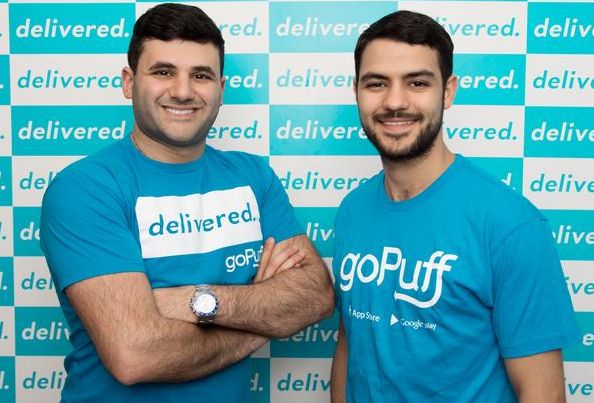
Having a necessary education or experience to run a business has become a myth, and most of the successful college dropouts, including Steve Jobs, Bill Gates, and Mark Zuckerberg are the biggest example of the same. Now there is no limitation on the age or the background of a person, in order to start a business. Like the co-founders of goPuff, Yakir Gola and Rafael Ilishayev, who started the company without having any experience in entrepreneurship, both running 20 and were the students of Drexel University.
Though Gola had a bit of experience of business earned through his parents’ small jewellery business, Ilishayev was a newbie for their startup. Gola’s parents had migrated from Israel, and Ilishayev’s family belonged to the Russian descent. The two met each other at the University, and since they shared the common language, they became good friends in no time.
Image Source: bizjournals.com
goPuff
was not their first business, as, before goPuff, they sold office
furniture to people and had saved a sufficient amount of money. While
in college, it was Gola who had a car among all their friends, and
always went out to bring small daily need things. Sometimes, the two
would go to multiple stores at different locations to buy different
things. The process was quite time-consuming and tiring.
Since it was not much long ago, companies like Amazon and some food delivery services were already providing home-deliveries, but there was nothing that could help with the late night cravings or emergency needs. It was an eye opener for the two, and they founded an opportunity in the same.
Gola and Ilishayev were convinced that they need to start a service, which could help people get things on their doorsteps, within a few minutes. The two started working on their business model and concluded 50 items, which they could deliver easily in a particular area. Since they did not have much of the money, and initially, it was just an experiment, they picked cheaper things to deliver. The two founded this very delivery service in their University campus and named it goPuff.
The
first hurdle that came into their way was convincing the store
owners. After that, they started finding investors for their business
and invested $60,000 of the earnings from their furniture business.
They worked seven days a week and 16 hours a day, as initially, they
did not have the money to hire other people for the delivery. In
fact, it was only Gola and Ilishayev, who delivered for the first six
months.
The
driving force for the two was the challenges and the targets they
gave each other. Soon, the service became popular, and they started
delivering in other Universities in Philadelphia, and then, in the
other cities. After working hard for four months, they were able to
get a small warehouse for their supplies, and later, they added more
things to their delivery list. In 2015, Gola left college to
concentrate completely on the venture, and on the other hand,
Ilishayev graduated in legal studies from the University in the same
year.
The
company became popular and started doing really well. In December
2015, the two started another delivery service to specially deliver
beer, naming it goBeer, and in the following year, in the month of
May, they launched an alcohol delivery service called goBooze.
Soon,
the service extended to the Universities based in cities like Boston,
Washington, D.C. and Austin, Texas. By the end of the first year of
its inception, the company had hired 60 full-time employees, and
2017, it had 200 employees. In the same year, the company closed an
$8.25 million Series A funding round from Anthos Capital, and the two
partners were named “2017 30 Under 30: Retail and E-Commerce” by
Forbes. They also won the 2017 Target Marketer of the Year Award.
The credit for the success of goPuff entirely goes to the uniqueness of the concept behind it, and the sacrifices the two co-founders made to work for it. For those past years, both Gola and Ilishayev have been ditching holidays as well as other plans with their family and friends to work for goPuff. goPuff, in a few cities, provides its services 24/7, and in other cities, the service is open until 4:30 a.m. The company is serving to the millennials, so the method of customer support is also millennial. The company is always active on Twitter to answer the queries of its customer. The company provides the fastest delivery, 23 minutes being the fastest delivery time.
Yashica is a Software Engineer turned Content Writer, who loves to write on social causes and expertise in writing technical stuff. She loves to watch movies and explore new places. She believes that you need to live once before you die. So experimenting with her life and career choices, she is trying to live her life to the fullest.
A sale is the best time for companies to earn more profits. And, after a long wait, Amazon’s summer sale has gone active for its Prime members. The sale started midnight on 2 May for the Prime members, giving them the opportunity to get their hands on the better deals before anyone else. As the other Amazon member will be able to take advantage of the sale after exactly 24 hours the sale has started, i.e. at 12 am IST on 3 May.
Image Source: newsd.in
It
has been a few months since the company has hosted a bigger sale. The
summer sale will end on 7th May, and people will be able to grab
great deals in those four days. The sale has got big discounts on
fashion, home appliances, gadgets, electronics, etc., and we need to
see how the Prime members take benefit of early shopping at the
summer sale.
The
company along with fabulous deals is also offering an extra 10 per
cent discount on SBI credit and debit card, i.e. up to Rs. 1,500 per
card. The sale is boasting up to 40 per cent discount on Smartphones,
and the users can also pre-book OnePlus 7 Pro Smartphone during this
period. The One Plus Pro will be available with a free screen
replacement warranty worth up to Rs 15,000 for the buyers with
pre-booking. Other than that, the buyers can get discount of up to
10,000 or above on high-end smartphones including One Plus 6T, Oppo
A5s, iPhone 6, iPhone X including its other variants as well as
Samsung smartphones.
The price for mobile accessories like earphones, screen guards, data cables, memory cards, etc. starts at Rs. 69, and accessories like power bank are available at Rs. 499. The company is also offering up to 50 per cent discount on branded digital gadgets like speakers, cameras and headphones from brands like Canon, Nikon, JBL, etc. In fact, the price of Sony PlayStation 4 500GB Slim is down to Rs. 22,190 from its MRP, i.e. Rs. 28,580.
The company has also proposed heavy discounts on its home production gadgets, including Amazon’s Fire TV Stick, Amazon Kindle Paperwhite, Amazon Echo, etc. The company as a bonus has also offered a 3-month subscription to Kindle Unlimited for as low as Rs. 79.
For
the prime members, Amazon is providing free as well as fast
deliveries and also discounts on its streaming services, including
unlimited video streaming, ad-free music etc. There is also a
cashback of up to 2400 Rs. for the Prime members on some eligible
purchases including from the Amazon-partnered companies like Swiigy,
Yatra.com, netmeds.com, BookMyShow, and others.
Yashica is a Software Engineer turned Content Writer, who loves to write on social causes and expertise in writing technical stuff. She loves to watch movies and explore new places. She believes that you need to live once before you die. So experimenting with her life and career choices, she is trying to live her life to the fullest.
Machine Learning is not the next big thing, but the current hot topic, which is the main focus of every tech giant today. Even though this technology is so much in demand, learning and experimenting with this technology needs a lot of expertise. So, to simplify things, Microsoft has announced that it is going to launch three new services to help people try their hands on machine learning and learn it better.
Image Source: microsoft.com
“There
is a category of AI practitioners, who are learning machine learning
concepts, they want to make their own models, but they are not
coders. This could be IT professionals or folks with a background in
statistics or mathematics. For those customers, we’re offering
experiences to make models visually.” said Microsoft’s director
of artificial intelligence Bharat Sandhu.
Those
new services will be the enhancements to Azure Machine Learning. The
Azure Machine Learning lets the users create AI architectures for
cloud-hosted and on-premises apps. With the new services, Azure MI
will now make the process of model creation more simpler, providing
the users with a simple drag and drop visual MI dashboard, from which
they can customize their MI program.
The
new services that the company will be launching include an interface,
which will be responsible to automate the process of model creation.
This way the developers do not have to write even a single line of
code. The company has also added new algorithms and optimizations to
the platform, that will help in creating more accurate models. These
algorithms are transparent to the users, and they can even manually
write the codes for the same.
Along
with the ML services, the company will also be adding new
capabilities for AI, IoT, blockchain and edge computing to the Azure
cloud platform. The AI Azure Cognitive Services will enable the
application to make decisions, see, hear, translate, and reason. In
addition to that, the company will also be including the AI features
to the Azure Search.
Microsoft has also announced to add a new SQL engine, i.e. Azure SQL Database Edge, having built-in AI features, to handle the computing and database management tasks, intelligently. On the other hand, the new IoT Plug and Play feature will allow the developers to connect IoT devices directly to the cloud, eliminating the need to write the code for the peripherals.
Along with all these services, Microsoft also announced an Azure Blockchain Service, Unreal Engine, and a HoloLens 2 Developer Bundle. The company has not commented on when those services will be available for use. But since it has made all these announcements ahead of its Build developer conference in Seattle, Washington next week, the company might be planning of announcing the launch date at the event.
Yashica is a Software Engineer turned Content Writer, who loves to write on social causes and expertise in writing technical stuff. She loves to watch movies and explore new places. She believes that you need to live once before you die. So experimenting with her life and career choices, she is trying to live her life to the fullest.
Google is all prepping up for its upcoming I/O 2019, it is going to host on 7 May in California, U.S., and it has already started on giving hints on few of its new launches it is going to announce at the event. According to one of its early pushed out news, it is going to open its Automotive OS for the third-party developers, so that they would be able to develop functionalities and entertainment apps for the vehicle infotainment systems.
Image Source: venturebeat.com
Google introduced the Android Automotive OS, an OS specially designed to work with vehicle infotainment systems, in 2017. Do not confuse Android Automotive with Google’s other product having a similar name, i.e. Android Auto, which is a mobile app. Whereas, Android Automotive is a full-fledged operating system developed for vehicles. Both the platforms are using the same underlying framework, and having the same framework, Android Automotive also supports compatibility with different screen sizes, OEM customizations, and regional driver safety guidelines.
Android
Automotive OS is based on Google’s Linux supported, open-source
mobile operating system. But it runs on the vehicles, instead of
smartphones and tablets.
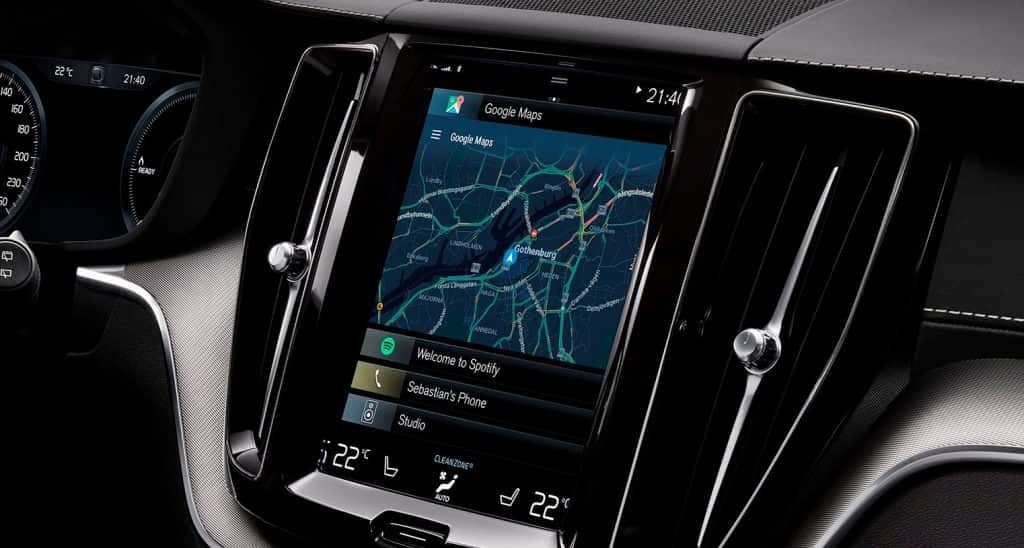
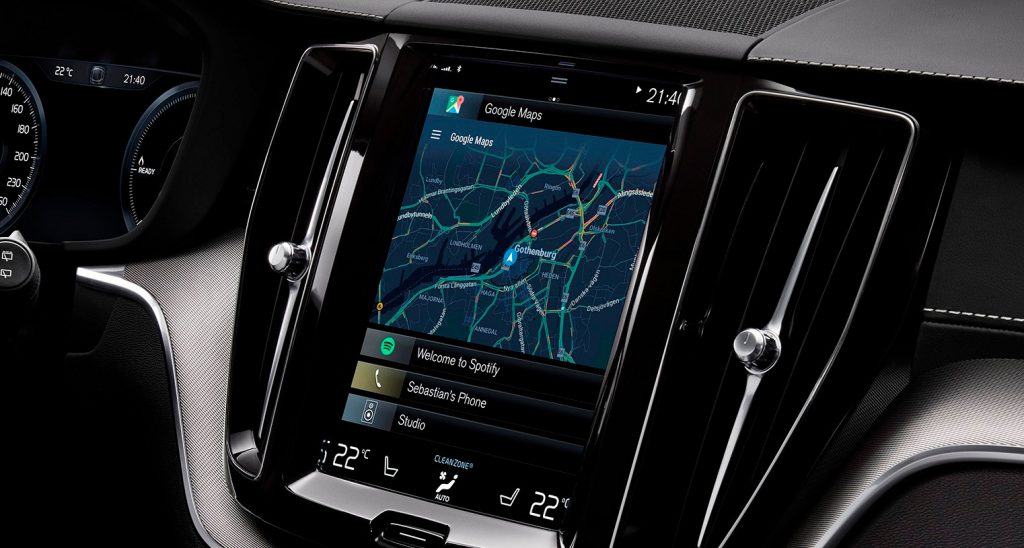
The company has hinted that it is already working with Volvo’s all-electric Polestar 2, powering its infotainment system with the Android Automotive. The Polestar 2’s infotainment system will have all the major services from Google including Google Assistant, Google Maps and the Google Play Store.
Google is also working with companies like Spotify and others, through which it will be able to bring entertainment apps to the Android Automotive OS. With the help of third-party developers, the Android Automotive will also be able to add support for the features like navigation, communication, and beyond to the OS.
Google
will be discussing on how to develop the apps for its Android
Automotive OS for cars, in the event, and if the developers won’t
be attending the event, they can find more information on the same
through the Google Groups community. The developers can also ask
questions regarding the development using the tag android-automotive
tag on StackOverflow.
Yashica is a Software Engineer turned Content Writer, who loves to write on social causes and expertise in writing technical stuff. She loves to watch movies and explore new places. She believes that you need to live once before you die. So experimenting with her life and career choices, she is trying to live her life to the fullest.