Yashica is a Software Engineer turned Content Writer, who loves to write on social causes and expertise in writing technical stuff. She loves to watch movies and explore new places. She believes that you need to live once before you die. So experimenting with her life and career choices, she is trying to live her life to the fullest.
Razer the fintech gaming company has joined its hands with the world’s leader in digital payments, Visa, to initiate an unusual type of partnership. The two companies will be working together to develop a new virtual prepaid solution for many of Southeast Asia’s, especially the unbanked and underserved, consumers.
The
company announced that its fintech arm, Razer Fintech, will be
joining the fast-track program from Visa, as a revolutionary idea,
aiming to transform the way the gamers make payments. The fast-track
program from Visa has been specially designed for fintech companies
to help them easily access 54 million merchant locations around the
world that accept Visa.
The partnership between the two companies will lead to developing a new virtual payment service, that will empower the Razer Pay e-wallet and give its users access to the global Visa payment network. With this new service, the unbanked users will be able to top up the wallet, make online payment through it, and also, will be able to withdraw cash through it. The scope of Visa is already huge, and with the collab, the two companies will be targeting to the 60 million Razer users. Noticeably, the company has not talked about rolling out a physical payment card along with the service.
“We are pleased to partner with such a forward-looking and innovative company that understands the value and importance of expanding access to digital payments. This announcement reaffirms Visa’s commitment to the fast-growing and digitally savvy Southeast Asia region. Together, Visa and Razer Fintech have the opportunity to transform the payments experience for not only the gaming community but many of Southeast Asia’s unbanked and underserved consumers as well”, Chris Clark, Regional President, Asia Pacific, Visa, stated during the announcement.
The
two companies have said that they will be rolling out a mini app for
the new payment service and will also include great offers for its
users. The app will be integrated into Razer’s virtual wallet app.
Yashica is a Software Engineer turned Content Writer, who loves to write on social causes and expertise in writing technical stuff. She loves to watch movies and explore new places. She believes that you need to live once before you die. So experimenting with her life and career choices, she is trying to live her life to the fullest.
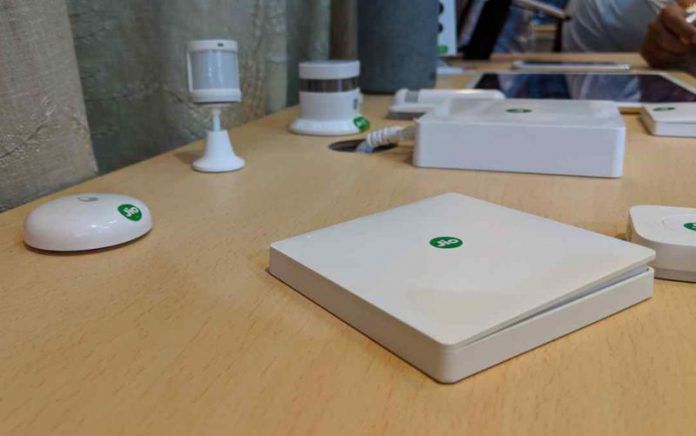
Reliance Jio, the biggest telecom company in India, had released the beta of its Jio GigaFiber last year, and since then, there have been many talks about the same. The Jio GigaFiber claims it will replace the old fashioned cables with all fibre cables, enhancing the speed for the broadband and TV connections. Reportedly, the company is planning to end the beta and officially launch the GigaFibre in the coming weeks.
Image Source: mysmartprice.com
Since
the company had made the testing open for the public, too, many of
the common people were able to enjoy the unlimited internet after
paying a sum of Rs. 4500. This way, there have been numerous leaks on
the details about the upcoming Jio GigaFiber.
The new Jio GigaFiber is faster and offers three different services altogether, i.e., landline, broadband, and a TV connection. With the new network connection, Reliance intends to provide its users with a connected ecosystem for their homes through a single package, and that too, at a cheaper price.
Though
there are various network providers that use optical fibre for the
connection, they mix these connections with the conventional cables.
With Jio GigaFiber, the whole network will rely on fibre optics,
leading to up to 100Mbps network speed with no or negligible loss in
the connection. The people who were using the beta of the service
have confirmed a similar speed on the network. The TV connection and
the landline will also rely on the internet, such that JIO TV will
stream the TV channels in HD, and people will be able to make free
calls through the landline. Even if we believe the rumours, the Jio
TV will stream 600 TV channels for Rs. 600.
Also,
unlike the other network providers, GigaFiber includes the dual-band
Wi-Fi routers. Currently, the company is offering the GigaFiber beta
connection for a security deposit of Rs 4500. The other plan includes
a single-band router rendering speed of 50Mbps, which will cost the
users a sum of Rs 2500.
GigaFiber
can be a big game changer for Reliance as it may empower other home
devices as well, and this way, people will not have the need for
different service providers for separate home internet services.
Yashica is a Software Engineer turned Content Writer, who loves to write on social causes and expertise in writing technical stuff. She loves to watch movies and explore new places. She believes that you need to live once before you die. So experimenting with her life and career choices, she is trying to live her life to the fullest.
The French automobile company, Renault has partnered with Waymo, the automobile subsidiary of tech giant Alphabet Inc., to bring new autonomous cars to France and Japan. The venture also includes Renault’s Japanese partner Nissan, which will be responsible for the launch of those self-driving cars in Japan.
Image Source: engadget.com
With
this partnership, Renault and Nissan will be researching on how
self-driving cars can help in easing-out the transportation of humans
as well as goods and develop driverless mobility services for the
same. Noticeably, Waymo has already brought such vehicles in Arizona
called Waymo One and a limited robo-taxi pilot program in suburban
Phoenix last year. Though the launched cars are fully-autonomous,
there is always a human monitor sitting on the other front seat of
the car for emergencies.
The
companies will also work on the commercial, legal and regularity
issues, that are related to the development of self-driving cars and
making the transportation-as-a-service for both the countries.
According
to the reports, the agreement between the companies has been done for
a limited but unspecified time. There has been no comment on the same
from either of the company. The agreement also has restricted all the
three to work with other companies on a similar project.
“This
is an ideal opportunity for Waymo to bring our autonomous technology
to a global stage, with an innovative partner. With the Alliance’s
international reach and scale, our Waymo Driver can deliver
transformational mobility solutions to safely serve riders and
commercial deliveries in France, Japan, and other countries,” said
John Krafcik, CEO Waymo, in a statement.
Though Waymo is quite excited about this merger, the venture will be a 50-50 partnership between Renault and Nissan for both the countries, and there has been no hint on the role of Waymo for the same. The two companies will be setting up a joint committee to work together in France and Japan.
Earlier,
the two companies were in talks with Fiat Chrysler Automobiles (FCA)
to bring next-generation technology and work in the field of
self-driving cars. But the merger could not take place, and FCA
withdrew the agreement.
Yashica is a Software Engineer turned Content Writer, who loves to write on social causes and expertise in writing technical stuff. She loves to watch movies and explore new places. She believes that you need to live once before you die. So experimenting with her life and career choices, she is trying to live her life to the fullest.
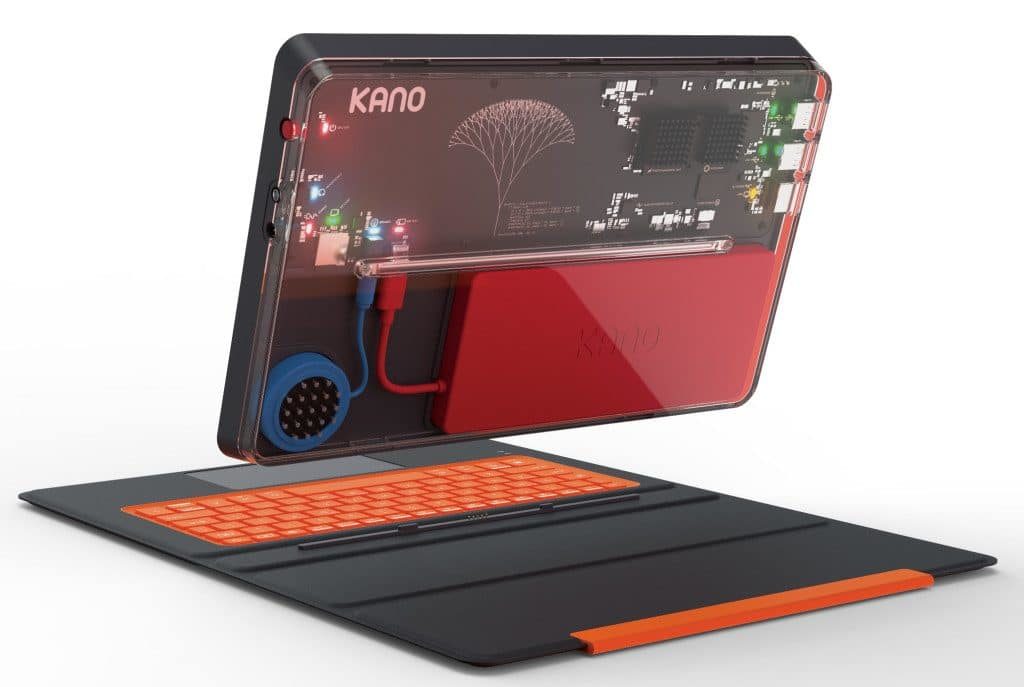
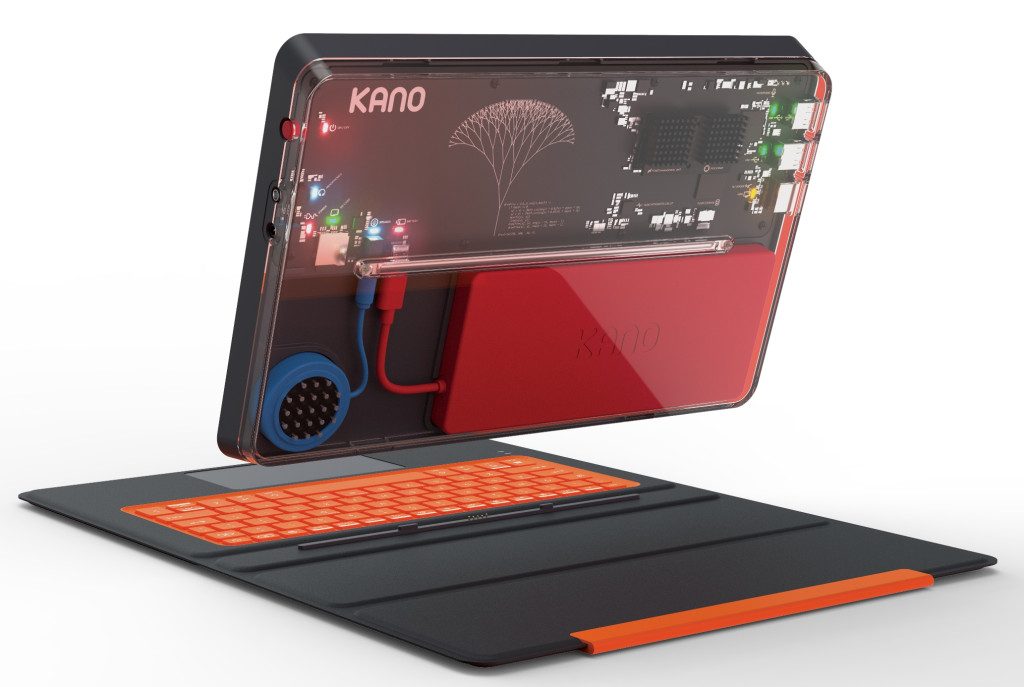
Reportedly, Microsoft has partnered with Kano, a London-based startup, that specializes in building build-your-own PC DIY kits for the kids. The two companies have joined their hands to bring a DIY touchscreen laptop for its little users, that will be running the Windows 10S.
Image Source: venturebeat.com
Windows
10S is the lighter version of the Windows 10, and it will be the
first time that any of the Kano computers will be operating a Windows
OS. Though using the Windows 10S will restrict Kano laptop to run
apps only from Microsoft. Previously, Kano laptops ran the Raspberry
Pi 3s OS and the OS from Kano itself.
The new Windows-based Kano PC is a laptop/tablet, which is a similar version of most of the Microsoft’s Surface PCs, but having a transparent back on its 11.6” screen. The screen of the laptop is a touch screen, and the transparent back shows the components of the upper flap of the laptop.
The
laptop comes into detachable pieces, such that the kids will need to
assemble the entire system themselves. The laptop is empowered with
the 1.44 GHz Intel Atom x5-Z8350 quad-core processor, supporting a
4GB RAM, and 64GB of eMMC storage. The laptop also supports expending
the storage with the help of microSD card. It also has got an HDMI
port, microphone, detachable speakers, headphone jack, and 2 ports
for USB extensions. The laptop also renders support for WiFi and
Bluetooth for connectivity.
Since
the kids will need to assemble the laptop by themselves, the company
has provided a storybook kind of instruction manual for the kids, on
how to attach the parts of the PC together and make the experience
even more interesting.
The company has included some educational apps to the laptop, including ‘How Computers Work’, in order to teach the kids more about coding and computing. Other applications that are included in the PC are some educational apps from Minecraft, Microsoft’s 3D Paint and Pong-based game development apps. The kids will also be able to create 3d models and learn binary codes, with the help of Kano PCs.
Kano
is known for bringing computing DIY kits for the kids, and it has
already launched various famous DIY kits, including Harry
Potter-themed coding kit with the wand and a computer running a Kano
OS operating system. The new Windows-based Kano PCs have been made
available for preorders on Kano’s official website and also at the
Microsoft Store for a price $299.99 and £299.99. These PC kits will
go live on sale in the US and UK starting from Oct 21.
Yashica is a Software Engineer turned Content Writer, who loves to write on social causes and expertise in writing technical stuff. She loves to watch movies and explore new places. She believes that you need to live once before you die. So experimenting with her life and career choices, she is trying to live her life to the fullest.
There will rarely be any person who doesn’t want to travel. Travelling is fun, exciting and connects you to a new world. Thanks to the various portals for ticket and hotel bookings, travelling has become easier and relaxing. But if we go over 15 years ago, the case was not the same. There were no online portals for bookings, and people relied upon the traditional inconvenient methods of travelling. This was the same time when not everyone had got access to the internet.
In the mid-2000s, Facebook was making the buzz and no one, at least in India, was thinking of making train and hotel bookings over the Internet. But then, Hrush Bhatt came with the idea of establishing an online website, where people could easily book hotels, trains and even flights.
Image Source: vervemagazine.in
Bhatt
is an Indian entrepreneur, who used to travel across India, with his
maternal family, a lot. He loved travelling and had been to the U.S.
quite sometimes. Bhatt was an alumnus at Lawrence University,
Appleton, Wisconsin, where he studied economics and history. While
studying, he wrote for the college newspaper, and even, received an
Apple Macintosh for his work, upon which he started learning to
design.
Bhatt
completed his graduation in 1998 and came back to India, where he
started working at Plexus Technologies as the lead designer. Here he
worked for a year and got to learn a lot about eCommerce. During his
job at Plexus Technologies, he became the part of the launch team of
Indiatimes.com, as the lead consultant.
After
leaving the job at Plexus Technologies, Bhatt launched a startup
named Paper Plane, a consulting firm and a digital agency. But like
every other startup, this one also could not do very well.
With
the failure of Paper Plane, Bhatt was quite discouraged and
frustrated. But this frustration led him to found Cleartrip, India’s
biggest travel booking portal. Bhatt, along with his co-founders
Stuart Crighton and Mathew Spacie, started building a website for his
new startup, i.e. a travel booking agency. Stuart Crighton has the
experience in the field of hospitality as he was the former COO at
Cox n’ Kings.
It
just took nine months for the co-founders to build a good website and
invite investors to invest in their idea. In 2006, they officially
launched Cleartrip. Since it was quite an unusual idea for the
investor of India, the company had to struggle to convince them.
Despite the uniqueness of the startup idea, Cleartrip took no time to
reach people and become popular, as soon as it was launched.
Interestingly, the company did not offer any discounts to the users,
but its quality service drew most of its customers. The company
mainly focused on travellers who travel a lot, instead of the ones
who made trip plans once in a year.
In
2011, Cleartrip launched Express Way, a one-click method, to help the
users to store their travel and payment details securely on the
platform. The company introduced its first mobile app in 2012, both
for iOS and Android, providing its users with an intuitive interface
and seamless booking processes. The company was dealing in booking
for flights, trains and hotels in all parts of India.
In
2016, Cleartrip introduced a new feature to its users, PriceLock
that, as the name suggests, allows the users to lock the prices of
flights. In the same year, it also launched Cleartrip Local, another
feature that enables the users to find out activities they can do in
the nearby area.
In 2017, the company offered the users to pay through Apple Pay and also introduced new features named Cleartrip Stories and Instant Search. Cleartrip Stories allowed users to share their experiences with their friends and family over their Cleartrip profile. Instant Search helped the users to search and make bookings even faster. In the same year, Google partnered with Cleartrip for its flight search application, Google Flights.
In 2018, the company expanded its services to the Middle East and Northern Africa (MENA) region, and in July month of the same year, Cleartrip acquired Flyin, a Saudi Arabia-based online travel aggregating company.
After
acquiring Flyin, Cleartrip started working in Arabic countries more
actively. So to make the processes more convenient, the company
launched the Arabic version of the website in 2018.
The
maximum average revenue that the company makes is worth $110 million,
selling over seven million flight tickets and 1.5 million hotel room
nights a year. Cleartrip, currently, is serving in 48 European and 18
Southeast Asian countries. The company has also established separate
services for corporate users named Cleartrip Business. It has also
introduced a travel tool, Agent Box, for the agents.
Cleartrip
has won many awards for its service in India and abroad, including
‘Most Innovative Companies in Asia’, ‘India’s Best Travel
Website’, ‘Product of the Year – Travel Category’, ‘Best
Mobile App for Travel’, etc.
Yashica is a Software Engineer turned Content Writer, who loves to write on social causes and expertise in writing technical stuff. She loves to watch movies and explore new places. She believes that you need to live once before you die. So experimenting with her life and career choices, she is trying to live her life to the fullest.
Only over ten days ago, an article from ‘The Information’ talked about Facebook’s rumoured cryptocurrency project, ‘Libra’, and today, the company has come out in open to announce that it will be launching its own cryptocurrency by the first half of 2020.
The biggest social network company, Facebook Inc., revealed on Tuesday, that it is ready to launch its cryptocurrency in 2020, in order to move its focus from social media to eCommerce and online payments.
Image Source: fortune.com
The
company reported that the new cryptocurrency won’t be a speculative
asset, like Bitcoin or the other major cryptocurrencies, but will be
a type of digital currency, as stable as the dollar, that people will
be able to use for normal expenditures or to transfer money globally.
According
to one of the spokespersons from Facebook, the company aims to
establish Libra as the first mainstream cryptocurrency, by offering
people to pay for online as well as offline services through it. In
the beginning, Libra will support online money transfer for the
countries that lack traditional banking facilities. And, after some
time, it will be used for day-to-day transactions.
Along with the cryptocurrency, the company is also working on its subsidiary, Calibra, a digital wallet, that will be used for the online transactions through the cryptocurrency. According to the company, Libra will be backed by the reserve of assets. Also, the new cryptocurrency will have its own new blockchain platform.
Facebook
is excited about Libra but has also got the regulatory concerns. It
has been facing backlashes from its users and the regulatory
authorities due to the data breaches alligations it holds. A
cryptocurrency from a company which has been responsible for these
hacks and breaches is quite questionable for the lawmakers and the
regulators.
The
company has already in talks with the regulators in the United
States, Europe and from the other countries, about the launch of its
own cryptocurrency. And, these regulators are also going in depth of
the announced project from Facebook to get to know more about it.
Since it is not purely a cryptocurrency, many of these regularities
doubt its privacy.
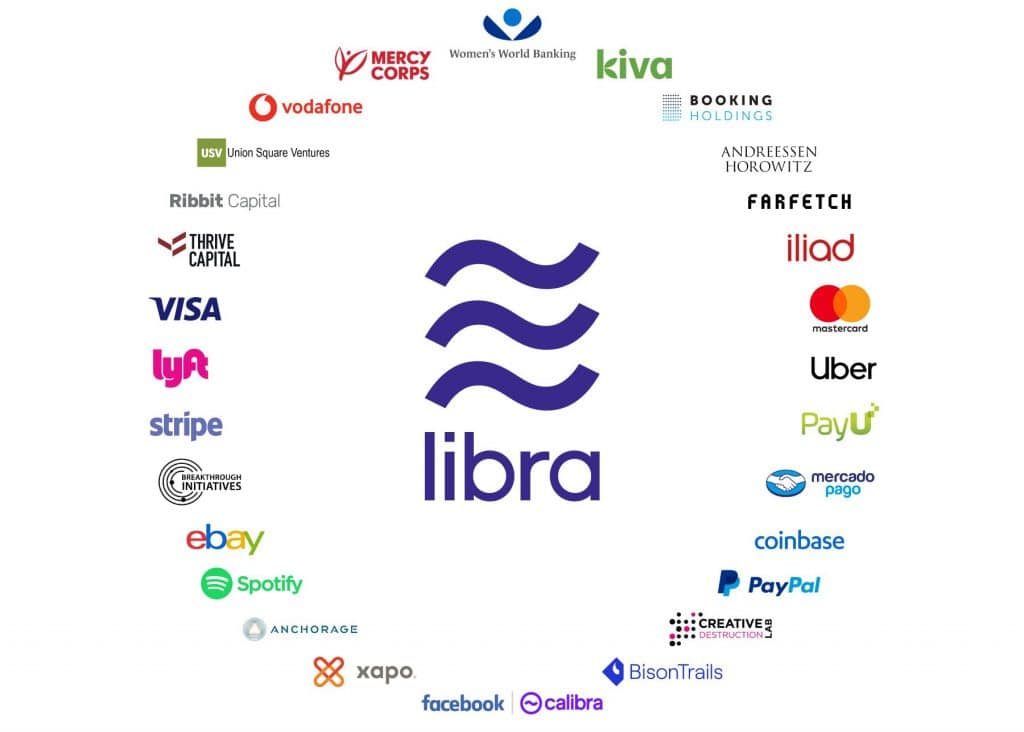
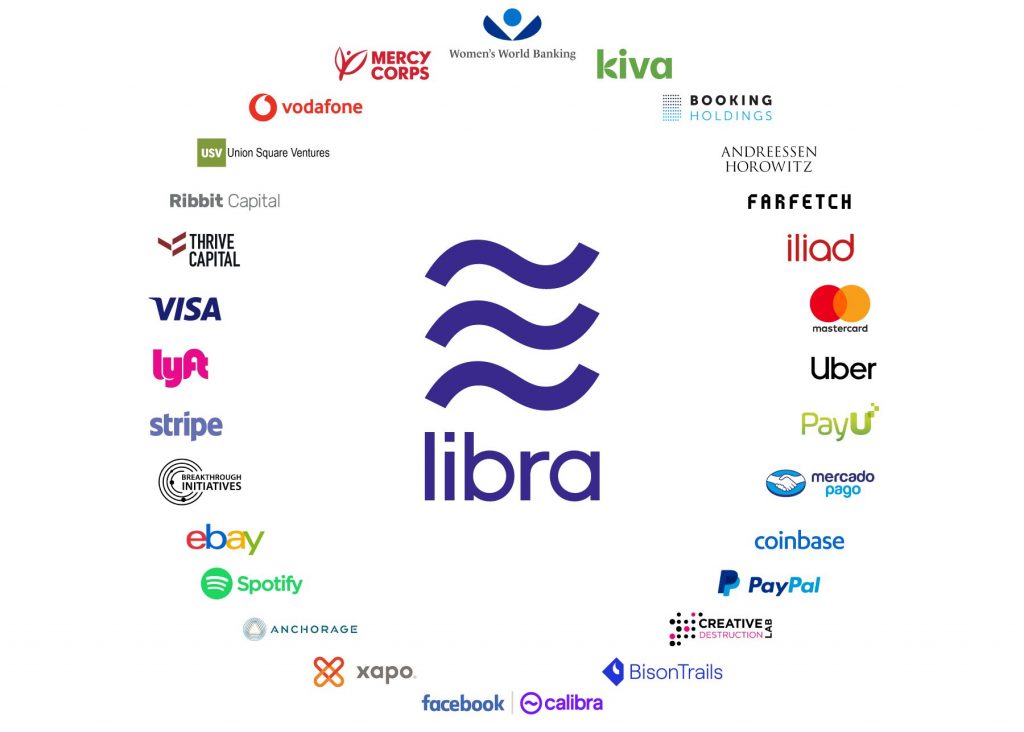
Facebook revealed that it has partnered with the Geneva-based association Libra for the development of its cryptocurrency. The organisation have been founded by some major companies from around the world, including Mastercard, Visa, PayPal, Stripe, eBay, Uber, Lyft, Spotify, Coinbase, Xapo, Andreessen Horowitz, Union Square Ventures, Mercy Corps, and Women’s World Banking, along with Facebook. So these companies will also be playing a crucial role in decisions to be taken for Libra.
Yashica is a Software Engineer turned Content Writer, who loves to write on social causes and expertise in writing technical stuff. She loves to watch movies and explore new places. She believes that you need to live once before you die. So experimenting with her life and career choices, she is trying to live her life to the fullest.