Your Tech Story

Yashica Vashishtha

Yashica is a Software Engineer turned Content Writer, who loves to write on social causes and expertise in writing technical stuff. She loves to watch movies and explore new places. She believes that you need to live once before you die. So experimenting with her life and career choices, she is trying to live her life to the fullest.

nomad Goods

Nomad Goods : The Founders of Most Portable Battery Chargers

Many of the startups, today, have become famous only because of their uniqueness. But, most of the entrepreneurs did not know how and where to start. But, the ones who had strategised all the steps were able to gain success faster than the others. One such team, that was focussed and clear on its goals, was the founders of Nomad Goods, a company that builds consumer electronics accessories, especially the portable charging devices.

The Santa Barbara-based company, initially, known as ChargeCard was founded by Noah Dentzel, Adam Miller and Brian Hahn in 2012. They founded Nomad Goods to bring portable accessories, like the chargers for smartphones, so that people do not worry about draining out the battery of their devices.

Noah Dentzel is a native of Santa Barbara and completed his school education from Santa Barbara High School. Later, he joined the Dartmouth College and completed a Bachelor of Arts (B.A.). He started his career as an intern at Tuenti Technologies, an internet company based in Madrid, later becoming the project manager for the app development team of the company.
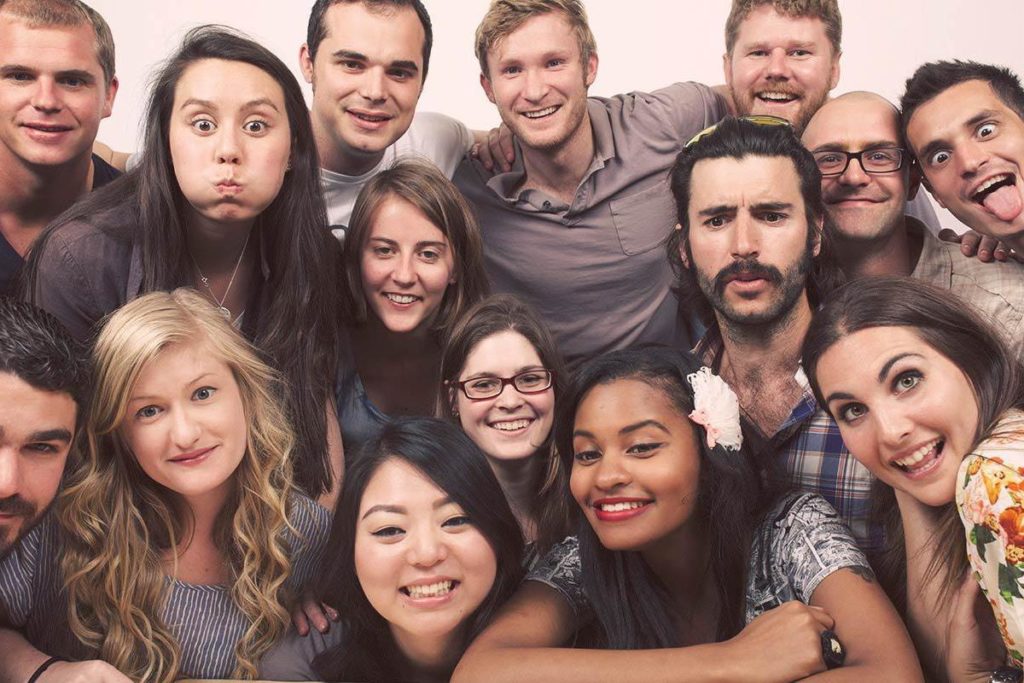
Nomad Goods team
Image Source: circleup.com

During the time he was working at Tuenti, most of the work was done over the phone. Dentzel had a BlackBerry phone and had to carry a charger or a USB cable with him all the time. This annoyed him, but as his work demanded, he had to stay near the charging point all the time. But then, he thought of buying micro USB or any other solution, and looked for the alternative for the long charging cables over the internet, but found nothing.

According to Dentzel, it was one of his friends from the mobile division of his company who gave him the idea of shaping up the cable charger into a thinner charger that looks like a credit card. It was a great idea, and along with his partners, Dentzel started working on the same. Meanwhile, he left his job and debuted the first product of the company on Kickstarter, on 18 July 2012.

The three co-founders did not want to take any risk by putting in a lot of money in the project, rather they decided to launch the product in front of people and know their reaction about it. The three participated in the event with an intention to raise about $50,000. But, since they had brought an amazing idea and a great product to the stage of Kickstarters, they ended up making $161,000 for the company from 5,500 backers.

The uniqueness of the idea was to create minimalist and practical tools, which anybody could carry to any place with them. The first product that Nomad Goods developed was a charger named ChargeCard, with the shape of a credit card and could easily fit into a wallet or a pocket.

Though the company got a really good start, the company had no marketing team, or a customer service department. It was all on the shoulders of the co-founders. So to get the attention of people around the world, they started sending the sample of their product to different writers, and as a result, they got featured in the New York Times. This gave another kickstart to the company.

In 2013, they developed their next product, named ChargeKey, a USB cable of the shape of a key, capable of holding other keys as well, such that the user did not need to carry an extra charger, but his keys were the charger. Another smart step the founders took was that they launched the ChargeKey at another fundraising platform, i.e., IndieGoGo. The launch helped them to raise another sum of $172,000.

In 2014, the company took part in CircleUp, and eventually, raised a sum of $1.2 million. The company hosted its series A funding in the month of November of the same year. Till the mid of 2015, the company had shipped over 150,000 units to its national and international customers.

Since its inception, the company has launched over thirty charging and non-charging products. The most successful charging products from the company includes Pod Pro (a charger for the iPhone and Apple’s smartwatch), RoadTrip (a car charger), Wallet (a charger of the shape of a note capable of giving a full charge to a smartphone), PowerPlant (a charger having two ports supporting multiple charging), etc.

Other than the charging products, the company also produces leather phone cases, leather and silicone Apple Watch bands, wallets, etc.

The company provides battery packs and charging hubs for iPhone, Apple smartwatch as well as Tesla Model 3. There are chargers for BlackBerry and Android smartphones as well. The chargers from Nomad Goods are compatible with almost any USB port you can find, such that you can plug it into any device like TV, game consoles, computers, car stereos, and even electric keyboard and charge your phone or the smartwatch.

Elon Musk Neuralink

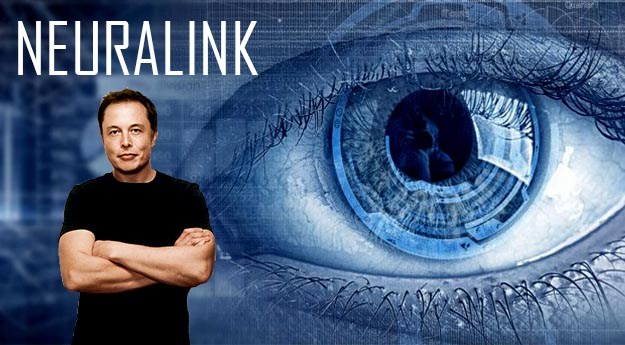
Neuralink : Elon Musk Finally Talks About his Secretive Company’s Brain Control Interface

Elon Musk, the Tesla and SpaceX founder, is always up to something next level. He has been involved in some really big and unique projects, like an online bank, an electric car, a reusable rocket, etc. The CEO of one of the biggest tech giants also owns the secretive experimental company ‘Neuralinks’. Tuesday evening during an event in San Francisco, Musk gave a presentation on the projects that this company has been working on for the past two years.

The company was founded in 2017, and it mainly works on developing the data transmission system between humans and computers. On Tuesday, CEO Musk, on the behalf of Neuralink, introduced devices that can be implanted to a human brain, so that they can operate devices like computer and smartphones through their thoughts.

Musk explained that there will be threads thinner than a normal human hair, which will be connected with a processor inside the human brain. This processor will make the person able to operate various electronic devices through a Bluetooth connection.

Elon Musk Neuralink
Image Source: ingeniousexpress.com

During the presentation, the company demonstrated a computer receiving information from a rats mind. And, in future, the company seeks to get permission from the U.S. Food and Drug Administration to start clinical trials on the human brains. If the company gets the approval, it will start the experiments by the end of the first half of the next year.

According to Musk, Neuralink is experimenting with such devices so that the paralysed people will be able to control through their mind, but with lesser damage made to their neural system than the other already available devices do.

The process of inserting the processor into a paralysed human’s brain will include drilling four 8mm holes into the patient’s skull and then implant the processor connected to 4 to 6 μm thin polymer threads. This will help them operate various devices only through their thoughts. The company intends to use a laser beam to get through the skull in future.

“We will painlessly laser-drill the holes into the skull, place the threads, plug the hole with the sensor, and then you go home. It’ll be an experience like getting Lasik,” said President Max Hodak.

According to a report by the New York Times, the company will be carrying out the early experiments with the neuroscientists at Stanford University.

“It’s not going to be suddenly Nueuralink will have this neural lace and start taking over people’s brains. Ultimately, the company wants to achieve a symbiosis with artificial intelligence. And that, even in benign scenario humans would be left behind.” said Elon Musk during the presentation.

Earlier in 2006, the scientists from the Brown University developed a similar system named BrainGate that enabled a paralysed person Matthew Nagle play Pong using only his mind. But, this was a way stiffer technology and is prone to cause more damage to the human brain.

But the technology used by Neuralink is more flexible. The company has also developed a robot who will insert those threads into the human brain that too six threads per minute.

N26

N26 : Transforming the Financial-services Industry in Europe and Beyond

There is no denial in the fact that technology has taken a huge leap in the past few years and has introduced us with many useful inventions. Whether it is booking a hotel online, getting food delivered at your doorstep, or making big financial decisions on a mobile app, everything is possible now. In simpler words, technology has made our life easier. One such convenient result driven by the use of technology is N26, a Berlin-based fin-tech mobile bank, that has changed the way people of Europe do banking.

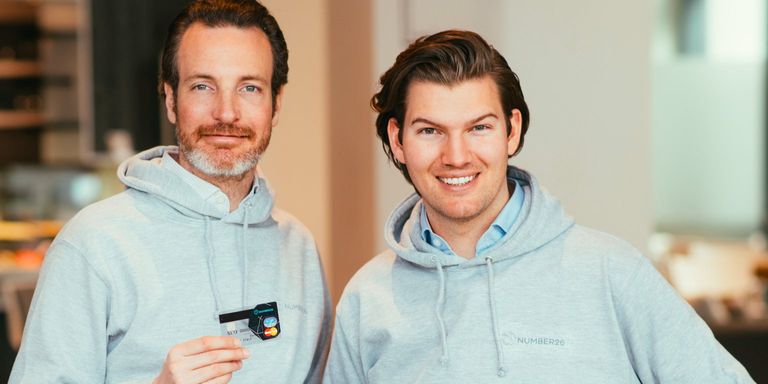
N26 is a banking startup that was founded by Valentin Stalf and Maximilian Tayenthal in 2013. Stalf and Tayenthal both are natives of Vienna Austria. Stalf has got a master’s degree in accounting and finance from St. Gallen University in Switzerland, whereas Tayenthal is a Master’s degree holder in Law from the Vienna University.

After completing his education, Stalf started working with an investment bank. But soon, he moved to Berlin and joined a tech incubator called Rocket Internet, where he worked on fin-tech-related projects. The work he was doing here was quite different from what actually was done in the finance domain of the country. Here, he learned more about how technology can be mixed with finance. He realised that traditional banking is way more complicated, and technology can easily transform the outline of banking operations.

N26 Founders
Image Source: businessinsider.com

Stalf left his job in 2013 to found N26, and the together with Tayenthal, launched the first product of the company in 2015. Founding a fin-tech company in a city like Berlin, where people clearly avoid visiting a bank and does not even use credit or debit cards was not an easy task.

When the two were working on the startup, like every other newbie, they were looking for investors. According to the co-founder and CFO N26, Tayenthal, “They did not take us seriously. If we called ten banks while looking for a partner, about eight of them did not pick up the phone.”

It took them 12 months to launch their first product, and as soon it was launched, it was a huge success. The company gained over 80,000 users just in one year, and the next year, the number was doubled. According to the two co-founders, they never intended to build an online bank, but “Spotify” banking. Stalf calls Uber and Spotify the inspiration behind N26.

The N26 mobile app started with a collaboration with a local bank, and now, it has major names as its partners, like Mastercard, Clark, TransferWise and Auxmoney. Prominent investors, like the Chinese tech giant Tencent, German insurer Allianz, and Peter Thiel’s (PayPal co-founder) venture arm Valar Ventures, are backing the company.

The company does not have any physical bank branches, and there are no ATM machines have been installed in the cities. But the users can use other bank’s ATMs for the withdrawals, and the N26 credit/debit cards are accepted at over 7,000 affiliated retailers, without any extra usage fee. In fact, the users can open a bank account on the N26 app in just eight minutes.

N26 was named as one of the hottest fin-tech startups in 2016. In 2017, the company started its efforts to expand in the US and the UK. In 2018, Stalf received the ‘Founder of the Year’ award from the University of St.Gallen.

The basis of the success of this very app was the user-friendliness it provided to its users. According to the CEO, Stalf, they wanted to create an app that people would love to use, as most of the banking apps are complicated, and the users are bound to use these apps.

In January 2019, the company raised a good amount of $300 million from investors in a round of funding, and ultimately, valued at $2.7 billion, becoming the first fin-tech Unicorn in Europe. The company is currently operating in 24 European countries, including Germany, Austria, France, Spain, and Italy. It is providing its services to over 2 million users signed up to the app and is attracting 2000 users a day.

Since its inception, the company has raised more than $500 million, and over 1000 employees are, currently, working full-time for the company. The company is continuously working to maintain the security of the app and improving its service.

N26 co-founders count their startup among the breed of digital banking challengers, like Revolut, Monzo, Starling and Atom, who are on the mission of replacing the traditional way of banking.

Amazon Prime Day Sale strike

Amazon Prime Day Sale: Over 2000 German Employees Protests on the First Day of Sale

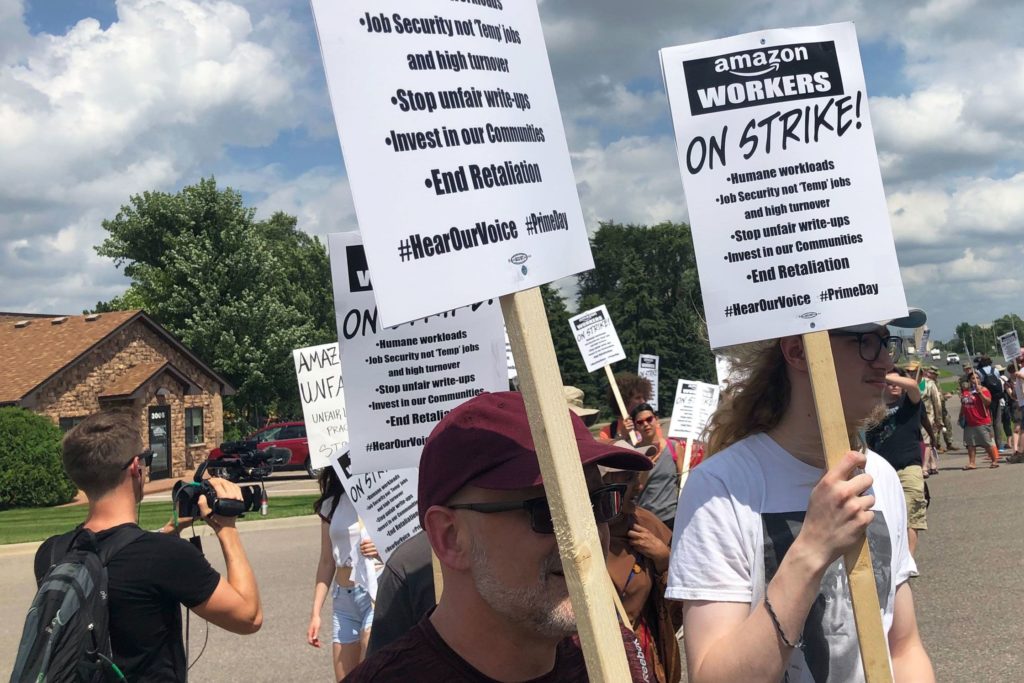
Amazon is hosting its two days Prime Day sale, probably the biggest sale of the year, which started on Monday 15th July, but amid this biggest shopping discount extravaganza, many of its employees have gone on strike. As soon, the sale started, the Amazon workers from Germany started their strike against the company with the motto, “No more discounts on our incomes”.

There has been always an issue for the Amazon workers on the wages the company offers them. According to the employees, the company offers new discounts and free deliveries to its customers by cutting off their salaries, and they can no more handle this. These workers from Germany had already announced that they will stop working during the Amazon Prime Day sale, and employees from the two distribution centres in Bad Hersfeld, as well as sites in Werne, Rheinberg, Leipzig, Graben and Koblenz, went on strike on the same day the sale started.

“We know Prime Day is a big day for Amazon, so we hope this strike will help executives understand how serious we are about wanting real change that will uplift the workers in Amazon’s warehouses,” striker Safiyo Mohamed said in a release.

Amazon Prime Day Sale strike
Image Source: cnbc.com

According to another striker, over 2000 Amazon workers went on the strike on the first day of the sale. But Amazon being aware of the strike to take place on its very important day had said that the strike won’t affect the operations of the sale. In fact, on Monday, the company even made the announcement that it will create another 1,000 jobs in Poland. This announcement by the company also reflected double salary for its Poland workers.

This is not the first time that Amazon workers are on strike, in fact, last year there were over 50 strikes in Europe only. Employees from some of the other countries also took part in those strikes. And, in April this year, the representatives of the worker union of 15 countries had a meeting in Berlin concerning the same issue.

Along with Germany, this time the employees from Minnesota, U.S. also joined the strike during the first six hours of the sale. The Amazon workers from the UK also had planned to strike during the sale.

Along with the low wages, the employees often complain about how the company treats them at their workplace. But as the company had already claimed that the Prime Day sale won’t get affected by the strike, the company still does not seem to be doing anything for the employees. Amazon has clearly said that it won’t be accepting the demands of the employees who have gone on the strike.

Arumugam and A Gopinath

Arumugam : An Indian YouTuber in his Sixties, Influencing Viewers with his Unique Cooking

YouTube has been a blessing for the content creators, and for those, who had never thought that they would face the camera. Now, millions of people are seeing and liking them. In the past five years, YouTube has changed the lives of millions of content creators from different fields, including music, dance, acting makeup, fashion, travelling as well as cooking. One such content creator and one of the most viewed YouTuber is Arumugam. Though the channel is created by his son, A Gopinath, the protagonist of the channel is Arumugam.

A Gopinath is a native of Tiruppur, a small town near Coimbatore in western Tamil Nadu. He earned a diploma in electronics and communication at the age of 20 and started working at a local cable service provider. He then moved to Chennai and began to work for a nameologist, where he edited and uploaded videos on YouTube for the company. After a few months, he left the job at the nameologist and joined the Tamil film industry. He worked as an assistant director in a few small-budget Tamil films, but none of his films got to see the face of daylight. After struggling in the field of film-making for over four years, he returned back to his village in 2016.

Gopinath’s father Arumugam, a building painter, most of the time used to cook food for his family as his wife worked as a full-time tailor in a garment factory. Gopinath had already seen many cookery videos on YouTube. So, looking at his father cooking, the 27-years old Gopinath decided to film his father and put his video on YouTube. For that, he created a channel named ‘Village Food Factory’.

Arumugam and A Gopinath
Image Source: theweekendleader.com

Gopinath made videos of his father cooking food and edited it accordingly. The videos went viral in no time, and people started liking the content. The uniqueness of the content grabbed the attention of most of the people, as Arumugam did not cook the food in a fancy kitchen with ultra-modern tools, but in an open place in the farms and jungle, that too with limited resources.

Arumugam sets up a traditional homely earthen stove and big wide utensils to cook the food. The channel received huge appreciation from its audience. In fact, by November 2016, the duo uploaded over 42 videos on the channel that gained over 66000 subscribers for the channel. In a span of four-five months, the channel had also gained over 30 million views and earned over 2.5 lakh rupees.

According to Arumugam, he received an 8000 rupees cheque the very first time as the earning from his videos, followed by a 45000 rupees cheque in the next month, and the number continued to increase.

To make the videos look better every single time, the father-son duo keeps changing the locations and try to add new-unique elements to it. Arumugam’s wife and his younger son also help him with his videos.

The family is entirely focussed on the channel, where Gopinath’s wife and mother do the pre-cooking preparation, Gopinath films the video and edits it, whereas his father and brother cook in the video. There is minimal talk in the video, but the detailed cooking helps the audience to see the whole process properly. The channel has helped the father-son duo reach even the international audience. According to Gopinath, one day a white man recognised his father in a flight and praised his work.

Gopinath intends to make this channel his full-time job and has already covered over 25% of south Indian dishes in the videos. Currently, the father-son are posting one video a week. The future plans of the two include establishing a restaurant in their native place.

YouTube has become the biggest source of income for many content creators. The idea like Village Food Factory is getting popular among people for its rawness and authenticity. Village Food Factory is among the top ten food channels in India, and currently, has over 250 videos and 3 million subscribers.

FORD-VW autonomous and electric vehicles

Ford-Volkswagen Alliance will Now Focus on Development of Autonomous and Electric Vehicles

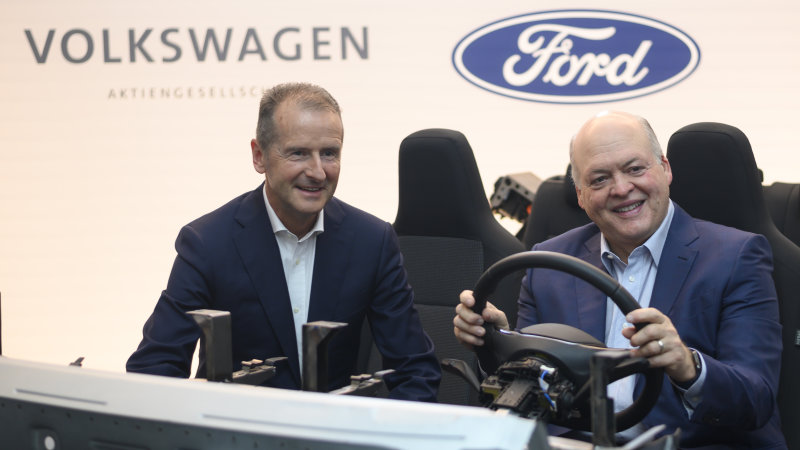
January this year, the two major automobile companies, Ford and VolksWagan, joined their forces to manufacture pickup trucks and vans, and now almost seven months later, the two wants to expand their partnership by adding a few more services in their list that they will be developing together. The two companies have confirmed that they will now be working together to build autonomous and electric vehicles.

In the past few years, many of the major automobile companies have shifted their focus to autonomous and driver-less cars. Those companies have realised the scope of such vehicles and are investing a lot of money in the field.

In fact, Ford is already working towards developing autonomous taxis and has partnered with Argo AI, a self-driving-car developer. Noticeably, Ford announced in 2017 that it will be investing over a billion dollar in the startup (Argo AI) in the coming five years, in order to bring its own autonomous and electric vehicles on the roads.

FORD-VW autonomous and electric vehicles
Image Source: autoblog.com

According to the reports, under the deal between Ford and VW, the latter will also be putting a huge sum of $2.6 billion in Argo AI, as the startup will be playing a significant part in the development work. VW will be paying a $1 billion in cash and the rest of the sum will be paid in the form of assets. The VolksWagso’s Munich-based Autonomous Intelligent Driving team will be joining Argo AI for the development work as one of the assets.

Argo AI is an independent company that has been developing autonomous and electric vehicles for the cities with well-marked roads and which are properly geo-fenced. The company has successfully tested its driver-less vehicles in five U.S. cities, including Pittsburgh, Palo Alto, Detroit, Miami and Washington, D.C.

“Ford and VW will remain ‘independent and fiercely competitive’ in the marketplace. Unlocking the synergies across a range of areas allows us to showcase the power of our global alliance in this era of smart vehicles for a smart world.” the CEO Ford Motor Company, Jim Hackett, said in a statement.

The reports say that with the deal, Ford will get the access to VW’s electric-vehicle MEB platform. The company plans to launch over 60000 self-driving cars, based on the MEB architecture, in a span of six years in the various cities in Europe and will start the mass production from 2023.

Though the companies will be building their own self-driving and autonomous cars on their own, the two will be using the same software and architecture for the development work. The collaboration between the two will help both in speeding up the development and will push the governments to add their support in such projects.