Your Tech Story

Yashica Vashishtha

Yashica is a Software Engineer turned Content Writer, who loves to write on social causes and expertise in writing technical stuff. She loves to watch movies and explore new places. She believes that you need to live once before you die. So experimenting with her life and career choices, she is trying to live her life to the fullest.

Mac Pro

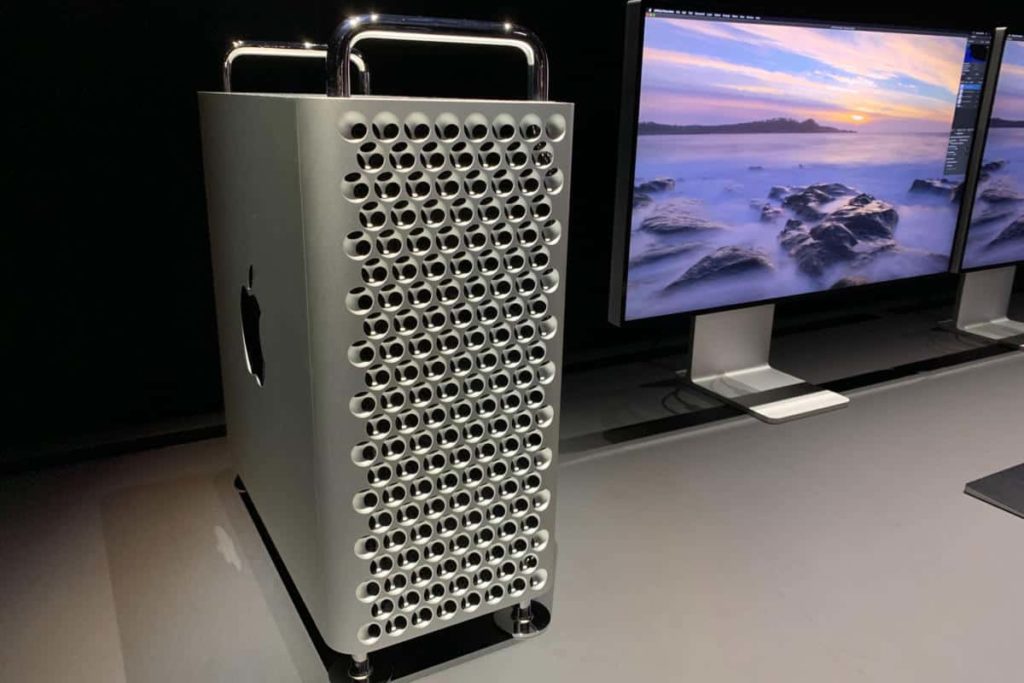
Apple Mac Pro Computers’ Production will Solely Take Place in the U.S.

The China-U.S. trade war does not seem to settle anytime sooner, amid which, many of the tech companies are facing real big issues. Even companies like Apple, despite being the biggest tech companies are not able to escape the heat.

For the past few years, Apple has been importing some of its major Mac components from China, as buying or manufacturing the same parts in the U.S. is a bit expensive. But due to the friction between the two countries, Apple had to make new arrangements for the components. At last, the company has got a green signal from the U.S. government for a cut in the tariffs on in-house manufacturing of the same components.

So finally, Apple now will be manufacturing its new Mac Pro computers solely in the U.S., and that too, in Austin, Texas. The company revealed the news on Monday, but it did not give any hints on when the computers will be out in the market. According to the previous reports from June, the company was planning to do the manufacturing in China, but as the government has given some revise on the tariffs, what can be better than that for Apple?

Mac Pro
Image Source: ilounge.com

“The Mac Pro is Apple’s most powerful computer ever and we’re proud to be building it in Austin. We thank the administration for their support enabling this opportunity. We believe deeply in the power of American innovation. That’s why every Apple product is designed and engineered in the U.S., and made up of parts from 36 states, supporting 450,000 jobs with U.S. suppliers, and we’re going to continue growing here.” said the Apple CEO Tim Cook.

The new Mac computer is the same $5,999 redesigned computer, that the company had revealed at the Worldwide Developer Conference in June. For the manufacturing of the various important parts, Apple has partnered with over a dozen American companies.

Over the China-U.S. trade war, U.S. President Donald Trump also encouraged the U.S. based tech companies for manufacturing the products and their parts within the country. On this, he gave a statement, “Make then in the U.S.A., no Tariffs! A man I have a lot of liking for and respect is Tim Cook, and we’ll work it out, I think they’re going to announce that they’re going to build a plant in Texas and if they do that I’m starting to get very happy, okay.”

If the manufacturing is solely done in the U.S., Apple may spend $350 billion in the U.S. by 2023, contributing to the U.S. economy to a high extent.

Plaid

Plaid : Powering Innovation in Financial Sector by Connecting Apps to Banks

There has been an explosion of multiple payment apps in the past couple of years, to be more precise, last two years. These apps have made it easy for all of us on how to manage our finances and bank accounts, making us able to send and receive money from and into our bank accounts in just a few taps on our smartphone. But is it that easy to do all of these processes? It looks like but is definitely not. These companies create an infrastructure to connect the banks with the app or use a ready-made API for the same. Plaid is one of the companies which creates those APIs for the app makers who then can connect the banks through their apps and provide financial services to their customers.

Plaid was founded by Zach Perret and William Hockey in 2012. Perret is a Duke University pass out with a bachelor’s degree in Science, and William has a degree in Computer Science from Emory University. The two worked at Bain & Company, Perret as a consultant and Hockey as an associate. The two met at work and gelled well due to their common interest, i.e. coding. While working at the company, they discussed ideas for a new startup and started working on some. And, in 2012 finally left their job to start their own business. They moved to New York and spent over eighteen months to conceive the right idea.

Like every other startup founders, it was not their first startup. Before Plaid they had tried their hands on various consumer-based products as well, but none of them worked. Once, they decided to create an app for connecting bank accounts and do the transaction. But it was again a failure.

Plaid founders
Image Source: wsj.com

So they decided to create an infrastructure for connecting the apps and the banks altogether, like a pipeline, moving their focus from consumer-based products. Following that, the two created personal financial management and tracking tool for consumers and named it Sliver. Later, the product was renamed as Rambler, which later won the $5,000 grand prize at the TechCrunch Disrupt NY Hackathon as a winner in 2013. It was the first time that a team made a full-scale financial services application live within 24 hours.

With Rambler, the two co-founded Plaid, an application programming interface, or API, that would do almost every type of banking work, like generating PDFs for the transaction and connecting the banks, just by using a bank customer’s online user name and password. The two moved to San Fransisco to set up an office and join more engineers to work on the product. Along with that, they started looking for investors and got rejected more than 50 times.

Finally, in July 2013, the company was able to raise a $2.9 million in a seed round led by Spark Capital. Later, the company raised a $60 million in Series A and Series B funding. Since then, the company has been growing in every which way. Within two years, the startup idea took the two co-founders of Plaid into the list of Forbes’ 30 Under 30 list in 2015.

According to Plaid, as of December 2018, 25 per cent of people in the United States having a bank account had connected to Plaid through an app. It was a fair increase of 13 per cent in 2017.

In 2019, the company raised a $250 million Series C investment and valued at a $2.65 billion. In total, the company has raised a $310 million investment from names like Andreessen Horowitz, Index Ventures, Norwest Venture Partners, Goldman Sachs, NEA, Spark Capital, etc.

Today, more than 15,000 banks are connected through various apps with the Plaid infrastructure and extend to thousands of apps, including Venmo, Robinhood, Coinbase, Acorns and LendingClub.

box

Box : The Journey from A Class Project to Becoming a Unicorn

File storage has become the biggest issue of the current time. With changing time, the need for storage capacity is also changing. In previous years, some KBs were sufficient, and now, even TBs are not able to fulfil the business requirements. But then, the introduction of the cloud has helped people to cop-up with their needs, such that they can buy as much online storage as they need to store their files on the cloud. This is a similar concept behind one of the successful startups, Box, which is a cloud content management and file sharing service. The founder of Box, Aaron Levie, started working on Box as a college project, which now is one of the Unicorn companies of the Silicon Valley.

Levie was born as Aaron Winsor Levie on 27 December 1985 in a Jewish family, settled in Mercer Island, Washington. He did his middle school from Islander Middle School in Mercer Island, Washington, where he met his best friend, and the future CFO of Box, Dylan Smith. Levie and Smith had always shown an interest in business as well as coding. In fact, when they were in high school, they had already built a few websites for people.

After completing his high school education, Levie joined the University of Southern California to pursue a degree in business and marketing, whereas Smith went to Duke University, and enrolled in a Bachelor’s course in economics.

Dylan Smith Aaron Levie Founders Box
Image Source: techrepublic.com

While at the University of Southern California, Levie constantly kept on working on new projects with his classmates. When he, with his other friends created code files, all of them created separate files on separate devices, so it was difficult for them to bring the code together and run. And this was the time when he realised that there has to be a single place to store files. It was the first pain point towards the development of Box.

At the same time, in one of their business studies class, a new project came up for their finals. Levie chose the same topic for his project that was a big issue for him and other businesses out there, centralised storage system. He wrote a paper for the project that represented the difficulties that the businesses were facing due to the lack of such systems.

While working on the project, Levie realised the scope of the project and decided to take the project more seriously. In 2004, he asked his friend Dylan to join him for help. Levie was working on the front end coding for the project, and then, brought his high school friends Sam Ghods and Jeff Queisser on board, too, to run the engineering work. Along with that, he hired some back-end developers on contract for the backend coding. The $20,000 seed funding for the project, and the company they founded, came from online poker earnings of Smith. They also invested the money that came from their previous projects in the company.

Levie knew the potential of his new project but was not sure what type of industry to target first. He, along with Smith, went to meet various business owners to clarify the same. Finally, they launched their company Box, and the service as Box.net in April 2005. At the end of 2005, the two went to Washington to work together on the project, and Levie took absence leave from his college. Soon, they moved their company to Berkeley, California.

Box received its first angel investment from Mark Cuban, a billionaire from Texas. During the beginning, the service was a consumer service, but the increased demand made Levie turn it into cloud storage and sell it to the businesses. In 2009, Box acquired Increo Solutions for its document collaboration and preview technology.

The company hosted a round of funding led by growth equity firm General Atlantic, where it raised a $125 million, in 2012. It also extended its operations to Europe and built its office in London, England. In 2013, the company in an F series round of funding raised a $100 million.

In 2014, 40% of Fortune 500 companies were using Box as their cloud storage and raised a $150 million in series G round of funding. Box also filed for an IPO at the New York Stock Exchange. The company became public in January 2015 and raised $175 million in the IPO. The IPO valued the company at around $1.6 billion, establishing it as a Unicorn company. In the same year, Box acquired another cloud management company named Airpost. The next year, the company built its headquarters in Redwood City, California. It even reached 44 million users around the world.

Box works in three types of offering, enterprise, business, and personal, IBM, Schneider Electric and Procter & Gamble, being its enterprise customers.

shutterstock

Jon Oringer : The Founder of No Less than Ten Startups, including Shutterstock

Today no business promotion is complete without HD images. Relevant images are the most helpful in grabbing the attention of people for every type of business. Why only promotions? Images help create presentations, websites and fulfil many other purposes. But getting copyright-free images for a cheaper price is not easy. And no one wants to get hit by a copyright strike by just picking an image from the web either. Also hiring models and renting places for clicking those HD pictures is not pocket-friendly. So for these issues, websites like Shutterstock comes for the rescue, where you get lakhs of images for a cheap subscription fee. The website was developed by Jon Oringer in 2003, and since then it has been ruling the stock image industry.

Jon Oringer was born on 2 May 1974 in Scarsdale, New York. He got lucky to get to learn computer programming when he was studying in elementary school at the age of five. So he automatically became interested in programming. As a kid, he had already developed entrepreneurial skills, and when he went to high school, he developed photographs and taught guitar to make money. He completed his school education from the Scarsdale High School. As a teenager, he also repaired computers to earn some extra cash. With his programming skills, he was soon able to create small software and sold them to people.

In 1993, he joined the Stony Brook University to pursue a BS degree in computer science and mathematics. During this time, he built the world’s first pop-up blocker programme and sold over thousands of copies of the same. In 1997, he graduated with a bachelor’s degree and joined Columbia University, where he graduated with an MS in computer science. After the success of the pop-up blocker, he tried hands-on building a personal firewall, cookie blocker and other similar software and was sole owner and employee of about ten companies.

To promote his business, Jon Oringer chose e-mail marketing. But he found out that the mails with images had a better impact on people than without any. In the beginning, he bought stock photos for promotions, but later, it became quite expensive for him to buy images from the third party. So finally, he bought a camera and changed his hobby of photography to professional photography for his business. Later, he started posting the clicked and unused pictures online and invited people to use them. Eventually, it came out to be that he clicked around 100000 in just six months. So he decided to build a website, where he could put all the photographs for downloads.

Jon Oringer Shutterstock
Image Source: forbes.com

In 2003, he developed and launched Shutterstock, a website, where he put 30,000 images filtered from his vast collection. These pictures were based on different scenarios and were best of the 100000 pictures Jon Oringer had clicked. Seeing a good business opportunity in expanding the photo stock business, he took some of his savings and rented a 600-square-foot office in New York for the company. The website offered subscription-based services and cost $49 a month. Like his other startups, Oringer initially took all the responsibilities himself. With time, he started joining his friends for the photography and to ccarry out other operations in the company.

Soon, with the expansion of the company, he ended up hiring professional photographers and contributors to fulfil the demands. In 2006, the company became the largest subscription-based photo-stock company, offering over 570,000 images. From August 2008, the company also started providing videos through its new platform named Shutterstock Footage, and in 2009, it launched Shutterstock for iPad offering free images to the users. It also introduced a new marketplace like Spectrum and Offset for high-quality images and videos.

Oringer filed for an initial public offering for ShutterStock public on the New York Stock Exchange, in May 2012, and in October of the same year, the company went public. After the IPO, the stock value of the company increased drastically, and in 2013, Oringer was a billionaire with a net worth of USD$1.05 billion. The company revenues of the same year reached $2.5 billion, and it also launched an Android app.

Along with new tools and features, the company also started collaborating with different companies, like in 2013, Facebook integrated Shutterstock into its Ad Creator tool. The next year, Salesforce also included the ShutterStock library to its platform. The company also formed a partnership with companies like Penske Media Corporation and Associated Press for a free license for access to their archives.

Oringer, with his skills and experience, took the right opportunity at the right time. This intelligent entrepreneur has been a guest speaker at various educational institutions. He has also received numerous awards for his achievements. In 2013, Business Insider named Oringer the coolest person in all of New York technology. He was also named as the New York’s Technology Entrepreneur of the Year by Ernst & Young.

Facebook Portal TV

Portal TV: New Video Chat Devices from Facebook for Your Living Room

Despite the backlashes for the user’s privacy invasion, Facebook has been always the leader in the field of social media. And, now the company wants to move ahead with its home devices. Last year, the company launched its own video chat device, Portal Plus, which seemed to be vain when people can use their smartphones for video chats. But Facebook had got its plans for the new hardware range. That is why, now the company has unveiled three more home devices in the similar range.

As a part of its connected devices to TV strategy, Facebook has just launched a new video chat and streaming device called Portal TV. The device is specially built for the users to make video calls over Facebook Messenger and Whatsapp, and for that, the company has incorporated a wide-angle video camera and a microphone to the device. The camera is capable of zooming and following the people around the room for the video calls.

Users can log in to their Facebook accounts on the Portal TV by plugging in the Portal device to the HDMI port of the TV, and they are ready to make video calls. The users need to say “Hey Portal” to the device and instruct it to call the particular person (from their friend list). The same procedure goes for Whatsapp. A picture-in-picture feature included in the Portal device lets the users watch Facebook Watch altogether with video calls to their friends, both in one screen.

Facebook Portal TV
Image Source: pocket-lint.com

The company is careful with its users’ privacy this time at least, as Facebook has included the options to turn off the camera and the microphone, simply by tapping on it or by sliding the cover to the camera, whenever they want. Also, like for the Whatsapp chat smartphone app, the chats, video and text, are encrypted, these are encrypted end to end for the Portal TV, too. But again, there is something unusual that the company has included in the device, and that is, human auditors to listen to what the users are talking over the calls to improve the service. Yes, the device will be continuously recording human chattering, and the Facebook contractors will be reviewing the talks. But again, the users can opt-out of this feature anytime.

Other than that, the device also offers streaming various channels, including Amazon Prime, Facebook Watch, Showtime, etc. The users can also play augmented reality games on the TV while making video calls.

The company revealed that it will bring the devices in the market starting from November 5th, and the Portal TV will cost $149.

Along with the Portal TV, the company also announced two more devices, the Portal Mini video chat smart speaker and a redesigned version of its Portal speakers. The Portal Mini costs $129, and the speakers cost $179. These two devices will be available in the market from October 15. However, buying all three devices together will get you an off of $50.