Your Tech Story

Suhani Jain

I am a student pursuing my bachelor's in information technology. I have a interest in writing so, I am working a freelance content writer because I enjoy writing. I also write poetries. I believe in the quote by anne frank "paper has more patience than person

Amazon

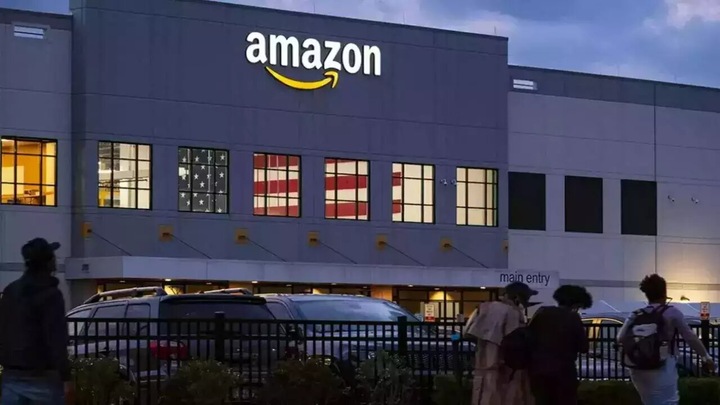
Amazon plans to cut more than 18,000 jobs

Amazon announced on Wednesday that it will eliminate more than 18,000 employees which is a larger number than the e-commerce giant initially stated last year.

Amazon
Image Source: timesnownews.com

The Wall Street Journal had previously reported on the cuts, which Amazon claimed pre-empted its scheduled announcement.

We typically wait to communicate about these outcomes until we can speak with the people who are directly impacted,” CEO Andy Jassy wrote in a memo to employees that the company published on its blog. “However, because one of our teammates leaked this information externally, we decided it was better to share this news earlier so you can hear the details directly from me.”

Source: cnbc.com

Tech firms are picking up from where they left off a year ago in 2023, getting ready for a prolonged economic recession. Salesforce announced on Wednesday that it would decrease its headcount by 10 percent, affecting over 7,000 employees. During the Covid global epidemic, both Amazon as well as Salesforce conceded to hiring too quickly.

Amazon particularly accepted that it had placed too many warehouse staff too quickly since customers shifted to online shopping. At the finish of the third quarter, the firm employed about 1.54 million individuals.

In November, Jassy announced that Amazon would remove positions, such as those in its physical stores, devices, and books divisions. CNBC revealed at the time that tech giant Amazon was planning to lay off approximately 10,000 employees. The figure has risen.

Amazon has weathered uncertain and difficult economies in the past, and we will continue to do so,” Jassy wrote. “These changes will help us pursue our long-term opportunities with a stronger cost structure; however, I’m also optimistic that we’ll be inventive, resourceful, and scrappy in this time when we’re not hiring expansively and eliminating some roles.”

Source: cnbc.com

The company intends to notify staff members who will be laid off beginning January 18, Jassy stated, mentioning that the majority of layoffs will occur in the Experience, stores, and People, and Technology (PXT) groups.

Other major tech companies, including Meta, which possesses Facebook, Instagram, as well as WhatsApp, and other businesses based on the cloud such as software firm Salesforce, have recently revealed significant layoffs.

Amazon has so far declared that it will start reducing projects such as the Echo which is better known as Alexa as well as delivery robots, that were wonderful but did not generate revenue.

Google

Google to pay $9.5 million to resolve DC location tracking lawsuit

Google has agreed to compensate 9.5 million USD as a settlement of a lawsuit filed previously this year by Washington DC Attorney General Karl Racine who alleged Google of misleading users and violating their privacy. Google has also consented to modify some of its methods, majorly how well it notifies users about the collection, storage, and use of their location data.

Google
Image Source: wtop.com

Google leads consumers to believe that consumers are in control of whether Google collects and retains information about their location and how that information is used,” the complaint, which Racine filed in January, read. “In reality, consumers who use Google products cannot prevent Google from collecting, storing and profiting from their location.”

Source: engadget.com

Racine’s office also alleged Google of using “dark patterns,” which seem to be design choices that aim to deceive users into performing actions that do not benefit them. The AG’s office stated that the company repetitively prompted users to enable location tracking options in some specific apps and notified people that such features would not operate normally unless location tracking was enabled.

Racine and his team discovered that location information was not even required for the app in discussion. They claimed that Google made it unlikely for customers to opt out of getting their location tracked.

Google received a pittance of 9.5 million USD. Last quarter, it ended up taking the firm Alphabet less than 20 minutes to generate that much earnings. Modifications to the firm’s practices as a result of the agreement may have a greater impact.

Individuals who have specific location settings enabled will receive messages explaining how to disable each setting, remove the associated data, and restrict the time Google could indeed keep that details. Users who create a new Google account will be informed as to which location-related account options are enabled by default and given the option to disable them.

It will have to keep a webpage up to date with information about its location data practices and policies. This will include methods for users to see their location settings as well as information on how each setting affects Google’s collection, preservation, or use of location information.

Furthermore, without the user’s full permission, Google will be prohibited from spreading a user’s exact location details with a third-party marketer. Within 30 days of receiving the information, the company must remove location information “which came from a device or from an IP address in both web and app activity.”

“Given the vast level of tracking and surveillance that technology companies can embed into their widely used products, it is only fair that consumers be informed of how important user data, including information about their every move, is gathered, tracked, and utilized by these companies,” Racine said in a statement. “Significantly, this resolution also provides users with the ability and choice to opt of being tracked, as well as restrict the manner in which user information may be shared with third parties.”

Source: engadget.com
twitter

Twitter reverses longstanding ban on political advertising

Twitter, the renowned social media networking site, has officially confirmed that it will loosen up the bans on political advertisements that had been placed in 2019.

Twitter opted to lift the long-standing ban on January 3, enabling numerous political actors as well as elected representatives to resume cause-related promos. Elon Musk, the CEO of Tesla, took over Twitter and implemented numerous policy changes.

Image Source: deccanherald.com

This decision was taken when it was revealed that the firm is already in financial trouble. In 2019, the firm chose to prohibit particular types of Politics ads, justifying that political influence must be “obtained” instead of being “bought”.

Although the social media went back on these wordings on January 3.

On the company’s Twitter Safety account, the move was announced with a tweet that read, “We believe that cause-based advertising can facilitate a public conversation around important topics. Today, we’re relaxing our ad policy for cause-based ads in the US. We also plan to expand the political advertising we permit in the coming weeks.”

Source: republicworld.com

Twitter’s advertising policy will now be aligned with the policies of television as well as other media sources, according to the company.

Making it clear that the move is still at a preliminary stage, the company wrote, “As with all policy changes, we will first ensure that our approach to reviewing and approving content protects people on Twitter. We’ll share more details as this work progresses.”

Source: republicworld.com

As reported by the New York Times, Elon Musk has previously stated that among his goals following Twitter, the takeover is to relax its rules regarding content moderation.

Twitter is going through a financial crisis currently, with reports claiming that the firm is cutting significant costs. Previously, the Tesla CEO’s approach to content moderation has startled several top brands.

Some even stopped spending on Twitter because they were concerned about their ads that they would stand alongside controversial tweets. The big brand’s decision resulted in a significant drop in the company’s revenue.

As per the New York Times, the decision to ease restrictions on political advertisements on the site has the potential to increase revenue. The action will entice numerous political actors to return to the platform, especially as various US politicians begin their campaigns for the presidential elections in 2024.

The social media platform is indeed trying to deal with numerous lawsuits, one of which reveals the firm’s financial condition. Previously this week, it was revealed that the firm is currently being sued for failing to pay its deposit for the San Francisco headquarters, highlighting the company’s difficulties.

Luxexcel

Meta buys smart lensmaker Luxexcel to further AR ambitions

Meta is increasing its investment in the metaverse by acquiring Luxexcel which is a Dutch firm that focuses on 3D-printing corrective lenses for smart glasses. The information was first confirmed by the Dutch newspaper De Tijd via TechCrunch, and Meta has now clarified the acquisition to The Verge.

Luxexcel
Image Source: unboxedmagazine.com

We’re excited that the Luxexcel team has joined Meta, deepening the existing partnership between the two companies,” Meta says in a statement provided by Ryan Moore, the company’s head of financial communications.

Source: theverge.com

Whilst details of the deal are uncertain, Meta CTO and Head of Reality Labs, Andrew Bosworth disclosed in a blog article previously this month that the firm is spending “about half” of the metaverse-focused team’s operational costs in augmented reality (AR) with the additional half going toward constructing virtual reality products (VR) since it continues to lose billions.

Luxexcel which was established in 2009, claims to be able to incorporate holographic film and projectors into prescription lenses to develop an augmented reality environment.

In 2021, it collaborated with WaveOptics, the firm that supplies the displays for Snap’s Spectacles, to develop a lens equipped with waveguides, or perhaps the transparent display technology required to overlay virtual objects on a real-world environment of the user.

Just as Meta works on its very first set of AR glasses, it is possible that we will not receive a final piece for some time. According to Bosworth, Meta’s AR glasses will necessitate years of upgrades as the company strives to make the device “slimmer, lightweight, efficient, and more effective.”

As per The Verge’s Alex Heath, the first edition of Meta’s AR glasses would be accessible only to developers, similar to Snapchat‘s Spectacles, with two subsequent pairs potentially becoming accessible to customers over several years.

However, Meta is getting closer to its target, as it has added color video passthrough to its expensive latest Quest Pro headset. It also collaborated with Ray-Ban to roll out the Ray-Ban Stories which is a pair of smart glasses that include cameras, speakers, and also microphones, in 2021. The lenses do not include built-in displays, however, this recent venture may be able to help Meta achieve that in the future.

Google Voice

Google Voice will now warn users of suspected spam calls

Google Voice has to be considered one of the strangest services that the company provides. It’s been in existence forever and has a few deeply devoted users, but somehow it feels like the type of product that’s always on the hit list, threatening to vanish at the whim of Google.

Google Voice
Image Resizer: twistarticle.com

A huge part of that is due to how much of an afterthought Voice is, and while we every now and then see it pick up a brand-new ability or multiple features, it’s nothing short of infuriating to see Google’s Phone app add functionality after feature while Voice is left out. Thankfully, Google is finally catching up, giving Voice the potential to notify users about spam calls.

We can’t really blame you if you can’t recall a moment when Mobile didn’t notify you regarding calls from numbers associated with spam, as the app has done so since the mid of 2016, preceding even the original Pixel phones.

Whilst Google should be intimidated that it has taken this long to introduce these very same features to Voice, we’ve learned to appreciate what we can get from this app.

Google says it is indeed applying the same techniques for Voice as it does for Mobile spam call recognition, so we don’t presume to see a substantial change in false positives/negatives, and, for what it is worth, the current system has performed very well. However, if that fails, people can always manually select a number as not spam, also Voice will recall that preference.

You can send these calls directly to voicemail using the “filter spam” alternative in Voice settings, and even if you don’t, Google will display “Suspected spam caller” to notify you when you receive a call from questionable numbers.

The availability officially starts today and is expected to reach all Voice customers by mid of January, although we’re already seeing spam or unwanted messages in our Voice call logs, back a few weeks.

HTTP Downloads

Google Working To Block Insecure HTTP Downloads In Chrome

Since HTTPS has grown more widespread on the internet, Google Chrome is planning to roll out a security feature that will restrict “insecure” HTTP downloads.

Whilst it used to be the case in that only privacy-sensitive websites, such as banks, required HTTPS encryption, it has now proficiently become the standard, particularly as even more online sites manage our data regularly. Google has been planning to add new security features to Chrome in recent years to promote the use of HTTPS connections anywhere and everywhere possible.

HTTP Downloads
Image Source: sammobile.com

Most prominently, any previous HTTP website is now marked as “Not Secure” in the address bar. Chrome also prevents websites that are secured from using insecure web forms and sometimes provides non-secure installs by default. This mix of safe and unsafe elements is referred to as mixed content.

A while back, the company added an “Always use secure connections” option to Chrome’s security settings. Allowing this directs Chrome to “upgrade” to the HTTPS mode of websites if you happen to navigate toward the unprotected version by accident. If a protected version is not accessible, an on-screen warning appears, asking if you want to proceed.

Google, a renowned search engine technology-focused firm, is planning to broaden that option to protect Chrome visitors from all possibly insecure HTTP downloads, based on a new code refactoring and affiliated explainer. This goes over and above the existing mixed data download protective measures by preventing downloads from any connection, regardless of whether it is affiliated with an unprotected website.

For instance, if you tap on an HTTPS download link and it takes you to an unprotected HTTP server then before finally connecting to an HTTPS server, Google Chrome will flag the download as unsafe. Likewise, if you’re visiting a website that’s only accessible via HTTP, Chrome will block any installs from that site.

Even so, as with Chrome’s other methods of preventing unprotected websites and installs, you will be able to get around the block. In this sense, it serves more as a loud alert to make sure you understand exactly what you’re doing than it is to truly stop users from possibly dangerous areas of the internet.

This upgrade feature to inhibit unprotected HTTP downloads will be sealed behind a Chrome flag at first. However, it is intended that it will be available shortly as a portion of the “Always use secure connections” toggle.

Because the feature is still in development, it is unlikely to be available for widespread testing until Chrome 111, which is scheduled to be released in March 2023, with a full launch following later in the year.