Your Tech Story

Suhani Jain

I am a student pursuing my bachelor's in information technology. I have a interest in writing so, I am working a freelance content writer because I enjoy writing. I also write poetries. I believe in the quote by anne frank "paper has more patience than person

Bosch

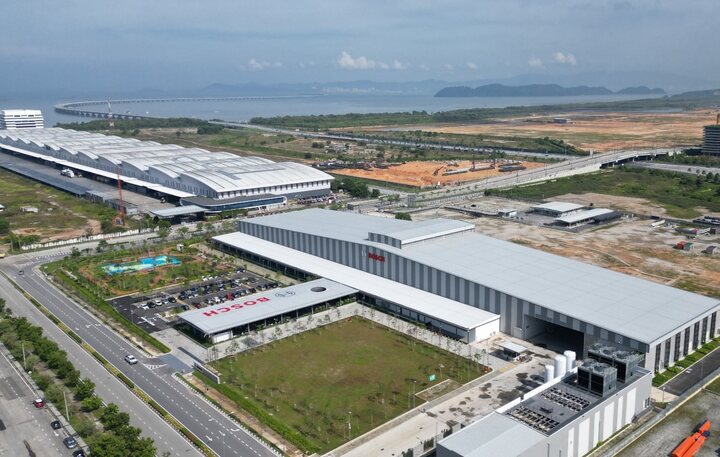
Bosch opens chip test center in Malaysia

The German electronics maker Robert Bosch said on Tuesday that it has launched its latest testing facility for semiconductors plus sensors for 65 million euros approximately $71.62 million in Malaysia and that it had plans to make investments of an additional 285,000,000 euros by the second half of the next decade.

By the middle of the 2030s, 400 more employment may be generated, it noted.

bosch
Image Source: just-auto.com

The majority of Bosch’s final evaluation for semiconductors is presently done in its plants in Germany, Reutlingen, China, Suzhou, and Hungary.

The brand-new testing facility in Penang will join those locations since Bosch is getting support for it from Malaysia.

“With our new semiconductor test center in Penang, we are creating additional capacity within our worldwide manufacturing network to meet the continued high demand for chips and sensors,” said Dr. Stefan Hartung, chairman of the Bosch board of management. “Semiconductors are a decisive success factor for all Bosch business areas, and the expansion of this business is strategically very important.”

Source: bosch-presse.de

On the Penang mainland area, Bosch has an overall of about 1 lakh square meters of property allocated. The brand-new test facility is greater than 18,000 square meters in size and has workplaces, neat spaces, and testing facilities for manufacturing as well as quality assurance.

Also Read: Apple rolling out second public beta of iOS 17 and macOS 14

There are expected to be up to 400 colleagues employed there by halfway through the following decade. With the addition of the new facility and an overall staff of 4,200 employees, Penang has grown to be Bosch’s largest Southeast Asian site.

Frontend production and backend production are the two main divisions in semiconductor production. Malaysia serves as a key node in the worldwide supply chain for semiconductors in the second case. According to estimates, the nation accounts for roughly thirteen percent of the world’s backend manufacturing.

In the past few years, the territory of Penang has produced over five percent of the global semiconductor market’s income, following government statistics.

“The new test center in Penang brings our manufacturing network closer to the companies that serve the further value chain of semiconductor manufacturing as well as to customers in this important Asian market. That shortens delivery times and routes, and it improves our competitiveness,” says Dr Markus Heyn, member of the Bosch board of management and chairman of the Mobility business sector.

Source: bosch-presse.de

Through its semiconductor sector, Bosch has embarked on an agenda of international expansion. The business intends to spend almost 3 billion euros in Dresden as well as Reutlingen during the following three years.

WhatsApp

WhatsApp Launches Instant Video Messages

Instant Video Messages, an updated feature that was initially tested previously this year on both iOS and Android devices, has now been officially released on WhatsApp which is a messaging service owned by Meta. As the name suggests, WhatsApp now allows you to send brief video messages to your family and friends in addition to voice communications.

Whatsapp
Image Source: businesstoday.in

“Video messages are a real-time way to respond to chats with whatever you want to say and show in 60 seconds”. “We think these will be a fun way to share moments with all the emotion that comes from video, whether it’s wishing someone a happy birthday, laughing at a joke, or bringing good news,” WhatsApp said in a blog post.

Source: neowin.net

In the chat window for WhatsApp, the bottom-right voice messaging button now serves two functions. To toggle between video and audio messaging modes, touch on it. You may simply hold down the button to begin capturing a video for sending as an instant video message on WhatsApp.

When you withdraw your finger from the record button, the video will be immediately delivered, similar to voice messages. According to WhatsApp, video communications are also encrypted from end to end and may be locked and recorded hands-free by just swiping up.

Also Read: Binance and its CEO seek dismissal of CFTC complaint

A WhatsApp video conversation can be recorded for up to 60 seconds.

When the receiver accesses the chat window, the video message will immediately begin playing on mute, they may tap on the video to activate the audio.

Videos as communications are not a new concept. The functionality has been available on Telegram for a while and it functions similarly. In addition, the feature of WhatsApp to send video messages is currently being released and will be available to all customers in the weeks to come.

This year, WhatsApp released several new features, including status reactions, the ability to save vanishing messages, connectivity to multiple cellphones, the ability to edit sent texts, Conversation Lock, the ability to block unknown calls, and contextual sticker compatibility.

Additionally, sending messages to unfamiliar telephone numbers has become simpler thanks to instant messaging software. Without first adding the contact information to their contacts, users may SMS contact information from within the app.

Nathan Blecharczyk

From Startup to Success: Inspiring Story of Nathan Blecharczyk

American Entrepreneur Nathan Blecharczyk is the other founding partner and the chief technology officer of Airbnb. It is a personal website where users may look for and post rental properties.

The site provides over 1,500,000 listings in around 34,000 cities in 190 countries around the world. With the assistance of Brian Chesky along with Joe Gebbia, Nathan helped establish the business in 2008, and its main office is located in San Francisco, California.

Nathan Blecharczyk
Image Source: theguardian.com

Before that, he worked as a technical architect, and in 2008, he first encountered the other co-founders. He is currently considered one of the most wealthy and youthful entrepreneurs in America.

Even though Nathan’s actual birthday is unknown, it is believed that he was born sometime in the year 1984.

In 2001, After graduating from Boston Latin Academy, he enrolled at Harvard University to obtain a bachelor’s degree in Computer Science. He decided to start a career in this field after becoming a technological architect as a result.

Also Read: Su Hua: Inspiring Journey of Triumph and Achievement

In February 2008, Nathan Blecharczyk became part of the Gebbia and Chesky teams. The following month, in August of that same year, Airbnb officially went live. They eventually began integrating market assets between hotels along with CouchSurfing. Nathan and his colleagues took a plane to New York to speak with customers in order to advertise the service.

In 2009, the website’s material began to focus less on communal spaces and air mattresses and more on a wider range of residences, such as dwellings, houses, castles, private lodgings, dorms, igloos, tree-house structures, and even exclusive islands.

By 2011, the website has processed 1 million reservations since its launch in 2008. It has reserved ten million nights by the year 2012. Nathan made changes to the website’s layout, its logo, and its mobile app in 2014. His business supported the Manor F1 Team in 2015.

Following the platform’s inception, Nathan and his crew have opened Airbnb facilities abroad in Hamburg, Sao Paulo, Barcelona, Paris, London, Milan, Moscow, and Copenhagen. They said in 2012 that they will be focusing more on Thailand as well as Asia, Australia, alongside Indonesia.

Among the handful of services of its sort is Nathan’s Airbnb. He is enveloping the whole globe on his website with a global point of view. One of the wealthiest and youngest billionaires in America.

Advantest

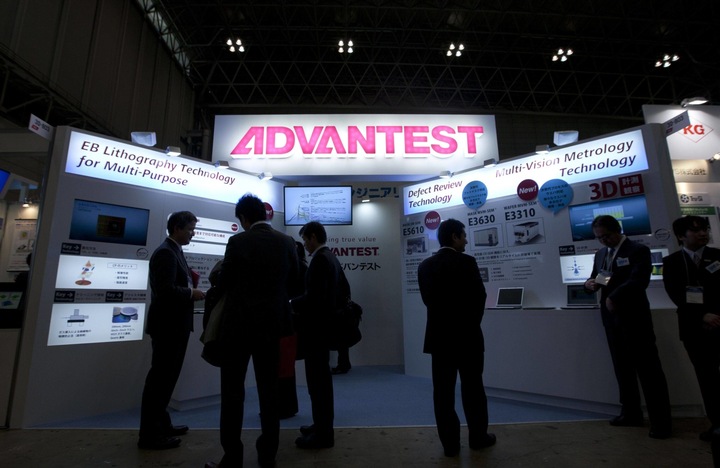
Japan’s Advantest sees AI driving demand for chip testing

On Wednesday, Japan’s Advantest Corporation announced that it expects rapid use of advanced semiconductors for generative artificial intelligence (AI) applications to carry on demand for its chip testing machinery.

“We can expect rapid growth in demand. However, we still don’t have concrete visibility,” Advantest CEO Yoshiaki Yoshida told an earnings briefing.

Source: theprint.in
Advantest
Image Source: japantimes.co.jp

As the world’s interest is grabbed by the potential of ChatGPT and other solutions designed at bringing web services more sophisticated and human-like Advantest stocks have soared 36 percent this year, nearing all-time highs. The corporation anticipates that operational profit would increase by 48 percent to 170 billion dollars in the financial year that ended in March.

The industry is expected to decrease this year as a result of clients hoarding surplus inventory, according to Advantest, a global leader in chip testing machinery together with Teradyne Inc. of the United States.

“Despite the fall this year I believe we will eventually face a growth curve,” Yoshida said. Advantest shares have more than doubled in value since the start of the year.

Source: theprint.in

Microsoft, as well as Alphabet’s child company Google, are one of the first to include generative artificial intelligence into their online tools, but a competing race to establish a dominating artificial intelligence platform in the world’s biggest internet marketplace has begun in China, driven by SenseTime, Alibaba Group Holding, Group, as well as Baidu.

Also Read: Intel, Ericsson to work together on custom 5G chip

Data centers are necessary for managing and developing artificial intelligence models that power anything from smart chatbot assistants to self-driving cars. The best hardware at the moment for real-time data analysis is numerous thousands of graphics processors, which are needed to do it.

According to Bloomberg Intelligence analyst Masahiro Wakasugi, the expanding usage of AI is straining the capabilities of sophisticated packaging and chip miniaturization, increasing the possibility of production errors.

Chip tester requirement is significantly increased as a result, enabling producers to ensure product quality and performance.

Teradyne, a competing company established in North Reading, Massachusetts, is rivaling Advantest. When a client switches vendors, which is exceedingly uncommon because it requires rethinking more machinery or whole lines of production, as well as retraining people, switching testing instruments might result in an important change in market share between the two.

In a couple of years, outstanding performance Graphics Processing Unit chip testers’ global sales would probably surpass those of smartphone chip testers, according to Toyo Securities analyst Hideki Yasuda.

Logitech

Logitech raises sales forecast for the first half of 2024

In the initial batch of economic numbers since the departure of longtime chief executive officer Bracken Darrell from the manufacturer of desktop and laptop accessories a month ago, Logitech International (LOGN.S) upped its revenue and earnings projection for the first quarter of the fiscal year 2024.

“While the markets are still challenging, I am proud of the team’s achievements during our first quarter,” said Guy Gecht, Logitech’s interim chief executive officer. “Our high-caliber seasoned team, design-led engineering, and strong execution truly set us apart. Our latest innovations and elevated outlook are just a glimpse of Logitech’s full potential as we execute our strategic vision.”

Source: news.logitech.com

A computer keyboard and mouse manufacturer reported that the hunt for a replacement was going smoothly and that there will be a follow-up when there is information to tell.

Logitech
Image Source: finance.yahoo.com

Guy Gecht, the interim chief executive officer of Logitech, stated that the financial markets were constantly competitive for the company. Throughout the global epidemic lockdown, individuals loaded up on Logitech’s web cameras and other tools so they could work from home, which led to a boom for the company.

Ever since then, performances have been hampered by decreased spending by firms and consumers due to the recession.

The Swiss-American business was, though, a little more upbeat on Tuesday, stating that it now anticipates first-half revenues of 1.875 billion USD to 1.975 billion USD, higher than the prior estimate of 1.8 billion USD to 1.9 billion USD.

Also Read: Netflix falls as benefits from password-sharing limit to take time

Additionally, the business anticipates non-GAAP operating earnings in the range of 180 million dollars to 220 million dollars for the first half of this fiscal year, up from its earlier forecast of 160 million dollars to 190 million dollars.

In addition, Logitech predicted full-year revenues of 3.8 billion dollars to 4 billion dollars in its first prediction for this fiscal year.

According to the chief financial officer Charles Boynton, Logitech achieved steady success in cutting operational costs and inventories over the three months leading up to the finish of June.

The present economic decline presents a dilemma for Logitech because it hasn’t yet hired Darrell’s replacement. Darrell left last month to take the CEO position at VF Corporation (VFC.N), the company that makes Vans trainers and The North Face outerwear.

Darrell, who oversaw Logitech for ten years, is credited for the company’s comeback through more rapid product introductions and enhanced design.

Ericsson

Intel, Ericsson to work together on custom 5G chip

The most cutting-edge manufacturing procedure Intel has revealed will be used to create a unique chip for telecommunications device producer in Sweden, Ericsson 5G networking equipment, the company announced on Tuesday.

“As our work together evolves, this is a significant milestone with Ericsson to partner broadly on their next-generation optimized 5G infrastructure. This agreement exemplifies our shared vision to innovate and transform network connectivity, and it reinforces the growing customer confidence in our process and manufacturing technology,” said Sachin Katti, Senior Vice President and General Manager of the Network and Edge Group, Intel. “We look forward to working together with Ericsson, an industry leader, to build networks that are open, reliable, and ready for the future.”

Source: ericsson.com
Ericsson
Image Source: verdict.co.uk

Competitors like the Taiwan Semiconductor Manufacturing Company have surpassed Intel in the production of the most minor and most energy-efficient chips. Packing five generations of chip production advancements into a span of four years was a significant component of Intel Chief Executive Officer, Pat Gelsinger’s strategy, which was first unveiled in 2021, to reclaim that advantage and bring the firm around.

According to Intel, the new Ericsson chip will use Intel’s “18A” manufacturing method which would make it one of the first chips from outside users to do so.

“Ericsson has a long history of close collaboration with Intel, and we are pleased to expand this further as we utilize Intel to manufacture our future custom 5G SoCs on their 18A process node, which is in line with Ericsson’s long-term strategy for a more resilient and sustainable supply chain,” said Fredrik Jejdling, Executive Vice President and Head of Networks, Ericsson. “In addition, we will be expanding the collaboration that we announced at MWC 2023 to work together with the ecosystem to accelerate industry-scale open RAN utilizing standard Intel Xeon-based platforms.”

Source: ericsson.com

The release date of the chip was not disclosed by Intel or Ericsson, but the company has indicated before that its 18A manufacturing method will be available by 2025.

Also Read: Stellantis, Samsung SDI set plan to build second US battery plant

The most recent node in Intel’s roadmap, 18A, was released four years ago. They will introduce ribbon architecture innovation along with enhanced performance to Intel 18A upon launching RibbonFET as well as PowerVia in Intel 20A. By 2025, these advancements will aid Intel in regaining the top spot while enhancing its consumer offers.

As the deployments of 5G proceed, completely configurable, open software-defined networks driven by the same cloud-native technologies that revolutionized the data center will be the wave of the future, bringing with them unmatched agility and automation.

The technology sector must cooperate and continue to synchronize network requirements within the framework of one worldwide set of rules to achieve the highest performance, and innovation, along with global scale. To provide their clients with these advantages in the direction of an industry-scale open RAN, Intel and Ericsson work in conjunction with other top technology firms.