Your Tech Story

Sandhya Gupta

I am a law graduate from NLU Lucknow. I have a flair for creative writing and hence in my free time work as a freelance content writer.

Master Plan

Tesla’s ‘Master Plan’ Fails to Impress Investors: What Went Wrong?

On Thursday, Tesla’s stock dropped about 7% after CEO Elon Musk and his team’s nearly four-hour talk fell short of the expectations of investors hoping to learn more about a new, reasonably priced electric car.

At Tesla’s investor day on Wednesday, Musk and more than a dozen execs unveiled brand-new plans to slash assembly costs in half, invest in a new factory in Mexico, and talk about the business’s innovation in operations management.

master plan
Image Source: economictimes.indiatimes.com

The EV manufacturer’s “Master Plan 3” was unveiled at the event, but Musk provided few details about the ideas’ timelines or any potential new Tesla products. Merlin Investor’s founder Guido Petrelli noted, “The biggest surprise coming out of Tesla investor day is that there wasn’t a surprise.”

Also Read: Tesla is getting cheaper. Is it a good move by Elon Musk?

Musk stated that Tesla will construct its upcoming auto plant in Mexico, close to Monterrey, but he didn’t offer any additional information besides the fact that the next-generation vehicle will be produced there.

Tesla’s senior vice president of powertrain and energy engineering, Drew Baglino, verified that construction on the company’s lithium refinery in Corpus Christi, Texas, has begun.

Musk claimed that AI makes him anxious and that a regulatory body is necessary to ensure that this “quite hazardous technology” serves the greater good.

The valuation of Tesla’s shares, which had decreased by roughly two-thirds in 2022, has increased by over 60% this year. “The markets were primed for a big announcement, perhaps on something like a more affordable new model. It may just have been a case of failing to live up to the hype”, AJ Bell’s investment director, Russ Mould, said.

In the past, Tesla events have made waves online, with Musk’s dance moves at the company’s Berlin plant opening in 2022 and an occasion in China in 2020 getting viral on social media. STMicroelectronics and Wolfspeed Inc., two suppliers and manufacturers of semiconductors, were affected by the company’s strategy to use 75% fewer silicon carbide vehicles while maintaining the performance and efficiency of the vehicles. In particular, STMicro will be negatively impacted by the reduction strategy, according to brokerage Equita.

In a move that mirrors the evolution in mobile phone billing, the business also intends to provide limitless overnight home charging in Texas for $30 per month. The company also praised its growing capacity for setting up production facilities rapidly.

The Corpus Christi lithium plant hopes to begin production within a year. Again, Tesla confirmed that the Cybertruck would be released this year, with mass manufacturing beginning in 2024.

Also Read: Elon Musk sells another $3.58 billion of Tesla shares

The US electric vehicle marketplace leader’s transformation from a niche player to a well-known automaker is the foundation of the new corporate strategy. Tesla released its two prior strategic plans in 2006 and 2016.

More than ten years ago, Musk released his first Master Plan, which outlined Tesla’s go-to-market plan of developing an electric sports car first, followed by a line of more affordable vehicles. With the Roadster, the Model S, and finally the Model 3 sedan—its least expensive model with a starting price of about $43,000—the business has carried out this vision.

age verification tools

Instagram starts testing its age verification tools in more countries

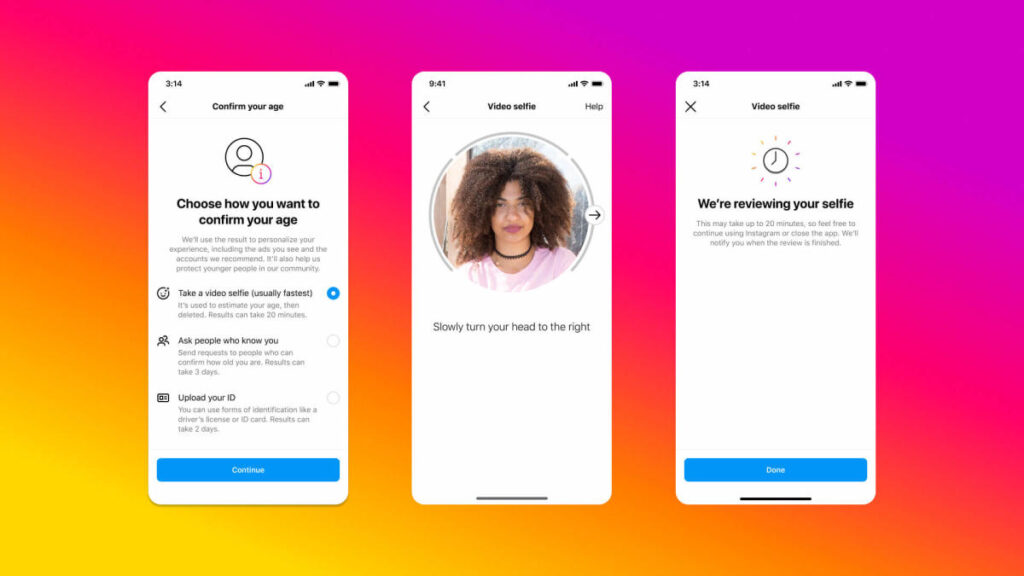
Meta revealed that it had begun trying its Instagram age-verification tools in additional nations, including Mexico and Canada. In June of last year, the social networking app started experimenting with three new ways for people to verify their age: uploading their ID, making a video selfie, or requesting friends who know them to do so.

age verification tools
Image Source: news.yahoo.com

Instagram would ask a user to verify their age with one of the three ways if they tried to change their birth date from under 18 to 18 or older.

Also Read: Google expands Gmail client-side encryption to more users

The test was first made available in the USA, and in October it was also made available in Brazil and Japan. Currently, more nations in Europe, Mexico, Canada, South Korea, Australia, and Japan are testing the age verification tools. In the upcoming months, Meta intends to make the tools accessible on a worldwide scale.

You can present an ID, such as a passport or a driver’s licence, to prove your identity. In this case, Instagram will keep your ID on its systems for 30 days before deleting it. You can use the video selfie approach if you do not have a valid ID. For this choice, Instagram has teamed up with London-based digital identification start-up Yoti.

Once you submit a video selfie, Yoti receives it and uses specially trained AI to confirm your age. Both businesses erase the data after the verification procedure is finished. The third method of age verification is known as “social vouching,” and it entails asking mutual followers to attest to your age.

The individual providing the vouch must be at least 18 years old and cannot be providing a vouch at the same time for another person. You will be asked to confirm your age, and the three individuals you choose to vouch for you will have three days to do so.

The people who are vouching for you will have the option to indicate your age range, such as under 13, 13–17, 18–20, 21, or older, or I’m not sure. Your age verification will only be accepted if all three of them select the same choice.

According to Meta, since it began trying age verification on Instagram last year, its evaluations have shown that it was able to thwart 96% of the teenagers who tried to change their birthdays on Instagram from under 18 to 18 or over. In an effort to prevent users under the age of 13 from signing up for the app, Instagram began requesting new users to enter their birthdates in 2019.

Also Read: Microsoft brings iMessage to Windows 11, will it last?

The social media platform made submitting one’s birthdate a requirement starting in 2021. The same year, it introduced teen-friendly restrictions like the ability to ban DMs from unauthorized adults and make profiles private by default for individuals under the age of 16.

James Dyson

Inventive Journey of James Dyson: From Failure to Success

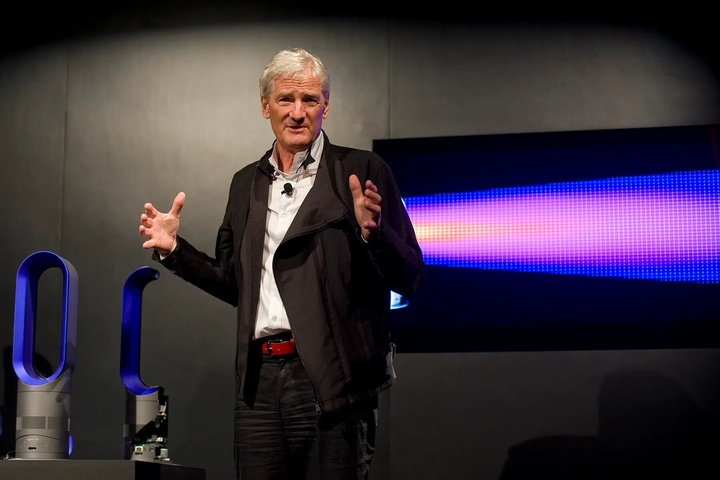
James Dyson is a British industrial designer, billionaire businessman, farmer, and inventor, who established Dyson Ltd. He is best known for developing the dual cyclone bagless vacuum cleaner that employs the cyclonic separation principle. With an approximate wealth of £23 billion, he is the second-richest individual in the UK, as per the Sunday Times Rich List 2022.

James Dyson
Image Source: wired.com

Early Life

James Dyson encountered many setbacks and disappointments from his earliest years. But he was adamant about making a significant impact on the world. While a student at the Royal College of Art in 1970, Dyson contributed to the creation of the Sea Truck.

His first unique creation, the Ballbarrow, was a wheelbarrow modified to use a ball in place of the wheel. This was covered by the BBC television show Tomorrow’s World.

Also Read: Alexandr Wang: From MIT Dropout to youngest billionaire

He made the decision to monetize this and build a company around it. James Dyson initially attempted to sell directly to the garden and home shops, but no one was interested, so he established a mail-order business and sold the Ballbarrows to customers.

While it was originally a huge success, over the period there was a decline and the business was engulfed in enormous amounts of debt. He made the decision to monetize this and build a company around it.

James Dyson initially attempted to sell directly to the garden and home shops, but no one was interested, so he established a mail-order business and sold the Ballbarrows to customers. While it was originally a huge success, over the period there was a decline and the business was engulfed in enormous amounts of debt.

Success Story

James Dyson was no longer trusted by anyone, but he wasn’t quite ready to give up. Despite being exhausted, despondent, and heavily in debt, he had plenty of creative ideas. His biggest strengths were in this. He proceeded to start over completely from the beginning.

Dyson came up with the concept of using cyclonic separation in the late 1970s to make a vacuum cleaner that would maintain suction as it gathered up dirt. After five years and roughly 5,127 prototypes, Dyson released the “G-Force” cleaner in 1983, partially funded by his wife’s income as an art instructor.

Dyson’s product was introduced in Japan via catalog sales because no maker or dealer would handle it in the UK because it would disrupt the lucrative industry for replacement dust bags. It received Japan’s International Design Fair Prize in 1991.

In 1980, he submitted a number of patent applications for his dual cyclone vacuum cleaner, EP0037674. Following the main manufacturers’ rejection of his invention, Dyson founded his own manufacturing business, Dyson Ltd.

The Dyson Dual Cyclone outsold some of the businesses that turned down his invention and went on to become one of the most well-known brands in the UK.

Also Read: From Engineer to Entrepreneur: The Rise of Kyle Vogt

From 1986 to 2001, Dyson leased the technology in North America to Fantom Technologies before entering the market on its own. As a result of his success, other significant makers started to sell cyclonic vacuum cleaners of their own.

Hoover (UK) was sued by Dyson in 1999 for violating their patent. According to the High Court, Hoover intentionally duplicated a key component of his patented designs when creating its Triple Vortex bagless vacuum cleaner line. Hoover consented to make a £4 million loss payment.

James Dyson has demonstrated to us the value of tenacity and creativity. His failure served as motivation for his achievement.

Meta

Finally, Meta’s AR/VR roadmap is out. Will Meta succeed again?

With a surge of AR (augmented reality) and VR (virtual reality) products, the parent company of Facebook, Meta now appears to be significantly investing in its metaverse plans.

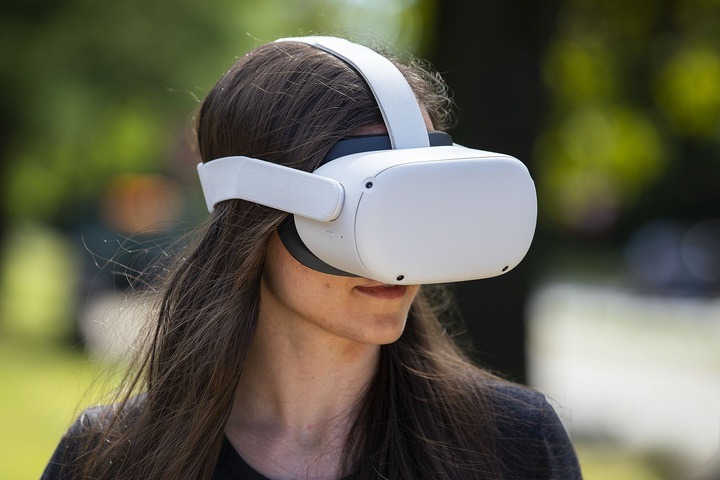
Quest Pro, a premium virtual and augmented reality headset from Meta, was introduced in October of last year. According to reports, Meta plans to introduce its first set of smart glasses with a display in 2025 along with a smartwatch with a neural interface to operate them.

Meta
Image Source: theverge.com

According to the story, Meta’s AR glasses are anticipated to become available later in 2027. A Quest 3 headset is probably included in the social media juggernaut’s potential 2018 plan as well. In 2024, it might also reveal a headgear with the codename Ventura.

Also Read: Snapchat launches A.I. chatbot powered by OpenAI’s GPT

The Verge reported that the potential roadmap for many AR and VR devices from Meta for the years 2023 through 2027 has been leaked. The Meta Quest 3 headset with mixed reality interactions will be revealed later this year, according to the story, which cites personnel of Meta’s Reality Labs division.

The main headset could be two times as thin and potent as the Quest 2 and is anticipated to cost more than it does at present. The Verge reported that the potential roadmap for many AR and VR devices from Meta for the years 2023 through 2027 has been leaked.

The Meta Quest 3 headset with mixed reality interactions will be revealed later this year, according to the story, which cites personnel of Meta’s Reality Labs division.

The main headset could be two times as thin and potent as the Quest 2 and is anticipated to cost more than it does at present.

According to the report, the Mark Zuckerberg-led company intends to release a more “accessible” headset next year under the codename Ventura. The firm might then release an advanced headgear with photorealistic Codec Avatars, code-named La Jolla.

Additionally, the report claims that the company will introduce the second-gen of its Ray-Ban Stories this fall. The glasses for augmented reality were created in collaboration with Luxottica, the parent company of Ray-Ban.

The third version of smart glasses with a “viewfinder” display for reading incoming texts, scanning QR codes, and instantly translating written text from another language is expected to be unveiled by the company in 2025.

Also Read: Microsoft brings iMessage to Windows 11, will it last?

The “neural interface” band that will enable individuals to operate the glasses through their brains will be distributed along with them.

The “neural interface” band, which would enable users to operate the glasses through hand gestures, will be made available along with the glasses. According to other reports, Meta is also working on a smartwatch that will sync with smart glasses.

Additionally, it has been reported that Meta may reveal its long-rumored Orion augmented reality glasses to staff members internally in 2024. It might be accessible to everyone after 2027.

Twitter

Jack Dorsey’s New ‘Decentralized’ Twitter Hits the App Store

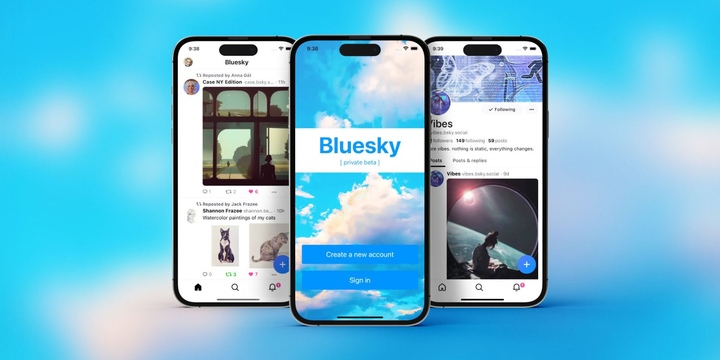
More beta testers are getting access to Bluesky, the Twitter substitute supported by Jack Dorsey, co-founder and CEO of Twitter. Even though the application is still only accessible via invite, its appearance on the App Store suggests that a public debut may be close.

Initially intended to be a “decentralized social network” and a Twitter extension, Bluesky eventually split off to create its own network.

Twitter
Image Source: coinscreed.com

Early in the previous year, the company made the announcement that it had become independent, writing on Twitter, “Both Twitter and Bluesky realized that our independence is important to the success of the project, which is why we established an independent company to ensure that we serve the broadest possible interests.”

Also Read: Twitter Cuts More Engineering, and Product Jobs to Curb Costs

Last year, Bluesky reported receiving $13 million to guarantee it had the autonomy and liberty to begin working on R&D. It also mentioned having Jack Dorsey on its board of directors. Furthermore, it stated that the funding provided by Twitter to Bluesky was “not subject to any conditions except one: that Bluesky was to research and develop technologies that enable open and decentralized public conversation.”

Authenticated Transfer Protocol, or AT, is Bluesky’s primary focus, and the Bluesky mobile app functions as a demonstration of the protocol in use. AT gives users the ability to build a federated, decentralized social network in a manner akin to the ActivityPub system that powers Mastodon.

The project has drawn some criticism, particularly from Mastodon and other devs who noted that ActivityPub, a suggested W3C standard, already drives a sizable and expanding “Fediverse” of connected servers. And since Musk bought Twitter, Mastodon, an open-source, decentralized alternative, has been growing in popularity among Twitter users who switched to the fediverse.

Users who want to participate can send their emails to be added to a waiting list and download the Beta app from the App Store, which is available only by invitation.

The interface of Bluesky, according to TechCrunch, is similar to that of Twitter with a few minor variations, such as asking “What’s up?” in the text box rather than “What’s happening,” but it simplifies it through the addition of a plus icon to add 256 characters with the feature to add pictures.

Moving to Bluesky might be seen as a hassle given the destruction of much more than a decade’s worth of tweets, recollections, and hot takes, leading users to wonder why they should do so. In 2021, during the Twitter ban imposed by then-president Donald Trump, Dorsey began pushing the concept of Bluesky. He challenged if the suspension was the best course of action.

Also Read: Uber’s Redesigned App Puts The Focus On Personalization

An open and free global internet can’t be eroded by these things, according to Dorsey, who also argued that the platform should examine how its service might encourage damage and diversion.

Dorsey stated that he thought Bluesky would separate from Twitter in a manner that would slow content moderation on larger platforms and lessen their influence over who is in charge of moderating that content.

windows 11

Microsoft brings iMessage to Windows 11, will it last?

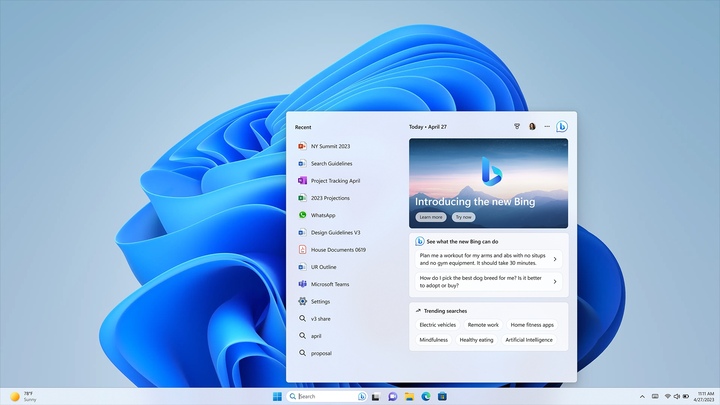
Microsoft announced on Tuesday that it intends to counter one of the major advantages enjoyed by Apple products by incorporating fresh interoperability features to Windows 11. These features will enable Windows 11 to interact with iPhones to view notifications, send texts, and make and take calls.

Windows 11
Image Source: androidauthority.com

By connecting an iPhone and a Windows 11 computer via Bluetooth radio, the new feature, which Microsoft is dubbing Phone Link for iOS, will enable “basic” support for calls, texts, and app alerts.

The software is initially only available for limited public testing, and it prevents users from sending multimedia messages like pictures and videos or joining group message chats.

Also Read: Are all Google One subscribers now able to access Magic Eraser?

The feature’s announcement was made in a blog post by Microsoft’s chief product officer, Panos Panay. “This builds on our continued efforts to bring you closer to what’s more important,” he wrote. Microsoft’s attempts with its Phone Link software are merely the most recent in a line of initiatives to better integrate Windows PCs with Apple’s well-known products and services.

In particular, Apple’s iMessage tool for texting and iCloud for pictures, documents, contacts, and calendars helped make numerous sync and messaging services for smartphones popular.

Additionally, it has made use of those technologies to link up its Mac computers, iPad tablets, and iPhone smartphones in a way that observers of the market say makes Apple products stick out.

However, over the last few years, Microsoft has released enhancements that make Windows Computers more similar to Apple products, including an updated photos app that supports Apple devices, more iCloud syncing, and a phone link application for devices running Google’s Android operating system.

Microsoft announced on Tuesday that its new features for Android smartphones would be included in the Windows 11 upgrade, including the capacity to switch on a Samsung device’s personal hotspot from a computer.

According to Microsoft, Samsung customers will also be able to access websites they recently viewed on their phones from a computer. Both features have long been accessible on Apple devices.

Microsoft is starting testing with a “small percentage” of testers this week, but if you’re intrigued, you can test the new Phone Link feature for iOS in the Dev, Release Preview, and Beta networks for Windows Insiders.

Also Read: Will the iPhone 15 Pro have as much RAM as a MacBook?

The Windows team at Microsoft stated in a blog post, “We will increase the availability of the preview to more Insiders over time and based on feedback we receive with this first set of Insiders.”

Microsoft has never before supported calls or messaging for iPhone users, so this is a move in the correct direction. The Phone Link interface for iOS is basic in comparison to what’s available for Android. Contrary to other PC link applications we’ve seen from Dell, Intell, and others, Phone Link is included with Windows 11, making it native as well.