Your Tech Story

Sandhya Gupta

I am a law graduate from NLU Lucknow. I have a flair for creative writing and hence in my free time work as a freelance content writer.

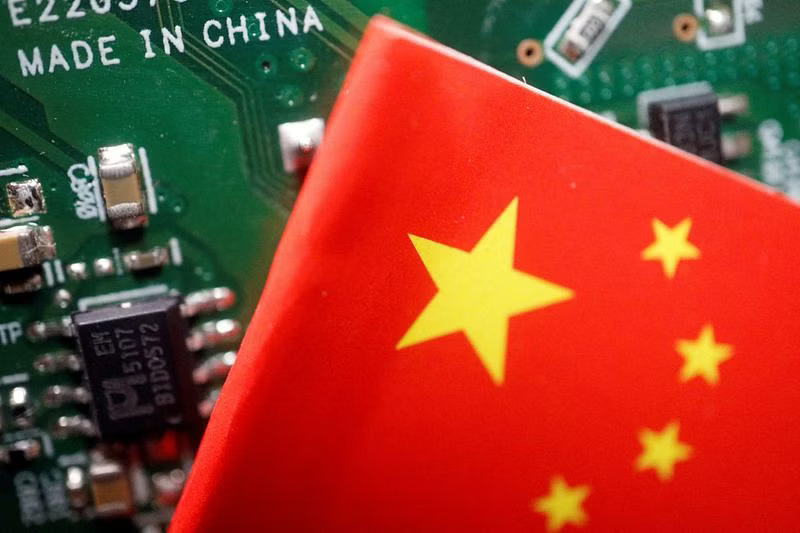
chip

Will China’s new policy help to tackle the chip talent shortage?

China is stepping up efforts to cultivate domestic semiconductor ability as it attempts to quickly fill a skills gap that has been exacerbated by American efforts to restrict Beijing’s access to cutting-edge chip technology.

Thanks to increased funding for prestigious universities and a boom in smaller, private schools with an emphasis on shorter-term education, enrollment in undergraduate and graduate programs has increased over the past five years.

chip
Image Source: theprint.in

While entry-level salaries have doubled, certain graduates with degrees in other fields are being drawn into the expanding sector. A white paper estimates that China will be short 200,000 industry employees this year.

Also Read: Why are OPPO and OnePlus exiting the UK and Europe markets?

Closing this gap is becoming even more crucial since the U.S. wants to cut China out of global supply chains due to concerns that any advanced chips it produces will ultimately be used by China’s military.

Liu Zhongfan, a member of the Chinese Academy of Sciences, told local media earlier this month that China needs to prioritize developing talent even over finding quick fixes to its supply-chain problems.

Students and experts, however, told Reuters that more modern schools in Taiwan and the US give more practical industry experience than China’s emerging chip curricula. According to a poll conducted in 2022 by the Chinese research company ICWise, more than 60% of students majoring in chip engineering in China graduate without having held a relevant internship.

Professors at Chinese colleges are frequently rewarded for writing papers rather than imparting cutting-edge techniques that are helpful in a company lab or chip manufacturing facility.

Taiwan Semiconductor Manufacturing Co. (TSMC), a leading chip manufacturer, has set up research facilities at four universities in Taiwan. In China, there have been some moves in this direction. Semiconductor Manufacturing International Corp (SMIC), its largest chip foundry, announced in 2021 the establishment of a School of Integrated Circuits at Shenzhen Technology University.

According to Hu Yunwang, founder of a Shanghai-based employment agency for chips, the average yearly salary for an entry-level engineer in the industry has increased since 2018, from approximately 200,000 yuan ($28,722.43) to 400,000 yuan, underscoring the supply-demand imbalance.

Also Read: Accenture to Cut 19000 Jobs as IT Spending Slows

With chip engineering training programs that claim to offer a fast track and primarily target graduates who specialized in a topic tangentially associated with chip engineering, several private schools have popped up to provide a temporary answer.

A former engineer from Arm Ltd. founded EeeKnow in Shanghai in 2015, offering in-person courses on topics like “Cortex-M3 MCU front-end design and verification in 60 days,” costing between 2,000 and 4,000 yuan.

OnePlus and Oppo

Why are OPPO and OnePlus exiting the UK and Europe markets?

According to reports, the ongoing conflict between Nokia, OnePlus, and Oppo is getting worse as the two BBK Electronics-owned businesses have allegedly decided to pull their devices out of some European markets. France, the U.K., Germany, and the Netherlands are among these countries.

Oneplus and Oppo have been having difficulties in Europe for a while. A patent dispute between the two businesses and Nokia has essentially prevented them from marketing their goods in Germany. The two Chinese smartphone companies had to stop their sales in Germany after losing a patent lawsuit with Nokia.

OnePlus and Oppo
Image Source: fonearena.com

According to a report from the European patent news siteJuve Patent, the latter accused OnePlus and Oppo of using their patented technology for processing 4G and 5G signals without paying the license fee.

Also Read: Why is Meta being sued by its home county, San Mateo?

Numerous 5G patents are held by the Finnish tech firm Nokia. Some Chinese smartphone manufacturers, like Oppo and OnePlus, are having issues as a result of this. In July of last year, a German court declared that Oppo and OnePlus were unauthorized users of Nokia’s 5G technology.

The judge warned them to come to an agreement on a reasonable fee for using the technology or risk losing the right to sell their smartphones. The judge prohibited Oppo from retailing its smartphones after they were unable to come to an agreement.

An Oppo representative told Android Police, “OPPO and OnePlus are committed to all the existing European markets. We had a great start in 2023 with the successful launches of several products in Europe and have a line-up of upcoming products for the rest of the year.

As always, OPPO and OnePlus will continue to provide more innovative products and the best-in-class service for users moving forward.”

Nokia demanded an “unreasonably high fee” for patents, according to a statement made by OnePlus’ head of communications Spenser Blank to The Verge. He also reaffirmed the suspension of OnePlus phone sales in Germany.

Oppo is reportedly getting set to stop operating in Germany and the UK, according to the Chinese publication 36Kr. It claims that even though Oppo devices are popular in Europe, the company’s return on investment isn’t very high. The business is essentially losing money.

This made some sense for Oppo in the past because it was optimistic about long-term gains due to its cautious strategy to European markets. The company’s stance appears to have been altered, though, by increasing worries about macroeconomic events like rising prices, the Russian invasion of Ukraine, and a contracting smartphone market.

Also Read: Accenture to Cut 19000 Jobs as IT Spending Slows

Oppo and OnePlus, despite being well-known brands in the technology industry, shipped significantly fewer smartphones in Q2202 to European consumers.

According to a report from Counterpoint Research, OnePlus shipped even fewer smartphones than Oppo did, accounting for just 5% of the European market. Although the move wouldn’t be completely unexpected, it wouldn’t be beneficial to competitors and would give consumers fewer options.

Dark and Darker

Why is Dark and Darker no longer on Steam?

Renowned hardcore action RPG Dark and Darker, created by Ironmace, is still embroiled in legal issues because Nexon, the distributor from South Korea, issued a cease-and-desist order that caused Steam to remove the game.

The DMCA takedown notification that Nexon has issued is the most recent in a string of legal actions the company has taken against the hapless independent publisher.

Dark and Darker
Image Source: wccftech.com

It all started with claims that former employees had used stolen assets and codes in Dark and Darker. In Dark and Darker, gameplay that is reminiscent of Escape from Tarkov’s survival extraction is combined with aspects of traditional dungeon crawling.

Also Read: Is it possible to transfer games between PCs and Steam Deck?

Dark and Darker’s gameplay loop immerses players in a hostile dungeon where their objective is to endure until a portal appears and they can escape. Currently, in open beta, the game has experienced a huge increase in popularity and has rapidly risen to the top of the charts on Steam. However, the Korean publisher Nexon has taken note of this achievement.

According to Nexon, the founders of Ironmace were discovered trying to steal code and other resources from the P3 project and then utilizing these assets to make the popular game Dark and Darker.

Although Ironmace has formally refuted these claims, the legal dispute has reached a point where Korean police have recently searched the company’s headquarters. A cease and desist order was issued on March 24 and, apparently overnight, the game was taken down from Steam.

Players first noted that the game’s online functionality, assets, and screenshots had been removed and that the game had vanished entirely from the platform.

The delisting of Dark and Darker from Steam, one of the biggest and possibly the most significant gaming platforms, could deal a fatal setback to the title as it continues to undergo beta testing. Ironmace must submit a Counter-Notice to Steam, agreeing to the authority of a US Federal Court, and describing why Dark and Darker was incorrectly flagged under risk of perjury in order to have the game relisted.

After that, Nexon has 14 days to file a lawsuit against Ironmace in US Federal Court. Steam will relist the game if no suit is launched. To prevent costly litigation, Ironmace and Nexon will probably settle these disputes in a settlement agreement.

Also Read: We may soon get an Xbox mobile gaming store. Is it a good move?

The competitive and well-liked game Dark and Darker is regarded as an independent treasure by many. Nexon has a lot at risk in this conflict as evidenced by its actions, including the removal of the game from Steam and high-profile accusations of theft made by the Ironmace team.

To prove the veracity of its mission and the studio as a whole, Ironmace must succeed. The fate of Dark and Darker and Ironmace as a whole is currently very up in the air, but one thing is for sure: the RPG and the dungeon-delving audience will be eagerly awaiting the outcome of the impending legal dispute

Twitter

Twitter to Begin Culling Legacy Verified Marks From April 1

Next week, Twitter will start removing the legacy verified marks from user profiles. The company is moving towards a system where only paid subscribers and people who are part of approved organizations have that status.

Since November 2022, Twitter Blue members may also show the blue “verified” checkmark on their profiles. “Legacy verified” accounts on Twitter are those that had already been verified under the prior system. Twitter announced in a tweet on Thursday that the move to eliminate legacy verification will start on April 1.

Twitter
Image Source: japantimes.co.jp

According to the website, on April 1st, it “will start winding down [its] legacy verified program and removing legacy verified checkmarks.” It was always clear that the company wanted to do this.

Also Read: U.S. SEC threatens to sue Coinbase over some crypto products

Elon Musk, the CEO of Twitter, stated that “far too many corrupt legacy Blue’verification’ checkmarks exist” and that the business is going to eliminate them in the upcoming months shortly after Twitter Blue was first introduced in November 2022.

The blue verification mark has become a key component of Twitter’s Twitter Blue subscription service, which Musk initially priced at $8 per month and now touts as the best method to use and advance the service. More paying subscribers, according to Musk, would also help to fix Twitter’s bot issue. According to the company, paying Blue users receive greater priority in searches and replies, which helps combat spam and scams. Additionally, they can edit tweets and get receive much fewer ads.

Just as Twitter Blue subscriptions went global, Twitter made a statement regarding legacy verified users. With this rollout, the service will be available to more people than it was previously. Paying subscribers will also receive a blue tick, have access to 4,000-character tweets, be able to edit their tweets, and benefit from better reply rankings.

If the company wants to reach Musk’s objective of having half of its income come from subscriptions, it must increase the availability of Blue. We’ll just have to see whether or not there are enough customers ready to pay the $8 monthly fee (or $11 if they pay via the iOS app) for its benefits.

Numerous journalists and public personalities are among those designated as verified without the Twitter Blue subscription. During the years that Twitter operated without Musk, this blue tick system assisted in establishing the veracity of assertions and reports emanating from those profiles and elevated Twitter to the status of a reliable news source.

Also Read: Trump returns to YouTube and Facebook after a two-year ban

Musk’s hatred for the old system has frequently been expressed in light of his contempt for journalists, who have frequently been the busiest verified users on Twitter. After largely ignoring journalist inquiries in previous months, Musk this month set the press@twitter.com email account to automatically reply with a poop emoji.

Meta

Why is Meta being sued by its home county, San Mateo?

The school board in Meta Platforms Inc.’s home county filed a lawsuit against the business for allegedly encouraging student addiction to its social media networks and causing a crisis of mental health.

Meta, the parent company of Instagram and Facebook has been named in a lawsuit by the San Mateo County Board of Education filed against Google, TikTok, and Snap-on March 13. The distance between Redwood City, the county seat, and Meta’s offices in Menlo Park, California, is roughly four miles.

Meta
Image Source: reuters.com

The complaint is comparable to a first-of-its-kind lawsuit brought by the Seattle school district in January, which claims that the companies deliberately created their social media platforms to be alluring and to send harmful content to children and teenagers.

Also Read: What’s behind bitcoin’s latest surge?

Numerous other school systems, as well as numerous children and their parents, have filed lawsuits in places like Florida and Arizona. According to the complaint, San Mateo’s board of education claims it is allocating “unprecedented resources” to help children harmed by excessive time spent on screens and diverting funds from traditional educational objectives to deal with psychological issues that “have no historic analog,” such as increased suicide rates.

According to Antigone Davis, the global head of safety at Meta, the company wants teenagers to stay secure online and provides over 30 safety tools for children and families, including age verification technology and parental control.

In a statement, Davis said, “We automatically set teens’ accounts to private when they join Instagram, and we send notifications encouraging them to take regular breaks.

We don’t allow content that promotes suicide, self-harm, or eating disorders, and of the content we remove or take action on, we identify over 99% of it before it’s reported to us.”

The billionaire CEO of Meta, Mark Zuckerberg, has previously supported the educational change, contributing $120 million to San Francisco Bay Area schools almost ten years ago.

Also Read: Why Google suspended China’s Pinduoduo app?

But in the 116-page lawsuit, Facebook and Instagram are referred to as a public nuisance, and Meta and the other businesses are charged with racketeering, gross negligence, conspiracy, and unfair competition.

At a Congressional hearing on Thursday, issues related to social media addiction were brought up as TikTok CEO Shou Chew fought back against efforts by US legislators and the Biden administration to compel the business’s Chinese parent firm, ByteDance, to forfeit its shares of the unit or shut it in the US.

The meeting was attended by the parents of a 16-year-old boy who committed suicide after using TikTok. The pair filed a lawsuit against ByteDance, claiming that TikTok sent their son over 1,000 videos about self-harm, suicide, and hopelessness.

Ivan Glasenber

The Rise of Ivan Glasenberg: Mining Magnate’s Success Story

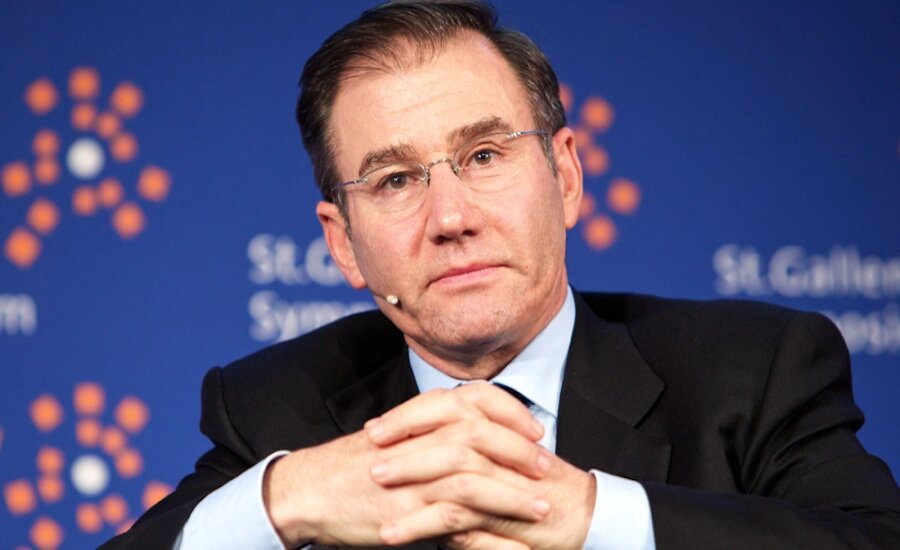
Ivan Glasenberg is a South African businessman and previous CEO of Glencore, one of the biggest commodities trading and mining enterprises in the world.

Early Life

Ivan Glasenberg was born to a Jewish household in South Africa. His father was a luggage maker and importer born in Lithuania, and his mother was South African. The family resided in Illovo, a Johannesburg neighborhood. In his early 20s, Glasenberg, an athlete, had won the national junior race walking championship.

Ivan Glasenberg
Image Source: mining.com

Glasenberg was born to a Jewish household in South Africa. His father was “a luggage maker and importer born in Lithuania, and his mother was South African.

Also Read: Guillaume Pousaz: From Small Village to Billion-Dollar Empire

The family resided in Illovo, a Johannesburg neighborhood. In his early 20s, Glasenberg, an athlete, had won the national junior race walking championship.

Success Story

Glasenberg began working for Glencore in 1984 and spent time in Australia and South Africa in the coal division. From 1989-1990, he oversaw Glencore’s offices in Beijing and Hong Kong. In 1991, he was named head of the organization’s coal division.In 2002, he was appointed CEO.

Glasenberg was identified by BusinessWeek in 2005 as a significant player in the clandestine commodity dealing of Marc Rich’s business, Mark Rich & Co. AG. Rich, a multibillionaire commodities trader, was subsequently granted a pardon by US President Bill Clinton after being accused of tax fraud and engaging in unlawful business with Iran.

Glencore became the corporate successor to Marc Rich & Co AG. In 2011, Glasenberg began acquiring more Glencore stock through his own dividends, spending up to an extra $54 million. Glasenberg was listed as owning more than 15% of Glencore’s stock in April 2012, making him the 20th wealthiest mining billionaire, according to Forbes, which pegged his total wealth at $7.3 billion.

Ivan Glasenberg was appointed CEO of the combined business after Glencore and Xstrata successfully completed one of the biggest mining company mergers in history, creating an $88 billion company. Originally, Glasenberg would have been President and Xstrata CEO Mick Davis would have been CEO in a merger of equals transaction; however, due to Qatar, a major Xstrata shareholder, refusing to participate, it turned into a takeover target.

Also Read: From Zero to Billionaire: The Inspiring Journey of Piotr Szulczewski

As a result, the new company, Glencore Xstrata, was formed with a 3.05 Glencore to 1 Xstrata share exchange, and Glasenberg was named CEO. In July 2013, Davis quit the company. Since 2002, Glasenberg has served as an executive director of Xstrata. He has also served as a non-executive director of Minara Resources Ltd., Rusal Plc., and Century Aluminum Co. between 2010 and 2011.

Following Glencore’s IPO on the London Stock Exchange, Glasenberg paid £240m in taxation to Rüschlikon. After a public vote, the residents’ tax rate was reduced by 7%, which was supported by a large majority of the villagers but drew condemnation from some of the villagers for what they perceived to be Glencore’s questionable business practices. His net wealth as of 2022 was $9.1 billion USD.