Your Tech Story

Sandhya Gupta

I am a law graduate from NLU Lucknow. I have a flair for creative writing and hence in my free time work as a freelance content writer.

admin review

What is the admin review feature on WhatsApp?

WhatsApp, a platform for instant messaging owned by Meta, is currently developing new updates and upgrades. For users to have a seamless and simple experience on the platform, Whatsapp provides new updates every other month. According to recent news, the tech company is working on delivering a new feature dubbed “admin review” for Android that would provide group admins with more tools so they can manage their WhatsApp group more effectively.

admin review
Image Source: ommcomnews.com

WhatsApp, a platform for instant messaging owned by Meta, is currently developing new updates and upgrades. For users to have a seamless and simple experience on the platform, Whatsapp provides new updates every other month.

Also Read: Google I/O 2023: How to watch and what to expect

According to recent news, the tech company is working on delivering a new feature dubbed “admin review” for Android that would provide group admins with more tools so they can manage their WhatsApp group more effectively.

According to WABetaInfo, group users on the app will be able to report particular messages to the group admin after WhatsApp launches the feature and it is activated on your mobile device.

According to the article, once a group member reports a message as improper or in violation of the group’s rules, the feature will enable group administrators to delete the offending posting.

Once it is implemented, WhatsApp’s group settings section will provide the new option to remove the message from the group. In the meanwhile, the article added that WhatsApp will display the reported texts in the group in a new part of the app within the group details page, which would be accessible only to group administrators and not to other group members.

A future update to WhatsApp’s app will make beta testers aware of the capability to report texts to group administrators.

On the other hand, according to some beta testers, WhatsApp is also apparently rolling out a new side-by-side’ function for Android users on its WhatsApp tablets platform.

Users will have more control over the platform’s user interface on their Android tablets thanks to WhatsApp’s “side-by-side” functionality, which enables them to flip between discussions without losing track of their ongoing chats.

The admin review feature on WhatsApp is a feature that allows group administrators to review and approve messages before they are posted in a group chat. When this feature is turned on, any message posted by a group member will be held for review by the group administrator(s) before it is visible to the rest of the group.

Also Read: Does the EU draft Data Act put trade secrets at risk?

This feature can be useful for group administrators who want to ensure that the messages posted in their group are appropriate and in line with the group’s rules and guidelines. It can also help prevent the spread of misinformation and spam in the group.

To enable the admin review feature, the group administrator(s) can go to the group settings, select “Group Info”, and then toggle on the “Admin Only” option under the “Send Messages” setting. After this is done, any message posted by group members will require approval from the group administrator(s) before it can be seen by other group members.

Google I/O

Google I/O 2023: How to watch and what to expect

Google I/O 2023 will take place on May 10th. Google I/O is an annual developer conference hosted by Google. The conference typically features keynote presentations, technical sessions, and product demonstrations focused on the company’s latest innovations in technology and software.

Google I/O
Image Source: techpp.com

In contrast to the multi-day I/Os of former years, this year’s event just lasts for that single day. Although Google is holding I/O as a live event at Shoreline Amphitheatre close to its campus in Mountain View, California, it is also being streamed on the Google I/O webpage. Google I/O can be live-streamed by any individual who registers for free on that website. The event can also be streamed on Youtube.

Also Read: Google Rolls Out Passkeys to (Eventually) Kill Passwords

These days, everyone seems to be thinking about AI-powered chat solutions, including Google. The organisation will have the chance to discuss Bard, its in-house chat client, and how it may benefit additional Google services like search, mapping, and productivity tools at Google I/O.

Google might take the opportunity to address worries regarding the hazards that certain individuals have identified with AI in addition to discussing how AI chatbots integrate into its own line of products, as one might anticipate.

The company released the Android 14 beta last month, and Google I/O 2023 will be its first chance to provide a public peek to a larger audience. This year is expected to be no different, given the significant role Android has played at previous I/O conferences.

Since a completed version of Android 14 is anticipated before the end of summer, we might even have more clarification on the development timeframe. Long rumoured to be in the works, Google’s first foldable device astonished everyone last week when it became public.

The maker shared a picture and a video of the Pixel Fold, a device that can be folded horizontally like a book. While Google declined to provide any information regarding its features, a prior claim from CNBC indicates the device may have a display that is 5.8 inches when it is closed and 7.6 inches when it is opened, making it comparable to Samsung’s Galaxy Z Fold 4.

Also Read: Google Authenticator finally syncs one-time codes in the cloud

The main announcement at Google I/O 2023 is expected to be a new piece of hardware for the company. There have been persistent rumours of a Pixel Fold that would disrupt the foldable phone market, which is now dominated by Samsung products. Google has now essentially acknowledged that this will take place.

It is anticipated that at least one new phone will be released by Google, especially in light of the rumours that claim the Pixel 7a will go on sale during that time.

Data Act

Does the EU draft Data Act put trade secrets at risk?

German engineering giant Siemens and German business software firm SAP have joined American IT juggernauts in denouncing new EU legislation on the use of data produced by consumer goods and other smart devices. Before the Data Act can be enacted as law, EU member states and EU legislators are working on its specifics.

Data Act
Image Source: economictimes.indiatimes.com

The proposed law, which addresses corporate and consumer data from the EU, is one of several pieces of legislation designed to restrain the influence of American tech titans and aid the EU in achieving its digital and environmental goals.

The proposed rule has drawn criticism from the United States for being overly onerous, and German businesses have voiced concern that a section requiring corporations to exchange data with third parties in order to supply aftermarket or related data-driven services could jeopardize trade secrets.

Also Read: What is Apple’s rapid security response?

“It risks undermining European competitiveness by mandating data sharing, including core know-how and design data, with not only the user, but also third parties,” the companies warned in a joint letter to Commission President Ursula von der Leyen, EU antitrust chief Margrethe Vestager, and EU industrial chief Thierry Breton.

According to them, “effectively, this could mean that EU companies will have to divulge data to third-country rivals, particularly those not operating in Europe and against which the Data Act’s safeguards would be ineffective.”

The chief executives of the two firms, Siemens Healthineers, German medical technology company Brainlab, German software developer DATEV, and lobbying group DIGITALEUROPE were among the signatories to the letter, dated May 4, obtained by Reuters.

The letter urged that the list of devices covered by the law not be expanded and called for measures to allow companies to reject requests to divulge data where trade secrets, cybersecurity, health, and safety are in danger. The Commission acknowledged receiving the letter and stated that while it recognized the value of trade secrets, corporations shouldn’t exploit them as an excuse.

The Data Act does not seek to alter international or domestic trade secret laws. Trade secrets shouldn’t, however, be a justification for avoiding sharing data, said Johannes Bahrke, a spokesperson for the EU Commission, at a daily press briefing.

The EU draft Data Act is a proposed legislation aimed at regulating data access and use within the EU. While the Act primarily deals with personal data, it also has provisions that could impact trade secrets.

Also Read: Is advertising the future of streaming?

One provision of the draft Data Act requires companies to disclose certain information about their data processing activities, including information about algorithms used to process data. This provision could potentially put trade secrets at risk, as companies may be required to disclose proprietary algorithms that give them a competitive advantage However, the draft Data Act also includes safeguards to protect trade secrets.

For example, companies would be able to request that certain information be kept confidential, and there are provisions in the Act that limit the disclosure of confidential information to specific parties, such as regulators or courts.

Google

Google Rolls Out Passkeys to (Eventually) Kill Passwords

Google has rolled out a new feature called “Passkeys,” which is designed to eventually replace traditional passwords. Passkeys are a type of two-factor authentication (2FA) that allows users to sign in to their accounts using their mobile devices instead of a password.

The Passkeys feature uses a combination of biometrics, such as face or fingerprint recognition, and an on-device security key, which is a physical security token that can be used to authenticate the user’s identity. This means that even if a hacker were to obtain the user’s password, they would still need physical access to the user’s mobile device to gain access to the account.

Also Read: Google Authenticator finally syncs one-time codes in the cloud

Since the dawn of the internet (and computing in general), password-based authentication has become the norm. However, the system has severe security flaws, including the possibility that hackers may steal your password or deceive you into providing it through phishing attacks.

The passkey system relies on a separate paradigm that leverages cryptographic keys kept on devices used for account authentication in order to specifically combat phishing assaults.

Passkey standards were originally created by the FIDO Alliance, a security collaboration with several IT companies as members. Passkeys are now a reality thanks to efforts from Microsoft, Apple, and Google. Apple made its passkey option available with the launch of iOS 16, enabling users to use this feature across applications, including Apple Wallet.

In October 2022, support for Passkey was made available on Google Chrome and Android devices. Today, Gmail and Drive are also able to use the feature. Password selection is notoriously difficult for people. However, adding even a single special character or alphanumeric string won’t provide complete security against malicious users.

In contrast, passkeys are typically regarded as being more secure than alternative methods, with Google even describing them as “resistant to online attacks like phishing.”

Google will still offer two-factor authentication and passwords as additional account access methods. Through end-to-end encrypted services like iCloud Keychain and Google Password Manager, Passkeys can sync between your devices.

Also Read: Google TV now has over 800 ad-supported free channels

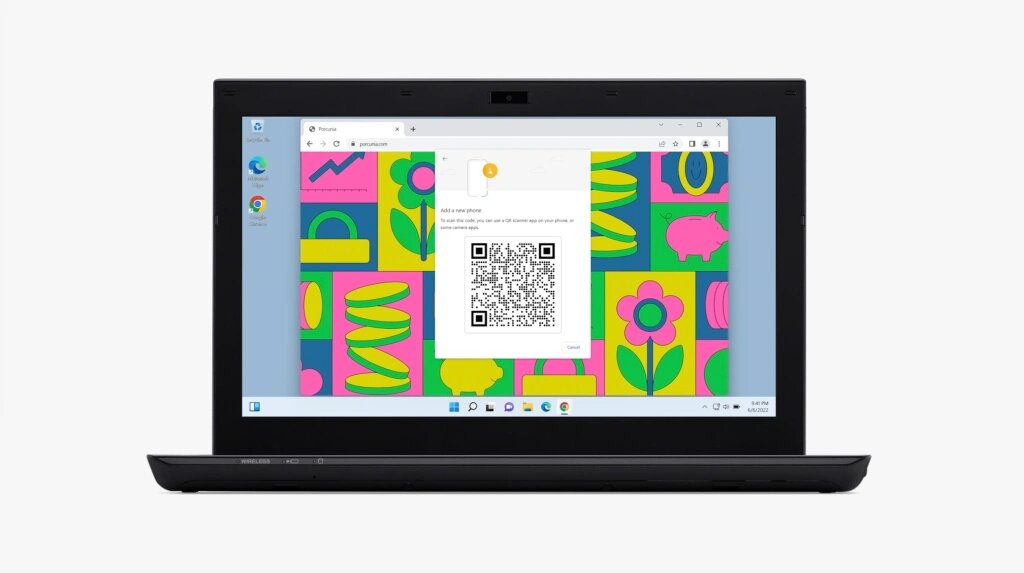
Another option is to create a QR code on a device that is signed into your Google account, which will identify another device where you want to log in and then set up passkeys on numerous devices using that code.

Passkeys are part of Google’s broader effort to move away from passwords and toward more secure authentication methods. The company has also developed other 2FA options, such as the Google Authenticator app and Google Prompt, which sends a notification to the user’s mobile device asking them to approve the login attempt.

Rapid Security Response

What is Apple’s rapid security response?

Apple on Monday made the initial release of “rapid security” updates available to the public in an effort to quickly address security flaws that are being actively exploited or represent a serious risk to its users. The so-called Rapid Security Response upgrades, according to a notice, “deliver important security improvements between software updates.”

Rapid Security Response
Image Source: 9to5mac.com

Rapid Security Responses were made available so that Apple consumers may update their devices more quickly than it normally takes for a software update.

Apple claims that the feature is turned on by default and that, with some exceptions, some quick patches can be downloaded without a reboot.

Also Read: Is advertising the future of streaming?

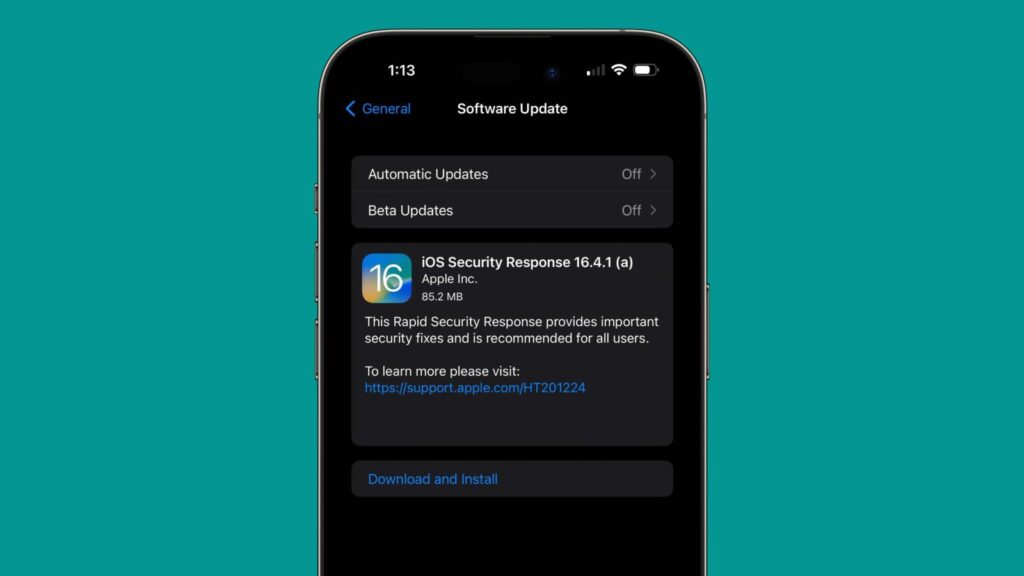
For users of iOS 16.4.1, iPadOS 16.4.1, and macOS 13.3.1, the rapid security update is now available. After being installed, it will change the software version to a letter, such as iOS 16.4.1(a), iPadOS 16.4.1(a), and macOS 13.3.1(a).

The quick security fix won’t be available to users of earlier versions of Apple’s os. In later software updates, according to Apple, fixes will be added.

The deployment on Monday, however, hasn’t gone as planned. Some customers reported having trouble installing the update. On an iPhone, iPad, and Mac used for testing by TechCrunch, the upgrades were downloaded but were not instantly installed.

Researchers have recently found new exploits created by spyware producers QuaDream and NSO Group that target iPhone users worldwide. Both spyware producers took advantage of previously unknown flaws in Apple software that let their government clients steal data covertly from a victim’s device.

Citizen Lab reported last month that Apple’s Lockdown Mode, a feature introduced last year to thwart similar targeted attacks, had effectively stopped at least one NSO-developed attack that took advantage of a flaw in HomeKit, the company’s smart home feature.

Apple’s rapid security response refers to the company’s approach to quickly identifying and addressing security vulnerabilities in its products. Apple has a dedicated team of security experts who work to proactively identify potential security risks and develop solutions to mitigate them.

Additionally, Apple has implemented various security measures such as two-factor authentication, encryption, and sandboxing to prevent unauthorized access to its products and services. In the event that a security vulnerability is discovered, Apple typically responds quickly by releasing a software update to address the issue.

The company also works closely with security researchers to identify and address vulnerabilities before they can be exploited by malicious actors.

Overall, Apple’s rapid security response is an essential aspect of the company’s commitment to protecting its users’ privacy and security.

advertising

Is advertising the future of streaming?

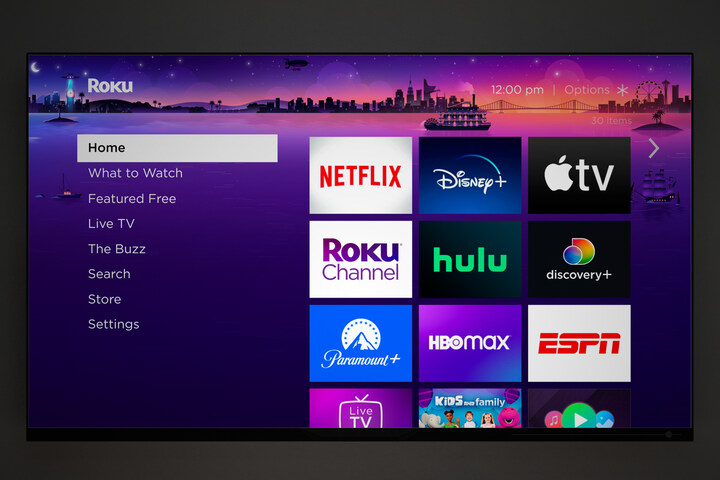
The rise of streaming services has revolutionized the way we consume media. With a plethora of streaming options, from Netflix to Hulu to Disney+, there has never been a better time to be a viewer.

However, with the increased competition between streaming services, the need for revenue has become more critical. Advertising has emerged as one of the ways streaming services can generate revenue, but is it the future of streaming?

Image Source: adage.com

Advertising has been a part of television for decades, and with the rise of streaming services, it was only a matter of time before it made its way into the world of online streaming.

The appeal of advertising is clear: it generates revenue for the streaming service, allows for more affordable subscription prices, and can provide targeted advertisements to viewers. This is especially beneficial for smaller streaming services that don’t have the financial power of Netflix or Amazon Prime.

Also Read: Why is Amazon shutting down Halo Division?

The fastest-growing segment of the streaming industry right now is free, ad-supported platforms. Many platforms have quietly accumulated large content collections and millions of users over the course of their existence.

And now, they’re beginning to make a greater impact as consumers hunt for cheaper means to access entertainment and companies look for innovative ways to monetize. Free streaming has its allure already present in the name—it’s cost-free!

According to an increasing number of streaming customers, they already pay more than they would like to for their subscriptions, and a Deloitte poll conducted in the fall of last year indicated that 44% of respondents had canceled at least one subscription service in the previous six months.

In addition, Deloitte discovered that 59% of customers would be content to view a few adverts per hour as a substitute for a less expensive or even free subscription.

Netflix has already found that their ad-supported option, which costs $6.99 a month and features a few advertisements per hour, generates more revenue per user than pure subscriptions. There is also an ad-supported option for Disney Plus as well. As does Peacock, the newest Max service, and a growing portion of the rest of the sector. It seems that advertisements are the streaming industry’s future.

Also Read: Amazon sees cloud slowdown in April, shares erase gains

However, it may have its drawbacks too. Advertising may not be enough to sustain smaller streaming services in the long run. The streaming market is becoming increasingly saturated, with new services popping up all the time. To stay competitive, streaming services need to offer something unique, and advertising may not be enough to differentiate them from the competition.

Services like Netflix and Amazon Prime have the financial power to invest in original content, which is a significant draw for viewers. Smaller services may not have the same luxury, and relying solely on advertising may not be enough to keep them afloat.