Your Tech Story

Sandhya Gupta

I am a law graduate from NLU Lucknow. I have a flair for creative writing and hence in my free time work as a freelance content writer.

Robinhood

Why did Robinhood Markets remove three crypto tokens?

Days after the U.S. securities regulator launched a crackdown against the major exchanges in the sector, Robinhood Markets said on Friday that it is withdrawing three cryptocurrency tokens from its platform.

On June 27, the online brokerage said that customers will no longer be able to trade Solana, Cardano, or Polygon using Robinhood.

Robinhood
Image Source: reuters.com

The move by Robinhood was made in response to the SEC classifying these tokens as securities in its lawsuit against Binance and another complaint it filed the next day against Coinbase. It is clear that the SEC’s legal action is already having an impact on the cryptocurrency market.

Also Read: Final Fantasy VII Rebirth launches in early 2024

The operation of Binance.US and CEO Changpeng Zhao are the targets of the SEC’s lawsuit, which was filed on Monday. It makes 13 allegations against Binance, including that it engaged in a “web of deception,” fraudulently inflated trading volumes, misappropriated user cash, and claimed fake independence of the US corporation while actually being in control of it.

Meanwhile, the US branch of Binance has chosen to stop accepting deposits in dollars. The US Securities and Exchange Commission (SEC) is stepping up its campaign of repression against the bitcoin industry as these actions are being taken.

Binance.US, regarded as Binance’s independent partner, announced on Twitter on Thursday that its partner banks were getting ready to stop providing access to dollar withdrawal routes by June 13. After the SEC requested an asset freeze via a court order, the decision was made. Customers can withdraw their money till Tuesday.

Solana is a high-performance blockchain platform designed to provide fast and scalable solutions for decentralized applications. It utilizes a unique combination of technologies, including a proof-of-history (PoH) consensus mechanism and a proof-of-stake (PoS) consensus algorithm.

Solana aims to address the scalability limitations faced by other blockchain platforms, offering high throughput and low transaction fees. It has gained attention for its potential in supporting various applications, including decentralized finance (DeFi) and non-fungible tokens (NFTs).

Cardano is a blockchain platform that emphasizes security, scalability, and sustainability. It uses a proof-of-stake (PoS) consensus mechanism called Ouroboros, which aims to provide a secure and energy-efficient network.

Cardano is developed with a strong focus on academic research and aims to offer a robust infrastructure for decentralized applications and smart contracts. The platform aims to provide scalability through its layered architecture, with plans to introduce additional layers for governance and sidechains.

Also Read: Google AI to power virtual travel agent from Priceline

Polygon is a layer 2 scaling solution for the Ethereum blockchain. It aims to address the scalability issues of Ethereum by providing a framework for building and connecting scalable and interoperable blockchain networks.

Polygon utilizes various technologies, including sidechains, Plasma, and a PoS consensus mechanism, to enable faster and cheaper transactions while leveraging Ethereum’s security.

It offers developers the flexibility to create dApps with Ethereum compatibility while benefiting from the scalability and low fees provided by the Polygon network.

Final Fantasy VII

Final Fantasy VII Rebirth launches in early 2024

The release date for Final Fantasy VII Rebirth, the follow-up to the acclaimed RPG remake, has been announced. It will launch on the PS5 at the beginning of 2024.

The second game in the Final Fantasy VII remake series, Final Fantasy VII Rebirth, explores the tale of the legendary fantasy game that reinvented the RPG subgenre in three different games.

Final Fantasy VII
Image Source: gematsu.com

After escaping the dystopian city of Midgar, the enduring heroes Cloud, Barret, Tifa, Aerith, and Red XIII are rejoined in Final Fantasy VII Rebirth. They then set out on a quest to find Sephiroth, the furious swordsman from Cloud’s past who was believed to have perished.

Also Read: Google AI to power virtual travel agent from Priceline

Players will experience an expansive universe in this stand-alone adventure, which has been built expressly to take advantage of the PlayStation 5 console’s capability and features a new level of graphical richness.

Players will experience a compelling narrative filled with puzzles to solve as they follow each party member’s personal journey and forge stronger ties with one another as they take on formidable foes.

Final Fantasy is a long-running and highly popular role-playing video game franchise created by Hironobu Sakaguchi and developed and published by Square Enix.

The series originated in 1987 with the release of the first Final Fantasy game for the Nintendo Entertainment System (NES) in Japan. Since then, the franchise has expanded to include numerous mainline entries, spin-off games, sequels, prequels, and other related media.

Each mainline Final Fantasy game typically features a new world, characters, and storyline, although certain elements such as recurring creatures, spells, and themes may be present across multiple titles.

The series is known for its engaging narratives, memorable characters, intricate battle systems, and beautiful music composed by Nobuo Uematsu.

Also Read: Snap hires new head of engineering from Google

The franchise has been a pioneer in the RPG genre, introducing various innovations and setting high standards for storytelling and gameplay mechanics. Some of the most notable entries in the series include Final Fantasy IV, Final Fantasy VI, Final Fantasy VII, Final Fantasy X, and Final Fantasy XV.

The games often blend fantasy and science fiction elements, offering rich and immersive worlds for players to explore.

Final Fantasy has had a significant impact on the gaming industry and has garnered a dedicated fanbase worldwide. It continues to be a prominent and influential franchise, with new titles and remakes being released on various platforms, including consoles, handheld devices, and PC.

Meta

Is Meta testing Reels on Quest?

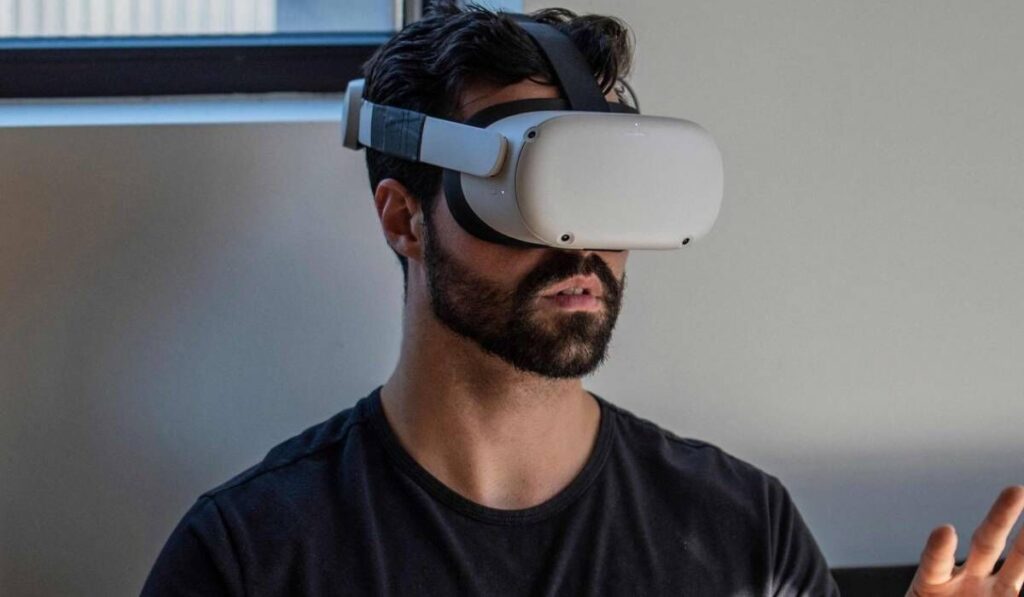
On its Quest headset, Meta is testing a means for users to watch Reels. CEO Mark Zuckerberg posted a video on Meta’s broadcast channel showcasing how a Reel will appear in virtual reality.

It appears that you can browse through Reels in a window that opens against your virtual background, much like when you open other apps on the OS.

Meta
Image Source: bizzbuzz.news

It’s unclear whether Reels will be included in Meta’s Instagram app for the Quest or whether users will be able to test it out. The Verge contacted Meta for comment, but they didn’t react right away.

Also Read: How Exciting Is The New Apple Health Features?

In any case, adding Reels to Quest is an indication that Meta is prepared to integrate its systems and apps more tightly. Additionally, it makes an announcement just a week after Meta unveiled the $499 Quest 3 and days after Apple unveiled the $3,499 Vision Pro.

During the WWDC23 event, Apple demonstrated the Vision Pro Mixed Reality headset. The $3499 headset’s transparent visor and several cameras for motion and vision tracking enable it to offer Virtual Reality and Augmented Reality content.

Apple is actively promoting its platforms, apps, and services on the Visio Pro. On the day that Vision Pro launches, content from Disney+ and its affiliated content producers will be available.

Zuckerberg responded to the Vision Pro by claiming Apple’s vision for the device isn’t the one he wants, noting that Apple primarily focused on solitary activities during its presentation. According to Zuckerburg, “Our vision for the metaverse and presence is fundamentally social. It’s about people interacting in new ways and feeling closer in new ways.”

Quest 3, the next-generation virtual and mixed-reality headgear, was unveiled by Zuckerberg last week and will be available later this year. The 128GB headgear starts at $499.99, and customers will also have the option of adding more storage.

Also Read: What’s so ‘pro’ about the Apple Vision Pro headset?

It has a newer Snapdragon chipset, which offers graphics performance that is more than twice as fast as Quest 2’s Snapdragon GPU from the same generation. According to the business, “On Quest 3, our best-in-class Meta Reality technology lets you seamlessly blend your real world with the virtual one.”

Meta is motivated by the creation of a unified ecosystem, to put it simply. Although social media networks like Whatsapp, Instagram, Facebook, and others exist, Meta would work to maintain the Quest ecosystem’s social nature by encouraging user interaction.

Google AI

Google AI to power virtual travel agent from Priceline

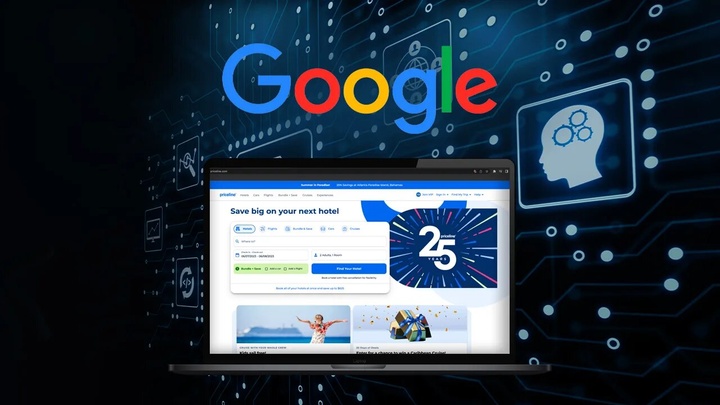
According to reports, Google is bringing its own AI engine to Priceline, an online travel firm, to assist users book trips using a chatbot.

According to Google and Priceline, the new feature, which will include a more advanced chatbot, could go available as early as this summer. Now that Priceline has access to Google’s generative AI, the platform can more effectively extract data from various sources, like hotels.

Google
Image Source: rappler.com

The customer can then be presented with that data in a way that makes it seem as though a human wrote it, as Google’s Bard is known for doing.

Also Read: Google quietly ends support for decade-old Chromecast

The chatbot would act as “a personal concierge” for users, said Martin Brodbeck, Priceline’s chief technology officer, to Reuters. Brodbeck stated, “You can easily find out that in Bryant Park there’s a Christmas market that runs from early November all the way through the beginning of January when you’re actually booking your hotel.”

The digital infrastructure of Priceline will also receive support from Google on the backend. The hundreds of software professionals who work at Priceline are apparently going to use artificial intelligence to generate code. Additionally, Google’s search engine will be integrated into the company intranet, and its AI will help sell popular spots to consumers.

When combined with excellent generative-AI content, Brodbeck told Reuters, “You could have it create images like a lovely beach.”

Google has long been the distant No. 3 provider of cloud services like data storage, so using AI to attract customers could help it catch up to rivals Amazon and Microsoft. The adoption of cutting-edge technology on Priceline’s website would give it an advantage over other travel-related marketplaces, some of which are looking into how customers will respond to AI.

Expedia Group, a competitor company, claimed that a smartphone app will use ChatGPT to power conversations. According to Rathi Murthy, its chief technology officer, this provides travelers with “inspiration on places to go” and booking possibilities.

Expedia Group, a competitor, said that ChatGPT would be used to facilitate conversations on its mobile app. According to its chief technology officer Rathi Murthy, this is providing travelers with “inspiration on where to go” and booking options.

Also Read: Snap hires new head of engineering from Google

Google has historically been a rival to Priceline, despite the fact that Brodbeck said its cloud computing skills were the catalyst for the collaboration. According to Thomas Kurian, CEO of Google Cloud, the capacity to create applications on top of generative artificial intelligence has recently attracted business.

According to Kurian, who was referring to the amazing prehistoric period when a vast variety of new species evolved, “There is kind of a Cambrian moment happening now where there is an explosion of this technology.”

Health Features

How Exciting Is The New Apple Health Features?

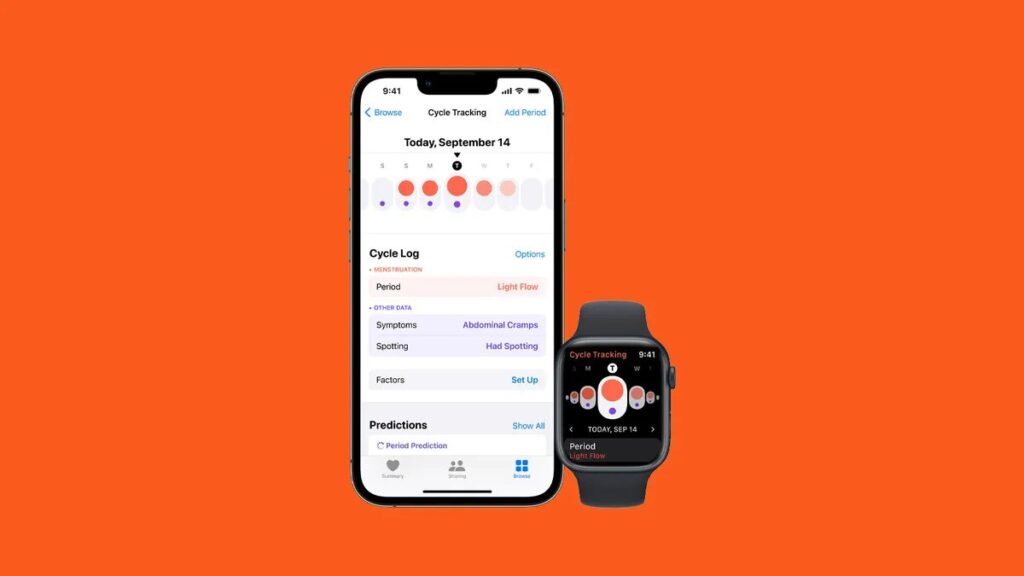
On Monday, Apple unveiled new health features for iOS 17, iPadOS 17, and watchOS 10, increasing the scope of the Health app to include eyesight and mental health.

While the new vision health features encourage good behaviors to reduce the risk of myopia, the new mental health features provide users the ability to track their feelings and moods. The most recent Apple software announcement won’t transform the healthcare industry.

health features
Image Source: cnet.com

As a result of their active approach to self-care and monitoring, consumers who don’t need significant healthcare services are instead encouraged to make little improvements.

Also Read: What’s so ‘pro’ about the Apple Vision Pro headset?

The Apple Health app in iOS 17 and iPadOS 17 and the Mindfulness app in watchOS 10 provides users with an appealing and user-friendly platform to consider their mental condition. Users can browse among multidimensional shapes to communicate their emotions, which can range from happy to terrible.

Two essential behaviors for kids are advised by eye care professionals to help lower the likelihood of myopia. These actions include spending more time in the sunlight and viewing objects like devices and books from a greater distance.

Apple Watch’s ambient light sensor can now track how much time users spend outdoors thanks to watchOS 10. On iOS 17 and iPadOS 17, users can check the amount of sun exposure time that their Apple Watch has detected.

Children can connect their Apple Watch to their parents’ iPhones using Family Setup, allowing parents to track their children’s exposure to sunshine through Health Sharing.

The TrueDepth camera is used by the new Screen Distance feature on the iPhone and iPad to prompt users to move their gadgets farther away after holding them up close for an extended period of time (closer than 12 inches). Myopia can be brought on by reading or using a device too closely, according to studies.

Younger users can benefit from screen distance by developing good viewing habits that reduce their risk of myopia, while older users can lessen digital eyestrain.

The demographic who needs healthcare the most frequently does not use the services that Apple Health provides for proactive health management. According to a survey by the Kaiser Family Foundation, around half of American adults had trouble paying for health care.

Also Read: Snap hires new head of engineering from Google

About 40% of American adults delayed or skipped getting medical care in the past year due to financial concerns. Adults without insurance, Black and Hispanic adults, and those with lower incomes are disproportionately affected by the high cost of healthcare. A larger percentage of American adults avoided or put off getting medical care in each of these groups because of the cost.

The target group who requires gadgets to manage their health proactively cannot afford Apple gear, despite it having technological advancements that might considerably help people manage their health.

Apple Vision Pro

What’s so ‘pro’ about the Apple Vision Pro headset?

With the Apple Vision Pro, virtual reality, and augmented reality headset, Apple is entering a new product category. The new gadget is not intended for the majority of people because it costs $3,500. It won’t be accessible until the beginning of 2024.

The Vision Pro wraps around your head entirely, covering your eyes with what appears to be a pair of goggles, similar to other VR headsets. A digital crown, resembling the one on the Apple Watch, is located on the top right side of the headset and allows you to adjust how much of the outside world enters your VR experience.

Apple Vision Pro
Image Source: wsj.com

This has the effect of lowering the lights in your immediate surroundings. You may change from augmented reality to virtual reality thanks to the crown.

The most prominent feature of the Vision Pro is visible when it is in augmented reality mode: A live feed of your eyes within the headset is shown on the screen that faces the outside. It is intended that this feature, termed EyeSight, will make it seem less strange to other people.

Also Read: Why Apple is changing the ‘Hey Siri’ trigger to just ‘Siri’?

Actually, the function of the headset depends heavily on your eyes. Along with your voice, hand movements, and eye tracking, the Vision Pro is controlled by you.

Additionally, it uses your eyes as a form of authentication thanks to Apple’s new Optic ID feature, which scans your irises to unlock the Vision Pro. Optic ID is similar to Face ID but for the eyes. Apple essentially wants you to do everything with the Vision Pro.

Your work can be dispersed across a number of sizable digital monitors that are hidden from view from everyone else in the space. On a virtual screen that is 100 feet wide, you may also watch movies, play games, and FaceTime with pals. Apple Immersive Video, which combines a 180-degree view of material with spatial audio, will be supported by the headset.

A new operating system dubbed visionOS powers the headgear and all of its applications. Additionally, it will have its own version of the App Store, which Apple undoubtedly expects to be fully loaded upon release. When the Vision Pro goes on sale, Apple claims that “hundreds of thousands” of iPhone and iPad apps will be compatible with it.

A new operating system dubbed visionOS powers the headgear and all of its applications. Additionally, it will have its own version of the App Store, which Apple undoubtedly expects to be fully loaded upon release. When the Vision Pro goes on sale, Apple claims that “hundreds of thousands” of iPhone and iPad apps will be compatible with it.

Also Read: Apple Plans Major Retail Push With New Stores Across China, US

Those who saw a preview of the Vision Pro at WWDC were quick to praise it as an excellent engineering achievement, but several questioned whether using an AR/VR headset for FaceTime calls is the best option.

The device’s technology is better than that of headsets from Meta, Magic Leap, and Sony, according to Brian X. Chen, a technology columnist for the New York Times. However, Chen notes that he found the new FaceTime Persona function to be uncomfortable.