Your Tech Story

Sandhya Gupta

I am a law graduate from NLU Lucknow. I have a flair for creative writing and hence in my free time work as a freelance content writer.

healthcare

AI and robotics are transforming healthcare. But How?

AI and robotics are revolutionizing the healthcare industry, bringing about transformative changes that enhance patient care, streamline operations, and empower healthcare professionals.

From diagnosing diseases to assisting in surgeries and managing patient data, these technologies are playing a pivotal role in shaping the future of healthcare.

healthcare
Image Source: einfochips.com

One of the significant contributions of AI and robotics in healthcare is in the field of diagnostics. AI algorithms can analyze large volumes of medical data, including patient records, lab results, and imaging scans, to assist in the detection and diagnosis of diseases.

These algorithms can quickly identify patterns and anomalies that may be missed by human observers, leading to earlier and more accurate diagnoses. This not only improves patient outcomes but also helps in optimizing treatment plans and reducing healthcare costs.

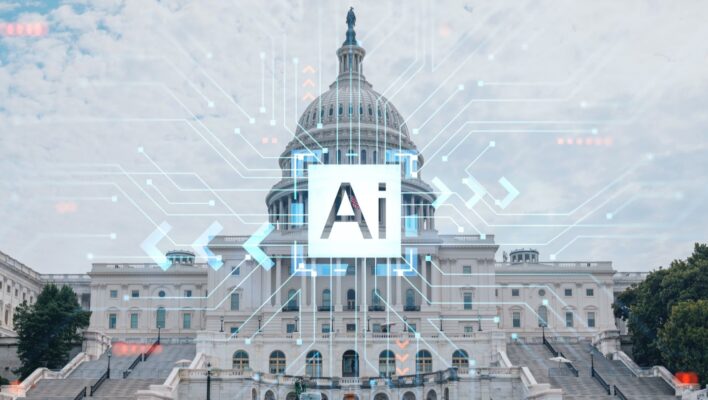
Also Read: Why is Congress limiting the use of Chatgpt in the offices?

Robotic technology is also revolutionizing surgical procedures. Robotic surgical systems allow for minimally invasive surgeries with enhanced precision and control. Surgeons can perform complex procedures with smaller incisions, reducing post-operative pain, scarring, and recovery time for patients.

The robotic arms can provide greater dexterity and range of motion than human hands, enabling intricate procedures in hard-to-reach areas. Surgeons can also benefit from augmented reality (AR) and virtual reality (VR) technologies, which provide real-time guidance and 3D visualization, further enhancing their accuracy and efficiency.

In addition to diagnostics and surgery, AI and robotics are transforming patient care and monitoring. AI-powered chatbots and virtual assistants can provide immediate and personalized responses to patients’ queries, offering support and guidance.

Robots are also being utilized in patient care settings, particularly in elderly care and rehabilitation. Social robots can engage with patients, offering companionship and support. They can remind patients to take medication, encourage physical activity, and monitor vital signs. This not only improves the well-being of patients but also reduces the workload on healthcare providers.

Another crucial area where AI and robotics are making a difference is in managing and analyzing large volumes of healthcare data. AI algorithms can mine electronic health records, clinical trial data, and medical literature to identify trends, patterns, and potential correlations. This wealth of information can help researchers and clinicians make evidence-based decisions, identify risk factors, develop personalized treatment plans, and discover new therapies.

Furthermore, AI-powered predictive analytics can help healthcare systems anticipate disease outbreaks, allocate resources efficiently, and optimize preventive strategies. By analyzing historical data and real-time information, AI algorithms can identify populations at risk and predict disease progression, enabling proactive interventions and saving lives.

In conclusion, AI and robotics are transforming healthcare by enhancing diagnostics, revolutionizing surgery, improving patient care and monitoring, optimizing data analysis, and enabling predictive analytics. These technologies hold tremendous potential to improve patient outcomes, increase efficiency, and reduce healthcare costs.

As they continue to advance, it is essential to strike a balance between technology and the human touch, ensuring that AI and robotics augment healthcare professionals rather than replace them, and ultimately, provide better care for patients.

Chatgpt

Why is Congress limiting the use of Chatgpt in the offices?

According to a recent report from Axios, the House of Representatives has introduced new regulations concerning the utilization of ChatGPT in congressional offices.

The report states that non-ChatGPT chatbots are currently not authorized for use. In a memorandum released on Monday, House Chief Administrative Chief Catherine L. Szpindor specified that lawmakers and staff are now limited to employing ChatGPT Plus, the paid version of the chatbot, due to its advanced privacy features.

chatgpt
Image Source: tech.co

The usage of the product is strictly confined to “research and evaluation” purposes, with privacy settings enabled. Additionally, offices are prohibited from inputting any non-public text into the service.

Several private companies, including industry giants like Samsung and Apple, have already imposed restrictions or outright bans on the usage of generative AI tools such as ChatGPT. These companies have expressed concerns about the potential leakage of confidential data through these tools.

These concerns are reinforced by previous privacy mishaps by OpenAI, the creator of ChatGPT, such as a bug that temporarily exposed chat histories to other users.

Also Read: Can the iPhone 16 be cheaper than the iPhone 15 Pro?

In the memorandum issued on Monday, Szpindor explicitly stated that no other versions of ChatGPT or similar AI software based on large language models are currently authorized for use in the House.

This announcement follows Senate Majority Leader Chuck Schumer’s recent call for Congress to expedite the enactment of new legislation aimed at regulating the artificial intelligence industry. Schumer has presented a framework that outlines Congress’ focus areas, including the potential risks of AI to national security and employment.

Schumer emphasized the significance of AI as an innovative force that can usher in technological advancements, scientific discoveries, and industrial growth. He stressed the need to encourage innovation while ensuring its safety. Failure to provide a sense of security around AI development could hinder progress in this field.

Lawmakers in both the Senate and the House have already introduced several bills aimed at regulating the AI industry this year. Sens. Richard Blumenthal (D-CT) and Josh Hawley (R-MO) recently proposed a measure that seeks to exclude AI companies from the protections of Section 230, thereby exposing these companies and their products to legal liability.

Furthermore, Congress has initiated discussions with prominent figures from the industry. Sam Altman, CEO of OpenAI and creator of ChatGPT, received a warm welcome from the Senate in May.

Other proposed measures include requesting federal agencies to review their AI policies and establishing a new commission tasked with studying and establishing regulations for the industry.

Microsoft

Why Microsoft wants to move Windows fully to the cloud?

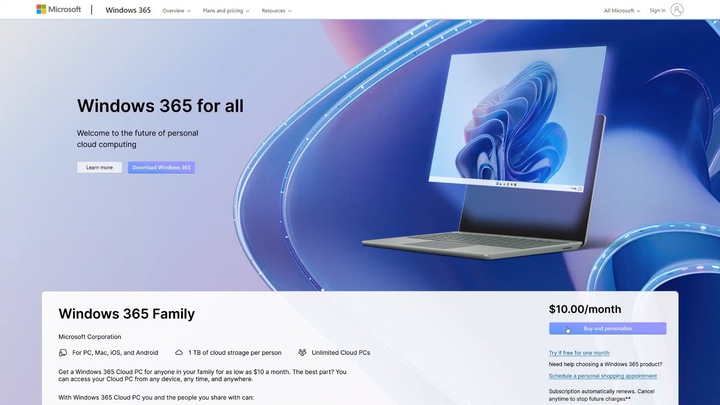
Microsoft is making significant strides in moving Windows to the cloud, not only for commercial use but also for consumers.

Internal documents revealed in the ongoing FTC v. Microsoft hearing shed light on the company’s plans to leverage its Windows 365 service to stream a full version of the Windows operating system from the cloud to any device.

Microsoft
Image Source: windowscentral.com

The presentation, dated June 2022, highlights Microsoft’s long-term goal of shifting Windows 11 towards cloud-based deployment, offering enhanced AI-powered services and seamless digital experiences across devices.

Windows 365, which currently caters exclusively to commercial customers, is being deeply integrated into Windows 11. In an upcoming update, Microsoft plans to introduce Windows 365 Boot, allowing Windows 11 devices to directly log into a Cloud PC instance during boot, bypassing the local version of Windows.

Additionally, Windows 365 Switch will be incorporated into Windows 11’s Task View, enabling users to seamlessly switch between local and cloud-based virtual desktops.

Also Read: Why are Facebook and Instagram ending news access in Canada?

The idea of transitioning Windows to the cloud for consumers is coupled with Microsoft’s interest in forging custom silicon partnerships. The company has already ventured into this realm with its ARM-powered Surface Pro X devices.

Reports suggest that Microsoft has explored designing its own ARM-based processors for servers and possibly even for Surface devices. Furthermore, rumors indicate that Microsoft may be developing its own AI chips.

The presentation emphasizes the importance of solidifying the commercial value of Windows and responding to the threat posed by Chromebooks. One avenue to achieve this is by increasing the usage of cloud PCs through Windows 365.

In line with its AI-focused approach, Microsoft recently announced Windows Copilot, an AI-powered assistant for Windows 11. Windows Copilot resides alongside the operating system and offers features such as content summarization, rewriting, and explanations. Currently undergoing internal testing, Windows Copilot is set to be released to testers in June before being made available to all Windows 11 users.

Windows Copilot is just one aspect of Microsoft’s broader AI initiatives for Windows. Collaborations with AMD and Intel aim to enable more Windows features on next-generation CPUs. Speculation surrounding Windows 12 has been fueled by hints from Intel and Microsoft themselves.

At CES earlier this year, Panos Panay, the Windows chief, expressed his belief that AI will revolutionize the way users interact with Windows. The internal presentation emphasizes Microsoft’s commitment to incorporating improved AI-powered services into Windows to fulfill its ambitious vision.

In conclusion, Microsoft’s internal presentation reveals its intentions to advance the cloud-based deployment of Windows, both for commercial and consumer use. With Windows 365 as a foundation, the company seeks to leverage the power of the cloud and AI to provide enhanced services and seamless experiences across devices.

By expanding its custom silicon partnerships and exploring AI-focused developments, Microsoft aims to strengthen the value of Windows and address competitive challenges while empowering users with innovative features and capabilities.

Facebook

Why are Facebook and Instagram ending news access in Canada?

Meta Platforms, the parent company of Facebook and Instagram, plans to block access to news content on its platforms for all users in Canada when a new law requiring internet giants to pay news publishers comes into effect.

The Canadian parliament passed “Bill C-18,” known as the Online News Act, which mandates platforms like Facebook and Google to negotiate commercial deals and compensate news publishers for their content. Both Meta and Google had previously warned that they would restrict access to news articles if the legislation was passed without amendments.

Facebook
Image Source: dailytimes.com.pk

Facebook argues that news articles constitute less than 3% of the content on users’ feeds and claims that news has no economic value for the company since its users do not primarily rely on the platform for news consumption. They also highlight the benefits journalists receive from posting their work on the social media platform.

Google, on the other hand, contends that Canadian law is broader than similar laws in Australia and Europe, as it places a monetary value on news story links displayed in search results and can potentially apply to outlets that do not produce news.

Google proposed revisions to the bill, suggesting that payment should be based on the display of news content rather than links and that only businesses producing news and adhering to journalistic standards should be eligible for payments.

Also Read: Can the iPhone 16 be cheaper than the iPhone 15 Pro?

In Australia, both Google and Facebook initially threatened to limit their services when similar laws were enacted in 2021. However, they reached agreements with Australian media companies after amendments were made to the legislation. As a result, Meta and Google have been paying around A$200 million ($134 million) annually to Australian news outlets.

Lawmakers in Meta’s home state of California and the U.S. Congress are pushing for similar rules, as they see a need to empower news organizations to negotiate collectively with platforms like Google and Facebook.

Meta generates 40% of its revenue from the United States and considers Australia and Canada among its significant markets. If Meta fails to obtain exemptions or modify the rules in Canada, it could potentially face similar challenges in the United States.

In 2022, U.S. lawmakers introduced a revised version of a bill aimed at facilitating collective negotiations between news organizations and platforms. Additionally, the New Zealand government announced its intention to introduce a law requiring major online companies to compensate local media companies for the appearance of their news content on digital feeds.

Pappas

TikTok COO Pappas quits after five years in the role

TikTok’s Chief Operating Officer (COO), V Pappas, is leaving the popular social media platform after almost five years with the company. In a note to employees and on Twitter, Pappas, who uses she/her and they/them pronouns, mentioned that now that TikTok has achieved significant success, she feels it’s the right time to pursue her entrepreneurial passions. TikTok CEO Chew Shou Zi announced that Pappas will continue to serve as a strategic adviser.

Pappas
Image Source: scmp.com

Chew expressed gratitude for Pappas’ contributions, acknowledging her instrumental role in growing the business, promoting the company, enhancing product offerings and marketing campaigns, and fostering a positive community of creators and users.

Chew wrote, “I want to take this opportunity to thank V for their many contributions over the years. Throughout their time at TikTok, they have been instrumental in growing the business, advocating for the company, elevating our product offerings and marketing campaigns, and fostering a positive community of creators and users.

They have had a significant and lasting impact and we are truly grateful for their tireless efforts.” US lawmakers grill TikTok CEO on App’s alleged ties to Chinese Communist Party.

Also Read: Intel spends $33 billion in Germany in landmark expansion

Pappas initially joined TikTok in 2018 as the general manager and later became the interim head in 2020 when the previous CEO departed. She assumed the COO position the following year and has been a vocal advocate for the company, testifying before the US Senate committee on social media’s impact on homeland security.

TikTok has faced scrutiny over its Chinese origins, with concerns raised about user data sharing with the Chinese government and the dissemination of propaganda and misinformation.

The company is currently in negotiations with the Biden administration regarding its data privacy plans. TikTok maintains that it has never been asked by the Chinese government to share US user data and that it would refuse such a request if made.

In 2020, the Trump administration in the United States issued executive orders that sought to ban TikTok, citing national security concerns related to data privacy.

However, these bans were later blocked by court rulings, and negotiations between TikTok and various US companies, including Oracle and Walmart, resulted in the formation of a new entity called TikTok Global. This partnership was intended to address the concerns raised by the US government.

Since then, TikTok has taken steps to address data privacy and security concerns. They have established transparency centers, expanded their content moderation policies, and emphasized their commitment to safeguarding user data. TikTok’s data is stored in the United States, with backup copies in Singapore.

In addition to Pappas’ departure, TikTok CEO Chew announced an organizational shake-up. Zenia Mucha, a former communications executive at Disney, will join TikTok as the Chief Brand and Communications Officer, overseeing marketing and public relations. Adam Presser, currently the chief of staff, will take on the role of head of operations.

iPhone

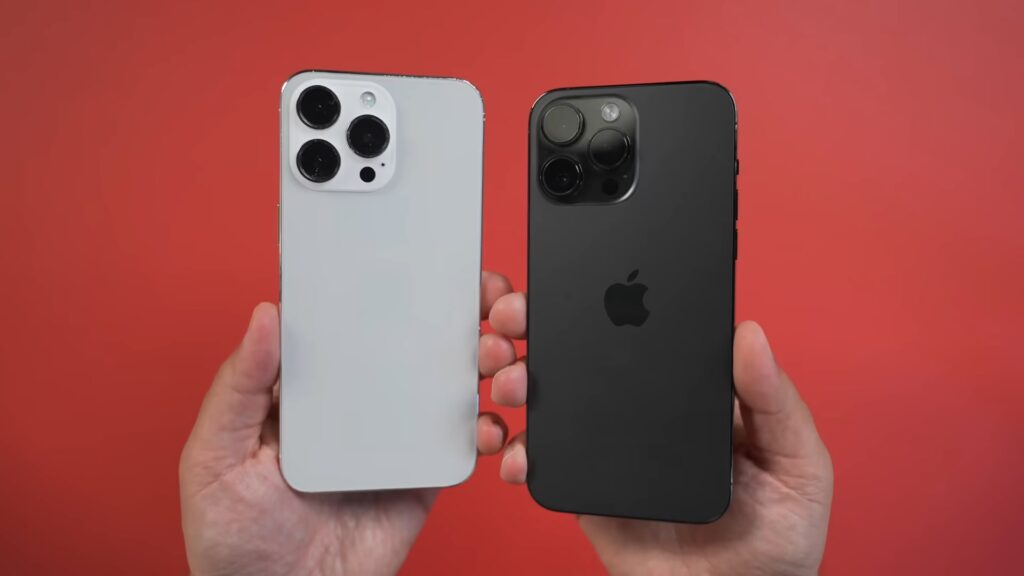
Can the iPhone 16 be cheaper than the iPhone 15 Pro?

According to a recent rumor, there will be significant differences between the initial and future versions of Apple’s A17 Bionic chip, which is expected to debut in the iPhone 15 Pro and iPhone 15 Pro Max later this year.

The key distinction lies in the manufacturing process, with the initial A17 chip utilizing TSMC’s N3B process, while a later version will transition to the N3E process in 2024. The switch to N3E is primarily motivated by cost-cutting measures, potentially compromising some efficiency gains.

iphone
Image Source: notebookcheck.net

TSMC’s N3B process, developed in collaboration with Apple, represents the original 3nm node and has been ready for mass production for a longer period than N3E. However, N3B exhibits a lower yield and is not compatible with TSMC’s upcoming successor processes.

On the other hand, N3E is a more accessible node with fewer EUV layers and lower transistor density. While N3E may sacrifice some efficiency, it can offer improved performance. Apple had originally planned to use N3B for the A16 Bionic chip but had to settle for N4 due to time constraints.

Therefore, it is possible that the initial A17 chips will adopt the N3B CPU and GPU core design intended for the A16, before transitioning to the original A17 designs with N3E in 2024. Apple will likely continue refining this architecture through TSMC’s future nodes for subsequent chips like the “A18” and “A19.”

Also Read: Is Starfield coming to PS5 or PlayStation?

Considering the drastic nature of such a change, it is highly unlikely that Apple would introduce such a significant alteration to the A17 Bionic chip during the product cycle of the iPhone 15 Pro and iPhone 15 Pro Max. Therefore, it is more plausible that the N3E version of the chip will be incorporated into next year’s standard iPhone 16 and iPhone 16 Plus models.

This aligns with past practices where Apple has introduced variations in chip configurations across different iPhone generations while still utilizing the same chip base.

The source of this rumor is a Weibo user claiming to be an integrated circuit expert with 25 years of experience working on Intel’s Pentium processors.

This individual has previously made accurate predictions, such as the inclusion of a Lightning-like authenticator chip in the USB-C port and charging cables of the iPhone 15 and 15 Pro, a rumor that was later supported by established sources.

They also correctly indicated that the standard iPhone 14 models would feature the A15 Bionic chip, while the A16 would be exclusive to the iPhone 14 Pro models.

In summary, the rumor suggests that Apple’s A17 Bionic chip will undergo significant changes, with an initial version utilizing TSMC’s N3B process and a subsequent version transitioning to N3E for improved cost efficiency.

However, it is unlikely that these changes will occur within the product cycle of the iPhone 15 Pro and iPhone 15 Pro Max, making it more probable for the N3E version to appear in the iPhone 16 and iPhone 16 Plus models next year. The source of the rumor has a track record of accurate predictions, adding credibility to these claims.