Your Tech Story

Sandhya Gupta

I am a law graduate from NLU Lucknow. I have a flair for creative writing and hence in my free time work as a freelance content writer.

Foxconn Starts Production of Upcoming Apple iPhone 15 in Tamil Nadu

Foxconn Starts Production of Upcoming Apple iPhone 15 in Tamil Nadu Ahead of September Launch

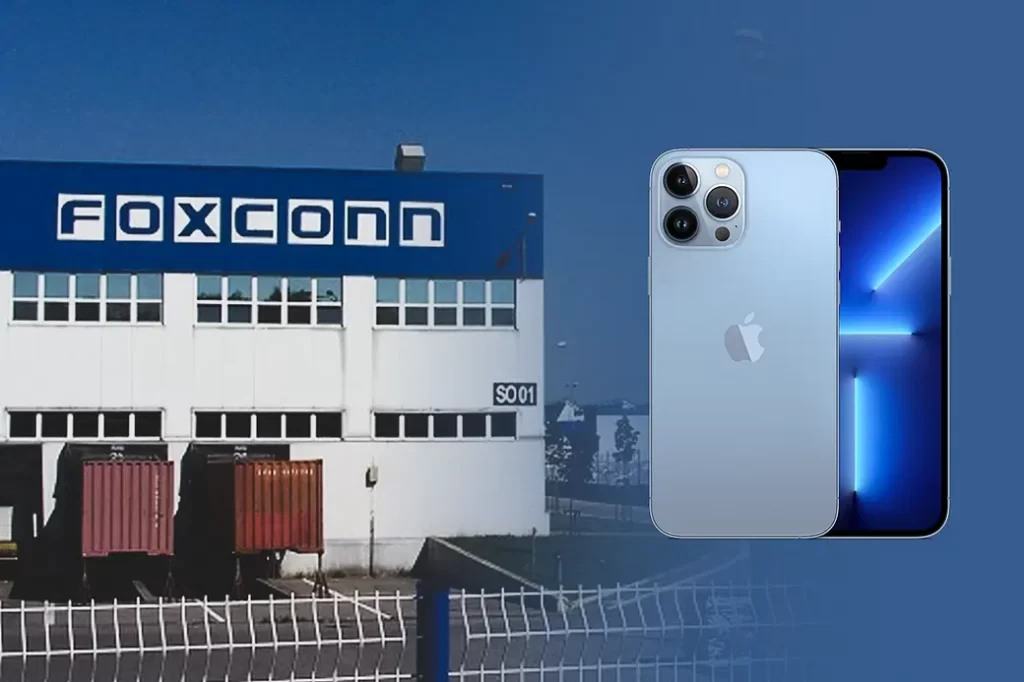
In a significant stride towards bolstering the “Make in India” initiative, Apple Inc. is poised to kickstart the production of its eagerly anticipated iPhone 15 in the southern state of Tamil Nadu. A recent report has unveiled that the Foxconn Technology Group’s manufacturing plant in Sriperumbudur is gearing up to roll out the latest iPhone iterations merely weeks after they commence production in Chinese factories. This strategic move aims to bridge the gap between Indian and Chinese manufacturing operations.

Foxconn Starts Production of Upcoming Apple iPhone 15 in Tamil Nadu
Image Source: gumlet.assettype.com

Anticipation is rife as Apple aficionados await the grand unveiling of the iPhone 15, anticipated to be announced on September 12, 2023. This upcoming iteration is slated to usher in the most extensive array of updates to the device in the past three years. The scale of production hinges largely on the availability of crucial components, many of which are imported. In view of this, production lines have been ramped up at the Chennai facility to facilitate seamless assembly.

Prior to the iPhone 14, Apple’s manufacturing footprint in India was limited, lagging behind China by a considerable six to nine months in terms of output. However, this disparity was considerably narrowed down last year. As of March-end, Apple managed to produce 7 percent of its iPhones in India, signifying substantial progress.

Apple is currently focused on aligning shipment timelines from India and China, aspiring to reach parity in this aspect. While sources remain cautious about achieving this goal, the push is evident and promising.

The spotlight isn’t solely on Foxconn, as other key Apple suppliers in India are also set to contribute to the production of the iPhone 15. Companies like Pegatron Corp. and the Wistron Corp. factory, which is on the brink of being acquired by the Tata Group, are gearing up to assemble the highly anticipated device.

In tandem with this development, reports have emerged indicating that Apple is primed to initiate the production of its iconic AirPods wireless earbuds at Foxconn’s Hyderabad facility. With an impressive $400 million investment by Foxconn, the Hyderabad plant is slated to commence large-scale manufacturing by December 2024.

The Foxconn Hyderabad factory is poised to churn out AirPods, marking the second product category, following iPhones, to be manufactured in India. Apple’s AirPods have etched their dominance in the TWS (true wireless stereo) market globally, making this strategic shift a pivotal move.

Also Read: Apple is working on its most powerful MacBook chip yet, the M3 Max

Having already established a manufacturing foothold in India through partners such as Foxconn, Wistron, and Pegatron, Apple’s expansion of product categories showcases their commitment to local production. As was the case with iPhones, there are whispers that AirPods production might extend to other facilities in the future.

With these groundbreaking developments, Apple is steadfastly ushering in a new era of localized production, underscoring India’s importance as a vital market and production hub.

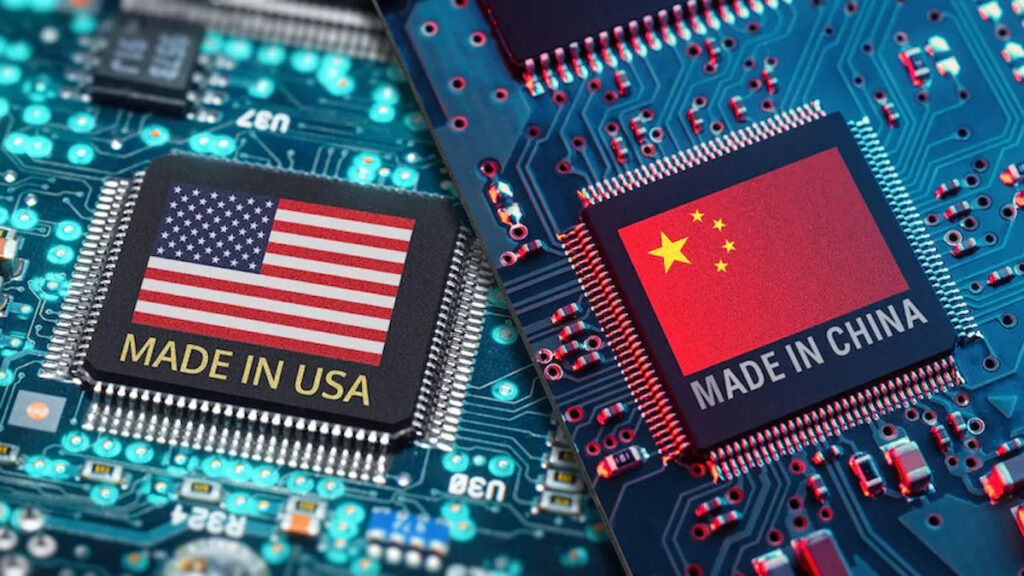
US starts process to restrict some investment in key tech in China

US starts process to restrict some investment in key tech in China

The White House has taken a significant step towards safeguarding sensitive technologies by initiating measures to restrict certain U.S. investments in China’s critical tech sectors. 

US starts process to restrict some investment in key tech in China
asiatimes.com

President Joe Biden signed an executive order on Wednesday, directing the U.S. Treasury Department to regulate investments in semiconductors, microelectronics, quantum computing, and artificial intelligence, with a particular focus on countries of concern, initially identifying China, Hong Kong, and Macau. The move aims to protect national security interests while setting the stage for a more controlled investment landscape.

The executive order establishes a framework where notification of investments will be required, and certain prohibitions will be applied to prevent the most acute national security risks. The targeted investments are those that could potentially provide China with military and intelligence advantages. Notably, these regulations will only apply to future investments and will not have retroactive effects.

The technology sectors under scrutiny are semiconductors, microelectronics, quantum computing, and artificial intelligence. These sectors hold immense strategic importance, and the United States has already imposed export restrictions on various technologies that are relevant to these fields. However, by restricting investments, the U.S. aims to prevent its funds from inadvertently aiding China in advancing its own domestic capabilities, which could undermine existing export controls.

While this executive order sets the groundwork for investment restrictions, it is important to note that the implementation process will be meticulous and may extend into 2024, coinciding with the presidential election year. The U.S. Treasury Department will undertake a rulemaking process that will include opportunities for public comment and stakeholder engagement. This thorough approach underscores the importance of these regulations for national security and international technological competition.

The Treasury Department’s proposed regulations target various aspects of technology investment in China. It is considering prohibiting investments in areas such as semiconductor manufacturing equipment, advanced integrated circuits, and certain quantum technologies. Additionally, the department is mulling over notification requirements for investments in less advanced integrated circuits and AI-related software with potential military or intelligence applications.

Also Read: Tokyo Electron’s Sales Dive 17% as Chip Market Malaise Persists

The U.S. has engaged in discussions with allies and partners to ensure that these measures are strategically sound and carefully tailored. Although no coordinated action was taken by allies on the day of the announcement, countries like Britain and the European Union have indicated their intention to implement similar investment restrictions. In fact, the Group of Seven advanced economies previously agreed that outbound investment restrictions should be part of the collective approach.

President Biden’s executive order represents a proactive stance towards protecting national interests and maintaining a competitive edge in crucial tech sectors. By establishing a regulatory framework for technology investments, the U.S. is working to strike a balance between economic engagement and safeguarding sensitive technologies. As the implementation process unfolds over the coming months, industry stakeholders, investors, and experts will closely monitor the developments that shape the future of U.S.-China technology interactions.

Tokyo Electron’s Sales Dive 17% as Chip Market Malaise Persists

Tokyo Electron’s Sales Dive 17% as Chip Market Malaise Persists

In the midst of a persisting chip market downturn, Tokyo Electron Ltd., Asia’s largest semiconductor equipment manufacturer, is finding solace in the accelerated investments by Chinese chip-makers. 

Tokyo Electron’s Sales Dive 17% as Chip Market Malaise Persists
capgemini.com

As the United States and its allies impose stricter export controls on cutting-edge technology, Chinese players are turning to mature semiconductor equipment, bolstering Tokyo Electron’s revenues. Tokyo Electron’s CEO, Toshiki Kawai, revealed on an earnings call that the company is experiencing “extremely strong investment” in China, leading to the acquisition of new customers. Kawai asserted that this trend is not a fleeting phenomenon limited to the current year but is anticipated to continue due to sustained demand.

This surge in demand from China is effectively compensating for the investment delays encountered among high-end logic chip manufacturers and foundries. Remarkably, China’s contribution accounted for 39% of Tokyo Electron’s revenues in the recent June quarter.

Tokyo Electron occupies a pivotal role in the chipmaking supply chain, supplying the machinery pivotal to Taiwan Semiconductor Manufacturing Co., Samsung Electronics Co., and Intel Corp. The company is weathering the storm by aligning its strategy with the prevalent market dynamics. It anticipates continued investment momentum in the automotive and industrial sectors, consistent with trends observed in the preceding fiscal year.

Despite a challenging global electronics market that led to a 17% sales drop in the June quarter, Tokyo Electron remains resolute in its full-year revenue forecast of ¥1.7 trillion ($11.8 billion). The company achieved an operating profit of ¥82.4 billion, slightly surpassing estimates. Hiroshi Kawamoto, Tokyo Electron’s finance unit head, stated that the Chinese clients are proactively adapting their strategies to circumvent restrictions, showcasing resilience in the face of evolving challenges.

Also Read:  Apple is working on its most powerful MacBook chip yet, the M3 Max

Notably, the company remains unscathed by Japan’s newly imposed constraints on chip-making equipment shipments, indicating its operational robustness. Tokyo Electron’s positive performance can be attributed to the advantageous boost from China, which counterbalances the subdued spending witnessed in other quarters due to the prevailing market slump. The global chip landscape has been marked by uncertainty, leading to July’s announcement by TSMC of a lowered annual sales projection and the postponement of its Arizona project’s production initiation to 2025.

However, despite the subdued market conditions, Tokyo Electron’s Hiroshi Kawamoto remains optimistic about the future. He revealed that the company has received numerous inquiries regarding artificial intelligence (AI)-related investments. Although the initial impact might be modest, the company believes that AI will gradually contribute to its earnings in the upcoming fiscal year. As the chip market experienced a probable bottoming out last quarter, Tokyo Electron positions itself to harness the evolving landscape, counting on innovation and strategic partnerships to navigate the ongoing challenges.

Amazon’s Robot

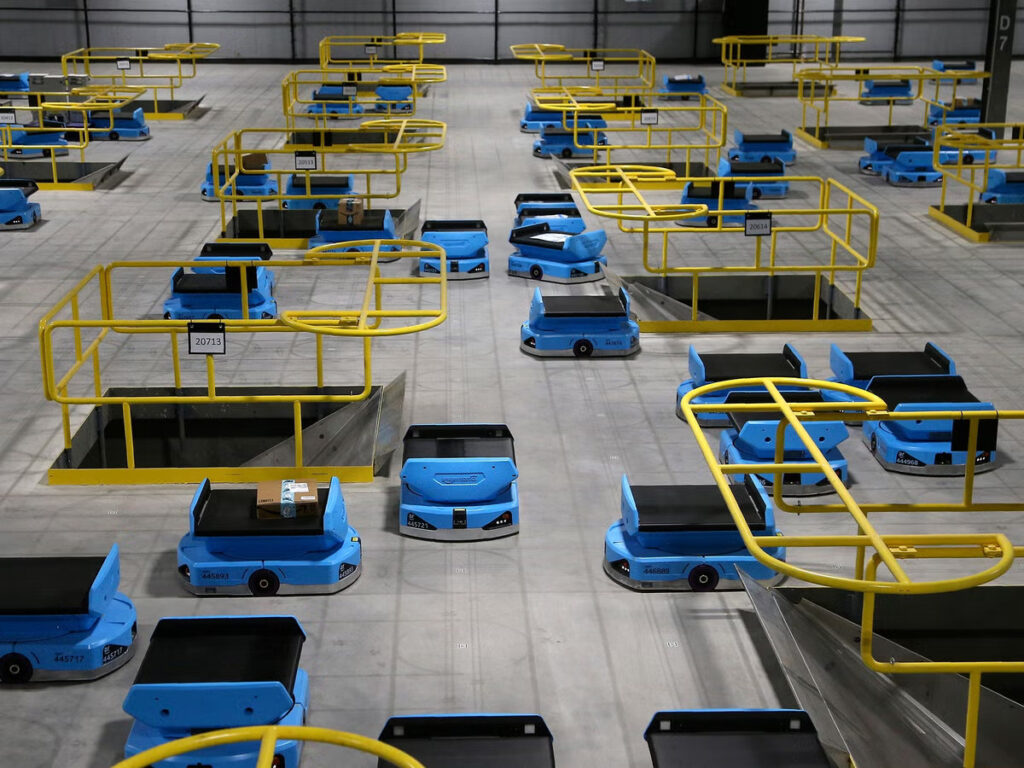
Amazon’s Robot Workers to Help Run Australia’s Largest Warehouse

Amazon’s Australian expansion takes a bold step forward as it prepares to operate within the country’s largest warehouse, leveraging advanced robotics for unprecedented efficiency.

Amazon’s Robot
Independent.co.uk

This move underscores Amazon’s commitment to innovation, efficiency, and blending cutting-edge technology with human expertise in its Australian operations. The upcoming fulfilment centre, sprawling over an impressive 209,000 square meters – equivalent to around 29 football fields, is slated for completion by 2025. Situated at Melbourne’s Craigieburn Logistics Estate, this monumental project is set to redefine the e-commerce landscape in Australia.

The true innovation lies in the seamless collaboration between human workers and a fleet of high-tech robots. These robots are designed to work alongside employees, optimising the order fulfilment process. By transporting inventory pods directly to human workers, these robots significantly reduce the time and physical strain associated with tasks like stocking items and picking orders. This harmonious man-machine partnership showcases how technology can augment human labour to achieve unmatched efficiency.

Beyond its technological marvel, this fulfilment centre is a cornerstone for job creation in Australia. In conjunction with the robot workforce, Amazon plans to generate approximately 2,000 job opportunities. Furthermore, an additional 2,000 jobs will emerge during the construction and fit-out phase of the facility. Amazon’s commitment to fostering employment growth while embracing automation reflects its dedication to progressive business practices.

This ambitious project marks a substantial expansion of 9,000 square meters when compared to Amazon’s existing Western Sydney robotics site, introduced with great success in 2022. The warehouse’s development is backed by Australian Super, the nation’s largest pension fund, with Logos at the helm of management and development. This underscores the growing trend of unlisted assets, particularly warehouses, gaining prominence within Australia’s A$3.5 trillion pension industry. The surge in online shopping has transformed the investment landscape, driving a shift towards digital economy-focused opportunities.

Also Read: Uber Is Developing an AI-Powered Chatbot to Integrate Into App

As Amazon’s Australian venture prepares to embrace this new paradigm, the integration of advanced technology and human prowess takes centre stage. The union of robotic precision and human skill amplifies operational efficiency, showcasing the trans-formative power of collaboration. With the fulfilment centre’s completion on the horizon, the business world anticipates Amazon’s pioneering role in shaping the future of warehousing in Australia.

In conclusion, Amazon’s adoption of robotics in Australia’s largest warehouse signifies a monumental leap towards enhanced efficiency and innovation in the e-commerce sector. This unprecedented synergy between cutting-edge technology and human expertise reaffirms Amazon’s commitment to redefining the retail landscape. As the countdown to the fulfilment centre’s completion begins, the business realm eagerly anticipates the dawn of a new era in Australian warehousing.

Rakuten

Rakuten signs MoU with OpenAI to develop services

In a significant stride towards fostering innovation and technological advancement, Rakuten Group, Japan’s leading e-commerce and tech giant, has announced the signing of a momentous Memorandum of Understanding (MoU) with OpenAI.

The collaborative effort aims to explore and develop cutting-edge commercial opportunities that leverage the power of OpenAI’s revolutionary artificial intelligence applications across Rakuten’s diverse portfolio of products and services.

rakuten
Image Source: reuters.com

The MoU marks the beginning of an exciting partnership between Rakuten and OpenAI, two trailblazers in their respective fields. OpenAI, renowned for pushing the boundaries of artificial intelligence research, brings to the table a wealth of knowledge in natural language processing, machine learning, and robotics.

Rakuten, with its extensive presence in e-commerce, digital content, fintech, and telecommunications, offers a unique ecosystem to test and implement OpenAI’s innovations in real-world scenarios.

Under the agreement, both companies will collaborate to integrate OpenAI’s applications into Rakuten’s existing products and services. This collaboration holds the promise of enhancing user experiences, streamlining processes, and unlocking new possibilities across Rakuten’s vast customer base.

Also Read: Crypto stocks dip after bitcoin slumps to six-week low

By tapping into OpenAI’s state-of-the-art technologies, Rakuten aims to offer more personalized and tailored solutions that cater to the evolving demands of consumers in an increasingly interconnected world.

The partnership also aims to foster cross-learning between the two organizations. OpenAI, as an AI research powerhouse, will gain valuable insights from Rakuten’s operational expertise and extensive consumer data.

Simultaneously, Rakuten stands to benefit from OpenAI’s research advancements, accelerating its digital transformation journey and reinforcing its position as a global technology leader.

Hiroshi Mikitani, Chairman and CEO of Rakuten Group, expressed his enthusiasm for the partnership, stating, “We are thrilled to collaborate with OpenAI in this endeavor. Rakuten’s mission is to empower people and society through innovation and technology, and AI has always been at the forefront of our strategy. Partnering with OpenAI will open up new avenues for us to revolutionize our products and services, ultimately elevating customer satisfaction.”

Sam Altman, CEO of OpenAI, also shared his vision for the partnership, saying, “We believe in creating a global community that benefits from AI’s progress. Collaborating with Rakuten is a fantastic opportunity to bring the fruits of our research to millions of users worldwide. Together, we aim to create transformative AI-driven solutions that drive growth, efficiency, and accessibility.”

As the world continues to embrace the potential of artificial intelligence, the collaboration between Rakuten and OpenAI holds the promise of delivering groundbreaking services and experiences.

Through this MoU, the two companies are poised to shape the future of commerce, technology, and AI-driven innovations, driving positive change and making a lasting impact on the lives of people worldwide. As the partnership unfolds, the world eagerly awaits the transformative outcomes that this fusion of expertise and vision will yield.

Crypto

Crypto stocks dip after bitcoin slumps to six-week low

Shares of crypto and blockchain-related companies faced a downward trend in premarket trading on Tuesday as bitcoin, the leading cryptocurrency, experienced a significant slump, hitting a six-week low. The bearish sentiment followed news of a hack at Curve Finance, a prominent platform utilized for borrowing and trading cryptocurrencies.

crypto
Image Source: brecorder.com

Bitcoin, which commands the lion’s share of the cryptocurrency market, witnessed a 2% drop, tumbling to $28,870 in value. The market reaction was swift and widespread, affecting a range of crypto-related businesses and platforms.

Curve Finance, a decentralized finance (DeFi) protocol that enables users to lend, borrow, and trade cryptocurrencies, revealed on Sunday that it had fallen victim to a malicious hack. The company disclosed the security breach on the messaging platform “X” (formerly known as Twitter). Reports suggest that the losses from the hack could exceed $40 million, casting a shadow over the broader crypto industry.

In response to the turmoil, major players in the crypto space experienced significant declines in their stock prices during premarket trading. Coinbase, a prominent cryptocurrency exchange, saw its stock dip by 3.1%, while Bitfarms, a blockchain-farm operator, experienced a 1.1% drop in its shares.

Also Read: Bosch opens chip test center in Malaysia

Crypto miners also suffered from the downturn, with companies like Riot Platforms, Marathon Digital, and Hut 8 Mining (the U.S.-listed shares of a Canadian crypto mining firm) all experiencing declines ranging from 3% to 3.35%.

Beyond individual company woes, the broader crypto industry faces additional challenges on the regulatory front. Two of the largest players in the sector, Binance, and Coinbase, are currently under scrutiny from the U.S. Securities and Exchange Commission (SEC). The regulatory uncertainty surrounding these platforms has added to the market’s anxiety, leading to a cautious approach from investors.

Moreover, the recent interest rate hikes implemented by the U.S. Federal Reserve have exerted additional pressure on risky assets, including cryptocurrencies. As the Fed tightens its monetary policy to curb inflationary pressures, investors have become increasingly wary of the high volatility and speculative nature of the crypto market.

Overall, the crypto industry finds itself at a crucial juncture, grappling with both internal and external challenges. The recent hack at Curve Finance has underscored the importance of strengthening security measures and risk management protocols across all crypto platforms. Additionally, regulatory scrutiny and macroeconomic factors continue to play a significant role in shaping investor sentiment in the market.

As the situation unfolds, market participants are likely to closely monitor developments in the ongoing investigations involving Binance and Coinbase. Furthermore, any future actions taken by central banks and regulatory bodies could have far-reaching implications for the crypto space as it seeks to find stability amidst a volatile market environment.