Your Tech Story

Jayshri

Jayshri is an Electronics Engineer, but her passion towards writing made her to be in this field. Apart from content writing, she loves reading, writing and surfing on various topics. In her free time, she likes to watch TV series and news. Sherlock Holmes is her all time favorite show. Jayshri loves cooking various Indian-western dishes.

Spacemaker

How Spacemaker Is Helping To Build Sustainable Urban Cities Under Havard Haukeland Policies?

As we can see, cities of the world are growing immensely day by day. Nothing wrong to say that it will grow more in the future. In fact, the definition of living quality in urban areas is changing with time. Thus, the constructions should be higher and denser as well, faster than before. Also, it is necessary to provide high living quality and an urban environment that is sustainable. Obviously, the construction industry has adopted these changes. But it is one of the industries, which is yet one of the least digitized. The construction industry needs a transformation to match the requirements of the future urban area. Here comes the role of Spacemaker, which is playing an important part to bring transformation in this industry. Spacemaker aims to assist in building sustainable cities that are the need for the future.

However, it is set up by Havard Haukeland in 2016, which is named among the world’s 500 most innovative science and deep tech startups. Moreover, it was invited to Paris as a finalist in the world’s biggest early-stage start-up competition in science and deep tech start-up section.

About Spacemaker

It is a Norway-based startup that creates AI software to assist property developers and architects. So that they can make better design decisions to build the cities. Recently, the firm has picked up 25 million dollars in Series A funding. In addition, it claims to enable property development specialists, like real estate developers, urban planners, and architects. Thus, enabling evaluation and development of the optimal environmental design for any multi-building residential development.

Havard Haukeland co-founded the firm in 2016.

The world’s first AI-assisted design and construction simulation software

Spacemaker developed “the world’s first” AI-assisted design and construction simulation software for the property development sector. In fact, it has developed a game-changing AI technology that enables users to find smarter ways to maximize the building site’s potential. The products of Spacemaker enables users to explore a multitude of site proposals. This helps to sort out the best ones; as well, provides details analysis for each. Furthermore, the company enables insights and collaborative workflow among different levels of authorities needed to build any site. Such as municipalities, real estate developers, engineers, and architects. Currently, it acquired partners such as Skanska, OBOS, AF Gruppen, etc. These are Northern Europe’s most impactful real estate developer and architect firms. 

How Spacemaker is Helping to Build Sustainable Urban Cities?

With rising urban populations, we need sustainable and liveable cities. But it is not possible to build the same with old construction methods. To developed new urban areas, the available land should be used wisely to create a comfortable residency. Also, to develop sustainable urban cities, many other factors need to consider. Like, space optimization, sunlight exposure, noise, wind, and many others. 

To achieve this, Spacemaker developed AI-based software, which enables a sense-check of their construction plans. As well, shows design optimization considering various factors as mention above. For that, this software crunches various data. Includes, physical data, regulations, environmental factors, and other preferences. Thereafter, it provides twenty to thirty options at most, considering all factors.

The mastermind behind Spacemaker- Havard Haukeland

He is the present CEO and co-founder of Spacemaker, a Norway based deep-tech start-up established in 2016. The firm is well-known for building the world’s first Artificial Intelligence for urban site development. Before that, he also worked at Link Architecture as an urban designer. It is one of the leading architect offices in Scandinavia. Also, Havard is the former architect at Element Architects. Apart from construction industry jobs, Haukeland also worked as director and scriptwriter at Seefood TV.

Educational Background

Havard went to The Oslo School of Architecture and Design (AHO) for studying masters in architecture. Further, he attended The Norwegian School of Information Technology and Westerdals School of Arts, Communication, and Technology. As well, he studied mathematics and physics at Nadderud VGS.

Awards and Recognitions

He was listed in 40 below 40 of Capital and among the Top 5 Innovator of the year, Top young leaders in Norway in 2017. Havard won Statsbygg´s award for the best Master Thesis in second place.

The company set up by Havard won HAI / Machine Learning startup of the year-Nordics, Startup of the year-Norway. In 2019, it won Best AI / Machine Learning startup of the year, Norway. Also, the firm honored with many such awards including, the Construction industry’s Innovation award, B2B startup of the year-Norway, CogX Sustainable Cities and Communities Award.

Synchronoss Technology

Synchronoss Technology: Stephen Waldis Showed That Acquisition Strategies Can Explore Business Too!

Synchronoss Technology is a Software Services Company that is providing Game-Changing SaaS And PaaS. Also, the company enables digital, cloud, messaging, and IoT platforms, which maximize the growth of its client’s businesses. As well, lower down operating costs and improved customer experience and engagement. Stephen Waldis established the company, who is the present chairman of it. Under his policies, the Synchronoss platforms are helping clients meet changing digital market trends. The company has a 20-year history as a trusted integrator and had built a strong network with many partners all over the world. 

Person Behind Synchornoss Technology foundation- Stephen Waldis

He is the founder and Chairman of the company, which is a global leader in a software solution. Earlier, he served at a top management position in several top companies. Especially, high-tech and telecommunication companies. However, Stephen started his career at AT&T. Where he worked at various positions such as product management, sales, and marketing as well, in technical filed. Thereafter, he acquired the executive-level position. In 2000, he set up Synchronoss to develop a platform that will meet the altering trends in the digital world.

Stephen attended Seton Hall University for his higher studies. 

Awards and Recognition of Stephen Waldis

20 plus years’ experience in high tech and telecommunication filed and the endeavor to start a unique start-up offered several honors to Stephen. He won the prestigious Ernst and Young Entrepreneur of the Year award three times. Apart from that, Waldis is a founding inductee into the Seton Hall University Hall of Fame for Business Entrepreneurial Studies. As well, he sits on the Board of Trustees of Seton Hall University along with the Board of Directors of The New Jersey Technology Council. In addition, he is also a board of trustees at private firms BillTrust and ClickFox.

The Backstory of Foundation

Synchronoss set up in 2000 in Delaware. However, it was a small start-up in New Jersey that shaped into a global leader as a software service company. Stephen Waldis founded the company back in 2000 with his 20+ years’ experience. In 2006, the firm went public and next year it became one of the successful technology IPOs. 

Currently, the company is providing miscellaneous software service as well, service in transaction management. It is especially for a broad range of activation solutions as well as connected devices, serving the industry leaders on the planet.

About the Company 

Synchronoss Technologies is a global leader and innovator of messaging, cloud, as well as digital and IoT products. However, the products of company cover activation, cloud, enterprise mobility, broadband, universal identity, messaging as well as for analytics. In fact, Synchronoss is one of the global leaders in carrier cloud solutions, having a 75% market share. It is well-known for its unique approach to Software Services. Synchronoss platforms basically developed to create profitable new revenue and reduce innovation and growth costs. Also, create amazing customer experiences, drive higher engagement and speed up the market.

The company operates at several locations across the continents, including Japan, China, India, France, Australia, and many more. Also, it has a global data and R&D facility at Bethlehem, PA. 

Synchronoss to exploring the business

The firm has expanded its business through acquisition strategies. In 2016, it acquired Intralink Holdings for 821 million dollars to expand the market in enterprise solutions. It was the financial service provider firm. Also, last year, Synchronoss acquired OpenWave Messaging to explore the business in the field of messaging solutions. As well, the company tied up with Price Water House Cooper so that the company’s enterprise mobility business can be explored. Furthermore, Synchronoss aims to explore the range of services in healthcare and life science. 

Services offer

The company provides a range of products and services that includes cloud, enterprise mobility, broadband, universal identity, messaging as well as for analytics. Its secure mobility solutions are best known to secure important data, this data is saved on the container. So, even the mobile is lost, the important data would be removed automatically. Also, its analytics service is helping companies for data analytics. Thus, enabling cost optimization and other innovations needed to meet the digital trends. Furthermore, it also offers a personal cloud to manage personal data on smartphones. Like, photos, videos, attachments, etc. 

Awards and Recognition 

For its unique business model and innovative technology platform, Synchronoss has owned many titles on its name. For example, Software 500’s Top 10 Companies, Magazine’s 500 Fastest Growing Companies, NJBiz Fast 50 Companies, Deloitte Technology Fast 50, and many more. In 2009, it named Starcast & Sullivan’s Top 10 Global companies to watch. Also, it was the 2007’s IPO Home’s top-ranked software IPOs. Additionally, Synchronoss has been featured on Forbes List of America’s Best Small Companies. As well, in the Forbes Fast Tech 25 list that features the fastest growing technology companies. Synchronoss was ranked 7th in the list with a three-year average sales’ 29% growth.

Recently, Assurant, Inc. selected a personal cloud platform of Synchronoss to add incremental value to its mobile device protection offerings. A company, which is the market leader in mobile device protection as well as in risk management solutions chose Synchronoss to improvise the customer experience. Currently, the company is traded on the Nasdaq stock exchange under the symbol SNCR.

coronavirus

Does India is planning to backstop its growing electronics sector by arranging to airlift components from China?

Highlights:

1. Manufacturing of Electronics products, especially smartphones assembly is a golden chance to improve India’s otherwise fading economy.

2. Two of the officials reported to Reuters that the Technology ministry has asked electronics and smartphone industry lobby groups to draw up a list of components made in China which then can be airlifted.

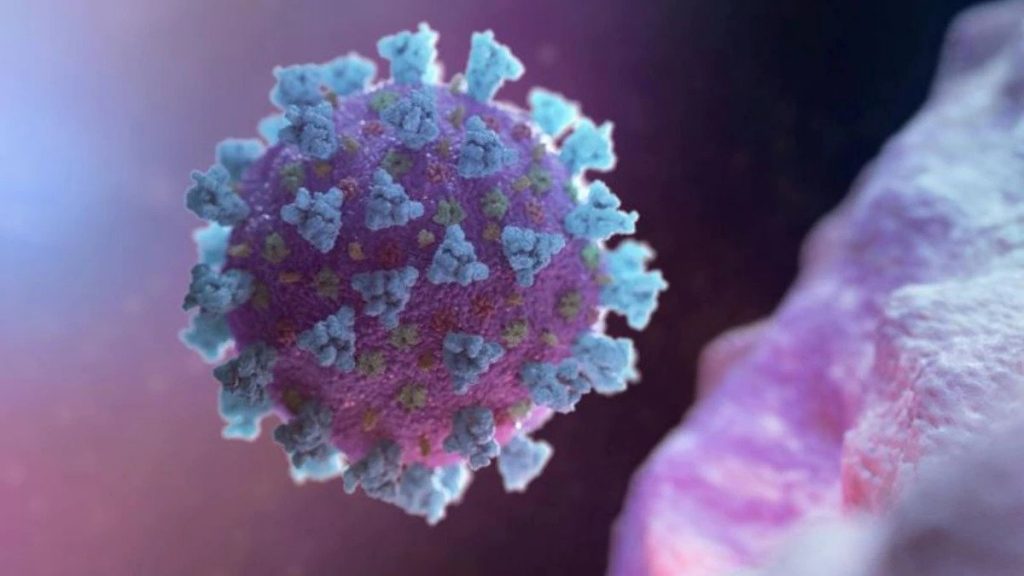
Coronavirus has been declared a global emergency, which took the lives of many people all over the world, especially in China. Recently, many smartphone companies denied participation at Mobile World Congress 2020 arranged in Feb due to Coronavirus Outbreak. However, India is planning to backstop its growing electronics sector by arranging to airlift components from China, three government officials said, as it tries to contain the fallout from the coronavirus crisis in China.

Emergency Airlift plan

India’s federal technology ministry has asked electronics and smartphone industry lobby groups to draw up a list of components made in China which then can be airlifted, two of the officials said.

After an extended shutdown due to the Coronavirus outbreak, China is slowly getting back to work. But the country is still facing a range of products and logistics delays. Electronics manufacturing such as smartphone assembly is the bright hope for India’s otherwise flagging economy. However, India is still relying on China for basic components required for the assembly of smartphones. Includes, display screens, camera modules, etc. 

The emergency airlift plans highlight the global supply chains’ interconnected nature as well, continued dependence on China for key goods even as some manufacturers prompted in some cases by the US-China trade war move to build up capacity outside of China. On the basis of this, other industries are exploring airfreight options too.

India’s role in Emergency Airlift plan

The auto industry in India is highly depending upon China for assembly parts like electronic components, fuel injectors, and pressure sensors.

As per the reports, the Indian Automotive Component Manufacturers Association has reached out to its members so that parts are in short supply will assess and can potentially be air-lifted. Also, the government adviser with direct knowledge of the matter reported that India’s embassy in China is coordinating an airlift of drug ingredients from China.

As per one of the government sources, “For the electronics and smartphone components, the technology ministry is in touch with aviation carriers and air freighters and they’ve been connected with the industry”.

“The airlifting of components from the Chinese cities of Guangzhou and Shanghai is one option being discussed”, the official said. However, the sources did not clear anything about when the airlifting might begin. The aviation ministry also did not immediately respond to a request for comment.

Import of Chinese goods has been lower down

Reuters has reported, Lack of truck drivers, a proliferation of road checkpoints and a shortage of workers at Chinese ports have slowed shipments even for parts that are still being produced. Also, Air cargo firms have reduced services in response to crew health concerns and uncertain demand.

All aware that China is the biggest trading partner of India, but imports of Chinese goods in India contracted in February to their lowest levels in nearly four years, trade ministry data reviewed by Reuters showed.

Scrambling in India

Indian Smartphone makers thus far have largely weathered the virus crisis, partly because they had made up inventories of Chinese-made parts to cover the Lunar New Year holiday period when factories in China shut down. But those stocks could dry up soon.

The co-founder of homegrown smartphone maker Lava Mr. S.N. Rai said, “the supply of some components had resumed, but the pace of production at his factory on the outskirts of New Delhi could soon slow down”.

Rai reported to Reuters, “The period between March 10 and March 20 is going to be very tough, in the absence of supplies, we might have to cut one or two of the three eight-hour shifts we have daily”.

Others are also scrambling for components

As per to two industry sources, the India units of contract manufacturers Wistron Corp, which makes some of Apple Inc’s lower-priced iPhones, and Flex Ltd have, through an industry body, asked for government help in securing components including camera modules and displays from China. However, Wistron and Flex did not immediately respond to Reuters’ requests for comment.

Oppo, a Chinese smartphone maker as well as Korean Samsung Electronics did not respond to requests seeking comment on their supply chains.

Coronavirus outbreak brought the uncertainty in Global Economy, especially the economy of China and developing countries like India. The global emergency affected the automotive sector of India. Also, now it is affecting the Electronics Manufacturing Industry of the country, which is the bright hope for the flagging economy of India. Let’s Hope, Coronavirus outbreak recedes soon so that all sectors reinstate its potential.

Ubihere

Ubihere’s Latest Technology fills in for GPS indoors, making it an alternative for GPS-denied environments

Highlights:

1. For indoor and outdoor positioning, Ubihere has introduced a new 2D and 3D technology.

2. The company’s patented technology enabled real-time asset location and information without GPS.

3. Ubihere’s technology to provide the alternative for GPS-denied environments.

Ubihere has enabled a novel 2D and 3D tracking technology for indoor as well as outdoor positioning. This patented technology offers real-time asset location and information. However, GPS is not needed for the whole process. Thus, making it an alternative for GPS-denied environments. It will be launching in Hospitals and Retail Store so that the efficiency of these crowded places will maximize.

How does it work?

Basically, an anonymous Video Analysis Positioning Technology which is OSU patented is used by Ubihere’s system along with advanced machine learning and tag technology. The cameras, system tags, and software track assets to the centimeter. These assets then monitored through either anonymous video feed or tags. These tags are the same as the size of the credit card and non-RFID.

Ubihere’s vice president of business development Mr. Alice Hilliard explained, “The map for indoor environments can be generated from a building information model (BIM). Based on the building’s architecture, movement is tracked. In milliseconds it can hone in on an exact location within a centimeter”.

Depending on the preference of the customer, the location data is transmitted to either the server or the cloud. Then it is loaded into dashboards. However, it can be accessed from any device the client requests.

Now, if a tagged object leaves a building, it will continue to be tracked with or without GPS. In case, if the object stays within the building, no need to use GPS. The battery life of the device which ranges from 18-24 months can be shorten using GPS. Also, several floors, temperature, and usage affect battery life.

Alper Yilmaz- Inventor of the Technology

Alper Yilmaz, the inventor of the technology and geoinformatics professor of Ohio State University (OSU) researched how to geolocate undercover officers based on motion video information. He also considered astronauts on spacewalks.

However, OSU commended Alper to commercialize his technology, and Rev1 Ventures served as the incubator. Under Rev1’s portfolio, Ubihere launched in 2016 in Columbus in Ohio.

Tags to offer a way to calibrate location in Hospitals and Retail Stores

These tags are useful to calibrate locations in places such as hospitals and retail stores, where food cart tracking or devices through lead-lined walls enables these places to maximize their efficiency.

Hilliard says, “Imagine how many times a nurse or other caregivers go back and forth”. Also, he added, “By tracking how people and objects move around, we can help departments figure out opportunities to layout the floor better to allow the staff to save time and steps”.

Further, Hilliard informed that “With a blueprint loaded into the software the system knows whether a (tagged) IV pump went down the hall, turned left or right, entered an elevator, or was left in a patient’s room”.

Locations such as retail stores are the best places to install the cameras, enabling Ubihere to anonymously track a journey of the consumer. If the tag and camera used together, it can assist stores to determine whether a display is working, showing how many customers came into the shop, or how many looked at or touched items in a particular display. In the case of e-commerce, the behavior of costumers can be tracked automatically in real-time with Google Analytics and other SEO tools.

Where else it can be used?

Hilliard explained that “If you were in a factory or even a nuclear power plant, OSHA guidelines establish that you have to have two people in the control room at all times”. Possibly, other uses include emergency-response teams and factories.

He further said, “Periodically, OSHA is required to monitor if the power plant is following that protocol. Instead of having someone sit there and oversee the situation, we can use our camera technology to anonymously collect workers’ whereabouts, which can then be easily pulled from the cloud. For response teams, an equipment failure that makes it difficult to locate a team member could be overcome with the tag technology”.

Yilmaz said, “Ubihere’s machine-based algorithms can learn locations based on various types of sensors, detecting odors isn’t out of the question”. This machine-based learning algorithms utilize maps and sensors to provide a new way to accurately locate things or people in indoor situations where GPS can’t.

About Ubihere

It uses non-GPS reliant tracking technology with great appeal to myriad industries. As well, enabled enormous implications for healthcare, retail as well as the US Military. Ubihere has its roots in research by Alper Yilmaz’s Ohio State University lab that researched how to geolocate undercover officers based on motion video information and astronauts on spacewalks. Its patented advanced positioning analytics map-enabled real-time asset location and information without GPS. Earlier, the company worked with Converge Technologies.

Ubihere now exploring potential applications of its GPS-free tracking technology. Initially, beta tests will be conducted in the hospital as well as in retail environments. As per the reports, the company also has signed three projects with the U.S. Department of Defense.

Hyundai

Chung Ju-Yung: Journey of Hyundai Motor’s founder who proves man’s potential is limitless!

The global economy has witnessed major uncertainties, and this could be witnessed in the future as well. All know that the economy is depends hugely on the automobile industry. However, due to changing technology and rising competitions the automobile industry is facing a wave of rapid change. Which again somehow affecting the growth of the automobile sector and proportionally the economy of any country. But, there are some leading automobile companies out there that will make whatever changes as per the requirements of today’s world.

Hyundai Motor is one of the automobile firms that adapting new technologies and investing in new businesses. Nevertheless, without a strong foundation, it is difficult for a company to stand strong since its foundation. Especially, in the world where technology alters every year and competition intensifies per day. All credit goes to South Korean entrepreneur Chung Ju-Yung, who set up Hyundai Motors back in 1946. A person with great future insights and resolutions, and inspiration for young entrepreneurs.

Life Journey of Chung Ju-Yung

It’s fascinating to know how a boy that belongs to a poor Korean family became one of the richest men in the world. No doubt, it must be tough for him to climb the ladder of success, which he achieved with his indomitable efforts. Today, Chung Ju-Yung is one of the reputed names in the automobile industry and role model for many entrepreneurs. Let’s see, the journey from a common man to Hyundai Motors’ founder.

Early life

He was born on 25 November 1915 in Kangwon Province. In the period, when Japanese rule was all over Korea. Chung belongs to a peasant family and he was the eldest among his other siblings. At a young age, he wanted to be a teacher. Due to poverty, he also had to leave higher education. Also, Chung had to step back from his dream because of poor family conditions, where two times bread was hard to get. Fortunately, he got to attend a local Confucian school. Because his grandfather was running that school thus, Chung could attend the school after finishing farm work.

However, he discovered the businessman within him at the time he sold wood. Thereafter, some newspaper articles against poverty encouraged Chung who was tired of leaving in poverty.

Escape or Discovery of New Life?

That time, farmers were living a poor life, no matter how hard they worked the poverty was unending. Knowing farm life’s harsh realities, Chung decided to find other work. With his friend, he traveled to Kowon and they got their first job as construction workers. He worked there for two months until his father took his home. During that job, he understood his passion for civil engineering. So, he again escaped working in this field. But this time, he learned a life lesson. A stranger promised him to offer a job and took all the money and ran away. After that, he helped his father in farm work, but he was not ready to continue a farmer’s life. Sooner or later, he again managed to escape and enrolled a name in local bookkeeping school in the hope of becoming an accountant. All goes well until Chung’s father took him home again.

In the business

He again ran away and this time it was the wise Chung. Earlier, he took any job he could find. At that time, he worked as a laborer, construction worker, and a handyman. After several job roles, he found a better job as a deliveryman. This job at Seoul in the Bokheung rice store offered him many facilities. In a short period, he got appreciation and promotion as a rice store accountant. Apparently, it was the first job in his life that assisted to develop business skills. In 1937, the store owner died, and he left the store on Chung’s name. So, now he became the owner of the rice store. All goes well until the war, Japan forced the Korean business out of trading rice.

Chung Ju-Yung to start Hyundai

After a huge loss in the rice business, he returned home. He noticed that the Japanese Colonial government has restricted many businesses for Koreans. Studying all the scenarios, he decided to jump into an automobile repair business. Eventually, he started a-do service garage which offered him a good income in a short time. But in 1943, the Japanese colonial government forced to merge the garage with steel plant and this business shut down too.

In 1946, Korea liberated from the control of the Japanese Colonial government. Chung grabs the opportunity and established Hyundai. He was known to the fact that it’s a great chance to set the business in anticipation of the post-war reconstruction and industrialization.

Hyundai grabbed the contracts

Chung’s vision turned true; the company acquired major contracts from the government. In a short period, Hyundai builds most of the transportation infrastructure in South Korea. For example, Soyang Dam, Gyeongbu Expressway, Ulsan’s shipyard which is today largest in the world. Also, the company earned several contracts from the American Military.

Later life

At the age of 85, he died in Seoul on 21 March 2001. He builds the strong foundation of Hyundai and set his name as one of the most admired businessmen in the history of Korea. Whatever the company achieved is attributed to the future perspective and resolutions of Chung Ju-Yung.

Hawaiian-Airlines

Stanley Kennedy: Hawaiian Airlines Founder who dreams of expanding flights beyond the islands!

Hawaiian Airlines is some of the best Airlines in the US that well-known as a tenth-largest commercial airline in the United States (US). As well, it is the largest airline of Hawaii that has the flag career throughout its journey. In fact, it’s the oldest airline that has never had a fatal accident since its foundation. Also, in the USA, Hawaiian airlines often top the on-time carrier list. The best part, it sets the example as the best airline that has fewest cancellations as well, minimal baggage handling issues.

Stanley Kennedy builds the foundation of airlines which took the first inter-island flight in 1929. Since then he ran Hawaiian Airlines however, he stepped down from daily operations back in 1955. After that, Kennedy served as chairman of the company until 1968. Presently, Hawaiian Holding Inc. owned the company. However, P. Ingram is handling the CEO and president’s position at one of the oldest operating airlines in the world.

Hawaiian Airlines Founder’s Life Journey – Stanley Kennedy

He was a US Naval Aviator during the first world war. As well, Kennedy was a silver star recipient who also holds the world record at that time. Most importantly, he is known as the Hawaiian Islands’ commercial aviation pioneer.

Early life

He was born on 7 July 1890 in Honolulu in Hawaii. Stanley’s father, James A. Kennedy was the president of the Inter-islands Steam Navigation company in Hawaiian island. However, the Kennedy family was an immigrant from Scotland. In 1908, Stanley completed his secondary education from Punahou School, Honolulu. After that, he went to Stanford University for graduation. Just after completing education, he joined his father at work.

Career

In 1917, the US entered World War I, thus many civilians had to join the US military force. He joined the US Navy and went for Naval Officer training at Massachusetts institute of technology. During the mission, Kennedy along the team set a world record for a sustained flight that fly for 7 hours, 59 minutes. For that, he earned a silver star.

After world war I, he returned and joined the Inter-Island Steam Navigation Company. Kennedy’s experience flying seaplanes encouraged him to used seaplanes to connect Hawaii’s people. But his father was against his idea. However, he proposed this idea again after his father died.

The beginning- Inter-island Airways

The members on the company’s administration panel accepted his proposal and Inter-Island Airways started in 1929. Stanley appointed as a General manager and vice president of his dream company. However, he hired his navy companion Charles Elliot as the first chief pilot of the company. Kennedy always had a dream of starting scheduled airline service in Hawaiian Island. In 1921, on 11 November, the company scheduled the first flight that flew from Honolulu-Maui-Hilo.

Flights beyond the Hawaiian Islands

Expectation continues to rise, he aimed at expanding the flights beyond the island. With changing vision, the company changed the name as Hawaiian Airlines in 1941. To start flight beyond the islands Kennedy had to face many challenges and lots of money spent on it. For that, Kennedy teamed up with TWA which later on steps back from the deal.

In 1959, the airline route application process reattended, and it was flying DC-6s to the mainland. After that, Stanley handover the presidency of Hawaiian Airlines to Art Lewis. But the company still not got the chance to win the route for scheduled flights. However, the approval of the Airline Deregulation Act, 1978 end the wait of Hawaiian Airlines to start scheduled flights beyond the Islands.

Personal life

He married Martha, a lady he met during his return journey after completing education. At the age of 77, in 1968 Kennedy died due to cardiac arrest. Stanley served as a chairman of Hawaiian Airlines till he died.

Hawaiian Airlines other Successes

In 1966, the company started inter-island Jet service. Also, the company established inter-island passengers as well as the Air-Cargo business after the second world war. Today, it is the world’s one of the oldest and Hawaii’s largest Airlines that is operating successfully. Its main hub is at Daniel K. Inouye International Airport and a secondary hub at Maui’s Kahului Airport. The dream of Stanley Kennedy to start scheduled flights is achieved. An airline operates scheduled flights to American Samoa, Hawaii, and New Zealand. Also, to Asia and other islands beyond Hawaii.