Your Tech Story

Annasha

Annasha Dey is an NIT student, who apart from studying engineering is also a content writer. She has a great interest in photography, writing, reading novels, and travelling as well. She is a foodie who loves socializing and hanging out with her friends. She is also a trained Kathak dancer and a big fashion enthusiast. Dey also loves watching TV series, which includes F.R.I.E.N.D.S. and Big Bang Theory. To be a better writer she prefers to read more

TripAdvisor

Unleash The Passionate Traveller Inside You With TripAdvisor

Is it for the sixth time you are canceling your Goa plan? The feeling is mutual my friend. All of us make a huge bucket list, but most of the plans aren’t executed. There is so much to explore, yet we are either too busy or too scared to step out. Every time we scroll down an Instagram profile of a traveler, we are highly tempted and intrigued. And, in our mind, we have already made a plan which ends up like ‘I wish I could, but TripAdvisor makes it easier to turn that in reality.

What are you scared of? With so many online travel companies coming up, traveling has honestly become way easier today. All you need is a week off from your job and some cash. Traveling is expensive but not all the time. And, once you do some thorough research about a place, there isn’t much to think about it.

TripAdvisor

TripAdvisor is the largest and the first ‘social travel website’ in the entire world. One of the best things about TripAdvisor is the contents are user-generated. So, you get completing honest reviews about any place you want to visit. The famous restaurants, the pocket-friendly hotels, the best trekking spots, water sports, and the best shopping sites, one gets to know everything.

Founded by Stephen Kaufer, the company was established in February 2000. The headquarters of TripAdvisor is based on Massachusetts, the U.S. The parent company of TripAdvisor is Tripadvisor Media Group which runs twenty-five travel brands. Some of them are BookingBuddy, Citymaps, TravelPod, etc.  
TripAdvisor
Image Source: Google Images

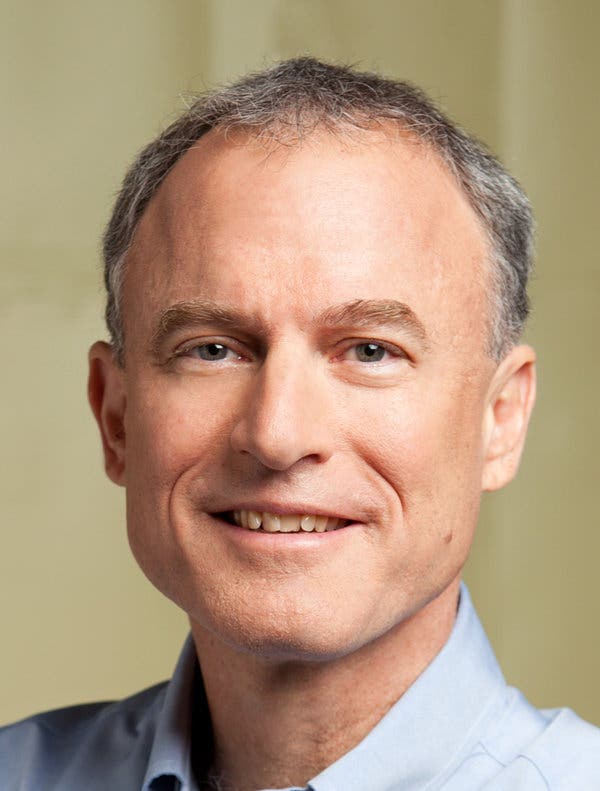
Stephen Kaufer

Kaufer received his Bachelor’s degree in Computer Science from Harvard College. After graduating in 1984, Kaufer joined CDS Ltd as its President. Before co-founding TripAdvisor, Kaufer also co-founded Centerline Software. 

Kaufer is a Board Member of Glassdoor, Cargurus, TripAdvisor and Caring for Carcinoid Foundation. Kaufer, in 2005 became Entrepreneur of the Year.

Why the Best?

The best feature of a travel website can have is user-generated content. TripAdvisor helps people to find the best accommodations suited for them and their reviews, in turn, helps out many more. The users are the ones making TripAdvisor get better and bigger every day.

Moreover, it doesn’t only help the users but also the hotels to improve themselves. Because one negative comment can easily turn a business upside down. The power lies in the hands of the customers.

Be it an appreciation, a criticism or a piece of advice, one can share everything in the platform of TripAdvisor. 

How did it start?

The company was set up in early 2000 with a funding of $3 million only. TripAdvisor was determined to post fully original reviews of the customers and not go for crowd-sourced content. Though it was considered not a good enough idea by some critics, the company went for it.

The website was free for every kind of user. But in 2001, Kaufer brought a little change and started charging small fees for per click. Every time a user clicked in the link of a specific hotel, charges summed up.

This strategy of Kuafer resulted in a huge profit. By 2004, the company witnessed 5 million active monthly visitors. In this same year, TripAdvisor was acquired by InterActiveCorp for $210 million. Nobody saw it coming and Kaufer regretted the decision later. 

Growing Bigger

After the acquisition, Kaufer was still the CEO of the company. Within the next few years, TripAdvisor hired more employees as it expanded. The company also built offices in India by 2008. After a couple of years, the company had 26 unique monthly visitors. It became the largest company in the world related to tours and travels making a yearly profit of $129 million.

In 2010, TripAdvisor acquired holidaylettings.co.uk which was the biggest independent rental website in the U.K. By the next year, TripAdvisor had 50 million monthly visitors and the company’s IPO was filed for $4 billion. When it became an independent business, TripAdvisor realized it lacked skilled leadership. But, the company managed itself well and now it has offices worldwide with more than 3,000 employees.

Acquisitions

After the acquisition of the U.K’s rental website in 2010, TripAdvisor bought Where I’ve Been (a Chicago-based app) in 2011. In the next couple of years, the company acquired Wanderfly, Jatesetter, GateGuru, Oyster.com, etc. The latest acquisition of TripAdvisor was in April 2018, Bokun, a travel management software. 

Criticism

TripAdvisor faced many difficulties and criticism in these span of almost two decades. It has been charged a few times for violating laws and lawsuits were also filed against it. But, every business goes through a downward spiral at some point. Its rigid pillars and strong foundation that has managed to keep it the best even now.

Rolf-Schroemgens

Trivago N.V., Making Hotel Experience Better

The travel agents are in huge demand with development in the tourism industry. India’s travel and tourism attract millions of foreign travelers every year. Witnessing immense profit in the acreage of tourism, a lot of online travel companies has been launched within the past decade. The companies like Trivago provide an entire customized travel package for you.

But, Trivago is a company that exclusively makes hotel search better. Trivago founded in January 2005 is a hotel search engine provides services to more than fifty countries. Users can search hotels according to their convenience and book through Trivago’s online platform.

Trivago founders are Rolf Schroemgens, Stephan Stubner, Peter Vinnemeier, and Malte Siewert. Schroemgens is the CEO of the company. The company currently has around 1300 employees.

About the Founders

Rolf Schroemgens
Image Source: Google

Rolf Schroemgens went to the HHL-Leipzig Graduate School of Management. He graduated in the year 2000 and started working in Ciao.com. He worked as the VP of Product & Strategy. He left the company in 2001 and after a break of three years, he made a breakthrough. Schroemgens became the President of the Entrepreneur’s Organization in 2015.

Stubner completed his high school education from Munich and went to the University of Paderborn for studying business. After graduating he started launching many online start-ups from 1999. By the time, he co-founded Trivago he was surrounded by a whirlpool of entrepreneurial experience.

Vinnemeier also went to HHL-Leipzig Graduate School of Management and before that went to the University of Illinois, Chicago. He was also the co-founder and CTO of Ciao.com and left the company along with Schroemgens.

Siewert apart from co-founded Trivago also co-founded Monkish Equity. He is a Strategic Advisor at Well now.

The Beginning

Originating on the lands of Germany, Trivago N.V became the nation’s first website for searching hotels. The company was founded in January 2005 and the Expedia Group of America acquired a major stock of it after a few years. The company started with initial external funding of $1.2 million.

When the company was formed, Stubner was named the Managing Director. But, he quit both his position and company as well. The other three co-founders took the entire responsibility of making this hotel search engine famous.

Initially, the main investors of Trivago included Samwer brothers, Florian Heinemann and Christian Vollmann. But, in 2008 the more investors came in-house increasing the amount of funding. In 2008, Trivago raised $1.14 million from Series B funding led by HOWZAT Media LLC. This marked the starting of a new era.

Exponential Growth

Unlike most of the websites, Trivago didn’t rely on Google to drive traffic. The team decided to invest in the advertising sector and hence launched TV advertisements. The company didn’t follow any strict digital marketing strategies. Schroemgens, in an interview, said that there wasn’t much competition in the market when Trivago was formed. Thus, they relied on TV for expanding their audience and it worked out pretty well.

Once they started making a good amount of profit, they started pouring it to expand in other countries. The company sold one-fourth of it to a US investment fund in December 2010. The acquisition was made for $52.86 million. After a couple of years, the American company, Expedia Group declared that it would be buying a major stake in Trivago. The deal was officially completed in 2013 for $632 million.

Business Model

In 2015, Trivago announced that its annual revenue turned up to $573.4 million. And the sole reason behind it was Trivago’s business model. The company followed the cost-per-click business model. Since it is a site where users can compare hotel prices; every click signifies a certain amount of sum in Trivago’s pocket.

Advertisements

Every company invests in an advertisement. But, nothing can beat the success of Trivago’s ads brought by the famous ‘Trivago guy’ and the ‘Trivago girl’. The ‘Trivago guy’ especially got famous in India which is portrayed by Abhinav Kumar.

The Success

Trivago’s big acquisitions include Rheinfabrik (an app development company) and Base7booking (a part of this company was acquired). The company was listed in the NASDAQ exchange in December 2016.

Beating the competition in today’s market, Trivago is the largest hotel search engine site throughout the world. It compares the rate of more than 1 million hotels and has 250 booking sites.

Schroemgens said that the company will continue to invest more in TV advertisements.

Akamai Technologies

Akamai Technologies, Unlocking The Power Of Content Delivery Network

Among the major companies availing us the advantage of cloud service and networking, content delivery network (CDN) is rare. Many of us don’t know what does CDN actually means. In simple words, it is a content distribution system which distributes proxy serves geographically. The main aim of CDN is to provide an efficient and better quality network to the end-user. So, one of the most embarking breakthroughs in this domain was successfully achieved by Akamai Technologies.

Akamai Technologies is an American based technology conglomerate founded in 1998. The main product of the company is CDN. Currently, Akamai is in the top position for its content delivery network. The other services of Akamai are cloud service and cybersecurity.

The four co-founders of Akamai Technologies are Frank Thomson Leighton, Daniel Lewin, Randall Kaplan, and Jonathan Seelig.

About the Founders

Frank Thomson Leighton

Frank Thomson Leighton is an Electrical Engineer who acquired a B.S.E degree in 1978 from Princeton University. After his undergraduate program, Leighton went to MIT and completed his Ph.D. in Mathematics. Leighton was very much interested in Applied Mathematics and Computer Science. This passion drove him to co-establish a software company.

Apart from co-founding Akamai Technologies, Leighton served as a professor at MIT and a member of the Computer Science and Artificial Intelligence Laboratory (MIT). He has bagged many awards and served as an advisor for industrial and academic organizations as well.

Daniel Lewin

Born in Denver, Lewin moved to Israel at the age of fourteen. In his early career, Lewin was highly dedicated to serving his country. Lewin served in the Israel Defense Forces for four years and served as a captain in one of the Special Forces.

Lewin started rising as a tech pro after beginning his work at IBM’s research laboratory. He developed a system that is still used as a verification tool in many companies. Lewin completed Bachelor’s and went to Cambridge for PhD at MIT. He faced a tragic death in 2001 in an airplane highjack.

Randall Kaplan

Kaplan went to the University of Michigan and later moved to Chicago to study law. He was inclined towards being an entrepreneur from an early age. Prior to co-founding Akamai, he served as the Assistant Chairman of SunAmerica.

After leaving Akamai, he started his own venture capital firm, JUMP Investors. Kaplan is also a well-known philanthropist.

Jonathan Seelig

After completing his B.Sc. from Stanford University in Physics, Seelig went to MIT Sloan School of Management. Seelig dropped out after a year and co-founded Akamai. He served as a Board Member of innumerable companies including Dotomi, Provident, oDesk, SundaySky, etc.

Seelig co-founded Ridge, an Israel based start-up in October 2018.

Challenge Accepted!

The beginning of Akamai Technologies has a very interesting story to narrate. Leighton didn’t plan to start a company until he accepted a challenge by one of his MIT colleagues.

Right after the era of the Internet started revolutionizing the world, web congestion stood in its way. This hindered the swift delivery of web content to the users. Tim Lee, the inventor of the World Wide Web, thus challenged everyone to find a solution to it.

After brainstorming, kudos to Leighton that he came up with a solution. Lewin started working under Leighton and they made significant progress. Leighton’s knowledge in Applied Mathematics led to developing some algorithm that solved the problem of congestion and came up with something excellent. This led to the founding of Akamai.

Setting up the business

To set up the business they needed capital and thus enrolled in the $50,000 Entrepreneurship Competition. The judges saw the immense potential in CDN and thus they received both capital and access to some of MIT’s intellectual properties. Akamai’s business started running in 1998. The commercial services of Akamai started in 1999 and it was listed on the NASDAQ Stock Market.

Success

In the same year, Akamai and Apple came into a partnership for building Apple’s new Media Network. This was followed by a strategic partnership between Akamai and Microsoft in the same year.

The success of Akamai surely surprised all its competitors. The idea and the efficiency of CDN were very unique to the company. By 2005, the company’s annual revenue summed up to $1.37 billion. Some of the biggest customers of Akamai are Al-Jazeera, Adobe, Sony, ESPN, Airbnb, etc.

The headquarters of Akamai is based on Cambridge, US. The company currently has over 7,000 employees and made more than thirty big acquisitions.

LOGO

St Microelectronics – A European Semiconductor Conglomerate

The usage and importance of semiconductors have increased in the modern era. To suffice the need for efficient telecommunication, semiconductors are of utmost importance. From making an integrated circuit to transistors and microcontrollers, everything falls under the domain of electronics. The demand for electronics engineers and semiconductor companies is rising exponentially with every passing day.

Major semiconductor companies around the world have either emerged from the US (Broadcom) or Asia (Samsung). Japan and China have also proved their excellence in this part. Seeing this Europe finally stepped out and harnessed its potential.

In 1987, STMicroelectronics was established and in 1957 the parent companies of ST were established. The parent companies of ST are SGS Microelettronica and Thomson-CSF Semiconductor. The company is currently based in Geneva, Switzerland.

The parent companies

With America, Korea, and Japan making a significant presence in the global marketplace, Europe was lagging a bit in this field. The Italian and the French government ran SGS Microelettronica and Thomson-CSF Semiconductor respectively before merging. And, they decided to merge the two companies to create something huge and worthy that can compete in the current industrial competition.

SGS was established in 1957 in Olivetti for producing semiconductors and related products. The company didn’t expand because the manufacturing unit was developed only for the local area. In the 1960s it made an agreement with Fairchild Semiconductors and the company started growing. But, very soon it reached saturation and was still insignificant compared to the other companies in the market.

Thomson-CSF was born back in 1879 by Elihu Thomson and Edwin Houston. It was known as a major electronics and defense contractor in France. The company merged with General Electric in 1892 and since then multiple companies merged with it. In the next century, few divisions of this company were sold and the existing parts were divided before privatization.

Formation of STMicroelectronics

The merging took place in 1987. Previously, the name of the new Italian-French conglomerate was SGS-THOMSON which was changed to ST in May 1998. The company changed its fate once the production started. By 2014, the company was ranked 14th on the top semiconductor’s company list.

By the end of 2013, the company made a sale worth $850 million and the annual revenue summed up to $8 billion. In 2014, the company became the 9th largest semiconductor company worldwide in terms of revenue. By this time, ST not only went international but established a market in ten different countries including manufacturing units and research centers. Around 45,000 employees were hired and were in full shape to beat the competitors.

The Success

The company soon filed for an IPO and the first one was completed on 4th December 1994. In 2002, the company started a partnership with Motorola and TSMC. By 2005, ST’s only competitors were Toshiba, Intel, Samsung, and Texas Instruments. It became the largest semiconductor company in Europe famous for making semiconductor chips.

In 2007, ST and Intel started a joint venture and merged Intel Flash Memory activities. In April 2008, ST and NXP started a new partnership concerning mobile activities. The major shareholder was ST owning 80% of the company. Next year welcomed another joint venture of ST-NXP Wireless with Ericsson Mobile Platforms.

ST contributes a very considerable amount in R&D. The main R&D centers of ST are in Geneva, Tours, Milan, and Catania.

Current Status of STMicroelectronics

By 2018, ST hired 46,000 employees among which more than 7,000 worked in the R&D centers. The annual revenue has summed up to $9.66 billion. ST has expanded to thirty-five different countries with 80 marketing offices.

Apart from the main headquarters in Geneva, ST has other headquarters too. The company has established its US headquarters in Texas followed by other branches in Amsterdam, Tokyo, Singapore, and Shanghai. Three headquarters in Asia concludes a rich business in this region.

Towards a better world

With the increasing crisis in our planet for every existing non-renewable resource, ST is more inclined towards producing smart solutions. Sustainability is a key feature of ST and throughout this journey, ST has maintained strict sustainability strategies. ST is a signatory of the United Nations Global Compact for the last nineteen years. The company actively participates in any kind of challenge concerning environmental protection and finds a solution to it.

Paypal

Paypal – Say No To Traditional Payment Methods

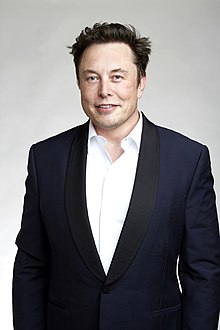
Elon MuskOnline transaction is a boon in our everyday life. It has made our life better by saving us time and making transactions by a few clicks. One does not need to run to the bank or ATM in the eleventh hour for withdrawing cash. Applications like GooglePay, PhonePe have become some of the most popular interfaces for money transactions. But, way before these applications came into play, an American company, PayPal ruled the market.

Founded in 1998, PayPal serves the entire world with its payment services. It was a subsidiary of eBay for a long time. PayPal has launched many divisions of online payment in the last twenty years. The founders of the company are Elon Musk, Ken Howery, Luke Nosek, Max Levchin, Peter Thiel and Yu Pan. Currently, Dan Schulman serves as the President and CEO of the company. The company’s headquarters is based in San Jose, California.

Founders

The world-famous tech pro, investor and entrepreneur, Elon Musk founded more than just one company. PayPal was his third start-up after co-founding Zip2 with his brother, Kimbal followed by founding X.com. Musk founded SpaceX, The Boring Company, Neuralink, and many more giant businesses.

Howery went to Stanford University and acquired a Bachelor’s degree in Economics. While he was a university student, he served as the managing editor of The Standard Review. Howery co-founded PayPal the very year he graduated. He was made Director of corporate development for eBay after it acquired PayPal.

Nosek is a computer engineer who co-founded SponsorNet New Media prior to co-founding PayPal. He served as PayPal’s vice president of marketing and strategy until the company was acquired by eBay.

Levchin has a degree in computer science who co-founded PayPal right after completing his graduation. He has also co-founded Slide, HVF, and Affirm. Levchin is mostly known for his efforts in managing fraud and contributions in CAPTCHA response.

The great venture capitalist and investor, Peter Thiel has a degree in law from Stanford. Before becoming a venture capitalist, Thiel served as a security lawyer. Thiel is a board member of Facebook, a partner at Founders Fund and a great philanthropist.

Pan has a degree in computer science from the University of Illinois. Pan served as a Google employee prior to co-founding PayPal. He was also hired by Youtube as a software engineer.

Early History

Back in 1998, the company was launched by the name Confinity. Confinity was founded to provide security software which later launched its money transfer service in 1999. BlueRun Ventures provided the initial funding for this new company.

After a year, Confinity merged with X.com, Musk’s online banking start-up. X.com had many other online payment services which Musk decided to shut down and focus exclusively on PayPal. In 2001, the company gained popularity as PayPal and not X.com anymore. It went public in 2002.

The major acquisition

In 3rd October 2002, eBay acquired PayPal for $1.5 billion. It was the biggest turning point in the success story of PayPal. After this business deal was closed, PayPal payments increased exponentially. Most of the eBay users paid through PayPal as it appeared as the default choice. Five years from buying PayPal, the company’s annual revenue summed up to $1.8 billion. In 2008, PayPal made two big acquisitions including Fraud Science (for managing frauds) and Bill Me Later.

Success of PayPal

The company reached 100 million active users from more than twenty-five different countries by 2010. Till now PayPal only provided online money transactions. In 2011, the company decided to provide offline services. The company wanted to deliver the advantage of paying in retail shops via PayPal. For launching this, PayPal came into a partnership with Discover Card in 2012. After the offline scheme was launched, it reached more than 7 million retail shops. This led the volume of PayPal’s payment transaction to $145 billion.

An independent company

In 2014, the company decided to establish itself independently. The spin-off was finally completed on 18th July 2015. After this agreement, Dan Schulman was made the CEO and President of the company and John Donahoe was declared as the Chairman.

he first acquisition made by PayPal as an independent entity was Xoom Corporation. Other acquisitions also include Hyperwallet, Simility, and GoPay, etc. The company today has more than 170 million active users and 21,000 employees approximately.

Eventbrite

Eventbrite, manage events in a better way

What was the last time when you heard about an international event management company? Big companies may hire employees separately for this purpose, but most of the independent organizations cannot afford that. We, especially in our college life come through the term “event management” very often. Event management is considered as an appreciable skill. Especially in a metropolitan city, where numerous events take place every day, there is a sheer need for event managers. But, to organize an event, promotions are needed as well.

Eventbrite, an US-based event management company meets all the requirements needed to organize an event. The company was founded in 2006 with the motive to help people surf events around the city. The website also provided the feature of creating events, promoting them along with online ticketing for the events. The founders of Eventbrite are Renaud Visage, Julia Hartz and Kevin Hartz.

Renaud Visage

Visage is a Cornell University graduate who acquired a degree in Engineering. Visage joined Geomatrix as a Project Engineer after a couple of years since his graduation. In 2000, Visage became the Director of Engineering for Zing Networks and left the company after a year.

He became a Venture Partner at Index Ventures after which he became a very prominent Investor. He invested in many companies which include Snips, Mobius Motors, Hokodo, Engineer.ai etc. He is also a Board Partner of Point Nine Capital. Even after Visage co-founded Eventbrite in January 2006, he still serves as an Investor. He is also a mentor at StartupBootcamp.

Julia Hartz

Julia went to Pepperdine University and acquired a Bachelor’s degree in Telecommunication. After graduation, Julia joined MTV as a Development Executive followed by contributing to FX Networks. She left FX Networks in 2005 and co-founded Eventbrite next year. She is the current CEO of the company and also a member of the Board of Directors.

Hartz is a very significant figure in the women entrepreneurial world. She has been featured in the Fortune magazine as one of the most powerful women entrepreneurs. Julia is also an investor and she was featured in the Forbes.

Kevin Hartz

Brought up in California, Kevin holds a Bachelor’s degree in Arts from Stanford University and a Master’s degree from University College, Oxford. Kevin started his career as a Product Manager in Silicon Graphics. Kevin co-founded a start-up, ConnectGroup which was later acquired by LodgeNet. Before co-founding Eventbrite, Kevin along with Alan Braverman founded Xoom.

The crisis

The three founders chose the wrong time to launch Eventbrite. During the 2000s, an aura of the economic crisis was spread around the globe. None of the venture capitalists wanted to invest in any new start-ups creating a really difficult situation for Eventbrite. But, luckily the three of them were well-experienced. Visage knew how to be more strategic and play tactically without enough funding.
Eventbrite started emphasizing more on SEO and reach out to people through unique contents. The marketing strategies of Eventbrite played the ace and they were finally able to conduct Series A funding at the end of 2009.

Strategies

In the beginning, Eventbrite launched a 100% free business model which lured a good number of customers. Eventbrite proposed this model for the so that the organizers can test the managing system of Eventbrite and then get start paying for it. After Eventbrite started making progress, many organizers shifted from free to paid model to have better access and services.
In 2008, the company launched its application which solely served the purpose of surfing events. With time, more people signed up and the demand rose drastically. This led Eventbrite to launch the feature of online ticketing and earn through it.

The Success

Once Eventbrite started landing investors, the list expanded day by day. Eventbrite closed their Series E funding by raising $50 million from Tiger Capital in 2011. Another $60 million was raised by the company from the same investor in 2013. Some of the major investors of Eventbrite include Sequoia Capital, Tiger Capital etc. In 2017, the company raised $134 million from Series G funding. The next year, Eventbrite filed for its first IPO worth $200 million. According to 2018, the company’s annual revenue sums up to $291.6 million. Eventbrite made some significant acquisitions including Nvite, Ticketfly, Picatic and Pandora.

Today, apart from managing events on the land of the US, it has offices in the UK, Ireland, Germany, Argentina, Netherlands, Brazil and Australia.