Your Tech Story

Team YTS

Crypto

Crypto Investors Scammed of $1 Million Through Bogus MetaMask Token, Scam Classified as โ€œHoneypotโ€ and โ€œRug Pullโ€.

MetaMask, a cryptocurrency exchange, recently announced that it will soon begin airdropping its own cryptocurrency, $MASK, into the wallets of its existing users. As a result of the news, a rumored fake MetaMask token appeared on the crypto market, and it was quickly available for trading on the Uniswap platform. This MetaMask token, which is based on the Ethereum blockchain, reportedly increased by 2,600% in a short period of time. The sale was locked as soon as the fake tokens worth $1 million were sold, raising suspicions of a rug-pull scam.

The scam, which preyed on traders’ eagerness for a MetaMask wallet token, took advantage of a flaw in the popular DEXTools trading app to persuade users of the token’s legitimacy. A scammer was able to inject code into the DEXTools app front end for the Uniswap WETH/MASK pair, causing a pop-up to appear telling users that the MASK token had been verified when they viewed it.
Unsuspecting users were unable to sell the fake MASK token after purchasing it. This type of scam is known as a “honeypot,” because it allows users to enter only to discover that the smart contract that governs the token’s interactions prevents them from selling.

Crypto
Image source: digitalcoinstandard.com

The scammer appears to have programmed the smart contract for the fake MetaMask token to prevent holders from selling until it has received upwards of $1 million in liquidity. According to transaction data from Etherscan, the scammer took 475 ETH from the token’s Uniswap liquidity pool, worth $1.79 million at press time. The ill-gotten gains were sent to Tornado Cash, a popular coin mixing app, and then laundered to a separate wallet.
The MASK token was first reported as a scam on Twitter Monday evening, with several accounts warning that it was a scam despite a pop-up on DEXTools claiming it was legitimate. Since then, Twitter user @cobynft has detailed how the scam worked, claiming that it was the DEXTools app developers’ “serious fault” that allowed the scam to convince so many people to buy the tokens. DexTools has yet to respond to questions about its role in the platform’s inability to prevent cybercriminals from abusing it.
The current anticipation for a legitimate MetaMask token is another reason why the MetaMask token scam was so successful. The MetaMask team has hinted at issuing a token to decentralize the popular EVM wallet, with many speculating that it could be done via an airdrop.

The MetaMask token scam is the third major crypto-fraud to hit the market this holiday season. MetaSwapMGAS, a Binance Smart Chain project, allegedly stole 1,100 BNB from users on Sunday. Another Ethereum project, MetaDAO, appears to have pulled a rug over its investors yesterday, stealing 800 ETH worth over $3.2 million. According to a recent report by research firm Chainalysis, scammers cheated crypto investors out of $7.7 billion this year. According to the report, the classic rug pull was the most common type of scam. Rug pulls are common in DeFi because it’s cheap and easy to create new tokens on the blockchain and get them listed on decentralized exchanges (DEXes) without a code audit if you have the right technical knowledge.
In November, investors in a new cryptocurrency called “Squidgame Cash” or “SQUID,” which was inspired by the Netflix series Squid Games, were reported to have had their “rug pulled” after the token crashed 99.99 percent overnight. This project is thought to have netted the scammers around $3.3 million. The case’s investigation is still ongoing.

Cases of crypto-focused cybercrime are on the rise in tandem with the global crypto expansion. The Federal Bureau of Investigation (FBI) in the United States said earlier this month that cyber scammers are duping people out of their assets by making them use physical cryptocurrency ATMs and digital QR codes to complete malicious transactions. To avoid being scammed, Hyderabad Police recently issued a warning to investors about transferring assets into unknown, unauthorized wallets.

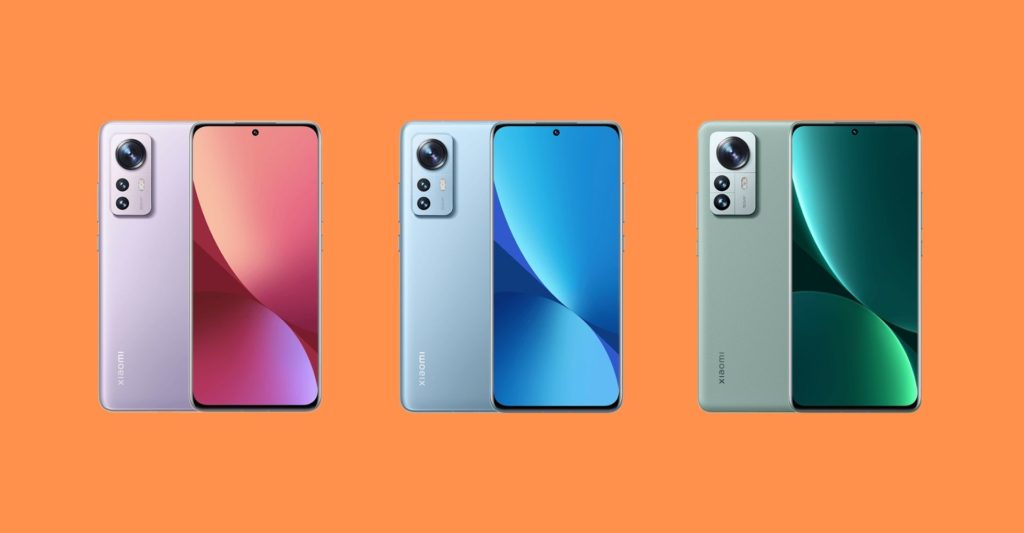
Xiaomi 12X

Xiaomi 12, Xiaomi 12 Pro, Xiaomi 12X With Triple Rear Cameras Launched; MIUI 13 Makes A Debut.

On Tuesday, December 28, Xiaomi announced the Xiaomi 12, Xiaomi 12 Pro, and Xiaomi 12X at a press event in China. The Xiaomi 12 series has a hole-punch display with Corning Gorilla Glass Victus protection, triple rear cameras, and 5G connectivity, among other things. Xiaomi also unveiled MIUI 13, its latest custom ROM for smartphones and tablets, alongside the Xiaomi 12 series. There is a claim that the new MIUI version is more user-friendly than MIUI 12.5 Enhanced Version. Three new privacy-focused features in MIUI 13 face verification protection, privacy watermarking, and electronic fraud protection. It also supports widgets, giving you an iOS 15-like experience. MIUI is Xiaomi’s custom skin for smartwatches, smart home devices, and televisions, and it will be available next year.

Xiaomi 12: Specifications and Features

Xiaomi 12 has a 6.28-inch Full HD + (1,080 x 2,400 pixels) AMOLED display with Corning Gorilla Glass Victus protection on top and a 20: 9 aspect ratio. It runs on Android-based MIUI 13. The display also has a peak brightness of 1,100 nits, a 120 Hz refresh rate, and Dolby Vision support. The Xiaomi 12 is powered by an octa-core Snapdragon 8 Gen 1 processor and up to 12 GB of LPDDR5 RAM.
The Xiaomi 12 features a triple rear camera setup with a 50-megapixel Sony IMX766 primary sensor, an f/ 1.88 lens, and optical image stabilization (OIS) support. A 13-megapixel secondary sensor with an f/2.4 ultra-wide-angle lens with a 123-degree field of view is also included in the camera setup. For improved focus lock, the rearview camera setup is aided by proprietary CyberFocus technology. The Xiaomi 12 comes with a 32-megapixel selfie camera. It supports Stagger HDR and beautification functions based on Artificial Intelligence (AI).
The Xiaomi 12 comes with up to 256 GB of UFS 3.1 onboard storage. Among the onboard sensors are a gyroscope, magnetometer, accelerometer, ambient light sensor, and proximity sensor. The Xiaomi 12 has Dolby Atmos support and Harman Kardon-tuned stereo speakers.
Xiaomi has included a 4,500 mAh battery in the Xiaomi 12 that supports 67 W fast charging and 50 W wireless charging. The phone also supports 10W wireless charging in reverse. The Xiaomi 12 is also 180 grams and measures 152.7 x 69.9 x 8.16 mm.

Xiaomi 12X
Image source: amazonaws.com

Xiaomi 12 Pro: Specifications and Features

Xiaomi 12 Pro has a 6.73-inch WQHD+ (1,440×3,200 pixels) E5 AMOLED display with 1,500 nits of peak brightness and a 120Hz dynamic refresh rate and runs MIUI 13. The display also has Corning Gorilla Glass Victus protection and a 480Hz touch sampling rate. It also features Apple’s low-temperature polycrystalline oxide (LTPO) backplane technology, which is found on the company’s premium iPhone models. The Snapdragon 8 Gen 1 SoC in the Xiaomi 12 Pro is paired with up to 12GB of LPDDR5 RAM.
There is a triple rear camera setup on the Xiaomi 12 Pro: a 50-megapixel Sony IMX707 sensor with an optical image stabilization feature that supports a wide aperture of f/1.9, a 50-megapixel portrait sensor, and a 50-megapixel ultra-wide sensor. The front of the phone also features a 32-megapixel selfie camera.
Up to 256GB of UFS 3.1 storage is available from Xiaomi. The Xiaomi 12 Pro has a four-unit speaker system with a dedicated tweeter to deliver a better audio experience. Harman Kardon tuning is included with the speaker system. The Xiaomi 12 Pro has a 4,600mAh battery with 120W fast wired charging capability. As well as wireless charging, the phone supports reverse wireless charging at a rate of 10 watts and 50 watts. The Xiaomi 12 Pro weighs 205 grams and measures 163.6×74.6×8.16mm.

Xiaomi 12X: Specifications and Features

The Xiaomi 12X is a slightly modified version of the Xiaomi 12. The display on the smartphone is the same 6.28-inch display found on the Xiaomi 12. It also has the same triple rear digital camera setup as the Galaxy S7 and the same 4,500mAh battery. When it comes to configurations, the Xiaomi 12X is equipped with an octa-core Qualcomm Snapdragon 870 SoC and up to 12GB of RAM. Onboard storage on the phone can go up to 256GB.

Price and Availability Details Of All 3 Models

The 8GB RAM + 128GB storage variant of the Xiaomi 12 is priced at CNY 3,699 (roughly Rs. 43,400). The phone is also available in an 8GB + 256GB model for CNY 3,999 (roughly Rs. 46,900) and a top-end 12GB + 256GB model for CNY 4,399 (roughly Rs. 51,600).
The Xiaomi 12 Professional, on the other hand, starts at CNY 4,699 (roughly Rs. 55,100) for the 8GB + 128GB variant. The phone is also available in an 8GB + 256GB model for CNY 4,999 (roughly Rs. 58,600) and a top-of-the-line 12GB + 256GB model for CNY 5,399 (roughly Rs. 63,300).
The 8GB + 128GB variant of the Xiaomi 12X costs CNY 3,199 (roughly Rs. 37,500). The phone is also available in an 8GB + 256GB model for CNY 3,499 (roughly Rs. 41,000) and a 12GB + 256GB model for CNY 3,799 (roughly Rs. 44,500).
As for the availability of the Xiaomi 12, Xiaomi 12 Pro, and Xiaomi 12X in China, pre-sales will begin on Tuesday, December 31, with the phones going on sale on December 31. Xiaomi has not yet announced when the Xiaomi 12 series will be available in other markets, including India.

Oppo A11s

Oppo A11s Affordable Smartphone With Triple Rear Cameras, 90Hz Display Released: Check Price, Specifications

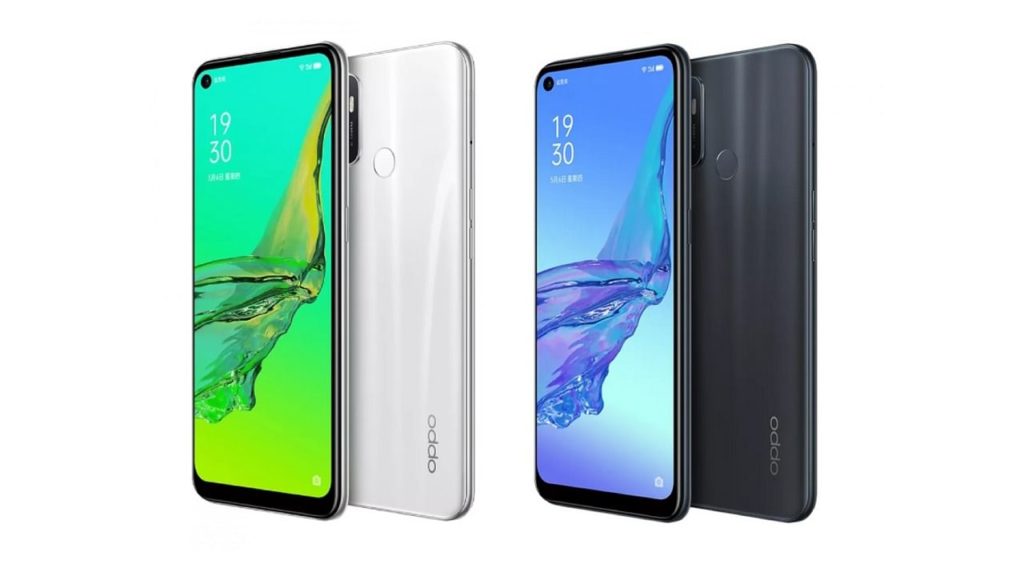
The Oppo A11s is the company’s most recent affordable phone. The Oppo A series’ newest model features triple rear cameras and a hole-punch display. The Oppo A11s also has a 90Hz display and is powered by a Qualcomm Snapdragon 460 octa-core processor. The smartphone is available in two color schemes and configurations, with 128GB of internal storage. The Oppo A11s is an upgrade to the Oppo A11, which was released in 2019.

Specifications and Features

The Oppo A11s runs Android 12 with ColorOS 7.2 on top and has dual nano-SIM support. The phone has a 6.5-inch HD+ (720×1,600 pixels) display with a 20:9 aspect ratio and a refresh rate of 90Hz. When it comes to the device’s processor, the Oppo A11s features an octa-core Snapdragon 460 SoC with Adreno 610 GPU and up to 8GB of RAM.
The Oppo A11s has a triple rear camera setup that includes a 13MP primary camera with an f/2.2 lens, as well as a 5MP secondary camera with an f/2.4 lens. A 2MP depth sensor and a 2MP macro shooter round out the device’s other two cameras. Oppo A11s has an 8MP selfie camera with an f/2.0 lens on the front.
The Oppo A11s has 128GB of internal storage. A 5000mAh battery powers the device, which supports 18W fast charging. 4G LTE, Wi-Fi 802.11ac, Bluetooth v5, GPS/ A-GPS, USB Type-C, and a 3.5mm headphone jack are among the device’s connectivity options. Also on the back is a fingerprint scanner. An accelerometer, ambient light sensor, and proximity sensor are all part of the smartphone’s sensory system.

Oppo A11s
Image source: tv9bangla.com

Price and Availability

The price of the newly launched budget device Oppo A11s has been set at $156.81, roughly Rs 11,800 for the variant with 4GB RAM and 128GB internal memory. Another variant of the smartphone is available, which has 8GB of RAM and 128GB of storage and costs $188.20 (roughly Rs 14,100). Dream White and Matte Black are two of the new Oppo A11s’ color options.

About the Company

OPPO is one of the most popular smartphone brands in the world, specializing in high-quality camera phones and advanced mobile photography technologies that are used by over 200 million people worldwide. One of OPPO’s first innovations was the introduction of phones with 5MP cameras (mega-pixels) and 16MP front cameras. It continues to attract a young consumer audience with popular, high-quality cameras phones like the powerful F11 Pro and the picture-perfect F1 Selfie Expert. Established in 2004, OPPO is headquartered in China. OPPO was the fifth largest smartphone brand in the world in 2018, dominating the Chinese domestic market and expanding into India, Southeast Asia, Africa, Australia, and Europe.
For the third year in a row, The Economic Observer named OPPO “Most Respected Chinese Company,” and the company was also named to Boston Consulting Group’s “2018 BCG Global Challengers” list. For the second year in a row, OPPO received the Canstar Blue “Most Satisfied Customers” award. BrandZTM named OPPO to its list of “Top 50 Chinese Global Brands” for 2019. BrandZTM has become the leading authority on the power of brands.

RBI

RBI Extends Tokenization Demand For Credit And Debit Cards By 6 Months, Providing Relief To Online Shoppers.

According to new Reserve Bank of India guidelines, e-commerce companies like Amazon and Flipkart, as well as online delivery aggregators like Zomato, will not be able to save card information on their platforms starting July 1, 2022. (RBI). Beginning next year, customers conducting online transactions on any e-commerce platform will be required to enter their debit or credit card information each time. Customers can, however, avoid the hassle by giving platforms permission to tokenize their cards.
To improve security, the RBI issued guidelines in March 2020 that prohibited merchants from saving customers’ card details. The regulatory body updated its guidelines on card tokenization services in September of this year to improve safety and security. The Reserve Bank of India (RBI) on Thursday extended the deadline for card tokenization until June 30, 2022, in response to repeated requests from industry stakeholders. Tokenization is the process of replacing credit and debit card information with an alternate code known as a “token.”

Because the card details are not shared with the merchant during transaction processing, tokenized cards are considered safe for online transactions. “The deadline for storing card on file (CoF) data has been extended by six months, to June 30, 2022,” the central bank said in a notice to all payment system operators, adding that all such data will be purged after the extended deadline expires.
The RBI had previously set a deadline of December 31, 2021, as the end date. Reserve Bank of India (RBI) had previously been requested by the Indian Banks Association (IBA) to extend the deadline for tokenizing. The main reason for the request for a delay in the tokenization deadline was that many small and medium-sized businesses lack the infrastructure to transition to the new system, even though banks are more or less prepared.

RBI
Image source: indianexpress.com

Tokenisation is the process of replacing credit and debit card information with an alternate code known as a “token.” Each card, token requestor, and device has its own token. The entity that accepts a customer’s request for tokenization of a card and forwards it to the card network for issuance of a corresponding token is known as the token requestor.

The cardholder can have his or her card tokenized by submitting a request through the token requestor’s app. Token requestors send their requests to the card networks, which issue tokens with the approval of the card issuer that correspond to the particular card, token requestor, and device.

So, what does this imply for a loyal customer? The following are ten key points to remember:

  1. Customers will be unable to save their debit or credit card information on any e-commerce platform beginning July 1, 2022.
  2. Every time a customer conducts an online transaction, they will be required to re-enter their card details.
  3. Customers can give e-commerce companies permission to “tokenize” their cards in order to avoid the hassle. E-commerce platforms will ask the card network to encrypt details with additional factor authentication if necessary after receiving a customer’s consent.
  4. Customers can save their cards for future transactions once the e-commerce platform receives the encrypted details.
  5. Most major e-commerce platforms can only tokenize Mastercard and Visa-issued cards for the time being. Other financial services cards are expected to be tokenized in the near future.
  6. For both credit and debit cards, the new RBI guidelines must be followed.
  7. International transactions are exempt from the new guidelines. The new RBI guidelines are only applicable to domestic cards and transactions.
  8. Customers will not be charged an additional fee for card tokenization.
  9. On e-commerce platforms, tokenized cards will be identified by the last four digits as well as the issuing bank and network name.
  10. Finally, card tokenization is not required. Customers can choose to tokenize their cards for faster transactions or enter their card information manually.

European Commission

The European Commission Approves Microsoft’s $19.7 Billion Acquisition Of Nuance.

Microsoft’s purchase of Nuance, an artificial intelligence company, received unconditional approval from the European Commission on Tuesday. In April, Microsoft paid $19.7 billion for the AI speech technology company Nuance. After LinkedIn, Nuance was the company’s second-largest acquisition under Nadella’s leadership. Microsoft hopes to expand its presence in the healthcare market with this new acquisition. This month, Reuters reported that the company was on its way to receiving approval in the European Union, in addition to approval in the United States and Australia.

According to the European Commission, the deal between Microsoft and Nuance will not cause any competition concerns in the European Economic Area (EEA). “According to the commission, Microsoft and Nuance provide very different products. While Nuance focuses on pre-built solutions for end-users, Microsoft’s Azure Cognitive Services includes application programming interfaces (API). This has no direct benefit for end-users, but it allows programmers to incorporate speech recognition into their respective programs,” according to the EU press release.

European Commission
Image source: www.onmsft.com

Nuance is best known for its Dragon software, which uses deep learning to help with speech transcription. It has also been praised for its accuracy over time, owing to its ability to adapt to the user’s voice. This technology has been licensed by the company for a variety of services and applications, including Apple’s Siri. Microsoft may integrate Nuance’s technology into its existing software, such as Teams, or offer it as part of its Azure cloud service.

Microsoft said in a blog post that “by augmenting the Microsoft Cloud for Healthcare with Nuance’s solutions, as well as the benefit of Nuance’s expertise and relationships with EHR system providers, Microsoft will be better able to empower healthcare providers through the power of ambient clinical intelligence and other Microsoft cloud services.”

The Commission concluded after conducting an investigation that the deal will not adversely affect competition in the markets for transcription software, cloud services, enterprise communications services, PC operating systems, and other products.
“On any of the markets examined in the European Economic Area, the proposed transaction would raise no competition concerns,” the Commission stated. Nuance, based in the United States, serves 77 percent of US hospitals and was instrumental in the launch of Apple’s Siri virtual assistant.
Apart from healthcare, Nuance provides AI expertise and customer engagement solutions to companies all over the world, including Interactive Voice Response (IVR), virtual assistants, and digital and biometric solutions. Nuance’s special features will be integrated into Microsoft’s existing applications, such as Azure, Teams, and Dynamics 365.
The Commission stated that it had looked into issues such as the overlap between Microsoft and Nuance’s transcription software activities and discovered that they offered “very different products” that, when combined, would face strong competition from other players.
As more companies integrate AI into their products and services, tech companies have increased their acquisitions of AI-focused firms. The 19.7 billion deal between Microsoft and Nuance was unanimously approved by both Nuance and Microsoft’s boards of directors, according to the blog post.

LG UltraGear

LG Released UltraGear Gaming Laptop With 11th Gen Intel Processor: Check Specs and Features

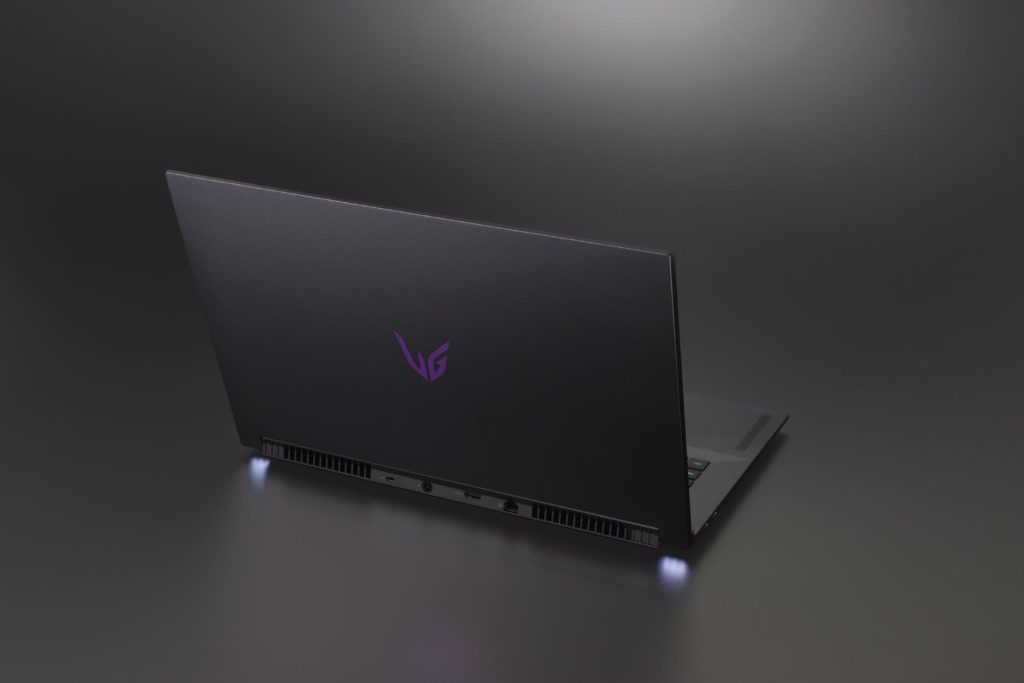
A new LG UltraGear gaming laptop has been introduced. LG UltraGear 17G90Q is powered by 11th Gen Intel Core CPUs, also known as Intel Tiger Lake H processors, with Nvidia GeForce RTX 3080 Max-Q GPU. A vapor chamber cooling system is used in the LG UltraGear 17G90Q gaming laptop. Details regarding the laptop will be announced at the Consumer Electronics Show (CES) in 2022. It is planned that the South Korean company will begin shipping gaming laptops in January 2022, with its own country as the first to get it.

Specifications and Features

An 11th Gen Intel Tiger Lake H processor, NVIDIA GeForce RTX 3080 Max-Q graphics card, two-channel RAM, and an ultra-fast twin SSD arrangement power the LG UltraGear gaming laptop. The LG UltraGear gaming laptop features a 17-inch IPS panel with a 1 millisecond response time and a 300 Hz refresh rate, as well as the newest top-of-the-line hardware, ensuring immersive, seamless gameplay for even the most graphically demanding PC games. Depending on the game, the LG UltraGear Studio allows users to manipulate the CPU and GPU.
The storage of the LG UltraGear 17G90Q is an unnamed SSD, however, it supports both channels, according to LG. A vapor chamber cooling system and DTS: X Ultra 3D sound are included. A full-size keyboard with a number pad comes included on the gaming laptop.
In terms of thermals, it has a vapor chamber that, according to the manufacturer, keeps the laptop cool even when pushed to its maximum.
Aside from that, it weighs 2.64kg and includes a per-key RGB illuminated keyboard, USB 4 Gen 32 Type-C, USB 3.2 Gen 2 Type-C, HDMI, RJ45, DC-in, and microSD/UFS connections. A 93Wh battery, an FHD webcam with dual microphones, Wi-Fi 6E, and Intel Killer Wireless complete the package. Two-way speakers with DTS X Ultra round out the package.

LG UltraGear
Image source: www.techspot.com

UltraGear laptops, along with lightweight brand Gram and high-performance Ultra PC, have been one of LG Electronics’ flagship brands since its inception in 2018. LG Electronics also released premium gaming speakers and monitors under the UltraGear brand earlier this year, including the LG GP9 speaker, which is compatible with both personal computers and gaming consoles.
LG has stated that the new LG Ultra Gear gaming laptops will be released in stages around the world, beginning in Korea in January 2022.

Price and Availability

The LG UltraGear 17G90Q’s price has yet to be determined. The gaming laptop will be released by LG in early 2022 in South Korea and the United States. The gaming laptop will be offered in only one color: Purple Gray.

About the Company

LG is a South Korean electronics company headquartered in Seoul that was founded in 1958 by Koo In-hwoi as GoldStar. After the Korean War, the company was founded to produce consumer electronics and household appliances for the local market. The company was the first to manufacture radios, televisions, refrigerators, washing machines, and air conditioners in South Korea. While the company was formerly known as GoldStar, in 1995 it was combined with Lucky Chemical and LS Cable, two other LG group enterprises.
LG Electronics is now a multinational company that makes and distributes consumer electronics, mobile phones, and home appliances. In addition, it manufactures commercial devices and products such as G-, V-, and F-series mobile communication products, in-car infotainment, HVAC and motor, and vehicle engineering components. Aside from compressors and motors, the company offers commercial display solutions, solar solutions, energy storage systems and energy management systems, membranes, stylers, and lighting systems.