Your Tech Story

Team YTS

Lenovo Legion Slim 7

Lenovo Legion Slim 7 Gaming Laptop With AMD Ryzen 7 Processor, Nvidia GeForce RTX 3060 Graphics: Now Available In India

On Monday, Lenovo announced the Legion Slim 7 in India (February 28). A year after the device’s global debut, Lenovo has launched a new gaming laptop under its Legion lineup in India. It’s one of the world’s slimmest gaming laptops, according to the company. The Lenovo Legion Slim 7 laptop, which weighs just under 2 kilogrammes and features the latest AMD Ryzen 7 5800H processor and NVIDIA GeForce RTX 3060 graphics, is dubbed the Legion Slim 7.

Lenovo Legion Slim 7 has been designed to increase the portability of its powerful laptop format, as can be seen from the company’s big claim. The device is only 0.74 inches wide at its widest point and weighs just under 2 kilogrammes. It’s worth noting that the Legion Slim 7 isn’t the world’s slimmest gaming laptop; the Dell Alienware x14, which was released earlier this month, is only 0.57 inches wide and thus beats out the Legion Slim 7.
In any case, the Legion Slim 7 comes with its own set of advantages. It, for example, comes with Windows 11 pre-installed and a WQHD display with a 165 Hz refresh rate. Lenovo has also included Legion’s proprietary technologies, such as Legion AI Engine, Legion Coldfront 3.0, and others. Here’s a closer look at everything the Legion Slim 7 has to offer.

Specifications and Features

Windows 11 Home is installed on the Lenovo Legion Slim 7. (64-bit version). It has a 15.6-inch WQHD (2,560×1,440 pixels) IPS anti-glare display with a 165Hz refresh rate and sRGB colour gamut coverage of 100 per cent. The display also features a DC dimmer and Dolby Vision technology. The laptop is equipped with an AMD Ryzen 7 5800H processor, as well as an Nvidia GeForce RTX 3060 graphics card and 6GB of GDDR6 graphics memory. There is also 8GB soldered DDR4 RAM with a frequency of 3,200MHz, as well as 8GB SO-DIMM DDR4 RAM. In total, the laptop can hold up to 24GB of RAM (16GB expandable SO-DIMM alongside the inbuilt 8GB memory).

Lenovo Legion Slim 7
Image source: mashable.com

Lenovo has included a 1TB SSD M.2 storage drive. A full-size keyboard with RGB lighting is included with the laptop. There are also stereo speakers with 2W audio output per speaker, as well as Nahimic Audio. Harman is also behind the speakers.

A 720p webcam with a privacy shutter is included with the Legion Slim 7. The Legion AI Engine comes preinstalled on the machine, which is said to shift power between the CPU and GPU to provide more frames per second. According to the company, this helps deliver top AAA titles at a maximum frame rate.
The Legion Slim 7 includes Lenovo Legion Coldfront 3.0, which uses artificial intelligence (AI) to optimise the system for resource-intensive games and allows users to control fan speed and voltage using Q-control 4.0.
The Lenovo Legion Slim 7 comes with a 71Whr battery that can last nearly eight hours on a single charge. The battery is also equipped with Rapid Charge Pro technology, which helps to improve battery life and speed up charging. The laptop weighs 1.9kg and measures 356x252x15.9mm.

Price and Availability

The Lenovo Legion Slim 7 is priced at Rs. 1,44,990 in India. Starting February 28, the laptop will be available in a single Shadow Black colour through the official Lenovo website, Lenovo Exclusive retail stores, and all major online and offline stores in the country.
The Lenovo Legion Slim 7 comes with a three-month subscription to Xbox Game Pass, which includes over 100 high-quality PC games. In January of last year, a previous version of the Legion Slim 7 gaming laptop was released in the United States.


TWS Echo Buds

TWS Echo Buds 2nd Gen Is Now Available In India.

In India, Amazon has released the Echo Buds (2nd Gen) true wireless stereo (TWS) earphones. The latest device in the brand’s Echo lineup features a 5.7mm dynamic driver as well as Bluetooth v5 connectivity. Active noise cancellation is included in the new Amazon Echo Buds (2nd Gen) TWS earphones (ANC). These have Amazon Alexa built-in, as well as Siri and Google Assistant voice assistant support, allowing users to control a paired smartphone without touching it. For sweat resistance, the pair is rated IPX4. Customers have the option of selecting from a variety of case types. With ANC and Hands-Free Alexa enabled, the new TWS Echo Buds are said to provide up to five hours of music playback on a full charge.

Specifications And Features

The new Amazon Echo Buds (2nd Gen) TWS earphones are powered by 5.7mm speaker drivers, according to the specifications. Three microphones are housed in each earbud for improved audio clarity. The earbuds are in-ear, but Amazon claims that their narrow nozzles reduce ear pressure and allow them to be worn for longer periods of time. Four sets of ear tips and two sets of wingtips in various sizes are included with the wireless earbuds. On each earbud, there are touch controls.

Amazon claims that the active noise cancellation in the Amazon Echo Buds (2nd Gen) TWS earphones provides an immersive audio experience by cancelling ambient noise. Aside from ANC, the new earbuds have a Passthrough Mode that allows the user to hear environmental sounds when needed, allowing them to be more aware of their surroundings.

TWS Echo Buds
Image source: tosshub.com

The new TWS earbuds have an Alexa voice assistant built-in, allowing users to control the device without touching it. Simple voice commands can be used to play music, podcasts, and other media. Android 6.0 and iOS 12 or higher support Alexa voice control. Furthermore, with a paired smartphone, Amazon Echo Buds (2nd Gen) support both Google Assistant and Siri.

The Amazon Echo Buds (2nd Gen) are said to have multiple privacy controls, according to Amazon. The Alexa app allows users to silence the microphones. Users can also access, listen to, and delete their recordings at any time. Amazon’s new TWS earbuds are sweat-resistant to IPX4 standards. The Amazon Echo Buds (2nd Gen) also have Bluetooth v5 connectivity. Both Android and iOS devices can be used with them. Accelerometer, proximity sensor, touch sensor, and hall sensor are among the sensors on the TWS earbuds.

The new Amazon earbuds come with USB Type-C connectivity and are said to provide up to five hours of music playback on a single charge when using ANC and Hands-Free Alexa. When combined with the charging case, the Amazon Echo Buds (2nd Gen) TWS earphones are said to provide up to 15 hours of playtime. With ANC and Hands-Free Alexa turned off, the earbuds alone are said to provide up to 6.5 hours of music playback time on a full charge. With a 15-minute quick charge, Amazon claims the earbuds can play music for up to 2 hours. The earbuds measure 20.0×19.1×19.1mm and weigh 5.7 grammes without ear tips.

Price And Availability

In India, the Amazon Echo Buds (2nd Gen) TWS earphones with a USB Type-C wired charging case cost Rs. 11,999. A higher-end model with a wireless charging case will set you back Rs. 13,999. Amazon is offering a Rs. 1,000 discount on both options as a launch offer. The earbuds are currently available for purchase on Amazon India in the colour black.

Intel 12th Gen

Intel 12th Gen CPUs For Slim And Light Laptops Officially Announced.

Intel 12th Gen processors, based on its all-new hybrid architecture, were announced in January. The H-series, the first of three lines of laptop CPUs aimed at gaming laptops and workstations, was the focus of that announcement. The P- and U-series of performance thin-and-light laptops, as well as those with modern/foldable PC designs, will be available starting today.

While the chips are now official, customers will not have to wait long to see them in new laptops, as Intel anticipates OEMs shipping devices in March. Acer, Asus, Dell, Fujitsu, HP, Lenovo, LG, MSI, NEC, Samsung, and “others,” which presumably includes Microsoft and Razer, are among the partners.

Intel 12th Gen

In Windows 11, the new mobile processors use Performance-cores (P-cores) and Efficient cores (E-cores) in conjunction with Intel Thread Director, just like the 12th Gen desktop processors. The architecture is similar to that of Arm-based big.LITTLE CPUs, with larger, more power-hungry cores paired with smaller, more energy-efficient ones. The larger cores handle the user’s current workloads, such as video editing or gaming, while the smaller cores handle background tasks or any minimized apps.

This hybrid design is based on energy efficiency, which, when combined with Intel’s smaller nanometer chip design, provides users with significantly more power when needed while also extending battery life.

Intel 12th Gen
Image source: i.gadgets360cdn.com

Indeed, Intel 12th Generation has far more cores than Intel 11th Generation, particularly in the traditional Ultrabook segment of thin-and-light laptops. Previously, an 11th Gen top-tier Core i7-1165G7 processor could only have four cores and eight threads; now, it can have up to fourteen cores (6 P-cores and eight E-cores) and twenty threads.

These new 12th Generation mobile chips are further divided into three categories:

P-series (28W): For thin-and-light performance laptops.
U-series (15W): For thin-and-light (convertible) laptops.
U-series (9W): For thinner detachable and new foldable PC designs

When compared to its 11th Gen processors, Intel claims the following in terms of real-world performance:

  • Multi-thread performance is up to 70% faster.
  • 3D rendering performance nearly doubled
  • Photo editing is up to 30% faster.

Many traditional clamshell laptops, as well as Dell’s highly anticipated redesigned XPS 13 Plus, Lenovo ThinkPad X1 Nano G2, and HP Elite Dragonfly G3, will use that 28W P-series processor, e.g., Core i7-1280P (14 cores; 20 threads), as OEMs refresh their current lineup. The 15W U-series will likely be used in thinner devices, such as “x360” convertible PCs.

It is expected that the 9W U-series chips will be used in detachable “Surface Pro-like” PCs as well as Intel’s move toward foldable PCs like the Asus ZenBook 17 Fold OLED, which is perhaps more interesting. These PCs can use the new Core i7-1260U processor, which has 10 cores (2P, 8E) and 12 threads with a maximum turbo speed of 4.7GHz (29W).

The switch to 12th Gen U-series (9W) processors contrasts sharply with Lenovo’s experimental ThinkPad X1 Fold, which featured an Intel 11th Gen (Lakefield) i5-L16G7 processor with only 5 cores (5 threads) and a maximum turbo speed of only 3.0GHz.

Of course, how these chips compare to AMD’s latest Ryzen 6000 Mobile processors remains to be seen. AMD, like Intel, has recently improved sleep states, battery efficiency, performance, graphics, and features on its non-gaming processors. However, Intel now appears to have the upper hand in terms of cores over AMD, which is a fascinating shift in power.

We should have comparative tests later this year with Microsoft’s unannounced Surface Laptop 5, which is expected to ship with Intel 12th Gen and AMD Ryzen 6000 Mobile processor options.

Intel Evo

Revisions to Intel’s Evo platform round out the news. OEM laptops must meet specific criteria, according to Intel, to ensure an optimal PC experience, such as fast resuming, long battery life, and specific hardware requirements.

The camera in the second-edition Evo guidelines had to be at least 720p resolution, and the speakers and tuning had to be of high quality. In addition, a new “Key Experience Indicators” (KEI) dubbed “Intelligent Collaboration” has been added.

The new Engineered for Intel Evo program, which is expanding to accessory partners this year, is another significant addition. Engineered for Intel Evo accessories labels will start appearing on devices that meet Intel’s requirements, such as the Kensington SD5700T Thunderbolt 4 dock and the Poly Voyage 4320UC Bluetooth conference headphones.

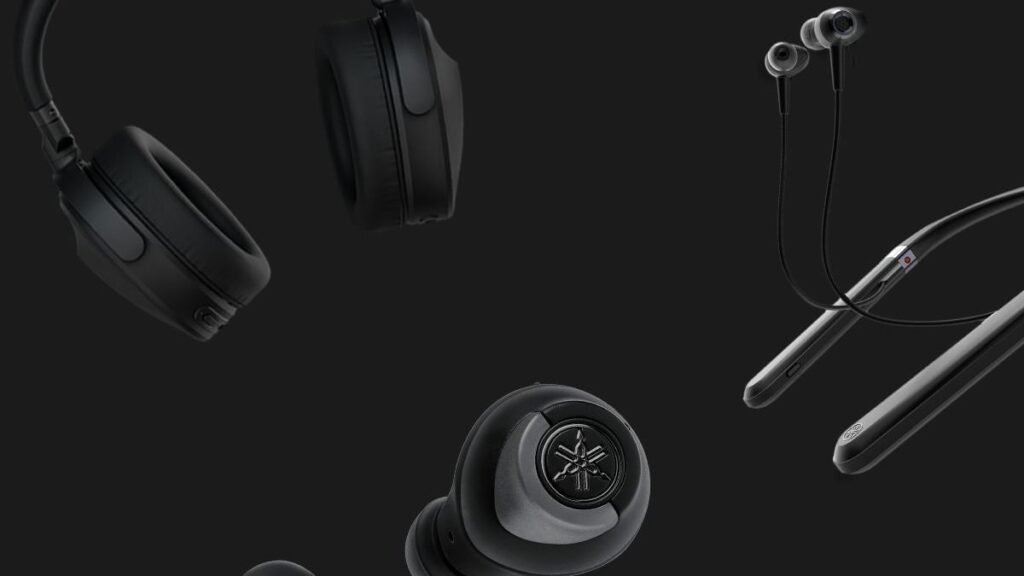
Yamaha Wireless Headphones

Yamaha Wireless Headphones, Neckband Earphones Series Debuted in India: Check Price And Features

In India, Yamaha has announced the release of six new wireless audio products. Premium wireless headphones and wireless neckband earphones are part of the collection. According to Yamaha, the high-end Yamaha wireless headphones also feature Listening Optimiser, a feature that makes adjustments to music in real-time.

Yamaha EP-L700A: Specifications & Features

SBC, AAC, and Qualcomm aptX Adaptive Bluetooth codecs are supported by the high-end Yamaha YH-L700A over-the-ear headphones, which have 40mm, dynamic drivers. The headphones are compatible with the company’s companion app, which allows you to control various settings. According to Yamaha, the pair has 3D sound immersion, head tracking, and internal microphones to measure listening conditions.

Yamaha claims that the ANC on the YH-L700A headphones does not interfere with the sound source. The headphones have a swivel folding design and a 3.5mm headphone jack that supports Hi-Res Audio. The Yamaha YH-L700A headphones have a maximum battery life of 34 hours on a single charge and support voice assistants on connected devices. The wireless headphones are 330 grammes in weight.

Yamaha EP-E700A: Specifications & Features

The Yamaha YH-E700A wireless over-the-ear headphones, which are second in line, have 40mm dynamic drivers and support SBC, AAC, and Qualcomm aptX Adaptive Bluetooth codecs. To control settings and features, the headphones pair with Yamaha’s app. The Yamaha YH-E700A, unlike the higher-end Yamaha YH-L700A, does not have 3D sound immersion or head tracking. Microphones can be used with headphones to monitor internal listening conditions.

The Yamaha YH-E700A also supports ANC without affecting the original sound source, as well as voice assistants on connected devices, according to the company. They have a swivel folding design and a 3.5mm headphone jack that supports Hi-Res Audio. The Yamaha YH-E700A headphones have a battery life of up to 35 hours on a single charge.

Yamaha Wireless Headphones
Image source: ecoustics.com

Yamaha EP-E500A: Specifications & Features

The Yamaha YH-E500A headphones have an on-ear design, unlike the Yamaha YH-E700A and YH-E700A headphones, which are over-the-ear headphones. SBC, AAC, Qualcomm aptX, and aptX HD Bluetooth codecs are supported by the headphones, which have 40mm, dynamic drivers.

The Yamaha YH-E500A, like the Yamaha YH-E700A and YH-E700A headphones, supports ANC. It has a 3.5mm headphone jack as well, but it does not support Hi-Res Audio. The headphones have the longest battery life of the three headphones launched by the company in India, lasting up to 38 hours. Yamaha’s YH-E500A wireless headphones are 200 grammes in weight.

Yamaha EP-E70A: Specifications & Features

With 9.2mm dynamic drivers, the Yamaha EP-E70A wireless earphones have a hard neckband design. SBC, AAC, and Qualcomm aptX Adaptive Bluetooth codecs are supported by earphones. The Yamaha EP-E70A has a Bluetooth range of up to 10 metres without interference.

The Yamaha EP-E70A earphones, like the headphones, are said to have advanced ANC that does not affect the original audio source. With the ANC feature enabled, the earphones offer 18 hours of battery life and support voice assistant on connected devices. The earphones are 90 grammes in weight.

Yamaha EP-E50A: Specifications & Features

The Yamaha EP-E50A earphones, which were just released, have a soft neckband design and 9mm dynamic drivers. SBC, AAC, and Qualcomm aptX HD Bluetooth codecs are supported by earphones. The Yamaha EP-E50A also has a communication range of up to 10 metres without interference.

The new Yamaha EP-E50A earphones, unlike the Yamaha EP-E70A, do not support advanced ANC, which does not affect the source audio, but rather regular ANC. These earphones support voice assistants on connected devices and have a battery life of 9 hours, which is exactly half that of the more premium Yamaha EP-E70A earphones with ANC. The wireless headphones are 35 grammes in weight.

Yamaha EP-E30A: Specifications & Features

The Yamaha EP-E30A, the series’ most affordable earphones, has a soft neckband design and 8.6mm dynamic drivers. Unlike the Yamaha EP-E70A and EP-E50A models, which also support Qualcomm’s proprietary codec, the earphones only support the SBC and AAC codecs. The earphones have a range of 10 metres with no interference.

The Yamaha EP-E30A wireless earphones do not support active noise cancellation, but they do support voice assistants on connected devices and have a battery life of up to 14 hours. The Yamaha EP-E30A wireless earphones are 19.5 grammes in weight.

Price And Availability

Yamaha has released the YH-L700 Over-Ear Wireless Headphones with 3D Sound and Head Tracking in India for Rs 43,300. The YH-E700A Wireless Noise-Canceling Over-Ear Headphones costs Rs 29,900, while the YH-E500A Wireless Noise-Cancelling Over-Ear Headphones costs Rs 14,800. The EP-E70A Neckband Wireless Noise-Canceling Earphones costs Rs 23,600. The EP-E50A Wireless Noise-Cancelling Earphones neckband costs Rs 12,400, while the EP-E30A Wireless Earphones neckband costs Rs 4890. On Amazon, Yamaha Music Store, and Bajaao.com, all Yamaha headphones will be available.

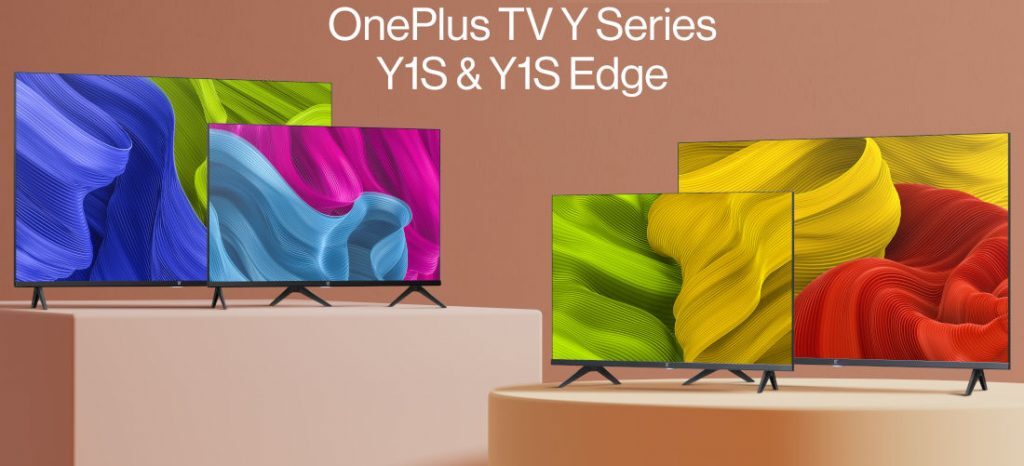
OnePlus TV Y1S

OnePlus TV Y1S, OnePlus TV Y1S Edge With Android TV 11, Dolby Audio Now Available in India.

Today, the OnePlus TV Y1S and TV Y1S Edge were released in India (Thursday, February 17). HDR10+, HDR10, and HLG formats are supported on the OnePlus TV Y1S and TV Y1S Edge. Both are powered by Android TV 11 and have Dolby Audio support. The OnePlus Y1S TV is equipped with 20W full-range stereo speakers, while the OnePlus TV Y1S Edge is equipped with 24W full-range stereo speakers. The auto low latency mode (ALLM) on the OnePlus smart TVs is said to improve gaming performance.

Specifications and Features

Both the OnePlus TV Y1S and TV Y1S Edge are smart TVs that come pre-installed with Android TV 11. Both come with a 32-inch and a 43-inch display. The former has a high-definition resolution, while the latter has a full-HD one. Both smart TVs support HDR10, HDR10+, and HLG formats. TUV Rheinland has also certified the displays for low blue light emission.

ALLM is a feature on the OnePlus TV Y1S and TV Y1S Edge that is said to improve the gaming experience for users. Google Assistant is also available on smart TVs. Users can use the Smart Manager to control a variety of smart TV functions, including system speed and storage space. Users will be able to connect their smartphones to their televisions and use them as a remote control with the OnePlus Connect 2.0. The TV Y1S series features dual-band Wi-Fi with 5GHz band support for connectivity.

OnePlus TV Y1S
Image source: fonearena.com

Dolby audio is supported on smart TVs. A 20W stereo speaker is standard on both models, while a 24W stereo speaker is standard on the TV Y1S Edge. With both smart TVs, OxygenPlay 2.0 is included, an aggregation platform offering 230 live channels. A Game Mode is also included with the smart TVs, which activate ALLM and promises to provide an immersive experience. The Kids Mode includes a watch timer that limits how long you can watch TV and an Eye Comfort Mode that improves your digital well-being.

Price and Availability

The 32-inch OnePlus Y1S TV costs Rs 16,499, while the 43-inch TV costs Rs 26,999. The OnePlus Y1S Edge costs Rs 16,999, while the 43-inch TV costs Rs 27,999. The 32-inch OnePlus Y1S TV will be available for purchase on February 21, while the 43-inch model will be available on March 2. Starting February 21, the TV Y1S Edge will be available. The OnePlus Y1S will be sold on Amazon India, Flipkart, and OnePlus.in. The OnePlus Y1S Edge will be available at Reliance Digital and Croma stores, as well as on the OnePlus’ Indian website.

About The Company

In late 2013, two former Oppo employees founded OnePlus, a new smartphone company. Their goal was to create OnePlus phones that checked all the boxes for Android fans: great design, powerful specs, the fastest and most lightweight software, and a low price. With the launch of the OnePlus One in 2014, the dream became a reality.
OnePlus has grown from its humble beginnings as an online-only niche smartphone manufacturer to a global powerhouse since then. When you take a step back and realize it’s only been a little over eight years, it’s quite an accomplishment.

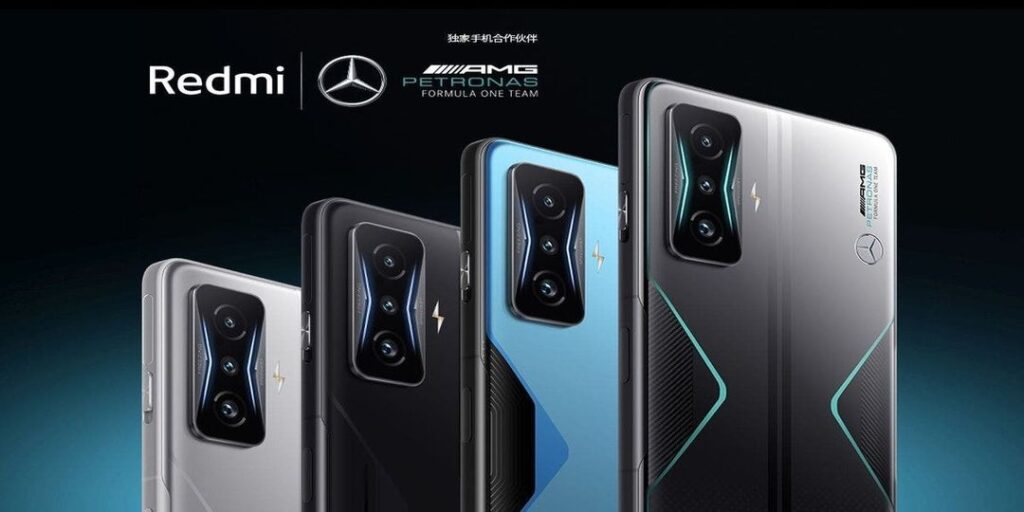
Redmi K50

Redmi K50 Gaming Edition, Redmi K50 AMG F1 Champion Edition With 120W Fast Charging Now Available.

On Wednesday, the Redmi K50 Gaming Edition and Redmi K50 AMG F1 Champion Edition were released in China. The smartphones are powered by the Qualcomm Snapdragon 8 Gen 1 SoC, which includes a “Twin VC” heat dissipation system and 120W fast charging technology. Aside from that, the Redmi phones feature OLED displays, quad JBL audio, a CyberEngine ultra-wideband X-axis motor, and a special gaming antenna. The design of the Redmi K50 AMG F1 Champion Version is inspired by the Mercedes-AMG Formula 1 racing car, with green accents, carbon fiber texture, and chequered flag sample parts.

Specifications and Features

The design, RAM, and storage of the K50 Gaming Edition and Redmi K50 AMG F1 Champion Edition differ. Aside from that, the phones are identical. The Dual-SIM Gaming Edition runs MIUI 13 on top of Android 12 and has a 6.67-inch full HD+ (1,080×2,400 pixels) AMOLED display. A 120Hz refresh rate, 480Hz touch sampling rate, Displaymate A+ rating, and Corning Gorilla Glass Victus protection are all included in the display.
The Qualcomm Snapdragon 8 Gen 1 SoCs with IO Turbo power the Redmi K50 Gaming Edition phones, which are paired with up to 12GB of LPDDR5 RAM. The phones have dual VC cooling with a 4,860mm square heat dissipation area, according to the company.

Redmi K50
Image source: cashify.in

The Redmi K50 Gaming Edition smartphones feature a triple rear camera setup that includes a 64-megapixel Sony IMX686 primary sensor and a 6P lens for photography. A 12-megapixel ultrawide camera with a 120-degree field of view and a 2-megapixel macro camera are included. This setup also includes a flicker sensor. The phone has a 20-megapixel Sony IMX596 sensor for selfies.
Up to 256GB of UFS 3.1 storage is available on the new Gaming Edition smartphones. This device supports 5G, 4G LTE, Wi-Fi 6, Bluetooth v5.2, GPS/ A-GPS/ NFC, Infrared (IR) blaster, and a USB Type-C port. Accelerometer, ambient light sensor, barometer, gyroscope, magnetic compass, and proximity sensor are among the sensors onboard.

JBL four-unit speaker, magnetic power pop-up shoulder key 2.0, and CyberEngine ultra-wideband X-axis motor, which is claimed to be more powerful than the one on iPhone 13 series smartphones, are among the other features on the Gaming Edition smartphones. The Redmi phones also have a 4,700mAh battery with 120W fast wired charging, which can charge the phones from zero to 100 percent in 17 minutes, according to Xiaomi. The phone weighs 210 grams and measures 162.5×76.7×8.5mm.

Price and Availability

The Redmi K50 Gaming Version smartphone is available in three configurations: 8GB RAM + 128GB storage for CNY 3,299 (roughly Rs. 39,000), 12GB + 128GB storage for CNY 3,599 (roughly Rs. 42,600), and 12GB + 256GB storage for CNY 3,899 (roughly Rs. 42,600). (roughly Rs. 46,000). It’s available in three different colours: black, blue, and silver. The special-edition Redmi K50 AMG F1 Champion Version costs CNY 4,199 and comes with 12GB of RAM and 256GB of storage (roughly Rs. 49,700).

The Redmi K50 Gaming Version will be available for pre-order starting tonight, with the sale starting on February 18. There is currently no information on the Redmi K50 Gaming Version’s global availability, including in India.